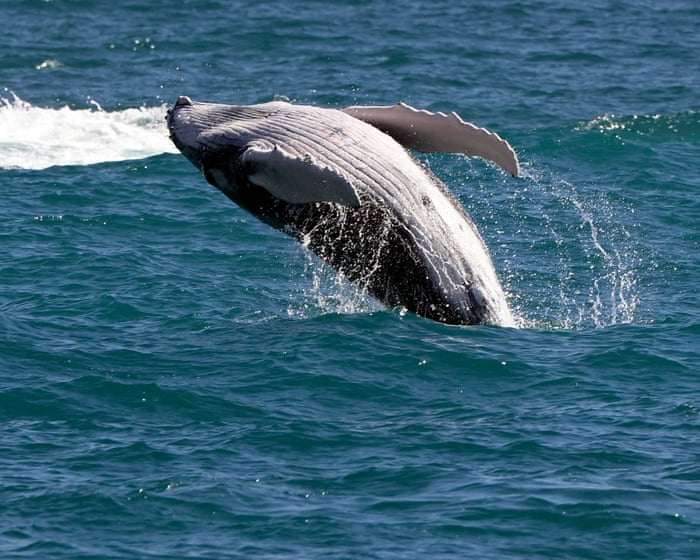
Pacific gray whales facing ‘catastrophic’ die-off as climate crisis hits food supply
Summary
Pacific gray whales are dying in large numbers in the Pacific Ocean because climate change is reducing their food supply by melting sea ice. Other problems like ship strikes, pollution, and hunting also add to the problem, causing the whale population to drop from 20,000 in 2019 to under 13,000 in 2024.Key Facts
- The gray whale population in the Pacific dropped from about 20,000 in 2019 to fewer than 13,000 in 2024.
- Scientists call the current high number of whale deaths a “catastrophic mortality event.”
- Climate change has reduced sea ice, which cuts the whales’ access to their main food.
- Other causes of death include ship collisions, oil spills, plastic pollution, harmful algae, and hunting by Indigenous people in Russia.
- Gray whales were once close to extinction in the 1970s but recovered and were removed from the endangered list in 1994.
- Environmental groups want the government to relist gray whales as endangered under the Endangered Species Act.
- The Trump administration has not added any animals to the endangered list in its second term and is reducing wildlife protections.
- NOAA will respond soon to the petition to protect gray whales; if denied, groups plan to sue.
Read the Full Article
This is a fact-based summary from The Actual News. Click below to read the complete story directly from the original source.