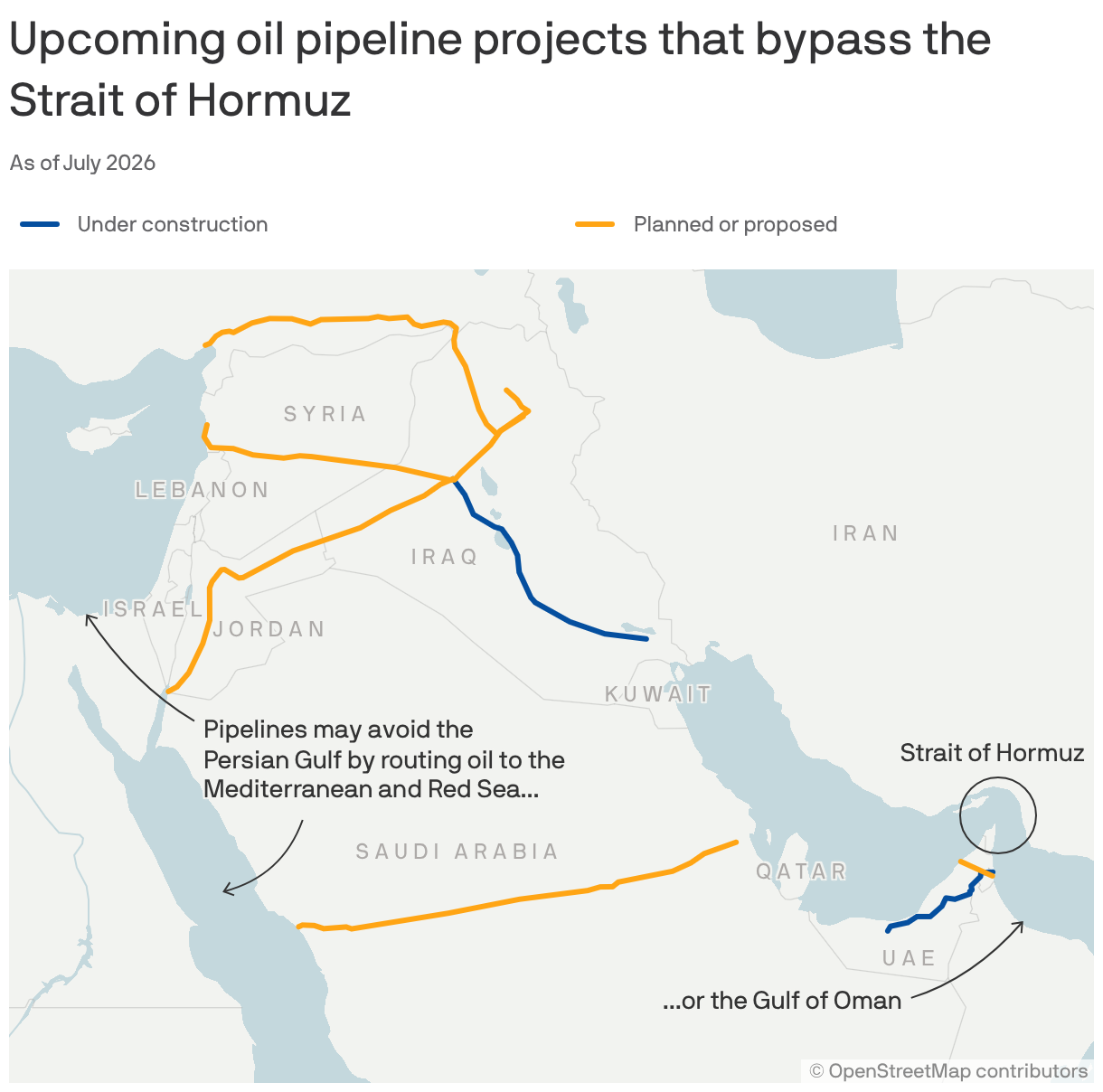
The push to bypass the Strait of Hormuz
Summary
Major oil producers and countries are working to reduce their reliance on the Strait of Hormuz, a key route for global oil shipments, due to risks from conflicts like the ongoing U.S.-Iran war. New pipelines and port projects aim to provide alternative ways to export oil, though the strait remains important for some countries and products.Key Facts
- The Strait of Hormuz is a crucial route for about 20% of the world’s oil supply.
- Ongoing conflict and tensions between the U.S. and Iran have increased concerns about disruptions in this waterway.
- President Donald Trump announced plans to reinstate a blockade of the strait and to charge fees for shipments, though these charges have no legal backing.
- These tensions caused oil prices to rise by over 9%, with Brent crude reaching $86.57 per barrel.
- Analysts estimate that by 2027, new and existing pipelines could reroute over 45% of oil exports currently passing through the strait, growing to over 60% by 2028.
- Two major pipeline projects are already under construction: one in the UAE and another in Iraq.
- Some exports, like Qatar’s liquefied natural gas, cannot be rerouted from the strait.
- The global oil market has adapted to past disruptions through reduced imports, oil reserves releases, and alternative shipping routes.
Read the Full Article
This is a fact-based summary from The Actual News. Click below to read the complete story directly from the original source.