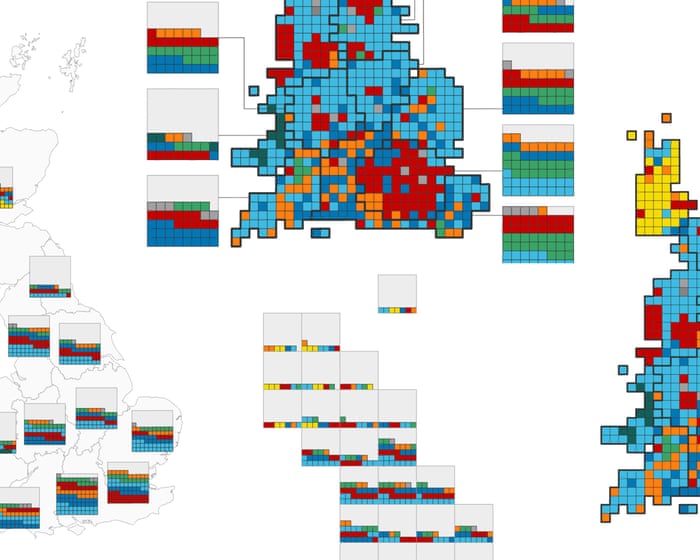
How could Britain look under proportional representation? See the results for your area
Summary
New research shows that different voting systems in the UK would produce very different results in Parliament based on current polls. Proportional representation systems would create a more balanced Parliament, with coalitions likely needed to form a government, unlike the current first past the post system which can give strong advantages to certain parties.Key Facts
- The current UK system, first past the post (FPTP), tends to give large seat advantages to some parties, like Reform UK potentially nearly winning a majority with 28% of the vote.
- Proportional representation (PR) systems aim to match the number of seats a party gets more closely to its share of the vote.
- Three PR systems were modeled: regional party list, single transferable vote (STV), and additional member system (AMS).
- Under all PR systems modeled, no single party would have a majority based on current polling.
- PR systems would lead to coalition governments, often involving Labour, Liberal Democrats, Greens, SNP, or Plaid Cymru.
- In some areas like the north-east, Reform UK’s seat share would drop dramatically under PR systems.
- The Greens would gain seats under PR, going from zero under FPTP to several seats under other systems.
- Public support for changing to proportional representation has increased in the UK, and some political leaders, including incoming Prime Minister Andy Burnham, have expressed support for it.
Read the Full Article
This is a fact-based summary from The Actual News. Click below to read the complete story directly from the original source.