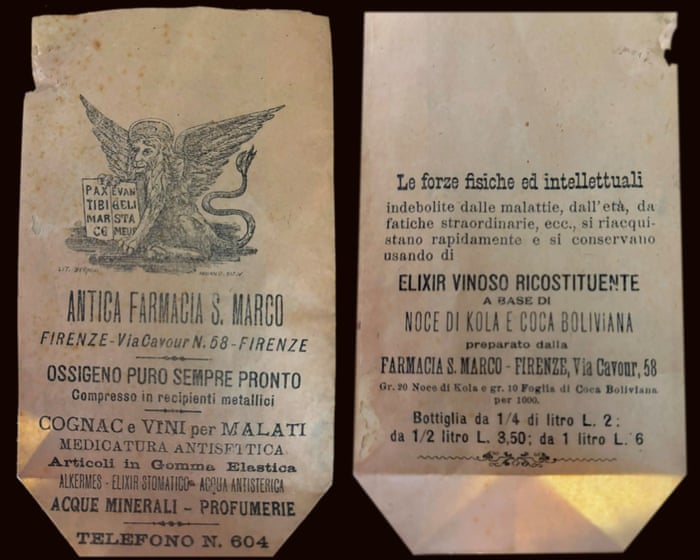
Was Florentine friars’ fatigue-fighting elixir a precursor to Coca-Cola?
Summary
An Italian friar discovered a 19th-century recipe from a Florence convent for a wine-based tonic made with coca leaves and kola nuts. The recipe resembles the original formula used by John Pemberton to create Coca-Cola, though there is no direct evidence linking the two.Key Facts
- The recipe was found in archives at the San Marco convent in Florence by Father Manuel Russo.
- The tonic combined Bolivian coca leaves, kola nuts, and wine, meant to fight fatigue and aid recovery.
- Coca leaves were imported to Italy by missionaries and widely used before being banned in 1961.
- John Pemberton created Coca-Cola in 1886 using coca leaf extract and kola nuts but mixed them with carbonated water instead of wine.
- Similar coca leaf medicines were produced in Italy and France during the 19th century.
- The San Marco tonic was popular and sold for 2 to 6 Italian lira, which equals less than a cent today.
- The convent pharmacy still exists and has historic items like a crocodile hanging from the ceiling, a symbol of rare ingredients.
- Another possible inspiration for Coca-Cola is an alcoholic syrup called Kola Coca made in Spain in 1885.
Read the Full Article
This is a fact-based summary from The Actual News. Click below to read the complete story directly from the original source.