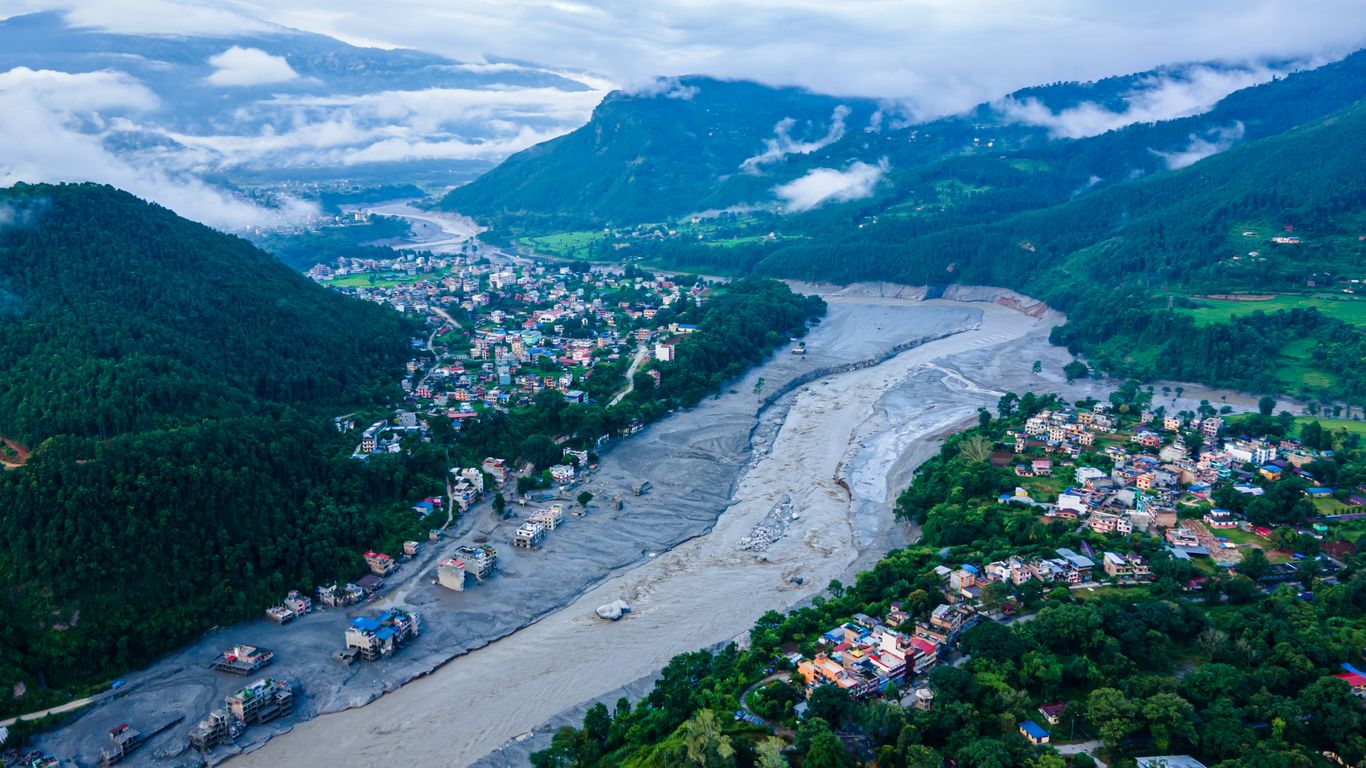
Why Nepal's rare, deadly flood struck without warning
Summary
A sudden flood caused by a glacier and mountain debris collapse struck northern Nepal and the nearby Tibet region, killing nearly 700 people and leaving about 3,000 missing. The flood came without typical warning signs like rain or earthquakes, highlighting gaps in current flood-warning systems.Key Facts
- The flood was triggered by the collapse of a glacier and mountain debris near Lāngtāng Lirung in the Himalayas.
- This collapse created energy similar to a magnitude-5.2 earthquake but was not caused by an actual earthquake.
- The debris formed a temporary dam that burst, causing a fast-moving flood with ice, water, rock, and sediment.
- Nearly 700 people have died, and about 3,000 are missing in Nepal’s Rasuwa district and Tibet’s Gyirong County.
- The flood traveled approximately 100 kilometers (62 miles) and raised a river by nine meters in 30 minutes.
- The event is called a "blue-sky flood" because it happened during clear weather, with no rain, thunderstorms, or prior river rise.
- Traditional flood-warning systems in Nepal monitor rainfall and major rivers but miss sudden mountain collapses and small waterways.
- Experts suggest that mountain monitoring should be added to warning systems to better predict such rare floods.
Read the Full Article
This is a fact-based summary from The Actual News. Click below to read the complete story directly from the original source.


