UK mathematician debunks myth around Parthenon’s optical illusions
Summary
A mathematician at the University of Oxford studied the Parthenon’s design and found that the common belief about its optical illusions is likely false. The curved base and columns do not seem to correct visual distortions as previously thought.Key Facts
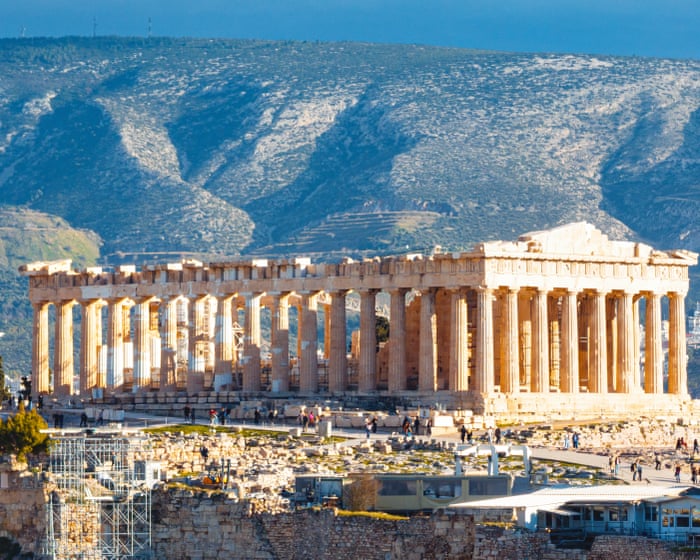
- The Parthenon is a Greek temple over 2,000 years old, famous for its architecture.
- It was long believed that the building’s curves fix optical illusions, so its lines look straight.
- Professor Alain Goriely used math models to test these ideas and found little proof they work.
- The idea came from a 1st-century Roman architect, Vitruvius, who wrote about the Parthenon 400 years after it was built.
- The base curves slightly, rising 6 cm in the middle, said to stop it from looking like it sags.
- Tests showed no clear illusion of sagging lines or column shapes affecting how we see the temple.
- The columns have a small bulge (entasis), but it is very subtle and likely not correcting any illusion.
- The actual reasons for the Parthenon’s design may be practical or aesthetic, like rain runoff or a pleasing look.
Read the Full Article
This is a fact-based summary from The Actual News. Click below to read the complete story directly from the original source.