With PRIMA, NASA will try to build a billion-dollar space telescope in record time
Summary
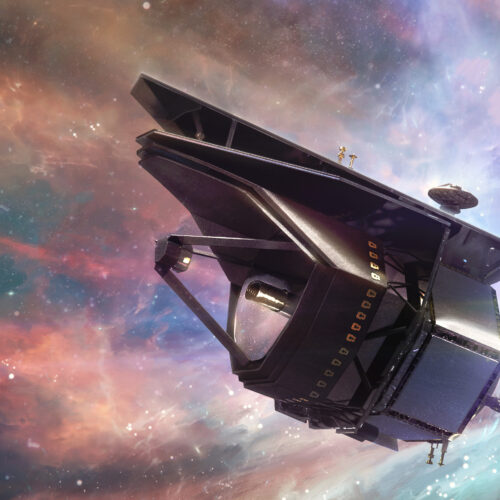
NASA announced plans to build a new space telescope called PRIMA, aiming to launch it by 2033. PRIMA will be a mid-sized mission with a budget of $1.2 billion (excluding launch costs) that will observe the universe in far-infrared light to study planets, galaxies, and cosmic dust.Key Facts
- PRIMA stands for Probe far-Infrared Mission for Astrophysics.
- It is the first mission in NASA’s new Probe Explorer program, which targets science missions with moderate budgets.
- PRIMA’s cost cap is $1.2 billion, less than flagship missions like the $4.3 billion Roman Space Telescope.
- NASA chose PRIMA after disqualifying a competing X-ray telescope called AXIS due to schedule and budget concerns.
- PRIMA will use a leftover cryocooler from the James Webb Space Telescope to cool its instruments to extremely low temperatures.
- The telescope’s primary mirror will be 1.8 meters (5.9 feet) wide.
- PRIMA will observe far-infrared light wavelengths between 24 and 235 micrometers.
- The mission will orbit around the Sun-Earth L2 point, about a million miles from Earth.
Read the Full Article
This is a fact-based summary from The Actual News. Click below to read the complete story directly from the original source.