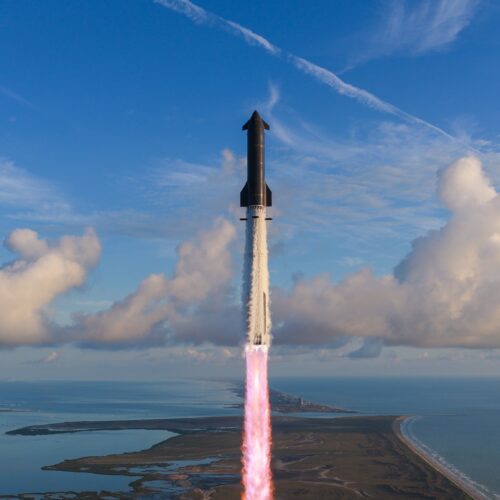
SpaceX's Starship goes orbital, deploying first next-gen Starlinks
Summary
SpaceX successfully launched its Starship rocket to orbit for the first time, carrying 26 next-generation Starlink satellites. The launch took place from South Texas and marked a major step as previous flights only reached suborbital heights.Key Facts
- This was the 14th test flight of SpaceX's Starship rocket, the world's most powerful launch vehicle.
- Unlike earlier tests, this flight reached low-Earth orbit, meaning it went all the way around the planet.
- The rocket carried 26 new Starlink satellites, which are used to provide broadband internet.
- The satellites were deployed using a system of pulleys and cables to eject them from the rocket.
- The 407-foot tall rocket lifted off with 33 methane-fueled Raptor engines generating around 18 million pounds of thrust.
- After launch, the Super Heavy booster separated and safely splashed down in the Gulf of Mexico.
- One of the six Raptor engines on the upper stage shut down early, but the others compensated to complete the orbital insertion.
- Two of the 33 engines on the booster stage failed during flight and return, which is a concern for future launches but did not stop this mission.
Read the Full Article
This is a fact-based summary from The Actual News. Click below to read the complete story directly from the original source.