Software squeezes more data out of Webb Telescope for imaging exoplanets
Summary
Researchers developed FLIP, software that uses a physical model of the James Webb Space Telescope’s NIRCam to reduce noise in images of exoplanets. Tests on Webb observations improved the signal-to-noise ratio by a factor of 1.5 to 2, depending on the observation.Key Facts
- FLIP stands for Physics-based Learning for Imaging Planets.
- The software models how NIRCam distorts the light from a point source, an effect described by a point spread function.
- FLIP adjusts 106 model parameters using gradient descent, a method for finding parameter values that improve a model.
- The optimization uses data from an actual star and takes a little more than half an hour on a current GPU.
- Researchers then fine-tune the model using the scientific image being analyzed.
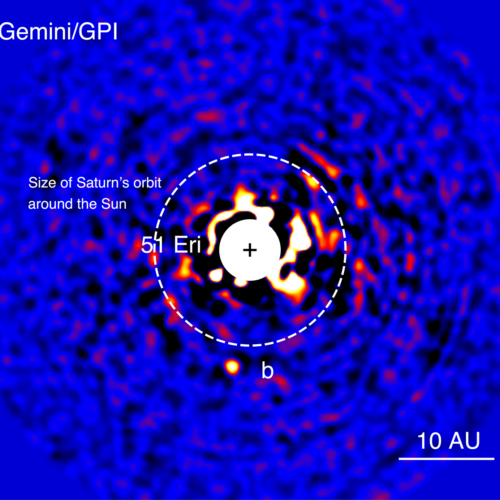
- The team tested FLIP on Webb observations of HIP 65426, 51 Eridani, and TYC 5899.
- HIP 65426 and 51 Eridani have known exoplanets that have been imaged previously.
Read the Full Article
This is a fact-based summary from The Actual News. Click below to read the complete story directly from the original source.