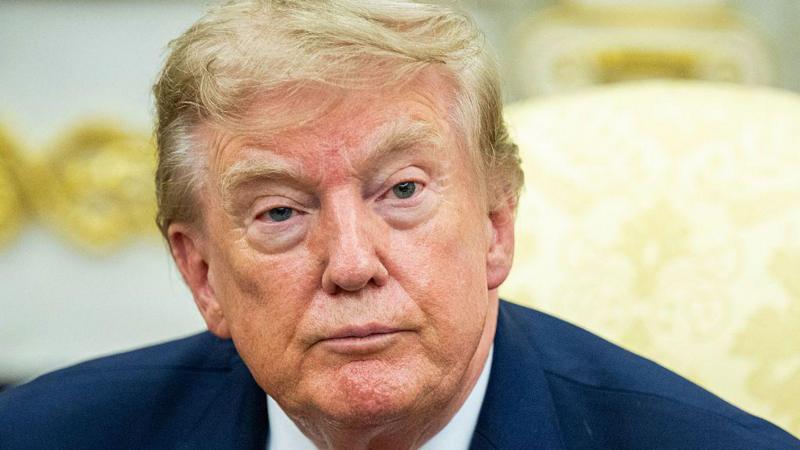
President Donald Trump announced a three-day delay in new 50% tariffs on Canadian goods while the US and Canada finalize a trade deal. The deal may also allow the revival of the Keystone XL oil pipeline, which was previously blocked by past US administrations.
Key Facts
President Trump paused new 50% tariffs on nearly $20 billion of Canadian imports for three days.
The US and Canada are close to finalizing a trade agreement after intense talks since July.
The new tariffs were set to apply to Canadian products like wine, dairy, cement, clothing, and hockey equipment.
Existing US tariffs on Canadian steel, aluminum, autos, and lumber remain in place.
A possible part of the deal is reducing US auto tariffs from 25% to 15%, with disputes over vehicle eligibility.
The trade deal might allow restarting the Keystone XL pipeline connecting Canadian oil to the US.
Canadian provinces control alcohol sales, and some banned US liquor in response to prior US tariffs.
Business groups warn that higher tariffs would harm both US and Canadian economies and jobs.
Read the Original
Want the full story? Tap a source to open the original
article.
The United States and Canada have made an agreement to avoid high tariffs on Canadian goods, US President Donald Trump announced. This deal stopped a 50% tax on many Canadian products that was about to start at midnight.
Key Facts
The US and Canada reached a trade deal to prevent steep tariffs.
President Trump announced the agreement shortly before the deadline.
The tariffs would have been 50% on many Canadian exports, like electronics, machinery, furniture, and dairy.
The tariff was set to begin at midnight but was paused for three days because of the deal.
The deal is still subject to final paperwork being completed.
President Trump mentioned the Keystone XL Pipeline, saying it might be revived.
The announcement was made on Trump's social media platform, Truth Social.
Read the Original
Want the full story? Tap a source to open the original
article.
About half of Venezuela’s oil production, over 500,000 barrels per day, is now being sent to the United States. The US and Venezuela are working together to increase oil production and exports, benefiting refineries on the US Gulf Coast that process Venezuela’s heavy crude oil.
Key Facts
Venezuela produces around 1.25 million barrels of oil per day.
More than 500,000 barrels per day are exported to the United States.
US refineries on the Gulf Coast are designed to process Venezuela’s heavy, sour crude oil.
The US is supporting Venezuela by sending over 100,000 barrels per day of naphtha, a lighter oil used to blend with heavy crude.
Venezuela aims to increase crude oil output to about 1.245 million barrels per day by August.
Venezuela’s oil exports have risen nearly 20% this year, while fuel production for domestic use increased by about 5%.
President Donald Trump stated that Washington would control Venezuelan oil revenues to benefit both countries.
The US has reportedly collected billions of dollars from Venezuelan oil sales, but details about the use of this money remain unclear.
Read the Original
Want the full story? Tap a source to open the original
article.
Unitree Robotics, the world's largest maker of humanoid robots, began trading on the Shanghai stock market with its shares rising over 600%. The company, founded in 2016 in eastern China, produces various robots and plays an important role in China's efforts to become a global leader in advanced technology.
Key Facts
Unitree’s shares opened at 1,100 yuan, much higher than the initial offer price of 150.8 yuan.
The company is listed on the Star Market, a tech-focused stock exchange in China.
Unitree makes humanoid robots, robotic arms, sensors, and four-legged robots.
Its robots are priced lower than competitors’, such as Boston Dynamics, making them more affordable.
The G1 humanoid robot model costs about $13,500 and has been on sale since 2024.
China is investing heavily in robotics to boost its industry and address worker shortages due to an aging population.
Unitree's robots have been featured in public events like China's Spring Festival Gala and the 2026 World Humanoid Robot Games.
The US and China are competing to lead the global robotics and AI markets.
Read the Original
Want the full story? Tap a source to open the original
article.
The Walt Disney Company honored 11 individuals as Disney Legends in 2026, including Bob Iger, the new owner of the Los Angeles Lakers. Iger has had a long career with Disney, serving as CEO twice and leading major company acquisitions and projects.
Key Facts
Disney inducted 11 people into the 2026 Disney Legends class.
Bob Iger, new owner of the Los Angeles Lakers, was one of the inductees.
Iger was Disney's CEO from 2005 to 2020 and returned as CEO in 2022.
He helped Disney buy Pixar, Marvel, Lucasfilm, and 21st Century Fox.
Iger led the opening of Shanghai Disneyland in 2016.
He also helped launch the Disney+ streaming service in 2019.
In March 2024, Josh D’Amaro became Disney's CEO, succeeding Iger.
Other Disney Legends named include Dwayne Johnson, Anne Hathaway, and Lin-Manuel Miranda.
Read the Original
Want the full story? Tap a source to open the original
article.
The Walt Disney Company, ABC, and their TV stations have filed a lawsuit against the Federal Communications Commission (FCC). They are challenging the FCC's decision to review ABC's broadcast license sooner than usual, claiming the move is a form of retaliation.
Key Facts
Disney, ABC, and their affiliated TV stations are suing the FCC.
The lawsuit is over an early review of ABC’s broadcast license.
Broadcast licenses are normally reviewed on a regular schedule, but this review was moved up.
Disney and ABC claim the early review is a retaliatory action by the FCC.
The FCC is the U.S. government agency that regulates broadcasting and communications.
The news was reported by David Shepardson from Reuters.
The case highlights tension between major media companies and government regulators.
Read the Original
Want the full story? Tap a source to open the original
article.
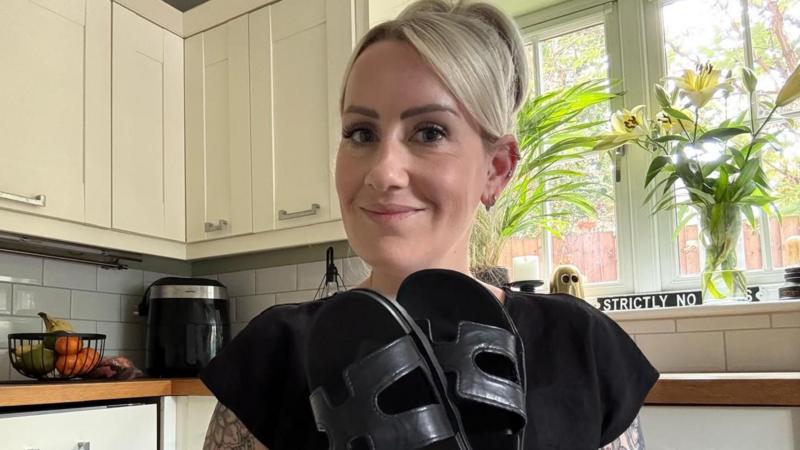
Vinted, a popular online marketplace for buying and selling used clothes, has banned thousands of users, including some who say they were wrongly accused of selling fake items. Many users complain that Vinted’s automated system flags legitimate listings as counterfeit and suspends accounts without clear explanations. Some banned sellers have struggled to get help or have their accounts reinstated.
Key Facts
Emma Neil was banned from Vinted after listing a pair of sandals for £2, which Vinted said were fake.
Over 4,000 users reported problems like bans or suspended accounts on a website collecting complaints about Vinted.
Vinted has 17 million users in the UK and says most have a good experience.
Many complaints focus on automated systems wrongly detecting fraud or counterfeit items.
Professional seller Matthew Connor was banned then unbanned after appealing, but lost thousands in sales.
Vinted says it uses trained teams and technology to keep the site safe and reviews appeals individually.
Users say they get slow or automatic responses from customer service and feel unheard.
Consumer expert Helen Dewdney notes a rise in complaints about Vinted’s customer support.
Read the Original
Want the full story? Tap a source to open the original
article.
More people in the UK are using mobile phones to pay for things instead of cash or cards. Though cash use is going down, the drop is slowing, and many people still prefer to use cash.
Key Facts
Two-thirds of UK adults had at least one mobile payment service last year.
Mobile payments have grown since Apple Pay arrived in the UK about 10 years ago.
About 90% of mobile wallet users have their debit card set as the main payment method on their phone.
Over 80% of people aged 16 to 34 regularly use mobile payments.
Debit cards, including those on phones, made up 54% of all payments in 2025.
Cash was used in 8% of payments last year, or about 3.9 billion times, and is expected to drop to 4% by 2035.
Cheques are almost gone, making up only 0.2% of payments in the UK last year.
Many people, especially those with lower incomes, still rely on cash, so access to cash machines remains important.
Read the Original
Want the full story? Tap a source to open the original
article.
A study from the University of Turku in Finland found that having poor sleep after age 50 can shorten how long people stay in the workforce by up to nine months. Women without sleep problems tend to work longer than men, and both short and very long sleep durations are linked to fewer years working after 50.
Key Facts
Poor sleep, including disrupted or too long sleep, can reduce working life by about nine months after age 50.
Women with no sleep problems work longer from ages 50 to 68 than men without sleep issues.
Moderate sleep problems mean nearly five fewer months of work; severe problems mean eight fewer months.
People sleeping less than seven hours or more than nine hours have shorter working careers than those sleeping 7 to 8.5 hours.
The longest working life (almost 14 years) was found among professional women without sleep disturbances.
The shortest working life (about 12.5 years) was seen in men with routine jobs and severe sleep problems.
The study suggests sleep health support and treatment, like therapy for insomnia, may help people work longer.
Researchers noted other factors like health conditions and job type could also influence how long people remain in work.
Read the Original
Want the full story? Tap a source to open the original
article.
Amazon is issuing refunds to some Prime customers as part of a $2.5 billion settlement with the Federal Trade Commission (FTC) over subscription problems making Prime hard to cancel. The refunds are being sent directly by Amazon through PayPal, Venmo, or checks, not by the FTC.
Key Facts
The FTC sued Amazon for using "subscription traps" that made it difficult to cancel Prime membership.
Amazon agreed to pay $2.5 billion in the settlement, with $1.5 billion for consumer refunds.
Amazon, not the FTC, manages and sends all refunds under the settlement.
Eligible customers who had trouble canceling Prime or were unintentionally enrolled from 2019 to 2025 can get refunds.
From November 12 to December 24, 2025, Amazon is sending automatic payments of up to $51 via PayPal or Venmo.
If customers do not accept digital payments within 15 days, Amazon will mail a paper check.
A second group needing to file claims will be notified between December 24, 2025, and January 23, 2026, with a deadline to submit claims by July 21, 2026.
The FTC warns about scammers pretending to be the agency and says it does not contact customers by phone or text to demand money.
Read the Original
Want the full story? Tap a source to open the original
article.
Bill Rasmussen, who co-founded ESPN, the first all-sports cable TV network, died at age 93 from Parkinson’s disease. He and his son started ESPN in 1979 with the idea of a channel devoted only to sports, which changed how people watched sports on TV.
Key Facts
Bill Rasmussen co-created ESPN with his son Scott in the late 1970s.
ESPN launched on September 7, 1979, as the first 24-hour sports cable network.
Early cable operators doubted the idea, but satellite technology allowed national broadcasts.
Rasmussen and his son were forced out of ESPN after one year when Getty Oil took majority control.
ESPN began showing NFL drafts in 1980 and created the ESPY Awards in 1993 and X Games in 1995.
The network helped grow college and women’s sports on TV and holds exclusive College Football Playoff rights.
After years apart, ESPN welcomed Rasmussen back for anniversary events starting in 1999.
Rasmussen died at home in Florida from complications of Parkinson’s disease, diagnosed in 2014.
Read the Original
Want the full story? Tap a source to open the original
article.
The interest rate on the U.S. 30-year Treasury bond rose above 5.3 percent on Tuesday, reaching its highest point since 2007 before dropping slightly. This increase suggests that borrowing money in the U.S. may become more expensive.
Key Facts
The 30-year Treasury bond yield peaked at 5.337 percent on Tuesday.
The yield opened at 5.308 percent and was 5.284 percent by Tuesday afternoon.
This is the highest yield for the 30-year bond since 2007.
A higher bond yield means higher borrowing costs for the government and potentially for businesses and consumers.
Treasury bonds are long-term debt securities issued by the U.S. government to raise money.
Rising yields can affect mortgage rates, loans, and other financial products.
The yield change reflects investor expectations about inflation and the economy.
This movement in bond yields is closely watched by economists and policymakers.
Read the Original
Want the full story? Tap a source to open the original
article.
Canadian Prime Minister Mark Carney and U.S. President Donald Trump spoke by phone to discuss trade negotiations, aiming to prevent new U.S. tariffs from starting at midnight on Wednesday. The talks focus on resolving differences over tariffs on Canadian goods including automobiles, with possible impacts on jobs and businesses.
Key Facts
The U.S. plans to impose new tariffs of 50% on about $20 billion of Canadian imports starting Wednesday midnight.
These tariffs would apply even if Canadian goods qualify under the US-Mexico-Canada trade deal protections.
One major issue is the U.S. auto tariffs, currently at 25%, which the U.S. might reduce to 15% based on the percentage of U.S.-made parts in vehicles.
The U.S. only wants to count U.S.-made parts to reduce tariffs, while Canada wants to include parts made anywhere in North America.
The U.S. Commerce Department has set new rules for automakers to certify U.S. content once per year instead of twice.
Tariffs could cause job losses and hurt industries like lumber, wine, and dairy in Canada.
Trade experts warn that this dispute could complicate the larger U.S.-Mexico-Canada trade agreement review process.
Canadian officials recently met with key U.S. trade representatives to negotiate tariff issues and ongoing trade disagreements.
Read the Original
Want the full story? Tap a source to open the original
article.
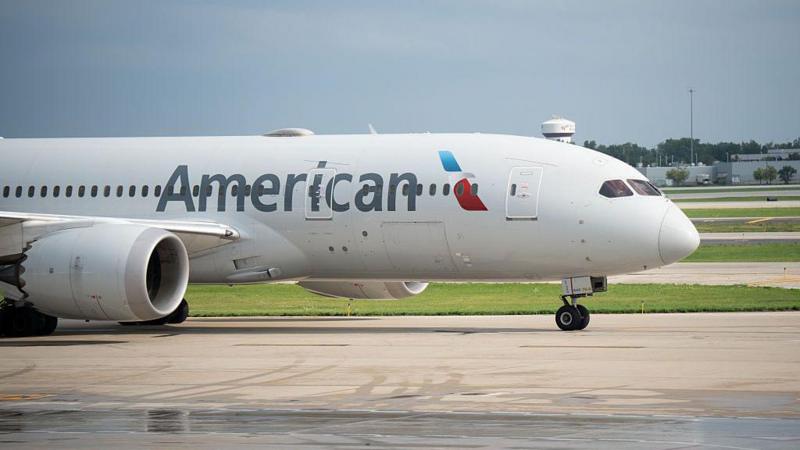
American Airlines will bring back TV screens on seats for all its US domestic flights. The airline stopped using these screens years ago but is now adding them again to improve passenger comfort and increase revenue. The new screens are part of a larger plan to upgrade their cabins and compete better with other airlines.
Key Facts
American Airlines removed seatback TV screens from most US planes in 2017.
The airline will restore these screens across its domestic fleet by early next decade.
Passengers had complained about using their own devices due to battery drain, viewing issues, and poor Wi-Fi.
Adding screens aims to improve the travel experience and increase airline revenue.
Other US airlines like Delta, United, and JetBlue still have seatback TVs, making them standard for many travelers.
American Airlines had removed screens to save weight and lower maintenance costs during a focus on efficiency.
Improved technology makes screens lighter, use less power, and cheaper to install now.
These changes are part of a bigger cabin investment plan announced recently by American Airlines.
Read the Original
Want the full story? Tap a source to open the original
article.
A human rights group reported that forced labor continues on large sugarcane plantations in the Dominican Republic, which export to the U.S. The group urged the U.S. government to ban imports from these plantations again, as workers face poor pay and bad living conditions.
Key Facts
Forced labor is happening on big sugarcane plantations owned by Central Romana Corporation in the Dominican Republic.
Central Romana is the largest employer and landowner in the country’s sugar industry.
The company has past links to President Donald Trump and U.S. Secretary of State Marco Rubio.
The U.S. had banned imports from Central Romana in 2022 but lifted the ban during President Trump’s administration.
About 8,000 workers, many Haitian migrants or their descendants, work under poor conditions with low wages and crowded housing.
Some workers don’t have official papers, limiting their job options and rights.
The report calls on Central Romana to pay fair wages, enroll workers in social security, allow independent unions, and improve health protections.
Fear among workers prevents them from complaining or demanding fair treatment.
Read the Original
Want the full story? Tap a source to open the original
article.
State Farm is sending refund checks to auto insurance customers with active policies in 2025. The company is paying a total of $5 billion in dividends, with average refunds of about $100 per vehicle, based on each customer’s premium paid.
Key Facts
More than 7.2 million refund checks have been mailed since July 31, and 3.8 million more checks will be sent soon.
The refunds are part of a $5 billion dividend to policyholders of 49 million vehicles.
Customers with auto insurance policies active any time in 2025 qualify for the refund.
Customers with an email on file will get instructions via email on how to receive payments digitally or by mail.
Customers without an email on file will receive a check by mail automatically.
Refund amounts depend on the percentage of the premium paid, which ranges between 4% and 10% depending on the state.
Payments are being sent in waves by state and will take several months to complete.
Customers can get more information by visiting sfdividend.com or calling the provided phone number.
Read the Original
Want the full story? Tap a source to open the original
article.
A major trial started in the US where 29 states are suing Meta, the parent company of Facebook and Instagram, for creating addictive social media products targeted at children. The lawsuit seeks $200 billion in damages and aims to change how Meta’s platforms work, especially their algorithms that show users content designed to keep them engaged.
Key Facts
Twenty-nine US states are suing Meta for designing addictive social media platforms aimed at children.
The lawsuit demands $200 billion in damages, equal to Meta’s yearly revenue.
Previous related cases forced Meta to pay millions for issues tied to addiction and child exploitation on its platforms.
The trial focuses on Meta’s algorithms, which show content that keeps users hooked by triggering emotional responses.
Meta’s business relies heavily on digital advertising driven by user engagement on its apps.
Changing the algorithm could reduce user activity and hurt Meta’s advertising income.
Experts say the trial could lead to significant changes in social media but likely won’t destroy the industry.
Similar concerns about addictive online design are also being addressed by regulators in the European Union.
Read the Original
Want the full story? Tap a source to open the original
article.
A new study found that companies keeping their diversity, equity, and inclusion (DEI) programs during President Trump’s second term did not suffer financially compared to those that cut these programs. The research showed no difference in stock returns or revenue between firms maintaining DEI efforts and those that ended them.
Key Facts
The study looked at S&P 500 companies before and after President Trump signed Executive Order 14173 in January 2025, which pushed to reduce DEI programs.
Some big companies like Apple, Costco, Delta Air Lines, and Dollar Tree kept their DEI policies unchanged.
Others like Target and Walmart rolled back their DEI efforts.
Financial performance was measured by “abnormal returns,” comparing expected stock returns to actual returns.
Firms maintaining DEI showed no financial penalties or revenue loss compared to firms that cut DEI programs.
Some executives worried about potential government retaliation, such as less favorable treatment or blocked mergers, but this did not show up in financial data.
Consumer support for companies with DEI programs remained strong overall, despite some cases of backlash like Bud Light’s controversy and Target’s boycott by progressive shoppers.
A 2025 poll found about 60% of Americans believe diverse workforces help businesses be more profitable and innovative.
Read the Original
Want the full story? Tap a source to open the original
article.
Wetherspoons pubs have banned loud phone calls and playing videos without headphones in all their 792 locations. The company says loud sounds from phones have become a problem, and the ban aims to create a quieter, more peaceful atmosphere for customers.
Key Facts
Wetherspoons owner Tim Martin introduced a ban on loud phone calls and playing videos without headphones.
The ban applies to all 792 Wetherspoons pubs.
The company said loud sounds from smartphones and tablets had become a growing problem.
Customers have generally welcomed the ban as it helps keep the pub atmosphere calm and enjoyable.
Some people still ignore the ban and play sounds loudly, causing annoyance.
Wetherspoons has also banned “spy glasses” with small cameras that secretly record inside pubs.
Staff have had to remind customers to turn off their phone sounds and enforce the rules.
The ban reflects wider efforts by Wetherspoons to manage modern behaviors that disrupt the pub environment.
Read the Original
Want the full story? Tap a source to open the original
article.
John Ott, a blind man, has sued Boeing, claiming the company did not provide the accommodations he needed after offering him a job. He accuses Boeing of wrongful termination, disability discrimination, and retaliation, and is seeking damages and possibly to return to work at Boeing.
Key Facts
John Ott is a 63-year-old blind man who sued Boeing.
He was offered a job as a machinist, which was later changed to a composite fabricator role.
Ott has a genetic disease called retinitis pigmentosa that caused his blindness.
He had worked as a machinist producing parts for Boeing at a nonprofit for people with disabilities since 2014.
Boeing raised safety concerns and changed the start date to January 19, 2024.
Ott experienced a lack of accommodations and unwelcoming attitudes during orientation.
He alleges discrimination and retaliation and is seeking damages and possible job reinstatement.
Boeing said it made good faith efforts to accommodate Ott without facing hardship.
Read the Original
Want the full story? Tap a source to open the original
article.