X, owned by Elon Musk, is trying to restart a lawsuit against several advertisers it claims unfairly boycotted its social media platform. A judge dismissed the case earlier this year, saying the advertisers had not broken antitrust laws, but X is asking a higher court to overturn that decision and continue the lawsuit.
Key Facts
X alleges a group boycott by advertisers caused it to lose significant ad revenue.
A Texas judge dismissed the lawsuit in March, ruling no antitrust violation occurred.
X settled with the World Federation of Advertisers but is still suing other companies like Mars, CVS, Nestle, and Lego.
The lawsuit claims the advertisers’ coordinated boycott unfairly hurt competition on social media.
The legal dispute involves GARM, an advertising industry group focused on brand safety standards.
X’s ad revenue dropped after Musk’s purchase of Twitter in 2022, partly due to advertiser concerns over content.
X is asking the 5th Circuit Court of Appeals to revive the case against the remaining defendants.
Musk’s company, X Corp., is now a SpaceX subsidiary, and recent reports show declining ad revenue for X.
Read the Original
Want the full story? Tap a source to open the original
article.
More than 90,000 rubber ducks were released into the Chicago River for the annual Chicago Ducky Derby. This event raises money to support Special Olympics Illinois, which helps people with disabilities compete in sports across the state.
Key Facts
The Chicago Ducky Derby involved 90,000 rubber ducks floating down the Chicago River.
The event took place on August 6, 2026, from the Columbus Drive bridge.
Becky Cavanagh, a 13-year Special Olympics athlete and event ambassador, picked the winning duck.
Sponsors pay $10 to enter one duck, which helps provide lunch for athletes.
A “quack pack” of six ducks costs $30 and helps fund gold medals for teams.
The fundraiser has raised over $480,000 for Special Olympics Illinois.
The fastest duck’s sponsor wins a new SUV, and the runner-up wins $2,500 in cash.
Special Olympics Illinois organizes sports competitions for people with disabilities throughout the state.
Read the Original
Want the full story? Tap a source to open the original
article.
Mexico has stopped exporting avocados to the U.S. temporarily because of security concerns in Michoacan, the main avocado-growing region. The U.S. halted inspections needed for avocado exports after a threat, and Mexico sent extra troops to protect the area and help restart exports quickly.
Key Facts
Mexico suspended avocado exports to the U.S. due to a security threat in Michoacan.
Michoacan is the main Mexican state allowed to export avocados to the U.S.
The U.S. Agriculture Department inspects avocados in Mexico to prevent pests.
Suspension of inspections stops exports and can increase avocado prices in the U.S.
Drug cartels in Michoacan are involved in violence and extortion, affecting the avocado industry.
Previous export halts happened after attacks on U.S. inspectors in Michoacan.
The avocado industry in Michoacan employs about 200,000 people.
Export pauses harm both Mexico’s economy and U.S. avocado supplies.
Mexican officials increased security troops to protect avocado areas and resume exports.
Read the Original
Want the full story? Tap a source to open the original
article.
Ford is developing a new midsize electric pickup truck called the Fathom, planned to go on sale in 2027. The company redesigned its approach to build a more affordable, lighter, and better-made electric truck after its previous full-size electric truck, the F-150 Lightning, faced declining demand and was discontinued in 2025.
Key Facts
The Ford Fathom is a new midsize electric pickup truck set to launch in 2027.
Ford has invested billions in developing and producing the Fathom.
The Fathom was designed from scratch with a new manufacturing process inspired by Chinese automakers.
Ford's first electric truck, the full-size F-150 Lightning, debuted in 2021 but was discontinued in December 2025 due to falling demand.
Automakers, including Ford, have had to adjust electric vehicle plans due to changes in global regulations and market demand.
Consumer interest in electric trucks is uncertain; many early reservations for electric trucks do not convert to actual sales.
Tesla’s Cybertruck had over 1 million reservations but only about 70,000 sales to date.
General Motors sold around 36,000 GMC Hummer EVs from 90,000 reservations, showing a higher conversion rate.
Read the Original
Want the full story? Tap a source to open the original
article.
This article explains why August is a good time for seniors to sign up for a Medicare supplemental insurance plan, also known as Medigap. It highlights that rising inflation, increasing borrowing costs, and higher long-term care expenses make having extra coverage important to reduce out-of-pocket medical bills.
Key Facts
Medicare supplemental plans help pay for costs not covered by regular Medicare, like deductibles and co-pays.
Inflation remains higher than the Federal Reserve’s target, making everyday expenses more costly for seniors.
Higher inflation reduces the money seniors have left to pay medical bills.
Borrowing costs may rise soon if interest rates increase, making loans and credit more expensive.
Rising long-term care costs, such as nursing homes or in-home care, take up more of seniors’ budgets.
A Medigap plan offers financial protection by covering extra healthcare expenses during these tough economic times.
Seniors should check their plan options and sign up at this time to get coverage before costs rise further.
Read the Original
Want the full story? Tap a source to open the original
article.
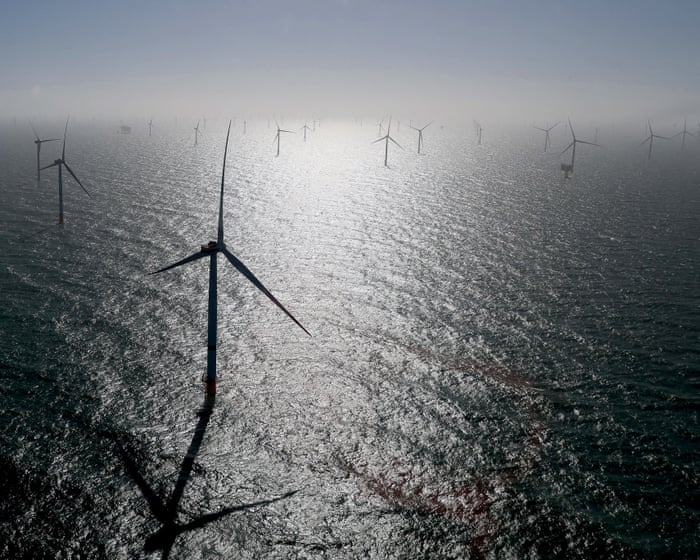
The U.S. government, under President Trump’s administration, has agreed to pay the German energy company RWE $1.22 billion to give up its offshore wind energy leases. In return, RWE will invest in fossil fuel projects like liquified natural gas and natural gas power plants, shifting away from renewable energy development.
Key Facts
RWE will give up offshore wind leases off New York, California, and Louisiana.
The deal is worth $1.22 billion and settles legal claims between RWE and the U.S. government.
RWE plans to invest $900 million in a Louisiana liquified natural gas project and $300 million in 15 natural gas power plants nationwide.
RWE initially paid $1.1 billion for the New York lease and $163 million for the other two leases in 2022.
This is the fifth deal by the Trump administration where payments were made to cancel renewable energy projects.
Total U.S. spending on cancelling offshore wind projects under this administration is nearly $4 billion.
Earlier agreements included deals with TotalEnergies and Duke Energy, totaling $2.7 billion.
Several states have sued the administration over these deals, calling them illegal.
Read the Original
Want the full story? Tap a source to open the original
article.
The FCC voted to remove a rule that limited how many households a TV broadcaster can reach across the country. This change aims to help TV networks compete better with fast-growing technology companies.
Key Facts
The FCC removed a rule that capped the number of households a broadcaster could reach nationally.
The rule had been in place since the early 2000s.
The goal is to help TV networks compete with tech companies growing quickly in media.
The rule’s removal could allow broadcasters to expand their audience reach.
The commission believes this change is necessary to keep up with changes in the media industry.
The decision was made on a Thursday by the FCC members.
Read the Original
Want the full story? Tap a source to open the original
article.
A $40,000 deposit in a high-yield savings account can earn around $1,580 to $1,640 in interest over one year, depending on the interest rate. These accounts offer higher rates than traditional savings accounts and allow easy access to funds without penalties.
Key Facts
Traditional savings accounts offer very low interest rates, about 0.38%.
High-yield savings accounts currently offer rates close to 4%.
Inflation is around 3.5%, so high-yield accounts help money grow faster than inflation.
A $40,000 deposit can earn roughly $1,580 to $1,640 in interest in 12 months at these rates.
Interest rates on these accounts can change over time based on the market and Federal Reserve actions.
Unlike certificates of deposit (CDs), high-yield savings accounts let you withdraw money without penalties.
Interest earnings increase if you add more money or if interest rates go up during the year.
Keeping the original $40,000 untouched is necessary to earn the estimated interest amount.
Read the Original
Want the full story? Tap a source to open the original
article.
A federal judge in Utah ruled that the state can enforce its antigambling laws against Kalshi, a company that offers prediction markets. The judge rejected Kalshi’s claim that federal law governing commodities stops states from applying their own gambling rules.
Key Facts
A federal judge in Utah made the ruling.
Utah wants to apply its antigambling laws to Kalshi.
Kalshi is a prediction market company, where people bet on outcomes of events.
Kalshi argued that a federal commodities law stops states from enforcing gambling restrictions on them.
The judge disagreed, allowing Utah’s laws to be enforced.
This decision affects prediction market firms and the Trump administration’s position.
The case is part of a bigger fight about which government level can regulate these markets.
Read the Original
Want the full story? Tap a source to open the original
article.
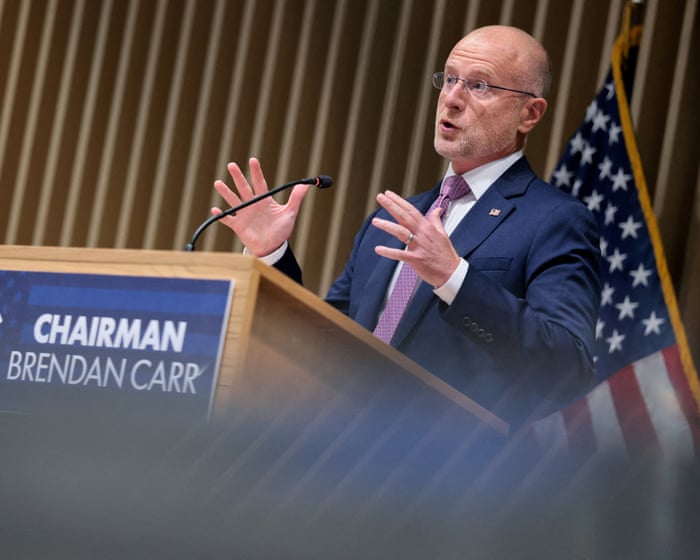
The Federal Communications Commission (FCC) voted to remove a rule that limited how many local TV stations one company can own. This change allows large media companies to own stations reaching more than 39% of U.S. TV households. The decision benefits big broadcasters but raises concerns about its impact on local journalism and competition.
Key Facts
The FCC voted along party lines to overturn the 39% national ownership cap for local TV stations.
The cap was created in 2003 to prevent one company from controlling too much of the TV market.
The change was supported by FCC Chair Brendan Carr and a Trump-appointed commissioner.
Critics say the FCC’s vote violates the law, as only Congress can change this ownership cap.
The decision mostly benefits large TV companies like Sinclair Broadcast Group and Nexstar.
Some media mergers, like Nexstar’s deal with Tegna, have been impacted by the ownership cap debates.
Advocacy groups warn this could reduce local news quality and lead to job cuts for journalists.
Protesters and press freedom groups have publicly criticized the FCC’s decision.
Read the Original
Want the full story? Tap a source to open the original
article.
The Trump administration has made a $1.2 billion deal with the offshore wind company RWE U.S. Offshore to cancel wind energy projects off New York, California, and Louisiana. RWE agreed to give up its wind leases and invest in natural gas projects instead, as the administration works to limit offshore wind development while supporting fossil fuels.
Key Facts
RWE U.S. Offshore reached a $1.22 billion agreement to give up planned offshore wind projects near three U.S. states.
The leases had involved years of planning and federal cooperation but had no clear path to approval.
President Donald Trump has opposed wind power and aims to stop building new wind turbines.
The administration has spent about $3.9 billion buying back offshore wind leases from energy companies.
RWE will invest $900 million in liquefied natural gas and $300 million in gas turbines across the U.S.
The administration prefers fossil fuels over wind because fossil fuels currently provide more reliable power.
Some states, including California, plan to sue the government over canceled offshore wind projects.
Critics argue that buybacks raise energy costs and favor fossil fuel interests over clean energy.
Read the Original
Want the full story? Tap a source to open the original
article.
SpaceX stock rose by 2.5% after a large number of shares held by company insiders became available for sale for the first time. Despite a recent stock drop and posting a loss for the quarter, SpaceX reported strong revenue growth and high spending on new projects, including artificial intelligence.
Key Facts
Over 900 million SpaceX shares became available to buy or sell after a lockup period ended, doubling the shares available previously.
SpaceX shares increased to $110.92 after a nearly 14% drop the day before.
Morgan Stanley analyst Adam Jonas believes SpaceX stock could rise to $300 by mid-2027.
SpaceX reported a loss of $541 million in the quarter ending in June, which was less than analysts expected.
The company’s revenue jumped to $7.8 billion, a 90% increase compared to the previous year.
SpaceX increased spending on research, development, infrastructure, and artificial intelligence projects.
Elon Musk sold SpaceX shares to the public for the first time in June through a large initial public offering (IPO).
Stock prices have dropped below the initial offering price of $135 per share, reducing the company's market value significantly.
Read the Original
Want the full story? Tap a source to open the original
article.
Kellogg announced it will remove artificial colors from all its cereals by the end of 2025, a year earlier than planned. The company will use fruit- and vegetable-based juices for coloring and will also remove the artificial preservative BHT from certain cereals.
Key Facts
Kellogg plans to remove artificial colors from all cereals by the end of 2025, ahead of the original 2027 target.
Natural colors will come from fruit and vegetable juices to keep cereals like Froot Loops and Apple Jacks colorful.
Kellogg has invested in new equipment to support this change.
The company will also remove BHT, an artificial preservative, from some cereals.
Consumer demand for simpler, recognizable ingredients helped speed up the timeline.
Kellogg had already removed artificial dyes in countries like Canada.
Activists delivered 400,000 petition signatures in 2024 asking Kellogg to drop artificial dyes and BHT.
Retailers like Target and Walmart are also removing artificial colors from their cereal products.
Read the Original
Want the full story? Tap a source to open the original
article.
President Trump’s Treasury Secretary Scott Bessent said the U.S. economy is no longer "K-shaped," meaning lower-income workers are starting to see better wage gains. However, many economists disagree and say the gap between rich and poor in the economy is still large.
Key Facts
Scott Bessent said the K-shaped economy is over and the economy now looks like a "C," where lower wage earners are improving.
The K-shaped economy describes a split where wealthy households grow richer while poorer households struggle with slow income growth and rising prices.
A New York Fed report showed that since early 2023, higher-income households have kept retail spending up, while low-income households have spent less.
Some periods in 2023 and 2024 saw the lowest wage earners getting relatively higher wage growth compared to other groups.
Hilton CEO Christopher Nassetta also described the economy as "C-shaped" based on hotel occupancy trends shifting to more middle and lower-priced customers.
Federal Reserve Chair Jerome Powell stated in December that the K-shaped economy is real and that low- and moderate-income people are cutting back on spending.
Financial experts like Peter Orszag and Moody’s chief economist Mark Zandi say the K-shaped economy still exists and the economic divide remains significant.
The debate highlights different views on whether recent economic policies are helping lower-income Americans catch up to higher earners.
Read the Original
Want the full story? Tap a source to open the original
article.
Certificate of deposit (CD) interest rates have changed since last August but remain competitive, especially for longer-term CDs. While some short-term rates have fallen, others have stayed the same or increased, and rates may rise soon if the Federal Reserve hikes interest rates in September.
Key Facts
CD rates for short terms like 3 and 6 months are slightly lower than last August.
The 1-year CD rate stayed the same at 4.40%.
Longer-term CD rates (18 months or more) have increased compared to last year.
The Federal Reserve cut rates three times in late 2025, which some expected to lower CD rates more.
Inflation caused by the Iran war slowed the Federal Reserve’s rate changes.
A possible rate hike in September 2026 could push bank CD rates higher.
Banks can raise CD rates anytime, not only when the Federal Reserve acts.
CDs remain a useful savings tool for protecting money and earning interest in today’s economy.
Read the Original
Want the full story? Tap a source to open the original
article.
Multiple debt collectors can try to collect payment on the same debt, often because the debt has been transferred or sold to different agencies over time. However, usually only one collector has the legal right to collect at a time, so it is important to verify which company is authorized before making any payments.
Key Facts
Debts may be passed from one collection agency to another if the first is unsuccessful.
Debt buyers can purchase debts and then try to collect or hire another collector.
Sometimes, collection efforts overlap due to timing delays or outdated records.
It is uncommon and usually not allowed for two companies to legally collect the same debt simultaneously.
Consumers should request proof of debt (debt validation) to confirm who owns the debt.
Comparing account details can help identify if multiple collectors are contacting about the same debt or different debts.
Consumers have the right to dispute debts that cannot be verified or are claimed by unauthorized collectors.
Keeping records of communications and payments helps resolve disputes if multiple collectors claim the same debt.
Read the Original
Want the full story? Tap a source to open the original
article.
Mortgage rates in the U.S. have risen for the fifth straight week, reaching 6.69%, the highest level in over a year. Higher rates increase borrowing costs for homebuyers, which may slow down home sales.
Key Facts
The 30-year fixed mortgage rate rose to 6.69%, up slightly from 6.66% last week.
This is the highest mortgage rate since July 2025.
The 15-year fixed mortgage rate fell slightly to 6.01% from 6.04% last week.
Higher mortgage rates mean borrowers pay more each month, reducing their ability to buy homes.
U.S. home sales have slowed partly because of rising mortgage costs.
Mortgage rates track the 10-year Treasury yield, which was 4.65% on Thursday, up from 3.97% before the U.S.-Iran conflict began in February.
The war between the U.S. and Iran has increased inflation fears and crude oil prices, contributing to higher mortgage rates.
Despite recent drops in oil prices, bond yields remain high, keeping mortgage rates elevated.
Read the Original
Want the full story? Tap a source to open the original
article.
The Department of Homeland Security (DHS) is planning a rule change that would make some employers pay a $4,000 fee when renewing H-1B and L-1 work visas. This could cost big companies that use many of these visas millions of dollars in extra fees each year.
Key Facts
DHS wants to apply an existing $4,000 fee to H-1B and L-1 visa renewal petitions for certain employers.
This fee is not new nor increased but will apply in more cases due to a 2015 law update.
Employers with 50 or more U.S. employees, where over half have H-1B or L-1 visas, would have to pay this fee.
Companies like Amazon, Apple, Microsoft, Infosys, and Tata Consultancy Services could be affected.
For example, a company filing 1,000 H-1B visa extensions could pay an extra $4 million in government fees.
The H-1B visa allows U.S. employers to hire skilled foreign workers for specialized jobs requiring at least a bachelor's degree.
The L-1 visa lets multinational companies transfer executives or specialized staff to the U.S.
The final rule has not yet been published, so details and timing may still change.
Read the Original
Want the full story? Tap a source to open the original
article.
The article emphasizes that the United States needs to adopt an energy plan based on new ideas and technology instead of political beliefs. It warns that China might dominate the future energy market if America does not move quickly.
Key Facts
America needs a new energy strategy focused on innovation.
Innovation means using new ideas and technologies to produce and use energy more efficiently.
The current approach may be influenced too much by political views rather than practical solutions.
China is advancing in energy technologies and could control the future market.
Acting fast is important for the U.S. to stay competitive in energy.
Energy control relates to who leads in producing and selling energy resources and technologies.
The article suggests the U.S. risks losing global energy leadership without change.
Read the Original
Want the full story? Tap a source to open the original
article.
A new report from Bank of America shows that cities hosting the World Cup experienced increased spending from fans inside and outside the country. This rise in spending brought an economic benefit to the host cities.
Key Facts
Bank of America released a report on World Cup host cities.
These cities saw more money spent by fans during the event.
Spending came from both local (domestic) and visiting (international) fans.
The increased spending gave an economic boost to the host cities.
David Tinsley, a senior economist at Bank of America, provided details about the report.
The report highlights the financial impact of hosting the World Cup.
Read the Original
Want the full story? Tap a source to open the original
article.