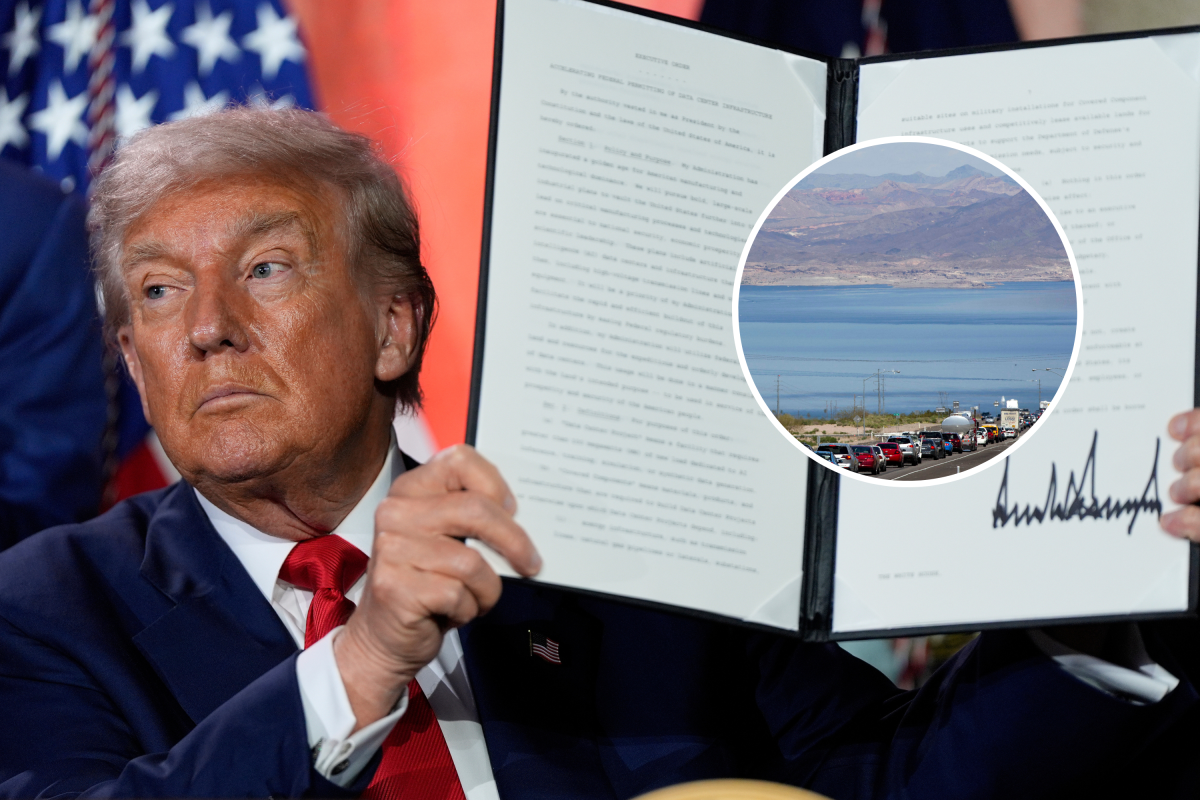
The Bureau of Land Management approved a plan to build a large data center on public land in southern Nevada. Local officials and environmental groups are challenging the approval, saying the proper environmental review was skipped. This case could affect how future data center projects on federal land are approved.
Key Facts
The Townsite Data Center is planned on 81 acres of federal land near Boulder City, Nevada.
The project was approved through an amended right-of-way by the Bureau of Land Management (BLM).
Boulder City officials and environmental groups argue the approval used an outdated review tied to a previous solar project.
The Center for Biological Diversity and Sierra Club Toiyabe Chapter have filed an official appeal to challenge the decision.
Boulder City also filed its own appeal and is trying to stop the project from moving forward.
Many Americans express concern about data centers due to energy use, water demand, and environmental harm.
Supporters say data centers are important for economic growth and advancing artificial intelligence technology in the U.S.
The case may set a national example for how the Trump administration approves data center developments on public lands.
Read the Original
Want the full story? Tap a source to open the original
article.
Shares of companies that make computer chips used in artificial intelligence (AI) have fallen sharply in the last month. Investors are worried that the recent fast growth and high spending on AI technology might slow down or not bring enough profit soon.
Key Facts
Shares of South Korean chip makers SK Hynix and Samsung dropped 46% and 35% in one month.
US chip makers Micron and Intel saw their shares fall 28% and 35% recently.
A Chinese company’s new chip manufacturing breakthrough raised concerns about competition in chip supply.
Big AI companies like Meta, Alphabet, and Open AI are facing pressure to make enough money to cover their high chip and data center costs.
Meta’s shares fell 15% in the last month; SpaceX shares also dropped significantly after its recent stock market debut.
Apple’s shares rose 21% as it has stayed mostly out of the AI chip race.
Some governments are limiting new data centers because they use a lot of water and energy.
Investors are cautious but some tech investors believe the current slowdown is a normal correction after big gains last year.
Read the Original
Want the full story? Tap a source to open the original
article.
When a couple divorces, debts they share do not automatically change. If one person stops paying on a joint debt, the lender can ask the other person for full payment, and both parties remain responsible until the debt is fully paid or resolved.
Key Facts
Divorce agreements state who should pay bills, but lenders are concerned with the original loan contract.
Both people who signed a joint loan are legally responsible for the entire debt.
If one ex stops paying, the lender can require the other ex to pay all the money owed.
Missed payments on joint accounts can lower both people’s credit scores.
Lower credit scores can make it harder to get loans, credit cards, or rent housing.
Debt collectors may contact either person if payments are missed, regardless of who was supposed to pay after divorce.
You might need to go back to court to enforce the divorce agreement or get paid back if you cover your ex’s share.
Laws and options vary by state, so consulting a lawyer may be helpful.
Read the Original
Want the full story? Tap a source to open the original
article.
Global investment in artificial intelligence (AI) grew to $581.7 billion in 2025 as more companies use AI across different business areas. Along with technology, experts say it is important to develop human skills like trust and communication to make AI work well in the workplace.
Key Facts
In 2025, companies worldwide invested $581.7 billion in AI, a big increase from the year before.
88% of organizations use AI in at least one part of their business, though many are still early in expanding its use.
By 2030, 59 out of every 100 workers will need new skills or training due to changes from technology.
Experts stress that human skills such as emotional intelligence, teamwork, and adaptability are key to successfully using AI.
Dr. Robin Hills, an emotional intelligence leader, says human meaning and trust inspire real commitment, which AI can't replace.
AI helps by processing information fast, but people create the meaning that motivates good decisions and actions.
Workplaces are changing with more digital communication, making emotional skills more important for handling conflict and building trust.
Focusing only on productivity misses the value of helping people connect and adjust to change with AI tools.
Read the Original
Want the full story? Tap a source to open the original
article.
The BBC has cancelled three entertainment shows—Blankety Blank, Celebrity Mastermind, and Live at the Apollo—due to budget cuts and falling viewer numbers. The main Mastermind show will continue with Clive Myrie as host, but the celebrity version and the other two shows will end after their already filmed series are broadcast.
Key Facts
Blankety Blank, Celebrity Mastermind, and Live at the Apollo are cancelled by the BBC to save money.
The main Mastermind program will continue with Clive Myrie hosting.
Celebrity Mastermind’s viewers dropped from 4 million in 2017 to 1.7 million recently.
Blankety Blank’s viewers fell from 5.5 million in 2021 to 2.3 million in the latest series.
Live at the Apollo’s audience declined from 1.3 million in 2018 to 660,000 in the latest series.
BBC plans to save £500 million over three years and reduce 100-150 hours of new TV programs by 2027/28.
Live at the Apollo has one more already filmed series but will not continue after that.
The BBC will focus more on digital content to support new comedy talent after these changes.
Read the Original
Want the full story? Tap a source to open the original
article.
The article discusses concerns about President Donald Trump’s approach to tariffs, questioning whether his trade policies truly help the economy. It uses Detroit automakers as an example to highlight the challenges faced under these tariff practices.
Key Facts
President Trump supports tariffs, which are taxes on imported goods.
Some Republicans view these tariffs as a way to improve the economy.
Detroit automakers have struggled under current trade policies.
The article suggests that these tariffs may harm businesses instead of helping them.
The situation raises worries among Republicans about the impact of tariff strategies.
The article implies a disconnect between political views and real economic outcomes for manufacturers.
Read the Original
Want the full story? Tap a source to open the original
article.
Mortgage interest rates have risen to around 6.75% for 30-year loans in 2026, partly due to higher oil prices and inflation concerns tied to the conflict between the U.S. and Iran. Experts predict rates will likely stay steady or rise slightly through fall 2026, with any significant decrease unlikely until 2027.
Key Facts
Average mortgage rates on 30-year conventional loans reached about 6.75% recently.
Rates were around a full percentage point lower in March 2026.
Rising oil prices and inflation worries, linked to the U.S.-Iran conflict, have pushed rates up.
Fannie Mae and the Mortgage Bankers Association expect rates to stay steady for the rest of 2026.
The Federal Reserve may raise interest rates in September 2026 to combat inflation.
Inflation fell slightly to 3.5% but remains above the Fed’s target of 2%.
A notable drop in mortgage rates would require a resolution to the Iran conflict and a sharp fall in inflation.
Modest rate decreases are predicted to occur no earlier than 2027.
Read the Original
Want the full story? Tap a source to open the original
article.
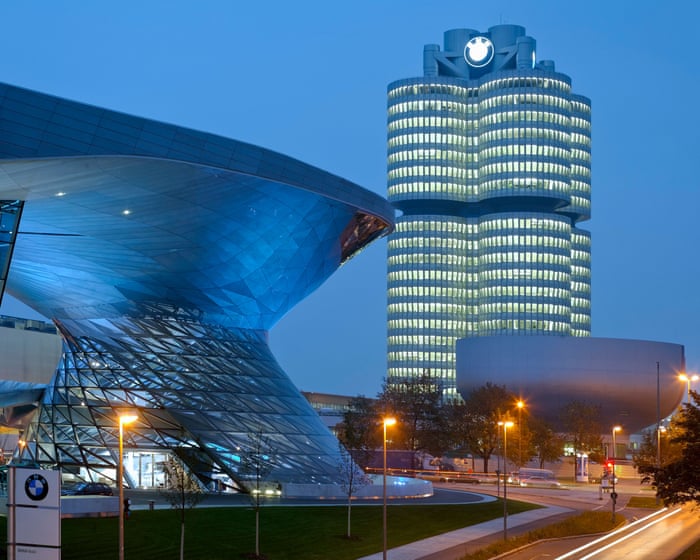
BMW plans to cut up to 8,000 jobs in Germany to reduce costs amid competition from Chinese electric car makers. Other German car companies like Volkswagen and Porsche are also cutting jobs and restructuring to adapt to market changes and global challenges.
Key Facts
BMW will cut up to 8,000 jobs in Germany, focusing on office and development roles, not production.
BMW has about 160,000 employees in total.
Chinese carmakers are growing fast and competing strongly, especially in electric vehicles.
German carmakers also face challenges from US tariffs and the need to shift from petrol to electric cars.
Volkswagen plans to cut up to 100,000 jobs and close four factories.
Porsche plans to cut 9,000 jobs, about 20% of its workforce, by 2035.
Aston Martin reported losses but saw sales and revenue improvements in early 2026.
Changes in global markets and politics are affecting how car companies plan for the future.
Read the Original
Want the full story? Tap a source to open the original
article.
Edmunds tested many midsize three-row SUVs and chose the five best models for families needing space and comfort. The top picks include the 2026 Hyundai Palisade, 2027 Kia Telluride, 2026 Toyota Grand Highlander, 2027 Ford Explorer, and 2026 Volkswagen Atlas.
Key Facts
The Hyundai Palisade leads the ranking with a quiet, spacious interior and a smooth ride.
The Palisade offers tech features like wireless smartphone connections and USB ports in all rows.
The Palisade hybrid version can reach up to 34 miles per gallon and accelerates faster than the regular model.
The Kia Telluride is similar to the Palisade but has a sportier look and a turbocharged engine.
The Toyota Grand Highlander provides extra passenger comfort and space without being a full-size SUV.
The Ford Explorer is known for quick acceleration and offers a Tremor version for off-road driving.
The Volkswagen Atlas has a roomy cabin suitable for families with lots of cargo and many standard features.
Prices for these SUVs start around $41,000 for the Palisade with the hybrid version costing about $45,760.
Read the Original
Want the full story? Tap a source to open the original
article.
The article discusses the challenge luxury fashion brands face in balancing animal welfare with their industry practices. It highlights growing concerns over animal cruelty and environmental harm caused by fashion, especially fur production, and how consumer values are pushing the industry toward more ethical choices.
Key Facts
In Guangdong, China, four young boys attacked puppies and their mother, footage which went viral and sparked protests.
The Social Media Animal Cruelty Coalition found over 80,000 links to animal cruelty footage online in one year.
The fashion industry has shaped cultural values and now faces pressure to explain how its products are made.
Globally, 92 million tonnes of textile waste are produced annually, raising sustainability concerns.
Europe is introducing stricter rules to reduce textile waste and environmental damage from fashion.
The luxury industry kills an estimated 100 million wild animals yearly for fur.
Animal welfare has been less discussed compared to issues like carbon emissions in fashion advocacy.
4NML, a luxury streetwear brand, avoids using animal materials and encourages reflection on society’s treatment of animals.
Read the Original
Want the full story? Tap a source to open the original
article.
Greggs, the UK's largest fast-food chain, reported a 20% profit increase in the first half of 2026 after introducing healthier products like protein salads and iced matcha lattes. The company also opened 34 new stores, expanding locations in places such as petrol stations and hospitals, while keeping prices steady.
Key Facts
Greggs’ pre-tax profit for the first half of 2026 was £76.0 million, up from £63.5 million in the same period of 2025.
Total sales reached over £1.1 billion in the 26 weeks ending June 2026, a 7.2% increase from the previous year.
The company launched new menu items focused on health trends, including high-protein salads and iced matcha lattes.
Greggs opened 34 new stores in the first half of 2026, offset by 31 closures, bringing the total to 2,773 outlets.
More than half of the new stores opened in locations without a Greggs nearby and away from traditional High Street areas.
Greggs did not plan any price increases after multiple hikes in 2025 and in May 2026.
The company is testing new store formats like “bitesize” shops and self-service “Greggs Express” to expand further.
Greggs expects 2026’s full-year profits to be similar to 2025’s £172 million, despite increased investment costs.
Read the Original
Want the full story? Tap a source to open the original
article.
EBay will pay nearly $56 million to David and Ina Steiner after they sued the company. The couple said eBay allowed people to stalk and emotionally harm them to stop their reporting about the company.
Key Facts
David and Ina Steiner filed a lawsuit against eBay.
They claimed eBay let a group harass them to stop their reporting.
The harassment included emotional and psychological harm.
A court decided in favor of the Steiners.
EBay will pay nearly $56 million in damages.
The case is about stalking connected to eBay’s actions or lack of control.
The settlement covers harm caused over time, not just one incident.
The legal action highlights issues with online company responsibility.
Read the Original
Want the full story? Tap a source to open the original
article.
Greggs, the UK bakery chain, increased its sales and profits in the first half of the year thanks to new stores and popular new products like iced matcha lattes and chicken rolls. The company opened 34 new shops, improved its menu with healthier options, and expanded its frozen product range sold in supermarkets.
Key Facts
Greggs’ total sales reached £1.1 billion from January to June, up 7.2% compared to last year.
The chain opened 34 new stores, bringing the total to 2,773 locations in the UK.
Sales in existing stores grew by 2.1% during the same period.
Pre-tax profit rose nearly 20% to £76 million in the first half of the year.
New menu items such as iced matcha lattes, a chicken roll, and salads helped attract customers.
Greggs expanded its “bake at home” frozen products in Tesco and Iceland supermarkets.
The company aims to keep opening stores and offering convenient ways for customers to buy their products.
Greggs is balancing price increases and cost control to keep customers during economic challenges.
Read the Original
Want the full story? Tap a source to open the original
article.
The U.S. Federal Reserve is expected to decide soon whether to raise interest rates as inflation rises because of higher oil prices linked to the ongoing conflict involving Iran. Despite rising costs, the job market remains strong, and the Fed may keep rates steady for now, but a hike could come later this year.
Key Facts
The Iran conflict has caused oil prices to rise, pushing inflation to a three-year high of 3.5%.
The Federal Reserve aims to reduce inflation to 2%.
Fed Chair Kevin Warsh has promised to restore price stability.
Increasing interest rates can reduce inflation but may slow down hiring.
The U.S. labor market added an average of 92,000 jobs per month in the first half of 2026.
Oil prices have been volatile due to on-again, off-again fighting and peace talks.
Average gas prices are currently about $4.11 per gallon, influenced by crude oil costs.
Markets expect the Fed to hold interest rates steady now, with a possible increase in September.
Read the Original
Want the full story? Tap a source to open the original
article.
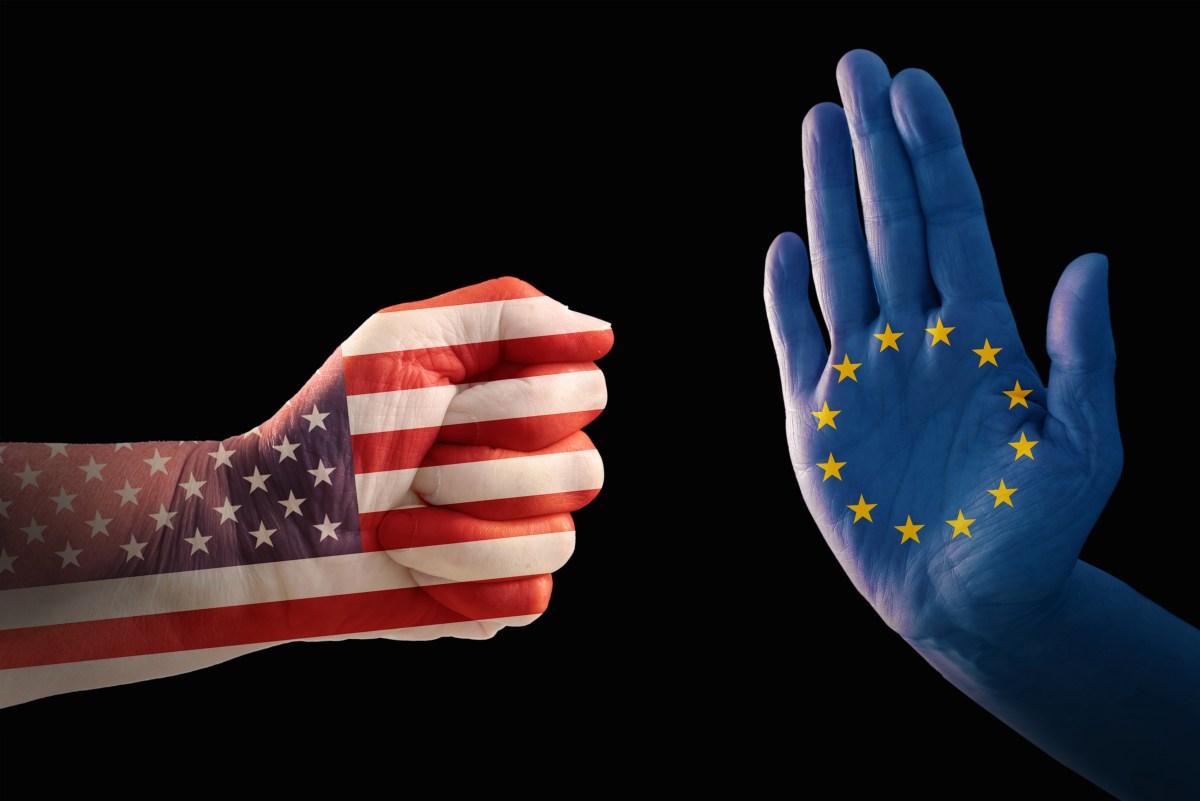
President Donald Trump negotiated with the European Union (EU) to reduce unfair trade barriers against American workers and businesses. However, Europe continues to impose strict rules on U.S. tech companies, making it harder for them to compete, while European companies benefit greatly from the American market.
Key Facts
President Trump pushed the EU to reduce tariffs and trade restrictions that harmed American businesses.
The EU's Digital Markets Act imposes heavy rules mainly targeting American tech firms.
European companies do not face the same tough regulations as American companies in Europe.
European pharmaceutical companies like Novo Nordisk earn much of their revenue from U.S. sales, where prices are much higher than in Europe.
Companies such as GSK and Roche have made large investments in U.S. drug manufacturing and research.
These European companies rely heavily on the U.S. market’s innovation and regulatory system.
The article suggests that EU regulators are harming U.S. business interests through strict regulations while benefiting from the U.S. market.
The overall trade relationship between the U.S. and EU faces tension because enforcement of agreements may be uneven.
Read the Original
Want the full story? Tap a source to open the original
article.
Shares in Asian chip companies fell sharply after SK Hynix, a major South Korean chipmaker, reported strong profits but missed investors' expectations. This caused a big drop in South Korea’s stock market for the second day, with other chip companies also losing value. The market’s fall reflects worries about how long companies will keep spending on AI technology.
Key Facts
SK Hynix’s shares dropped by up to 16% after it missed profit expectations despite strong results.
South Korea’s Kospi stock index fell as much as 12.6%, hitting its lowest point since April.
Samsung Electronics shares also fell nearly 10%, both companies are major parts of the Kospi market.
Japan’s Nikkei index dropped 1.5%, and Taiwan’s TSMC shares fell 3% amid the sell-off.
U.S. chip company stocks, including Intel and AMD, also declined recently.
Some investors who bought shares with borrowed money worsened the stock market fall by quickly pulling out.
South Korea’s finance minister said the government is looking at ways to stabilize the market.
As chip stocks dropped, Apple’s stock rose briefly above a $5 trillion valuation as investors sought safer options.
Read the Original
Want the full story? Tap a source to open the original
article.
The Indian Premier League (IPL), a popular cricket league, is now worth $20.6 billion, growing by more than 11% this year. Big investment groups recently bought IPL teams for record prices, showing strong interest in the league’s future.
Key Facts
The IPL’s business value reached $20.6 billion in 2024, up over 11% from last year.
This marks the second year in a row with double-digit growth in the league’s value.
IPL started in 2008 and has 10 teams featuring top cricket players worldwide.
The league earns money through TV broadcasts, sponsorships, merchandise sales, and team ownership.
A group including Blackstone and other firms bought the Royal Challengers Bengaluru team for $1.78 billion in March.
The Mittal family and Adar Poonawalla bought the Rajasthan Royals team for $1.65 billion in May.
The IPL’s brand alone grew 10.3% in value to $4.3 billion.
Bengaluru is the most valuable IPL franchise, worth $312 million.
Read the Original
Want the full story? Tap a source to open the original
article.
Heathrow Airport has been allowed to recover £320 million spent on planning its third runway by charging airlines higher fees. These costs will be passed to passengers through higher airfares for the next 20 to 25 years, starting with a small increase in 2028.
Key Facts
Heathrow Airport spent £320 million developing plans for a third runway since early last year.
The Civil Aviation Authority (CAA) allowed the airport to recoup this money by raising charges to airlines.
These higher charges will likely increase airfares for passengers for 20 to 25 years.
The initial cost increase per passenger will be about 15 pence in 2028, rising to about 30 pence later.
A rival plan, Heathrow West, can recover £4.1 million spent on its expansion proposal until November 2025.
Airlines, including British Airways, warn that early cost recovery may make the expansion too expensive for travelers.
The CAA says the recovered costs are capped, reviewed for efficiency, and only cover justified expenses needed to develop expansion plans.
The UK government aims to start building the third runway during the current parliament, targeting completion by 2035.
Read the Original
Want the full story? Tap a source to open the original
article.
Britain plans to require datacentre projects to pay large upfront fees to get connected to the electricity grid. This aims to reduce the long queue of datacentres waiting for power connections and ensure only serious projects secure grid access.
Key Facts
There are currently 315 datacentre projects in Britain waiting to connect to the electricity grid, with a total demand of 73 gigawatts (GW).
This demand is much higher than Britain’s peak electricity use of 45 GW.
Ofgem, the energy regulator, proposes requiring upfront fees or financial guarantees when a connection offer is made.
Datacentre companies like Amazon and Microsoft could pay around £350 million to reserve 500 megawatts (MW) of grid capacity.
Projects must meet clear targets, such as securing customers and funding, or be removed from the queue.
The proposals are designed to prevent speculative projects that block grid access for serious developers.
Datacentres use large amounts of electricity and are important for AI technologies.
Similar grid connection delays for datacentres are seen worldwide, with many projects potentially being canceled or delayed.
Read the Original
Want the full story? Tap a source to open the original
article.