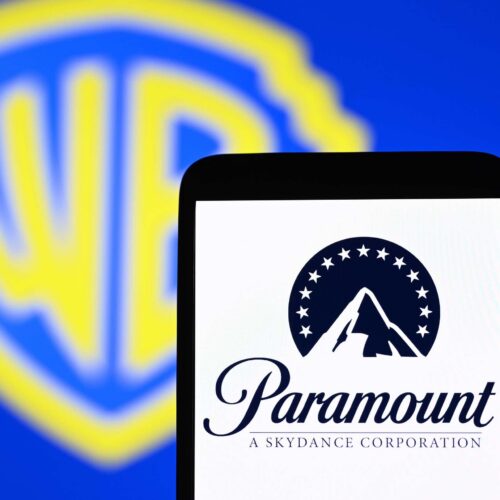
Twelve U.S. states filed a lawsuit to stop Paramount from buying Warner Bros. Discovery in an $81 billion deal. The states say the merger would reduce competition in Hollywood and limit choices for viewers across the country.
Key Facts
Twelve states are suing to block Paramount’s takeover of Warner Bros. Discovery.
The proposed merger is valued at $81 billion.
The states argue the deal would reduce competition in the entertainment industry.
Officials say this could lead to fewer movies and TV shows for consumers.
They also warn it might cause higher prices and lower quality content.
California Attorney General Rob Bonta is leading the lawsuit.
The states believe the merger would negatively affect audiences nationwide.
Read the Original
Want the full story? Tap a source to open the original
article.
Twelve U.S. states have sued to block Paramount’s $110 billion plan to buy Warner Bros Discovery, saying the merger would reduce competition and hurt movie theaters and cable TV customers. The lawsuit claims the combined company would control a large share of the market, possibly raising prices and lowering quality for viewers.
Key Facts
Twelve states, led by California, filed the lawsuit against Paramount’s acquisition of Warner Bros Discovery.
The proposed deal is worth $110 billion.
If approved, the new company would control 27% of basic cable TV licensing and 75% of wide-release movie distribution.
The states say the merger could lead to higher prices, less quality content, and harm movie theaters and cable service providers.
Paramount CEO David Ellison may move the company’s headquarters out of California amid the lawsuit.
The states asked Paramount to delay completing the merger until the legal case is resolved.
Warner Bros Discovery owns CNN, and there are concerns about how the merger might affect the news outlet.
The deal already passed U.S. Department of Justice review but still faces opposition from actors, producers, and some regulators abroad.
Read the Original
Want the full story? Tap a source to open the original
article.
California has started a new rebate program to help people buy electric vehicles (EVs). The program gives up to $3,500 off for new EV buyers and $1,750 for used EV buyers, with certain price limits and conditions.
Key Facts
The federal EV tax credit ended last September after President Trump and congressional Republicans removed it.
The federal credit used to offer up to $7,500 for buyers who met certain income and price limits.
California’s new MyFirstEV program offers a $3,500 rebate for first-time EV buyers on new EVs priced under $50,000.
It also offers a $1,750 rebate on used EVs priced under $25,000.
The state budget allocates $135.5 million to this program, and automakers will add another $135.5 million.
California-based EV makers like Rivian and Lucid are exempt from the $50,000 price cap on rebates.
Tesla, now headquartered in Texas, is only eligible for rebates on new EVs under $50,000 despite being founded in California.
The program’s list of participating automakers has not been released yet.
Read the Original
Want the full story? Tap a source to open the original
article.
Apple has filed a lawsuit against OpenAI, accusing the company of using stolen trade secrets taken by former Apple employees who joined OpenAI. Apple says an employee discovered a security bug that allowed him to access and download secret Apple files for weeks after leaving the company.
Key Facts
Apple sued OpenAI over alleged theft of confidential information by former Apple employees now working at OpenAI.
The complaint centers on Chang Liu, who left Apple in January 2026 and found a bug that let him access Apple’s secure files with an Apple work laptop.
Liu allegedly downloaded many secret files about unreleased Apple products, hardware designs, and technical details.
A message from Liu to another employee showed he joked about accessing Apple’s network without permission.
Apple says it quickly fixed the security bug after discovering the unauthorized access.
Apple claims this case reveals a larger pattern of former Apple employees stealing trade secrets for OpenAI.
OpenAI denies the core accusation and says it does not want to use other companies’ secrets; it is reviewing Apple’s complaint.
OpenAI CEO Sam Altman expressed respect for Apple but dismissed fears related to the lawsuit.
Read the Original
Want the full story? Tap a source to open the original
article.
About 20 percent of adults used their savings to buy groceries in 2025, according to a report from the Urban Institute. The report also found that more people are using credit cards to pay for food.
Key Facts
19.6 percent of adults ages 18 to 64 used their savings to buy groceries in 2025.
This information comes from the Urban Institute’s Well-Being and Basic Needs survey.
The survey data was collected in December 2025.
Credit card use for grocery shopping increased during the same period.
The report highlights changes in how people pay for basic needs like food.
Using savings for groceries could indicate financial stress among adults.
The Urban Institute is a research group that studies social and economic issues.
The report was made public on a Monday in 2026.
Read the Original
Want the full story? Tap a source to open the original
article.
Twelve U.S. states, led by California, sued to stop a $111 billion merger between Paramount Skydance and Warner Bros. Discovery. The merger was approved by President Trump’s administration, but the states argue it will reduce competition, raise prices, and hurt movie theaters and TV viewers.
Key Facts
The merger would combine two big movie studios and merge streaming services Paramount+ and HBO Max.
The U.S. Justice Department approved the deal on June 12, saying it wouldn’t harm competition or consumers.
Twelve states filed the lawsuit in California, arguing the merger violates laws against reducing competition.
The states claim the combined company would control over 85% of wide-release theatrical films and 59% of basic cable channels with Disney as the only major competitor.
Paramount previously won approval for other acquisitions during the Trump administration after agreements like installing bias monitors.
Paramount CEO promised changes at Warner-owned CNN, which aligns with President Trump’s concerns about the network.
The states say a public promise to release “at least 30 films annually” is not legally binding and does not fix competition concerns.
Paramount is reportedly considering moving its headquarters out of California due to the lawsuit.
Read the Original
Want the full story? Tap a source to open the original
article.
Twelve US states, led by California, have sued to block a $110 billion merger between Warner Bros. and Paramount. They argue the deal would reduce competition and increase prices for movie theaters and TV viewers. The companies say the merger is needed to survive challenges from technology and streaming services.
Key Facts
The merger would combine Warner Bros. and Paramount, two major Hollywood studios.
Together, they would control over 25% of major movie releases and a big share of cable TV channels.
Along with Disney, Universal, and Sony, four companies would control 86% of major film releases.
The lawsuit claims the merger will lead to higher costs, less content, and lower quality for audiences.
The United States Department of Justice had previously approved the merger in June.
The states want a court to stop the merger while the legal case is reviewed.
The merger would end a century-long rivalry between the two studios.
Supporters say the media industry faces challenges from fewer cable viewers and streaming competition, so the merger is necessary.
Read the Original
Want the full story? Tap a source to open the original
article.
Companies are facing new challenges as artificial intelligence (AI) and digital tools increase the amount of information workers must handle. This can make decision-making harder, even though technology provides more data and options. Experts say businesses should focus on designing systems that help employees make clear, confident decisions to improve productivity.
Key Facts
Many workers switch between multiple digital platforms and tools during the day, which can interrupt their focus.
AI speeds up information analysis but also creates more choices, making it harder to decide the best course of action.
Having too much information without clear guidance can consume mental energy needed for teamwork and problem-solving.
Organizations are encouraged to simplify how decisions are made to boost productivity.
Visible work activities like meetings and messages don't always show whether meaningful progress is being made.
Consultants suggest connecting data directly to decisions increases the value of information.
Employee well-being and avoiding burnout remain important concerns as work structures change.
Return-to-office rules are less influential than expected, as hybrid and remote work stay common.
Read the Original
Want the full story? Tap a source to open the original
article.
A chemicals factory in Lancashire called AGC Chemicals Europe Ltd plans to close after facing financial losses and legal claims from local residents. The factory’s historic emissions of a harmful chemical called Pfoa, linked to cancer, have contaminated the area, leading to investigations and health concerns.
Key Facts
AGC Chemicals Europe Ltd is consulting employees about closing its Lancashire factory, affecting 190 workers.
The factory has lost money for four years and has not made a final closure decision yet.
The factory emitted an estimated 49 tonnes of Pfoa, a chemical linked to kidney cancer, between the 1950s and 2012.
Pfoa is a type of "forever chemical" that does not break down in the environment and was banned worldwide in 2020.
Soil and local food near the factory showed contamination, leading to advice for residents to wash food and avoid local eggs.
More than 90 residents want to join a possible lawsuit involving contamination and health risks.
A government study found higher rates of kidney cancer near the site but did not confirm a direct link to the contamination.
The factory previously tested Pfoa on monkeys, causing harm to the animals.
Read the Original
Want the full story? Tap a source to open the original
article.
Twelve state attorneys general have filed a lawsuit to stop Paramount from taking over Warner Brothers Discovery. They argue the merger would reduce competition and hurt business conditions in the media industry.
Key Facts
Twelve state attorneys general are involved in the lawsuit.
The lawsuit targets Paramount’s planned acquisition of Warner Brothers Discovery.
Warner Brothers Discovery owns major movie and TV studios and the CNN news channel.
The states claim the merger would reduce competition in the media market.
The states believe the merger would negatively affect businesses and consumers.
The lawsuit was filed on a Monday.
Paramount and Warner Brothers Discovery are large companies in the entertainment industry.
Read the Original
Want the full story? Tap a source to open the original
article.
A $50,000 deposit in a 1-year certificate of deposit (CD) opened in July would earn between about $2,055 and $2,075 in interest at current rates around 4.11% to 4.15%. A high-yield savings account paying about 4.10% would earn nearly the same, about $2,050, but with a variable rate and no penalty for early withdrawal.
Key Facts
Top 1-year CD rates are currently between 4.11% and 4.15%.
A $50,000 deposit in a CD at 4.11% earns about $2,055 in interest after one year.
A $50,000 deposit in a CD at 4.15% earns about $2,075 in interest after one year.
A high-yield savings account paying 4.10% would earn roughly $2,050 on $50,000 in one year.
CD interest rates are fixed and locked in for the full year.
Savings account rates are variable and can rise or fall with Federal Reserve changes.
Savings accounts allow penalty-free access to funds anytime.
The Federal Reserve has kept rates steady so far, but rates may change depending on inflation.
Read the Original
Want the full story? Tap a source to open the original
article.
Georgia Power plans to build a new power line in Georgia to supply electricity mainly to data centers, which requires buying over 300 pieces of land, including some homes. Some homeowners feel forced to sell their properties, fearing the company might use a legal process called eminent domain to take their land if they refuse.
Key Facts
Georgia Power needs a new transmission line to meet growing electricity demand, mostly for data centers.
The project involves acquiring more than 300 parcels of land, including homes.
Eminent domain lets companies take private land for public projects but requires compensation.
Homeowners like Ansley Brown’s family feel pressured to sell their homes, which have personal and generational value.
Georgia Power says eminent domain is a last resort and tries to handle the process responsibly.
Some affected residents say the construction harms their community and environment.
Georgia Power does not disclose which data centers will use the power for safety reasons.
The company claims it negotiates in good faith and aims to be transparent with property owners.
Read the Original
Want the full story? Tap a source to open the original
article.
Some homeowners in Georgia are being asked to sell their homes or face losing them because the state needs to build new power lines. These power lines will help supply electricity to growing AI data centers, which require lots of energy.
Key Facts
Georgia Power, a large utility company, plans to build new transmission lines.
The new lines are needed to provide electricity to AI data centers.
Data centers are facilities that store and process large amounts of information.
Some homeowners are receiving ultimatums to sell their property.
If homeowners do not sell, the state may take their homes through legal processes.
The new power lines are part of efforts to support expanding technology infrastructure.
This situation is causing concern among local residents about losing their homes.
Read the Original
Want the full story? Tap a source to open the original
article.
Twelve U.S. states have filed a lawsuit to stop Paramount Skydance from buying Warner Bros. Discovery in a $110 billion deal. The states say the merger would reduce competition, lead to fewer jobs and lower pay in the film industry, and increase prices for consumers.
Key Facts
Twelve states, led by California, sued to block the Paramount-Warner Bros. merger.
The merger would combine two of the largest U.S. media companies in film and cable TV.
States argue the merger would reduce competition and harm movie industry workers.
They also claim the deal could raise costs for cable and movie tickets and limit choices for viewers.
If merged, the companies would control about one-third of U.S. cable programming and movies.
Paramount aims to complete the deal by the third quarter of the year and faces a $650 million quarterly fee if delayed.
The U.S. Justice Department had previously approved the merger, saying it likely wouldn’t hurt competition.
Some Hollywood professionals, including well-known actors and directors, oppose the merger because of concerns about jobs and costs.
Read the Original
Want the full story? Tap a source to open the original
article.
The global kids’ fitness market is worth about $8.5 billion and is growing as more families and schools focus on children’s physical health and development. Mobile fitness programs, like those from Creative Kids Movement Network, bring activities such as dance and yoga directly to schools and daycares, helping children stay active without added travel or scheduling challenges for parents.
Key Facts
The kids’ fitness market is valued at around $8.5 billion globally.
Growth is driven by school-based programs, which make up 38% of market growth.
Dual-income families create 30% of the demand for convenient fitness options.
Mobile franchises offer fitness directly at schools and daycares, reducing scheduling and transportation issues.
Creative Kids Movement Network provides dance, yoga, and fitness classes on location for young children.
The company started in 1998, founded by Kate DeBiase, who moved from corporate work to focus on child wellness.
Programs support physical coordination, creativity, confidence, and social skills for kids.
Alex DeBiase joined the business to help grow operations and expand partnerships.
Read the Original
Want the full story? Tap a source to open the original
article.
Volkswagen Group plans to cut up to 100,000 jobs worldwide, which is double the number it planned before. The company’s profits have fallen due to lower sales in China and the US, and it needs to reduce costs to stay competitive.
Key Facts
Volkswagen includes brands like Porsche, Audi, Seat, Skoda, and VW itself.
The company previously planned to cut 50,000 jobs in Germany by 2030.
Recently, Volkswagen’s profits dropped sharply from €22.6 billion in 2023 to €8.9 billion last year.
Sales in China fell by 26% in the first half of the year, and US sales dropped over 7%.
Chinese car brands are gaining ground by offering new technology and lower prices.
Volkswagen’s CEO said the company’s costs are 20% higher than rivals.
Four German factories, including two that make electric cars, may be closed because they are costly to run.
The company made a deal with the German union IG Metall to cut 35,000 jobs socially responsibly, but new plans suggest cuts could be much bigger.
Read the Original
Want the full story? Tap a source to open the original
article.
Twelve state attorneys general sued to stop Paramount Skydance’s $110 billion acquisition of Warner Bros. Discovery, saying the deal would reduce competition in movies and cable TV. Paramount disputes the lawsuit and says the merger will help compete with streaming services and protect jobs.
Key Facts
States involved include California, New York, Washington, Arizona, Colorado, Connecticut, Massachusetts, Minnesota, Nevada, New Jersey, New Mexico, and Oregon.
The lawsuit claims the merger would lead to fewer companies controlling most movie distribution, limiting choice and raising prices.
After the merger, three distributors would control 75% of widely released films, and four would control over 90% of top-grossing movies.
The combined company would hold 27% of the cable TV market, making it the second and third largest players combined.
California Attorney General Rob Bonta says the merger would harm movie theaters, cable distributors, and viewers by reducing content and quality.
Industry groups like the Writers Guild of America and Cinema United support the lawsuit, fearing negative effects on jobs and local theaters.
Paramount says the lawsuit misrepresents the market and argues the merger is needed to compete with streaming services and protect entertainment jobs.
The U.S. Justice Department approved the merger in June, but regulators in the UK and EU are still reviewing the deal, with the EU considering required asset sales.
Read the Original
Want the full story? Tap a source to open the original
article.
The UK government is launching a new program called Music in Libraries to turn public libraries into spaces where people can borrow music equipment and use free studios for music creation. The project, inspired by musician Ed Sheeran’s charity work, will invest at least £12.5 million to support young and underprivileged musicians, along with additional funding to help emerging artists and music venues.
Key Facts
Public libraries in England will offer free music studios, equipment, and performance opportunities.
Ed Sheeran’s charity inspired and helped design the Music in Libraries scheme.
The government has committed at least £12.5 million to fund the program.
The initiative aims to help young people from all backgrounds express themselves and improve mental health through music.
An extra £15 million is added to the existing Music Growth Package to support new artists and reduce obstacles for music festivals.
The scheme will relax music event licensing rules and provide longer contracts to festivals for stability.
The LIVE Trust raised £1 million from artists like Harry Styles to support grassroots music venues and emerging artists.
Since January 2025, the LIVE Trust has helped over 100 artists, venues, and promoters with funding.
Read the Original
Want the full story? Tap a source to open the original
article.
U.S. companies are receiving large refunds from tariffs that courts have canceled. These refunds are helping businesses manage rising costs caused by inflation and global conflicts, but many do not plan to use the money to expand their activities.
Key Facts
Over $104 billion in tariff refunds are being processed, with about $71 billion already approved for payment.
Companies like PepsiCo and McCormick say they will use the refunds mainly to offset higher costs from inflation and conflicts like the war in Iran.
Nike expects to recover nearly $1 billion in tariffs, improving its profit margins.
Companies such as BJ's Wholesale Club are using refunds to reduce prices slightly for consumers.
Some businesses may save the money, pay off debt, or return it to shareholders rather than invest or lower prices.
Research suggests only about one-third of the refunded companies are financially limited enough to use the money for hiring or investments.
The refunds cancel out much of the tariff revenue the government had collected, reducing net tariff income to near zero recently.
The timing of refunds coincides with new cost pressures, giving companies a temporary cash cushion.
Read the Original
Want the full story? Tap a source to open the original
article.
Many Americans are struggling with high credit card debt and are turning to debt relief programs. However, making mistakes during this process can increase costs and reduce savings, so it's important to understand key points before enrolling.
Key Facts
Credit card interest rates are still high, averaging over 21%, making debt harder to pay off.
Inflation and record household debt levels are adding to financial challenges for borrowers.
Waiting too long to start a debt relief program can increase the total interest you owe.
Debt settlement fees vary widely, generally between 15% and 25%, so comparing companies can save money.
Debt settlement can harm your credit score; other options like debt management plans may have lower fees and less credit impact.
Continuing to use credit cards while in a debt relief program can add more debt and make relief less effective.
Legitimate debt relief companies are not allowed to charge fees before settling any debt.
Carefully choosing and understanding your debt relief plan can improve your chances of success and reduce costs.
Read the Original
Want the full story? Tap a source to open the original
article.