President Trump’s administration announced it will not renew the United States–Mexico–Canada Agreement (USMCA) as it currently stands. The decision came on the deadline day for renewing the trade deal, which President Trump originally made with Canada and Mexico during his first term.
Key Facts
The USMCA is a trade agreement between the United States, Mexico, and Canada.
President Trump helped create the USMCA during his first term in office.
The administration decided not to renew the USMCA in its current form.
The announcement was made on the deadline day for renewal.
U.S. Trade Representative Jamieson Greer delivered the statement about the decision.
The article does not specify what changes, if any, will be made to the agreement next.
The decision affects trade relationships among the three North American countries.
Read the Original
Want the full story? Tap a source to open the original
article.
Olivia Rodrigo has partnered with Lego to create a new collection of Lego sets inspired by her music and personal style. The collection includes five sets based on her three albums and features minifigures of her famous performances. Olivia helped design the sets, which will be available worldwide starting August 1.
Key Facts
The Lego Editions Olivia Rodrigo collection has five sets inspired by her albums "Sour," "Guts," and "you seem pretty sad for a girl so in love."
It is the first time a musician has gotten multiple dedicated Lego sets.
The sets include five new minifigures of Olivia Rodrigo based on her well-known performances.
Olivia Rodrigo actively took part in designing the Lego sets.
The sets include little details and references to her songs, memories, outfits, and moments.
Lego’s marketing officer said the collection aims to help fans connect with Olivia’s music and express themselves through building.
The collection will launch globally on August 1.
Fans can pre-order the first three sets now on the Lego website.
Read the Original
Want the full story? Tap a source to open the original
article.
Top central bankers from the U.S., Europe, Canada, and the UK agree they should communicate less clearly about their future policy plans. They want to rethink how they guide the markets and public to make better decisions about interest rates and money policies.
Key Facts
Central bankers at a conference in Portugal, including ECB President Lagarde, Bank of England Governor Bailey, Bank of Canada, and U.S. Federal Reserve Chair Kevin Warsh, shared similar views on reducing detailed forward guidance.
Forward guidance means telling the public and markets exactly what the central bank plans to do in the future with interest rates.
Leaders said forward guidance can trap them and is hard to change once given.
Lagarde supports "framework guidance," which explains how decisions are made, but Warsh prefers less detailed commitments.
Warsh will announce members of five task forces soon to provide outside advice on Fed operations.
These task forces aim to suggest improvements by the end of the year.
Warsh referenced the challenges caused by policies made after the 2008 financial crisis and calls this a rare chance to rethink basics.
Former Bank of England Governor Mervyn King will lead a new task force on how central banks communicate.
Read the Original
Want the full story? Tap a source to open the original
article.
French shipping company CMA CGM Group will buy FedEx Supply Chain, FedEx's logistics division, for $1.4 billion. This purchase will expand CMA CGM’s logistics business in the U.S. and is part of a larger plan to invest $20 billion in American logistics by 2025.
Key Facts
CMA CGM Group is a French container shipping company.
It will buy FedEx Supply Chain, FedEx’s third-party logistics unit, for $1.4 billion.
This acquisition will triple the size of CMA CGM’s logistics branch, CEVA Logistics.
CMA CGM plans to invest $20 billion in U.S. warehousing, air cargo, and logistics over four years starting in 2025.
The companies plan to make multi-year agreements for air and ocean freight services.
FedEx is focusing more on its delivery business, especially in healthcare, automotive, aerospace, and data centers.
FedEx recently completed the spinoff of FedEx Freight on June 1.
The deal is expected to finish later in 2024 after regulatory approval, with air and ocean freight agreements finalized between 2026 and 2028.
Read the Original
Want the full story? Tap a source to open the original
article.
Walmart has signed its first deal to buy electricity from a nuclear power plant in Illinois. The agreement will supply 176 megawatts of clean energy starting in 2029 to support Walmart's new distribution center and help meet its goal of zero emissions by 2040.
Key Facts
Walmart will get nuclear power from Constellation's Dresden Clean Energy Center in Illinois.
The electricity contract lasts for two 15-year periods starting in 2029 and 2030.
This is Walmart’s first nuclear power purchase and one of the first for a U.S. retailer.
Walmart aims to achieve zero emissions in its global operations by 2040.
The nuclear power will support Walmart’s new high-tech distribution center in Belvidere, Illinois.
Nuclear power offers reliable, emissions-free electricity but has concerns around radioactive waste and safety.
Tech companies like Microsoft, Amazon, and Meta are also signing large deals for nuclear power to supply data centers.
Walmart operates about 175 stores and clubs in Illinois, where this power will be used.
Read the Original
Want the full story? Tap a source to open the original
article.
CBS Mornings Deals is offering special discounts on various products designed to improve daily life. Customers can visit cbsdeals.com to find and buy these discounted items.
Key Facts
CBS Mornings Deals presents exclusive discounts on selected products.
The deals aim to enhance everyday lifestyle.
Shoppers can access these offers by visiting cbsdeals.com.
CBS earns commissions from purchases made through their website.
The feature is part of the CBS News program CBS Mornings.
The deals are promoted through CBS News and the CBS News app.
Read the Original
Want the full story? Tap a source to open the original
article.
A new study shows that in the next decade, more houses may be built than people want to buy in the U.S. This could cause home prices to stop rising or even go down, creating better chances for buyers to find affordable homes.
Key Facts
The housing market has faced a shortage of homes, rising prices, and high mortgage rates for years.
The Mortgage Bankers Association study forecasts that demand for new homes will slow down from 2025 to 2035, averaging about 1.13 million homes per year.
During the same period, about 12.6 million new housing units could be built, likely exceeding demand.
Demographic changes, such as fewer young people and lower birth rates, are expected to reduce the need for new houses.
Aging baby boomers may leave homes to heirs who might sell them, adding to the supply of homes for sale.
After 2035, demand for new homes could fall even more, to roughly 802,000 yearly.
Some housing markets already have more homes for sale and fewer buyers moving in, leading to more competition among sellers.
Experts warn that while prices may fall in the long term, buyers needing homes now should not wait years for prices to drop.
Read the Original
Want the full story? Tap a source to open the original
article.
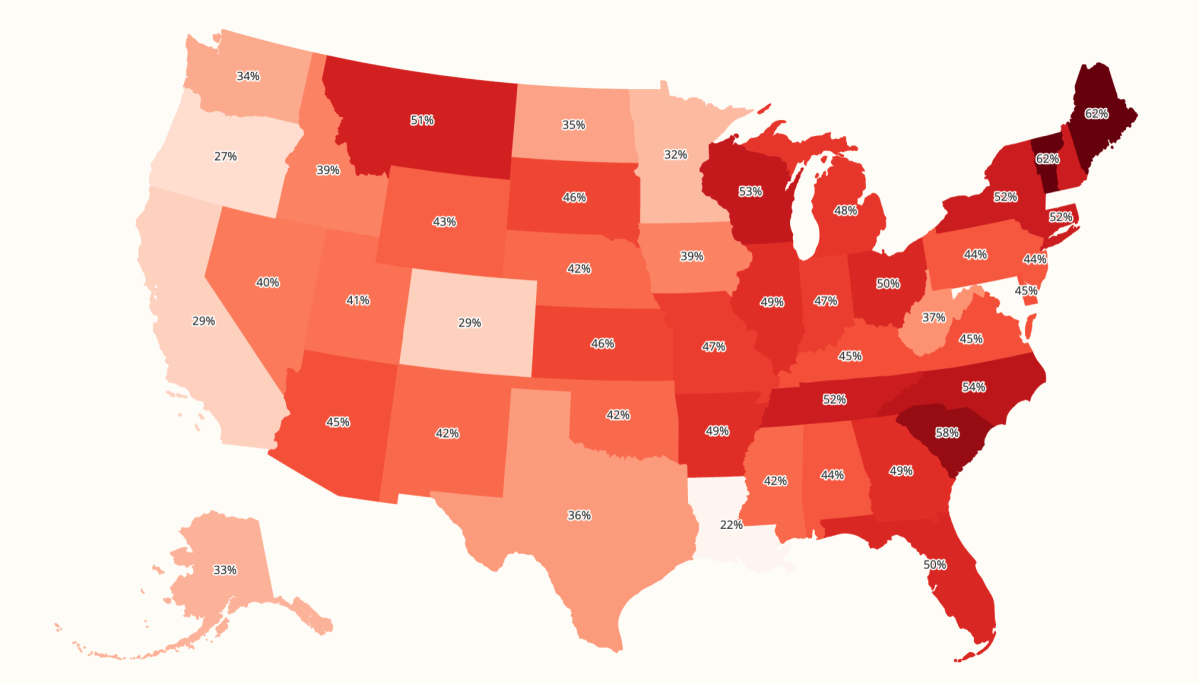
U.S. home prices have risen sharply since the start of the COVID-19 pandemic, increasing nearly 30% nationwide between 2019 and 2025. Some states saw much higher increases due to high demand, low supply, and migration, while other states had smaller price rises or recent corrections.
Key Facts
From 2019 to 2025, U.S. home prices grew by about 30% on average.
Maine and Vermont saw the largest increases, around 62%.
Nine states reported home price increases over 50%, including Connecticut, Florida, New York, and South Carolina.
States with many new homes built, like Arizona and Texas, may see slower or declining home prices soon.
States with restricted home building, like New York and Massachusetts, are expected to continue price increases.
Home prices are still rising nationally in 2026 but at a slower rate of about 1-2% per year.
Mortgage interest rates rose sharply in 2022 and have stayed high, making borrowing more expensive.
The pandemic and rise of remote work pushed many people to move to cheaper areas, increasing demand there.
Read the Original
Want the full story? Tap a source to open the original
article.
Kroger has agreed to buy Giant Eagle for $1.65 billion, with the deal expected to finish in 2027 after approval from regulators. Both companies will keep operating separately for now, and Giant Eagle plans to keep its current store brands.
Key Facts
Kroger is buying Giant Eagle in a deal worth $1.65 billion in cash.
The purchase is expected to be completed in 2027, after government approval.
Until then, Kroger and Giant Eagle will continue to work as separate companies.
Giant Eagle will keep its store names like Giant Eagle and Market District after the deal.
Some stores may be sold or closed as part of government rules to approve the deal.
Kroger’s new CEO, Greg Foran, said the deal will help Kroger reach new markets near Giant Eagle’s locations.
Kroger already operates in 35 states under different store names.
The deal faces federal antitrust review, which examines whether it reduces competition unfairly.
Read the Original
Want the full story? Tap a source to open the original
article.
The cost of arts degrees in Australia will stay at about $50,000 until at least 2028 because no quick changes will be made to the Job-ready Graduates (JRG) program. The head of the Australian Tertiary Education Commission, Barney Glover, said he will advise the government after more research next year and warned universities to prepare for stable, but not growing, international student numbers.
Key Facts
The JRG program raised fees for arts and humanities courses while lowering them for science and math.
This has led to fewer students from lower-income backgrounds enrolling in arts subjects.
Barney Glover, head of Atec, will not suggest any short-term fee reductions and will advise on changes in the second half of next year.
The program has been called a failure by Glover and others, with concerns about unfair fees and growing student debt.
Commonwealth government funding to universities decreased by $1.2 billion in 2024 compared to before the JRG program.
International student numbers have stopped growing due to government caps, creating financial uncertainty for universities.
Glover encourages universities to find new income sources and diversify away from relying heavily on one market.
Some politicians, like Greens deputy leader Mehreen Faruqi, want faster action to reduce or eliminate university fees.
Read the Original
Want the full story? Tap a source to open the original
article.
Experts and government agencies in Australia warn that the rapid growth of datacentres is using up valuable industrial land, which logistics companies and housing projects also need. This competition for land may raise costs, reduce supply for housing and freight businesses, and contribute to higher inflation.
Key Facts
Transport for NSW says datacentres are taking scarce industrial land needed for freight and logistics near cities.
Freight companies are moving out of Sydney to cheaper areas like Brisbane or Melbourne due to land shortages.
The industrial land vacancy rate in Sydney is still low compared to international standards.
Increased population and consumer demand will need more industrial land for logistics in Sydney.
Datacentre industry group says supply of land and infrastructure is growing and calls for planned land use for both datacentres and logistics.
The Australasian Supply Chain and Logistics Association warns datacentres and freight compete for the same land, impacting costs and emissions.
The Reserve Bank of Australia warns datacentre investment may increase inflation and pressure interest rates.
Commercial building approvals in Australia reached record levels recently due to new datacentre projects.
Read the Original
Want the full story? Tap a source to open the original
article.
Debts do not disappear when a person dies, and interest charges on those debts can continue to grow. Creditors usually keep charging interest until debts are paid off or settled through the deceased person’s estate during the probate process.
Key Facts
Debt remains even after the borrower dies; it does not just go away.
Creditors often continue charging interest on unpaid debts after death based on the original loan terms.
Types of debts that can keep accruing interest include credit cards, mortgages, and personal or auto loans.
Interest and debts are generally paid from the deceased person’s estate, not the family’s personal money.
The estate executor handles debts during probate by collecting assets and paying creditors in a specific legal order.
If the estate lacks enough money, some creditors may only get partial payment or none at all.
Family members usually aren’t responsible for the debts unless they co-signed or live in states with community property laws.
Probate laws about post-death interest vary by state, so executors need to check local rules.
Read the Original
Want the full story? Tap a source to open the original
article.
The Halifax banking brand will be phased out after 173 years, with all accounts rebranded as Lloyds. Lloyds Banking Group, which owns Halifax, said customers will keep their current details and services, and no jobs will be cut during the change.
Key Facts
Halifax was founded in 1853 in West Yorkshire and became one of the UK’s largest building societies.
Lloyds Banking Group bought Halifax in 2009 and decided to retire the Halifax brand to simplify their business.
Customers will keep the same app, branch staff, account numbers, and sort codes after rebranding.
Halifax branches will be renamed Lloyds or merged with nearby branches during 2027.
About 3,000 staff work at Lloyds’ Halifax office in Trinity Road, West Yorkshire.
Lloyds recently invested £116 million to upgrade the Halifax head office building.
Local leaders expressed sadness about losing the Halifax name but welcomed the commitment to keep branches open.
No job losses have been announced as part of the rebranding process.
Read the Original
Want the full story? Tap a source to open the original
article.
The price difference between flats and houses in England has reached its highest point in 30 years. Many flats for sale, especially one- and two-bedroom ones, remain unsold this year due to problems with lease agreements and extra costs. The government is working on new rules to address these issues.
Key Facts
The price gap between flats and houses is at its largest in 30 years.
About two-thirds of one- and two-bedroom flats listed for sale this year have not sold.
The leasehold system in England is a major reason for flats being less popular.
Leasehold means owning a flat for a set number of years, not buying the land outright.
Costs like maintenance and service charges add to the challenges of flat ownership.
The government is planning new measures to improve the leasehold system.
The radio program Money Box discussed the financial impact of buying flats.
Experts from mortgage and leasehold organizations participated in the program.
Read the Original
Want the full story? Tap a source to open the original
article.
Kevin Warsh, the new Federal Reserve Chair, said the central bank will stay independent and focus on lowering inflation. He indicated the Fed will not cut interest rates soon despite President Trump’s calls for lower rates.
Key Facts
Kevin Warsh became Federal Reserve Chair on May 22, 2025.
Warsh stated the Fed aims to keep inflation near its 2% target.
The Fed usually raises borrowing costs to fight inflation.
President Trump wants the Fed to lower interest rates, but Warsh rejected this idea.
Warsh emphasized the Fed’s independence from political influence.
He did not specify the exact steps the Fed will take to reduce inflation.
Wall Street expects the Fed may raise interest rates from about 3.6% to 3.9% as soon as September.
Warsh has shifted from previously supporting lower rates to focusing on inflation control as Fed Chair.
Read the Original
Want the full story? Tap a source to open the original
article.
New research shows Australian households now spend a larger share of their income on mortgages than they did in the late 1980s when interest rates were at 17%. Despite current mortgage rates being about half that high, rising home prices have led to higher borrowing, making mortgage payments a greater financial burden today.
Key Facts
Mortgage interest rates hit 17% around 1989-1990, with households spending about 5.7% of their income on interest payments then.
In early 2026, mortgage rates averaged 8.3%, yet households spent around 5% of income on mortgages alone and 5.4% when including other consumer debt.
Total debt payments as a share of income could reach nearly 6% after recent interest rate increases.
Home prices have increased so much that people need to borrow more, despite fewer people owning homes today.
Though mortgage rates are lower now than in the 1980s, current conditions cause more financial stress for borrowers.
Economic factors like rising living costs and tax changes have caused home prices in cities like Sydney and Melbourne to drop recently.
Experts say these price falls are normal and short-lived, often followed by rapid growth in home prices.
Housing affordability is currently at its worst level on record since 1994, making it harder to buy a home than in the late 1980s.
Read the Original
Want the full story? Tap a source to open the original
article.
A report by UBS shows that typical Americans have lost wealth between 2020 and 2025, while the richest Americans have grown richer. The median wealth, which represents the middle person’s assets, has dropped after adjusting for inflation, even though average wealth has risen.
Key Facts
Median wealth per adult in the U.S. fell significantly from 2020 to 2025 after adjusting for inflation.
Average wealth per adult increased, driven by gains among the wealthiest Americans.
The U.S. has the second-highest average wealth per adult at $696,277 but a much lower median wealth of $68,998.
Americans created over 441,000 new millionaires in 2025, about 1,200 each day, nearly half of all new millionaires worldwide.
The U.S. holds 35.7% of global personal wealth among the markets studied by UBS.
Wealth inequality in the U.S. is high, with a wealth Gini coefficient of 0.77, ranking sixth among 56 markets.
The U.S. ranks 2nd in average wealth but only 28th in median wealth, showing wealth gains are concentrated in the top households.
Wealth affects economic mobility since it helps with buying homes, education, and starting businesses; declining median wealth suggests fewer resources for many families.
Read the Original
Want the full story? Tap a source to open the original
article.
Henrico County in Virginia is asking government and school staff to save electricity because their power costs will rise by nearly 25% starting July 1. The county has many data centers, which use a lot of power, contributing to higher electricity bills that could cost an extra $5 million next year.
Key Facts
Henrico County’s electricity rates for government and schools will increase by about 25% starting July 1.
The county has 37 data centers, with plans for 17 more, mostly in the eastern corridor.
Data centers use large amounts of electricity, impacting overall power costs.
County Manager John Vithoulkas sent an email asking employees to conserve energy by turning off lights, shutting down computers, and not using space heaters.
Henrico is part of a group of about 170 Virginia government entities that buy power together and are seeing similar rate increases.
Virginia has the highest number of large data centers worldwide and uses a lot of water and power for these centers.
Reports predict that increasing data center power needs could raise residents’ electricity bills significantly by 2030 and 2040.
Loudoun County nearby calls itself the “Data Center Capital of the World” and is also working on employee energy-saving programs.
Read the Original
Want the full story? Tap a source to open the original
article.
The UK government has announced an increase of £15 billion in military spending over the next four years. However, there is a yearly shortfall of about £1.2 billion that still needs to be found to fully fund this rise, which may become a challenge for Andy Burnham if he becomes prime minister.
Key Facts
The Defence Investment Plan (DIP) adds £15 billion to UK military spending over four years.
Annual defence spending is expected to increase by around £3.75 billion compared to previous plans.
There is an estimated yearly funding gap of about £1.2 billion to meet the planned defence spending increase.
The total cumulative shortfall over four years is about £4.7 billion, but experts prefer to discuss the gap in annual terms.
The £1.2 billion gap is a small part (0.17%) of the projected total government spending for 2026/27 (£678 billion).
The gap is about 5% of the £24 billion “headroom” the Chancellor has to balance day-to-day spending with tax revenues by the end of this Parliament.
Funding this gap in the upcoming Budget may require spending cuts, tax increases, or more borrowing.
Similar funding gaps have appeared before when governments announce new spending plans without immediately naming sources of funding.
Read the Original
Want the full story? Tap a source to open the original
article.
Many people struggle to keep up with monthly debt payments due to rising costs and inflation. Some debts, like credit card and medical bills, can often be negotiated to lower the total amount owed, especially if the debt is in collections.
Key Facts
About 34% of people say they cannot pay the full amount on all their debts each month.
Around 44% would consider using a company to negotiate their debts.
Debt settlement means agreeing to pay less than the full amount owed.
Credit card debt is easier to negotiate because it is usually unsecured, meaning no specific property backs the loan.
Medical providers often can reduce bills because they prefer some payment over none.
Debts sent to collection agencies are often more negotiable because these agencies buy debts cheaply or earn commissions.
Negotiating debts after they go to collections can hurt credit scores, so it’s better to explore options early.
Some medical debt may be reduced through assistance programs before negotiating a settlement.
Read the Original
Want the full story? Tap a source to open the original
article.