Campaigners against Gatwick Airport’s expansion lost two High Court challenges but plan to consider an appeal. The expansion will move the emergency runway slightly and increase the airport’s flights from about 280,000 to nearly 389,000 yearly by the late 2030s.
Key Facts
The UK government approved a £2.2 billion plan to expand Gatwick Airport by shifting its emergency runway 12 meters north.
The expansion aims to allow Gatwick to operate with two runways, increasing flight capacity by over 100,000 flights per year.
Anti-noise campaign groups Cagne and Peter Barclay challenged the plan, arguing the government didn’t properly assess climate impacts.
The High Court judge ruled the expansion would not significantly affect the UK’s net zero climate goals and rejected the legal challenges.
Campaigners said they will consider appealing the decision and continue to oppose the expansion due to concerns about noise, air quality, and infrastructure.
Gatwick Airport and the Department for Transport defended the plan, calling the legal challenges “unarguable.”
Gatwick expects the expansion to create 14,000 jobs and generate about £1 billion in economic benefits.
The judge agreed that the government properly considered the need for expansion and its social and economic effects.
Read the Original
Want the full story? Tap a source to open the original
article.
A report from Realtor.com shows that 11 mostly Midwestern states have home prices affordable for people earning the median income. These states allow homebuyers to spend less than 30% of their income on housing, making it easier to buy a home compared to other states.
Key Facts
The 11 affordable states are Iowa, Illinois, Ohio, Kansas, Indiana, Michigan, Pennsylvania, West Virginia, Missouri, Maryland, and Minnesota.
Iowa is the most affordable state, with homebuyers spending about 25.4% of their income to afford a median-priced home.
Illinois ranked second, requiring about 26% of income for a typical home.
Ohio and Kansas tie for third place, with median homes costing 27% of income.
Indiana ranks fifth, with home costs equal to 28.3% of median income.
Realtor.com uses a guideline that households should spend no more than 30% of gross income on housing to avoid financial strain.
The South and West regions are building the most new homes, with Texas and Florida leading in new housing permits in 2024.
Most new housing development is expected in the Sun Belt and select Midwestern markets where building is still practical.
Read the Original
Want the full story? Tap a source to open the original
article.
When a person dies, some debts are paid from their estate while others are forgiven if there is not enough money to cover them. Family members usually do not have to pay the debts unless they co-signed or are legally responsible under state law.
Key Facts
Debts belong to the person who borrowed the money, not their family members.
Credit card debts are unsecured and usually must be paid from the estate; if there isn’t enough money, the debt is forgiven.
Joint credit card holders or spouses in certain states may be responsible for credit card debts after death.
Personal loans without a co-signer are typically paid from the estate; if there are insufficient funds, remaining debts may be discharged.
Federal student loans are forgiven completely when the borrower dies; some private student loans may also be forgiven depending on the lender.
Medical bills can be paid from the estate but family members usually don’t have to pay unless they agreed to.
If the estate does not have enough assets to cover debts, some creditors may not be paid and the debts may be canceled.
Read the Original
Want the full story? Tap a source to open the original
article.
Global stock markets fell sharply as investors grew worried about the future of AI companies and chipmakers. The sell-off began after drops in major US tech stocks and spread to Asian markets, raising concerns about high spending and borrowing in the AI industry.
Key Facts
The Nasdaq index opened 2% lower after a significant drop in tech stocks.
The Dow and S&P 500 also opened down despite record highs earlier this year.
Seven tech companies make up 30% of the S&P 500’s total value.
Economists warn the AI investment surge might be a bubble similar to the dot-com crash in the early 2000s.
Alphabet’s shares dropped 5% after two top AI researchers left the company.
SpaceX’s stock fell 16% after an initial public offering (IPO) and announced plans to raise $20 billion in bonds.
Morgan Stanley estimates AI-related borrowing will top $500 billion this year.
Asian markets also fell, with South Korea’s benchmark down 10% and major chipmakers losing over 12%.
Read the Original
Want the full story? Tap a source to open the original
article.
The U.S. Fish and Wildlife Service has changed the official definition of "shellfish" by removing the requirement that they must have an external shell. This change will include animals like squid, octopus, and cuttlefish in the shellfish category starting July 23, 2026, to match modern science and reduce confusion in trade and regulation.
Key Facts
Previously, shellfish were defined as mollusks with an external shell.
The new definition includes aquatic invertebrates in the mollusk group, such as squid, octopus, and cuttlefish, even if they lack an external shell.
Crustaceans like lobster, shrimp, and crab remain included as shellfish.
The change aims to fix inconsistent treatment of certain seafood at U.S. ports and improve wildlife trade enforcement.
The new rule was published on June 23, 2024, and takes effect on July 23, 2026.
Small businesses involved in squid trade have faced extra fees and burdens due to unclear definitions.
Industry groups and federal offices have supported reclassifying squid to avoid duplicative regulations.
The change aligns with how shellfish allergies are medically understood, as cephalopods are already considered allergenic shellfish.
Read the Original
Want the full story? Tap a source to open the original
article.
The Protect College Sports Act aims to let universities and sports conferences join together to sell TV and streaming rights. This could bring more money into college sports but might also make watching games more expensive for fans.
Key Facts
The act proposes an antitrust exemption, which means it would allow colleges to work together in ways usually restricted by competition laws.
Universities and sports conferences could pool their media rights to sell them as a group.
This collective sale could lead to higher revenues for college sports programs.
Fans might face higher costs to watch college sports on TV or online streaming services.
The proposal is under discussion in Congress, which will decide whether to approve it.
Read the Original
Want the full story? Tap a source to open the original
article.
In the United States, a few large companies hold patents on seeds, which limits competition and slows down new ideas in farming. This situation allows these companies to charge high prices for seeds and use government money meant to help farmers to increase their own profits instead.
Key Facts
The U.S. is one of the few countries that lets companies have patents on plant varieties.
Two companies control over 70% of corn and soybean seed sales in the U.S.
Four companies control almost 94% of the cottonseed market.
The Department of Justice says seed patents block competition and research in farming.
Small companies and public researchers often avoid seed research because of patent risks.
Patents stop farmers from saving seeds to plant again, which was common in farming's history.
The price of genetically engineered seeds has increased by 463% since 1990.
Farmers' crop prices have only increased by 56% in the same time period.
Read the Original
Want the full story? Tap a source to open the original
article.
The article shares information about special discounts featured on CBS Mornings Deals. It encourages readers to visit a website, cbsdeals.com, to find and buy products that can improve daily life. CBS earns money when people buy items through this site.
Key Facts
CBS Mornings Deals offers exclusive discounts on various products.
The deals aim to help improve everyday lifestyle.
Shoppers are invited to visit cbsdeals.com to see these offers.
CBS earns commissions from purchases made through this website.
The discounts are highlighted during the CBS Mornings show.
The article promotes the use of the CBS News App for more content.
The website can be accessed via popular web browsers like Chrome and Safari.
Read the Original
Want the full story? Tap a source to open the original
article.
Tech stocks fell for a second day as investors questioned if spending on artificial intelligence (AI) will lead to bigger profits. Major companies like SpaceX, Nvidia, and Alphabet saw their stock prices drop amid growing doubts about their high valuations.
Key Facts
The Nasdaq Composite dropped 628 points (2.4%) to 25,537 points on Tuesday.
The Dow Jones fell 305 points (0.6%) to 51,407, and the S&P 500 dropped 1.6%.
Investors are now demanding proof that AI investments will result in increased profits.
SpaceX shares declined 2.7% on Tuesday after a 16% fall on Monday.
Nvidia’s stock fell by 3.4%, Broadcom by 2.4%, and Alphabet by 1.2%.
SpaceX’s valuation is over $2 trillion despite recent stock price drops.
Experts say the market shift reflects investors wanting clear results instead of just promises related to AI spending.
Read the Original
Want the full story? Tap a source to open the original
article.
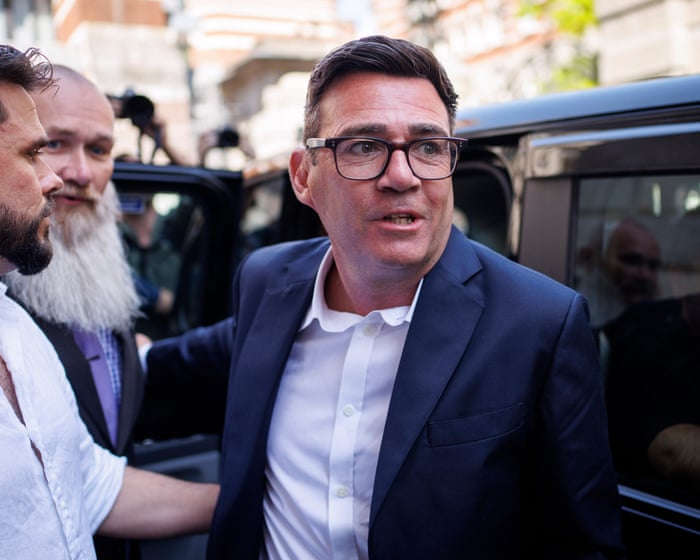
Andy Burnham’s chief economic adviser candidate, Jim O’Neill, has called for the UK government to borrow billions more to invest in infrastructure projects. He suggests creating an independent body to oversee this spending, which he believes would follow fiscal rules while increasing infrastructure investment.
Key Facts
Jim O’Neill, an economist and former minister, supports more government borrowing to fund infrastructure.
O’Neill proposes an independent body like the Office for Budget Responsibility to manage infrastructure spending.
The extra borrowing aims to boost major infrastructure projects while following current fiscal rules.
Andy Burnham is expected to become prime minister and is seen as proposing more left-leaning economic policies than Keir Starmer.
Burnham plans to give a speech outlining his policy ideas, including devolution and economic plans.
O’Neill has led the Northern Powerhouse Partnership, supporting northern England transport projects like a new Manchester Piccadilly underground station.
The proposal involves increasing borrowing while balancing it against assets to ease investor concerns.
O’Neill suggests turning the Treasury’s Nista agency into an independent transparent organization to show how projects will boost economic growth.
Read the Original
Want the full story? Tap a source to open the original
article.
The World Cup is expected to generate $17 billion in revenue across the United States. Businesses are seeing a big impact as international fans travel long distances to attend the event.
Key Facts
The World Cup is bringing a large number of international fans to the U.S.
Fans are traveling thousands of miles to attend games.
U.S. businesses expect to earn $17 billion from the event.
Business owners describe the event as an unprecedented opportunity.
The event is seen as a major boost to various industries in the U.S.
Media coverage includes interviews with fans and business owners about their experiences.
The World Cup is having a wide-reaching economic effect in the country.
Read the Original
Want the full story? Tap a source to open the original
article.
Clive Davis, a well-known music executive who recently passed away at age 94, helped develop the careers of many famous musicians over six decades. He worked closely with artists like Janis Joplin, Carlos Santana, and Bruce Springsteen, playing a key role in their success and shaping their music.
Key Facts
Clive Davis became president of Columbia Records at age 35.
He signed Janis Joplin after seeing her perform at the Monterey Pop festival.
Davis encouraged Joplin to release a shorter version of “Piece of My Heart” and to go solo.
He found Joplin’s song “Me and Bobby McGee” after her death, which was part of her acclaimed album “Pearl.”
Davis signed Carlos Santana to Columbia Records in 1968 and later helped create Santana’s successful 1999 album “Supernatural.”
“Supernatural” won eight Grammy awards, tying the record for most Grammys won by an album.
Davis signed Bruce Springsteen when he was 22 years old and urged him to rework his debut album for more commercial singles.
Throughout his career, Davis built strong relationships with artists and influenced multiple music genres.
Read the Original
Want the full story? Tap a source to open the original
article.
The UK accounting watchdog fined and temporarily banned the small audit firm King & King and its partner Milankumar Patel for serious failures in auditing companies owned by metals tycoon Sanjeev Gupta. The firm relied too much on fees from Gupta’s companies, violating rules that require auditors to be independent and objective.
Key Facts
King & King and Milankumar Patel were fined £378,184 and received a severe reprimand after a four-year investigation by the Financial Reporting Council (FRC).
The firm audited more than 140 companies linked to Gupta’s GFG Alliance between 2018 and 2020, including Liberty Steel and British Aluminium companies.
Nearly 41% of King & King’s 2021 revenue came from GFG Alliance companies, exceeding the 15% fee cap rule for auditors.
The firm failed to properly assess audit risks, income and expenses, financial disclosures, and whether companies could continue operating (going concern).
FRC updated rules to clarify the fee cap applies to groups of companies with the same owner.
GFG Alliance was involved in a major scandal related to Greensill Capital, which collapsed owing large loans from government-backed schemes.
The UK Serious Fraud Office is investigating GFG for suspected fraud, but the company denies any wrongdoing.
FRC banned Patel from future audits and ordered the refund of fees, emphasizing the need for auditor independence and ethics.
Read the Original
Want the full story? Tap a source to open the original
article.
In South Korea, workers at top AI chip companies like Samsung Electronics and SK Hynix have become some of the highest-paid employees due to strong demand and advancements in artificial intelligence. Their high salaries and bonuses have made these jobs very attractive and have increased the social status of these workers as marriage partners.
Key Facts
South Korea’s leading chipmakers, Samsung Electronics and SK Hynix, are major producers of memory chips.
The rise in artificial intelligence technology has boosted the value of these companies.
Workers at these companies have received large salary increases and bonuses, with some Samsung chip unit bonuses exceeding $400,000 this year.
Strong union activity has contributed to better pay for employees.
Jobs at these chip companies are highly desired due to high pay and status.
These workers are now seen as top marriage prospects in South Korea.
The article links the AI boom to the rising demand and value of chip manufacturing jobs.
Read the Original
Want the full story? Tap a source to open the original
article.
Many workers are choosing not to return to the office because of their personal values. This decision is driven more by what they believe is important than by simply rebelling against rules.
Key Facts
A large number of employees are not following orders to come back to physical offices.
Their choices are influenced mostly by their personal values.
This behavior is different from just refusing to comply.
Values can include work-life balance, comfort, or beliefs about productivity.
The trend reflects deeper changes in how people view work environments.
Employers face challenges in encouraging office returns.
The situation impacts company policies and workplace culture.
Read the Original
Want the full story? Tap a source to open the original
article.
South East Water has introduced a hosepipe ban in parts of southern England due to a sharp increase in water use during a heatwave. The ban aims to protect water supplies, especially for homes far from treatment plants or on higher ground.
Key Facts
The hosepipe ban applies to Kent, Sussex, Surrey, Hampshire, and Berkshire.
On June 21, South East Water treated and supplied 644 million litres, which is 56 million litres more than the usual daily amount in June.
Water demand is expected to rise further as temperatures climb in the coming days.
Other water companies advised people to reduce water use, such as not watering lawns.
Water shortages in other areas of the UK are caused by events like burst pipes and pollution incidents.
Yorkshire Water is providing bottled water to vulnerable customers to ensure they have access.
Experts say heatwaves increase water use and stress the need for water conservation.
South East Water is currently the only company to enforce a hosepipe ban.
Read the Original
Want the full story? Tap a source to open the original
article.
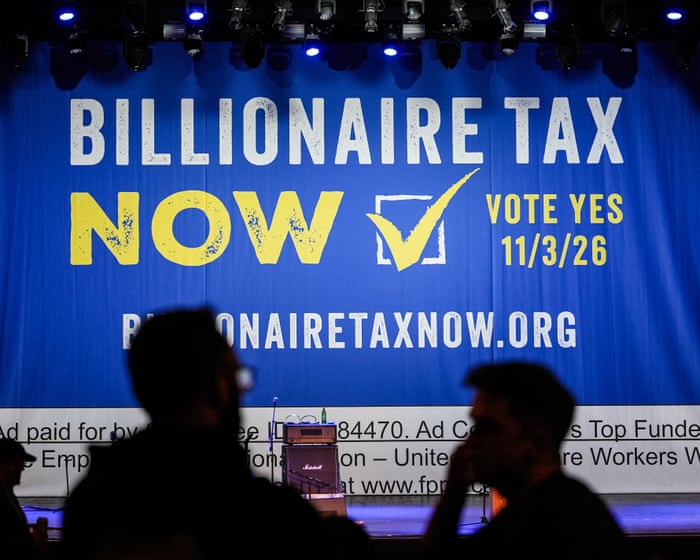
California is considering a new tax on billionaires to fund healthcare, food, and education programs. Tech billionaires are spending heavily to stop the tax, and the state’s governor is working to block or reduce the proposal before it goes to voters in November.
Key Facts
California’s billionaire tax would charge a one-time tax on residents worth over $1 billion.
The original tax rate was 5%, but it was lowered to 2% after negotiations.
The tax has passed the signature stage but still faces uncertainty about reaching the November ballot.
Tech leaders like Sergey Brin, Eric Schmidt, Larry Page, and Mark Zuckerberg oppose the tax and fund campaigns against it.
Some tech billionaires have left or are planning to leave California because of the tax threat.
Governor Gavin Newsom argues the tax would push billionaires out and reduce state revenue.
The Service Employees International Union-United Healthcare Workers West supports the tax as a way to fund social services.
Negotiations are ongoing to possibly withdraw or modify the tax before the June 25 deadline for the ballot.
Read the Original
Want the full story? Tap a source to open the original
article.
The Supreme Court ruled that tariffs put in place by President Donald Trump’s administration were unlawful and ordered refunds. However, only a small part of the $166 billion owed has been paid back, and the current refund process mainly helps large corporations while working families and small businesses receive little or no relief.
Key Facts
The Supreme Court declared certain tariffs from President Trump’s administration unlawful in February.
$166 billion in refunds were ordered, but only $21 billion has been repaid so far.
Another $40 billion is stuck because individuals must sue separately to get their refunds.
The refund process favors large importers who have legal resources to file complex claims.
Working families paid around $1,700 more per household due to these tariffs.
Small businesses, farmers, and manufacturers faced higher costs but have limited access to refunds.
The administration continues to impose similar new tariffs despite court rulings.
State officials urge changes to make refunds fair and transparent for consumers and small businesses.
Read the Original
Want the full story? Tap a source to open the original
article.
Virginia has agreed to add a new tax on electricity used by data centers starting July 2026 and ending before July 2028. This tax aims to raise up to $600 million a year to support the state budget, while new environmental rules will encourage data centers to use more water- and energy-efficient cooling methods.
Key Facts
Virginia will charge data centers $0.011 per kilowatt-hour of electricity starting July 1, 2026, ending before July 1, 2028.
The tax could generate up to $600 million annually for Virginia’s general fund.
Any revenue above $600 million will go into a special fund and be refunded to data centers proportionally.
Virginia is imposing a new tax rather than cutting existing tax breaks for data centers.
New environmental rules will focus on reducing water use for data center cooling, especially in areas with scarce groundwater.
The state’s Department of Environmental Quality will create plans to retrofit current data centers to use more efficient cooling systems.
Some lawmakers want data centers to pay more to fund social programs, while others worry the tax could hurt Virginia’s business climate.
Northern Virginia has the largest concentration of data centers in the world, with over 200 facilities.
Read the Original
Want the full story? Tap a source to open the original
article.
The CEO of People Inc., Neil Vogel, said Google is misusing its power by using the same tool to gather content for both its search engine and artificial intelligence (AI) projects. Vogel explained that blocking Google is hard because it uses one crawler for both purposes, which affects content owners and their revenues.
Key Facts
Neil Vogel is the CEO of People Inc., a large American publisher.
Google uses one web crawler for both search indexing and AI data collection.
Blocking Google’s crawler is difficult because it serves multiple Google services.
People Inc. previously partnered with Cloudflare to control AI crawlers through a permission-based system.
Publishers like People Inc. earn money from search traffic through ads and affiliate links.
People Inc. has AI content licensing agreements with Meta, OpenAI, and Microsoft.
Some deals let AI companies use content without limits; others are pay-as-you-go.
Vogel expects AI-publisher agreements will continue because publishers provide essential data inputs for AI.
Read the Original
Want the full story? Tap a source to open the original
article.