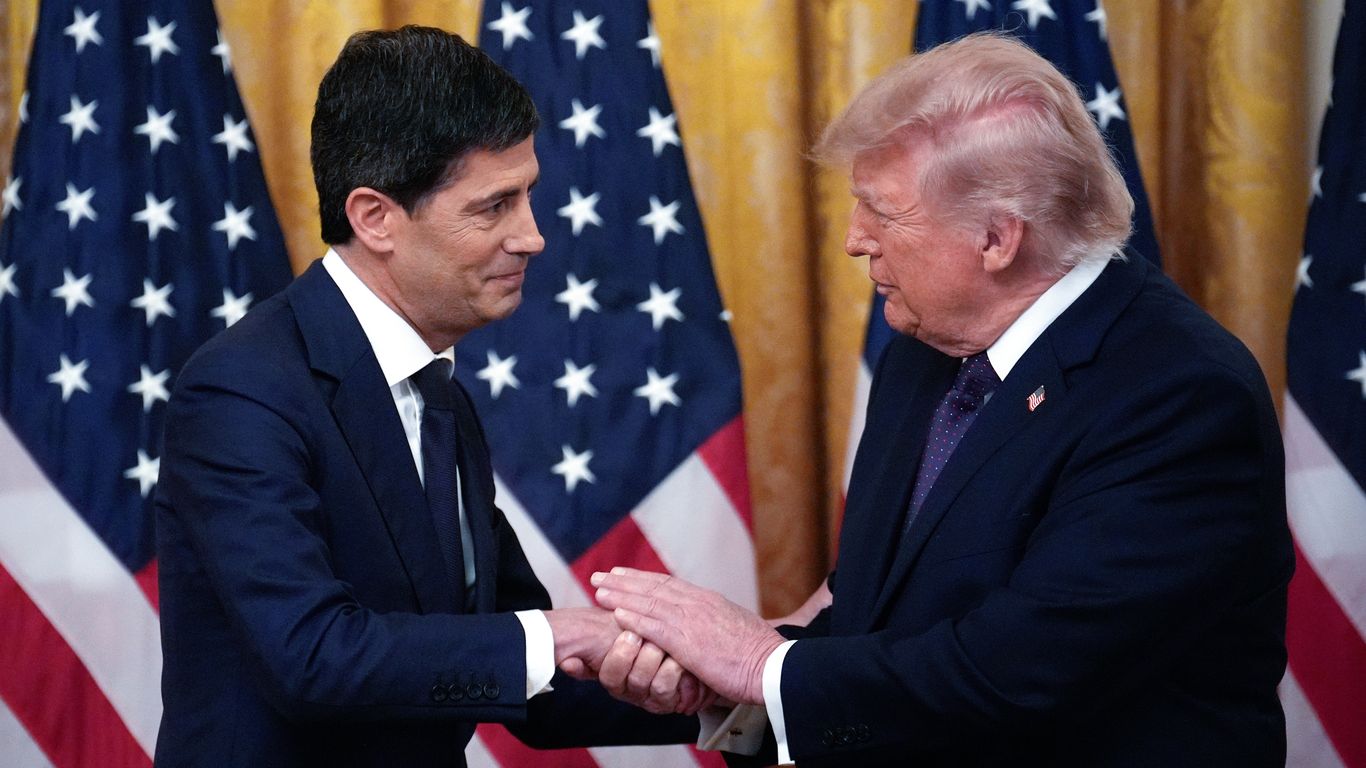
President Donald Trump said the US may put 100% tariffs on French wines if France does not remove its tax on American tech companies. French President Emmanuel Macron has refused to drop the tax, which raises hundreds of millions of euros each year.
Key Facts
President Trump threatened 100% tariffs on French wines.
The tariffs are a response to France’s digital services tax on tech companies.
The tax affects large US technology firms such as Apple, Amazon, and Facebook.
French President Emmanuel Macron has decided not to remove the digital services tax.
The tax generates hundreds of millions of euros for France’s government.
The threat was made before the G7 summit in the French Alps.
The issue is part of ongoing trade tensions between the US and France.
Read the Original
Want the full story? Tap a source to open the original
article.
Tyra Banks has sued Netflix and the makers of the docuseries "Reality Check: Inside America's Next Top Model," claiming they edited her interviews unfairly to create a false story. She says the show made it look like she ignored a sexual assault on the original series, which she denies.
Key Facts
Tyra Banks, who created and hosted "America's Next Top Model," filed a defamation lawsuit against Netflix and the docuseries’ directors.
She was interviewed for 3.5 hours, but the footage was cut down to 16 minutes, which she says misrepresented her statements.
The lawsuit alleges the docuseries falsely claims Banks ignored a contestant’s sexual assault and used it for ratings.
Banks says she was not informed or asked about the assault during her interview.
The docuseries included input from former judges on the show who Banks claims have personal grudges against her.
Banks was only allowed to see the docuseries one day before it was released and was denied access to the full interview footage.
Since the show's release, Banks has faced public criticism, including negative reviews of her ice cream shop in Australia.
Banks is seeking damages and wants to stop Netflix from using her image linked to the series’ soundtrack.
Read the Original
Want the full story? Tap a source to open the original
article.
The International African American Museum in Charleston, South Carolina, will furlough all its staff for 20 days spread between July and December due to financial challenges. The museum will remain open and officials say they chose furloughs to reduce costs without laying off employees.
Key Facts
The museum will furlough all staff, including leaders, for a total of 20 days from July to December.
The furlough days will be staggered, not continuous.
The museum cited financial pressure and changes in funding as reasons for the furloughs.
The goal is to reduce expenses and avoid laying off employees.
The museum opened on June 27, 2023, after about 20 years of planning.
It is located on Gadsden’s Wharf, where many enslaved Africans first arrived in the U.S.
Since opening, the museum has had over half a million visitors.
Museum officials want to focus on growing revenue and fundraising to stay financially stable.
Read the Original
Want the full story? Tap a source to open the original
article.
The Federal Reserve is very likely to keep interest rates the same in its June meeting. Many savers have been benefiting from high interest rates on certificates of deposit (CDs), which offer fixed returns above 4%. Savers should think carefully about whether to wait for potentially higher rates, which CD terms to pick, and how to spread their money across different account types.
Key Facts
The Fed meeting is scheduled for June 16 and 17, with a 99% chance rates will stay paused.
Chances of a rate cut are just over 1%, so rates are expected to remain steady.
Currently, many CDs offer fixed interest rates over 4%, depending on the term length.
Waiting for higher CD rates after a possible future rate hike might result in lost interest earnings now.
Short-term CDs (3-6 months) may be good if you expect rates to rise soon.
Long-term CDs can lock in current high rates if you expect rates to fall later.
Early withdrawal from CDs incurs penalties, so pick terms carefully.
Other savings options like high-yield savings and money market accounts offer competitive rates with more flexibility than CDs.
Read the Original
Want the full story? Tap a source to open the original
article.
Nvidia plans to raise $25 billion by selling bonds, its biggest debt sale in five years, to finance general corporate needs and repay existing debt. Strong investor interest and favorable market conditions have allowed the company to offer bonds with a range of maturities at relatively low costs.
Key Facts
Nvidia is issuing $25 billion in investment-grade bonds in the U.S., the largest since 2021.
The bond sale was increased from $20 billion after receiving over $85 billion in orders.
Bonds will have maturities ranging from 2 to 30 years.
The 10-year bond yield is expected to be 0.5 percentage points above U.S. Treasury bonds.
Nvidia will use the money for general corporate purposes, including repaying and refinancing existing debt.
This issuance will raise Nvidia’s total debt to about $30 billion, up from $8.5 billion.
The company benefits from high demand for AI-related technology and investment.
Nvidia holds a double-A credit rating, indicating strong creditworthiness.
Read the Original
Want the full story? Tap a source to open the original
article.
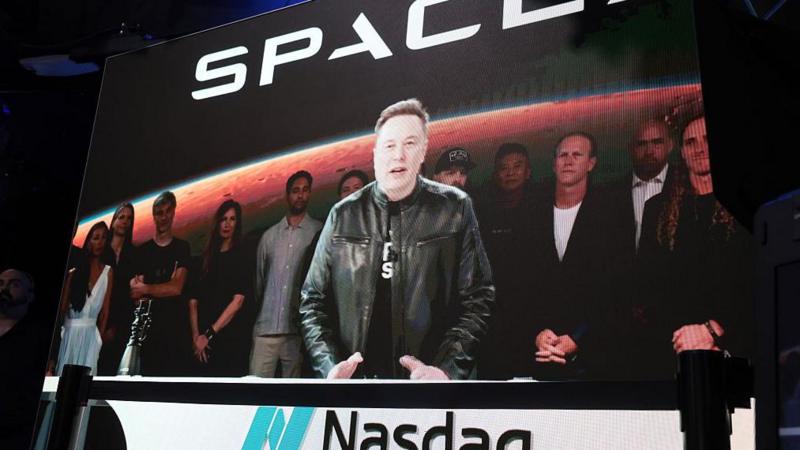
SpaceX raised $85.7 billion in its initial public offering (IPO), which is $10 billion more than first reported. The extra amount came from a financial tool called a "greenshoe" option that allows banks to sell additional shares if there is high demand.
Key Facts
SpaceX's IPO raised $85.7 billion, including an extra $10 billion through a "greenshoe" clause.
The IPO took place on the Nasdaq stock exchange.
The "greenshoe" option lets banks sell more shares than originally planned to meet high demand.
Banks involved included Goldman Sachs, Bank of America, and JPMorgan.
SpaceX's share price jumped from $135 to $184 on the first full trading day, a 14% increase.
Elon Musk became a trillionaire due to the increase in SpaceX’s stock value.
Most of Elon Musk’s wealth is tied to SpaceX shares, making his wealth dependent on the stock price.
Analysts warned that SpaceX’s high valuation might be risky because the company is still losing money and faces competition and regulatory challenges.
Read the Original
Want the full story? Tap a source to open the original
article.
Canada is closing its human rights watchdog that investigated forced labour claims involving Canadian companies abroad. The government plans new laws to better track products tied to forced labour and require importers to show their goods are free of slavery.
Key Facts
Canada’s watchdog called the Canadian Ombudsperson for Responsible Enterprise (CORE) started in 2019.
CORE focused on investigating forced labour, especially related to China’s treatment of the Uyghur minority.
Over six years, CORE launched only five investigations and issued formal recommendations against two companies.
Canadian officials said CORE was not effective and resources would be better used elsewhere.
Some politicians want CORE strengthened, not eliminated, to better fight human rights abuses.
New Canadian laws will create a public list of products linked to forced labour and require importers to prove their goods are slavery-free.
The US government criticized Canada and others for weak enforcement on forced labour and threatened tariffs on Canadian goods.
Canada’s finance minister previously highlighted CORE as a way to help prevent forced labour in supply chains during trade talks with China.
Read the Original
Want the full story? Tap a source to open the original
article.
Fox Corporation will buy Roku Inc. for about $22 billion. The deal will combine Fox’s TV channels and streaming services with Roku’s platform, advertising business, and streaming devices.
Key Facts
Fox agreed to pay $160 per share to buy Roku, valuing the deal at around $22 billion.
The merger will combine Fox’s channels (Fox, Fox News, Fox Business, FS1) and streaming platforms like Tubi with Roku’s The Roku Channel and hardware.
Roku has about 100 million households using its platform.
Roku’s main profit comes from its advertising and subscription business, not hardware.
Fox expects to own about 73% of the combined company, with Roku shareholders owning about 27%.
Fox will take on $8 million in debt to buy Roku and plans to cut $400 million in combined costs.
The combined company would become the third-largest TV viewer by market share in the U.S.
The deal needs government approval and shareholder votes and should finish in the first half of 2027.
Read the Original
Want the full story? Tap a source to open the original
article.
Chicago’s Rookery Building, completed in 1888, is the oldest existing steel-frame high-rise in the United States and an important example of early skyscraper design. The building uses a mix of traditional masonry and new steel-support methods that helped pave the way for modern tall buildings, and its preservation reflects a growing trend to reuse historic structures to reduce environmental impact.
Key Facts
The Rookery Building was commissioned in 1885 and finished in 1888, standing 12 stories tall at 181 feet.
It is the oldest surviving building in the US that uses a steel-frame structure to support its weight.
The Rookery combines masonry walls with internal iron and steel supports, a hybrid method that helped solve engineering challenges.
Its steel-grillage foundation spreads the building’s weight over Chicago’s soft soil, allowing taller buildings on difficult ground.
The building’s architecture mixes Byzantine, Venetian, and Islamic design elements.
Chicago’s Home Insurance Building (1884-1885) was the first steel-frame skyscraper but was demolished in 1931.
Nearly half of US buildings are over 50 years old, and adaptive reuse is growing, with 25,000 apartments created from converted buildings in 2024.
Reusing old buildings can reduce carbon emissions from construction by 50 to 75 percent, helping environmental goals.
Read the Original
Want the full story? Tap a source to open the original
article.
Pet insurance helps pet owners manage the high costs of veterinary care by reducing financial pressure. This insurance makes advanced treatments more affordable and helps owners spend more on ongoing pet care like preventive services and better food.
Key Facts
Veterinary care costs have increased, including specialty treatments and medications.
Advanced veterinary services like surgeries and cancer therapies are now common but expensive.
Pet insurance covers part of medical bills after deductibles and reimbursements.
Insurance helps owners afford advanced treatments that might otherwise be too costly.
It protects pet budgets from large unexpected expenses, allowing continued spending on preventive care.
Owners can choose better quality care instead of defaulting to the cheapest option when insured.
Pet insurance is not free care; owners still pay some costs but with less financial strain.
Having insurance can improve a pet’s overall health by supporting ongoing wellness spending.
Read the Original
Want the full story? Tap a source to open the original
article.
A $35,000 certificate of deposit (CD) account can earn between about $340 and nearly $3,000 in interest depending on the term chosen, with fixed rates currently much higher than traditional savings accounts. Money market accounts offer slightly lower but variable interest rates and more flexibility accessing funds.
Key Facts
CDs have fixed interest rates that vary by term length and lender.
A 3-month CD at 3.95% earns about $341 in interest on $35,000.
A 2-year CD at 4.16% earns nearly $3,000 on $35,000.
Interest is guaranteed if the CD is held until maturity; early withdrawal may cause a penalty.
Traditional savings accounts currently pay an average of 0.38%, much lower than CDs.
Money market accounts have variable rates around 3.90% now and allow easier access to funds.
Money market rates could rise or fall, while CD rates remain fixed for the term.
CDs are insured by the FDIC up to $250,000, offering protection for deposits.
Read the Original
Want the full story? Tap a source to open the original
article.
Larry Warsh, an art collector and co-editor of a new book on Keith Haring, highlights the artist’s 3D works featured in an upcoming Crystal Bridges Museum exhibition. The show, running from June 2026 to January 2027, presents Haring’s sculptures, masks, clothing, and other objects to showcase his impact beyond flat paintings and subway art.
Key Facts
Larry Warsh is a longtime art collector and co-editor of the book "Keith Haring in 3D."
The Crystal Bridges Museum in Bentonville, Arkansas will hold the exhibition from June 6, 2026, to January 25, 2027.
This is the first major show focusing on Keith Haring’s three-dimensional art.
The exhibition includes sculptures, totems, masks, painted objects, clothing, boomboxes, and a 1963 Buick Special.
Warsh was part of the 1980s New York downtown art scene alongside Haring, Basquiat, and others.
Warsh emphasizes Haring’s skill in making art that connects with people socially and physically.
The show highlights how Haring brought his graphic style into everyday objects and public spaces.
Warsh compares Haring’s approach to art and commerce to artists like Andy Warhol and Salvador Dalí.
Read the Original
Want the full story? Tap a source to open the original
article.
Fox Corporation has agreed to buy streaming company Roku in a deal worth about $22 billion, combining cash and stock payments. The companies say Roku will keep operating as a platform open to partners, and the merger will create the third-largest U.S. TV viewing company.
Key Facts
Fox will pay $96 in cash and nearly one share of Fox stock for each Roku share.
The deal values Roku at about $160 per share and totals roughly $22 billion including debt.
After the deal, Fox shareholders will own about 73% of the new company, and Roku shareholders will own about 27%.
The merger is expected to finish in the first half of next year, pending shareholder and regulatory approvals.
Roku will keep running as an open platform, with Roku CEO Anthony Wood staying on and joining the Fox board.
Fox gains access to Roku’s streaming platform, which reaches over 100 million households worldwide.
The combined company will be the third-largest U.S. television player by viewing share.
Fox currently operates a large network of sports, news, and entertainment channels, and owns Tubi, a streaming service it bought in 2020.
Read the Original
Want the full story? Tap a source to open the original
article.
Electricity costs in the U.S. are expected to reach record levels this summer due to higher prices and hotter weather. A new report estimates that the average American household will spend about $800 on electricity from June to September, which is more than 10% higher than last year.
Key Facts
Americans will spend nearly $800 on electricity this summer, up 10.5% from last year.
Rising electricity prices are linked to increased energy demand and investments in upgrading the power grid.
The cost increase is partly due to the need for more energy to cool homes during hotter summers.
From 2019 to 2024, the average monthly electric bill rose by about 23%.
Arizona is expected to have the highest summer electricity costs at around $1,060 per household, up nearly 14% from last year.
Connecticut follows with an estimated $944 per household, up about 11%.
Washington and North Dakota are projected to have the lowest summer electricity costs at $488.
One in six U.S. households is behind on utility payments, and many Americans feel financially worse off than a year ago due to inflation and rising costs.
Read the Original
Want the full story? Tap a source to open the original
article.
The 2026 World Cup in the United States is expected to boost the U.S. economy by about $9.6 billion, which is nearly double the economic impact of Taylor Swift's Eras Tour. While the World Cup brings many international visitors, Taylor Swift's tour mostly attracted local fans, limiting its nationwide economic impact.
Key Facts
The World Cup is estimated to add $9.6 billion to the U.S. economy.
Globally, the World Cup is expected to increase GDP by $21.1 billion.
Taylor Swift's Eras Tour boosted U.S. GDP by about $4.9 billion.
The World Cup attracts visitors from many countries, including Europe.
Many World Cup visitors stay longer and spend more on hotels, food, and travel.
Taylor Swift’s concerts mostly drew fans living within 200 miles of the show locations.
Taylor Swift sold over $2 billion in tickets, breaking previous concert sale records.
FIFA and President Donald Trump praised the ticket sales for the World Cup, but many matches are not sold out.
Read the Original
Want the full story? Tap a source to open the original
article.
Fox Corp. will buy Roku, a streaming service company, in a deal worth about $22 billion. The combined company aims to become the third-largest TV viewer platform in the U.S., with no immediate changes expected for Roku users.
Key Facts
Fox Corp. agreed to buy Roku in a cash-and-stock deal valued at around $22 billion, including debt.
Roku will continue as an open platform that works with many partners.
The merger will create the third-largest U.S. TV viewing platform by audience share.
Fox will gain access to over 100 million global households and Roku’s streaming channel and data.
Fox already owns sports, news, entertainment networks, and the streaming service Tubi.
Roku’s CEO and founder, Anthony Wood, will stay with the company and join Fox’s board.
Fox shareholders will own about 73% of the new company; Roku shareholders will own about 27%.
The deal needs shareholder and regulatory approval and should close in the first half of next year.
Read the Original
Want the full story? Tap a source to open the original
article.
A possible peace deal between the U.S. and Iran could help reduce inflation by reopening the Strait of Hormuz, a key route for oil shipments. Although ships are beginning to move through the strait again, some risks and delays remain due to conflict damage and the need for repairs.
Key Facts
President Donald Trump announced that ships loaded with oil are starting to pass through the Strait of Hormuz again.
The Strait of Hormuz is a crucial route for shipping oil, fertilizer, and other industrial goods.
There are still risks from underwater mines and conflict damage that raise insurance costs for passage through the strait.
Repairing the strait to ensure safe travel could take several weeks.
Oil shipments and other supplies are expected to increase gradually, not immediately.
The peace deal between the U.S. and Iran may lower geopolitical risks that affect global supply chains.
These changes could help reduce inflation by improving the flow of goods and energy prices.
The Federal Reserve is watching these developments as it makes decisions about inflation and economic policy.
Read the Original
Want the full story? Tap a source to open the original
article.
The Crystal Bridges Museum of American Art in Bentonville, Arkansas, has expanded its campus by 50 percent with new galleries, studios, and public spaces. The expansion aims to provide visitors with more ways to experience American art, connect with nature, and support artists through new exhibitions and programs.
Key Facts
Crystal Bridges added 114,000 square feet to its campus, increasing its size by half.
The expansion includes new galleries, studios, gathering areas, and an elevated café.
The museum’s goal is to offer more access and diverse stories in American art.
The first major exhibit in the new space features Keith Haring’s 3D artwork.
The museum emphasizes a smooth visitor experience linking art with the natural Ozark landscape.
New designs by Safdie Architects strengthen connections between indoor galleries and outdoor trails and ponds.
Crystal Bridges supports artists through residencies and ongoing creative programs.
The expansion encourages visitors to find personal connections and deeper understanding of art.
Read the Original
Want the full story? Tap a source to open the original
article.
Kevin Warsh is leading his first meeting as chairman of the Federal Reserve. He faces rising inflation, pressure from members who want higher interest rates, and decisions about how the Fed will communicate its plans. His approach could change how the Fed handles economic policy and talks to the public.
Key Facts
Kevin Warsh is the new Federal Reserve chairman holding his first policy meeting.
Inflation has been rising this year, causing uncertainty about planned interest rate cuts.
Some Fed officials want to raise interest rates to control inflation.
Warsh has called inflation a choice and believes the Fed must take responsibility.
He thinks new technologies and earlier government policies can help growth without causing inflation.
The Fed might remove language suggesting future interest rate cuts from its official statements.
Warsh may reduce how much the Fed communicates detailed future plans, different from his predecessor.
Observers will watch closely to see how Warsh’s leadership changes Fed policy and communication.
Read the Original
Want the full story? Tap a source to open the original
article.
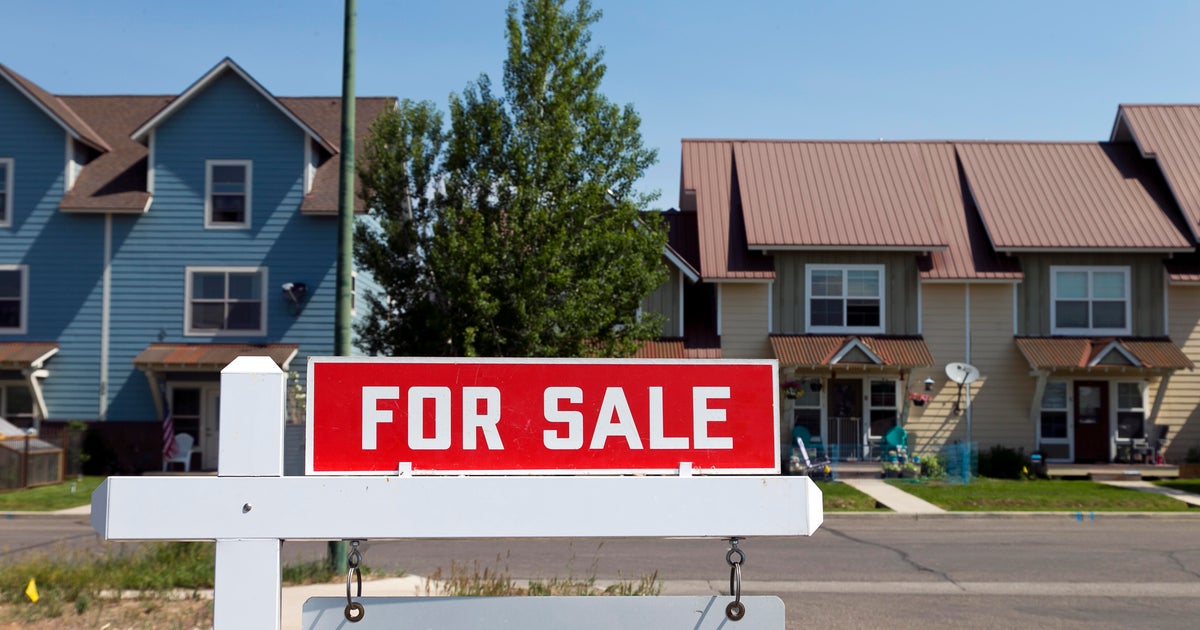
The number of U.S. cities where the cheapest homes cost $1 million or more has grown to 242, tripling since 2020. High home prices are mostly found in California and the Northeast, driven by housing shortages and strong demand during the pandemic.
Key Facts
A "starter home" is defined as a home in the lowest third of home values in a region.
242 U.S. cities now have starter homes costing at least $1 million.
This number has tripled since 2020.
The median U.S. home price is about $418,000.
The typical starter home costs just under $199,000 nationally.
Buyers need an annual income of about $117,000 to afford the average home.
California has 105 cities with million-dollar starter homes, the most of any state.
26 states now have at least one city with starter homes costing $1 million or more, up from 9 states before the pandemic.
The Northeast has more expensive homes due to ongoing housing shortages, while some Sun Belt areas have built more homes, easing price growth.
Read the Original
Want the full story? Tap a source to open the original
article.