Oil prices increased after Iran attacked a U.S. airbase in response to American air strikes. The amount of commercial shipping passing through the Strait of Hormuz dropped to nearly zero due to the rising conflict.
Key Facts
Iran said it attacked a U.S. airbase after U.S. strikes near the Strait of Hormuz.
The Strait of Hormuz is a key route for oil shipments.
Commercial traffic through the Strait of Hormuz fell sharply to almost none.
Benchmark crude oil prices rose on May 28, 2026.
The U.S. and Iran are engaged in escalating military actions in the region.
President Trump stated no country would control the Strait of Hormuz under future agreements.
Other related business news includes Australia suing 3M over chemicals and Brazil supporting more oil exploration in the Amazon.
Read the Original
Want the full story? Tap a source to open the original
article.
The unemployment rate for recent college graduates is higher than the general rate, with some experts suggesting artificial intelligence (AI) may be a factor. Studies show AI might reduce entry-level jobs in some fields, but economists disagree on how much AI is causing the hiring slowdown.
Key Facts
The unemployment rate for recent college graduates is 5.6%, compared to 4.2% overall.
The job market for college graduates in early 2026 is considered challenging by the New York Federal Reserve.
AI technology could cut U.S. entry-level jobs by half by 2030, according to Anthropic CEO Dario Amodei.
Some industries vulnerable to AI, like customer service and software development, saw a 16% decline in jobs for young workers aged 22-25.
A Stanford study linked this decline to the release of ChatGPT in late 2022.
In industries less affected by AI, young worker employment kept pace with older employees.
Experts disagree if AI is the main reason for the weak job market or if other factors like a general slowdown in hiring explain it.
Healthcare jobs, less vulnerable to AI, may offer quicker hiring opportunities for graduates.
Read the Original
Want the full story? Tap a source to open the original
article.
French President Emmanuel Macron announced large private investments to support France’s plan to use more electricity and less fossil fuels. About 200 companies agreed to help increase electricity’s share of the country’s energy to 60% by 2030, including a €1 billion electric vehicle project by Stellantis.
Key Facts
President Macron supports moving France away from fossil fuels toward more electricity use.
The goal is to have electricity make up 60% of France’s energy by 2030, doubling the current amount.
Around 200 companies signed a national agreement to support this energy shift.
Stellantis, a car maker, plans a €1 billion project focused on electric vehicles (EVs).
The meeting is called the "electrification team" gathering.
BP’s chairman Albert Manifold was fired over serious concerns about governance and conduct.
The French government aims to boost electric vehicle production and use.
This initiative is part of France’s broader efforts to reduce climate change impacts.
Read the Original
Want the full story? Tap a source to open the original
article.
Albert Manifold, the former chair of BP, denied allegations of aggressive behavior and misconduct that led to his sudden removal after less than a year. BP said it had serious concerns about his governance and conduct, but plans to continue the current company strategy under new leadership.
Key Facts
Albert Manifold was removed as BP chair less than eight months after starting in October 2025.
BP cited serious concerns about Manifold’s governance, oversight, and conduct for his immediate departure.
Manifold denied the accusations, calling them lies and saying no one raised issues about his behavior while he was chairman.
Media reports described Manifold's behavior as aggressive and claimed he wanted too much control, which he disputed.
Manifold said he pushed hard on cutting costs and improving performance but rejected claims about his conduct.
He avoided usual executive perks like chauffeur-driven cars, private jets, and corporate hospitality to set an example during cost cuts.
BP named Ian Tyler as interim chair and said Chief Executive Meg O’Neill will continue the company’s strategy.
BP stated it supports its employees and stands by its statement about Manifold’s behavior.
Read the Original
Want the full story? Tap a source to open the original
article.
Many big companies spent a lot of money on artificial intelligence (AI) but are now unsure if it is worth the cost. They face high bills, unclear benefits, and workers who do not always support using AI at work.
Key Facts
Microsoft cut back on most of its AI software licenses partly due to high costs.
Uber’s chief operations officer said AI expenses are becoming difficult to justify.
One company spent $500 million in a single month because it did not limit employee AI use.
Some companies use AI as a reason to reduce their workforce, though this may be mainly to manage expenses.
Workers and customers are becoming less positive about AI use.
AI currently works best for coding tasks but not as well for other business areas.
Companies often automate tasks they dislike instead of those that bring the most money.
AI costs can increase quickly because many AI services charge based on how much they are used, even for simple questions.
Read the Original
Want the full story? Tap a source to open the original
article.
The UK government announced that from mid-2027, new rules will remove many paperwork and border checks on British food exports to the EU. This change aims to help UK food businesses sell products more easily in Europe, reduce costs, and support jobs.
Key Facts
Starting mid-2027, UK meat exporters will no longer need veterinary certificates to prove their products meet EU rules.
Plant and wood packaging exports to the EU will also be free from certain health paperwork.
Businesses selling food to Northern Ireland will not need health labels anymore.
The deal covers rules on additives, animal breeding, pesticides, organic products, and farm feed.
The government expects this deal to add about £5.1 billion each year to the UK economy.
Around 16,000 UK food companies stopped exporting to the EU after Brexit due to complex paperwork.
Current paperwork fees can be up to £200 per shipment, causing delays and extra costs.
UK and EU officials aim to complete the agreement before their summit on 13 July 2024.
Read the Original
Want the full story? Tap a source to open the original
article.
Morocco has become the top industrialized country in Africa, surpassing South Africa for the first time since 2010, according to the African Development Bank’s 2025 Africa Industrialisation Index. The report highlights Morocco’s steady industrial growth, export variety, and strategic policies, while noting that overall industrial progress in Africa remains slow and uneven.
Key Facts
Morocco leads Africa’s industrialisation index with a score of 0.8415, just ahead of South Africa’s 0.8396.
South Africa’s industrial competitiveness score declined from 0.8819 in 2010 to 0.8396 in 2024.
The index measures industrialisation based on performance, direct drivers (like investment and infrastructure), and indirect factors (such as business environment and inflation).
Four Arab countries (Morocco, Egypt, Tunisia, Algeria) rank among the top six industrial economies in Africa.
North Africa is the most industrialised region, followed by Southern Africa, Central, West, and East Africa.
Africa’s manufacturing value added grew from $285 billion in 2020 to $351 billion in 2025, but the continent still makes less than 2% of the world’s manufacturing output.
Intra-African trade is low at 14.4% of total trade, much less than Asia (60%) and Europe (57%), partly due to trade barriers and weak infrastructure.
The African Continental Free Trade Area (AfCFTA) could boost incomes by 7% and add up to $450 billion in value if it shifts focus from trade alone to also supporting production and regional supply chains.
Read the Original
Want the full story? Tap a source to open the original
article.
The price of coffee, such as a latte in London, has risen significantly due to many global economic factors. Weather problems in major coffee-growing countries have raised the cost of coffee beans, pushing prices to levels not seen in decades.
Key Facts
A latte in central London can cost close to £5, reflecting higher coffee prices.
Starbucks' CEO described a $9 coffee experience in the US as "affordable," sparking debate.
Coffee carts pay lower fees than shops but still face rising costs at every step.
Coffee prices reveal wider global economic issues, including inflation, trade problems, climate change, and demand in China.
Coffee farming dates back to 1895 with espresso’s invention in Italy.
Arabica beans are hand-picked in countries like Brazil, Ethiopia, and Kenya; robusta beans are mostly machine-harvested in Vietnam.
Climate events like droughts, typhoons, and frosts have caused coffee prices to rise sharply in recent years.
Arabica prices peaked above $4 per pound in 2023, up from about $1.20 historically; robusta prices also surged.
Read the Original
Want the full story? Tap a source to open the original
article.
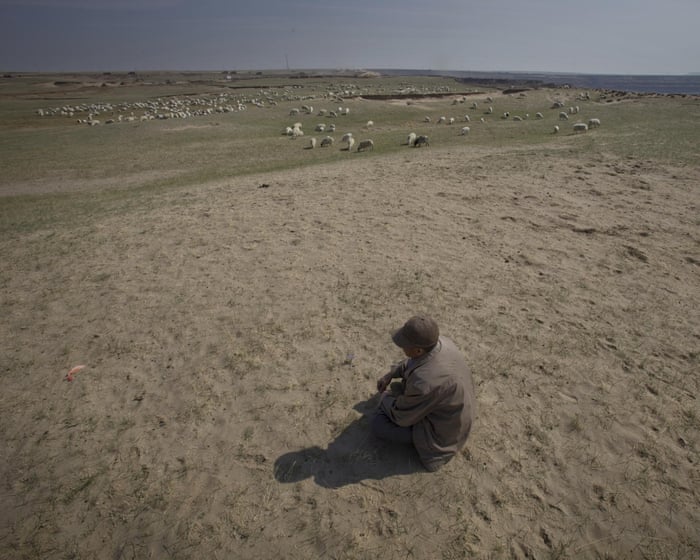
A Chinese farm owner in Inner Mongolia successfully hired four shepherds after his job ad went viral on social media, attracting many applicants from crowded cities. His offer of higher-than-average pay and simple rural work drew attention amid China's tough job market and widespread long working hours culture.
Key Facts
Zuo Xiaoyong posted an ad seeking two shepherds to care for 3,000 sheep on his Inner Mongolia ranch.
The job pays about 8,000 yuan ($1,180) monthly, above China’s urban average salary of 6,000 yuan.
The job involves outdoor work in summer and indoor tasks in winter with temperatures below -30°C.
The ad gained about 59 million views on Weibo, China’s social media platform.
Over 700 people applied, including recent graduates, factory workers, and office employees.
China’s official unemployment rate is 5.2%, but youth unemployment is higher at 16.9%.
Many workers want to escape the "996" work culture: working from 9 a.m. to 9 p.m., six days a week.
Zuo ended up hiring four shepherds (two couples) with prior farm experience and prefers couples due to the remote location.
Read the Original
Want the full story? Tap a source to open the original
article.
Experts warn that Britain is facing a growing food crisis due to extreme weather, high inflation, and the effects of the war in Iran. They say the government is not doing enough to prepare for problems like lower crop yields, higher food prices, and supply chain disruptions.
Key Facts
Britain is experiencing a heatwave and dry spring causing stress to crops and livestock.
Food prices are expected to be 50% higher this November compared to five years ago.
The Iran war is contributing to high fuel and fertiliser costs, affecting food production.
The government has avoided imposing price controls on staple foods despite inflation concerns.
A group of food experts wrote to ministers urging an update to the national food strategy.
Experts want more focus on domestic food production, supply chain preparedness, and affordable healthy food.
Some experts say food security should be treated as a national security issue.
There is concern that food supply problems could cause social unrest and economic strain.
Read the Original
Want the full story? Tap a source to open the original
article.
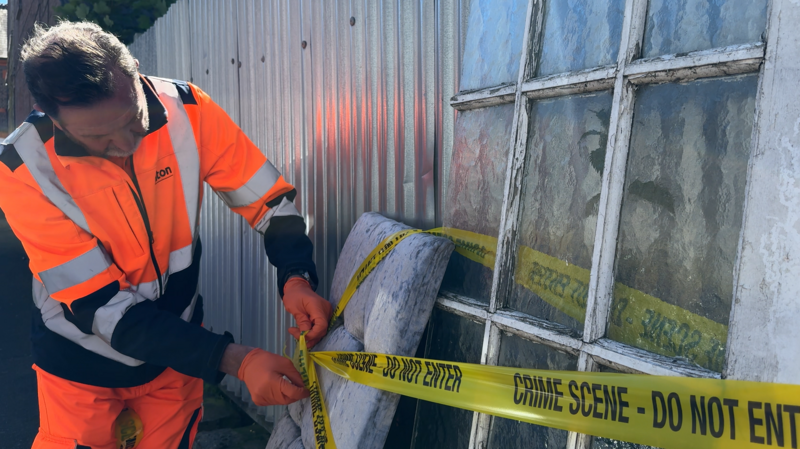
Luton Council in England is using crime scene tactics, like yellow "crime scene" tape and investigations, to catch people who illegally dump rubbish, called fly-tipping. This new method aims to identify those responsible by searching for evidence in dumped waste and has been introduced because fly-tipping has increased and traditional clean-ups were not working.
Key Facts
Luton Council started a trial in September using crime scene methods to fight fly-tipping, marking dumped rubbish with tape and searching for clues like delivery labels.
Fly-tipping includes illegal dumping of items like furniture, mattresses, toys, and household waste on streets.
Luton has the highest fly-tipping incidents in the East of England region.
In 2024-25, local authorities in England dealt with 1.26 million fly-tipping cases, a 9% rise from the previous year.
The council leaves dumped rubbish for 3 days marked with tape to show it is under investigation, while food waste in bins is cleared faster.
CCTV cameras have been added in problem spots to help catch offenders.
Causes of fly-tipping include expensive housing, more shared housing (HMOs), illegal dumping by waste operators, and confusion over who is responsible for rubbish.
Fly-tipping causes health risks, harms wildlife, and costs local councils and landowners money to clean up.
Read the Original
Want the full story? Tap a source to open the original
article.
The Australian government is suing the company 3M for more than $2 billion over pollution caused by PFAS chemicals in firefighting foam used at defense bases. The government says these “forever chemicals” caused major environmental and health problems, and 3M did not properly warn about the risks.
Key Facts
Australia sued 3M for over $2 billion (US$1.4 billion) due to PFAS contamination at defense sites.
PFAS are called “forever chemicals” because they do not break down easily in the environment.
PFAS were used in firefighting foam at 28 Australian defense bases, causing soil and water pollution.
More than 200,000 tonnes of contaminated soil and 13 billion liters of water have been used to clean these sites.
The Australian government claims 3M and its Australian branch hid information about the dangers of PFAS.
3M stopped selling PFAS products in Australia about 20 years ago but denies manufacturing PFAS there.
PFAS are linked to health risks like liver damage, lower birth weight, and testicular cancer.
3M settled a $10.3 billion case in the US related to PFAS pollution in 2023.
Read the Original
Want the full story? Tap a source to open the original
article.
Santos will pause work on its Narrabri gas project in New South Wales while it waits for final approvals and instead focus on expanding its exploration in the Beetaloo Basin in the Northern Territory. The company will review the future of Narrabri after 2027 following appraisal of its Beetaloo reserves and plans fewer efforts on some eastern assets.
Key Facts
Santos CEO Kevin Gallagher said the company will not spend money or effort on the Narrabri gas project right now.
The company is prioritizing exploration in the Beetaloo Basin, believing it has enough gas for over 50 years of supply.
A strategic review found that Santos’ gas reserves in eastern Queensland and Western Australia’s Browse Basin are lower in priority.
The Narrabri gas project still lacks some key approvals, including a production license and pipeline development permission.
The project faces opposition from landowners and a legal challenge by Gomeroi traditional owners under native laws.
NSW Premier Chris Minns supports the gas project, stating the state still needs gas alongside renewable energy targets.
Opponents say delaying the project prolongs uncertainty and harms local communities, farmland, and water supplies.
Santos continues to seek necessary regulatory approvals while focusing on its Beetaloo Basin activities.
Read the Original
Want the full story? Tap a source to open the original
article.
Piper Rockelle, a former child influencer who recently turned 18, started an account on OnlyFans, a platform where creators share content and earn money from subscribers. She claims to have made nearly $3 million in her first day and is expected to make over $40 million in her first year according to her manager.
Key Facts
Piper Rockelle announced publicly that she would start an OnlyFans account on January 1, soon after turning 18.
OnlyFans is a website where creators sell content directly to their fans.
Rockelle shared photos on the platform wearing playful, teenage-style outfits in her bedroom setting.
She claims to have earned $2.9 million in her first 24 hours on OnlyFans.
Her business manager predicts she could make more than $40 million in her first year on the site.
It is difficult to verify earnings because many OnlyFans stars report different amounts.
OnlyFans has paid creators a total of $25 billion since 2016, with top earners reportedly making tens of millions annually.
Rockelle is among the top 0.012% of earners on OnlyFans.
Read the Original
Want the full story? Tap a source to open the original
article.
Australia is suing the US company 3M for 2 billion Australian dollars (about 1.4 billion US dollars) because of toxic chemicals called PFAS found in firefighting foam. The government says 3M hid information about the dangers of the foam, which polluted many defense sites across Australia.
Key Facts
Australia filed a lawsuit against 3M for 2 billion Australian dollars over harmful chemicals in firefighting foam.
The chemicals involved are called PFAS, which do not break down easily and can harm people and the environment.
The foam contaminated 28 defense locations in Australia, causing large cleanup costs.
Australia claims 3M knew about the risks but gave false information about the foam’s safety.
3M stopped selling firefighting foam containing PFAS in Australia 20 years ago but denies making PFAS in the country.
The government has already spent over 1 billion Australian dollars on investigating and cleaning PFAS contamination.
PFAS are used in many products because they resist water and stains but can build up in soil, water, food, and the human body.
3M said it will defend itself in court, and noted the government’s Defence Department kept using the foam after 3M stopped selling it.
Read the Original
Want the full story? Tap a source to open the original
article.
Patagonia has sued environmentalist drag queen Pattie Gonia for trademark infringement after Pattie Gonia applied to register the name for clothing and activism. Patagonia says it tried to resolve the issue for years but must protect its brand, while Pattie Gonia says the lawsuit threatens their activism and identity.
Key Facts
Patagonia filed a trademark lawsuit on January 21 in a federal court in Los Angeles.
The lawsuit demands $1 in damages plus legal fees.
Pattie Gonia, performed by Wyn Wiley, is a drag queen and environmental activist with millions of followers.
Wiley applied for a trademark for “Pattie Gonia” in September to use for apparel and activism.
Patagonia claims this would harm its brand, which has existed for 50 years.
Patagonia says it tried multiple times to reach a peaceful agreement to protect its trademark.
Wiley says drag uses parody and denies copying Patagonia’s logo or font.
Patagonia founder Yvon Chouinard gave the company away to a trust that uses profits to protect the planet.
Read the Original
Want the full story? Tap a source to open the original
article.
CEOs of S&P 500 companies received a median pay increase of nearly 6% in 2025, with the median compensation rising to $17.7 million. This growth rate is the slowest since 2022, when median pay increased by about 1%.
Key Facts
The median pay for CEOs in the S&P 500 was $17.7 million in 2025.
CEO pay grew by almost 6% compared to the previous year.
This 6% increase is the smallest annual growth since 2022.
In 2022, CEO pay grew by about 1%.
The data comes from a survey by the Associated Press.
Ken Sweet, an AP banking reporter, contributed to the analysis.
The S&P 500 includes 500 major U.S. companies by market size.
Read the Original
Want the full story? Tap a source to open the original
article.
Fifa is being investigated by New York and New Jersey attorneys general over claims that it raised World Cup ticket prices unfairly and misled fans about where their seats were located. The investigation focuses on allegations that Fifa sold more expensive front-row tickets after initial sales and did not give clear information to buyers.
Key Facts
New York and New Jersey attorneys general launched an investigation into Fifa's ticket pricing for the 2026 World Cup.
The investigation alleges Fifa artificially increased prices for tickets.
Fans are said to have been misled about seat locations.
More expensive "front" category tickets were released after the first batch of tickets sold out.
Fifa President Gianni Infantino defended the prices, saying they reflect high demand.
Fifa has not made any comment on the current investigation.
The World Cup event is happening very soon, adding urgency to the investigation.
Read the Original
Want the full story? Tap a source to open the original
article.
Simon Robinson from Reuters is expected to become the new news director of ABC, replacing Justin Stevens who resigned after four years. Robinson has extensive experience in journalism and newsroom leadership, while Stevens cited personal and professional reasons for leaving.
Key Facts
Justin Stevens resigned as ABC news director after four years on the job.
Stevens was responsible for 2,000 journalists across Australia.
ABC managing director Hugh Marks said Stevens wanted to pursue other careers.
Simon Robinson, a Reuters executive, is expected to take over as ABC news director.
Robinson has worked at Reuters for 16 years and helps lead a newsroom of 2,600 people.
Robinson has experience as a correspondent, editor, and newsroom leader.
Stevens worked at ABC for 19 years and helped make ABC News a top digital news source.
Stevens mentioned the complexity and high public expectations of ABC News in his farewell to staff.
Read the Original
Want the full story? Tap a source to open the original
article.
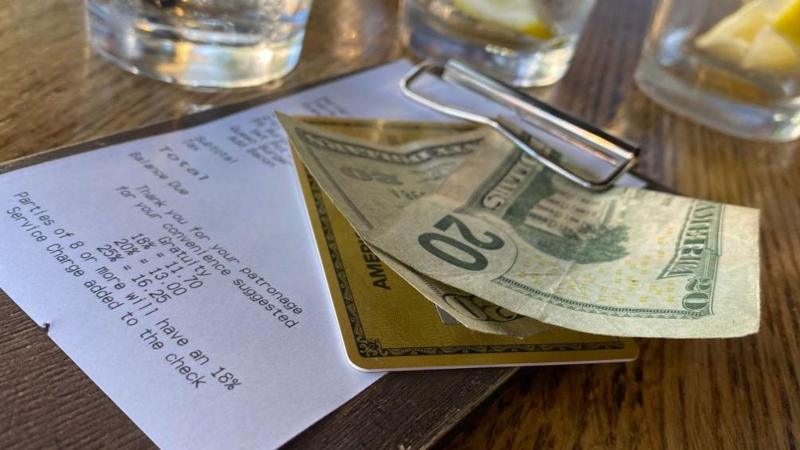
The culture of tipping large amounts in the United States, especially at 20% in many cities, is causing debate and has started to influence tipping habits in other countries like Iceland and Mexico. In places where tipping is not traditional, businesses have begun asking customers to add tips, leading to frustration among locals. In the UK, tips are also slowly increasing, partly to help pay higher wages without raising restaurant prices too much.
Key Facts
In many US cities, a 20% tip is expected at restaurants, though some people still tip around 15%.
US servers often rely on tips for most of their income because base pay can be low.
Iceland traditionally did not have tipping, but more American tourists have introduced tipping habits there.
Some Icelandic restaurants now ask customers if they want to add a tip when paying, which annoys local people.
Mexican locals also blame American tourists for spreading the tipping culture.
In the UK, service charges and tips have grown from around 12.5% to 15%, mainly in high-end restaurants.
UK restaurants use tips to pay staff more because rising costs make raising wages directly difficult.
Rising tipping expectations reflect wider economic pressures on workers and hospitality businesses.
Read the Original
Want the full story? Tap a source to open the original
article.