A new financial app for managing Trump Accounts will be available for download starting Thursday. These accounts, created under President Donald Trump’s tax and spending law, provide tax-advantaged savings for children born between 2025 and 2028, with an initial $1,000 government contribution.
Key Facts
Nearly 6 million families have already signed up for Trump Accounts.
The app is developed by Robinhood and BNY Mellon and will launch July 4.
Anyone born from January 1, 2025, to December 31, 2028, is eligible for a $1,000 federal government deposit into their account.
Families, employers, and relatives can contribute up to $5,000 per year.
Funds must stay invested in broad-based index funds like ETFs tracking the S&P 500.
Money cannot be withdrawn until the child turns 18 years old.
The app will include eight financial literacy lessons for families.
Future plans allow transferring investments to other banks if families wish.
Read the Original
Want the full story? Tap a source to open the original
article.
French banker Matthieu Pigasse’s firm, Centerview Partners, was chosen to advise Venezuela on restructuring its over $150 billion debt without a formal bidding process. Centerview will lead talks on how Venezuela handles its debt, which is important for the country’s financial future.
Key Facts
Matthieu Pigasse is a French banker whose firm Centerview Partners was appointed adviser for Venezuela’s debt restructuring.
Venezuela has more than $150 billion in debt that it plans to overhaul.
Centerview got the role without a formal competitive bidding process, which raised questions about fairness.
The debt restructuring aims to reduce what Venezuela owes to creditors and improve the country’s financial health.
Mauricio Claver-Carone, a former US Latin America envoy, reportedly helped Centerview’s appointment, though he has no official government role now.
Claver-Carone defended the lack of an open bidding process, saying trusted American firms are preferred.
Centerview says it was hired because of its experience in sovereign debt and claims it has no conflicts of interest.
Venezuelan officials did not comment, and US officials said Claver-Carone shares his views with US government contacts as a private citizen.
Read the Original
Want the full story? Tap a source to open the original
article.
The U.S. government expressed disappointment after the Dutch government stopped a New York company, Kyndryl, from buying a Dutch cloud services firm, Solvinity. The Dutch blocked the deal because of worries about national security.
Key Facts
The Dutch government blocked Kyndryl’s plan to acquire Solvinity.
Kyndryl is a company based in New York.
Solvinity is a cloud services provider in the Netherlands.
The Dutch government’s reason was concern over national security.
The U.S. Embassy in The Hague issued a statement expressing disappointment.
The decision affects international business deals involving technology and data services.
This case shows how countries sometimes restrict foreign investments for security reasons.
The U.S. is closely watching how this decision may impact American companies abroad.
Read the Original
Want the full story? Tap a source to open the original
article.
Global carmakers from the US, Europe, and Japan are facing strong competition from Chinese companies in electric cars, batteries, design, and software. Chinese firms lead in automation and innovation, supported by government subsidies and competition from tech giants entering the auto industry.
Key Facts
Chinese carmakers are advancing faster in electric vehicle (EV) technology and related software than many foreign brands.
China produces more than 315 product categories linked to EVs, nearly doubling since 2016.
It is about 30% cheaper to make a small electric SUV in China compared to advanced economies, mainly due to lower battery costs.
The Chinese government has invested tens of billions of dollars in EV and battery manufacturing in recent years.
Chinese tech companies like Xiaomi, Huawei, and Alibaba are now building electric cars and integrating them with smartphones and smart-home devices.
Xiaomi’s factory produces a car every 76 seconds, showing high levels of automation and speed.
Foreign car brands' share in China’s market dropped from 64% in 2020 to 32% in 2024.
Companies like BYD have developed ultra-fast charging systems that add around 400 km of range in five minutes.
Read the Original
Want the full story? Tap a source to open the original
article.
A recent report warns that one in six young people in the UK will neither be working nor in training or education within five years unless urgent steps are taken. The report says that current systems in education, health, and welfare are not helping young people prepare for adult work life, and youth unemployment is at its highest since 2014.
Key Facts
One in six UK young people (aged 16-24) could be without work, education, or training by 2031 without action.
Currently, about 957,000 young people, or one in eight, are classified as NEET (not in education, employment, or training).
The youth unemployment rate is 16.2%, which is more than three times the overall rate of 5%.
The first step of starting a career is becoming harder due to fewer job opportunities and employers demanding experience.
The government is responding with plans to pay companies to hire young people and increase apprenticeships.
The report's author, Alan Milburn, says the problem is due to outdated education and welfare systems, not young people's attitudes.
Many young people want work or training, with 84% of NEETs surveyed expressing a desire to work.
The government is also focusing on early support like special education needs and changing benefits rules.
Read the Original
Want the full story? Tap a source to open the original
article.
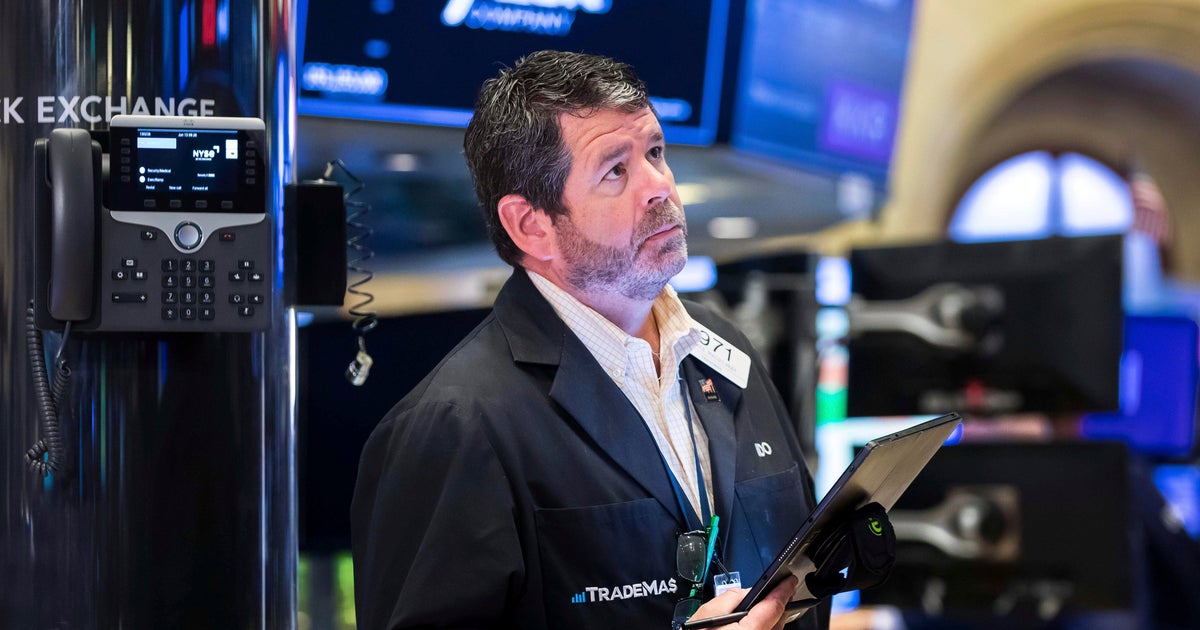
The US stock market rose near record levels and oil prices dropped as talks between the US and Iran raised hopes of a peace deal. This possible agreement could reopen the Strait of Hormuz, helping oil supply and easing worries in the global economy.
Key Facts
US stock indexes like the S&P 500 and Dow Jones gained on news of peace talks.
Oil prices fell sharply, with US crude down 5.5% to about $88.68 per barrel.
Iran reportedly agreed in principle to let oil traffic through the Strait of Hormuz return to normal within 30 days.
The US may lift its naval blockade on Iranian ports if a deal is reached.
The White House called the initial report on the deal "a complete fabrication," but markets remained optimistic.
President Donald Trump said officials are not fully satisfied with the deal yet but are making progress.
Major issues still unclear include Iran’s nuclear program, ballistic missiles, and US sanctions.
Regional tensions continue, with Israeli attacks ordered against Hezbollah in Lebanon.
Read the Original
Want the full story? Tap a source to open the original
article.
Canada has signed a long-term deal to export one million tonnes of liquefied natural gas (LNG) annually from British Columbia to Germany starting in the early 2030s. The agreement supports Canada's goal to diversify trade beyond the United States and helps supply Europe with more energy as it seeks alternatives to Russian resources.
Key Facts
Canada will export one million tonnes of LNG each year to Germany for up to 20 years.
The LNG will come from the Ksi Lisims project on the coast of British Columbia, which is still awaiting final approval and funding.
The deal was announced by Canada’s energy minister, Tim Hodgson, following a trade mission to Germany.
Most of Canada’s current LNG exports go to the United States.
The project has support from the Nisga'a Nation, whose land will host the LNG facility.
Several indigenous and environmental groups oppose the project, citing legal and environmental concerns.
Canadian Prime Minister Mark Carney is promoting the project as nationally important, aiming for a fast-track process.
Some members of Carney’s Liberal Party have expressed concern about the government’s environmental policies amid increased energy development.
Read the Original
Want the full story? Tap a source to open the original
article.
The stock market, especially the S&P 500, has been doing very well in May despite high inflation, rising gas prices, and low consumer confidence. Experts say the market is rising due to strong company profits, the growth of artificial intelligence (AI), and hopes for an end to the conflict in Iran that could lower oil prices.
Key Facts
The S&P 500 hit nine record highs in May.
Goldman Sachs predicts the S&P 500 could reach 8,000 points by the end of the year, about 6% higher than now.
Technology companies grew their earnings by 50% in the first quarter, much higher than usual.
Other U.S. companies also doubled their typical earnings growth, helped by lower taxes from a recent Republican tax and spending bill.
Despite higher stock prices, the price-to-earnings ratio (a measure of stock value) has actually fallen because earnings grew faster than stock prices.
Investors are optimistic about AI’s ability to improve business productivity and grow the economy.
Most investors are hopeful that the Iran war will end soon, which could reduce oil prices and help the market.
If the U.S. and Iran reach a deal, it could further lower inflation and lead to more stock market gains.
Read the Original
Want the full story? Tap a source to open the original
article.
Putting $90,000 into a certificate of deposit (CD) account now can earn a steady, fixed interest rate between about 3.9% and 4.16%, depending on the term length. While stock investments can offer higher returns, CDs provide guaranteed earnings without risk of losing the original money during the term.
Key Facts
A 3-month CD at 3.90% interest can earn about $865 on $90,000 by maturity.
A 1-year CD at 4.11% interest can yield approximately $3,700 on $90,000.
A 2-year CD at 4.16% interest can earn about $7,644 on $90,000.
CDs lock in a fixed interest rate, protecting against market ups and downs.
Alternative options include high-yield savings and money market accounts with similar interest rates but no lock-in period.
High-yield savings accounts let you deposit and withdraw money without fees but have variable interest rates that may change.
Money market accounts offer competitive, variable rates and sometimes allow check writing, which CDs and savings accounts do not.
CDs require keeping money locked in for the term to earn the stated interest without penalties.
Read the Original
Want the full story? Tap a source to open the original
article.
Nvidia announced it will invest $150 billion annually to strengthen its operations in Taiwan and keep the region central to AI technology development. This plan focuses on building a new headquarters and expanding partnerships, especially with Taiwan Semiconductor Manufacturing Company (TSMC), despite US efforts led by President Trump to develop AI manufacturing domestically.
Key Facts
Nvidia plans to invest $150 billion each year in Taiwan to maintain its leadership in AI chip production and related technology.
The new Nvidia headquarters in Taiwan will be operational by 2030, with construction starting this year.
Nvidia’s CEO Jensen Huang described Taiwan as the key center for AI chip making, packaging, and supercomputers.
Nvidia already began making some AI chips in the US in 2024 to support President Trump’s AI and manufacturing goals.
Despite US investments, Nvidia remains heavily reliant on Taiwan for advanced chip packaging and manufacturing.
Nvidia’s Taiwan investment grows from $10-15 billion a few years ago to $100 billion now, with plans to reach $150 billion annually.
Nvidia is collaborating closely with Taiwan Semiconductor Manufacturing Company (TSMC), a major chip manufacturer.
Nvidia recently became the first company valued at $5 trillion and expects to grow further by expanding in Taiwan.
Read the Original
Want the full story? Tap a source to open the original
article.
Gas prices in the U.S. are high this summer, with some states paying much more than others. The West Coast has the highest prices, exceeding $6 per gallon in places like California, while many Southern and Midwestern states have lower but still rising costs, affecting how much people spend on travel.
Key Facts
The national average gas price is over $4 per gallon as summer travel begins.
California has the highest average price at $6.094 per gallon.
Other expensive states include Washington ($5.752) and Hawaii ($5.655).
Southern and Midwestern states generally have lower prices but still saw significant increases since February.
Higher gas prices make long car trips more costly; a 1,000-mile trip now costs about $178, compared to $127 last year.
Rising fuel costs are leading many Americans to take shorter trips or vacations closer to home.
The conflict involving Iran is disrupting global oil markets and contributing to high prices.
Analysts expect gas prices to remain high for several months.
Read the Original
Want the full story? Tap a source to open the original
article.
A Google software engineer, Michele Spagnuolo, is charged with using secret company data to make over $1 million by betting on a prediction market called Polymarket. He had access to Google's internal search data, which helped him bet on future search trends before the public knew them.
Key Facts
Michele Spagnuolo worked as a software engineer at Google.
He used confidential Google search data to place bets on Polymarket, a prediction market platform.
Spagnuolo bet on the most searched person on Google in 2025 before this information was public.
His account on Polymarket was named AlphaRaccoon.
He earned about $1.2 million from these bets after Google announced its Year in Search 2025 results.
Spagnuolo is charged with commodities fraud, wire fraud, and money laundering.
He was arrested in New York and released on bail.
Google said the employee accessed marketing data legally but misused it and has been placed on leave.
Read the Original
Want the full story? Tap a source to open the original
article.
Drag queen and climate activist Pattie Gonia is fighting a $1 trademark lawsuit from outdoor clothing company Patagonia. Patagonia says it must protect its brand name, while Pattie Gonia says the case threatens her identity and environmental work.
Key Facts
Pattie Gonia is the drag persona of photographer Wyn Wiley from Nebraska.
Patagonia filed the trademark lawsuit in January in California federal court.
The company wants to protect its brand name and prevent confusion with Pattie Gonia’s merchandise.
Patagonia says it tried to settle the dispute before starting the lawsuit.
Pattie Gonia has a community of over 3 million people and raises money for environmental causes.
The lawsuit could force her to stop using the Pattie Gonia name and affect her advocacy work.
Patagonia seeks only $1 in damages but could incur expensive legal fees for Pattie Gonia.
Patagonia was founded in 1973 by climber and environmentalist Yvon Chouinard.
Read the Original
Want the full story? Tap a source to open the original
article.
Many U.S. veterans are not using the Department of Veterans Affairs (VA) home loan benefits, missing out on potentially thousands of dollars in savings. The VA loan program offers no down payment, lower interest rates, and limited closing costs but remains underused due to misunderstandings about eligibility and costs.
Key Facts
As of last year, $28 billion in VA home loan funds remain unused by veterans.
The VA home loan program allows eligible veterans to buy homes with no down payment and no private mortgage insurance (PMI) in most cases.
VA loans typically have lower interest rates and limits on closing costs compared to conventional loans.
Many veterans do not apply because they think they do not qualify or believe myths about credit score requirements and loan processing difficulty.
The home loan benefit can provide savings of $40,000 to $80,000 on a single home purchase.
Rising home prices and monthly payment amounts still limit some veterans from buying homes despite loan benefits.
The VA loan is a lifetime benefit and can be used multiple times by eligible veterans and some surviving spouses.
Expert sources emphasize that VA loans are valuable financial tools, especially in expensive housing markets.
Read the Original
Want the full story? Tap a source to open the original
article.
The cost of replacing a home heating and cooling system (HVAC) in 2026 varies widely, generally ranging from $5,000 to $28,000 depending on home size, system type, and installation needs. Higher efficiency standards, new refrigerant rules, labor shortages, and additional work like duct or electrical upgrades are driving up prices.
Key Facts
A full HVAC replacement in 2026 can cost from $5,000 to $28,000, including labor and equipment.
Average replacement for a 2,000 square foot home is between $7,000 and $20,000.
New federal efficiency rules require more advanced, energy-saving systems that increase upfront costs.
The HVAC industry is shifting to newer, eco-friendly refrigerants, raising equipment and repair costs.
Labor shortages of qualified technicians are raising installation prices, especially during hot or cold weather.
Many older homes need extra work like duct sealing or electrical upgrades alongside HVAC replacement.
Some homeowners may pay for larger systems or extra features they don’t need.
Rebates and financing options might help lower the cost but are not always utilized.
Read the Original
Want the full story? Tap a source to open the original
article.
A new version of Soarin’ Across America, a flight simulator ride, has been updated at EPCOT and will open at Disneyland on July 2. National Geographic shares fun facts about all 50 U.S. states for guests waiting in line.
Key Facts
Soarin’ Across America is a flight simulator ride.
It showcases famous places across the United States.
The ride was revamped and is now open at EPCOT.
Disneyland will launch the updated ride on July 2, 2026.
National Geographic provides educational facts about all 50 states.
These facts are shared with guests while they wait in line.
The update aims to make the ride more immersive and informative.
Read the Original
Want the full story? Tap a source to open the original
article.
The Heritage Foundation has added four new members to its board of trustees. The new members include commentator Mollie Hemingway, political theorist Yoram Hazony, retired CEO Lawrence Blanford, and another business leader. This change is part of the group’s plan to update its direction, called "Heritage 2.0."
Key Facts
The Heritage Foundation added four new board members.
New members include Mollie Hemingway, a conservative commentator.
Yoram Hazony, a political theorist, also joined the board.
Lawrence Blanford, retired CEO of Green Mountain Coffee Roasters, is a new trustee.
Another business leader joined the group, but their name was not specified.
The changes are aimed at updating the think tank’s approach, called "Heritage 2.0."
The Heritage Foundation is a conservative think tank.
The announcement was made on Wednesday.
Read the Original
Want the full story? Tap a source to open the original
article.
Politicians in Illinois and Colorado are challenging the use of credit-card rewards programs that help fund airlines. These changes could strongly impact both airlines and travelers who use these rewards.
Key Facts
Illinois and Colorado politicians want to change rules about credit-card rewards.
Many airlines rely on credit-card rewards programs for funding.
Credit-card rewards let travelers earn miles or points to use for flights.
Changes could reduce airline income from these rewards.
Consumers who earn miles through credit cards might be affected.
The airline industry could face financial problems if these programs shrink.
The proposed changes aim to address concerns about how rewards programs work.
It is unclear exactly what rules will change and when.
Read the Original
Want the full story? Tap a source to open the original
article.
The article explains that the higher price of a £5 latte is expected to continue. Factors like increased costs for coffee beans, tariffs, and the overall cost of living contribute to the sustained price level.
Key Facts
The price of a latte has increased to around £5.
The cost of coffee beans has gone up due to tariffs introduced by President Donald Trump.
Rising costs in running cafes, including rent and wages, also affect latte prices.
The overall increase in the cost of living makes it harder for prices to go down.
Coffee shops face higher expenses, so they maintain higher prices to cover costs.
Read the Original
Want the full story? Tap a source to open the original
article.
An 18-month certificate of deposit (CD) account offers a fixed interest rate of about 4.15% currently, allowing savers to earn guaranteed interest while protecting their money. However, savers must keep their money in the CD until the end of the term to avoid penalties, and traditional savings accounts have much lower interest rates.
Key Facts
An 18-month CD has a fixed interest rate of approximately 4.15% right now.
Interest earnings range from about $31 for a $500 deposit to over $3,100 for a $50,000 deposit at maturity.
CDs are insured by the FDIC up to $250,000 per account, making them safe.
Early withdrawal from a CD may result in penalties, which can reduce or eliminate interest earned.
Traditional savings accounts offer much lower interest rates, around 0.38% on average.
High-yield savings and money market accounts offer interest rates similar to CDs without locking in the money.
CDs protect money from market ups and downs because their interest rate stays the same for the term.
An 18-month CD balances earning a good return with not locking funds away for too long.
Read the Original
Want the full story? Tap a source to open the original
article.