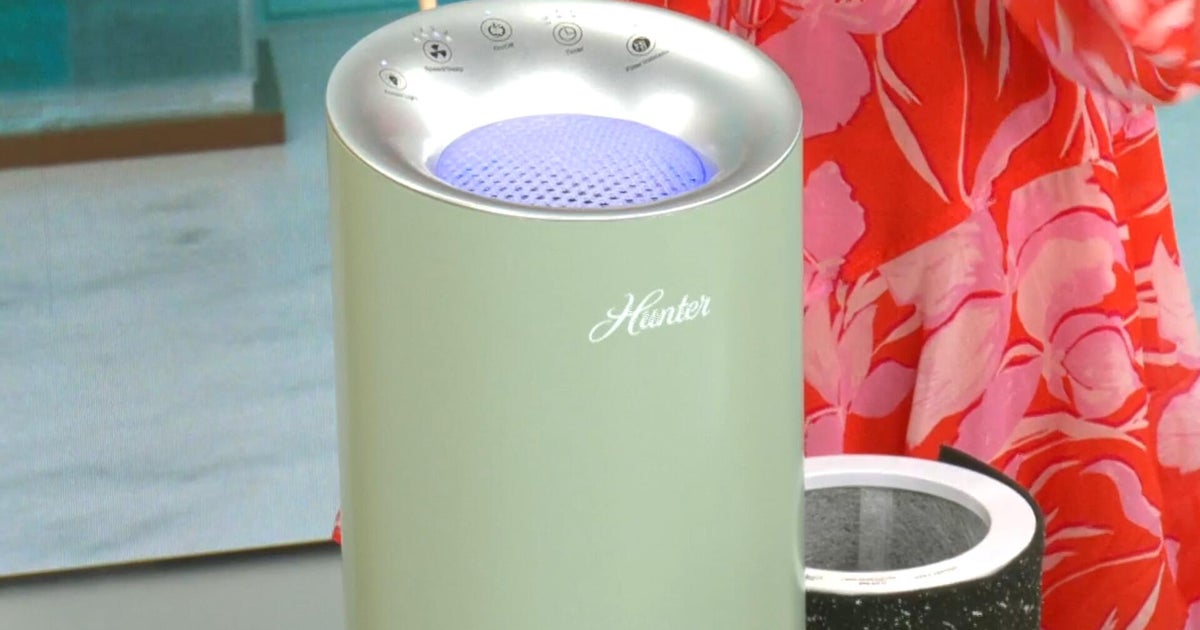
CBS Mornings Deals is offering special discounts on products that could be useful every day. You can find these deals on their website, cbsdeals.com, where CBS earns a commission if you buy something.
Key Facts
CBS Mornings Deals features exclusive discounts on various items.
The items shown may become useful in daily life.
Customers can visit cbsdeals.com to see and buy these deals.
Purchases through the website help CBS earn commissions.
The offers are promoted during CBS Mornings broadcasts.
The deals are designed to attract viewers to shop online.
The CBS News app and web browsers like Chrome and Safari can access these offers.
Read the Original
Want the full story? Tap a source to open the original
article.
Mortgage interest rates have risen in 2026 after some temporary declines in 2025, making borrowing more expensive for homebuyers and those refinancing their homes. As of May 21, 2026, average rates for 30-year and 15-year mortgages are significantly higher than last year, leading many borrowers to consider locking in current rates.
Key Facts
The average interest rate for a 30-year mortgage is 6.62% as of May 21, 2026.
The average rate for a 15-year mortgage is 6% as of the same date.
Refinance rates on a 30-year mortgage have increased to an average of 6.87%.
The 15-year refinance rate averages at 6%.
Rates increased compared to earlier months in 2026 and most of 2025.
Inflation is rising, and the Federal Reserve has paused interest rate cuts, with possible future increases.
Borrowers are advised to shop around for better mortgage offers and consider locking in rates to avoid potential hikes.
Some homeowners may benefit from refinancing with 20-year loans that balance shorter paybacks and monthly payments.
Read the Original
Want the full story? Tap a source to open the original
article.
Since President Donald Trump signed an executive order last year to start a deep-sea mining industry, companies have raised large amounts of money and the government is speeding up permits. Several companies are negotiating for rights to mine minerals on the seafloor, with auctions planned soon, though some questions about the companies and the process remain.
Key Facts
President Trump signed an executive order to develop a U.S. deep-sea mining industry in April last year.
At least nine companies are currently negotiating with the government for access to underwater mineral resources.
Federal regulators are fast-tracking permits to allow commercial deep-sea mining.
Areas from American Samoa to Alaska may be auctioned for seabed mining this summer and fall.
Seafloor minerals include polymetallic nodules with manganese, copper, nickel, cobalt, and some rare earth elements.
Some companies involved have unclear track records and face legal challenges.
The International Seabed Authority regulates mining on international waters but has not yet approved commercial mining.
Critics say financial outlooks for deep-sea mining projects are uncertain despite high investor interest.
Read the Original
Want the full story? Tap a source to open the original
article.
BT warns that smartphone prices may increase because many tech companies are buying a lot of semiconductor chips for artificial intelligence (AI) projects. This demand is causing shortages and higher costs for chips used in electronics like phones and routers. BT is also working to cut costs and reported steady profits despite losing many broadband customers.
Key Facts
The boom in AI has led tech companies to buy large amounts of semiconductor chips, causing shortages.
Chip shortages will likely raise smartphone prices and may increase costs for routers too.
Memory chips are used in many electronics, including phones, graphics cards, and datacenter servers.
Premium phone makers like Apple may raise prices to cover higher chip costs.
Other companies like Microsoft, Samsung, Dell, Sony, and Nintendo have already raised prices on devices.
BT plans to save £3.7 billion over the next several years and extended its restructuring to 2030.
BT lost 825,000 broadband customers in the year ending March but saw mobile phone customer losses at a record low.
BT's revenue fell by 4% to £19.7 billion, while its pre-tax profits went up by 8% to £1.4 billion.
Read the Original
Want the full story? Tap a source to open the original
article.
New data shows that Americans continue to spend money even though inflation has been high for a long time. This means people are still buying things despite worries about rising prices.
Key Facts
Consumer spending in the U.S. remains steady despite inflation concerns.
Inflation refers to the general rise in prices over time, which can reduce buying power.
The data comes from recent consumer reports analyzed by CBS News.
Americans are continuing normal shopping habits despite economic challenges.
The analysis was explained by financial expert Jill Schlesinger.
Prolonged inflation usually makes people spend less, but that is not the case currently.
This trend can impact the overall economy and market performance.
Read the Original
Want the full story? Tap a source to open the original
article.
The US government announced it will invest $2 billion in nine quantum computing companies, including big names like IBM and GlobalFoundries. This move is part of a strategy to boost American technology and jobs in the field of quantum computing.
Key Facts
The US commerce department signed letters of intent to invest $2 billion in nine quantum computing firms.
IBM will receive $1 billion, GlobalFoundries $375 million, and several smaller companies will get $100 million or less.
Among the companies funded is PsiQuantum, which has investors linked to President Donald Trump’s family, specifically his son’s venture capital firm.
The investment aims to create jobs and advance US capabilities in quantum technology.
This action follows a pattern where the government takes equity stakes in strategic companies in technology sectors.
The agreements are not final, and the government is looking for more companies to join.
Quantum computing uses atomic-level properties to perform calculations much faster than regular computers, but still faces engineering challenges.
Some companies involved have political ties, like D-Wave Quantum linked to a Pentagon official and others linked to Trump family interests.
Read the Original
Want the full story? Tap a source to open the original
article.
Plug-in hybrid electric vehicles (PHEVs) have both a gasoline engine and a battery. New data from Toyota shows most drivers of their PHEVs regularly plug in their cars to recharge the battery, allowing them to drive on electric power part of the time. Other car makers report similar results, suggesting PHEV owners do use the electric features more often than some critics thought.
Key Facts
Plug-in hybrids combine a gas engine and electric motor, needing to be plugged in to recharge the battery.
Some people believed PHEV owners rarely plug in and mainly use gas.
Toyota analyzed data from over 6,000 drivers of its RAV4 Prime and Lexus NX 450h+ models from 2021-2024.
RAV4 Prime drivers plug in on about 70% of driving days; Lexus NX drivers plug in on 80-90% of driving days.
Only 9% of Toyota PHEV owners and 4% of Lexus PHEV owners rarely plug in.
BMW, Kia, and Hyundai also report most of their PHEV owners regularly charge their vehicles.
Many other automakers with PHEVs have not shared data on how often their customers plug in.
This data challenges the view that many PHEV owners do not use the electric battery feature.
Read the Original
Want the full story? Tap a source to open the original
article.
Annuities are insurance products that pay you steady income, often used for retirement. Experts say annuities can be useful now because they offer guaranteed payments and higher interest rates than some other safe investments, but rising inflation and the need for quick access to cash may make them less ideal for some people.
Key Facts
Annuities provide a fixed income stream, helping protect against unpredictable markets.
Current interest rates on annuities are relatively high, sometimes better than certificates of deposit (CDs) or savings accounts.
Annuities have earned better returns than bonds over the past 10 years while keeping similar safety.
Some annuities come with extra features (riders) that help cover long-term care costs, which have increased significantly since 2019.
Inflation is at 3.8%, the highest in nearly three years, which can reduce the buying power of fixed income from annuities.
Inflation also increases the need for liquidity, or easy access to cash, which annuities usually limit.
Experts caution that annuities are not a perfect choice for everyone and recommend careful research before buying.
Read the Original
Want the full story? Tap a source to open the original
article.
Robin Millar, a blind UK pop producer and disability charity leader, is taking legal action against the company he co-founded, Blue Raincoat Music, over the alleged failure to provide workplace support after his cancer surgery. Millar claims disability discrimination and exclusion because his requests for assistance were denied during his recovery.
Key Facts
Robin Millar is a blind pop producer and head of a major UK disability charity, Scope.
He co-founded Blue Raincoat Music and also worked with Reservoir Media after a merger.
Millar underwent cancer surgery and requested workplace support to help with mobility challenges.
His requests for a support worker were denied by his company.
He has filed claims of disability discrimination, victimisation, and exclusion in an employment tribunal.
The company, Reservoir Media, denies wrongdoing and says they have followed relevant laws.
MPs have raised concerns about disabled people facing difficulties at work due to lack of reasonable adjustments.
A government committee report says disabled workers often leave jobs because workplaces are not accessible enough.
Read the Original
Want the full story? Tap a source to open the original
article.
TUI, Europe's top travel company, has stopped sponsoring the show Married at First Sight on Channel 4 in the UK, Australia, and the US. This decision came after reports that some women were sexually assaulted during filming and concerns about the show's ability to protect participants.
Key Facts
TUI ended sponsorship of Married at First Sight in the UK, Australia, and the US after sexual assault allegations emerged.
Some women told the BBC they were raped during filming of the UK version.
The production company for the UK version said it has a strong system to protect participants and acted correctly.
Channel 4 removed all episodes of the show from their streaming services after the allegations.
Channel 4’s CEO apologized for the distress caused to the women featured.
The media regulator Ofcom said it may tighten rules for reality TV shows if needed.
The UK Parliament’s Culture Committee has contacted Channel 4 and Ofcom to ask about their response to the allegations.
The show’s latest UK season, already filmed, is still planned to be aired despite the controversy.
Read the Original
Want the full story? Tap a source to open the original
article.
The UK government has announced £120 million in funding to support the country’s ceramics industry. The money will help manufacturers invest in new equipment for energy efficiency and cover operational costs to secure the industry’s future.
Key Facts
The government will provide £60 million for equipment investment and £60 million for operational expenses.
Ceramics UK, the industry body, is working with the government on how the funding will be used.
The ceramics sector is important to industries like aerospace, defense, clean energy, and electronics.
The industry faces challenges like high energy costs, especially gas, which makes up 90% of energy use in ceramics manufacturing.
The number of ceramics firms in North Staffordshire dropped from 137 in 2018 to 123 in 2024.
Despite fewer firms, the overall value and supply chain turnover in advanced ceramics and related products have grown since 2018.
Local reports warn that ceramics companies are vulnerable to energy price shocks due to the Ukraine war.
The funding aims to protect thousands of jobs and ensure long-term business stability.
Read the Original
Want the full story? Tap a source to open the original
article.
The UK government will reduce VAT to 5% on summer attractions and children’s meals from June 25 to September 1 to help families with costs during the school holidays. Chancellor Rachel Reeves also plans to raise taxes on multinational oil companies and postpone fuel duty increases to support cost-of-living relief.
Key Facts
VAT on summer attractions like theme parks, zoos, museums, and children’s meals will be cut from 20% to 5% between June 25 and September 1.
The “Great British Summer Savings” scheme includes free bus rides for under-16s in England during August.
If companies pass on savings, families could save about £1.50 on a child’s cinema ticket or £17 on a wildlife park visit.
Fuel duty increases planned for September and December will be delayed.
Import tariffs on some foods, including chocolate and biscuits, will be suspended, with expectations that supermarkets will lower prices accordingly.
The government will raise the tax-free mileage rate by 10p per mile for work-related driving.
Tax rules will change to make multinational oil firms pay more corporation tax on profits from UK operations, potentially raising several hundred million pounds.
The UK economy grew 0.6% in the first quarter of the year, the fastest in the G7 before the conflict in Iran affected global markets.
Read the Original
Want the full story? Tap a source to open the original
article.
A JPMorgan Chase investment banker, Lorna Hajdini, responded to a sexual assault lawsuit filed by her former colleague Chirayu Rana by suing him for defamation. She says the accusations are false and have harmed her reputation and life. JPMorgan supports Hajdini and does not believe the claims against her or the company have merit.
Key Facts
Chirayu Rana accused Lorna Hajdini of sexual assault and coercion at JPMorgan.
Rana claimed Hajdini used her position and made racist threats to force him into sexual acts.
Hajdini denies the allegations, including being Rana’s supervisor or using racial slurs.
Hajdini countersued Rana for defamation and emotional distress, seeking damages.
JPMorgan tried to settle with Rana before the lawsuit and offered $1 million.
Rana was put on administrative leave by JPMorgan after filing his complaint.
Sexual harassment claims made by men represent about 17% of all such claims, according to a US agency.
JPMorgan supports Hajdini’s right to defend herself and questions the merit of the allegations.
Read the Original
Want the full story? Tap a source to open the original
article.
UK service companies reported one of the biggest drops in business activity in ten years, with many facing rising costs, supply problems, and job cuts. The sharp fall in activity is linked to political uncertainty in the UK and the impact of the war in the Middle East, and it could slow down the UK’s economy growth.
Key Facts
The UK services sector, which makes up about 80% of the economy, saw its activity fall to the lowest level since July 2016 (excluding the Covid period).
The S&P Global purchasing managers’ index (PMI) for services dropped from 52.6 in April to 48.5 in May (below 50 means shrinking business activity).
Private sector jobs decreased for the 20th month in a row, with significant job cuts in the services sector.
The decline in services overshadowed a small growth in manufacturing, where some companies rushed orders to avoid future price increases.
The UK inflation rate slowed from 3.3% in March to 2.8% in April, and wages grew more slowly, easing pressure on prices.
Economists believe the Bank of England may pause interest rate increases due to signs the economy is weakening but not facing runaway inflation.
Political uncertainty around Prime Minister Keir Starmer’s leadership and the Middle East war increased business uncertainty.
The decline in the PMI could lead to negative GDP growth in the second quarter, after a small growth in the first quarter.
Read the Original
Want the full story? Tap a source to open the original
article.
The European Union’s executive commission lowered its growth forecast and expects higher inflation due to rising energy prices caused by the war in Iran. Despite these challenges, the EU economy is predicted to avoid a full recession but will face higher costs for households and businesses.
Key Facts
The EU is a net energy importer and is affected by energy price shocks from the Middle East conflict.
Growth forecast for the 21 countries using the euro was lowered to 0.9% for 2026 and 1.2% for 2027.
Inflation is now expected to rise to 3.0% in 2026, above the European Central Bank’s 2% goal.
Rising fuel costs are increasing household bills and business expenses, reducing profits in many industries.
The European Central Bank may raise interest rates this year to control higher inflation.
Oil prices increased sharply due to threats to shipping traffic through the Strait of Hormuz, a key route for global oil and gas.
Consumer confidence in the EU has dropped to a 40-month low because of fears about jobs and inflation.
The commission warned that prolonged high energy prices could cause slower growth and more inflation.
Read the Original
Want the full story? Tap a source to open the original
article.
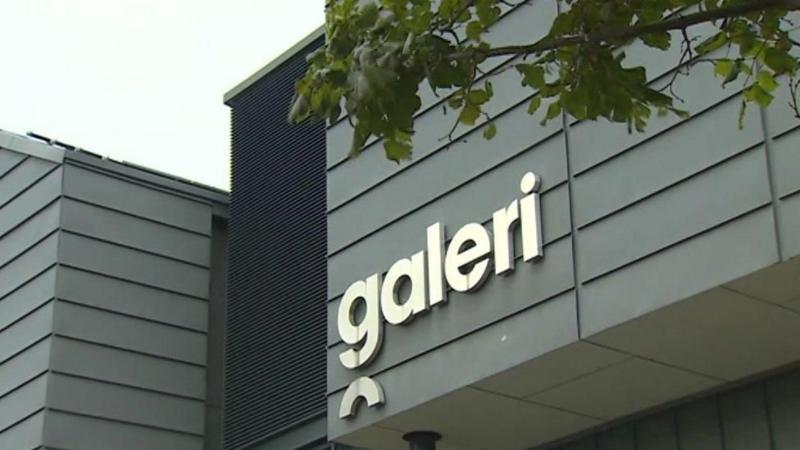
A cinema in Caernarfon, Wales, has banned unaccompanied under-16s from attending evening screening after 7 p.m. due to problems with teens damaging seats, shouting, and filming during movies. The cinema calls this a temporary change while it works on a longer-term plan to improve the experience for all visitors.
Key Facts
Galeri cinema in Caernarfon, Gwynedd, set the new rule to require under-16s to be with a responsible adult after 7 p.m.
Reports of anti-social behavior include damaging seats, shouting at other customers, and using mobile phones to film during movies.
The cinema said the rule is temporary and aims to keep the cinema enjoyable for everyone.
If age cannot be verified or no adult is present, entry will be denied after 7 p.m.
Welsh film critic Gary Slaymaker said disruptive behavior in cinemas has increased since the COVID-19 lockdown.
Slaymaker noted more phone use during films and suggested a lockbox for phones could improve the experience.
Staff are often part-time students who face challenges when dealing with noisy customers.
The cinema’s decision responds to audience complaints and ongoing concerns about cinema etiquette.
Read the Original
Want the full story? Tap a source to open the original
article.
The Royal Horticultural Society (RHS) has experienced financial losses, losing £8.1 million in the year ending January 2025, which raised concerns about its future. Some critics, especially on the conservative side, have blamed changes like moving to peat-free products and a shift away from traditional practices for the issues, while RHS reports more positive recent financial results.
Key Facts
The RHS recorded a net loss of £8.1 million in the year ending January 2025, double the loss from the previous year.
Financial problems have been linked to external factors like roadworks blocking visits and changes in sponsorship.
A wealthy couple who funded the Chelsea flower show with over £23 million stopped their support this year.
The luxury hotel The Newt, a former Chelsea flower show sponsor, opened its own free-entry garden show for children under 16.
The RHS transitioned to selling peat-free products starting January 2024 to reduce environmental damage.
Tim Penrose, a traditional exhibitor, was banned from the show after protesting the anti-peat rules and refusing to attend related seminars.
RHS stated that recent unpublished accounts showed income growth of 7% and a cash profit of £4.8 million after overcoming some challenges.
The Chelsea flower show faces pressure to find new charity sponsors and balance traditional gardening with environmental concerns.
Read the Original
Want the full story? Tap a source to open the original
article.
London Mayor Sadiq Khan has stopped a £50 million contract between the Metropolitan Police and the US tech company Palantir due to concerns about breaking procurement rules. The deal involved using Palantir’s AI technology to analyze police intelligence, but the approval process was incomplete and there were worries about value for money and dependence on one company.
Key Facts
The contract would have been Palantir’s largest in UK policing.
Mayor Khan’s office said the Met Police only seriously considered Palantir, skipping other suppliers.
The contract lacked necessary approval from the Mayor’s Office for Policing and Crime (Mopac).
The Met Police trialed Palantir’s AI to monitor staff behavior, which found some officers involved in misconduct.
Palantir has over £600 million in UK public service contracts, including with the NHS and Ministry of Defence.
Palantir was co-founded by Peter Thiel, a tech billionaire who supports President Trump.
City Hall questioned whether ethics should be a factor in public contract decisions.
Palantir can still bid for future contracts after a new procurement process is set up.
Read the Original
Want the full story? Tap a source to open the original
article.
A report by the National Association of Realtors shows that millions of U.S. homeowners face higher taxes when selling their homes because the federal capital gains tax limits have not increased since 1997. As home prices have grown significantly, many sellers could owe more taxes, which may discourage them from selling and reduce the number of homes available on the market.
Key Facts
The federal capital gains tax exclusion for selling a main home is $250,000 for single people and $500,000 for married couples, unchanged since 1997.
Home prices have increased over three times since 1997, from $129,000 to about $419,300 nationally.
About 25.4 million homeowners have gains over $250,000, and roughly 8 million have gains over $500,000 from home sales.
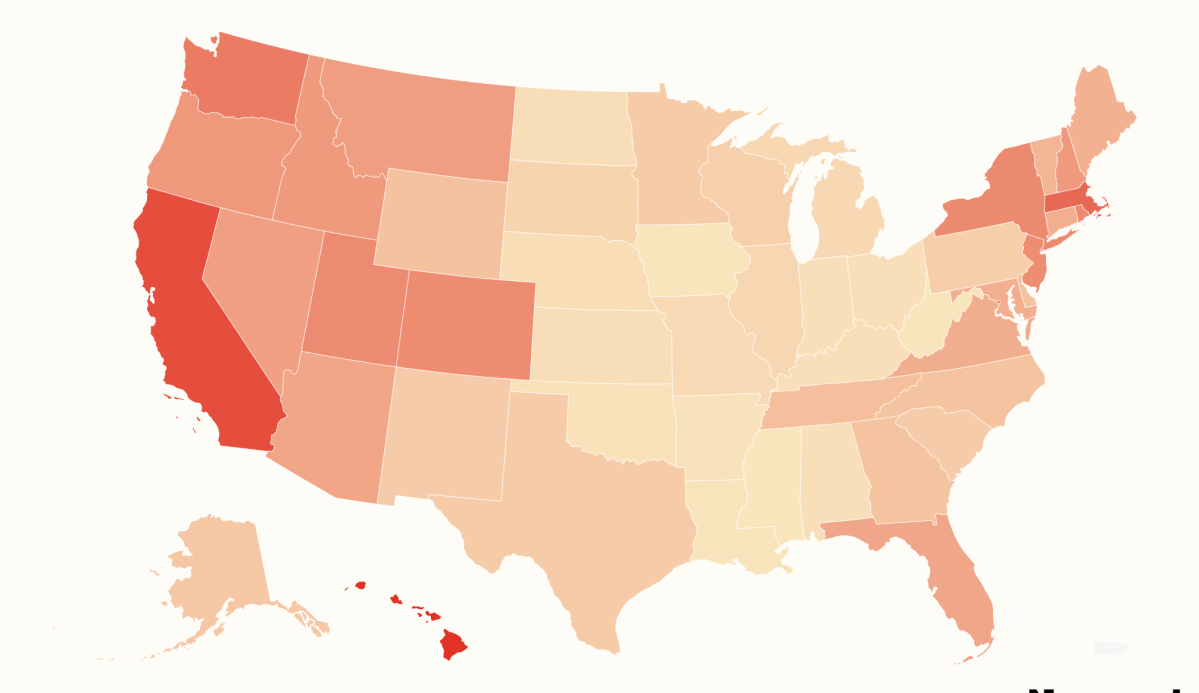
Around 13.1 million homeowners (15% of all owner-occupied homes) have gains that exceed the current tax exclusion limits.
Homeowners in expensive states like Hawaii (51.3%) and California (43.6%) are most affected by these limits.
Large states like Texas, Florida, and New York also have many homeowners with big gains due to their size and price growth.
Some Midwest and Southern states like Mississippi, Iowa, and Louisiana have fewer homeowners exceeding these tax limits, despite recent price rises.
If home prices rise 10% to 30% in the future, an even larger share of homeowners across all states will face higher capital gains taxes.
Read the Original
Want the full story? Tap a source to open the original
article.
Lee Mendelson Film Productions sued the U.S. Department of the Interior, a video game company, an auction house, and a belt maker for using music from "A Charlie Brown Christmas" without permission. The lawsuits claim the defendants used Vince Guaraldi’s famous jazz songs in social media posts and a video game without proper licensing.
Key Facts
Lee Mendelson Film Productions owns the rights to music from "Peanuts" TV specials like "A Charlie Brown Christmas."
The company filed four lawsuits in federal courts against the Interior Department, GameMill Entertainment, Heritage Auctions, and Buckle-Down Inc.
The Interior Department allegedly used Guaraldi’s "O Tannenbaum" arrangement in a social media holiday card without permission.
Heritage Auctions is accused of using "Linus and Lucy" in social media posts to promote an auction without a license.
Buckle-Down Inc. is also sued for unauthorized use of "Peanuts"-themed music in social media posts.
GameMill Entertainment is alleged to have used music in its 2025 "Peanuts" video game that closely imitates Guaraldi’s compositions without permission.
Lee Mendelson Film Productions seeks financial damages and court orders to stop future unauthorized use.
Peanuts Worldwide LLC, which owns rights to the characters, is not involved in the lawsuits.
Read the Original
Want the full story? Tap a source to open the original
article.