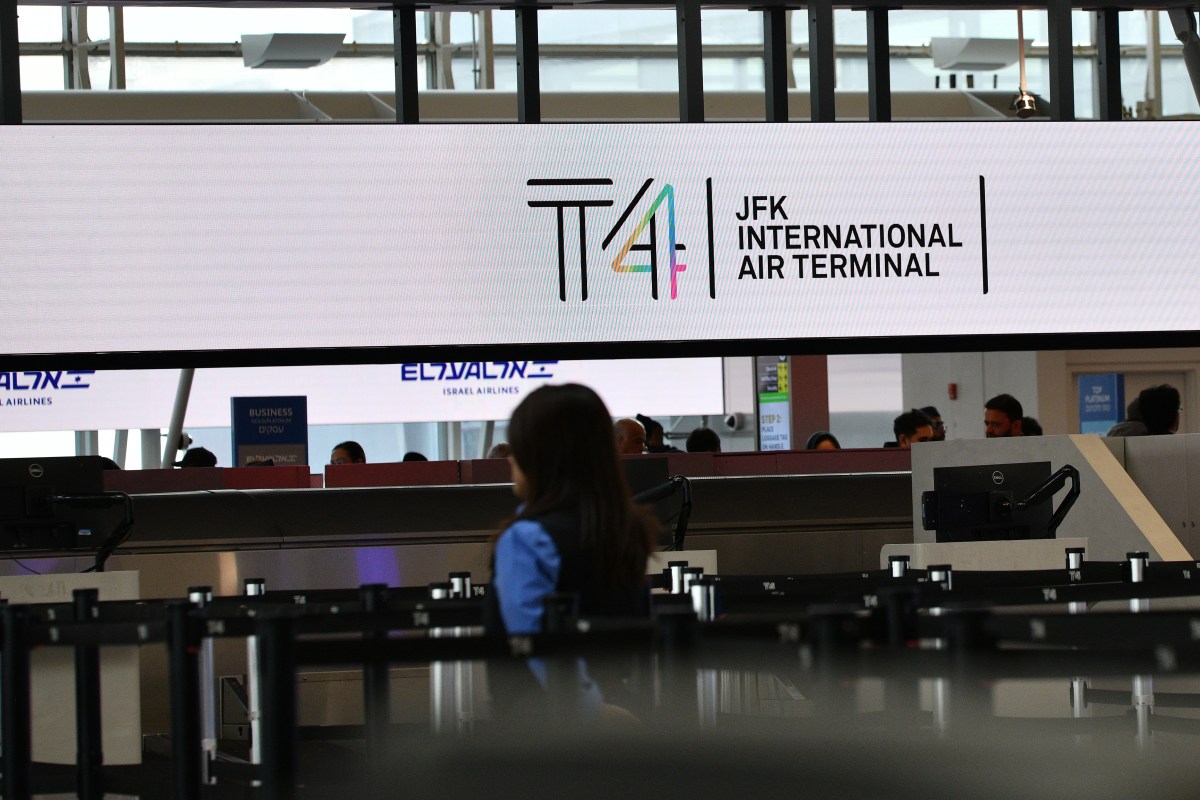
Air Canada will stop flying to New York's JFK airport from June 1 to October 25 due to high jet fuel prices caused by the conflict in Iran. The airline will still fly to New York’s other airports, LaGuardia and Newark Liberty, and will offer alternative options to affected passengers.
Key Facts
Air Canada will suspend flights to JFK airport between June 1 and October 25.
Flights to other New York airports (LaGuardia and Newark) will continue.
Jet fuel prices have risen from $2.50 to $4.32 per gallon because of the Iran conflict.
Higher fuel prices make some routes unprofitable, forcing airlines to change schedules.
Fuel and labor costs are the largest expenses for airlines.
Delta Air Lines expects fuel costs to add $2 billion to its expenses in the second quarter.
Other airlines are raising fees and reducing some route services due to fuel costs.
The International Energy Agency warns that jet fuel supplies in Europe are low amid a major energy crisis.
Read the Original
Want the full story? Tap a source to open the original
article.
Interest rates on certificates of deposit (CDs) have fallen compared to one year ago, so a $10,000 CD opened now will earn less interest by maturity than one opened in April 2025. However, rates remain around 4%, making CDs and high-yield savings accounts still attractive options for saving money, depending on your preferences for fixed or variable interest.
Key Facts
Interest rates on CDs peaked alongside high inflation and the Federal Reserve's high interest rates.
CD rates have dropped since last year, reducing potential earnings on a $10,000 deposit.
In April 2025, a 1-year CD at 4.40% would have earned $440 in interest; now, a 1-year CD at 4.10% would earn $410.
Rates for other CD terms (9 months to 3 years) have also decreased but remain near 4%.
CDs have fixed interest rates that do not change during the term, providing predictable returns.
High-yield savings accounts offer similar interest rates but have variable rates that can go up or down.
The Federal Reserve is unlikely to cut rates in 2026, so savings returns may remain steady.
Online banks often offer better rates on CDs and savings accounts than traditional banks with physical branches.
Read the Original
Want the full story? Tap a source to open the original
article.
At CinemaCon, Disney introduced InfinityVision, a new label for premium large movie screens that meet high standards for size, sound, and picture quality. This move aims to compete with other big-screen formats like Imax by assuring moviegoers a top-quality cinema experience, especially as theaters seek new ways to attract audiences.
Key Facts
InfinityVision is a certification for premium large-format (PLF) movie theaters, focusing on screen size, sound, and picture quality.
About 300 InfinityVision-certified screens exist worldwide, but no official list has been released yet.
Disney’s movie Avengers: Doomsday will open alongside the third Dune film, which will occupy many Imax screens, prompting Disney to promote InfinityVision as an alternative.
Cinemas use PLF formats to encourage people to watch movies at theaters instead of at home, often charging extra for this enhanced experience.
Multiple PLF options exist, such as Dolby, RPX, VistaVision, and now Barco’s HDR projectors, each with different features for brightness, contrast, and sound quality.
The Alamo Drafthouse theater chain is adopting the new HDR by Barco projectors, which offer high contrast, deep blacks, and bright images.
The variety of large-format options aims to give audiences multiple premium viewing choices in competitive markets.
Read the Original
Want the full story? Tap a source to open the original
article.
Disney plans to charge $10 million for a 30-second Super Bowl advertisement starting right away, a higher price than usual. This move is causing challenges because advertisers want to pay less, and Disney has not sold as many ad spots as other broadcasters did before their usual sales period.
Key Facts
In 2016, a 30-second Super Bowl ad cost over $5 million.
By 2023, some NBC ad spots reached over $10 million, but most sold for $7-8 million.
Disney will broadcast the Super Bowl in 2027 and wants $10 million per 30-second ad from the start.
Other broadcasters usually sell 40% to 60% of their Super Bowl ad space well before May.
Disney’s Super Bowl ad sales have been slower and less successful than expected.
Advertisers prefer to pay less than Disney's initial $10 million asking price.
NBC raised ad prices gradually, while Disney is trying to set the highest price immediately.
The price gap between Disney's demand and what advertisers want is causing issues in selling ads.
Read the Original
Want the full story? Tap a source to open the original
article.
Several U.S. states have rules that limit when and how antique and classic cars can be driven. New laws in Minnesota and California aim to clarify these limits, especially focusing on the cars' use as collectors' items and emissions exemptions.
Key Facts
Minnesota proposes House File 3865 to define and limit using antique cars only as collectors’ items.
California’s "Leno’s Law" would expand emissions test exemptions for older cars with collector insurance.
In California, antique cars with Historical Vehicle license plates are mostly allowed only in shows, tours, or special events, not daily driving.
Florida lets cars over 30 years old get "Antique" plates but restricts their use to exhibitions and occasional pleasure driving.
Texas registers vehicles over 25 years old as classic or antique and forbids their use for commuting or business.
New York exempts antique cars from regular safety inspections but restricts when they can be driven on public roads.
Georgia and Pennsylvania exempt antique cars from safety and emissions tests but limit their use primarily to events and exhibitions.
Insurance for antique cars often requires special plans that reflect the vehicle's value and restrict usage, including limits on annual miles driven.
Read the Original
Want the full story? Tap a source to open the original
article.
The Strait of Hormuz, a vital route for oil and gas, has reopened after being blocked by Iran. This reopening reduces the risk of energy supply problems and helps stabilize global markets and prices.
Key Facts
Iran blocked the Strait of Hormuz to pressure countries reliant on oil.
The U.S. responded by enforcing its own naval blockade against Iran.
Iran declared the strait open again after a ceasefire between Israel and Lebanon.
President Trump said the U.S. blockade on Iran will stay until a deal is complete.
Oil prices dropped about 14% after news of the reopening.
The S&P 500 stock market index rose 1.3% and hit a record high.
U.S. Treasury bond yields fell, suggesting expectations of lower inflation.
The reopening eases pressure on the Federal Reserve's monetary policy decisions.
Read the Original
Want the full story? Tap a source to open the original
article.
Many young adults in Generation Z are delaying marriage and choosing to buy homes on their own. Economic challenges like high home prices and mortgage rates are pushing them to prioritize owning a home over traditional steps like marriage.
Key Facts
Over half (53%) of Gen Z homebuyers, aged 18 to 26, buy homes alone.
This is more than double the rate of millennials buying solo at the same age.
Gen Z accounts for only 4% of all homebuyers due to many still starting their careers or unable to afford homes.
The median age for first-time homebuyers in the U.S. is now 40, higher than in the past.
Many Gen Zers delay milestones like marriage or career changes to focus on affording a home.
Rising home prices, low home inventory, and high mortgage rates make traditional life milestones harder to reach.
About 14% of young buyers use community or government help to pay down payments.
Experts say buying a home early can help build wealth even if it breaks from cultural norms.
Read the Original
Want the full story? Tap a source to open the original
article.
A US court found Live Nation Entertainment and Ticketmaster guilty of having a harmful monopoly over concert venues and charging too much for tickets since 2010. This has led to calls in Australia for the government and regulators to investigate and improve rules on ticket prices and transparency.
Key Facts
A New York jury ruled that Live Nation and Ticketmaster stifled competition and overcharged on concert tickets.
The court found an extra US$1.72 was charged for every ticket sold by Live Nation since 2010, adding up to US$595 million in 2025 alone.
Australian experts believe ticket fees in Australia may be even higher, possibly around A$10 per ticket.
The US decision has renewed calls for Australia’s competition regulator (ACCC) to investigate the ticketing industry.
A 2025 Australian report recommended stronger monitoring of music industry competition and clearer ticket fee rules.
Industry groups say Live Nation’s control hurts musicians, crew, and fans by keeping prices high and limiting competition.
Live Nation’s business model includes owning the promoter, venues, and ticket platforms, creating a monopoly.
The US case may force Live Nation to split up, which could affect how the company operates in Australia and open markets to competitors.
Read the Original
Want the full story? Tap a source to open the original
article.
Interest rates on home equity loans have dropped recently, making borrowing $100,000 more affordable for homeowners. For example, a 10-year loan now costs about $1,160 per month, which is roughly $85 less monthly than it was in early 2025.
Key Facts
Homeowners in the U.S. have over $10 trillion in available home equity to borrow against.
Current average interest rates for a home equity loan are around 6.97%, lower than earlier this year and in 2025.
Monthly payment for a $100,000 home equity loan over 10 years at 6.97% is about $1,160.
The same loan over 15 years costs about $897 per month at the current rate.
In January 2026, rates were around 8.1%, leading to monthly payments over $1,220 for 10 years.
Lower rates can save borrowers more than $1,000 each year and over $10,000 during the loan lifetime.
Interest rates offered depend on credit scores, so good credit is important to qualify for the best rates.
Borrowers should compare lenders to find the most affordable home equity loan options.
Read the Original
Want the full story? Tap a source to open the original
article.
This article explains how consumers can find out if they are on an energy price cap tariff. The price cap limits the amount energy companies can charge customers, helping people avoid very high bills.
Key Facts
An energy price cap sets a maximum price energy providers can charge per unit of energy.
The cap is designed to protect consumers from excessive energy costs.
Customers can check their energy tariff by reviewing their energy bills or contacting their supplier.
Being on a price cap tariff does not necessarily mean the cheapest deal, but it offers price protection.
The price cap is reviewed and adjusted regularly by a government regulator to reflect market changes.
Not all energy tariffs fall under the price cap—some fixed deals may be exempt.
The article aims to help people understand their energy bill and avoid overpaying.
Read the Original
Want the full story? Tap a source to open the original
article.
Emma Grede, a British entrepreneur linked to the Kardashian-Jenner brands, says working from home can hurt careers, especially for women. She believes being visible at work helps people get promotions and higher pay, despite the flexibility remote work offers.
Key Facts
Emma Grede helped build successful Kardashian-Jenner business brands like Good American.
She stated that work-from-home culture is "career suicide" because it reduces chances for promotions.
Grede believes women are disproportionately affected by remote work’s career risks.
She says face-to-face interaction with decision-makers is important for career growth.
Managers often do not clearly say that remote work may hurt advancement.
Grede first made similar comments on a podcast last year and faced online criticism.
Her views are shared in an interview linked to her new book about work and life.
The topic highlights ongoing debates about remote and hybrid work after the pandemic.
Read the Original
Want the full story? Tap a source to open the original
article.
Oil and gas prices dropped by nearly 10% after Iran announced it would open the Strait of Hormuz to commercial shipping during a 10-day ceasefire between Israel and Lebanon. Despite this, the US, led by President Donald Trump, said its naval blockade on Iran would continue until a formal deal is reached.
Key Facts
Iran said the Strait of Hormuz would be open to commercial ships during a 10-day ceasefire.
The Strait of Hormuz is a crucial passage for oil and gas shipments from the Middle East.
Brent crude oil prices fell by 9% to $90 per barrel following the announcement.
European gas prices also dropped about 8.5% on hopes for peace between the US and Iran.
The US maintains a naval blockade on Iran's use of the strait until a deal is made, according to President Trump.
Around 800 tankers, including 300 oil and gas ships, are currently stuck in the Gulf region.
Iran charges tankers about $2 million for safe passage through the strait, though it is unclear if this fee will continue.
The recent ceasefire and diplomatic progress raise hopes that oil and gas supplies could return to normal soon.
Read the Original
Want the full story? Tap a source to open the original
article.
Oil prices dropped more than 10% after Iran said the Strait of Hormuz is fully open for oil tankers to pass. At the same time, U.S. stock markets rose toward new records, helped by positive earnings reports from some companies.
Key Facts
The Strait of Hormuz reopening allows oil tankers to carry crude oil from the Persian Gulf again.
U.S. crude oil price fell 10.8% to $81.28 per barrel; Brent crude fell 10.3% to $89.13.
The S&P 500 index rose 0.8%, the Dow Jones increased 1.4%, and the Nasdaq went up 1%.
U.S. stocks have gained more than 11% since late March due to hopes the U.S. and Iran avoid worsening conflict.
President Donald Trump said the war should be ending soon.
Some U.S. companies, like State Street and Fifth Third Bancorp, reported better-than-expected profits.
Netflix’s stock dropped 11.5% despite good profits, because it did not raise its forecast for full-year revenue growth.
European stock markets rose strongly following the news, while some Asian markets closed lower before the announcement.
Treasury bond yields fell, reflecting lower inflation pressure from the drop in oil prices.
Read the Original
Want the full story? Tap a source to open the original
article.
Homeowners can borrow money using HELOCs (home equity lines of credit) or home equity loans, which currently offer lower interest rates than credit cards and personal loans. These rates are expected to drop if the Federal Reserve lowers its rates later in 2026, making borrowing through home equity potentially more affordable.
Key Facts
HELOC and home equity loan rates are lower than most credit cards and personal loans right now.
As of April 17, 2026, average interest rates are about 7.07% for HELOCs and around 8% for home equity loans of various terms.
Home equity loans have fixed rates and provide a lump sum; HELOCs have variable rates and offer a line of credit that borrowers can use as needed.
Payments on HELOCs are usually interest-only at first, then include principal after 10-15 years.
Homeowners with at least $300,000 in home equity can use this to borrow money.
Interest paid on these loans may be tax-deductible if used for eligible home repairs or renovations.
Borrowing with home equity uses the home as collateral, so failure to pay could lead to foreclosure.
Rates and terms vary by lender and borrower credit profile, so shopping around is important.
Read the Original
Want the full story? Tap a source to open the original
article.
Oil prices fell more than 10% after President Donald Trump and Iran’s foreign minister said the Strait of Hormuz is open for shipping. This waterway is very important for moving oil, and the reopening suggests that interruptions might soon ease.
Key Facts
The Strait of Hormuz is a key shipping route that carries about 25% of the world’s sea-traded oil.
Both President Trump and Iran’s foreign minister announced the strait is fully open for commercial ships.
Iran’s announcement said ships would use a coordinated route as directed by Iran’s maritime authorities.
Brent crude oil price dropped to $88.90 per barrel, its lowest in over a month.
West Texas Intermediate (WTI), a key U.S. oil price, dropped to $83.35 per barrel.
U.S. stock futures increased after the news.
The opening announcement follows progress in ceasefire talks in the region.
It is still unclear how quickly shipping companies will resume using this route fully.
Read the Original
Want the full story? Tap a source to open the original
article.
Mortgage interest rates are higher now compared to a few years ago, but good rates are still possible for buyers with strong credit. Today’s average rates for a 30-year mortgage are about 6.13%, while 15-year loans average 5.50%. Refinancing rates are slightly different, with 30-year refinances averaging 6.83%.
Key Facts
Average 30-year mortgage rate as of April 17, 2026, is 6.13%.
Average 15-year mortgage rate is 5.50%.
Average 30-year refinance rate is 6.83%, and 15-year refinance rate is 5.50%.
Higher credit scores, especially in the mid-700s or above, help borrowers get better mortgage rates.
Borrowers should pay bills on time, check credit reports for errors, and avoid taking new credit before applying.
Comparing rates and terms from multiple lenders can result in better deals, especially when refinancing.
Shorter loan terms, like 15 years, usually offer lower interest rates than longer terms, like 30 years.
It’s important to consider all loan costs, including fees and closing costs, when choosing or refinancing a mortgage.
Read the Original
Want the full story? Tap a source to open the original
article.
NJ Transit confirmed that train tickets for trips to World Cup soccer matches will cost $150 each. This fare increase is part of preparations for the event held in several U.S. cities this spring.
Key Facts
NJ Transit announced a $150 train fare for World Cup match days.
The World Cup will take place at multiple venues across the U.S. in spring.
The high ticket price is much more than regular train fares.
The pricing aims to manage large crowds during the tournament.
Soccer fans traveling to the games will face higher transportation costs.
This price hike reflects increased demand and special event planning by NJ Transit.
The World Cup is a major international soccer tournament held every four years.
Read the Original
Want the full story? Tap a source to open the original
article.
Oil prices dropped by 10% after Iran said the Strait of Hormuz is fully open, following a ceasefire between Israel and Lebanon. This reopening raised hopes that energy supplies would improve, leading to lower gas prices in the UK and a rise in U.S. stock markets.
Key Facts
Iran announced the Strait of Hormuz is completely open for commercial ships during the ceasefire period.
Brent crude oil price fell below $90 per barrel, down 10%.
Iran’s foreign minister said ships must follow a coordinated travel route set by Iran’s maritime authorities.
President Donald Trump confirmed the strait’s reopening but said the U.S. naval blockade on Iranian ports remains until a peace deal is finalized.
Talks between the U.S. and Iran include a possible agreement involving $20 billion in frozen funds and Iran reducing enriched uranium stockpiles.
UK gas prices fell by nearly 8%, anticipating more deliveries from the Gulf region.
U.S. stock markets rose, with the Dow Jones up by 578 points (1.2%) after the announcement.
Oil company shares like BP and Shell dropped as the reopening could reduce their war-related profits.
Read the Original
Want the full story? Tap a source to open the original
article.
A vitamin C supplement made by Blueroot Health is being recalled because it may contain undeclared allergens like egg, soy, and hazelnut. The FDA classifies this recall as Class II, meaning the products could cause health problems but serious effects are unlikely. About 11,849 bottles sold in 40 states are affected, and consumers are advised to stop using the product and return it.
Key Facts
The supplement is called Vital Nutrients Aller-C and comes in 100-count and 200-count bottles.
Undeclared allergens found include egg, soy, and hazelnut, which may cause allergic reactions.
11,849 bottles from lot 25E04 and its sub-lots are being recalled.
The recall cover products with expiration dates of May 2027.
The products were sold nationwide from September 2025 to March 2026.
The recall started on March 27 and was expanded on April 10.
The FDA classified the recall as Class II on April 15, meaning moderate health risk.
Consumers should stop using the supplement and return it for a replacement.
Read the Original
Want the full story? Tap a source to open the original
article.