A federal appeals court ruled that Nevada can regulate betting on sporting events offered by Kalshi, a prediction market platform. The court decided these bets are not federally controlled financial swaps but are similar to sports gambling, which states have authority to oversee.
Key Facts
The 9th Circuit Court of Appeals rejected Kalshi's request to stop Nevada from regulating its sports event bets.
The court said the 1936 Commodity Exchange Act does not prevent Nevada from applying its gambling laws to these bets.
Kalshi markets contracts on outcomes of sports events, which the court called sports gambling despite Kalshi calling them "swaps."
Around 20 states are involved in court cases about who should regulate prediction markets like Kalshi.
The 3rd Circuit Court previously ruled differently, saying federal regulators have exclusive control over similar contracts.
Kalshi plans to seek further legal review and notes federal regulations are still being clarified.
Nevada's gaming regulators say the decision supports their role in controlling sports betting.
Financial reform advocates say the ruling protects state efforts to regulate gambling and protect consumers.
Read the Original
Want the full story? Tap a source to open the original
article.
A federal appeals court panel decided that Nevada can continue to regulate the prediction market company Kalshi and stop it from trading on sports and election events until it gets a gambling license. The court ruled that federal law does not override Nevada’s gambling laws for Kalshi’s business, and the court sent part of the case back to a lower court for further review.
Key Facts
Kalshi is a company that operates prediction markets where people trade contracts based on sports and election outcomes.
Nevada’s Gaming Control Board told Kalshi to stop trading because it did not have a state gambling license.
Kalshi argued it should be regulated by the federal Commodity Futures Trading Commission (CFTC), not Nevada, claiming it is a “designated contract market.”
A panel of the 9th U.S. Circuit Court of Appeals said Nevada’s gambling laws likely apply and federal law does not prevent the state from regulating Kalshi.
The court rejected Kalshi’s request to restart trading on sports and election contracts in Nevada while legal battles continue.
Nevada’s attorney general called the ruling a major win for state authority over gaming.
The case over prediction markets is happening in about 20 states, and there are conflicting court decisions raising the chance the U.S. Supreme Court will decide the issue.
Kalshi plans to seek further court review of the ruling.
Read the Original
Want the full story? Tap a source to open the original
article.
The U.S. government predicts strong job growth in healthcare, utilities, and AI-related fields from 2025 to 2035 due to population aging and rising technology use. While nearly 2.2 million healthcare jobs will be added, some administrative and retail jobs are expected to decline because of automation and AI.
Key Facts
Healthcare and social assistance jobs are expected to grow 9.5%, adding 2.2 million new jobs by 2035.
Utilities is the fastest-growing industry at 9.8% growth, driven by energy needs for artificial intelligence (AI).
About 927,000 jobs will be created in professional, scientific, and technical services, largely due to AI demand.
AI growth will create new software developer, consultant, and engineer jobs.
Around 752,000 administrative jobs, like office clerks and customer service representatives, are projected to be lost by 2035.
Some jobs in arts, entertainment, sports, and media may also decline due to AI.
Federal government jobs are expected to decrease by 3.4% from 2025 to 2035.
AI will cause a mix of job gains in tech fields and losses in routine or administrative roles.
Read the Original
Want the full story? Tap a source to open the original
article.
Juul Labs received approval from the FDA to sell a new vaping device called Juul2, which includes optional age-verification to prevent use by minors. The company hopes the updated product and future flavors will appeal to adult smokers while addressing concerns about underage vaping.
Key Facts
The FDA granted Juul permission to sell an updated e-cigarette for the first time in over ten years.
Juul2 has an optional age-verification feature that uses an online app to help stop underage access.
Juul stopped selling popular flavors like mango and mint in 2019 due to teen usage concerns.
Juul settled lawsuits related to underage vaping, paying around $3 billion and laying off hundreds of workers.
Studies reviewed by the FDA showed 20% to 50% of adult smokers using Juul products quit smoking after six weeks.
The FDA said this approval is not an endorsement and warned that non-smokers should not use e-cigarettes.
Juul is no longer the leading e-cigarette brand in the U.S., falling behind Vuse, produced by Reynolds American.
Teen vaping has declined overall, with many teens now using unauthorized flavored disposable e-cigarettes from China.
Read the Original
Want the full story? Tap a source to open the original
article.
Alaska has approved a 1.3-mile mining access road for Grand Portage Resources Ltd., a Canadian company, despite strong public opposition. The road will provide access for the proposed New Amalga Gold Project and is expected to create jobs and generate economic benefits for the state.
Key Facts
The road is 1.3 miles long with a 15-foot-wide gravel surface and two helicopter pads on state land.
Nearly 90% of 196 public comments opposed the road due to environmental and recreation concerns.
The road will not restrict public access but may change the outdoor experience because of noise and safety issues.
The mining project is expected to create 277 jobs and have a net value of nearly $1 billion over seven years.
The approval includes fees and potential tax revenues benefiting the state’s economy.
Local contractors and businesses will be involved in building the road.
The mine is located near Herbert Glacier on U.S. Forest Service land and has not yet been fully approved.
Opposition cited concerns about environmental damage, disturbance to recreation, and profits going to a foreign corporation.
Read the Original
Want the full story? Tap a source to open the original
article.
A federal appeals court upheld key parts of the Inflation Reduction Act that let Medicare negotiate drug prices for seniors. The court rejected a lawsuit by drug companies that claimed the program was unconstitutional.
Key Facts
The U.S. Court of Appeals for the Fifth Circuit ruled in favor of the government on Medicare drug price negotiations.
Pharmaceutical groups like PhRMA challenged the program, saying it violates constitutional rights.
The court said drug companies do not have a guaranteed right to set prices when participating in Medicare.
Participation in Medicare and Medicaid by drug companies is voluntary.
The ruling supports the Inflation Reduction Act signed into law in 2022.
Similar lawsuits by big drugmakers like Merck and AstraZeneca were also rejected.
The U.S. Supreme Court refused to hear several challenges to the program earlier this year.
The program aims to lower prescription drug costs for seniors and taxpayers by allowing price negotiations.
Read the Original
Want the full story? Tap a source to open the original
article.
A $150,000 deposit in a high-yield savings account could earn between about $5,900 and $6,150 in interest over one year, based on current rates around 4%. These accounts offer a safer way to grow money compared to investments, especially in today’s uncertain economy and possible upcoming Federal Reserve rate increases.
Key Facts
Current top interest rates on high-yield savings accounts range from about 3.95% to 4.10%.
At 3.95%, a $150,000 deposit would earn roughly $5,925 in interest after one year.
At 4.00%, the same amount would earn about $6,000 in interest after one year.
At 4.10%, the interest would be approximately $6,150 after one year.
Interest rates may change if the Federal Reserve raises its rates, potentially increasing returns.
High-yield savings accounts allow easy access to funds and have fewer restrictions than other savings options.
Investing may offer higher returns but comes with risks of losing money, unlike savings accounts.
Many savers consider high-yield savings accounts a good option in today’s inflation and economic uncertainty.
Read the Original
Want the full story? Tap a source to open the original
article.
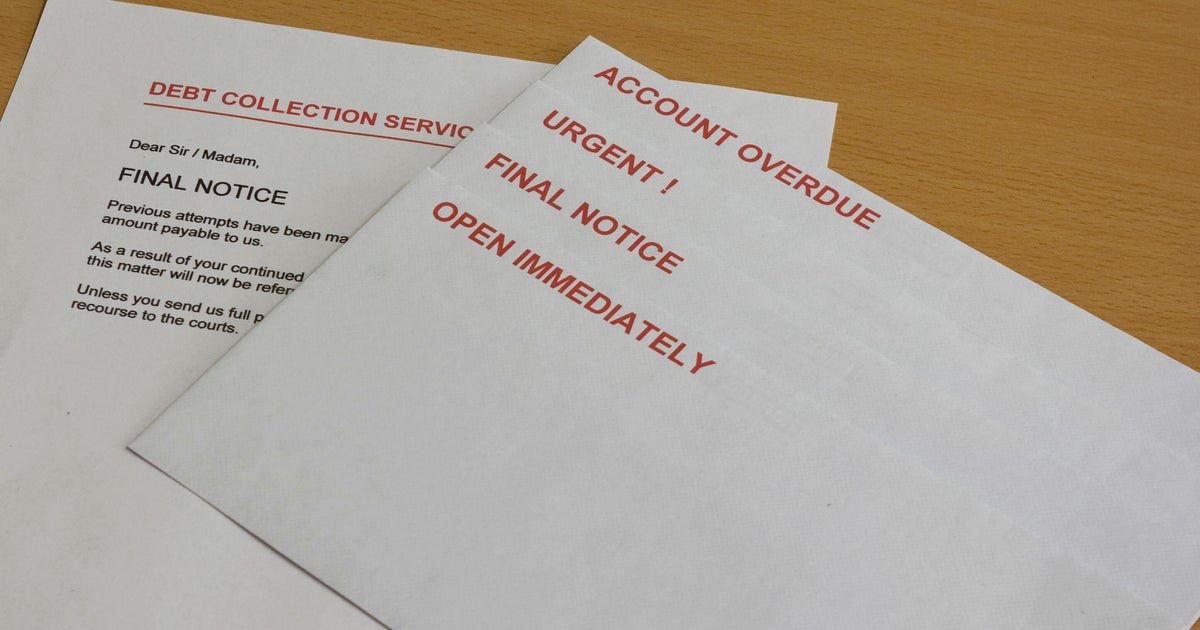
Debt collectors can find information about where you work in several ways, including checking records they already have or asking other people for "location information." They are limited by federal rules about what they can ask or say when trying to find your employer. Before a collector can take money directly from your paycheck, they usually must sue you and win a court judgment.
Key Facts
Debt collectors may have your employer’s information if it was included in the records they obtained when buying or taking over your debt.
They can use public records or commercial databases to find or confirm employment details.
Federal law lets debt collectors ask third parties for "location information," such as your workplace, but they can’t reveal that you owe money.
Debt collectors generally cannot repeatedly contact third parties for this information unless allowed by law.
Collectors must stop contacting you at work if your employer forbids it or if you tell them not to call there.
Finding your employer does not mean immediate wage garnishment; debt collectors need a court judgment first for most debts.
Wage garnishment requires a legal order that tells your employer to withhold part of your paycheck to pay the debt.
State laws and the type of debt can affect the wage garnishment process.
Read the Original
Want the full story? Tap a source to open the original
article.
A $40,000 home equity loan taken out in September 2026 would have monthly payments between about $386 and $488, depending on the loan term. These loans have fixed interest rates around 8.14%, which is higher than earlier in the year but still lower than many credit cards and personal loans.
Key Facts
The average interest rate for home equity loans is about 8.14% as of late August 2026.
Monthly payments for a $40,000 loan at 8.14% are about $488 over 10 years or $386 over 15 years.
In April 2026, rates were lower (6.96%), making monthly payments cheaper at $464 (10 years) or $359 (15 years).
Rates in January 2026 were similar to September, with monthly payments close to $488 (10 years) or $385 (15 years).
Home equity loans typically have lower interest rates compared to personal loans and credit cards.
Borrowers with good credit might get better loan rates than the average.
Interest on home equity loans used for home projects may be tax-deductible.
These loans give predictable monthly costs because of fixed interest rates, which helps with budgeting.
Read the Original
Want the full story? Tap a source to open the original
article.
This article lists a selection of Labor Day sales on various high-quality products. It highlights discounts on kitchen appliances, cookware, home goods, and food items to help shoppers prepare for the upcoming fall and winter seasons.
Key Facts
The Our Place Titanium Always Pan Pro is on sale for $99, down from $175.
The Frontgate Resort Collection Bath Towels are discounted to $35 from $50.
The Garmin Forerunner 165 Smartwatch is now $199, originally priced at $249.99.
The Our Place Dream Cooker, a six-in-one multicooker, is on sale for $159, reduced from $199.
Caraway’s Clean Start Bundle, a 39-piece cookware set, is offered at $1,195, down from $1,900.
Anyday’s 12-piece glass round dish set is priced at $158, originally $225.
Bedsure’s faux fur blanket is discounted from $143.98 to $79.99.
Labor Day sales provide a chance to buy durable, useful products at lower prices before colder weather.
Read the Original
Want the full story? Tap a source to open the original
article.
Starting this September, savers in the U.S. can earn around 4% or more interest on their money through certain types of bank accounts. High-yield savings accounts, money market accounts, and certificates of deposit (CDs) offer higher returns than traditional savings accounts.
Key Facts
Traditional savings accounts currently offer a very low interest rate of about 0.38%.
High-yield savings accounts offer around 4.10% interest with flexible access to funds.
Money market accounts have interest rates slightly below 4.10% and allow check writing.
Certificates of deposit (CDs) offer fixed interest rates up to about 4.50% but require locking funds until the maturity date.
Interest rates on some accounts may increase if market rates rise later this year.
Online banks often provide higher interest rates on CDs compared to physical branch banks.
These options provide safer ways to earn more interest compared to investing, which can be risky.
Savers should compare account options online to find the best terms and rates.
Read the Original
Want the full story? Tap a source to open the original
article.
Federal Reserve Chairman Kevin Warsh said the US central bank may need to raise interest rates if inflation does not show clear signs of returning to its 2% target. He highlighted that current financial conditions are not strict enough to control price rises and said inflation progress has been slow.
Key Facts
Chairman Warsh said the Fed must be sure inflation is moving clearly and quickly toward the 2% target.
Financial conditions are not yet tight enough to reduce inflation pressure.
The Personal Consumption Expenditures Price Index (PCE), the Fed’s preferred inflation measure, was 3.7% in July.
Inflation has been rising about 3%, which is higher than before the pandemic.
There is a 57.4% chance the Fed will raise interest rates by 0.25% in mid-September.
Warsh emphasized keeping inflation expectations stable to avoid higher inflation.
He avoided setting a specific timeline for rate hikes but allowed for the possibility of earlier increases.
Warsh also discussed how artificial intelligence may impact the economy and future Fed policies.
Read the Original
Want the full story? Tap a source to open the original
article.
Blue Apron and Marley Spoon, two meal delivery companies, have faced many complaints from customers. People say their meal boxes arrived mostly empty or with spoiled food because of ongoing supply problems.
Key Facts
Blue Apron and Marley Spoon deliver meal kits to customers.
Recently, many customers received boxes that were almost empty.
Some boxes contained spoiled or bad food.
These problems are due to supply chain issues, meaning delays or shortages in getting ingredients.
Customers have threatened to stop using these services because of these issues.
The companies have had these problems for several weeks.
Blue Apron and Marley Spoon were once known for reliable deliveries.
Read the Original
Want the full story? Tap a source to open the original
article.
Kevin Warsh, a former Federal Reserve official, said that inflation in the U.S. is still a worry. He noted that even though steps have been taken to control rising prices, inflation has not been fully resolved.
Key Facts
Kevin Warsh spoke about ongoing inflation concerns in the U.S.
Inflation refers to the general rise in prices for goods and services.
The Federal Reserve has taken actions to help lower inflation.
Despite these efforts, inflation remains a problem.
Warsh’s comments were reported by CBS News.
Warsh is a former chair of the Federal Reserve.
Inflation affects the cost of living for people across the country.
Read the Original
Want the full story? Tap a source to open the original
article.
David Booth, a leader in index investing, advises investors to stay calm and keep investing despite market ups and downs. In his upcoming book "Stay Calm," Booth explains that accepting uncertainty in the market is better than trying to beat it, and that investing broadly and cheaply through index funds is an effective strategy.
Key Facts
David Booth co-founded Dimensional Fund Advisors, which manages $1 trillion in assets.
His new book "Stay Calm" will be published on September 1, 2026.
Index investing began in the 1970s as a way to avoid the risks and high fees of picking individual stocks or using active management.
Booth studied under Eugene Fama, whose research showed markets are efficient and hard to beat consistently.
Data shows most active fund managers do not beat the market after fees.
Booth encourages investors, especially young people, to start investing early to benefit from compound growth.
The stock market has averaged about a 9-10% annual return over nearly 100 years despite various economic crises.
The higher returns come as a reward for taking risks by investing in stocks.
Read the Original
Want the full story? Tap a source to open the original
article.
Canada's economy grew strongly in the second quarter of 2024, with a 3.3 percent annualized increase driven by higher exports and domestic spending. However, new U.S. tariffs on Canadian goods have created uncertainty about future economic growth.
Key Facts
Canada’s GDP grew at an annualized rate of 3.3% in Q2 2024, the fastest since 2023.
Growth followed a revised 0.3% increase in Q1, meaning Canada avoided a technical recession.
Exports increased by 3.6%, the largest quarterly rise in over three years.
Domestic demand rose by 1% in Q2, helped by higher consumer spending and business investment.
Consumer spending was boosted by higher wages and government support.
Business investment grew 2.3% after shrinking in previous quarters.
President Donald Trump imposed a 50% tariff on $20 billion of Canadian exports, with Canada responding with its own tariffs.
The new tariffs raise concerns about future economic growth and add uncertainty amid ongoing trade tensions.
Read the Original
Want the full story? Tap a source to open the original
article.
Florida had about 270,000 fewer Canadian visitors in the first half of 2026 compared to the same time in 2025. This drop shows a decline in Canadian tourism to the state.
Key Facts
Florida experienced a decrease in Canadian tourists in early 2026.
The number of Canadian visitors dropped by around 270,000.
The decline is measured by comparing the first six months of 2026 to the same period in 2025.
Canadian visitors are an important part of Florida's tourism.
Fewer tourists can affect Florida’s economy, especially businesses that rely on visitors.
The article focuses specifically on the change in Canadian tourism to Florida.
There is no mention of reasons for the decrease in the article excerpt.
Read the Original
Want the full story? Tap a source to open the original
article.
The U.S. government has authorized a new drug called Bimectin to help stop the New World screwworm parasite that harms cattle in Texas and New Mexico. This decision comes amid concerns about the parasite spreading and disagreements over reopening cattle trade with Mexico while infections continue.
Key Facts
The New World screwworm is a fly larva that eats living flesh, harming cattle and other animals.
The parasite was eradicated in the U.S. in 1966 but has recently reappeared in Texas and New Mexico.
The FDA issued an Emergency Use Authorization for Bimectin, a generic ivermectin injection to prevent screwworm infestations.
Bimectin can be given to cattle within 24 hours of birth, during castration, or if animals have wounds.
This is the 14th emergency FDA approval related to fighting the screwworm.
Bimectin provides an alternative to another drug called Ivomec, reducing dependence on a single product.
The parasite can cause serious injuries, reduce livestock productivity, and even lead to death.
The drug is available over the counter but is not allowed for dairy cows producing milk or veal calves, with specific rules before slaughter.
Read the Original
Want the full story? Tap a source to open the original
article.
If you owe money on a credit card or loan and fall behind, a debt collector might try to take money directly from your paycheck. This usually happens only after they sue you and get a court judgment. There are warning signs before wage garnishment happens, such as being sued, having a judgment against you, receiving court papers, and your employer getting an order.
Key Facts
Credit card balances reached $1.26 trillion in the second quarter of 2026.
Many people have debts that are late or unpaid.
Debt collectors usually must sue you and get a court judgment before they can take money from your paycheck.
Getting a summons or complaint means the debt collector is suing you.
A court judgment against you increases the chance of wage garnishment.
You may receive court documents about garnishment before any money is taken.
Your employer must get a wage garnishment order before money is taken from your paycheck.
Garnishment laws and processes vary depending on your state.
Read the Original
Want the full story? Tap a source to open the original
article.
New research suggests that digital money technologies like stablecoins could make the U.S. dollar even more important in global finance. This happens because easier access and faster transactions encourage more people and companies to use dollars for borrowing and trading.
Key Facts
The U.S. dollar is involved in about 90% of global currency trades.
Stablecoins are digital tokens backed by traditional money, like the dollar.
Financial technologies may increase demand for dollar assets and markets.
More companies might borrow money in dollars because digital money is easier to use.
This could strengthen the dollar's position, even with concerns about U.S. debt and politics.
Other currencies like the euro, yen, and pound have lost some ground, while China's renminbi has gained.
A world more dependent on the dollar could mean other countries are more affected by U.S. economic policies.
Increased use of digital U.S. Treasury securities could increase financial risks if U.S. government spending is not carefully managed.
Read the Original
Want the full story? Tap a source to open the original
article.