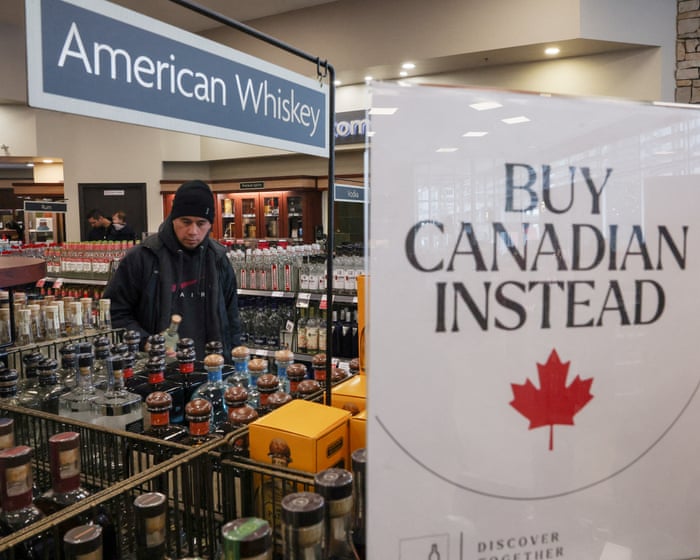
President Donald Trump used an old law from 1930 to place a 50% tax on $20 billion of Canadian goods. This led Canada to respond with equal taxes on U.S. products and increased tensions between the two countries.
Key Facts
The law used is Section 338 of the Tariff Act of 1930, which is rarely used and mostly unknown to trade lawyers.
The tax imposed is a 50% tariff on $20 billion worth of Canadian imports to the U.S.
Canada responded by placing equal tariffs on American goods.
The tariffs have caused tension between the U.S. and Canada, who are close trading partners and allies.
The trade conflict is part of a larger trade war initiated by President Trump.
The legal foundation of the tariff move has not yet been tested in court.
The Tariff Act of 1930 is an old law, nearly 100 years old.
The situation raises questions about U.S. trade policy and its impact on international relations.
Read the Original
Want the full story? Tap a source to open the original
article.
Federal Reserve Chair Kevin Warsh signaled that the central bank might raise interest rates soon to fight inflation if price increases don’t slow down. His comments at the Jackson Hole conference increased expectations for a rate hike in September, while also discussing how artificial intelligence could help the economy grow without causing inflation.
Key Facts
Warsh indicated the Fed may raise interest rates at its next meeting in mid-September if inflation remains high.
A government report on inflation just before the meeting could influence the Fed’s decision.
Warsh prefers to wait for clear evidence on inflation before making decisions on rate changes.
Despite expectations, long-term interest rates, including mortgage rates, did not rise after Warsh’s speech.
The current average rate for a 30-year fixed mortgage is 6.66%, slightly higher than last year.
Warsh highlighted artificial intelligence as a factor that could improve economic growth without increasing inflation.
Some economists, like Kenneth Rogoff, are more cautious about the immediate benefits of AI.
The Jackson Hole conference where Warsh spoke is an important annual meeting for central bankers and economists.
Read the Original
Want the full story? Tap a source to open the original
article.
Federal Reserve Chair Kevin Warsh indicated in a speech that the central bank might raise interest rates soon to fight inflation. He emphasized waiting for new data before deciding but said inflation has not improved enough. This has increased expectations for a rate hike in the Fed’s September meeting.
Key Facts
Kevin Warsh spoke at the annual Jackson Hole Economic Policy Symposium.
He suggested a possible interest rate increase to control inflation.
The Fed will review a government price report just before its September meeting.
Inflation has not significantly improved despite some gas price drops.
Warsh avoided promising when a rate increase would happen, emphasizing data-driven decisions.
Some experts say Warsh’s comments raise pressure to hike rates in September.
Long-term interest rates, like those influencing mortgages, did not rise after his speech.
A Fed rate hike may not automatically increase mortgage or consumer loan rates immediately.
Read the Original
Want the full story? Tap a source to open the original
article.
President Donald Trump has used a rarely applied 1930 law, Section 338 of the Tariff Act, to impose a 50% tax on $20 billion of Canadian goods. This move has not been tested in court and has led to Canadian retaliation, raising questions about the legal strength of these tariffs.
Key Facts
President Trump invoked Section 338 of the 1930 Tariff Act to impose tariffs on Canada.
The tariffs apply a 50% tax on $20 billion worth of Canadian imports.
Canada retaliated with equal tariffs, increasing trade tensions.
Section 338 has never been used or challenged in court before.
The 1930 Tariff Act, known as the Smoot-Hawley Act, was created during the Great Depression to protect U.S. businesses.
Legal experts say the law is outdated and may conflict with newer trade laws.
Past U.S. presidents never used Section 338 despite considering it in the 1930s and 1940s.
The tariffs target Canadian discrimination against U.S. dairy, auto, and alcohol exports.
Read the Original
Want the full story? Tap a source to open the original
article.
Many Canadians have been avoiding American products since President Trump imposed tariffs on Canadian goods. This boycott has made daily life more expensive for some Canadians but reflects their response to trade tensions and political actions between the two countries.
Key Facts
President Trump started tariffs on Canadian goods in February last year, leading to a Canadian boycott of US products.
Canada responded by imposing matching tariffs after trade talks failed recently.
Some Canadians report higher costs from buying only Canadian goods, like groceries and beer.
The boycott includes avoiding US technology, streaming services, petrol, vehicles, and social media platforms.
Abbreviations like ABUS ("Anything but US") and slogans like "Elbows Up!" show organized resistance to US products.
A July survey found 40% of Canadian grocery shoppers actively check product origins and try to avoid US goods.
Canadians discuss boycotting US airlines, hotels, airports, and moving investments to Canadian companies.
Some people grow their own vegetables or buy produce from other countries to avoid US products despite environmental concerns.
Read the Original
Want the full story? Tap a source to open the original
article.
Eve Ogden Schaub is growing flax in her garden to make a linen dress by hand, sharing the process on Instagram. Her project challenges fast fashion by showing the time and work involved in making clothes the slow, traditional way.
Key Facts
Schaub started growing flax in April 2025 in a 600 sq ft garden in Vermont.
She harvests flax, processes it through several traditional steps like retting, breaking, scutching, and hackling.
Schaub plans to spin the flax into linen yarn, dye it with indigo she is growing, weave it on a large loom, and sew a dress.
The project demonstrates how clothing was once made with great effort and was more valuable.
Fast fashion produces cheap clothes quickly but harms the environment and workers’ health, especially in places like Ghana and India.
Schaub wants to show the benefits of slower, more meaningful making and to raise awareness about synthetic materials in clothing.
She has experience with lifestyle experiments, including reducing waste and sugar in her family’s life.
Schaub shares her learning process openly, including mistakes, to highlight how complex traditional cloth-making is.
Read the Original
Want the full story? Tap a source to open the original
article.
This week, the U.S. will release two important reports about jobs. One report on Tuesday will show job openings and people quitting or being laid off in July. The bigger jobs report on Friday will give a full update on job growth and unemployment in August.
Key Facts
Tuesday’s report will give details on job openings and turnover for July.
Turnover includes layoffs and people quitting jobs.
Friday’s report will cover job growth and unemployment for a wide range of sectors in August.
The July jobs report showed the U.S. job market stalled unexpectedly.
Employment has been stronger than expected despite high inflation and weaker consumer confidence.
The Federal Reserve is balancing controlling inflation and supporting jobs using interest rates.
High inflation pushes the Fed to raise rates, but higher rates can hurt jobs.
Rising oil prices from conflicts and trade wars are making goods and fuel more expensive.
Read the Original
Want the full story? Tap a source to open the original
article.
Energy prices in Great Britain are set to rise again in October, with millions of households facing higher bills due to a government price cap increase. Households can save up to £173 per year by switching to a fixed energy tariff, which locks in prices for a specific period and protects against future rises.
Key Facts
The energy price cap will increase by 4% on October 1, after a 13% rise in July.
This increase will raise the average annual energy bill to about £1,723 for 22 million households on default tariffs.
About 11 million homes (35% of households) are already on fixed tariffs and will not be immediately affected by the price cap rise.
Fixed tariffs offer a set price for energy over a period, typically one or two years, helping customers avoid rising costs.
The cheapest fixed tariff currently available is from Fuse Energy, costing around £1,550 annually, saving £173 compared to the new price cap.
Other suppliers like Co-op Energy, Octopus Energy, E.ON Next, and Ecotricity also offer fixed deals with savings over £100 per year.
Analysts predict another possible price increase of 9% in January 2027, potentially raising average bills to £1,872.
Customers should check their current contract length and terms before switching to a fixed tariff.
Read the Original
Want the full story? Tap a source to open the original
article.
An advocacy group says Australians could save up to $370 a year on energy bills if plug-in solar panels were made legal like in the UK. These small solar units can be plugged into household power points and help reduce electricity costs, but current Australian rules do not allow their use.
Key Facts
Plug-in solar panels are small, standalone solar units that can be connected to power points to run home appliances.
Australians in cities could save between $226 and $372 annually using plug-in solar systems.
These panels are sold in Australia but are not yet legal to plug in and use.
More than a third of Australians who rent or live in apartments cannot access the benefits of solar energy.
Countries like the UK, Germany, Spain, and New Zealand have legalized plug-in solar panels.
An 800-watt plug-in solar system can power a fridge, TV, and other appliances during the day.
Such a system costs about $1,000 and pays for itself in about three years.
Only 11% of Australian renters have solar, compared to 44% of homeowners, partly due to landlords paying installation costs while tenants benefit.
Battery and solar panel use in homes is increasing quickly, with strong demand supported by government programs.
Read the Original
Want the full story? Tap a source to open the original
article.
Europe’s gas storage levels are the lowest in 13 years as the region prepares for winter. This is causing concern about higher gas prices and market instability due to reduced gas supplies and increased demand.
Key Facts
EU gas stores were 63% full at the end of August, below the 80% average for that time of year.
Gas storage levels are expected to be about 20% below the five-year average entering winter, the lowest since 2013.
The UK has almost no gas in storage and depends heavily on gas imports by pipeline and ship.
Disruptions caused by the US-Israel conflict with Iran have reduced oil and gas exports from the Gulf region.
A cold end to last winter and higher gas use for electricity during recent heatwaves have drained gas supplies.
Gas prices in Europe have risen to a three-year high, reaching above €68 per megawatt-hour, more than double the price from earlier this year.
Europe may need very high gas prices to compete with Asian buyers for liquefied natural gas shipments.
Some Western European countries have gas storage levels around half full, while others like Italy and Poland have over 80% full.
Read the Original
Want the full story? Tap a source to open the original
article.
Younger consumers, especially Gen Z, prefer cold drinks over hot coffee, choosing customizable and visually appealing beverages. Starbucks and other chains have shifted their focus to promote cold drinks, which now make up a large part of their sales and profits.
Key Facts
Starbucks sells mostly cold drinks now, with three out of four drinks being iced or cold options.
Gen Z (born 1997-2012) favors drinks they can customize to fit their tastes and needs.
Customizable cold drinks appeal to younger buyers because they offer a sense of control and self-expression.
Starbucks uses its brand image like a luxury item to keep prices higher than other coffee shops.
Social media trends, like the viral Unicorn Frappuccino on TikTok, help boost sales and store visits.
Other chains like Dunkin' Donuts, McDonald's, Chick-fil-A, and Taco Bell are also launching cold drink options to attract younger customers.
Data shows people under 25 buy cold drinks more than hot drinks year-round, not just in summer.
Cold drinks provide high profits for Starbucks due to options like added flavors, foams, and proteins being low-cost to make.
Read the Original
Want the full story? Tap a source to open the original
article.
President Donald Trump announced a deal between the United States and Venezuela that gives the U.S. control over about 65 billion barrels of Venezuela’s oil reserves. The agreement aims to increase oil production, lower gas prices in the U.S., and bring money and jobs to Venezuela’s economy.
Key Facts
The U.S. will have majority control of over 65 billion barrels of proven oil reserves in Venezuela.
The deal is expected to bring about $209 billion to Venezuela’s government.
Venezuelan interim President Delcy Rodriguez supports the agreement.
The deal allows American companies long-term access to Venezuelan oil fields.
Negotiations took weeks and involve U.S. officials like Secretary of State Marco Rubio and Secretary of War Pete Hegseth.
Venezuela has the largest proven oil reserves in the world but produces much less oil than its capacity.
The structure and details of the deal, including which companies are involved, have not been publicly shared.
The agreement is meant to boost oil supply for U.S. refineries and help rebuild Venezuela’s energy industry.
Read the Original
Want the full story? Tap a source to open the original
article.
Sweetcorn is becoming a new ingredient in UK desserts like ice cream, cookies, and pastries. This trend, called "swavoury," mixes sweet and savory flavors and is inspired by sweetcorn desserts popular in countries like Thailand and South America.
Key Facts
Sweetcorn is traditionally used in savory dishes in the UK but is now appearing in sweet foods.
The trend combines sweet and savory flavors, known as "swavoury."
Crystelle Pereira, a cook and former Great British Bake Off finalist, supports using sweetcorn in desserts.
Sweetcorn desserts are common in South East Asia and Latin America.
The trend is growing slowly in the UK, especially on social media and in specialty bakeries.
Some London bakeries have popular drinks and pastries made with sweetcorn, such as corn milk matcha and sweetcorn danish.
The growth of South Korean food’s popularity in the UK also influences this trend.
Sweetcorn milk and corn lattes are not yet widely available in UK supermarkets or mainstream coffee shops.
Read the Original
Want the full story? Tap a source to open the original
article.
A large number of old and broken fridges are piling up at waste centers in England and Wales due to a shortage of specialists and facilities to process them safely. This problem has grown because of heat waves causing more fridges to break down and the closure of some recycling plants, leading to delays in collection and increased storage issues.
Key Facts
Heat waves this year have caused many fridges and freezers to break down, increasing the number needing disposal.
Several councils have stopped collecting old white goods because of a backlog caused by a lack of specialists.
Three of the UK's 10 large fridge processing plants have closed recently due to a fire, bankruptcy, and changes in use.
The remaining plants cannot operate safely above 30 degrees Celsius, limiting processing during hot weather.
Some fridges are now sent to Europe for recycling while the UK builds new processing plants.
White goods makers pay into compliance schemes to manage the recycling and disposal process.
The largest compliance scheme in the UK supports around 85 councils and helps develop new recycling infrastructure.
Authorities are calling on the government and white goods companies to support councils with costs and prevent future problems.
Read the Original
Want the full story? Tap a source to open the original
article.
The United States and Canada have increased tariffs on each other's goods, escalating their ongoing trade dispute. These new taxes mainly affect cars, building materials, and household items, likely leading to higher costs for consumers and businesses on both sides of the border.
Key Facts
President Donald Trump has threatened to raise tariffs on Canadian cars and auto parts from 25% to 50% starting in 2027.
Canada has imposed retaliatory tariffs, including a 25% import tax on some American vehicles and 50% tariffs on steel and aluminum.
Tariffs on construction materials like steel, aluminum, lumber, plywood, and screws raise costs for homebuilders and may increase housing prices.
The US imported $23 billion worth of wood products in 2024, nearly half from Canada.
Canada’s new tariffs also target household products such as carpets, washing machines, furniture, and kitchen utensils.
Economists say higher tariffs will likely increase prices for consumers and strain manufacturing supply chains.
Car dealerships in the US have so far absorbed most tariff costs, but that is expected to change, affecting car prices.
The long-running "lumber wars" between the US and Canada continue to affect trade on softwood used in construction.
Read the Original
Want the full story? Tap a source to open the original
article.
Callaway and Good Good Golf are facing criticism because of an advertisement that shows a man pushing a woman to the ground after she touched his golf club. The companies are responding to the negative reactions to this commercial.
Key Facts
Callaway and Good Good Golf created a joint advertisement.
The ad depicts a man pushing a woman to the ground.
The push happens because the woman touched the man's golf club.
The advertisement has caused public backlash.
News outlets, including CBS News, have reported on the issue.
The companies involved are addressing the crisis connected to the ad.
Read the Original
Want the full story? Tap a source to open the original
article.
Federal Reserve Chair Kevin Warsh said inflation remains a concern and more actions might be needed. At an economic meeting in Wyoming, he said he is not committed to raising interest rates but has not ruled out the possibility.
Key Facts
Kevin Warsh is the Chair of the Federal Reserve.
He spoke at the Fed’s annual economic meeting in Jackson Hole, Wyoming.
Inflation is still an issue according to Warsh.
Warsh said there is ongoing work to control inflation.
He is not firmly planning to raise interest rates but has not excluded that option.
The discussion included Amna Nawaz and Nick Timiraos from The Wall Street Journal.
Read the Original
Want the full story? Tap a source to open the original
article.
A federal appeals court ruled that Kalshi's sports betting platform must follow Nevada's state gambling laws because its sports event contracts are considered gambling, not swaps regulated only by the federal Commodity Futures Trading Commission (CFTC). The court rejected Kalshi’s claim that these contracts are exempt from state laws under the Commodity Exchange Act.
Key Facts
The US Court of Appeals for the 9th Circuit ruled against Kalshi’s attempt to avoid state gambling regulations.
Nevada’s Gaming Control Board can enforce state gambling laws on Kalshi’s sports betting contracts.
Kalshi claims its platform offers “swaps” under the federal Commodity Exchange Act, regulated only by the CFTC.
The court found Kalshi’s so-called swaps are actually sports gambling and must comply with state laws.
The ruling conflicts with a previous decision in the 3rd Circuit that found sports wagers on prediction markets are swaps.
This conflicting rulings could lead the Supreme Court to decide on the issue.
The judges quoted Shakespeare to emphasize that calling sports bets by another name does not change their nature as gambling.
The dispute involves whether sports bets on prediction markets fall under exclusive federal regulation or state gambling laws.
Read the Original
Want the full story? Tap a source to open the original
article.
The 9th Circuit Court of Appeals decided that states have the right to regulate prediction market platforms as if they were gambling operations. This means state gaming regulators can oversee these markets, not just the federal government.
Key Facts
The ruling came from a three-judge panel of the 9th Circuit Court of Appeals.
The decision was unanimous, meaning all judges agreed.
It confirmed a lower court’s ruling that states can regulate prediction markets.
Nevada gaming regulators are now allowed to oversee the prediction market platform called Kalshi.
Kalshi had argued that only the federal government should regulate prediction markets.
This ruling affects how prediction markets will be governed across states.
Prediction markets are platforms where people can bet on the outcomes of future events, similar to sports betting.
The decision could impact other states’ plans for regulating prediction markets or similar platforms.
Read the Original
Want the full story? Tap a source to open the original
article.
The United States, led by President Donald Trump, and Canada are involved in a trade war that has led to tariffs on billions of dollars of goods from both countries. Experts warn this conflict could hurt the Canadian economy more, increasing the risk of a recession, with job losses and economic damage expected in several provinces.
Key Facts
The US imposed 50% tariffs on $20 billion worth of Canadian goods after trade talks failed.
President Trump threatened to add 50% tariffs on all Canadian car products starting January 1.
Canada responded with tariffs on over 700 US products, also valued at $20 billion, with rates of 15%, 25%, and 50%.
Canada sends about 70% of its exports to the US, making it vulnerable to US tariffs.
The tariffs could reduce Canada’s GDP by 0.3 percentage points next year, hitting provinces like Quebec, New Brunswick, Ontario, and British Columbia especially hard.
Some Canadian businesses plan layoffs and factory closures due to the tariffs.
The trade tensions escalated with President Trump renaming Lake Ontario as "Lake America" to protest Canada.
Experts warn the trade war could cause long-term economic damage and increase job losses.
Read the Original
Want the full story? Tap a source to open the original
article.