President Trump began implementing new tariffs on imports from over 60 countries on Thursday. These new import taxes are causing economic challenges, with early signs of slowing job growth and rising inflation in the U.S.
Key Facts
President Trump imposed new tariffs on goods from more than 60 countries and the European Union.
Import taxes for European Union, Japan, and South Korea are set at 15%.
Tariffs on imports from Taiwan, Vietnam, and Bangladesh are set at 20%.
These measures are introducing economic difficulties, including slower job growth and rising product prices.
Trump aims to use tariffs to boost the U.S. manufacturing sector and reduce the trade deficit.
The tariffs have led some companies to import more goods before the taxes began.
The U.S. trade deficit for the first half of 2025 increased by 38% compared to the previous year.
Total construction spending in the U.S. dropped by 2.9% over the past year.
Read the Original
Want the full story? Tap a source to open the original
article.
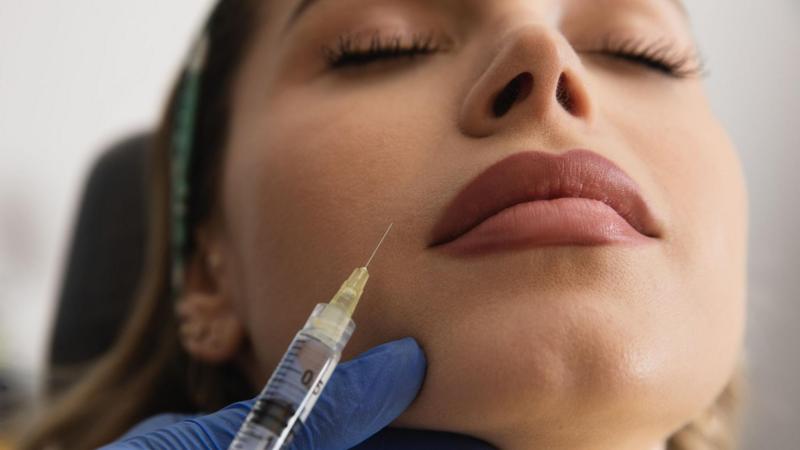
The government plans to introduce stricter rules for cosmetic procedures like Botox and Brazilian butt lifts to protect people from unqualified practitioners. Only qualified health professionals will be able to perform high-risk procedures, and clinics will need to get licenses. Public consultation and parliamentary approval are needed before these rules take effect.
Key Facts
The government aims to regulate non-surgical cosmetic procedures due to safety concerns.
Only qualified health professionals will be allowed to perform high-risk procedures like Brazilian butt lifts.
Clinics will need licenses for procedures like fillers and Botox, meeting strict safety and training standards.
The new rules include age restrictions on certain procedures to protect under-18s.
Around 16,000 businesses offer non-surgical cosmetic procedures, which have grown in popularity.
Public consultation in 2023 showed strong support for tighter regulations.
The final rules require parliamentary approval and will take time to implement.
Read the Original
Want the full story? Tap a source to open the original
article.
Europe is taking steps to become less dependent on China for rare earth metals, which are important for technology like smartphones and electric vehicles. The Solvay plant in France, one of only two such facilities in Europe, is expanding to meet the region's increasing demand. The European Union has set goals to lessen reliance on imports and improve local processing and recycling of these vital materials by 2030.
Key Facts
Rare earth metals are essential for many modern technologies, such as smartphones and electric vehicles.
Currently, 70% of mining and 90% of refining of rare earth metals occur in China.
Europe is working to reduce its dependence on Chinese imports of these metals.
Solvay's facility in France, operational for 80 years, is one of only two places in Europe processing rare earths.
The European Union introduced the Critical Raw Materials Act to decrease reliance on imports by 2030.
Solvay's plant aims to supply 30% of Europe's rare earth needs by recycling existing materials.
There are no active rare earth mines in Europe, but projects in Norway and Sweden are developing.
The process to refine these metals is complex, involving about 1,500 steps.
Read the Original
Want the full story? Tap a source to open the original
article.
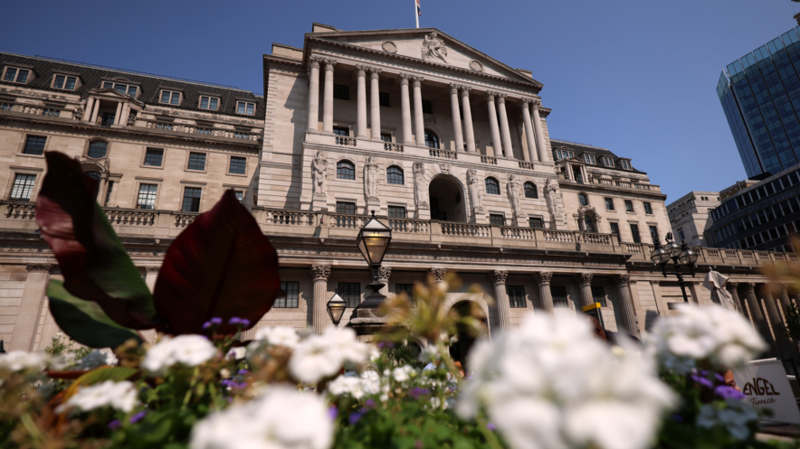
The Bank of England is expected to lower interest rates from 4.25% to 4% on Thursday. This move could make borrowing cheaper but decrease returns for savers. Despite rising inflation, this decision comes as the UK economy faces slow growth and a cooling job market.
Key Facts
The Bank of England may cut interest rates to 4% from 4.25%, the lowest since March 2023.
This would be the fifth rate reduction since last August.
Homeowners with variable-rate mortgages might pay about £40 less per month if rates are cut.
Savers could see their average return rates fall from 3.9% to 3.5%.
Inflation in the UK rose to 3.6% as of June, exceeding the Bank's 2% target.
Signs indicate that the UK job market is slowing down, with fewer payroll jobs and higher unemployment.
The decision on interest rates will be announced at noon, and detailed economic forecasts will be shared.
Read the Original
Want the full story? Tap a source to open the original
article.
United Airlines had to stop all its flights from taking off in the United States due to a computer system problem. This issue affected flights waiting to depart but did not impact flights already in the air.
Key Facts
United Airlines faced a computer problem affecting the weight and balance calculations needed for planes to take off.
The Federal Aviation Administration issued a stop for all United flights at the airline's major hubs, including Chicago and San Francisco.
Smaller regional jets operated by United were not affected by this issue.
Flights that were already flying were not impacted.
Passengers used social media to express frustrations, as many were stuck on planes or at gates.
Some planes returned to their gates to let passengers off while waiting for the issue to be resolved.
United Airlines is the latest to experience such problems, following similar issues at other airlines like Southwest and Delta in previous years.
Read the Original
Want the full story? Tap a source to open the original
article.
Novo Nordisk, a major pharmaceutical company, is considering layoffs due to increased competition for its obesity drug, Wegovy. The company's outgoing CEO mentioned possible workforce reductions as sales slow and the firm faces greater pressure from rivals and lower-cost versions of the drug. Despite challenges, the company remains focused on strategies to address market changes.
Key Facts
Novo Nordisk is facing increased competition from Eli Lilly for its obesity drug Wegovy.
The company is experiencing slower sales growth, particularly in the United States.
Novo Nordisk's CEO mentioned potential layoffs due to the company's need to adjust operations.
The company lowered its sales and profit forecasts, leading to a significant drop in market value.
Copycat drugs, using the same ingredients as Wegovy, have affected Novo Nordisk's sales.
Novo Nordisk has about 77,000 employees and is planning cost-cutting measures.
The company is pursuing legal action against pharmacies making unauthorized copies of its drug.
Second-quarter sales of Wegovy increased significantly in the US and other markets.
Read the Original
Want the full story? Tap a source to open the original
article.
The United States, under President Trump, plans to end a tariff exemption that allowed companies like Shein and Temu to ship goods to the U.S. without paying taxes. This change might make low-cost clothing from these companies more expensive for American shoppers.
Key Facts
The U.S. is ending a tariff exemption known as the de minimis exemption.
The change affects how companies like Shein and Temu operate in the U.S.
Shein and Temu used this exemption to ship goods duty-free to U.S. customers.
Without this exemption, these companies might have to pay more in taxes.
Higher costs for companies might lead to higher prices for shoppers.
Consumers may start reconsidering how much they pay for low-cost clothing.
Read the Original
Want the full story? Tap a source to open the original
article.
The next economic downturn could mean a significant loss of jobs as companies use artificial intelligence (AI) to replace workers. Recessions often see increased automation, and this trend may continue with AI causing job losses, particularly during economic weak periods. Experts and government officials note this potential impact on employment.
Key Facts
AI might replace many jobs during the next economic downturn.
Companies often use recessions to introduce more automation to cut long-term labor costs.
Past economic cycles show job losses increase during downturns due to technology improvements.
The manufacturing sector experienced job shrinkage partly due to automation from 2000 to 2019.
Recessions led to longer periods of high unemployment even when economic output improved.
AI could particularly impact white-collar jobs, which involve complex tasks.
Economists suggest traditional policies might not fully address the new unemployment risks posed by AI.
The Federal Reserve is aware of AI's potential to change job markets and affect unemployment levels.
Read the Original
Want the full story? Tap a source to open the original
article.
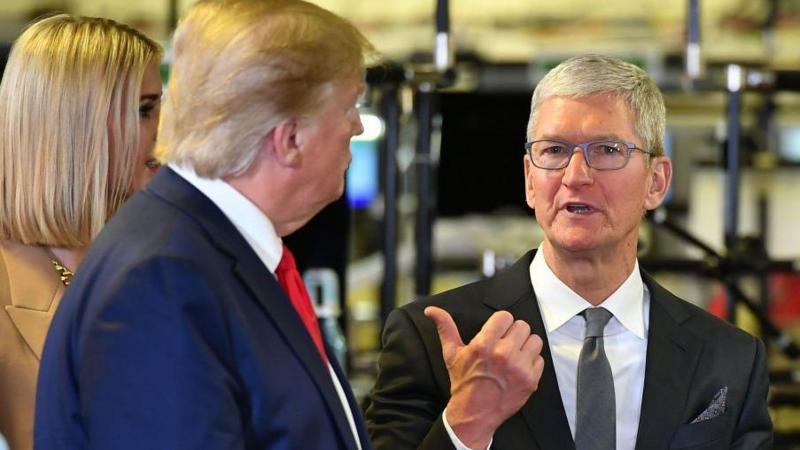
Apple plans to invest $100 billion in US manufacturing, focusing on job creation, according to the White House. This move aims to bring key parts of Apple's supply chain to the US and boost domestic manufacturing. The announcement is part of a larger strategy to strengthen America's economic and national security.
Key Facts
Apple will invest $100 billion in manufacturing in the United States.
The investment aims to create more jobs across the country.
It will help bring parts of Apple's supply chain to the US.
White House economic adviser, Kevin Hassett, mentioned the investment during an interview.
Apple previously announced $500 billion in US investments, including a large factory in Texas.
In previous years, Apple pledged $350 billion in 2018 and $430 billion in 2021 under different US administrations.
The investment responds to pressure from US tariffs on Apple if it doesn't increase US manufacturing.
Apple's stock increased by over 3.8% following the investment news.
Read the Original
Want the full story? Tap a source to open the original
article.
Apple plans to invest an additional $100 billion in the United States. This decision comes after pressure from the Trump administration to increase domestic manufacturing. The investment aims to expand Apple's supply chain in the US.
Key Facts
Apple announced a $100 billion investment in the US.
The decision follows pressure from President Trump's administration.
The investment is meant to expand Apple's supply chain in the US.
Apple had previously pledged to spend $500 billion in the US over four years.
President Trump had threatened to raise tariffs on Apple products if manufacturing did not move to the US.
Apple's products are mainly made in China, but the company is shifting some production to India and Vietnam.
Despite facing new tariffs, Apple shares rose 4%.
Apple plans to launch a manufacturing academy in Michigan.
Read the Original
Want the full story? Tap a source to open the original
article.
A court in Scotland decided that an LG phone was the cause of a fire in a woman's home, leading to her being awarded nearly £150,000 in damages. The phone, which was charging at the time, was found to be defective, causing the fire and the woman's subsequent injuries and work absence.
Key Facts
A fire broke out in Denise Parks' home in Coatbridge on October 31, 2018.
The fire started in the living room where an LG K8 phone was charging.
A judge in Edinburgh ruled that the LG phone caused the fire.
Denise Parks and her husband, Robert, were home when the fire occurred.
Ms. Parks was treated for smoke inhalation and had a history of anxiety, which worsened after the fire.
She was off work for over three months due to the incident.
The court awarded Ms. Parks £149,496 in damages.
LG shut down its smartphone section in 2021 after facing competition.
Read the Original
Want the full story? Tap a source to open the original
article.
Former sub-postmaster Lee Castleton is suing the Post Office and Fujitsu for over £4 million, claiming damages related to a faulty IT system called Horizon. This lawsuit follows Castleton's previous bankruptcy after being held liable for missing funds due to alleged software errors. The case involves complex claims, including financial and personal losses.
Key Facts
Lee Castleton is suing the Post Office and Fujitsu for more than £4 million.
The Horizon IT system, developed by Fujitsu, allegedly had faults leading to financial discrepancies.
Castleton was convicted due to missing funds shown by the Horizon software but argues it was incorrect.
He was previously made bankrupt after unsuccessful legal attempts to dispute the claims.
Castleton represented himself in court after his legal insurance ran out.
The claim includes past and future lost earnings, pension losses, and property losses.
Castleton seeks compensation for mental distress, damaged reputation, harassment, and causing bankruptcy.
The lawsuit accuses the Post Office and Fujitsu of withholding evidence and alleges the legal judgment against him was obtained by fraud.
Read the Original
Want the full story? Tap a source to open the original
article.
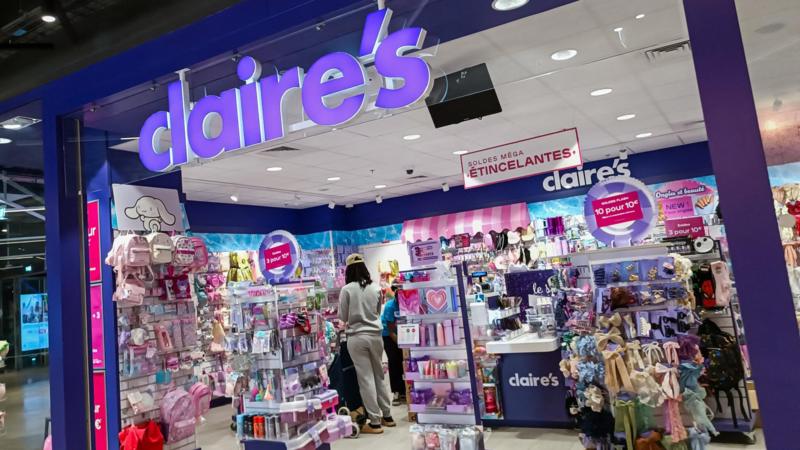
Fashion accessories chain Claire's has filed for bankruptcy in the U.S. for the second time due to declining sales and increased online competition. The company plans to keep its stores open while exploring options and discussing arrangements with partners and landlords. Although the bankruptcy affects North American operations, there is currently no impact on its UK stores.
Key Facts
Claire's filed for bankruptcy in the U.S. for the second time.
Online competition and fewer customers buying its products have affected Claire's sales.
The company operates 2,750 stores across 17 countries, including around 280 in the UK.
Claire's also filed for bankruptcy in 2018 due to loan repayment issues.
The company is in talks with potential partners and is considering finding a buyer.
Claire's operates under two brand names, Claire's and Icing.
Claire's has additional franchised stores in the Middle East and South Africa.
Tariffs from the U.S. trade policies are impacting Claire's global supply chain.
Read the Original
Want the full story? Tap a source to open the original
article.
President Donald Trump has introduced new tariffs on several countries to adjust the global trade system. These tariffs have led to better trade deals for the U.S., but might result in higher costs for American consumers.
Key Facts
President Trump announced new tariffs on multiple nations.
The goal of these tariffs is to rebalance global trade in favor of the U.S.
Trade partners have made deals that meet more of Trump's conditions.
Financial markets have not been negatively affected by these tariffs so far.
Tariff revenues are increasing.
Economists warn that Americans could face higher prices on goods.
The article also raises unrelated questions about Asia’s manufacturing and global hunger.
Read the Original
Want the full story? Tap a source to open the original
article.
The Hut Group (THG), which owns the Myprotein brand, announced a decrease in profits by £13 million due to high whey protein prices. Whey protein costs have risen because of increased demand and stayed high over the past year. THG chose not to pass these costs on to customers, aiming to expand their market share instead.
Key Facts
THG's profits will decrease by £13 million because of high whey protein prices.
Whey was once a by-product of cheese-making but is now popular in foods and drinks.
THG owns Myprotein, which generates a third of the company's revenue.
Profits for the first half of the financial year dropped to £24 million from £37.1 million.
Demand for protein has increased with more health-conscious consumers.
THG is absorbing the cost of high whey prices to grow market share.
THG expects sales from its nutrition business to grow by 10% to 12% in the year's second half.
The rise in whey protein demand is partly due to weight-loss medications like GLP-1 drugs.
Read the Original
Want the full story? Tap a source to open the original
article.
The National Institute of Economic and Social Research has issued a report forecasting a larger budget gap for the UK government than previously expected. The report suggests that tax increases may be necessary for the Chancellor, Rachel Reeves, to meet borrowing rules. Adjustments to VAT, pensions, and council tax are possible ideas to raise revenue.
Key Facts
The National Institute of Economic and Social Research (Niesr) issued a pessimistic economic forecast for the UK.
The forecast suggests a budget gap of £40-50 billion, larger than previous estimates.
The current buffer for borrowing rules is £10 billion, which Niesr describes as too small.
The rules require that government day-to-day costs be paid from tax income, not borrowing.
The report hints at tax rises to cover budget shortfalls, despite government promises not to change main tax rates.
Potential areas for revenue increase include VAT, pensions allowances, council tax, and income tax thresholds.
The International Monetary Fund suggests that budget adjustments should only occur once a year to avoid uncertainty.
Read the Original
Want the full story? Tap a source to open the original
article.
Claire's, a store known for ear piercings and jewelry aimed at young people, has filed for bankruptcy protection for the second time in seven years. The company is dealing with financial challenges due to high tariffs on imports from China, inflation, and competition from online shopping and larger retailers. Despite these issues, the stores in North America will stay open during the bankruptcy process.
Key Facts
Claire's has filed for bankruptcy protection for the second time in seven years.
The company is facing a nearly $500 million loan due in December 2026.
Claire's blames declining sales on inflation and tariffs from imports, mostly from China.
North American stores will remain open during the bankruptcy process.
Claire's grew popular in malls but now faces tough competition from online retailers and large companies like Amazon and Walmart.
The retailer has about 3,000 stores under the Claire's and ICING brands.
Claire's filed the first bankruptcy in 2018 and emerged with $1.9 billion less debt.
The shift towards more online shopping is impacting Claire's traditional mall-based sales.
Read the Original
Want the full story? Tap a source to open the original
article.
The UK's advertising watchdog, ASA, has banned a BrewDog ad for suggesting that beer can help with boredom, loneliness, or frustration in life. BrewDog argues the ad focused on the beer's quality rather than implying any relief from these feelings, but the ASA disagreed and concluded it broke advertising rules. BrewDog has faced similar issues in past ads, leading to bans and warnings.
Key Facts
The ASA banned the BrewDog ad for suggesting alcohol could help with negative emotions like boredom or loneliness.
The ad for BrewDog's Wingman beer included a theme with air force elements and promised to be "always got your back."
BrewDog argued the ad was about the quality of their beer, not its impact on emotions.
The ASA received one complaint that led to the investigation and ruling.
BrewDog has previously faced bans for other ads, including one incorrectly claiming their fruity beers counted as part of a healthy daily diet.
The company started in 2007 and has grown into a global brand with bars in several countries.
BrewDog recently announced plans to close some of its bars, citing them as not profitable.
BrewDog's co-founder, James Watt, has altered his role within the company, moving from CEO to a new position.
Read the Original
Want the full story? Tap a source to open the original
article.
The article discusses an interview with John Denton, Secretary-General of the International Chamber of Commerce (ICC), where he talks about the negative impact of uncertainty on businesses. He specifically mentions how tariffs contribute to this uncertainty. The interview was conducted by Suranjana Tewari for BBC Sounds.
Key Facts
John Denton is the Secretary-General of the International Chamber of Commerce (ICC).
The interview was conducted by Suranjana Tewari.
The focus of the discussion was on the harm uncertainty causes to businesses.
Tariffs, which are taxes on imported goods, are highlighted as a source of uncertainty.
The interview is available on BBC Sounds and was released on August 6, 2025.
The interview lasts 23 minutes.
Read the Original
Want the full story? Tap a source to open the original
article.
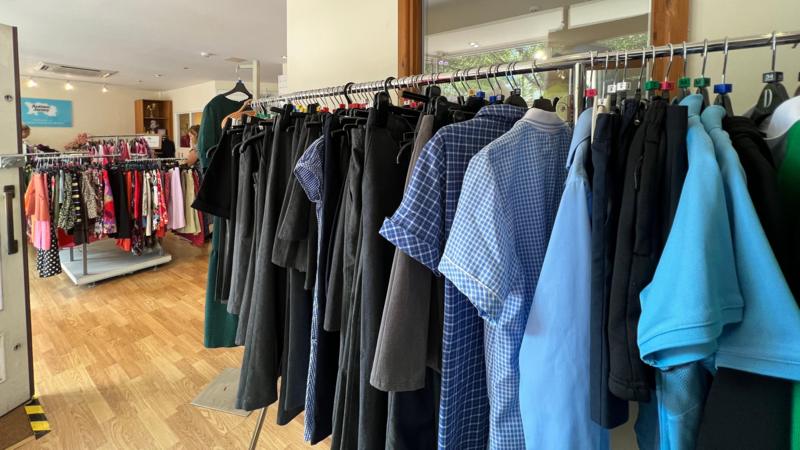
A charity in Jersey and the retailer Marks & Spencer (M&S) are partnering to cut down on the costs of school uniforms. Parents can donate used uniforms to Autism Jersey's shop and get a 10% discount on new uniforms at M&S. This effort aims to ease the financial burden for families struggling with high living costs on the island.
Key Facts
Autism Jersey and M&S are working together to make school uniforms cheaper.
Parents can donate used uniforms and receive a 10% discount on new uniforms at M&S.
Families in Jersey find school uniform costs a financial burden due to higher required items compared to the UK.
At Jersey public schools, parents need to buy up to five uniform items, while UK schools require only three.
Sonja Meacock, a parent and shop manager, highlighted the struggle between spending on essentials and uniforms.
School uniform costs in Jersey range from £100 to £200 per child for secondary school.
Jersey's Education Department has not commented on the uniform cost concerns.
The current discount offer is available until September 27.
Read the Original
Want the full story? Tap a source to open the original
article.