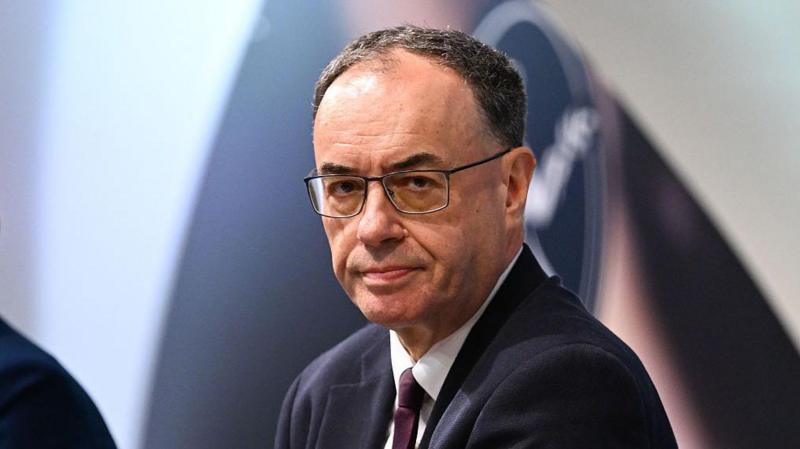
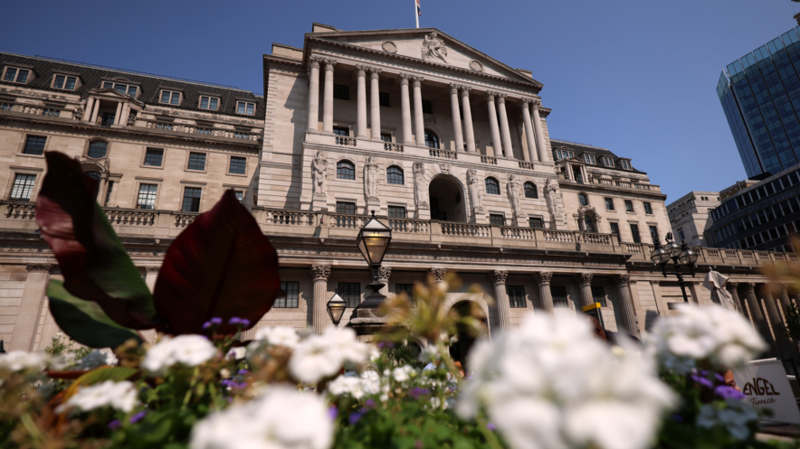
The Bank of England has cut interest rates to 4% in a close decision by its Monetary Policy Committee. This move aims to address expected changes in the job market and future inflation, despite high current inflation rates. The Bank predicts that economic growth may improve slightly in the coming quarters with support from increased exports.
Key Facts
The Bank of England cut interest rates to 4% recently.
Inflation in the UK is currently above the Bank's 2% target.
Future interest rate cuts are uncertain after a close vote among the committee members.
The decision reflects expected decreases in job vacancies and a rising jobless rate.
Some officials wanted to keep rates steady, highlighting differing opinions within the Bank.
The Bank forecasts slight economic growth improvement in the next quarters.
Lower confidence in consumer spending is due to high previous interest rates and government messaging.
The Bank anticipates improvements if consumer spending and savings habits return to normal.
Read the Original
Want the full story? Tap a source to open the original
article.
The Bank of England has reduced the UK interest rate from 4.25% to 4%. This change can influence mortgage and savings rates, impact prices, and affect the job market.
Key Facts
The Bank of England cut the interest rate to 4%, the lowest since March 2023.
This rate impacts mortgage rates, which can change based on the type of mortgage.
A standard variable rate mortgage of £250,000 over 25 years will see a £40 monthly payment decrease.
Fixed-term mortgage rates are falling, with five-year rates at 5.01% and two-year rates at 5%.
Lower interest rates may lead to reduced savings returns, with average savings rates at 3.5%.
The Bank's target is to keep inflation at 2%, but current inflation stands at 3.6%.
Inflation is expected to rise to 4% by September, partly due to higher food prices.
Employment concerns include rising job vacancies and businesses reducing staff due to operating cost pressures.
Read the Original
Want the full story? Tap a source to open the original
article.
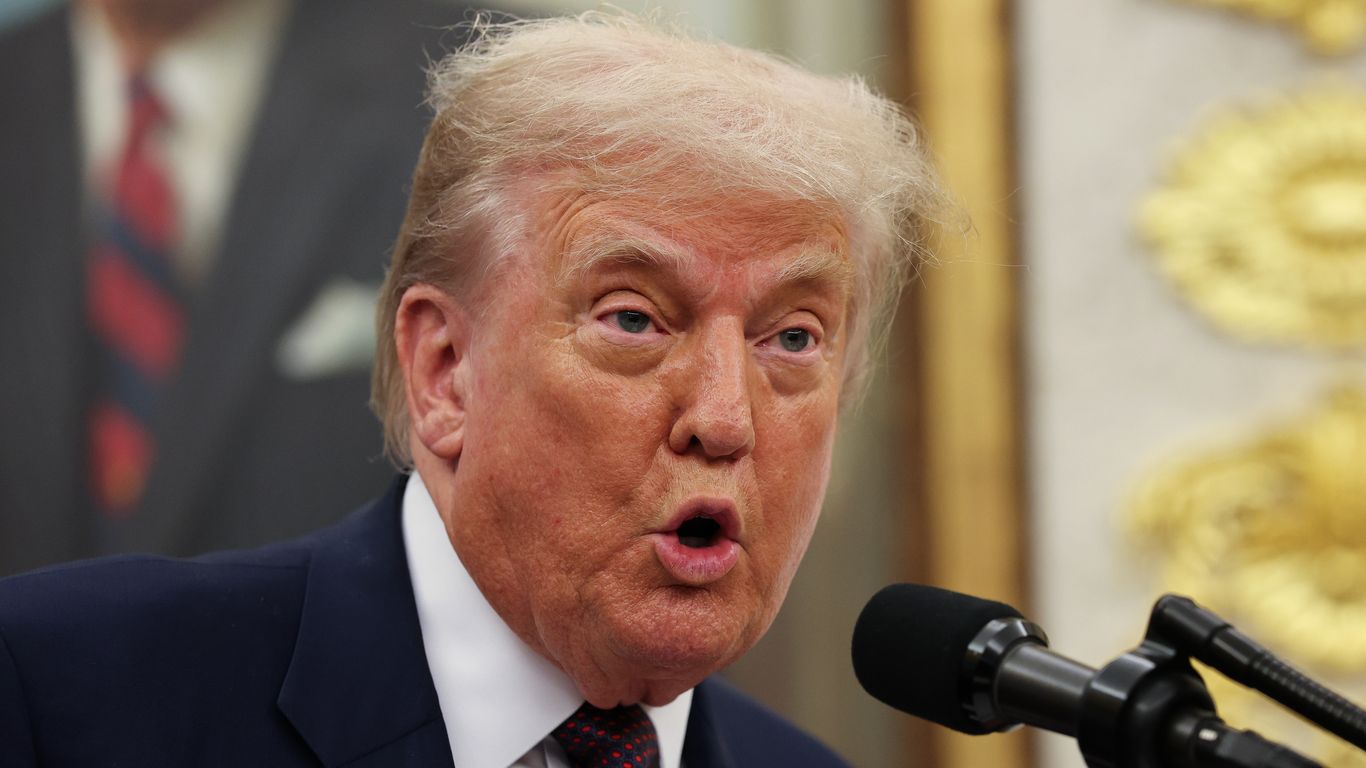
Intel's stock fell after former President Donald Trump called for its CEO to resign. Trump, along with Senator Tom Cotton, raised concerns about CEO Lip-Bu Tan's ties to Chinese companies. These concerns are linked to national security issues and the growing U.S.-China tech rivalry.
Key Facts
Intel's stock dropped by 3.5% following Trump's demand for the CEO's resignation.
Trump expressed concerns about Intel CEO Lip-Bu Tan's connections to Chinese firms on social media.
Senator Tom Cotton sent a letter to Intel's board about Tan's ties to companies linked to China's military.
Cotton mentioned Tan's past leadership at Cadence Design Systems, which sold products to a Chinese university against U.S. rules.
Intel, a recipient of over $8 billion from the CHIPS Act, did not respond to the situation immediately.
The U.S.-China rivalry is focusing on technology, including chips and AI, which are important for future economies and defense.
Concerns exist over potential Chinese spies in tech companies stealing secrets.
Intel is currently cutting costs and reducing its workforce as it navigates challenges in the tech market.
Read the Original
Want the full story? Tap a source to open the original
article.
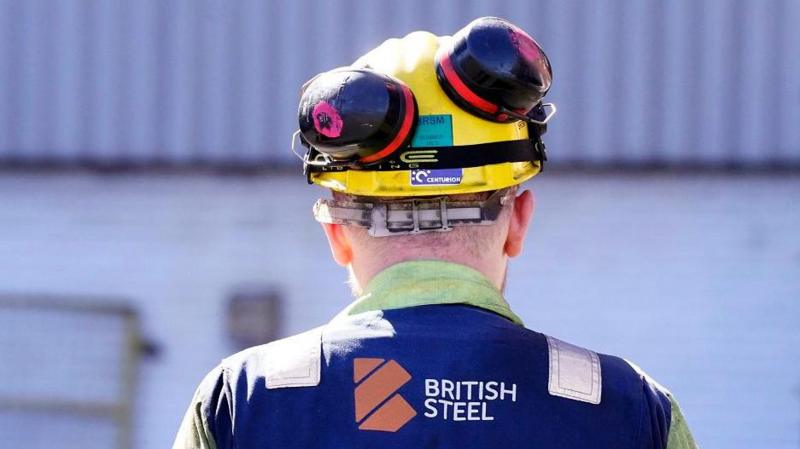
The UK government is in talks with the Chinese owners of British Steel, Jingye, who are asking for hundreds of millions of pounds from taxpayers. Negotiations are ongoing as the government seeks a new buyer for the Scunthorpe site. The government had already taken control of British Steel to maintain operations and save jobs, but has not fully nationalized the company.
Key Facts
Jingye, a Chinese company, owns British Steel and is asking for taxpayer money to complete a transfer.
The UK government took control of British Steel in April to keep the company's blast furnaces operating and save jobs.
Negotiations between the UK government and Jingye have been challenging due to differing valuations of the company.
Jingye rejected a £500 million offer from the UK government earlier this year.
The government has a £2.5 billion steel fund for running the site, but does not want permanent ownership.
Talks with potential new buyers have stalled because of Jingye's demand for a large payout.
The government may consider full nationalization if negotiations continue to be difficult.
A final resolution to the ownership issue has not yet been reached.
Read the Original
Want the full story? Tap a source to open the original
article.
CEO confidence has improved over the summer, according to a report by the Conference Board and the Business Council. Although confidence rose, many business leaders remain cautious about the economy and conditions. Trade deals have reduced some concerns about tariffs.
Key Facts
CEO confidence increased by 15 points, reaching 49 in the three months ending in July.
A score below 50 means there are still more negative than positive views among CEOs.
The improvement came as tensions over tariffs between the U.S. and China lessened.
More CEOs now plan to reduce their workforce (34%) than to expand it (27%).
CEOs ranked "geopolitical instability," "cyber," and "tariffs and trade" as top concerns.
93% of CEOs are using technology like AI to manage costs.
89% plan to negotiate supplier costs or potentially pass increased costs to customers.
The data was collected from July 14 to July 28, surveying 122 CEOs mainly from U.S. companies.
Read the Original
Want the full story? Tap a source to open the original
article.
The U.S. has begun implementing higher tariffs on goods from over 60 countries, including the EU, Japan, and South Korea. These tariffs are part of President Trump's efforts to address the trade deficit, though they are starting to impact the U.S. economy negatively. Some economists warn that these tariffs could slow economic growth and affect jobs and wages.
Key Facts
The U.S. imposed tariffs of at least 10% on imports from over 60 countries.
Goods from the EU, Japan, and South Korea face 15% tariffs.
Imports from Taiwan, Vietnam, and Bangladesh are taxed at 20%.
The tariffs are intended to reduce the U.S. trade deficit.
Some U.S. companies and consumers are experiencing negative impacts, like potential job losses and increased inflation.
The U.S. trade deficit increased to $582.7 billion in the first half of the year.
Germany's industrial production fell 1.9% in response to earlier U.S. tariffs.
India faces a 50% tariff on its exports to the U.S. due to its Russian oil imports.
Read the Original
Want the full story? Tap a source to open the original
article.
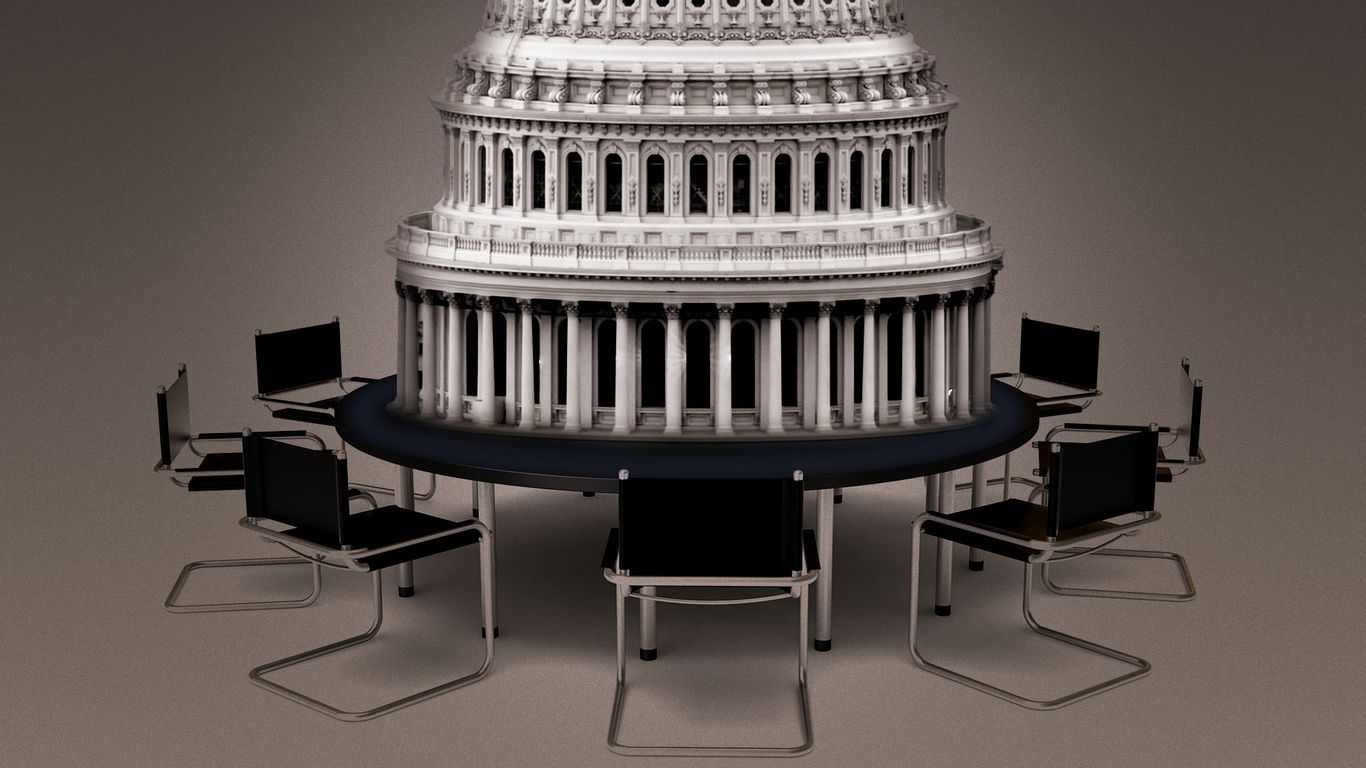
Dialog, a private network founded by Peter Thiel and Auren Hoffman, plans to expand by building a campus in the suburbs of Washington, D.C. The group wants this campus to be a permanent site for its private meetings. Dialog is known for its secretive gatherings of influential leaders and plans to buy a venue in Virginia for its events.
Key Facts
Dialog is a secretive, invite-only network started by Peter Thiel and Auren Hoffman.
The group plans to build a permanent campus in northern Virginia, near Washington, D.C.
Dialog hosts off-the-record meetings for leaders like CEOs and elected officials.
The organization does not have a public website or share its list of members openly.
It has hosted events at exclusive locations like Ritz-Carlton Dove Mountain in Arizona.
Dialog meetings involve small groups discussing wide-ranging topics under confidentiality.
Previous participants include well-known figures such as Elon Musk and Sen. Cory Booker.
Dialog is expanding to hold more events, including a planned gathering in the Middle East.
Read the Original
Want the full story? Tap a source to open the original
article.
President Donald Trump has put higher tariffs in place on imports from more than 60 countries. These tariffs, which range from 10 to 50 percent depending on the country, began being collected by the US Customs and Border Protection from Thursday. The tariffs are meant as a response to what the US sees as unfair trade practices, but some worry they will lead to higher prices and fewer product choices in the US.
Key Facts
The US has started collecting higher tariffs on imports from over 60 countries.
New tariffs began at 00:01 EDT on Thursday and range from 10 to 50 percent.
Tariffs on goods from Brazil are now at 50 percent, and those from the UK are at 10 percent.
President Trump claims the tariffs will bring in billions in revenue for the US.
There are concerns that these tariffs could cause inflation and impact long-term economic growth.
The US coffee industry might be affected as it heavily relies on Brazilian imports.
Some countries have reached lower tariff deals with the US, like the UK and the EU.
A 100 percent tariff will be imposed on foreign-made semiconductors, with exceptions for US-investing companies.
Read the Original
Want the full story? Tap a source to open the original
article.
President Trump has implemented new tariffs on several countries, affecting global trade relationships. Some industries in the U.S. benefit while others face increased costs that may affect consumers. The Trump administration has made deals with major trade partners and modified tariffs for those without agreements.
Key Facts
New tariffs from President Trump have started, impacting multiple countries.
Some U.S. businesses expect higher costs might be passed on to customers.
Agreements have been made with the European Union, Japan, South Korea, and the UK.
Different tariff rates apply based on trade agreements or lack of them.
The U.K. faces a 10% tariff, while Syria sees a 41% rate.
Some Canadian goods are taxed at 35%, but the USMCA deal exempts most.
Mexico's tariffs were postponed for 90 days.
China’s trade truce period with the U.S. will end on August 12.
Read the Original
Want the full story? Tap a source to open the original
article.
NPR readers shared their methods to resist impulsive shopping and manage their finances better. Suggestions include techniques like waiting before purchasing and using libraries or secondhand stores to enjoy shopping without spending too much money.
Key Facts
NPR asked readers how they avoid impulsive shopping.
Popular tips include waiting a certain time before making purchases.
Some suggest using libraries as a free way to enjoy the feeling of shopping.
Visiting thrift stores is recommended for low-cost shopping experiences.
Leaving items in an online cart for a while helps decide if you really want them.
Creating a wishlist helps reassess the need for desired items over time.
Envisioning the actual use of an item can prevent unnecessary purchases.
Avoiding stores unless necessary helps reduce buying things you don't need.
Read the Original
Want the full story? Tap a source to open the original
article.
Higher import taxes, known as tariffs, are now in place on goods coming into the United States from many countries. These tariffs are increasing government revenue but are also starting to have a negative impact on the U.S. economy.
Key Facts
The U.S. government has implemented higher tariffs on imports.
These tariffs apply to goods from many different countries.
The new tariffs are increasing the money the government collects.
The economy in the U.S. is starting to feel some negative effects from these tariffs.
Tariffs are a kind of tax on goods that come into the country.
The changes began on August 7, 2025.
Read the Original
Want the full story? Tap a source to open the original
article.
NPR talked to economist Paul Krugman about how President Trump's new tariffs could affect the economy. The discussion aims to understand potential changes in economic conditions due to these tariffs.
Key Facts
Paul Krugman is an economist who shared his views on tariffs.
The discussion was about President Trump's latest tariff announcements.
Tariffs are taxes on goods coming into a country from abroad.
Tariffs can impact the cost of goods and economic conditions.
The interview took place on NPR, hosted by Steve Inskeep.
The focus was on the possible economic impact of these tariffs.
Read the Original
Want the full story? Tap a source to open the original
article.
The United States, under President Trump, has introduced new tariffs on imports from over 90 countries. These tariffs require companies that import goods into the U.S. to pay taxes, and there are concerns that these costs might be passed on to consumers. Some countries like Brazil and India face high tariffs, while others like Mexico have temporarily avoided increases.
Key Facts
New U.S. tariffs on imports involve over 90 countries.
Companies importing goods into the U.S. must pay these tariffs.
Brazil and India face a 50% tariff rate on most goods.
Tariffs with China are on hold until August 12, due to ongoing negotiations.
Mexico will keep its current tariff rates for 90 days, avoiding a 35% increase for now.
Canada is subject to a 35% tariff, but some goods are exempt due to a trade agreement.
The tariffs' impact on U.S. consumer prices is a concern.
Read the Original
Want the full story? Tap a source to open the original
article.
New tariffs from President Trump on various countries have taken effect, escalating a trade conflict. Several nations, including India and Brazil, face increased import taxes, as the U.S. pushes to renegotiate trade agreements. The higher tariffs target certain imports and encourage domestic production.
Key Facts
President Trump implemented new tariffs on several countries, leading to increased import taxes.
India is affected by a 50% tariff, set to start on August 27, unless it stops buying oil from Russia.
A potential 100% tariff on foreign-made computer chips has been announced, targeting tech firms to boost U.S. investments.
Some countries, like the UK and Japan, have made agreements with the U.S. to reduce the initially proposed higher tariffs.
Export-reliant countries in Southeast Asia, like Laos and Myanmar, face high tariffs up to 40%.
Tariffs on Canadian goods rose to 35%, but many exports are exempt under the USMCA trade agreement.
Talks continue with Mexico to avoid increased tariffs after a 90-day pause.
Certain major chip manufacturers, such as TSMC and Samsung, are reportedly exempt from new tariffs.
Read the Original
Want the full story? Tap a source to open the original
article.
United States President Donald Trump has announced a 100 percent tariff on imported semiconductors. Companies with existing investments in the U.S., like TSMC and Samsung, will be exempt from these tariffs. The move aims to encourage semiconductor manufacturing within the United States.
Key Facts
President Trump announced a 100 percent tariff on foreign-made semiconductors.
The tariff will not apply to companies that have invested in the U.S.
TSMC and Samsung are among the companies exempt due to their U.S. investments.
Apple has announced a $600 billion investment in the U.S. around the same time.
Details about the implementation of the tariffs remain unclear.
The Philippines expressed concern, as semiconductors make up a large part of its exports.
The CHIPS Act, signed by then-President Biden, supports U.S. semiconductor manufacturing.
South Korea has favorable tariffs due to a recent trade deal with the U.S.
Read the Original
Want the full story? Tap a source to open the original
article.
A new government plan in England will change how councils receive funding, resulting in some inner London councils losing money while outer London areas and cities outside London, like Nottingham and Slough, gain more. The plan aims to better align funding with local needs by adjusting for factors like property values and local demand for services. These changes will start in 2026 and spread over three years.
Key Facts
Inner London councils like Camden and Westminster may lose 11-12% of their funding.
Outer London areas and cities like Nottingham and Slough will likely get more funding.
The Institute for Fiscal Studies (IFS) report predicts a £2.1 billion redistribution in government funding.
New formulas will consider property values in council tax bands and business rates.
The changes aim to provide more funds to areas with high demand for services and lower income.
Some shire district councils may lose funding, while others in urban areas might benefit.
The government says the update is to fix outdated systems and match funding with service needs.
The plan will be finalized later this year and phased over three years starting in 2026.
Read the Original
Want the full story? Tap a source to open the original
article.
President Trump began implementing new tariffs on imports from over 60 countries on Thursday. These new import taxes are causing economic challenges, with early signs of slowing job growth and rising inflation in the U.S.
Key Facts
President Trump imposed new tariffs on goods from more than 60 countries and the European Union.
Import taxes for European Union, Japan, and South Korea are set at 15%.
Tariffs on imports from Taiwan, Vietnam, and Bangladesh are set at 20%.
These measures are introducing economic difficulties, including slower job growth and rising product prices.
Trump aims to use tariffs to boost the U.S. manufacturing sector and reduce the trade deficit.
The tariffs have led some companies to import more goods before the taxes began.
The U.S. trade deficit for the first half of 2025 increased by 38% compared to the previous year.
Total construction spending in the U.S. dropped by 2.9% over the past year.
Read the Original
Want the full story? Tap a source to open the original
article.
The government plans to introduce stricter rules for cosmetic procedures like Botox and Brazilian butt lifts to protect people from unqualified practitioners. Only qualified health professionals will be able to perform high-risk procedures, and clinics will need to get licenses. Public consultation and parliamentary approval are needed before these rules take effect.
Key Facts
The government aims to regulate non-surgical cosmetic procedures due to safety concerns.
Only qualified health professionals will be allowed to perform high-risk procedures like Brazilian butt lifts.
Clinics will need licenses for procedures like fillers and Botox, meeting strict safety and training standards.
The new rules include age restrictions on certain procedures to protect under-18s.
Around 16,000 businesses offer non-surgical cosmetic procedures, which have grown in popularity.
Public consultation in 2023 showed strong support for tighter regulations.
The final rules require parliamentary approval and will take time to implement.
Read the Original
Want the full story? Tap a source to open the original
article.
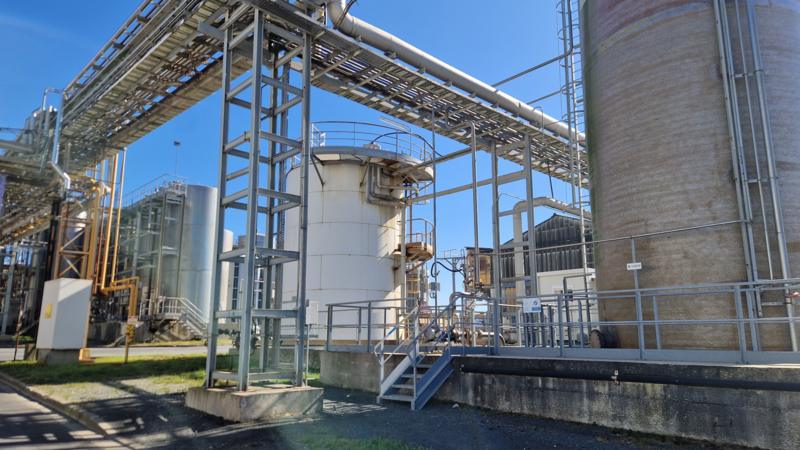
Europe is taking steps to become less dependent on China for rare earth metals, which are important for technology like smartphones and electric vehicles. The Solvay plant in France, one of only two such facilities in Europe, is expanding to meet the region's increasing demand. The European Union has set goals to lessen reliance on imports and improve local processing and recycling of these vital materials by 2030.
Key Facts
Rare earth metals are essential for many modern technologies, such as smartphones and electric vehicles.
Currently, 70% of mining and 90% of refining of rare earth metals occur in China.
Europe is working to reduce its dependence on Chinese imports of these metals.
Solvay's facility in France, operational for 80 years, is one of only two places in Europe processing rare earths.
The European Union introduced the Critical Raw Materials Act to decrease reliance on imports by 2030.
Solvay's plant aims to supply 30% of Europe's rare earth needs by recycling existing materials.
There are no active rare earth mines in Europe, but projects in Norway and Sweden are developing.
The process to refine these metals is complex, involving about 1,500 steps.
Read the Original
Want the full story? Tap a source to open the original
article.
The Bank of England is expected to lower interest rates from 4.25% to 4% on Thursday. This move could make borrowing cheaper but decrease returns for savers. Despite rising inflation, this decision comes as the UK economy faces slow growth and a cooling job market.
Key Facts
The Bank of England may cut interest rates to 4% from 4.25%, the lowest since March 2023.
This would be the fifth rate reduction since last August.
Homeowners with variable-rate mortgages might pay about £40 less per month if rates are cut.
Savers could see their average return rates fall from 3.9% to 3.5%.
Inflation in the UK rose to 3.6% as of June, exceeding the Bank's 2% target.
Signs indicate that the UK job market is slowing down, with fewer payroll jobs and higher unemployment.
The decision on interest rates will be announced at noon, and detailed economic forecasts will be shared.
Read the Original
Want the full story? Tap a source to open the original
article.