A security researcher released code for a new exploit called HiveLegacy that lets non-administrator Windows users make changes to administrator accounts. Microsoft is investigating this vulnerability after releasing many security patches, and users can protect themselves by using detection tools and monitoring their systems.
Key Facts
A researcher named NightmareEclypse published an exploit called HiveLegacy for Windows on the same day Microsoft released many security updates.
HiveLegacy targets a vulnerability in the Windows User Profile Service.
It allows users with limited rights to alter the registry settings of administrator accounts, potentially gaining admin-level control.
The exploit requires knowing another user’s password and the username of a third account on the computer.
Microsoft is aware of the exploit and is investigating the issue.
The exploit uses the way Windows loads user settings during login, which runs with high system privileges.
Independent security experts have provided detection scripts and advice on monitoring Windows system activity to prevent this exploit.
Restricting the creation of local accounts and watching for unusual system behavior can help block attacks using HiveLegacy.
Read the Original
Want the full story? Tap a source to open the original
article.
SpaceX’s stock price has fallen below the price it first had when it started trading on the stock market just over a month ago. The share price dropped to $132.62, which is lower than the initial price of $135, causing some investors to potentially lose money.
Key Facts
SpaceX began trading on the stock market a little over one month ago.
The initial price for one share was $135.
The share price recently dropped to $132.62.
This price is 41% lower than the highest price since the company went public.
The drop means some early investors might lose money on their shares.
SpaceX is a company founded by Elon Musk that works on rockets, satellites, and artificial intelligence.
The company did not immediately respond to requests for comment about the stock price drop.
Earlier, the company’s value was higher than Amazon and Microsoft, and Elon Musk briefly became the world's first trillionaire.
Read the Original
Want the full story? Tap a source to open the original
article.
Google will start allowing other app stores inside its Google Play Store next week after a legal settlement with Epic Games was withdrawn. This change comes from a court ruling that found Google unfairly blocked competing app stores on Android devices.
Key Facts
The settlement between Google and Epic Games about app store rules is now withdrawn.
Google will begin letting third-party app stores appear in the Google Play Store starting next week.
This change is part of a court order to stop Google’s anticompetitive behavior on Android.
Epic Games started the dispute by adding a way to buy V-Bucks directly in Fortnite, bypassing Google’s fees.
Google used its market power to block competing app stores and keep the Play Store dominant.
The judge ruled that allowing other app stores on Google Play is the best way to promote fair competition.
Google had planned a registered app store program but court skepticism and expert analysis slowed approval.
Now, Google and Epic will not pursue modifying the court’s remedies but will continue current policy changes.
Read the Original
Want the full story? Tap a source to open the original
article.
Representative Ted Lieu, a Democrat from California, said he is concerned about how fast artificial intelligence (AI) is developing. He believes Congress needs to find ways to manage AI carefully as it changes quickly.
Key Facts
Rep. Ted Lieu is the fourth-ranking Democrat in the U.S. House of Representatives.
He spoke about AI’s rapid growth at the Hill Nation Summit.
Lieu said AI is advancing faster than he expected.
He expressed worry about the pace of AI development.
Lieu emphasized that Congress should work to balance the benefits and risks of AI.
The article notes Lieu’s criticism of some Republicans’ lack of strategy on AI.
Read the Original
Want the full story? Tap a source to open the original
article.
The UK government plans to introduce a social media curfew from midnight to 6 am for 16- and 17-year-olds, starting next spring. The curfew will be on by default but can be turned off by users, and the government also wants to remove addictive features like autoplay and infinite scroll to reduce online harms.
Key Facts
The curfew targets 16- and 17-year-olds in Britain for certain social media apps.
It will be enabled automatically but users can opt out by changing settings.
The government aims to disable addictive app features such as autoplay and infinite scrolling.
Some teens are skeptical about the curfew’s effectiveness since it is not mandatory.
Teens currently have different experiences and controls on social media use at home.
Age verification will be required to ensure the rules apply to the right users.
Some young people believe adults should also have limits on addictive features.
Discussions with teens reveal mixed opinions on the impact and fairness of the curfew.
Read the Original
Want the full story? Tap a source to open the original
article.
OpenAI has launched its first branded device, the $230 Codex Micro, which is a small, light-up keyboard designed to help users manage multiple AI tasks easily. The keyboard shows color-coded lights to indicate the status of AI threads and offers buttons for common actions, aiming to improve how people interact with OpenAI’s AI agents on desktop computers.
Key Facts
The Codex Micro costs $230 and is a compact keyboard with RGB lighting.
It is made in collaboration with Work Louder, a company that makes similar keyboards for creative work.
The keyboard has six special keys that change colors to show the status of different AI tasks: white (idle), blue (thinking), green (done), amber (needs input), and red (error).
Pressing a lit key opens the related AI task window on the computer screen.
Users can remap six other buttons for common AI actions or general computer shortcuts.
The keyboard has OpenAI branding and comes in a limited supply.
OpenAI is moving beyond software, working on hardware with design help from former Apple chief Jony Ive.
A planned handheld AI device may face delays due to technical challenges.
Read the Original
Want the full story? Tap a source to open the original
article.
Australian Prime Minister Anthony Albanese announced plans to manage the impact of artificial intelligence (AI) by working with states on regulations for AI data centers and creating a new AI office in his government. He emphasized protecting Australian creative work from AI use and promised new rules and faster decisions to support AI development while aiming to control its local effects.
Key Facts
Prime Minister Albanese spoke about AI at the University of Sydney, aiming to lead Australia in managing AI technology.
The government will work with state premiers to regulate AI data centers to avoid problems with land use, energy, and water resources.
A new AI office will be created within the Prime Minister’s department, and new AI laws will be proposed by early 2027.
Albanese wants Australia to benefit from its own AI inventions, not just store data for overseas companies.
The government will protect Australian artists, writers, musicians, and journalists by refusing to allow AI to use their work without permission.
Experts warn regulating global tech giants like Microsoft, Google, and OpenAI is very difficult for national governments.
There are challenges in managing AI’s broad effects on society, including job losses and ethical concerns.
Albanese favors a careful and step-by-step approach to AI policy, despite some calls for faster, broader legislation.
Read the Original
Want the full story? Tap a source to open the original
article.
Prediction markets are online platforms where people can bet on the outcome of future events. These markets have grown quickly and now influence many areas of the digital economy, making it feel like widespread gambling.
Key Facts
Prediction markets let users bet on what might happen in the future.
They have expanded rapidly in the last decade.
Their growth turns many digital activities into forms of betting or gambling.
This trend was not expected 10 years ago.
Prediction markets affect different parts of the economy by spreading risk and information.
Read the Original
Want the full story? Tap a source to open the original
article.
This weekend, many protests will happen to express concerns about artificial intelligence (AI) data centers. People are showing their worries about the impact these centers might have.
Key Facts
Dozens of protests are planned for this weekend.
The protests focus on AI data centers.
People are concerned about issues related to AI technology.
AI data centers are places that store and manage data for AI systems.
The demonstrations aim to raise awareness about potential problems from these centers.
Read the Original
Want the full story? Tap a source to open the original
article.
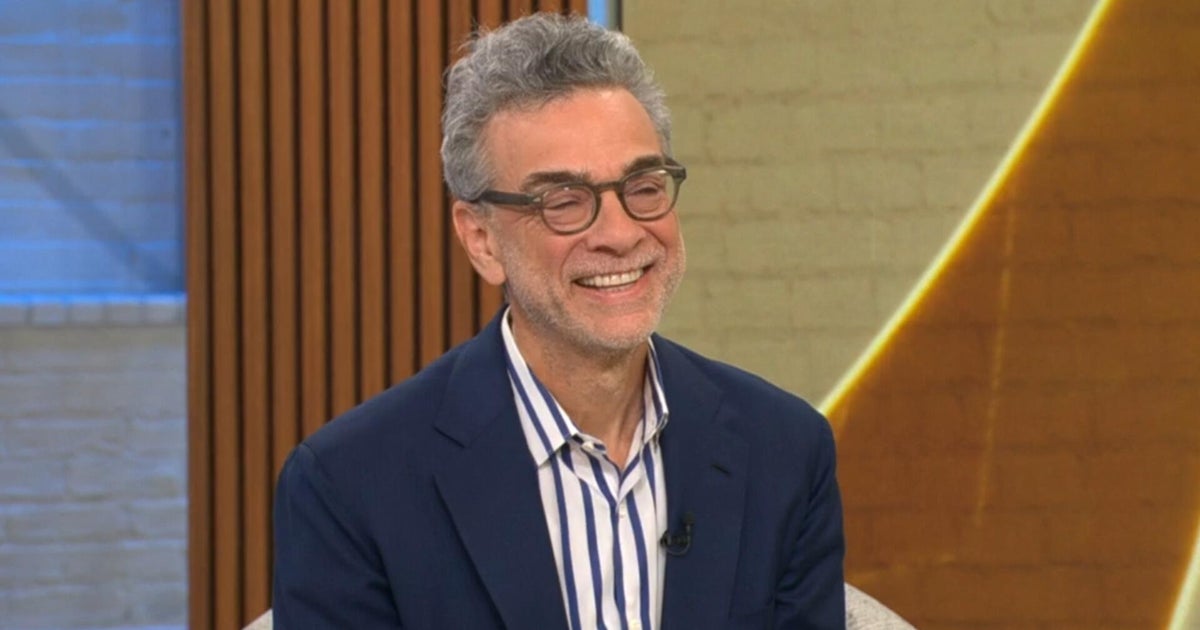
Stephen Dubner, a well-known author and journalist, has started a new weekly talk show called "Better in Person" on YouTube. He talks about how the show began, the variety of guests he features, and why he chose to pay for the show himself.
Key Facts
Stephen Dubner is the co-author of the bestselling book "Freakonomics."
He launched a weekly talk show named "Better in Person."
The show is available on YouTube.
Dubner has a wide range of guests on the show.
He decided to finance the show himself without outside funding.
The show aims to present conversations in a personal, in-person style.
Dubner discussed the show during an interview on "CBS Mornings."
The program is part of Dubner's work beyond writing books.
Read the Original
Want the full story? Tap a source to open the original
article.
Horror games are very popular now, with many new titles and crossovers with horror movies. A recent conference at Falmouth University explored how horror games use fear and control themes to engage players and reflect on real-world issues like workplace dangers and global crises.
Key Facts
New horror games like Resident Evil Requiem, Reanimal, Silent Hill: Townfall, Silver Pines, and Dreadmoor are either out or coming soon.
Horror studios like Blumhouse are creating games, and some games become horror films.
The Falmouth University conference included talks on zombies, gothic themes, and the role of scary little girls in horror games.
Creative director Will Doyle explained how game makers build horror using fear, alienation, and a human tendency to see patterns.
Horror games often focus on players feeling both in control and helpless, reflecting tensions around action and agency.
Some games highlight dangers and mistrust in workplaces, mirroring current social concerns.
Academic study of horror games helps treat games as cultural stories and gives new developers important knowledge.
The link between horror games and other cultural ideas, like architecture and radical art, was also discussed at the conference.
Read the Original
Want the full story? Tap a source to open the original
article.
Many people across the United States are worried about data centers that support artificial intelligence (AI) because they use a lot of electricity and water. In response, New York Governor Kathy Hochul has temporarily stopped new data center construction to review these concerns.
Key Facts
Data centers are facilities that store and process large amounts of data, essential for AI technologies.
These centers consume significant electricity and water resources.
There is increasing public concern about the environmental impact of data centers nationwide.
New York Governor Kathy Hochul signed an order to pause the construction of new data centers.
The pause aims to give officials time to study and address resource usage issues.
This move reflects a growing trend of scrutinizing AI infrastructure for sustainability.
The pause affects the ongoing boom of building AI-related data centers in New York state.
Read the Original
Want the full story? Tap a source to open the original
article.
Star Wars director George Lucas supports using artificial intelligence (AI) in making movies, saying it makes the process easier and is a natural step forward. Other filmmakers have mixed views on AI, with some praising its help and others worried about its effects on filmmaking.
Key Facts
George Lucas said AI tools make it easier to create movies and compared resisting AI to sticking with old-fashioned horse and buggy instead of cars.
Lucas believes AI in filmmaking is an unavoidable part of progress and the future.
Gareth Edwards, another Star Wars director, called AI "a genius" at helping filmmakers.
Some directors, like Christopher Nolan, have criticized AI, saying the public and especially young people often reject it.
Steven Soderbergh said AI is not a perfect solution or the end of traditional filmmaking, but more of an early phase.
Lucas also criticized the use of audience testing and focus groups, saying filmmakers should not simply follow audience opinions without understanding reasons behind their dislikes.
The discussion shows a range of opinions in the film industry about how AI should be used in movie production.
Read the Original
Want the full story? Tap a source to open the original
article.
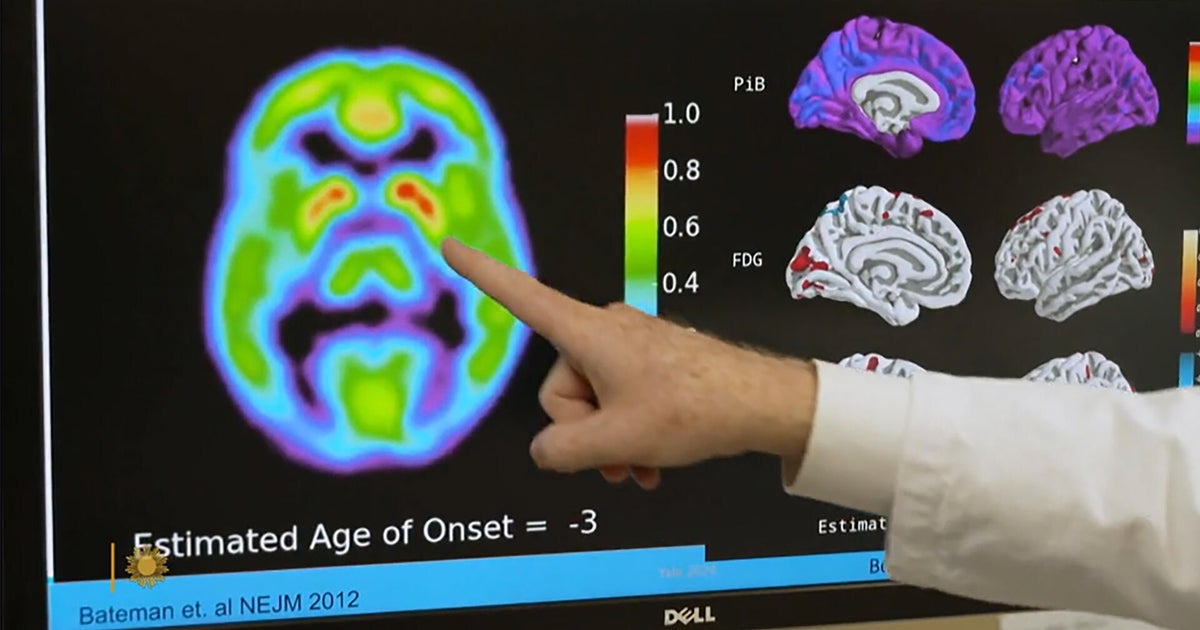
Researchers have developed a blood test called p-tau217 that may help predict whether healthy older adults will develop Alzheimer's symptoms within five to ten years. The test measures a protein linked to brain changes seen in Alzheimer's and could help select people for drug studies aimed at preventing the disease.
Key Facts
The p-tau217 blood test detects a form of tau protein related to Alzheimer's brain plaque and tangles.
High levels of p-tau217 in healthy older adults show a 38% risk of cognitive problems in 5 years and 78% risk in 10 years.
The test currently is used mainly to help diagnose Alzheimer's in people who already have cognitive issues.
Researchers advise against healthy people seeking the test now, as it does not yet change treatment recommendations.
The study analyzed data from 2,684 older adults tracked over many years, with 478 developing cognitive impairment.
Some scientists caution that the 10-year risk estimate is less certain due to fewer people tracked for that long.
Other health issues like heart problems could affect results, making it hard to predict Alzheimer's alone.
The test may help speed up clinical trials by identifying high-risk individuals for new drugs or prevention strategies.
Read the Original
Want the full story? Tap a source to open the original
article.
Anil Menon, a NASA flight surgeon, applied four times to become an astronaut but was rejected each time. After joining SpaceX to support human spaceflight missions, he and his wife Anna, also working at SpaceX, eventually both went to space.
Key Facts
Anil Menon applied four times to become a NASA astronaut but was never selected.
Menon is an emergency physician and pilot with experience in Afghanistan and Mount Everest.
He became a NASA flight surgeon in 2014, training astronauts for space missions.
In 2018, Menon left NASA for a job at SpaceX to support the Crew Dragon spacecraft missions.
His wife, Anna, also works at SpaceX in crew operations management.
Menon helped prepare for SpaceX’s first human flight, Demo-2, with NASA astronauts.
Both Menon and his wife eventually traveled to space.
They took a risk in switching jobs and moving their family to Houston and then California.
Read the Original
Want the full story? Tap a source to open the original
article.
SpaceX is planning to build data centers in space by launching a large group of satellites called AI1, each powered by solar panels and designed to handle advanced computing tasks. Experts say there are many technical challenges to overcome, such as managing heat and radiation in space, and the business side of this idea is also uncertain.
Key Facts
SpaceX wants to create a network of about 1 million satellites that act as data centers in orbit.
These satellites will use solar power, with panels around 600 square meters in size to generate up to 150 kW of power.
The project aims to support tens of millions, possibly up to 100 million, high-performance computing units called GPUs.
Elon Musk said building these satellites uses technology similar to what is already in SpaceX’s Starlink satellites.
Experts recognize the technical problems involved, including cooling systems, radiation protection, and communication delays.
Some industry leaders think the excitement is more about potential money and company value than immediate practical use.
The idea of orbital data centers is new, and SpaceX is the main company actively developing this concept.
The project’s success depends on solving many difficult engineering and financial issues.
Read the Original
Want the full story? Tap a source to open the original
article.
A major Australian healthcare provider, Partnered Health, experienced a cyber-attack that stole thousands of patient medical records and personal information. The company reported the breach to authorities and is taking legal action to prevent misuse of the stolen data.
Key Facts
The cyber-attack happened on June 23 and affected 21 clinics in cities like Sydney, Melbourne, and Canberra.
Personal details taken include names, birth dates, addresses, and health insurance information.
Medical records stolen include consultation notes, referral letters, and test results.
Partnered Health is owned by private equity firm Quadrant and has over 60 medical centers serving more than five million people.
The company reported the incident to the Australian Cyber Security Centre, the privacy commissioner, and law enforcement.
Partnered Health requested a court order to stop anyone from using or publishing the stolen data.
Bupa is in the process of buying Partnered Health, making it the latest healthcare business targeted by hackers.
Data breach reports in Australia reached a new high in 2025, with 1,205 incidents, including a major Qantas airline hack affecting millions of customers.
Read the Original
Want the full story? Tap a source to open the original
article.
BBC Radio 1 is changing its presenter lineup, with six hosts leaving and new presenters, including TikTok stars GK Barry and Charley Marlowe, joining the station. The schedule changes will take effect starting in September and include new shows and time slots.
Key Facts
Six presenters, including Dean McCullough, Rickie Haywood-Williams, Melvin Odoom, Nat O'Leary, James Cusack, and Swarzy, will leave BBC Radio 1.
Jeremiah Asiamah will replace Haywood-Williams and Odoom. Charlie Hedges will continue hosting the Live Lounge.
TikTok stars GK Barry and Charley Marlowe will join as new presenters. Barry will host shows throughout the year, starting in September.
Marlowe will co-host weekend mid-morning shows with Vicky Hawkesworth, taking over from O’Leary.
Danny Mylo and Rosie Madison will take over the Early Breakfast slot from McCullough.
Emil Franchi is taking over the Weekend Breakfast show.
A new show, The Official Chart: First Look, will be hosted live from Birmingham by Lauren Layfield on Sunday evenings.
Departing presenters expressed gratitude for their time at the station and excitement about their next steps.
Read the Original
Want the full story? Tap a source to open the original
article.
Anthropic, an artificial intelligence company, is hiring experts to prevent its AI from being misused for dangerous purposes like making explosives or nuclear weapons. The company pays high salaries for roles focused on safety and testing the AI models to stop harmful actions before they happen.
Key Facts
Anthropic has 32 job openings aimed at stopping AI misuse related to chemicals, explosives, nuclear weapons, scams, and cybercrime.
One specific role is for an Enforcement Analyst focused on preventing AI use that could cause radiological or nuclear harm.
Salaries for these safety jobs range from the mid $200,000s to upper $200,000s per year.
The company hires experts with backgrounds in biology, explosives, and other sensitive fields to test and improve AI safety.
CEO Dario Amodei has warned about serious risks, including biological attacks potentially causing millions of casualties.
Anthropic opposed collaborating with the Defense Department over concerns about using AI for mass surveillance and autonomous weapons.
Other AI labs like OpenAI are also hiring specialists in biological and chemical risks, with salaries up to $445,000.
Due to lack of clear government rules, private companies are taking lead roles in creating safety measures for AI.
Read the Original
Want the full story? Tap a source to open the original
article.
A new report from Common Sense Media warns that Google’s built-in AI search features, used by millions of students, pose risks to children. These AI tools often give wrong answers, never refuse to answer homework questions, and cannot be turned off in Google Search.
Key Facts
Google Search has two AI features: AI Overview (automatic summary) and AI Mode (conversational search tab).
Both AI features cannot be disabled by users.
Common Sense Media tested over 2,600 interactions and found the AI tools failed to recognize harmful content and gave incorrect or inconsistent answers.
These AI features answer every homework question instead of encouraging students to think or learn.
About 75% of American children ages 9 to 17 use AI summaries in search results.
Google tools are widely used in thousands of schools and power many classroom experiences.
Google says their AI tools have safety measures and parents can control some search settings.
Lawmakers are considering rules to make AI safer and ensure better understanding of AI for students.
Read the Original
Want the full story? Tap a source to open the original
article.