Microsoft released the Surface Laptop 8, a faster and longer-lasting version of its ARM-based laptop. It has a higher price than the previous model and includes new features like a haptic trackpad and a bright, high-quality screen.
Key Facts
The Surface Laptop 8 uses Qualcomm Snapdragon X2 Plus or X2 Elite chips.
The price starts at £1,449 ($1,600), about £400 more than the previous model.
It has a solid aluminum body and comes in new colors, including jade green.
The laptop features a 13.8-inch or 15-inch 120Hz LCD screen with HDR and Dolby Vision.
It supports Windows 11 haptic signals, giving physical feedback through the trackpad.
Battery life lasts nearly 14 hours of mixed work, which is very good for a Windows laptop.
It includes two USB-C ports, a USB-A port, headphones jack, and a Surface Connect port (charger not included).
Performance is improved but still not as fast as Apple’s MacBook Air with the M5 chip.
Read the Original
Want the full story? Tap a source to open the original
article.
Labor MP Ed Husic urges his party to impose stricter rules on big AI companies instead of letting them regulate themselves. Ahead of Prime Minister Albanese’s speech on AI, there is debate in the government about whether to change copyright laws to benefit AI firms, with Husic opposing any loosening of protections for creators.
Key Facts
Ed Husic says watering down copyright laws to help AI companies goes against Labor’s values.
Husic argues self-regulation by AI companies like OpenAI and Anthropic has failed and governments must set strong rules.
The Prime Minister’s upcoming speech will address AI policy, data centers, and intellectual property in Australia.
Labor is considering, but has not finalized, changes to copyright laws related to AI training on Australian creative works.
Treasury officials warned about complaints from Anthropic regarding copyright rules and data center development.
Husic insists creators deserve fair payment when their works are used by AI companies.
There are concerns about the impact of AI-related infrastructure on local communities, including energy and resources.
The debate illustrates Labor’s challenge balancing support for AI growth with protecting creators and communities.
Read the Original
Want the full story? Tap a source to open the original
article.
SpaceX plans to launch its Starship and Super Heavy booster on their 13th test flight, carrying 20 real Starlink Version 3 satellites. The mission will last about an hour and will test satellite deployment, laser communication links, and heat shield imaging before the spacecraft lands in the ocean.
Key Facts
The launch window opens Thursday at 5:45 pm CDT from Starbase, Texas.
This will be Starship’s 13th full-scale test flight and second using the newest Starship version.
Inside Starship’s cargo bay are 20 real Starlink V3 satellites, not yet part of the active network.
The satellites will deploy one by one using a pulley system on the spacecraft’s side.
Engineers will test laser communication between the new satellites and older Starlink satellites in orbit.
The flight will follow a suborbital path over the Indian Ocean, lasting just over one hour.
Starship will splash down northwest of Australia; the satellites will burn up on reentry.
Some satellites have cameras to capture images of Starship’s heat shield during flight for analysis.
Starship can carry up to 60 Starlink V3 satellites in future launches, greatly increasing network capacity.
Read the Original
Want the full story? Tap a source to open the original
article.
More than 200 experts, including Nobel winners, have urged leaders to prepare for big changes caused by artificial intelligence (AI). They warn AI could change the economy faster and more deeply than the Industrial Revolution and could cause job losses as well as improvements in living standards.
Key Facts
The open letter was organized by Stanford University’s digital economy lab.
It is signed by over 200 economists and AI researchers, including 16 Nobel laureates.
The letter warns AI may become much more powerful in the next decade.
Experts say AI could cause large-scale job displacement but also create new opportunities.
The letter calls for governments and companies to set rules and supports to help people benefit from AI.
Professor Anton Korinek said waiting too long to act would be a mistake.
Amazon recently cut 14,000 jobs, partly due to AI taking over some work.
The United Nations warned that AI might increase economic inequality between rich and poor countries.
Read the Original
Want the full story? Tap a source to open the original
article.
New research shows that YouTube still suggests videos about eating disorders to teens, even after new rules were made to reduce harmful content. The Centre for Countering Digital Hate created a fake account to test recommendations and found that 10% of videos suggested involved dangerous diet or body image topics.
Key Facts
YouTube recommends some eating disorder videos to teenagers one year after new safety rules started.
The research used a fake 13-year-old girl's account to test what videos YouTube suggests.
About 1 in 10 recommended videos included harmful ideas like extreme calorie restriction or thinspiration.
This is better than two years ago when 1 in 4 videos were harmful, but still a problem.
Google said it works hard to remove bad videos and the ones found were taken down.
UK rules now require sites like YouTube to protect users under 18 from risky content.
If companies don’t follow these rules, they can be fined up to 10% of their worldwide earnings.
An ex-patient with anorexia said such online content worsened her condition and she stopped using social media at university.
Read the Original
Want the full story? Tap a source to open the original
article.
The Yuka app, developed in France, helps people check the healthiness of food, cosmetics, and toiletries by scanning product barcodes. It uses a simple color system to show whether a product is good, bad, or could be better for health and has millions of users worldwide, especially in the U.S.
Key Facts
Yuka lets users scan barcodes of products to rate their healthiness with green, yellow, or red signals.
The app has a database with six million products and adds about 1,200 new items daily.
Yuka started in France in 2015 and now has 85 million users in 12 countries, with 28 million in the U.S. alone.
It rates not only food but also cosmetics and toiletries.
Yuka suggests healthier alternatives and shows detailed nutritional and additive information.
The French government created a Nutri-Score labeling system, giving an easy-to-understand overall health score on packaged foods.
Many big food companies use Nutri-Score labels, but some avoid it when their products score poorly.
Yuka and the crowdsourced Open Food Facts database fill information gaps that food labels don’t cover.
Read the Original
Want the full story? Tap a source to open the original
article.
Apple has filed a lawsuit against OpenAI, accusing the company of stealing trade secrets as Apple tries to create its own hardware. OpenAI denies these claims. The case highlights growing tensions between the two companies as their partnership turns into a legal conflict.
Key Facts
Apple is suing OpenAI for alleged theft of trade secrets.
The lawsuit relates to Apple’s efforts to build its own hardware.
OpenAI denies the accusations made by Apple.
Both companies had previously been business partners.
Their relationship has now changed into a legal dispute.
Experts discussed how to regulate the tech industry for fair competition.
The discussion featured a tech analyst, a lawyer, and an AI scientist.
The case raises questions about rules for artificial intelligence companies.
Read the Original
Want the full story? Tap a source to open the original
article.
The US government warns that Russian state hackers are targeting home and small office routers to hide attacks on important organizations. These hackers use weak security settings on routers to control them and route harmful traffic, making it harder to detect their actions.
Key Facts
Russian state hackers continue to compromise routers worldwide, especially those with weak security settings.
The hacking groups involved include names like Berserk Bear and Energetic Bear.
Hackers scan routers using a network protocol called SNMP, often exploiting default or weak passwords.
Compromised routers are used as exit points to hide attacks on sectors like communications, defense, energy, finance, and government.
The US and other countries like Australia, Denmark, New Zealand, and the UK issued a joint warning.
The government advises users to disable SNMP versions 1 and 2, use strong passwords, update firmware, and turn off unnecessary features.
Similar attacks using routers and proxy networks have also been linked to Chinese hackers, though the current advisory focuses on Russian actors.
Companies like Google have tried to disrupt these hacker-controlled networks but the threat persists as new networks form.
Read the Original
Want the full story? Tap a source to open the original
article.
Microsoft’s carbon emissions increased by 25 percent in 2025 due to expanding its AI data centers. The company paused buying certain types of renewable energy certificates while focusing on investments that reduce overall carbon output.
Key Facts
Microsoft’s carbon emissions rose 25 percent in 2025.
The rise is mainly from growing AI data center operations.
Microsoft stopped using non-additional, unbundled renewable energy certificates for now.
The company is prioritizing investments that reduce net carbon emissions.
Expanding data centers typically requires more electricity, leading to higher emissions if not fully powered by clean energy.
Renewable energy certificates represent proof that electricity was generated from renewable sources.
Microsoft aims to manage its carbon footprint as it grows its AI technology infrastructure.
Read the Original
Want the full story? Tap a source to open the original
article.
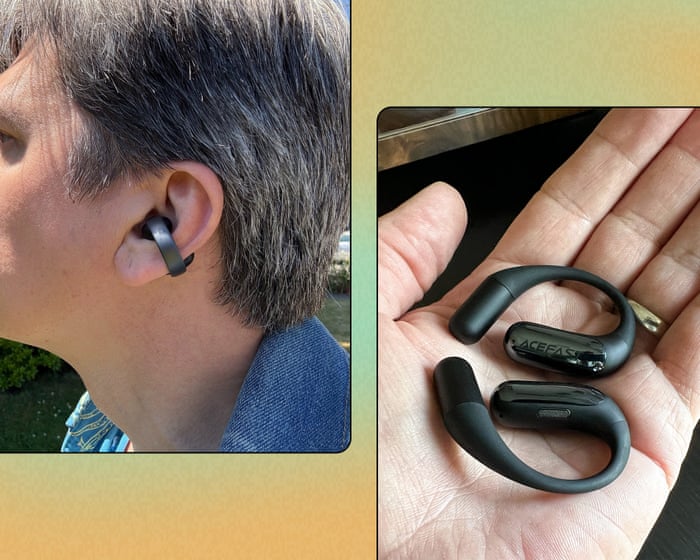
Open earbuds are wireless headphones designed to let in outside sounds while playing music or audio. They fit differently from regular earbuds and allow users to hear their environment, making them useful for activities like walking or cycling. The article reviews several top open-ear earbuds based on sound quality, comfort, and price.
Key Facts
Open earbuds leave the ear canal open, letting users hear surrounding sounds while listening to audio.
They differ from regular earbuds that block outside noise and can make your voice sound odd.
These earbuds are good for activities where being aware of your environment is important, such as running errands or cycling.
Open earbuds generally have less bass and a different sound experience than traditional earbuds.
The Soundcore Aeroclip earbuds are recommended as the best overall, costing about $150 and offering comfort, sound quality, and water resistance.
Bose Ultra Open Earbuds are suggested as a premium option, priced around $199.
There are also budget options like the Acefast AceFit Air Open-Ear headphones for about $22.
Open earbuds use special designs like clip-on loops for secure fits and touch controls along the device’s ring.
Read the Original
Want the full story? Tap a source to open the original
article.
Researchers at New York University studied "silly sprinklers" to understand a physics problem first discussed by physicist Richard Feynman and Ernst Mach in the 19th and 20th centuries. Their experiments showed that a reverse sprinkler spins much slower than a regular one and explained how water flow inside the sprinkler creates forces that cause this rotation.
Key Facts
"Silly sprinklers" create fun water patterns like loops and spirals.
The reverse sprinkler problem was popularized by physicist Richard Feynman.
Ernst Mach first wrote about a similar idea in 1883.
Feynman tested the problem himself and found a reverse sprinkler mostly stays still after an initial movement.
Some scientists thought a reverse sprinkler might spin backward due to vortex formation.
New York University researchers made sprinklers with very low friction to study the effect carefully.
They used dyes and lasers to visualize water flow inside the sprinkler.
The reverse sprinkler spins about 50 times slower than a normal sprinkler, caused by internal water jets pushing against each other unevenly.
Read the Original
Want the full story? Tap a source to open the original
article.
The Federal Communications Commission (FCC) approved a test satellite from Reflect Orbital that will carry a large mirror to reflect sunlight back to Earth. The project aims to provide extra light for activities like farming and emergency response by shining sunlight on chosen areas, but it has raised concerns about space pollution, impacts on astronomy, and effects on wildlife and humans.
Key Facts
Reflect Orbital plans to launch the Earendil-1 satellite with a giant mirror to reflect sunlight onto Earth.
The reflected light would cover an area about 3 miles wide and move every four minutes as the satellite orbits.
The project intends to create "sunlight on demand" to support agriculture, emergency services, and solar power generation.
Some scientists say one satellite’s light is too weak and short-lived to be useful; hundreds may be needed for meaningful effects.
Astronomers and environmental groups worry the mirrors could cause light pollution that disrupts telescope observations and natural wildlife cycles.
Experts warn bright reflections could affect human health by disturbing sleep patterns and create hazards for pilots and drivers.
Adding many mirror satellites could worsen space congestion and increase the risk of collisions in low-Earth orbit.
The FCC approved the test despite these concerns, saying its role is limited to managing radio-frequency spectrum use.
Read the Original
Want the full story? Tap a source to open the original
article.
More people around the world are using artificial intelligence (AI), but many do not fully understand how it works or how to use it efficiently. Experts say the next step in AI will involve multiple specialized AI tools working together to handle complex tasks, helping people focus more on guiding results than managing details.
Key Facts
A 2025 study surveyed over 48,000 people in 47 countries and found that 66% use AI regularly.
Many users rely on AI outputs without checking if the information is correct.
Most people use one AI system at a time, which can slow down work because they must repeat information.
Large companies are starting to use multiple AI tools that work together to complete tasks more efficiently.
These advanced AI systems help users spend less time controlling every step and more time directing the final results.
Access to advanced AI tools is uneven; big companies have more resources to develop these systems than individuals or small businesses.
Some people believe AI is too complex or expensive to use effectively, but experts say anyone can learn by trying and experimenting.
There is a shift toward using AI to enhance human abilities rather than just to cut costs or replace workers.
Read the Original
Want the full story? Tap a source to open the original
article.
A recent study shows that many health care workers struggle to accurately read electrocardiograms (ECGs), correctly interpreting them only about 56% of the time. Dr. Nicholas Tullo, founder of ECG Academy, believes ECG training should focus more on understanding heart physiology rather than just memorizing patterns, and he has created an online program to teach this approach.
Key Facts
Clinicians correctly interpret ECGs only 56.4% of the time on average.
Error rates in critical heart emergencies range from 25% to 30% among physicians and nonphysicians.
Overreliance on computer interpretations and simple pattern recognition can cause mistakes.
Traditional ECG teaching often emphasizes memorization rather than deep understanding.
Dr. Nicholas Tullo developed ECG Academy to help clinicians learn the physiological reasons behind ECG waveforms.
Tullo’s musical background helped him notice subtle rhythms in ECGs, linking music and heart signals.
ECG Academy offers online lessons, master classes, and accredited courses to fit clinicians’ busy schedules.
The program focuses on simplifying complex ECG concepts to improve interpretation skills.
Read the Original
Want the full story? Tap a source to open the original
article.
Smartphone shipments dropped 11% in the last quarter, reaching the lowest level for that period since 2013. The main reason is the rising cost of memory chips, which makes budget phones more expensive and less attractive to buyers, while companies like Apple and Samsung are managing to keep sales stable.
Key Facts
Smartphone shipments fell 11% in the recent quarter, the lowest since 2013 for that quarter.
The rise in prices for DRAM and NAND memory chips is reducing the number of smartphones sold.
Higher memory costs especially affect phones priced at $500 or less, where memory can be half the production cost.
Apple’s shipments grew by 3% last quarter, maintaining stable prices for current models.
Samsung became the largest smartphone maker by shipments, holding 24% of the market.
Samsung’s premium Galaxy S26 phones sold better despite price increases.
Other major brands like Oppo, Vivo, and Xiaomi saw sales decrease.
Google’s Pixel phone shipments rose 16% due to strong sales of the Pixel 10.
Read the Original
Want the full story? Tap a source to open the original
article.
Meta is expanding its biggest data center in Louisiana to reach 5 gigawatts of computing power. The project’s investment has grown to over $50 billion, nearly double the original cost estimate.
Key Facts
The data center is called Hyperion and is located in Richland Parish, Louisiana.
Meta first announced the Hyperion data center plan last October.
Initial projected cost was over $27 billion.
Investment in the project has now surpassed $50 billion.
The data center will have 5 gigawatts of compute capacity, a measure of its processing power.
This expansion makes it Meta’s largest data center so far.
The project is part of Meta’s broader data infrastructure growth.
Read the Original
Want the full story? Tap a source to open the original
article.
AI companies are creating digital versions of deceased loved ones called "generative ghosts." These AI chatbots are made using a person’s social media, photos, and voice recordings to allow family and friends to interact with a simulated version of the person after they have passed away.
Key Facts
Generative ghosts are AI chatbots trained on data like emails, videos, and photos of a deceased person.
The technology aims to help memorialize loved ones in a meaningful way.
Companies such as Séance AI, You, Only Virtual, and re;memory offer services that create lifelike digital avatars.
These avatars can speak, move, and respond to questions in a way that mimics the deceased person.
Basic versions only replay recorded statements, while advanced ones simulate how the person communicated.
Prices for creating these AI avatars range from around $20 to $24 per month.
Users generally prefer the AI to speak as if it were the actual person, not referring to itself in the third person.
Inaccurate or unfamiliar language used by the bots can make users stop interacting with them.
Read the Original
Want the full story? Tap a source to open the original
article.
Two hacker projects have made progress in running the game Doom on the old Neo Geo game console, which was previously thought impossible due to its hardware limits. These projects use creative methods to display Doom's graphics, although the visuals have big compromises.
Key Facts
Doom was considered impossible to run on Neo Geo because it uses sprites and lacks a normal frame buffer (a way to quickly redraw the screen).
The Doom64KB project uses the console’s fix layer (normally for menus) to create a simple frame buffer for Doom graphics.
Doom64KB shows the game in low resolution with only 16 colors and large tile blocks.
Another method called Doom-NG uses a technique to render walls as vertical strips of sprites, simulating the 3D view of Doom.
Doom-NG creates a recognizable but striped and blocky version of Doom that runs smoothly on Neo Geo hardware.
Both projects still miss features like enemy behavior, music, and weapon choices.
These early efforts show how skilled coders can push old hardware beyond expected limits.
Further improvements could make the game run better or look smoother, especially with hardware modifications.
Read the Original
Want the full story? Tap a source to open the original
article.
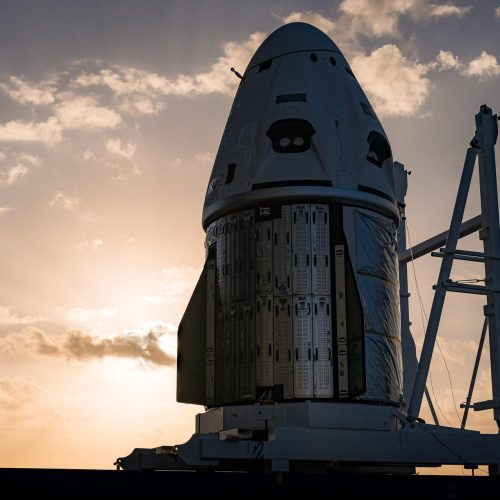
NASA relies on SpaceX’s Crew Dragon spacecraft to send astronauts to space because Boeing’s Starliner has not yet completed a successful crewed flight. Private companies building new space stations worry about Crew Dragon’s future availability and rising costs, since SpaceX may stop making Falcon 9 rockets and Crew Dragon by the mid-2030s as it focuses on new Starship launches.
Key Facts
SpaceX successfully launched astronauts in Crew Dragon, ending a long gap in U.S. human spaceflight.
Boeing’s Starliner has not completed a successful crewed test flight and likely won’t fly crews before 2028.
NASA plans to retire the International Space Station in the early 2030s and is supporting private space station projects.
Several private space companies (Axiom Space, Vast Space, Voyager, Blue Origin, SpaceX) are working on these future stations.
Crew Dragon is expected to be the main way to transport astronauts to these new stations in the 2030s.
SpaceX President Gwynne Shotwell said Crew Dragon and Falcon 9 will be produced for a limited time, possibly less than ten more years.
Moving launches from Falcon 9 to Starship might raise Crew Dragon transport costs and cause availability issues.
Boeing may not compete on reliability or price for crew transport, and its commitment to Starliner is uncertain.
Read the Original
Want the full story? Tap a source to open the original
article.
Elon Musk and Sam Altman publicly argued on X (formerly Twitter) following Apple’s announcement of a lawsuit against OpenAI over trade secrets. Musk criticized Altman by calling his actions a “scam” in response to the lawsuit.
Key Facts
Elon Musk and Sam Altman are technology leaders who debated on social media platform X.
Apple filed a lawsuit accusing OpenAI of violating trade secret laws.
Musk used the lawsuit to criticize Altman, calling him a scammer.
The public exchange occurred soon after Apple’s legal announcement.
OpenAI is a company involved in developing artificial intelligence technologies.
Musk is the founder of SpaceX and also involved in technology and social media.
The dispute gained attention because of the high profiles of the people involved.
The issue centers on accusations related to the misuse of confidential business information.
Read the Original
Want the full story? Tap a source to open the original
article.