Katalyst Space Technologies launched a special satellite called Link to catch and boost NASA's Swift satellite, which is in danger of falling from orbit. This is the first mission designed to save a satellite by attaching to it and moving it to a safer orbit.
Key Facts
NASA asked companies to propose quick plans to save the Swift satellite less than a year ago.
Katalyst won a contract last September to build and launch the rescue mission.
The Link satellite weighed nearly half a ton and was launched from a Northrop Grumman Pegasus XL rocket.
The Pegasus rocket was air-launched from an aircraft over the Pacific Ocean near the Marshall Islands.
The goal is for Link to approach Swift, grab it with robotic arms, and use thrusters to move it to a higher orbit.
Swift’s orbit is tilted 20.6 degrees to the equator, so a special launch location was chosen to reach it efficiently.
This mission is the first time Katalyst flew this version of Link, which includes cameras, sensors, and robotic arms.
Engineers are cautious because Swift was not made to dock with another satellite, and its condition is uncertain.
Read the Original
Want the full story? Tap a source to open the original
article.
Microsoft announced it will cut about 4,800 jobs, including 3,200 in its Xbox division, to reduce costs and restructure the gaming business. The changes include selling or spinning off four game studios and reviewing options for a fifth studio, aiming to make Xbox more profitable by 2027.
Key Facts
Microsoft is cutting around 4,800 jobs, about 2% of its workers worldwide.
About 3,200 of these cuts will happen in the Xbox gaming division over the next fiscal year.
Four Xbox game studios will be sold or spun off, and a fifth studio is being reviewed for possible closure or sale.
Xbox CEO Asha Sharma said the division’s profit margins are much lower than competitors.
Some jobs in Microsoft’s commercial business are also being cut to support AI efforts.
Microsoft is investing $2.5 billion to help customers adopt AI with 6,000 engineers working inside those companies.
Xbox has had multiple rounds of layoffs since Microsoft bought Activision Blizzard in 2024.
The restructuring aims to make Xbox healthier financially and achieve growth by 2027.
Read the Original
Want the full story? Tap a source to open the original
article.
Anthropic secretly added a hidden tracker in its Claude Code AI tool to monitor some users in China. The company removed the tracker after it was discovered, saying it was meant to stop unauthorized reselling and copying of their AI models. This incident adds to growing tensions between US and Chinese AI firms over technology copying.
Key Facts
Anthropic inserted a hidden tracking code in Claude Code users in China.
The tracker collected info like time zone, proxy, and links to Chinese AI labs.
Anthropic’s engineer said the tracker started in March as an experiment.
The tracker aimed to stop unauthorized resellers and AI model copying, called “distillation.”
Distillation is when someone copies an AI model by querying it many times.
Anthropic has been fighting the US government to prevent surveillance of US users.
Chinese AI models have recently matched or outperformed US models quickly.
Anthropic and OpenAI want distillation attacks to be illegal and regulated by the US.
Alibaba’s Qwen AI showed signs of copying Claude after heavy distillation attacks.
Read the Original
Want the full story? Tap a source to open the original
article.
Microsoft’s Xbox division will cut 3,200 jobs and sell off five smaller game studios as part of a major restructuring. Xbox CEO Asha Sharma said these changes aim to simplify the division, reduce management layers, and focus on larger, more successful studios.
Key Facts
Xbox plans to lay off 3,200 employees, about 20% of its gaming division workforce.
Half of the layoffs started immediately; the rest will happen by June 2027.
Microsoft is selling five smaller Xbox-owned studios, including Compulsion Games and Double Fine Productions.
Some studios will operate independently or be sold to other companies.
Xbox has struggled financially with smaller studios, losing an average of 64 cents per dollar invested.
Larger studios like Mojang (Minecraft) and King (Candy Crush) remain important and report directly to the Xbox CEO.
The layoffs follow previous job cuts in Xbox after the Activision Blizzard purchase and other recent restructurings.
The Xbox division had grown complex, with many layers of management; the new structure will have fewer layers to speed up decisions.
Read the Original
Want the full story? Tap a source to open the original
article.
Microsoft announced it will cut 4,800 jobs, about 2.1% of its workforce, with Xbox facing a large part of the layoffs. Xbox's new chief, Asha Sharma, said the company is starting a major restructuring, including spinning off four game studios, to focus on future growth amid changes in the gaming industry.
Key Facts
Microsoft will cut 4,800 jobs company-wide, which is around 2.1% of its employees.
More than 1,600 Xbox jobs will be cut immediately, with another 1,600 cuts planned over the next year.
Four Xbox game studios—Compulsion Games, Double Fine Productions, Ninja Theory, and Undead Labs—will be spun off.
Xbox CEO Asha Sharma described the restructuring as the most significant in Xbox history.
Microsoft said the job cuts are to focus on areas that benefit customers in a fast-changing industry.
Microsoft will not replace the lost roles with AI but acknowledges AI is changing how work is done.
The gaming industry is already experiencing challenges, including past layoffs, studio closures, and rising hardware costs.
Mojang (Minecraft developer) and King (Candy Crush developer) will now report directly to Asha Sharma.
Read the Original
Want the full story? Tap a source to open the original
article.
Two spacecraft from Japan and China had close encounters with small asteroids this weekend. Japan’s Hayabusa2 flew by the asteroid Torifune, while China’s Tianwen-2 arrived near asteroid Kamoʻoalewa to study it and plan sample collection.
Key Facts
Japan’s Hayabusa2 mission launched in 2014 and first visited asteroid Ryugu in 2018, collecting 5.4 grams of samples.
Hayabusa2 still has fuel left and is continuing an extended mission to visit more asteroids.
On Sunday, Hayabusa2 flew within about 10 km of the 450-meter asteroid Torifune.
Hayabusa2’s next planned flyby is a small asteroid about 11 meters wide expected in July 2031.
China’s Tianwen-2 spacecraft reached within 20 km of asteroid Kamoʻoalewa on July 2.
Kamoʻoalewa is about 20 meters in diameter and orbits near Earth but is not captured by Earth’s gravity.
Tianwen-2 will study Kamoʻoalewa, try to collect samples, and aims to return them to Earth by November 2027.
After the sample return, Tianwen-2 may continue to another asteroid named 311P/PanSTARRS for further study.
Read the Original
Want the full story? Tap a source to open the original
article.
This article describes a recipe for making a hot dog Reuben sandwich using an air fryer. It explains the cooking steps and suggests variations for different ingredients to create a tasty sandwich quickly and easily.
Key Facts
The hot dog Reuben uses hot dogs instead of traditional corned beef.
The recipe is from the book "The Instant Air Fryer Bible" by Bruce Weinstein and Mark Scarbrough.
Any type of hot dog can be used, including beef, pork, turkey, or vegan options.
The air fryer toasts bread evenly and crisps the sandwich without burning the inside ingredients.
Ingredients include rye bread, olive oil spray, Russian dressing, sauerkraut, Swiss cheese, and hot dogs.
Cooking involves air frying hot dogs first, then assembling and air frying the whole sandwich.
Variations suggested include swapping sauerkraut for kimchi or Swiss cheese for Gruyère or Comté.
The recipe provides a fast and easy method for making deli-style sandwiches using air fryer technology.
Read the Original
Want the full story? Tap a source to open the original
article.
Utah launched a program where an AI chatbot named Doctronic helps patients refill prescriptions online without visiting a doctor. This new approach has sparked debate among doctors and experts about whether AI is ready to handle medical tasks and how it should be regulated to ensure patient safety.
Key Facts
Utah started a pilot program allowing prescription refills via an AI chatbot called Doctronic.
The AI system helps patients skip doctor visits for refills, aiming to make healthcare more convenient.
Current laws say only licensed doctors can prescribe medication, which raises legal questions about AI’s role.
The program operates under a special "regulatory sandbox" that lets Utah waive some laws for testing AI healthcare tools.
Doctronic’s refill requests are currently reviewed by human doctors before approval.
The company plans to move toward fully automated prescription refills without human review.
Utah’s medical licensing board learned about the program only after its launch and has raised safety concerns.
There is debate on whether the federal Food and Drug Administration (FDA) should regulate AI tools like Doctronic since they directly affect medical decisions.
Read the Original
Want the full story? Tap a source to open the original
article.
New AI surveillance systems will track people’s actions in public and private spaces using facial recognition and data analysis. These systems will report rule-breaking instantly to authorities and may limit personal freedoms and social progress.
Key Facts
AI surveillance can monitor many actions, from minor offenses to major rule violations, in real-time.
Such systems link violations directly to official government records and notify authorities immediately.
China uses over 600 million cameras combined with AI to control social behavior and enforce rules.
The US Department of Homeland Security is expanding AI surveillance, including facial recognition and social media monitoring.
AI surveillance aims not only to protect security but also to control citizens’ behavior.
Experts warn this technology can increase self-censorship and conformity, impacting democracy and freedom.
AI automates complex analysis of personal data and activities, increasing surveillance power.
The fusion of multiple tracking methods by AI creates persistent and wide-reaching monitoring systems with potentially harmful social effects.
Read the Original
Want the full story? Tap a source to open the original
article.
Bentley will soon launch its first electric vehicle (EV) named the Torcal. The car is based on a natural landmark name and uses electric power technology shared with other Volkswagen Group EVs. Bentley plans to reveal the Torcal on September 23.
Key Facts
Bentley is introducing its first electric vehicle called the Torcal.
The name Torcal comes from El Torcal de Antequera, a natural limestone rock formation in Spain.
The name also connects to the Latin root for “torque,” highlighting the car's electric power features.
Bentley tested the Torcal in the Arctic Circle and at the Nürburgring race track.
The Torcal uses the PPE platform shared with other Volkswagen Group electric vehicles, like the Porsche Cayenne EV.
Bentley's CEO said the Torcal aims to combine luxury, comfort, and strong electric performance.
The car is expected to look somewhat like Bentley’s EXP 15 concept shown last year.
Bentley will reveal the Torcal officially on September 23 and will build it at its Crewe factory in England.
Read the Original
Want the full story? Tap a source to open the original
article.
The Czinger 21C is a hybrid supercar with advanced technology, including a powerful V8 engine combined with electric motors. It uses special design software and 3D printing to create strong, lightweight parts shaped exactly for performance, making it different from traditional car manufacturing.
Key Facts
The Czinger 21C has a carbon fiber body and a 2.88-liter twin-turbocharged V8 engine.
It also has three electric motors, producing a total of 1,250 horsepower.
The car weighs under 3,700 pounds and can go from 0 to 60 mph in 1.92 seconds.
Its top speed is 253 mph, and it can complete a quarter mile in 8.6 seconds.
The 21C’s design uses generative software that tests millions of shapes to find the best material layout for strength and weight.
Parts are made with metal 3D printing (additive manufacturing), allowing complex shapes regular methods cannot produce.
Czinger Vehicles was founded by Kevin and Lukas Czinger and is linked to Divergent Technologies, a company known for innovative manufacturing used in aerospace and defense.
The car costs about $2.35 million, putting it among the most expensive and high-performance cars in the world.
Read the Original
Want the full story? Tap a source to open the original
article.
A study from Oxford and Potsdam universities found that AI tools change the meaning of users’ online posts on political and social issues like abortion and climate change. These AI systems add their own political biases, which could influence public opinion over time. The study highlights that current regulations do not address this problem, creating a gap in accountability.
Key Facts
AI writing tools can reverse or change the meaning of users’ draft messages on sensitive topics.
The study analyzed AI models from companies like Elon Musk’s xAI, Meta, Google, Alibaba, and Mistral.
Some AIs show a liberal bias by rewriting posts on issues like feminism and climate change to be more pro-liberal.
Elon Musk’s AI tool “Grok” shows a bias more aligned with conservative views, often challenging mainstream ideas.
The AI systems sometimes rewrite religious or political statements to avoid or soften controversial views.
Small changes in meaning by AI can add up across millions of messages to shift public opinion.
Current European laws like the EU AI Act do not cover this specific AI bias issue.
Researchers warn that AI changing users’ words can disrupt honest communication and misrepresent people’s true opinions.
Read the Original
Want the full story? Tap a source to open the original
article.
The Euclid space telescope discovered the oldest and most distant quasars ever seen, shining from a time when the universe was only 670 million years old. These findings help scientists study the early universe and the formation of the first stars and galaxies.
Key Facts
Euclid is a space telescope operated by the European Space Agency and launched in 2023.
It found 31 new quasars, including the two oldest ever observed.
Quasars are extremely bright objects fueled by supermassive black holes at galaxy centers.
The light from the oldest quasars comes from when the universe was about 5% of its current age (670 million years old).
Euclid has doubled the number of known ancient quasars in just two years.
These quasars come from the "epoch of reionization," when the first stars and galaxies formed.
The discoveries challenge scientists because these huge black holes grew very fast in the early universe.
Data from the James Webb Space Telescope will help study these quasars further.
Read the Original
Want the full story? Tap a source to open the original
article.
A Scottish village in Lanarkshire was chosen as a site for a large AI datacentre project that promised many jobs and investment. Local residents now worry they might lose their homes and green land, while questions remain about how much renewable energy the project will actually use.
Key Facts
The UK government selected Lanarkshire for a multibillion-pound AI datacentre development called an “AI growth zone.”
The project is led by the US company CoreWeave and Glasgow-based DataVita.
The datacentre will house special computer chips needed for artificial intelligence systems.
Initial promises included 3,400 new jobs and up to £543 million invested in local programs.
Residents were offered incentives like free solar panels and cash to avoid opposing the project, but these offers had no legal guarantees.
The project requires large amounts of energy and land, raising concerns about the loss of green belt areas.
DataVita claims it will power the site using renewable energy parks nearby, but current plans show they have less than 10% of the required land for this.
The AI growth zone will rely on the national electricity grid rather than being fully powered by on-site renewable energy, contrary to earlier claims.
Read the Original
Want the full story? Tap a source to open the original
article.
A large AI datacentre project in rural Scotland, planned to be powered fully by renewable energy by 2030, is unlikely to meet this goal. Government documents and internal communications reveal that the site may have serious issues securing enough power from renewables and will rely on the general power grid instead.
Key Facts
The AI datacentre complex in Lanarkshire is an £8.2 billion project by US firm CoreWeave and Scottish company DataVita.
It was announced that the complex would run entirely on renewable energy by 2030.
Internal government and developer documents show concerns about power supply and doubt renewable goals can be met.
The site will connect to the national power grid, which has a long waiting list for new connections.
The government says the site’s energy needs will still mostly come from renewables.
AI datacentres require huge amounts of electricity to operate specialized computer chips for AI tasks.
The UK faces high electricity costs and delays for new grid connections, affecting such projects.
Experts say political promises about AI infrastructure often ignore practical challenges in energy and development.
Read the Original
Want the full story? Tap a source to open the original
article.
Meta decided in early 2025 to reduce content censorship on Facebook, Instagram, and Threads. This change focused on removing only illegal or very serious harmful content, relying more on users to report less serious issues, which may have led to an increase in antisemitic and other offensive content.
Key Facts
In January 2025, Meta announced a policy to reduce censorship and remove factcheckers.
The policy focused on tackling illegal or very serious violations like terrorism threats and child exploitation.
Meta’s CEO Mark Zuckerberg said this change would catch less harmful content but reduce accidental removals of innocent posts.
The royal commission into antisemitism reported concerns that this policy allowed more antisemitic and hateful content.
Internal Meta guidelines showed some offensive comments were allowed if they were not false claims about specific criminal behavior.
Meta tries to balance removing hateful content with avoiding over-enforcement that could remove legitimate speech.
Meta reported a consistent 0.02% rate of hateful content violations since 2022, but the commission noted a steep 79% drop in actions against hateful conduct after the policy change.
Some users providing evidence to the inquiry were targeted with offensive content on Meta’s platforms.
Read the Original
Want the full story? Tap a source to open the original
article.
Sennheiser has released the Momentum 5 headphones, which offer strong sound quality, improved noise cancelling, and a user-replaceable battery. They provide up to 57 hours of listening with noise cancelling on and support multiple Bluetooth audio formats for better sound on various devices.
Key Facts
The Momentum 5 headphones cost around £330 ($400) and replace the previous model.
They are made with high-quality materials and are comfortable for long use.
Controls include buttons and a touch panel on the right ear cup for playback and noise cancelling.
They use Bluetooth 5.4 and can connect to two devices at once (multipoint).
Supported Bluetooth audio formats include aptX Adaptive, aptX Lossless, SBC, and AAC.
Battery life is about 57 hours with noise cancelling active, and charging takes roughly two hours.
Sound quality features clear tone separation, balanced bass, mids, and highs, with customizable sound settings available through a smartphone app.
Noise cancelling improves over past Sennheiser models but is slightly less effective than top competitors like Sony and Bose.
Read the Original
Want the full story? Tap a source to open the original
article.
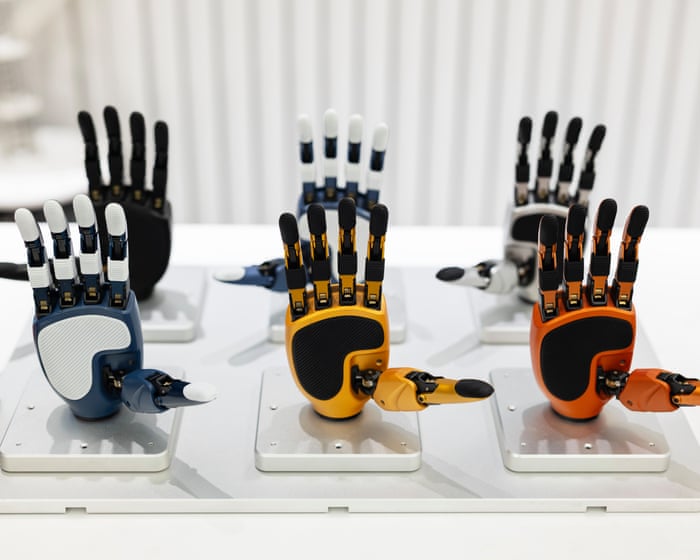
Chinese companies are working to create robotic hands that can move and work like human hands, which is very hard to do. These efforts are part of China's plan to use robots for practical jobs because the country faces a shrinking and aging workforce.
Key Facts
Human hands are very complex and difficult to copy with machines.
Chinese start-ups are focusing on making robotic hands with advanced movements, called dextrous hands.
China leads the world in installing factory robots, but humanoid robots with useful hands are still not common.
Beijing supports "embodied AI," which means robots that can do physical tasks like humans, as part of its development plan.
Making a robotic hand is considered 100 times harder than making the rest of a humanoid robot, due to its size and complexity.
LinkerBot is a Chinese company that only makes robotic hands and produces about 5,000 each month.
The company aims to create affordable prosthetic hands for people who have lost limbs.
Elon Musk’s Tesla also works on humanoids, and Musk agrees that making hands is the hardest part of building a robot.
Read the Original
Want the full story? Tap a source to open the original
article.
A study by consumer group Which? found that the UK has worse mobile internet coverage and speeds than any other EU country and every other G7 nation. Despite low costs, many UK users experience slow connections, dropped signals, and poor coverage, especially outside cities and on railways.
Key Facts
UK mobile coverage ranks last among 27 EU countries and G7 members.
UK is 57th worldwide for network performance and 70th for download speeds.
Only 64% of the UK has 5G mobile coverage, with rural areas largely uncovered.
Over one-third of UK mobile users had issues like slow speeds or dropped calls in the last year.
The UK has some of the cheapest mobile internet prices due to competition and network mergers.
Poor mobile signal on Britain’s railways is a major concern compared to Germany’s higher standards.
Barriers to improving UK mobile networks include strict planning rules and landowner disputes.
Which? urges government, regulators, and companies to boost investment and improve coverage targets.
Read the Original
Want the full story? Tap a source to open the original
article.
The U.S. is working to secure supplies of rare earth elements, which are vital for many modern technologies and defense. Experts suggest recycling rare earths from old electronics and devices could be a better way to get these materials instead of only mining new sources.
Key Facts
Rare earth elements are 17 metals used in things like smartphones, wind turbines, and military jets.
China currently dominates the rare earth market, which is important for U.S. manufacturing and defense.
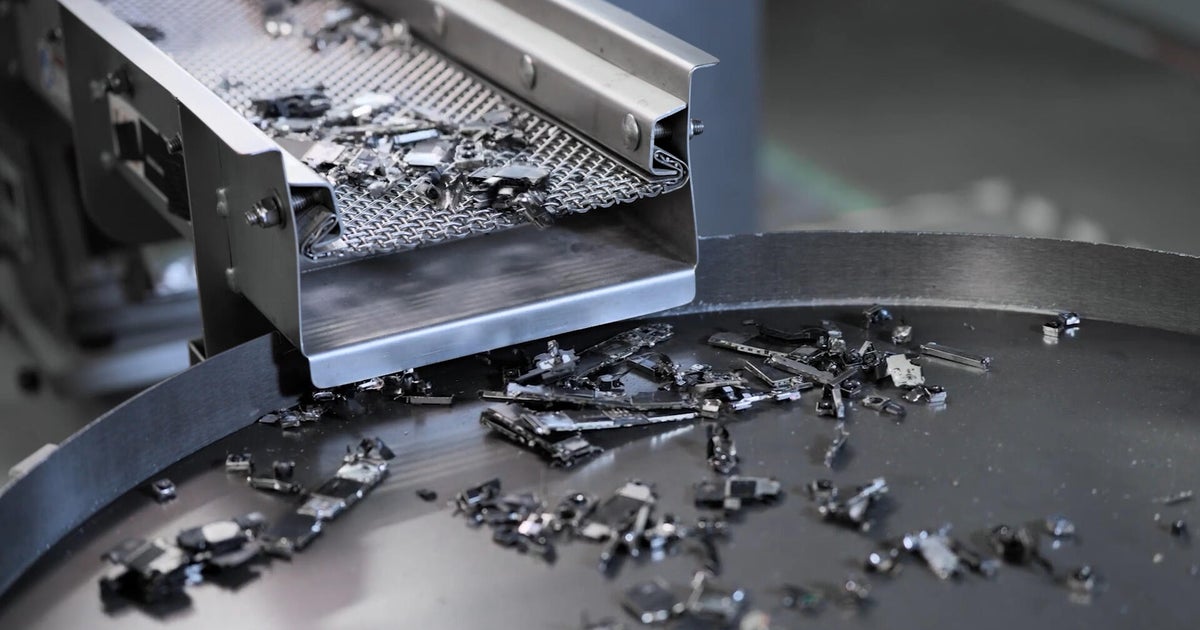
Less than 1% of rare earths used are recycled; most end up as waste in electronics, airplanes, and ships.
Recycling rare earths is hard because devices contain small amounts scattered in complex ways.
Recycling is seen as better for the environment compared to mining new rare earth deposits.
MP Materials runs the only active U.S. rare earth mine in California and is working on recycling efforts.
Apple has partnered with MP Materials to recycle magnets and has a robot called Daisy to recover materials from iPhones.
The goal is to create a "closed loop" supply chain where materials are reused continuously to reduce the need for new mining.
Read the Original
Want the full story? Tap a source to open the original
article.