A study by consumer group Which? found that the UK has worse mobile internet coverage and speeds than any other EU country and every other G7 nation. Despite low costs, many UK users experience slow connections, dropped signals, and poor coverage, especially outside cities and on railways.
Key Facts
UK mobile coverage ranks last among 27 EU countries and G7 members.
UK is 57th worldwide for network performance and 70th for download speeds.
Only 64% of the UK has 5G mobile coverage, with rural areas largely uncovered.
Over one-third of UK mobile users had issues like slow speeds or dropped calls in the last year.
The UK has some of the cheapest mobile internet prices due to competition and network mergers.
Poor mobile signal on Britain’s railways is a major concern compared to Germany’s higher standards.
Barriers to improving UK mobile networks include strict planning rules and landowner disputes.
Which? urges government, regulators, and companies to boost investment and improve coverage targets.
Read the Original
Want the full story? Tap a source to open the original
article.
The U.S. is working to secure supplies of rare earth elements, which are vital for many modern technologies and defense. Experts suggest recycling rare earths from old electronics and devices could be a better way to get these materials instead of only mining new sources.
Key Facts
Rare earth elements are 17 metals used in things like smartphones, wind turbines, and military jets.
China currently dominates the rare earth market, which is important for U.S. manufacturing and defense.
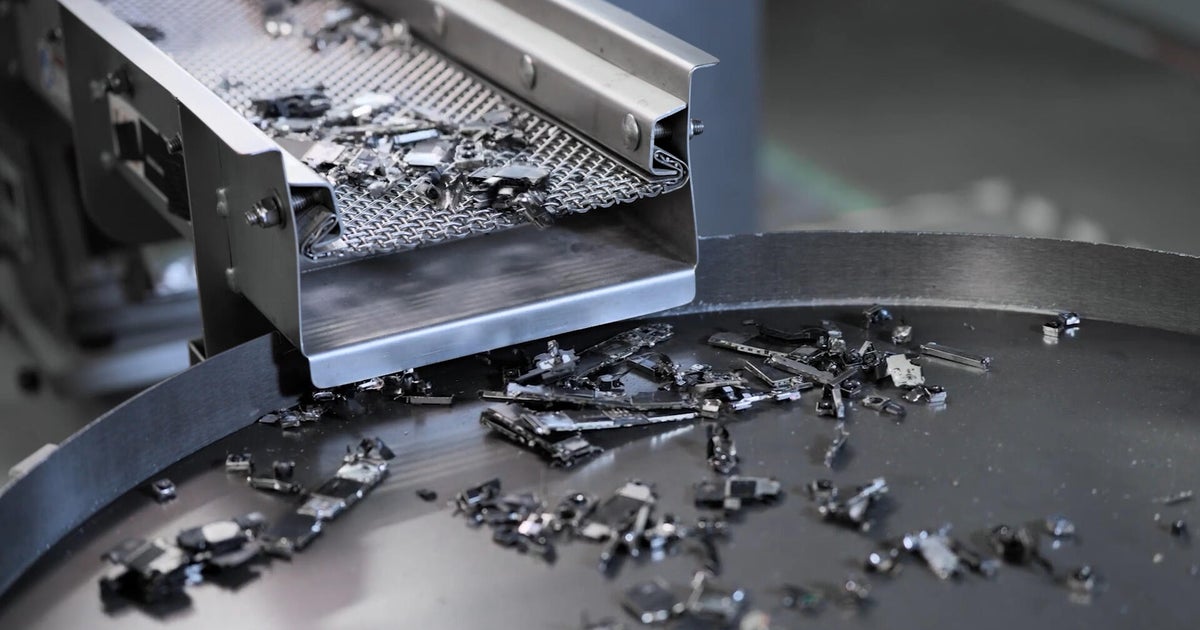
Less than 1% of rare earths used are recycled; most end up as waste in electronics, airplanes, and ships.
Recycling rare earths is hard because devices contain small amounts scattered in complex ways.
Recycling is seen as better for the environment compared to mining new rare earth deposits.
MP Materials runs the only active U.S. rare earth mine in California and is working on recycling efforts.
Apple has partnered with MP Materials to recycle magnets and has a robot called Daisy to recover materials from iPhones.
The goal is to create a "closed loop" supply chain where materials are reused continuously to reduce the need for new mining.
Read the Original
Want the full story? Tap a source to open the original
article.
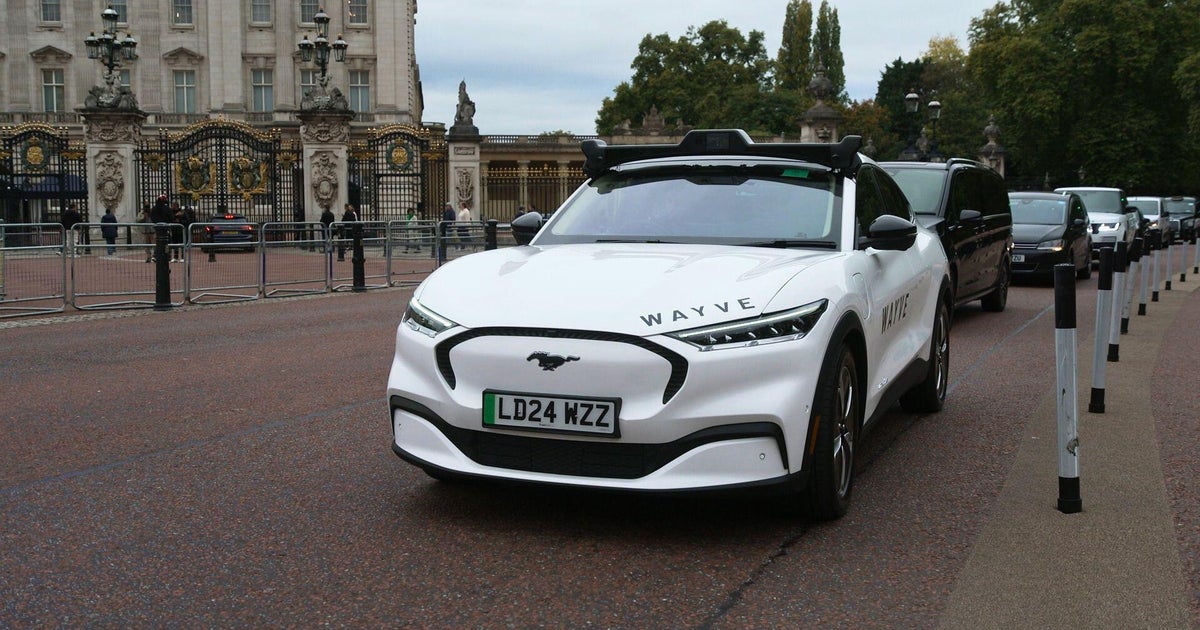
London taxi drivers, known for memorizing the city's streets, face new tests as companies plan to introduce self-driving, AI-powered taxis. These autonomous vehicles, called robotaxis, aim to operate on London’s streets without human drivers.
Key Facts
London black cab drivers must memorize thousands of streets to get their license.
New companies are working to bring robotaxis, which drive themselves using AI technology, to London.
Robotaxis do not need human drivers to operate.
The introduction of autonomous taxis challenges the traditional role of London cabbies.
London is testing these new self-driving vehicles on city streets.
The technology aims to change how people get around the city in the future.
Read the Original
Want the full story? Tap a source to open the original
article.
The Trump administration has put rules in place that limit private companies from releasing some AI models. These limits affect companies like Anthropic and OpenAI, which have AI models based on their own private data. As a result, more people are paying attention to open-source AI models, which are freely available and can be shared publicly.
Key Facts
The Trump administration has introduced new restrictions on private AI model releases.
These restrictions give the government control over AI models owned by a single company using private data.
Companies like Anthropic and OpenAI are directly affected by these new rules.
The rules act like a "kill-switch," meaning the government can stop the release of certain AI models.
The new policies have increased interest in open-source AI models, which are open and shared freely.
Open-source AI models do not rely on private data controlled by one company.
The shift could encourage more collaboration and transparency in AI development.
Read the Original
Want the full story? Tap a source to open the original
article.
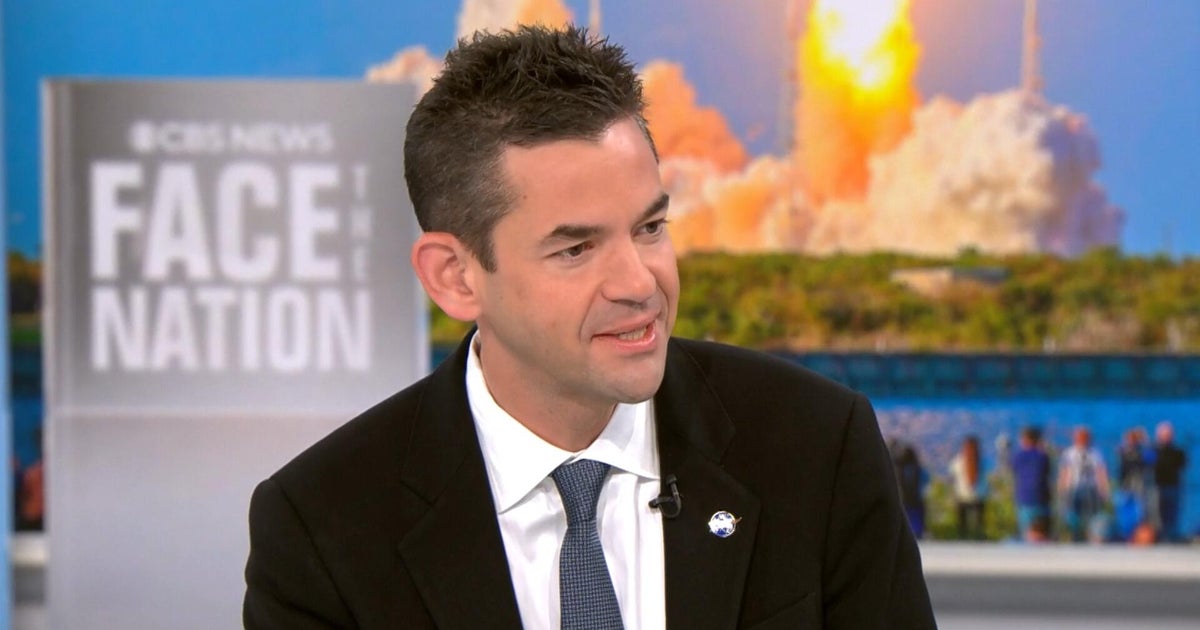
NASA Administrator Jared Isaacman discussed the importance of maintaining America's presence in space during a recent interview. He highlighted NASA's current mission to repair the Swift telescope using private companies as a new, cost-effective approach to extend the life of scientific instruments in orbit.
Key Facts
Jared Isaacman is the NASA Administrator and has been to space twice.
He emphasized the moon as a nearby testing ground for space exploration.
NASA plans for a future economy based on lunar resources and asteroid mining.
The Artemis program has inspired public interest and brought attention to space exploration.
NASA recently launched a repair mission to the Swift telescope, which observes gamma rays.
This mission involves docking with and boosting the telescope's orbit to extend its life.
The mission leverages private companies and commercial launch providers to lower costs.
The current mission is experimental, with data still coming in after a few days, costing about $30 million.
Read the Original
Want the full story? Tap a source to open the original
article.
Agentic AI offers great potential for government use, but current AI systems are not reliable enough to be widely used. Improving reliability is necessary to unlock the benefits of agentic AI.
Key Facts
Agentic AI refers to artificial intelligence systems that can operate independently to achieve goals.
These systems have significant potential to help government functions.
At present, agentic AI cannot be deployed at large scale because they lack sufficient reliability.
Reliability means the AI performs well and consistently without errors.
Building reliable agentic AI will allow broader and safer use in government settings.
Read the Original
Want the full story? Tap a source to open the original
article.
Professor Simon Baron-Cohen, who developed the “extreme male brain” theory of autism, now says the phrase is unhelpful because it causes misunderstandings. He will lead a new £26 million research centre at Cambridge University focused on improving the health and quality of life for autistic people, including studying their physical health risks.
Key Facts
Simon Baron-Cohen created the “extreme male brain” theory, linking autism to strong systemizing skills over empathy.
He regrets using the phrase “extreme male brain” because it can lead to wrong ideas, such as autistic people lacking empathy.
A donation of £26 million from US philanthropist Lisa Yang will fund a new autism research centre and a clinical autism centre at Cambridge.
The research will focus on improving life expectancy, health outcomes, early diagnosis, and practical support for autistic people.
Recent data suggest autistic people have higher risks of heart disease, especially autistic women who face 71% higher risk of serious heart events.
Baron-Cohen says autism research has often ignored physical health, despite autistic people tending to die younger.
The centre will also study issues specific to autistic women, such as childbirth and menstrual distress.
Past autism community concerns led to the cancellation of a proposed genetic sequencing project involving autistic people.
Read the Original
Want the full story? Tap a source to open the original
article.
Scientists and engineers are exploring the use of antimatter rockets to send space probes to other star systems. This technology could allow spacecraft to travel much faster than current methods.
Key Facts
Antimatter rockets use antimatter, a type of particle that annihilates when it meets normal matter, releasing a lot of energy.
This energy could power rockets to speeds high enough to reach stars beyond our solar system.
Current space travel technology is too slow for interstellar missions.
Developing antimatter propulsion could make exploring distant star systems possible in the future.
Experts are discussing the challenges and potential of using antimatter for space travel.
Read the Original
Want the full story? Tap a source to open the original
article.
Listening bars, places where people gather to listen to full albums in a shared space, are becoming more popular in the U.S. These venues focus on high-quality sound and the experience of focused, intentional listening, in contrast to the casual way many listen to music today.
Key Facts
Seattle's Shibuya HiFi is a listening bar where guests remove their shoes and listen quietly to full albums together.
Listening bars are inspired by Japanese jazz kissas, which began in the 1930s.
Shibuya HiFi hosts about 80 listening sessions each month, which often sell out.
Fans pay around $20 for tickets to hear albums in these special settings.
Artist and audio engineer Devon Turnbull builds custom speakers and designs public listening rooms to improve sound quality.
Turnbull’s installation at the Smithsonian Cooper Hewitt Museum highlights the importance of the music listening experience beyond just sound.
The rise of digital music streaming has increased access to songs but some feel it reduces the quality and emotional impact of listening.
Listening bars emphasize a multi-sensory experience, including comfort, lighting, and ambiance to enhance music enjoyment.
Read the Original
Want the full story? Tap a source to open the original
article.
Chinese tech company Alibaba has told its workers to stop using Anthropic's AI system called Claude Code because it was detecting users from China. Anthropic says it does not want Chinese companies to use Claude and accuses Alibaba of creating many fake accounts to copy and train their own AI models using Claude.
Key Facts
Alibaba ordered its staff to stop using Anthropic's Claude Code AI tool.
Claude Code was identifying users who were accessing it from China.
Anthropic wants to prevent Chinese companies from using Claude.
Anthropic accuses Alibaba of running "distillation" campaigns, which means copying data from Claude.
Alibaba allegedly used about 25,000 fake accounts to train their own AI models with Claude’s data.
Both companies are competing in the advanced artificial intelligence (AI) technology field.
The conflict highlights tensions over AI usage and technology control between China and foreign companies.
Anthropic is working to block or limit access to Claude in China.
Read the Original
Want the full story? Tap a source to open the original
article.
Many people find it hard to focus for a long time because of habits like checking phones and watching short videos. The trend called "attention-span-maxxing" encourages spending longer on activities like reading or watching without interruption to rebuild focus. Experts say attention can be improved but the process is complex and involves managing how the brain expects rewards from what it pays attention to.
Key Facts
The average attention span on digital devices is around 47 seconds.
Short-form content like TikTok encourages impatience and constant stimulation.
Genuine cognitive effort, like reading, helps build attention better than passive activities like gaming.
Attention rebuilding involves learning to tolerate discomfort and boredom during longer tasks.
Frequent use of short videos trains the brain to quickly avoid boredom by seeking new stimuli.
There is no clear evidence yet of lasting damage from short-form content, but it conditions how attention works.
Mindfulness research distinguishes “doing mode” (searching for tasks) from “being mode” (staying with one experience).
Spending longer focused on one task brings benefits such as better understanding and calmness.
Read the Original
Want the full story? Tap a source to open the original
article.
Many pet owners are using artificial intelligence (AI) tools to help cope with the loss of their pets. These tools include AI-written letters, chatbots, and digital memorials that keep pets' memories alive and provide emotional support during grief.
Key Facts
AI tools for pet loss create messages or conversations based on a pet’s personality and memories.
Platforms like Karyad and ToThereOn offer digital spaces for memorializing pets and sharing stories.
Veterinarian Bethany Hsia notes a lack of emotional support for pet owners after a pet’s death.
Owners often use AI to reduce the loneliness left by the pet’s absence, not as a replacement for the pet.
Maintaining a connection with a deceased pet, known as a "continuing bond," can help some people grieve.
AI memorials are interactive tools that extend traditional ways of remembering pets, like photos and journals.
Experts caution that while AI can help release emotions, it should not replace professional grief counseling.
Ethical questions exist about how much technology should be involved in the grieving process.
Read the Original
Want the full story? Tap a source to open the original
article.
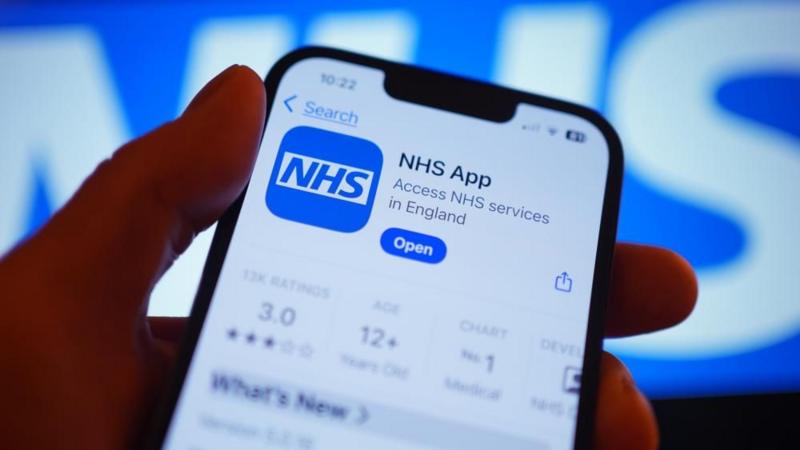
The NHS in England will use artificial intelligence (AI) in its app to help patients find the right health service, such as a GP, pharmacy, or emergency care. The AI tool will ask patients questions and suggest the best option, with a full rollout expected by April 2028.
Key Facts
The new AI triage tool will guide patients to appropriate services based on their answers.
Over 200,000 patients will use the tool within the next year.
The tool was tested at a medical practice in Sussex, reducing phone queues by 29%.
NHS England plans a £10 billion investment to improve technology and digital systems starting in 2025.
AI will also be used to transcribe and summarize hospital appointments in real time at some NHS trusts.
Trials showed NHS staff spent 25% more time with patients when using AI notetaking technology.
Health experts stressed the importance of patient safety, confidentiality, and keeping human judgement in decisions.
There are concerns about making sure all patients can access services, including those less comfortable with digital tools.
Read the Original
Want the full story? Tap a source to open the original
article.
The Australian federal health department is concerned about the growing use of AI scribe tools by doctors that record and summarize patient conversations. These tools raise privacy, safety, and consent issues, and some companies may send patient data overseas without clear oversight or regulation.
Key Facts
AI scribes record, transcribe, and summarize doctor-patient conversations for medical notes.
Use of AI scribes by Australian general practitioners nearly doubled from 22% in August 2024 to 40% in November 2025.
AI scribes are regulated as medical devices only if they serve a therapeutic purpose; many are marketed as outside this regulation.
Some AI scribe companies may transfer patient data outside Australia, risking privacy and security.
The federal health department warns about limited oversight, data security risks, and unclear patient consent practices.
AI scribes could help doctors work more efficiently and reduce burnout but may affect patient safety and data accuracy.
Patients sometimes face pressure to consent to AI scribe use, with some providers refusing care if consent is denied.
Different regulators oversee AI scribes, leading to uneven rules and standards.
Read the Original
Want the full story? Tap a source to open the original
article.
OpenAI paused its Stargate UK project, a large data center plan in Britain, due to concerns about regulations and high energy costs. Investigations show OpenAI may never have visited the main site, and much of the promised investment was not actually secured.
Key Facts
Stargate UK was planned as a major UK data center project involving OpenAI, Nscale, and Nvidia.
The project aimed to boost US-UK cooperation in AI technology and was announced during President Trump’s 2024 UK visit.
OpenAI paused the project in April citing regulation and energy cost concerns.
Freedom of Information requests revealed OpenAI and Nscale did not meet local officials at the key site in North Tyneside.
Nvidia visited the site months after the announcement, but others did not.
The UK government promoted potential investment of £30 billion, but only £10 billion from Blackstone is confirmed.
The remaining £20 billion investment was described as potential from unspecified future partners.
Sources suggest the project was more a government publicity move than a fully planned initiative.
Read the Original
Want the full story? Tap a source to open the original
article.
The Merlin bird ID app lets users identify bird species by their songs and photos using machine learning. It will soon connect with the eBird database to share bird sightings automatically, helping scientists monitor bird populations and support conservation efforts.
Key Facts
Merlin app, created by the Cornell Lab for Ornithology, identifies birds from their songs and pictures using machine learning.
Bird sightings recorded by users will be automatically added to eBird, a global database with over 2 billion bird observations.
The app can currently identify 2,066 bird species, mainly in the US, Canada, Europe, India, and parts of the Americas.
Merlin has been downloaded over 40 million times in 240 countries, with nearly 2 million users in the UK alone.
The UK bird population has declined by over 70 million in 50 years, highlighting the importance of bird monitoring apps like Merlin.
Some users report occasional misidentifications by Merlin, and the European Bird Census Council advises caution in using the app for official surveys.
The app aims to connect more people to nature and improve conservation through citizen science contributions.
Future updates will allow users to upload audio recordings directly to eBird via the Merlin app.
Read the Original
Want the full story? Tap a source to open the original
article.
Researchers find it is difficult for most people to tell if writing was created by artificial intelligence (AI) or by humans because AI learns from human writing. Common clues used to identify AI, like clichés or certain punctuation, also appear in normal human writing, making it hard to be sure. This uncertainty has led to debates and accusations about AI use in books and articles, and even AI detection tools can give unreliable results.
Key Facts
People can only correctly identify AI-written text about 60% of the time.
Common signs thought to reveal AI writing, such as clichés and specific punctuation (like dashes), also appear frequently in human writing.
AI models are trained on large amounts of human writing, so their output often closely mimics human style.
Some authors have faced accusations of using AI in their work, leading to public controversy.
Humans’ writing styles are influenced by AI, creating an interaction that blurs the line between human and AI text.
Commercial AI detection software may wrongly label natural writing styles, including those of neurodivergent people, as AI-generated.
Modifying AI-generated text can make it look more like human writing, confusing detection tools even further.
Experts express skepticism about the reliability of tools or methods to definitively determine if writing is AI-generated or human-made.
Read the Original
Want the full story? Tap a source to open the original
article.
Ear plugs are becoming popular at music festivals to protect people’s hearing from loud sounds. Newer ear plugs are designed to look stylish and help listeners hear music more clearly while reducing harmful noise. Experts say hearing loss is common and advise checking that ear plugs meet safety standards.
Key Facts
Ear plugs are increasingly used by music fans, including at major concerts like Harry Styles and BTS shows.
New ear plugs come in fashionable designs and can reduce unwanted noise while keeping music clear.
Brands like Loop, Alpine, and Hears target young people with colorful, stylish ear plugs often promoted on social media.
Some companies collaborate with big festivals such as Coachella to promote their ear plugs.
Hearing loss is one of the most common disabilities, affecting about one in three adults in the UK.
Audiologists compare the damage loud noises cause to ears like grass being trampled at a festival, where hearing cells get damaged over time.
Experts recommend buying ear plugs that follow safety rules and checking their Single Number Rating (SNR), which shows how much noise they block.
Wearing ear plugs is becoming more accepted as a normal part of going to concerts rather than just protective gear.
Read the Original
Want the full story? Tap a source to open the original
article.
This article describes a TV program called Tech Now that showcases how new technology is being used in different areas. The show features stories about preserving historic ships, innovations in sports, medicine, farming, space, and more.
Key Facts
Tech Now is a TV series highlighting the use of technology in many fields.
It covers subjects like restoring warships in Sweden and tech at the FIFA World Cup.
The program explores advances in medical imaging, prosthetics, and heart surgery.
It features underwater technology and AI solving art mysteries.
Episodes include topics on climate science, insect farms, phone technology, and space exploration.
The series showcases innovations from global events like VivaTech and CES.
It also reports on eco-friendly tourism, sustainable mining, and wildfire detection using tech.
Read the Original
Want the full story? Tap a source to open the original
article.
NASA has launched a robotic mission to save the Swift space telescope, which is falling back toward Earth. A robot spacecraft named Link will reach Swift, attach to it, and try to move it back to a higher orbit to extend its life.
Key Facts
NASA sent the Link spacecraft from the Marshall Islands in the Pacific Ocean.
Link was launched on a Pegasus rocket carried by a modified airplane.
The mission aims to capture and boost the Swift telescope, launched in 2004.
Swift is falling faster due to recent solar storms and needs help to avoid burning up.
The robot will use three robotic arms to dock with Swift in space.
The process of finding, docking, and rescuing Swift could take several weeks to a month.
This $30 million mission is the first attempt to extend the life of a satellite by robotic rescue.
Swift studies gamma-ray bursts, which are powerful cosmic explosions.
Read the Original
Want the full story? Tap a source to open the original
article.