New supersonic planes being developed could cut flying times significantly on domestic U.S. and international routes. President Donald Trump has pushed to update old rules that ban supersonic flights over land by focusing on noise limits instead of speed, which may allow these faster jets to operate more widely.
Key Facts
NASA’s experimental X-59 aircraft aims to fly at about Mach 1.4, roughly 1.6 to 1.8 times faster than current passenger planes.
Flights like New York to Los Angeles could shrink from 5.5 hours to just over 3 hours.
Transatlantic flights, for example New York to London, could drop from about 7 hours to 4 hours.
The longest routes, such as Los Angeles to Sydney, may be cut by as much as 6 hours.
Since 1973, U.S. rules have banned civilian planes flying faster than sound over land due to sonic boom noise.
President Trump issued a June 2025 executive order encouraging regulators to replace the ban with noise-based limits.
The FAA began proposing changes in mid-2026 to update these regulations because of advances in technology.
The Concorde was the only successful supersonic passenger jet in the past, but it stopped service due to noise, cost, and safety issues.
Read the Original
Want the full story? Tap a source to open the original
article.
Sony announced that starting in January 2028, new PlayStation games will no longer be sold on physical discs. Instead, games will be sold with digital codes, although customers can still buy them in stores.
Key Facts
From January 2028, new PlayStation games will only be available digitally, not on discs.
Physical copies sold in shops will include a digital download code instead of a disc.
Rockstar recently said Grand Theft Auto VI will launch without a physical disc.
Sony said this change reflects a shift in consumer preference toward digital media over physical discs.
The change will not affect games released before January 2028.
Some people are concerned this will limit options like lending or selling games.
Critics worry it could be harder for gamers with less money to buy or trade games.
Sony has not yet said if it will allow digital games to be resold or transferred.
Read the Original
Want the full story? Tap a source to open the original
article.
PlayStation announced it will stop releasing physical game discs starting in 2028. Instead, all new games will be sold only as digital downloads through the PlayStation Store and other retailers.
Key Facts
Sony’s PlayStation will end physical game discs in 2028.
New games will be available only as digital downloads after that year.
The company said this change matches how most players now access games.
Some fans reacted negatively, feeling disappointed by the move.
This follows a similar change with Grand Theft Auto 6, where physical copies include only a digital download code.
The switch reflects a shift in consumer trends toward digital content.
The news was shared in a blog post by Sony Interactive Entertainment.
Read the Original
Want the full story? Tap a source to open the original
article.
The article discusses how the Pentagon should use artificial intelligence (AI). It says that while AI can be quickly adopted for support tasks, it needs careful handling in critical areas involving lethal decisions.
Key Facts
The Pentagon uses AI for many tasks.
AI is suitable for back-office or support functions.
Mission-critical applications involve important and potentially dangerous tasks.
Lethal applications mean those related to using weapons or force.
AI in lethal areas requires more careful rules and limits.
Speed is good for safe uses of AI but caution is important where people’s lives are at risk.
Read the Original
Want the full story? Tap a source to open the original
article.
The 2027 Chevrolet Bolt and the 2026 Nissan Leaf are two electric vehicles (EVs) priced around $30,000, offering affordable options for buyers interested in electric cars. Both have improved features, with the Leaf offering a longer estimated driving range and updated tech screens, while the Bolt has quicker charging and better handling.
Key Facts
The 2027 Chevrolet Bolt can travel about 262 miles on a full charge (EPA estimate); the 2026 Nissan Leaf offers up to 303 miles.
In real-world tests, the Bolt traveled 290 miles and the Leaf 310 miles on a single charge.
Both cars accelerate from 0 to 60 mph in about 7 seconds.
The Bolt has smoother, more agile handling, especially on city streets.
Charging speed favors the Bolt, which regains range faster at public fast-charging stations.
The Leaf features bigger touchscreen displays (up to 14.3 inches) and supports wireless Apple CarPlay and Android Auto smartphone apps.
The Bolt has two 11-inch screens and uses Google Built-In but lacks Apple CarPlay and Android Auto.
The Bolt offers Super Cruise, a hands-free driving system for highways, which the Leaf does not have.
Read the Original
Want the full story? Tap a source to open the original
article.
The US government has allowed the AI company Anthropic to start using its advanced AI models, Fable and Mythos, again after temporarily stopping access due to national security concerns. The US Commerce Department lifted export restrictions less than three weeks after the suspension, as officials monitor AI technology to prevent misuse by foreign military intelligence.
Key Facts
Anthropic is a leading AI company based in the United States.
The US Commerce Department had ordered Anthropic to suspend access to its powerful AI models.
The suspension lasted less than three weeks before export controls were lifted.
The AI models involved are named Fable and Mythos.
The US government is increasing oversight on new AI models to protect national security.
Officials are concerned that advanced AI could be used by military or intelligence agencies in countries like China and Russia.
The decision reflects ongoing government efforts to manage risks from rapidly advancing AI technologies.
Read the Original
Want the full story? Tap a source to open the original
article.
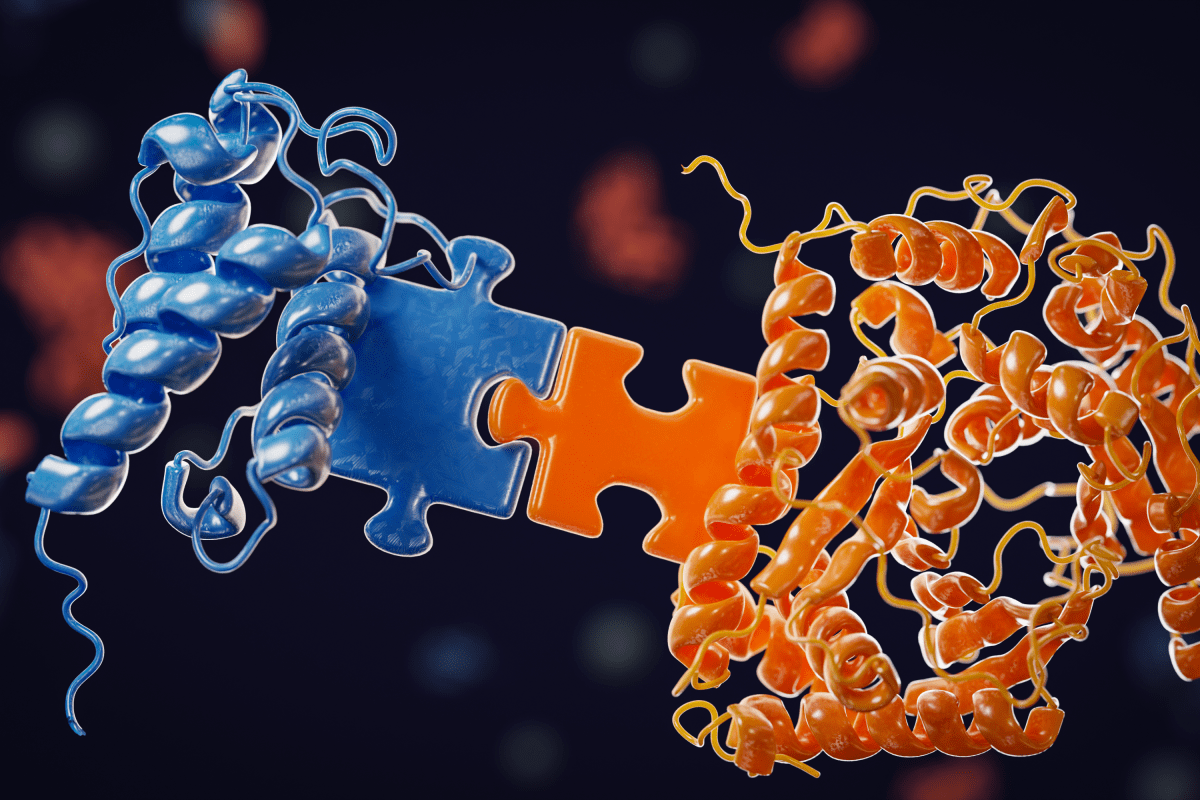
Scientists have discovered how bacteria create cancer-fighting drugs by connecting enzyme systems that build these compounds step by step. This finding could help speed up the production and development of new cancer treatments by mixing and matching parts of the drug-making process.
Key Facts
The study was published in the journal Nature Communications.
Bacteria use enzyme complexes called polyketide synthases (PKSs) and nonribosomal peptide synthetases (NRPSs) to build complex molecules.
These enzyme systems physically connect using a structure called the β-hairpin docking (βHD) domain.
This connection allows bacteria to produce varied versions of HDAC inhibitors, drugs that stop cancer cells from growing.
Romidepsin, a drug for some blood cancers, is part of this HDAC inhibitor family.
The discovery explains how bacteria combine parts to create different drug molecules through a "mix-and-match" process called combinatorial biosynthesis.
Using this knowledge, scientists may create new drugs that work against cancers not helped by current treatments.
Any new drugs made will still need many years of testing before doctors can use them.
Read the Original
Want the full story? Tap a source to open the original
article.
The United Nations released a report warning that the fast growth of artificial intelligence (AI) could increase global inequality because many poorer countries lack the tools and infrastructure to use AI well. The report suggests ways for countries to develop AI safely and fairly, such as building local infrastructure, improving education, and monitoring AI systems after release.
Key Facts
The UN report says AI development is uneven, with richer countries like the US and China leading.
Using AI tools alone does not guarantee equal benefits for all countries.
Some countries depend on foreign AI systems, losing control over important safety and usage standards.
The report urges investment in AI computing infrastructure like data centers and energy supply.
AI often works best in a few major languages, leaving many languages underserved and causing risks, especially in healthcare translation.
More than 1 billion people use AI weekly, but many in poorer regions have limited access due to weak internet and infrastructure.
The report highlights environmental concerns linked to data centers, such as high energy and water use.
It warns that AI power concentrated in a few firms or countries may threaten democratic accountability.
Read the Original
Want the full story? Tap a source to open the original
article.
Signet City is an upcoming role-playing game set to launch in 2027. In it, players control a parasite that inhabits different people’s minds while exploring a dystopian city inspired by 1980s social photography and sci-fi themes.
Key Facts
Signet City is created by Gareth Damian Martin, known for previous sci-fi indie games.
The game presents a first-person view through hosts’ minds, with players shifting between multiple hosts.
Players complete daily actions influenced by a dice-based system, combining storytelling and gameplay mechanics.
The city setting faces various crises, and characters each have their own emotional storylines.
The visual style uses black-and-white hand-drawn characters with photographic backgrounds inspired by 1980s British social photography, especially Tish Murtha’s work.
The game blends elements of 1980s northern English city life and science fiction.
Signet City aims to integrate narrative and game mechanics tightly rather than treating them separately.
This marks a break from the norm by announcing the game many years before its release.
Read the Original
Want the full story? Tap a source to open the original
article.
The United Nations has started a new group called the AI for Good Global Commission to create worldwide rules for artificial intelligence (AI). This group includes leaders from technology companies and governments and will meet for the first time in July in Geneva to work on AI issues like health, education, and safety.
Key Facts
The AI for Good Global Commission is backed by the United Nations and the International Telecommunication Union (ITU).
The first meeting is scheduled for July 8 in Geneva, Switzerland.
Salesforce CEO Marc Benioff and Rwandan President Paul Kagame are co-chairs of the commission.
Members include leaders from several countries and tech companies such as Amazon, Microsoft, Nvidia, Anthropic, and Cohere.
The commission aims to strengthen AI infrastructure and use AI for health, education, food security, and disaster response.
Governments have different views on AI regulation, making it hard to create universal rules.
The commission also hopes to improve internet access for the 2.2 billion people who currently lack it.
The group’s first meeting will happen right after a related UN global discussion on AI governance.
Read the Original
Want the full story? Tap a source to open the original
article.
Some people are using artificial intelligence (AI) to have long-term romantic relationships. About 28% of people surveyed said they have a relationship with AI.
Key Facts
28.16% of people surveyed by Vantage Point Counseling have AI relationships.
AI relationships mean people connect emotionally with computer programs instead of humans.
Madonna’s planned biopic was canceled, but Apple TV is making a TV show about the story.
Actress Anne Hathaway announced her third pregnancy and has five movies releasing soon.
Christopher Nolan is releasing a film version of Homer’s "The Odyssey" in July.
Ranch dressing is popular at World Cup games and in American culture.
TSA warns travelers not to take large bottles of ranch dressing in carry-ons.
Kraft created small, travel-friendly ranch packets for fans to use worldwide.
Read the Original
Want the full story? Tap a source to open the original
article.
Extreme heat can cause important electrical and technology equipment to stop working correctly. During recent heatwaves, power transformers and IT systems in places like France and England have been damaged or slowed down, leading to power outages and service interruptions.
Key Facts
A transformer in Brittany, France, overheated during a heatwave of about 40°C, causing power outages for over 100,000 people.
Heatwaves can cause electrical equipment, telecom gear, and railway systems to fail or perform poorly.
Six NHS trusts in England declared critical incidents when their medical IT and lab equipment were affected by heat.
High temperatures reduce the efficiency of electricity generation, with gas power stations dropping output by around 10% at 40°C compared to 20°C.
Solar panels also lose some efficiency as temperatures rise above 27°C, though sunny weather during heatwaves can initially boost solar energy production.
Metal power lines expand and sag in heat, which can cause safety risks and force operators to reduce electricity flow to prevent accidents.
UK energy networks are working on making infrastructure stronger against climate-related heat challenges.
Past heatwaves, like in 2022, caused power cuts and hospital data centers to fail, showing the risks heat poses to critical technology systems.
Read the Original
Want the full story? Tap a source to open the original
article.
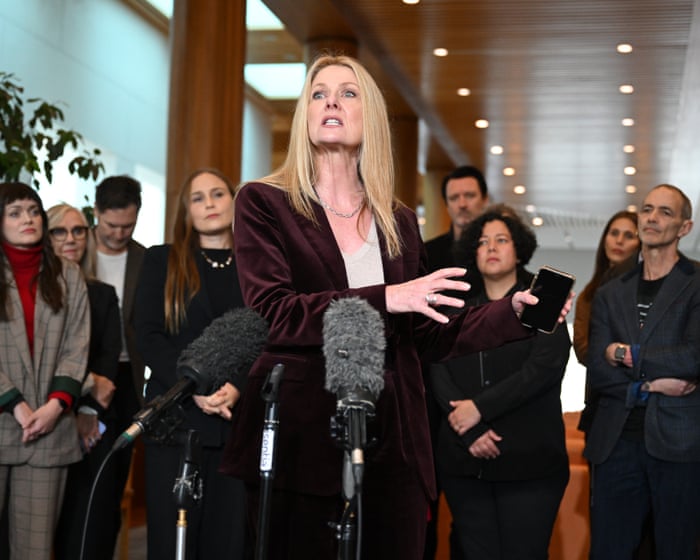
The Australian government is considering a plan to attract over $50 billion in datacentre investments by offering a $350 million annual fund for artists. Some creatives and politicians are concerned this deal could weaken copyright laws by allowing AI companies special rights to use creative works without full permission.
Key Facts
The plan involves tech companies investing $50 billion in datacentres in Australia.
In return, these companies would fund artists with $350 million each year.
The deal may include exemptions letting AI firms use copyrighted content for training without full copyrights protections.
Many artists and authors worry this would harm their rights and income.
Independent senator David Pocock called the deal the "ultimate dirty deal" and asked the government to reject it.
The government says it has no plans to weaken copyright laws despite these concerns.
There are disagreements within the government about the best way to regulate AI and copyright.
Prime Minister Albanese plans to give a major speech on AI policy soon.
Read the Original
Want the full story? Tap a source to open the original
article.
Two NASA astronauts performed a spacewalk outside the International Space Station to fix a broken wrist joint on a robotic arm. The faulty joint stopped working during regular use, and the repair took 7 hours and 20 minutes.
Key Facts
The repair happened outside the International Space Station.
The problem was with a wrist joint on a robotic arm.
The joint failed and did not move as it should.
Two astronauts carried out the spacewalk to make the fix.
The spacewalk lasted 7 hours and 20 minutes.
The robotic arm is important for the station’s operations.
The astronauts worked carefully in the space environment.
Read the Original
Want the full story? Tap a source to open the original
article.
Anthropic will restore global access to its top AI models, Claude Fable 5 and Mythos 5, after the US government lifted export restrictions. These earlier limits were placed due to security concerns but were removed after Anthropic worked with officials to improve safeguards.
Key Facts
Anthropic’s advanced AI models, Claude Fable 5 and Mythos 5, were restricted from global access by the US government on June 12.
The restrictions were lifted after the company addressed national security risks in close cooperation with the US government.
The Department of Commerce officially withdrew the export controls and allowed Anthropic to restore access starting the day after the announcement.
Earlier, only a small group of US cybersecurity firms could access one model, Mythos 5, under government authorization.
The Trump administration led these controls and praised companies for working together to improve AI security.
OpenAI, a competitor, also limited access to its new model GPT-5.6 following US government guidance.
The administration issued an executive order in early June requiring steps for AI safety and cybersecurity involving private tech firms.
CIA Director John Ratcliffe compared top AI models’ power to nuclear weapons, highlighting government concerns about their risks.
Read the Original
Want the full story? Tap a source to open the original
article.
The U.S. government has removed export controls that limited foreign access to Anthropic's advanced AI models, Claude Fable 5 and Mythos 5. Anthropic will start restoring access to these models after working with the Department of Commerce to meet government requirements.
Key Facts
The U.S. Department of Commerce lifted export restrictions on Anthropic’s AI models.
Anthropic announced it will restore access to Claude Fable 5 and Mythos 5 starting the day after the announcement.
These restrictions were originally put in place last month by President Donald Trump’s administration.
Anthropic had stopped foreign access to their AI models due to these government orders.
The Commerce Department worked closely with Anthropic for two weeks to approve Fable 5.
The company was previously allowed to provide the models only to U.S. groups managing critical infrastructure.
U.S. Commerce Secretary Howard Lutnick confirmed the alignment between government agencies and the company.
Anthropic thanked users for patience and those involved in redeploying the models.
Read the Original
Want the full story? Tap a source to open the original
article.
The US government has removed export controls on Anthropic’s AI models called Fable and Mythos after temporarily blocking them due to national security concerns. Anthropic will restore access to these models and work closely with the US government to manage security risks.
Key Facts
The US Commerce Department lifted export restrictions on Anthropic’s Fable and Mythos AI models.
Access to these models was previously suspended over fears they could pose national security risks.
Anthropic agreed to detect and fix security risks and to share information with the US government about any malicious use.
The US had partly allowed Mythos 5 to be used by some “trusted” US organizations before fully lifting controls.
The government increased oversight of advanced AI models due to concerns about misuse by foreign military or intelligence agencies.
OpenAI’s CEO expressed concerns about government decisions on which customers can access AI models.
OpenAI delayed the public release of its GPT-5.6 model at the US government’s request, limiting access to vetted partners.
Anthropic disabled its most advanced models on June 12 after the export control order was issued.
Read the Original
Want the full story? Tap a source to open the original
article.
The US government has removed export restrictions on Anthropic's advanced AI tools, Claude Fable 5 and Mythos 5, allowing the company to restore access to them. These AI models were temporarily suspended due to concerns they could be exploited by hackers.
Key Facts
The US Department of Commerce lifted export controls on Anthropic’s top AI models.
Anthropic will begin restoring access to Claude Fable 5 and Mythos 5 after the ban was lifted.
The AI tools were suspended on June 12 over fears they might help hackers find weaknesses in computer systems.
Claude Fable 5 is designed for consumers and can perform complex reasoning tasks independently.
Mythos 5 is intended for businesses and cybersecurity experts to find and exploit security flaws in computer code.
The US government was concerned about a possible way to bypass safety features, known as "jailbreaking," in Fable 5.
Anthropic disagreed that this potential jailbreak justified a full recall of the AI models.
These models compete with other AI platforms like OpenAI’s ChatGPT and Google’s Gemini.
Read the Original
Want the full story? Tap a source to open the original
article.
The Trump administration removed export limits on Anthropic's new AI models called Fable and Mythos. This change happened about two weeks after the government first restricted these AI tools.
Key Facts
The export limits on Anthropic’s AI models Fable and Mythos were lifted on a Tuesday.
The restrictions were originally put in place just over two weeks before they were lifted.
Commerce Secretary Howard Lutnick announced the decision on the social media platform X.
The government worked with Anthropic to review and approve the Fable 5 model.
Lifting the restrictions allows wider use and sharing of these AI models outside the U.S.
Anthropic is a company that develops artificial intelligence technology.
Export controls are rules that limit how technology can be shared internationally.
The decision reflects ongoing government involvement in regulating advanced AI tools.
Read the Original
Want the full story? Tap a source to open the original
article.