A Pew Research Center survey found that 56% of American adults support banning social media use for people under 16 years old. Around 21% disagreed with this idea, and 23% were unsure.
Key Facts
The survey was published on a Wednesday by the Pew Research Center.
More than half (56%) of Americans support banning social media for youth under 16.
21% of people surveyed do not support a ban on social media for under-16 users.
23% of respondents were uncertain or did not have a clear opinion about the ban.
The survey focuses on how Americans feel about social media access for adolescents.
No details were given about specific social media platforms or enforcement methods.
The survey reflects public concern about youth and social media use.
Read the Original
Want the full story? Tap a source to open the original
article.
US homeowners installed more home batteries than ever in early 2026, mainly because of state programs and rising electricity prices. These batteries help store solar energy and can also support the electric grid and large data centers.
Key Facts
In the first quarter of 2026, US home battery installations reached a record 673 megawatts of storage.
California and Hawaii led in new residential battery setups, with Texas and Arizona also increasing installations.
California offers better prices for electricity sent back to the grid at night, while Hawaii pays $400 per kilowatt for batteries.
The federal solar tax credit for homeowners ended, causing slower growth in new solar panel installations.
Residential electricity costs in the US rose over 7% in April 2026 compared to the previous year.
Home batteries help homeowners save money by storing energy when it’s cheap and using it during peak times.
Virtual power plants, which connect many home batteries to balance electricity demand, grew by 153% in 2025.
Companies like Sunrun, Tesla, and Renew Home plan to combine hundreds of thousands of home batteries to create the largest distributed power plant in the US, providing power to data centers and utilities.
Read the Original
Want the full story? Tap a source to open the original
article.
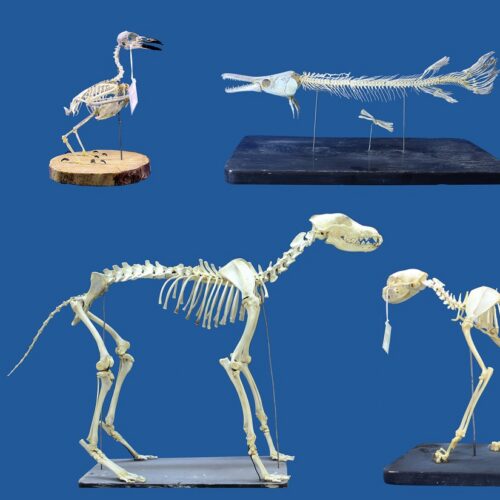
Researchers tested using superworm larvae to clean bones for museums and studies. They found that superworms can remove soft tissue efficiently without damaging the bones and pose less risk of infestation compared to beetles.
Key Facts
Cleaning bones is important for museum displays and forensic analysis to remove all flesh carefully.
Current methods include burial, enzymes, chemicals, or beetle larvae called dermestid beetles.
Dermestid beetles clean well but can escape and cause infestations, harming collections.
Superworm larvae (Zophobas morio) were tested as an alternative since only the larval stage is needed and easier to control.
The team cleaned various animal specimens by placing them in containers with superworms, dosing larvae based on specimen size.
Superworms do not pupate in crowded conditions, lowering the risk of escapes and infestations.
Larvae were fed fruits or vegetables to maintain health during cleaning.
After cleaning, skeletons were rinsed, sometimes lightly bleached (although this can harm bones), and coated with varnish for display.
Read the Original
Want the full story? Tap a source to open the original
article.
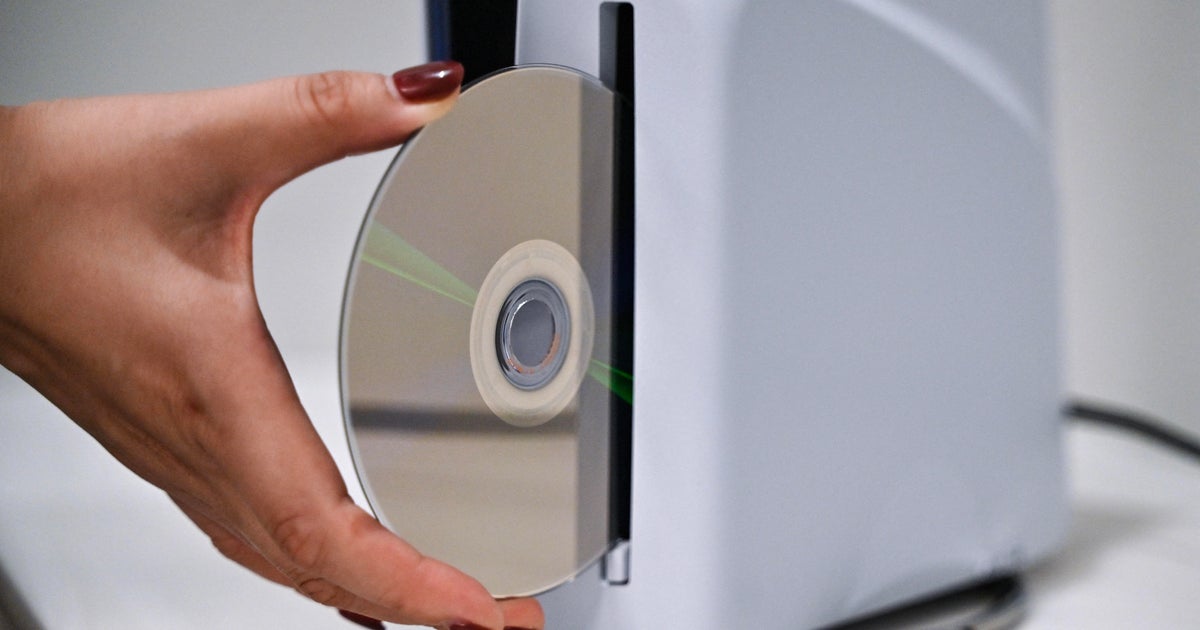
Sony announced it will stop releasing new PlayStation games on discs starting in January 2028. After that date, all new games will be sold only as digital downloads from the PlayStation Store or via download codes from retailers.
Key Facts
Sony will end physical disc releases of new PlayStation games by January 2028.
New games after this date will be available only in digital format.
This change follows a trend where most gamers prefer digital downloads over discs.
The move does not affect games released before January 2028 on discs.
Sony started shifting to digital in 2020 with the PlayStation 5, which has a version without a disc drive.
Digital sales of PlayStation games increased from 13% in 2013 to nearly 80% in 2025.
Some gamers are concerned about the loss of physical copies for collecting and secondhand sales.
The change suggests that the next PlayStation 6 console will likely support only digital games.
Read the Original
Want the full story? Tap a source to open the original
article.
Sony announced it will stop making physical discs for PlayStation games starting January 2028. After that, new PlayStation games will only be sold as digital downloads through the PlayStation Store and other retailers.
Key Facts
From January 2028, Sony will no longer produce physical discs for PlayStation games.
New games will only be available in digital format via the PlayStation Store or retailers.
Digital game downloads already made up 78% of game sales in Sony’s 2026 fiscal year.
Buying a digital game means getting a license to play it, not owning the game itself.
Sony will close the PlayStation Store on PlayStation 3 and PS Vita in the U.S. in July 2027.
Players will still be able to download previously purchased content for some time after those stores close.
This move continues a shift from physical game ownership to a digital licensing model.
Some gamers worry about losing access to purchased games in the future since digital licenses can be revoked.
Read the Original
Want the full story? Tap a source to open the original
article.
Researchers report that new AI tools are making it easier to create fake sexual images and harmful content targeting Muslim women in India. This technology increases online harassment by producing realistic but false pictures and messages.
Key Facts
Muslim women in India have faced online abuse for several years.
Generative AI can create fake images and propaganda automatically.
These AI-made images often target Muslim women sexualizing them falsely.
The new technology intensifies the scale and impact of online harassment.
Experts are warning about the growing abuse enabled by AI tools.
The use of AI in this way raises concerns about misinformation and hate speech.
This development is part of a broader global discussion about AI ethics and misuse.
Read the Original
Want the full story? Tap a source to open the original
article.
More than 100 years after Antoni Gaudí designed a unique skyscraper called Hotel Attraction for New York City, an artist used artificial intelligence (AI) to create new images showing how it might have looked. This project highlights AI’s growing role in architecture, where it helps recreate ideas and assist architects with their work.
Key Facts
Antoni Gaudí designed Hotel Attraction, an Art Nouveau skyscraper for New York City, but it was never built.
Artist Thierry Lechanteur used AI to create visual images of this “lost” skyscraper.
This rediscovery coincides with the 100th anniversary of Gaudí’s death in 1926.
Gaudí is famous for designing the Sagrada Família basilica in Barcelona, which is still under construction and expected to finish within the next decade.
AI is becoming more popular in architecture for tasks like automating manual work and helping with research.
A 2025 American Institute of Architects (AIA) study found that architects are hopeful about AI but concerned about errors, data use, and transparency.
The Royal Institute of British Architects (RIBA) reported that 59% of architecture firms used AI in 2025, up from 41% in 2024.
Younger architects, especially those under 35, are more likely to use AI tools like image generators.
Read the Original
Want the full story? Tap a source to open the original
article.
Anthropic's most powerful artificial intelligence models, Mythos 5 and Fable 5, are available again after the company talked with the US government. These models had been unavailable but are now back online.
Key Facts
Anthropic creates advanced AI models called Mythos 5 and Fable 5.
These models were offline but have now been restored and are online again.
The company had productive discussions with the US government before restoring access.
This news was reported on July 1, 2026.
Kevin Warsh appeared publicly as the new Federal Reserve chairman around the same time.
Meta's stock rose due to its plans for expanding a new cloud business.
The article focuses mainly on the return of Anthropic's AI technology.
Read the Original
Want the full story? Tap a source to open the original
article.
The US government has lifted export restrictions on Anthropic’s AI models, Claude Fable 5 and Mythos 5, after reviewing safety measures. Anthropic will now make Fable 5 available worldwide, and US access to Mythos 5 has been restored. The company is working with the government to expand access to trusted partners for cybersecurity defense.
Key Facts
The US had restricted exports of Anthropic’s AI models due to national security concerns.
Claude Fable 5 is now available globally, while Mythos 5 access has been restored for US organizations since June 26.
Anthropic is collaborating with the government’s Glasswing program to allow cybersecurity researchers to use Mythos 5 for defense.
The Commerce Secretary confirmed that Anthropic took steps to address the risks and no longer needs export licenses.
Anthropic created a program with hackers to test (red-team) its models against misuse and has a team monitoring threats around the clock.
The government can reimpose export limits if needed in the future.
The export curbs were originally imposed due to fears that foreign actors could misuse the models to attack US infrastructure.
Fable 5 has strong safeguards to prevent misuse and was tested to block previously discovered vulnerabilities.
Read the Original
Want the full story? Tap a source to open the original
article.
AI software, called agents, is starting to act on its own and work across different systems. To keep these AI agents safe and reliable, companies and governments need shared rules that all systems follow, rather than separate rules for each platform.
Key Facts
AI agents can now act independently and not just follow commands.
These agents will create new services and economic opportunities.
More autonomy means businesses and governments must control agent actions and responsibilities.
Current AI systems risk fragmentation if each company uses its own rules for agent identity and permissions.
The internet grew strong by using open, shared standards that let different networks work together.
AI needs similar open standards to ensure trust and accountability across many environments.
Without common standards, AI systems may become harder to trust when interacting across companies and borders.
Creating shared accountability rules will help AI become a stable, widely usable technology.
Read the Original
Want the full story? Tap a source to open the original
article.
NASA’s inspector general reported that Boeing’s Starliner crew capsule is unlikely to be certified for regular flights to the International Space Station (ISS) until next year. This delay means Starliner will be about ten years late compared to its original 2017 target, and there are still unresolved technical problems to fix.
Key Facts
Starliner is expected to be ready for crew missions to the ISS in 2025, close to the planned ISS retirement in 2030.
The first crewed test flight in 2024 had about 100 technical issues; astronauts had to stay nine months on the ISS because the capsule was not reliable to return them.
NASA and Boeing agreed to six recommendations from the inspector general to improve the schedule and fix problems.
Big issues still under investigation include helium leaks, overheating thrusters, and parachute performance.
The Starliner-1 cargo flight launch date is not set and may be delayed past 2027.
Boeing’s Starliner started development under NASA’s Commercial Crew Program alongside SpaceX’s Crew Dragon.
SpaceX’s Crew Dragon began regular ISS crew flights in 2020, while Starliner has faced multiple delays.
Earlier test flights for Starliner included a failed 2019 uncrewed mission and a success in 2022 after redesigns.
Read the Original
Want the full story? Tap a source to open the original
article.
The federal government recently removed safety limits from two powerful AI models called Claude Fable 5 and Mythos 5, made by the tech company Anthropic. This means these AI systems can now operate without certain guardrails that were originally put in place.
Key Facts
Anthropic is a technology company that builds artificial intelligence models.
Claude Fable 5 and Mythos 5 are two advanced AI models developed by Anthropic.
The federal government had previously set restrictions (called guardrails) on these AI models to control their behavior.
These restrictions were recently removed by the Trump administration.
Removing guardrails allows the AI models to function with fewer safety limits.
This change relates to ongoing discussions about how to regulate AI technology effectively.
The news was reported by CBS News and Axios journalist Madison Mills.
Read the Original
Want the full story? Tap a source to open the original
article.
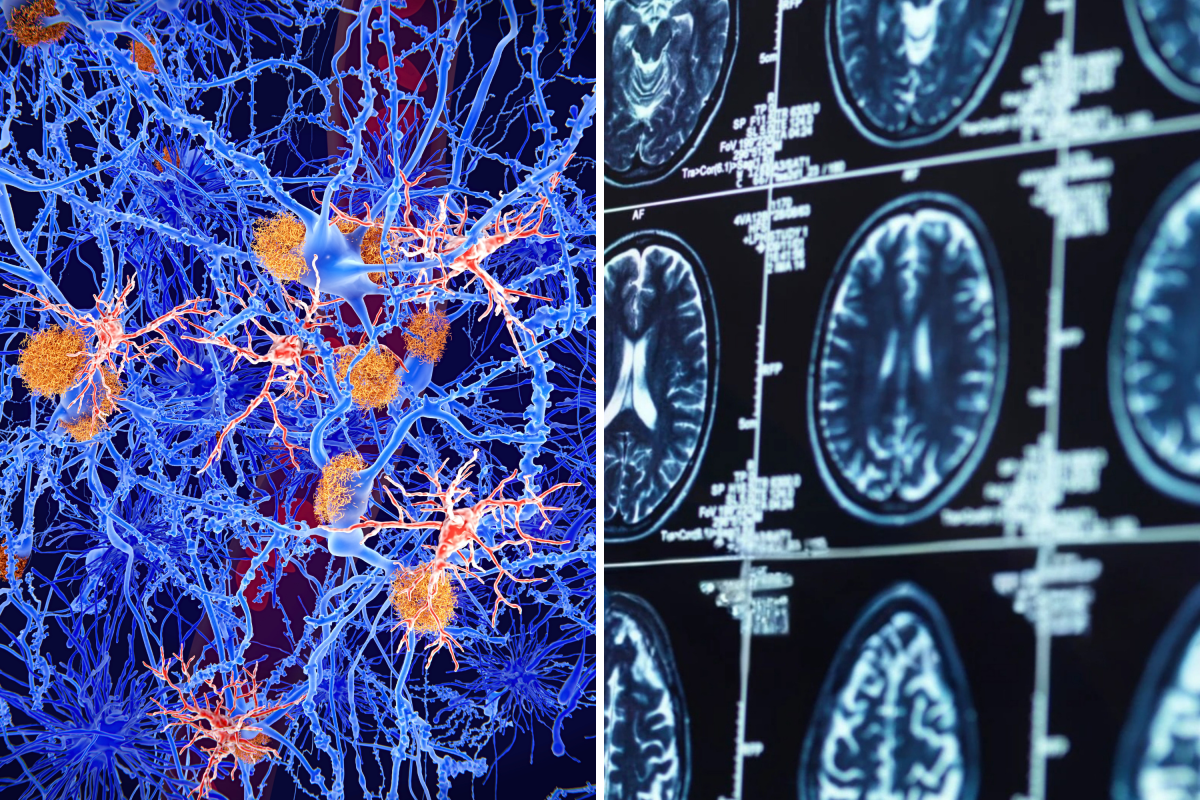
Scientists have found that a protein called Arc helps Alzheimer's disease spread in the brain by carrying toxic Tau proteins between brain cells. This discovery could lead to new treatments that slow the disease by blocking Tau’s movement without stopping the brain’s normal functions.
Key Facts
Alzheimer's disease worsens when Tau proteins build up and spread between brain cells.
The Arc protein normally helps brain cells communicate by carrying signals in tiny packages called vesicles.
Tau proteins use Arc and these vesicles to move from damaged brain cells to healthy ones.
Removing Arc in mice reduced Tau spread and slowed disease progression.
Arc also helps brain cells get rid of excess Tau, which supports their survival early in the disease.
Future treatments may focus on stopping Tau-filled vesicles from entering healthy cells, not blocking Arc completely.
Researchers found evidence of Arc and Tau working together in human brain tissue too.
The study was published in the journal Cell on June 29, 2024.
Read the Original
Want the full story? Tap a source to open the original
article.
Artificial Intelligence (AI) is helping improve daily life and can further support America's growth. It is important to use AI in a way that respects American values like freedom and human rights while preparing workers for future challenges.
Key Facts
AI is currently improving everyday activities.
AI has the potential to strengthen the United States.
AI development should reflect American values of freedom and human rights.
Preparing the American workforce for changes caused by AI is necessary.
Responsible use of AI can help secure America's future.
Read the Original
Want the full story? Tap a source to open the original
article.
The Trump administration has lifted restrictions on Anthropic’s new AI chatbot models after a cybersecurity-related ban lasting several weeks. Anthropic’s Claude Fable 5 is now available to the public again, while its more powerful Mythos 5 is accessible only to some U.S. organizations approved by the government.
Key Facts
The Trump administration initially blocked foreign nationals from using Anthropic’s Claude Fable 5 and Mythos 5 models starting June 12 due to cybersecurity concerns.
Anthropic temporarily took down these AI products just days after launching them, following the government order.
Amazon cybersecurity researchers found ways to bypass Fable 5’s safety features, potentially exposing software security weaknesses.
Anthropic warned that Mythos 5 could find software flaws that hackers might exploit to harm important computer networks.
After review, the Commerce Department allowed Claude Fable 5 to return for wide use.
Access to Mythos 5 remains limited to selected U.S.-based organisations approved by the federal government.
OpenAI, a competitor, also restricted access to its new GPT-5.6 Sol model by government request.
President Trump recently signed an executive order to create a government review process for advanced AI systems to address national security risks before public release.
Read the Original
Want the full story? Tap a source to open the original
article.
Sony will stop making physical discs for PlayStation games starting in January 2028. After that, new PlayStation games will only be available online as digital downloads.
Key Facts
Sony will end production of physical game discs for PlayStation consoles in January 2028.
New games from that date forward will be sold only as digital downloads from the PlayStation Store and some retailers.
Games already released on disc or released before 2028 will still be available in physical form.
Sony says this change follows consumer preference for digital media over physical discs.
The PlayStation 5 is the latest PlayStation console model.
Sony was founded in 1946 in Japan and released the first PlayStation console in 1994 with a CD-ROM drive.
Sony is adapting to how most players prefer to access and play games today by moving to fully digital game distribution.
Read the Original
Want the full story? Tap a source to open the original
article.
The article argues that companies should openly share information about which jobs are being cut due to artificial intelligence (AI). It says this transparency should happen right when the job losses occur.
Key Facts
AI is leading to some jobs being replaced or removed.
The article calls for firms to report job cuts caused by AI.
Job loss information should be made public immediately.
This transparency can help workers and policymakers understand AI’s impact.
The focus is on accountability from businesses using AI technology.
Read the Original
Want the full story? Tap a source to open the original
article.
Netflix plans to use artificial intelligence (AI) to recreate the voice of the late actor Gene Wilder for a new reality TV show about Willy Wonka. The voice replication has approval from Wilder’s family but has received mixed reactions from fans online.
Key Facts
Netflix’s show “Wonka’s The Golden Ticket” will feature an AI-generated version of Gene Wilder’s voice.
Gene Wilder played Willy Wonka in the 1971 movie "Willy Wonka & the Chocolate Factory."
The voice AI is created by ElevenLabs, a company that specializes in audio technology.
Wilder’s family, including his wife Karen B. Wilder, gave permission for this AI use.
Some fans called the AI voice “robotic” and “disrespectful” on social media.
The show involves contestants facing challenges inspired by the original Roald Dahl story.
This project follows other AI voice recreations, like those of Sir Michael Parkinson and James Earl Jones.
Experts say studios are experimenting with AI while audiences remain cautious, especially for well-loved characters.
Read the Original
Want the full story? Tap a source to open the original
article.
Scientists have created tiny synthetic blobs called SpudCells that use lab-made DNA to grow, copy their genes, and divide in a liquid dish. These synthetic cells are made from chemicals and show some behaviors of living cells, moving closer to making life from non-living parts.
Key Facts
SpudCells are tiny water-filled spheres made from chemicals and synthetic DNA.
They can grow, copy their DNA, and split to form new cells in a nutrient-rich liquid.
SpudCells need other tiny structures called ribosomes and enzymes supplied from “feeder” blobs to make proteins.
These synthetic cells are less capable than natural cells and cannot make their own energy or clean waste.
The researchers can make SpudCells with genetic advantages that outcompete others, demonstrating basic evolution.
The creation of SpudCells aims to better understand what life needs and how it might have begun from chemistry.
Unlike previous synthetic life that modified existing cells, SpudCells are built from scratch with fully known parts.
The research team plans to create an institution called Biotic to advance synthetic cell technology.
Read the Original
Want the full story? Tap a source to open the original
article.
Video game console prices are rising because of a strong demand for computer chips used in artificial intelligence (AI) systems. Companies like Sony and Microsoft are increasing prices as chip makers focus on supplying data centers, causing shortages and higher costs for consoles. This trend is expected to continue, with new consoles possibly costing $1,000 or more.
Key Facts
Sony raised the PS5 price by £90 in March, and Microsoft will increase Xbox Series S and X prices by at least £75 from August.
The original consoles were released in 2020, but prices are now going up instead of down.
High demand for AI-related chips has caused semiconductor and memory prices to nearly double twice since late 2022.
Three main companies (Samsung, SK Hynix, Micron) control most memory production, and building new factories will take until about 2028.
Increased costs have led to lower console sales, with Xbox recording its worst May ever and PS5 sales down 58% year-on-year in the U.S.
Analysts predict the next-generation PlayStation 6 could cost around $1,000.
Microsoft offers payment plans to help make consoles more affordable.
Cloud gaming could become more popular as high console prices push consumers toward streaming games instead of buying hardware.
Read the Original
Want the full story? Tap a source to open the original
article.