Sarah Wynn-Williams, a former director at Facebook (now Meta), is suing Meta after the company tried to stop her from promoting her memoir about her time there. She says Meta’s legal actions and surveillance violate her rights and were unfair because she signed a deal under pressure after being fired.
Key Facts
Sarah Wynn-Williams worked as director of global public policy at Facebook from 2011 to 2018.
She published a memoir in March 2025 alleging a toxic culture at Facebook, including harassment and discrimination.
Meta tried to block her from promoting the book, citing a severance agreement with arbitration and non-disparagement clauses she signed after leaving.
Wynn-Williams’ lawsuit says the agreement is invalid because she signed it under financial pressure after losing important job benefits.
Meta’s legal team monitored her public appearances in the UK and requested she reveal future events.
After her appearance at a UK literary festival, book sales surged by over 300%.
Meta claims she broke the agreement and is using the lawsuit to boost book sales.
Wynn-Williams’ publisher and lawyer say Meta’s actions hurt free speech and public discussion about the company.
Read the Original
Want the full story? Tap a source to open the original
article.
A new Chinese open-source AI model called GLM-5.2 matches the capabilities of some of the top U.S. AI models but costs much less to run. Security experts are worried this lower cost and open access will make advanced hacking tools easier for criminals to use and customize.
Key Facts
GLM-5.2 is an open-source AI model released last week by Chinese company Z.ai.
It performs similarly to leading U.S. AI models like GPT-5.5 and Claude Opus 4.8 in cybersecurity tasks.
Some researchers claim GLM-5.2 may be illegally derived from these U.S. models, explaining its high performance.
Open-weight models like GLM-5.2 can be freely downloaded, changed, and used without safety limits.
Hackers are already sharing ways to jailbreak GLM-5.2 to bypass restrictions and use it for cyberattacks.
GLM-5.2 allows hackers to create personalized attacks, including generating phishing emails and fraud scripts.
Open-source models offer no central provider to detect or block malicious use, unlike commercial AI services.
Chinese companies plan to release more powerful open-source AI models later this year.
Read the Original
Want the full story? Tap a source to open the original
article.
Boy George and his team used artificial intelligence (AI) to help him re-record his hit song "Karma Chameleon." The AI adjusted his current voice to sound more like his original 1983 recording, giving him more control over the song’s future use.
Key Facts
Boy George’s song "Karma Chameleon" is more than 40 years old and very popular.
The original master recording is owned by others, limiting Boy George’s control and earnings from the song.
Artist Included, a music tech company co-founded by George's manager Paul Kemsley, created a new AI-assisted version of the song.
Boy George sang new vocals, and AI helped match the tone, texture, and key of the original track.
The AI was used only to adjust George’s voice, while the music and production involved original band members and producers.
This approach lets Boy George have a say in how his song is used moving forward.
George found the recording process challenging because his live performance style had changed over time.
The new version aims to closely recreate the sound and feel of the original "Karma Chameleon."
Read the Original
Want the full story? Tap a source to open the original
article.
A small study tested immunotherapy to help women with premature menopause due to autoimmune disease. The treatment helped some women’s ovaries start working again, leading to the birth of healthy babies in a few cases.
Key Facts
Premature ovarian insufficiency (POI) causes the ovaries to stop working before age 40 and affects over 3% of women worldwide.
The study involved 12 women with autoimmune-related POI; 10 completed the treatment.
Before treatment, none of the women’s ovaries produced mature eggs.
Researchers used rituximab, a drug that calms immune cells, to try to restore ovarian function.
After treatment, 6 out of 10 women showed ovarian activity, and 5 had mature eggs collected.
Three women had embryos implanted and gave birth to healthy babies.
All women who responded also had Addison’s disease, suggesting the treatment may work best for certain groups.
The study was small and exploratory, and more research is needed before this can become a common treatment.
Read the Original
Want the full story? Tap a source to open the original
article.
Western intelligence agencies warn that advanced artificial intelligence (AI) is speeding up cyberattacks on critical infrastructure like power grids and hospitals. The U.S. government has limited access to some AI models to prevent their misuse in hacking, and allied countries issued a joint warning about growing AI-driven cyber risks.
Key Facts
The U.S. restricted access to advanced AI models from Anthropic due to concerns about misuse in cyberattacks.
The Five Eyes alliance (U.S., UK, Canada, Australia, New Zealand) issued a joint advisory on June 22, 2026, about AI’s increasing role in cyber threats.
AI can identify software weaknesses faster and help attackers plan and launch cyberattacks more quickly than before.
Cyberattacks targeting critical sectors like healthcare, energy, and transportation increased, with AI making attacks easier and more scalable.
Infrastructure like power grids and water systems is more vulnerable as these systems connect to the internet.
AI tools can scan many internet-connected devices at once to find security gaps that hackers can exploit.
Experts say AI shifts the advantage to attackers by reducing the time from finding a weakness to attacking it.
U.S. officials now treat some advanced AI systems as national security issues and apply export controls to them.
Read the Original
Want the full story? Tap a source to open the original
article.
The "Suspicious Minds" podcast, created by Sean King O'Grady, explores the risks and dangers of artificial intelligence (AI). It discusses how AI can affect mental health and society, especially as AI grows quickly without enough safety rules.
Key Facts
The podcast "Suspicious Minds" is based on a book by Doctors Joel and Ian Gold.
Season 1 focused on AI causing mental health issues like delusions and psychosis.
Season 2 looks at the broader impact of AI on society, even for those not using AI tools.
Sean King O'Grady is a filmmaker and the podcast host.
The podcast uses interviews to explain AI’s risks and how it affects people.
AI technology is spreading fast but is currently unregulated and may have safety problems.
The future impact of AI is uncertain and could change quickly.
The podcast is available on YouTube, Spotify, and other platforms.
Read the Original
Want the full story? Tap a source to open the original
article.
Kim Murstein and her grandmother Gail Gudnick started the podcast "Excuse My Grandma" during the pandemic. They said the podcast helped improve their relationship and taught them new things about each other.
Key Facts
The podcast "Excuse My Grandma" is hosted by Kim Murstein and her grandma Gail Gudnick.
They began the podcast during the COVID-19 pandemic.
The hosts shared their experience on CBS News' "CBS Mornings."
The podcast helped strengthen their bond as family members.
They learned new perspectives from each other through the podcast.
The show has become popular among listeners.
The pandemic was a key factor in launching their podcast.
Read the Original
Want the full story? Tap a source to open the original
article.
Tech companies are spending trillions of dollars to build computer centers for artificial intelligence (AI), but investors worry that the money spent might not lead to enough profits. Many people and businesses use AI, but few seem willing to pay for it, and some doubt how useful AI really is.
Key Facts
Tech companies are expected to spend $7.6 trillion by 2031 on new data centers for AI.
Big AI companies include Alphabet, Amazon, Meta, Microsoft, and Oracle.
These companies are borrowing a lot of money to build AI infrastructure.
Many consumers and workers are skeptical about the value and impact of AI.
About 40% of U.S. adults think AI will negatively affect society in the next 20 years.
Some companies are laying off workers and investing in AI, but the financial benefits are unclear.
The current AI boom reminds experts of the dotcom bubble of the 1990s, with uncertain outcomes.
Investors should expect ups and downs as AI companies try to make money from their investments.
Read the Original
Want the full story? Tap a source to open the original
article.
The Anker 511 Nano 3 is a small USB charger that delivers 30 watts of power, enough for phones, tablets, and some laptops. It is compact, reliable, safe, and currently available at a discounted price of $12.34 on Amazon Prime Day.
Key Facts
The Anker 511 Nano 3 charger is very small and lightweight, with folding prongs for easy storage.
It delivers 30 watts of power, which is higher than many chargers its size that only offer 20 watts.
The charger can maintain 30 watts for 30 minutes and 20 watts for an hour without overheating.
It supports four different voltages and a standard called programmable power supply, allowing it to charge many devices quickly.
The charger has a TÜV Rheinland safety certification, meaning it has been tested by a trusted lab for safety.
Its regular price is $19.99 but is discounted to $12.34 during Amazon Prime Day.
It comes in multiple colors like lilac purple, misty blue, and natural green.
The charger is suitable for everyday use and easy to carry in bags, pockets, or car compartments.
Read the Original
Want the full story? Tap a source to open the original
article.
Apple is raising the prices of some MacBooks and iPads around the world because the cost of memory and storage chips has gone up sharply. The increase is linked to high demand for chips used in AI data centers, which is affecting prices across the electronics industry.
Key Facts
Apple raised prices on certain MacBooks and iPads by up to 20%.
The price increase is due to rising costs for memory and storage chips.
Demand for chips used in artificial intelligence (AI) data centers has surged.
This surge has created a supply and demand imbalance, pushing prices higher.
The MacBook Pro with 1 terabyte of storage rose from $1,699 to $1,999 in the US.
The Neo laptop price in the UK increased from £599 to £699 shortly after launch.
Apple’s CEO Tim Cook said price hikes were “unavoidable” given memory chip issues.
Other companies, like Valve, are also increasing product prices due to higher costs.
Read the Original
Want the full story? Tap a source to open the original
article.
Rockstar Games opened pre-orders for Grand Theft Auto VI, set to release on November 19 for PS5 and Xbox Series S/X. The game will only be available as a digital download at launch, with no physical disc, and will launch as a single-player experience without an updated GTA Online mode.
Key Facts
Grand Theft Auto VI pre-orders began at midnight, five months before release.
The game price is $80 in the US, £70 in the UK, and €80 in Europe; an Ultimate Edition costs more and includes extra in-game items and stores.
Buyers will receive a Vintage Vice City pack with 1980s-themed clothing and items.
There will be no physical discs at launch; store copies come with download codes instead.
The lack of physical discs helps prevent early leaks and may save manufacturing costs.
GTA VI will initially be a single-player game without the updated multiplayer GTA Online mode.
The game is set in a fictional Florida-like state called Leonida and includes the returning Vice City location.
Rockstar has faced delays, leaks, and legal issues related to firing employees who tried to unionize.
Industry experts expect GTA VI to sell 40 million units in its first year, surpassing GTA V’s first-year sales.
Read the Original
Want the full story? Tap a source to open the original
article.
Apple increased the prices of many of its products, including Macs and iPads, citing higher memory costs. Memory prices have risen due to supply shortages and a shift in focus by chipmakers toward data center needs.
Key Facts
Apple raised prices on several Mac models by $100 to $1,300.
The entry-level MacBook Neo price went up from $599 to $699.
The iMac price increased from $1,299 to $1,499.
An M5 MacBook Pro price rose from $1,699 to $1,999.
The M3 Ultra Mac Studio, with 96GB memory, saw a $1,300 increase, now costing $5,299.
iPad prices increased by $100 to $200, depending on the model.
Smaller price hikes occurred for Apple TV and HomePod products.
Apple CEO Tim Cook said rising memory costs are causing these unavoidable price increases.
Chipmakers focus more on memory for data centers, reducing supply for consumer devices.
Apple removed a high-memory (512GB) M3 Ultra Mac option from sale in March.
Read the Original
Want the full story? Tap a source to open the original
article.
Samsung announced the Galaxy A27 5G, releasing it in select markets starting July 3. The phone has a bigger, smoother screen, a new Qualcomm processor for better performance, improved software features, and comes in four colors.
Key Facts
The Galaxy A27 5G has a 6.7-inch Full HD+ Super AMOLED screen with a 120Hz refresh rate.
It uses a Qualcomm Snapdragon 6 Gen 3 processor, replacing Samsung’s previous Exynos chip.
The phone offers 6GB or 8GB of RAM and storage options of 128GB or 256GB, with microSD support up to 2TB.
The rear camera setup includes a 50MP main camera, a 5MP ultra-wide, and a 2MP macro lens; the front camera is 12MP.
It has a 5,000mAh battery with 25W fast charging and runs Android 16 with Samsung’s One UI 8.5.
The phone has an IP64 dust and splash resistance rating, lower than the previous model’s IP67.
Samsung promises six years of software updates and security patches for this phone.
The Galaxy A27 5G is priced from £319 for the 128GB version and £379 for 256GB.
Read the Original
Want the full story? Tap a source to open the original
article.
Russian authorities used phone-hacking tools made by the Israeli company Cellebrite on a political prisoner months after Cellebrite said it stopped working with Russia. An investigation found that these tools helped Russian officials get private information from the prisoner's phone to build criminal cases and track contacts.
Key Facts
Russian authorities used Cellebrite’s phone-hacking tools on Andrei Pivovarov, a Russian political prisoner.
Cellebrite announced it had ended contracts with Russia months before the hacking took place.
The tools allowed Russian officials to access messages and contacts on apps like WhatsApp and Viber.
Information taken from Pivovarov’s phone was used in legal cases and to target his contacts.
Citizen Lab, a research group, confirmed with high confidence Cellebrite’s tools were used.
Cellebrite claims it aims to avoid misuse and highlights differences from other spyware companies.
Human rights investigators found Cellebrite did not deactivate the tools already sold to Russia.
Cellebrite holds rights to deactivate devices sold but has not done so with equipment in Russia.
Read the Original
Want the full story? Tap a source to open the original
article.
Astronomers discovered two giant planets that are extremely light, with densities lower than cotton candy. These planets orbit a star 1,110 light-years away and are the largest known planets with such low density.
Key Facts
The two planets are called "super-puffs" because they are very large but very light.
They orbit a star in the southern sky constellation called Volans, or "flying fish."
The planets have densities similar to shaving foam, much lighter than Jupiter, which is 35 times denser.
One planet takes 139 days and the other 232 days to circle their star.
They are likely made mainly of hydrogen and helium gases.
NASA's TESS satellite detected these planets, and future observations by the Webb Space Telescope will study their composition.
Super-puffs are rare; fewer than 40 are known among over 6,300 planets found outside our solar system.
Understanding these planets helps scientists learn how giant planets form in space.
Read the Original
Want the full story? Tap a source to open the original
article.
IBM announced a new chip technology that could make computer chips run 50% faster and use much less power. The new design stacks transistors in layers, which is a big change from current chip designs, but the technology will take about five years to be ready for production.
Key Facts
IBM’s new technology is called "0.7-nanometer" and packs nearly 100 billion transistors on a chip the size of a fingernail.
This is almost twice as many transistors as current 2-nanometer chips made by companies like TSMC.
Smaller nanometer numbers mean more transistors can fit on a chip, leading to faster and more powerful computing.
The new chip design uses a three-dimensional structure called "nanostack," stacking transistor layers to improve performance and energy efficiency.
The chip could deliver up to 50% better performance or 70% better energy efficiency compared to IBM’s 2-nanometer chips.
IBM’s new chips also improve SRAM memory by 40%, which is important for faster short-term data access in devices.
IBM expects the technology to be ready for manufacturing in about five years but does not produce chips itself.
IBM licenses its designs to other companies, like Japan’s Rapidus, for chip production.
Read the Original
Want the full story? Tap a source to open the original
article.
Fanatics Sportsbook will be the first U.S. sports betting company to work with ProhiBet Bad Actors. This system uses artificial intelligence (AI) and investigation methods to find and identify people who send abusive messages to athletes on social media.
Key Facts
Fanatics Sportsbook is a sports betting company in the U.S.
It is partnering with ProhiBet Bad Actors, a tool to fight online abuse.
ProhiBet Bad Actors uses artificial intelligence to spot abusive behavior on social media.
The system also uses investigative techniques to identify the people responsible.
This partnership aims to stop harassment and protect athletes from online abuse.
Fanatics Sportsbook will ban bettors who harass athletes.
Read the Original
Want the full story? Tap a source to open the original
article.
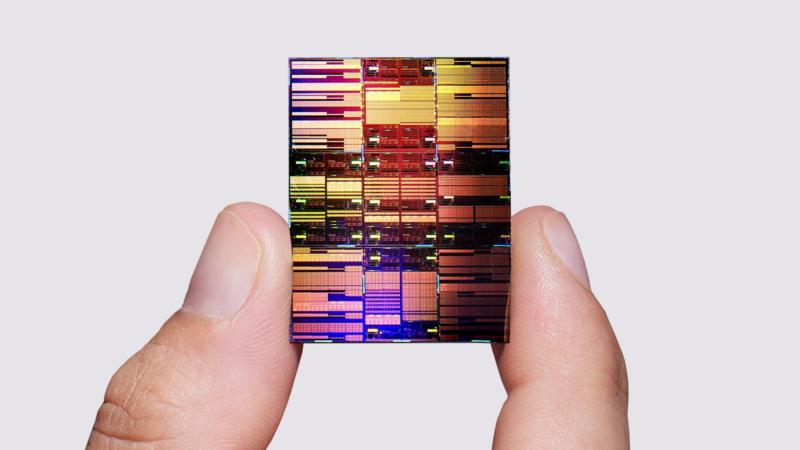
IBM has created a new design for computer chips that fits nearly 100 billion tiny switches called transistors on a chip the size of a fingernail. This chip technology uses a 0.7 nanometer scale, smaller than the current standard of 2 nanometers, aiming to improve chip power and energy use, but it may take several years before it is ready for use.
Key Facts
IBM's new chip design uses a scale of about 0.7 nanometers, smaller than the current 2-nanometer chips on the market.
The prototype chip has nearly 100 billion transistors on a tiny silicon surface about the size of a fingernail.
Testing shows the new chip is 50% faster and 70% more energy efficient than IBM’s 2-nanometer chip.
The design stacks transistors in layers, like a tall building instead of spreading them flat, to fit more on a small chip.
This approach is called NanoStack and was described as a major step forward by IBM’s research director.
Transistors are the tiny switches that control electrical signals and determine how powerful and efficient a chip is.
Making chips smaller and stacking transistors in 3D helps keep improving performance even as traditional chip shrinking faces limits.
Challenges with 3D chips include managing heat and ensuring layers don’t interfere with how transistors switch off.
Read the Original
Want the full story? Tap a source to open the original
article.
IBM has developed a new chip design called the "nanostack" architecture that can fit nearly 100 billion transistors on a chip the size of a fingernail. This design, called the world’s first sub-1 nanometer chip technology, promises much better computing power and energy efficiency for artificial intelligence (AI) data centers.
Key Facts
IBM’s new chip can hold almost 100 billion transistors on a tiny chip about the size of a fingernail.
The chip uses a sub-1 nanometer (0.7 nanometer) technology, which is called the 7 angstrom node.
The "nanostack" technology stacks transistors vertically to pack more into the same space.
Each transistor is made of three nanosheets, each about 5 nanometers thick, separated by 9 nanometers.
IBM says this chip design can improve computer performance by 50% or increase energy efficiency by 70% compared to their previous 2-nanometer chips.
The new design also offers a 40% improvement in memory scaling for SRAM, important for AI tasks.
These advancements were presented at the 2025 IEEE Symposium on VLSI Technology and Circuits in Japan.
The improvements could help overcome physical limits that have made shrinking chip features more difficult in recent years.
Read the Original
Want the full story? Tap a source to open the original
article.
Tech companies like Google, Amazon, Microsoft, and Nvidia are addressing concerns about their data centers’ water use as part of the growing AI industry. They are promoting efforts to reduce and manage water consumption, such as recycling water and using new cooling methods. Public worries about water and energy use are influencing policies and debates worldwide.
Key Facts
Major tech companies are working to explain and reduce water use in AI data centers.
Google, Amazon, and Microsoft have water replenishment projects and use recycled water for cooling.
Nvidia says its new technology can greatly reduce water concerns.
About 70% of U.S. people oppose data centers in their communities mainly due to water and energy use.
Virginia lawmakers are moving to restrict water-heavy cooling methods in data centers.
Data centers use less water overall than many other big industries.
Experts warn that local water use matters most, especially in drought areas.
Water cooling uses less electricity than air cooling, but uses more water, creating a tradeoff.
Read the Original
Want the full story? Tap a source to open the original
article.