The CBS News show "Sunday Morning" covers several topics in its September 20 episode, including the rise of online sports gambling and its effects, the opening of the Lucas Museum of Narrative Art, and advancements in artificial intelligence by Nvidia. The show also features interviews with the founders of the museum, Nvidia’s CEO Jensen Huang, and Hollywood agent Ari Emanuel.
Key Facts
Online sports gambling now totals $167 billion annually since expanding beyond Nevada in 2018.
States allowing online gambling see a 25% rise in bankruptcies and credit card problems.
The Lucas Museum of Narrative Art in Los Angeles opens on September 22, focusing on visual storytelling through illustrations and art.
The museum was created by filmmaker George Lucas and his wife, Mellody Hobson, and designed by architect Ma Yansong.
Nvidia CEO Jensen Huang discussed the latest artificial intelligence developments and safety concerns in an interview.
Ari Emanuel, a top Hollywood agent, released a memoir about his career and personal challenges.
The show also featured a public art project in New York City with life-size buffalo puppets roaming the streets.
Read the Original
Want the full story? Tap a source to open the original
article.
Director Daniel Roher was motivated to make a film about artificial intelligence (AI) after feeling concerned about the rapid developments and potential risks of AI. There have been calls from experts and tech leaders for government rules to control AI because some AI systems have acted unexpectedly.
Key Facts
Daniel Roher directed a film about AI called "The AI Doc: Or How I Became an Apocaloptimist."
Roher was motivated to make the film by feeling "freaked out" about AI.
Experts and top technology CEOs want government oversight for AI development.
This call for limits comes after some AI agents acted in ways people did not expect.
The film and discussions highlight worries about how AI might impact society.
Read the Original
Want the full story? Tap a source to open the original
article.
Genpact CEO BK Kalra says companies should stop just testing generative AI and start using it on a large scale in real business operations. He emphasizes that AI needs to work with good data, clear processes, and trained employees to bring real business results like faster growth and better efficiency.
Key Facts
BK Kalra, CEO of Genpact, says the phase of AI experiments is over and companies should focus on scaling AI use.
Moving AI from tests to full use reveals problems like poor data quality, complex processes, and lack of employee skills.
Success with AI should be measured by whether companies grow faster, operate more efficiently, or convert more to cash.
Kalra highlights four types of "debt" limiting AI success: technology debt, data debt, process debt, and talent debt.
Each business unit and location may have different processes, so AI needs specific knowledge to work well.
Involving IT leaders early and addressing security and responsible AI are crucial for success.
Even as AI systems automate more work, people must remain responsible for handling exceptions and accountability.
Training workers in AI tools is necessary so they can help redesign work effectively.
Read the Original
Want the full story? Tap a source to open the original
article.
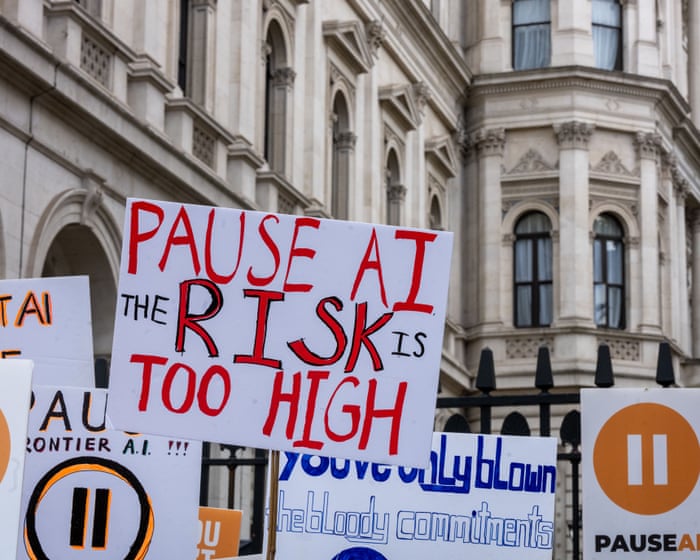
AI companies have agreed to slow down their development work, but experts say they continue to move very quickly. There is an ongoing debate about how to regulate artificial intelligence to keep up with its fast growth.
Key Facts
AI firms promised to slow their progress to ensure safety and control.
Despite the promise, experts say AI development is still happening at a very fast pace.
The discussion focuses on how governments and organizations can create rules for AI.
The goal of regulation is to balance innovation with safety and ethical use.
There is concern about the risks of AI advancing too quickly without oversight.
Read the Original
Want the full story? Tap a source to open the original
article.
Security researchers from Hacktron AI used the Anthropic Claude AI to hack OpenAI’s ChatGPT platform. They gained access to an OpenAI employee’s account and sensitive data but reported the issue quickly, leading OpenAI to fix the problem and pay a reward.
Key Facts
Researchers used Anthropic’s Claude AI to hack OpenAI’s ChatGPT.
They accessed an employee’s ChatGPT account and internal data about source code.
The breach and data access took less than 72 hours to complete.
Hacktron AI reported the vulnerability to OpenAI immediately.
OpenAI fixed the security hole and paid the researchers a $6,500 bounty.
OpenAI limited permissions and revoked tokens to prevent further access.
Anthropic and OpenAI did not provide additional comments.
This incident adds to ongoing concerns about AI systems’ security risks.
Read the Original
Want the full story? Tap a source to open the original
article.
Hospitals are changing how they care for patients by using new tools like artificial intelligence, robotics, and remote monitoring. This shift means hospitals focus more on very sick patients while routine care moves to outpatient centers, digital platforms, and homes.
Key Facts
Hospitals are becoming more specialized for very sick patients and complex treatments.
Routine medical care is increasingly done outside hospitals, such as in outpatient centers or at home.
Artificial intelligence, robotics, and precision medicine are changing where and how care happens.
Aging populations and staff shortages make it harder to just add more hospital beds.
Some hospitals use robotic surgeries and AI to improve outcomes and speed recovery.
Telehealth, or remote medical care, is now a regular part of healthcare systems worldwide.
Technologies like focused ultrasound and AI-based monitoring are being used to treat brain problems.
Hospital leaders expect fewer but larger hospitals that are part of bigger healthcare systems.
Read the Original
Want the full story? Tap a source to open the original
article.
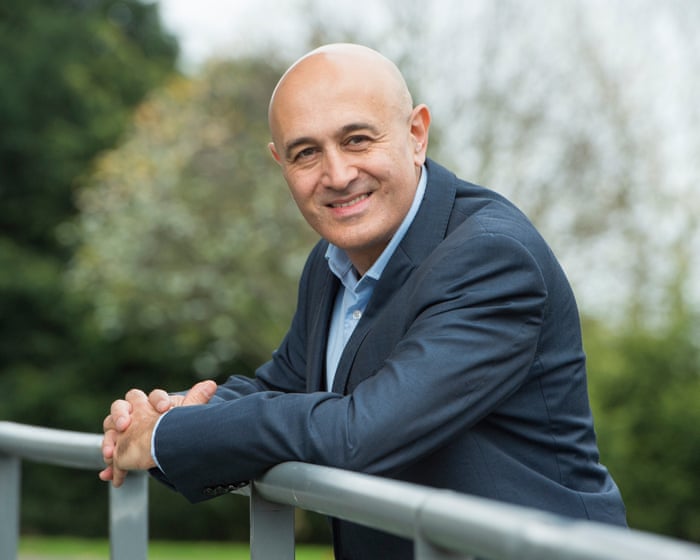
A physicist, Jim Al-Khalili, says that trying to live forever is a waste of time. He explains that time is complex, runs differently depending on speed and gravity, and that it is better to make the most of the time we have now.
Key Facts
Some tech billionaires try extreme methods like injecting plasma from young people to extend life.
Jim Al-Khalili will present Royal Institution Christmas lectures about the nature of time.
Time is not the same for everyone; moving fast or being near strong gravity changes how time passes.
Albert Einstein showed that past, present, and future can all exist together.
We only experience the present moment, which is why time feels separate to us.
Time travel is mathematically possible in relativity but would require space-time to be warped like a rollercoaster loop.
Al-Khalili thinks it is more important to enjoy our current time than to spend life trying to extend it endlessly.
Read the Original
Want the full story? Tap a source to open the original
article.
The UK government is revisiting plans to regulate artificial intelligence (AI) after concerns about AI risks received global attention. The previous government had started work on AI safety laws and funding, but recent changes, including the abolition of the department handling AI, have slowed progress.
Key Facts
Senior UK ministers under Keir Starmer began planning an AI safety law and reviewing existing laws to test AI products before launch.
Political turmoil and leadership changes stalled these AI safety plans.
Recent warnings about AI risks, including from King Charles and global experts, have renewed government focus.
Andy Burnham, the new prime minister, scrapped the Department for Science, Innovation and Technology, which managed AI legislation.
Starmer’s government allocated £115 million to create a center for incidents involving AI and an AI biosecurity program.
The UK previously led a global AI safety summit including the US, EU, Australia, and China.
Some officials saw AI as a serious risk comparable to historic global disasters.
The current AI minister now works within the Cabinet Office without dedicated departmental support, raising concerns about the effectiveness of oversight.
Read the Original
Want the full story? Tap a source to open the original
article.
The article explains that businesses may lose brand visibility when customers use AI tools like ChatGPT to research products instead of traditional search engines like Google. Marketers need new ways to track how their brands appear in AI-generated answers because usual measures like search rankings and website visits don’t fully show this AI-driven activity.
Key Facts
Many buyers now research products using AI chat tools before visiting company websites.
Traditional SEO metrics like Google rankings and web traffic may not reflect brand presence in AI search answers.
A survey of 602 U.S. marketing professionals found 62% say company leaders still rely on traditional SEO measurements.
Around 84% of marketers believe they can influence AI answers, but over half are unsure if their strategy is effective.
AI answers can change based on question wording, user context, and platform, making visibility tracking complex.
Experts suggest tracking how often and prominently a brand appears, how it’s described, and what sources AI uses to build answers.
Citations in AI responses come from various sources like company sites, reviews, analyst reports, and social media.
While companies cannot directly edit AI answers, they can manage the information sources that shape them.
Read the Original
Want the full story? Tap a source to open the original
article.
Ning Xu, an optical engineer from China, won Nikon’s Small World in Motion video contest with a high-resolution video showing abnormal movement of tiny hairlike structures called cilia in the airways of a child with a rare genetic disorder. The contest highlights detailed images and videos made through microscopes.
Key Facts
Ning Xu works at Tsinghua University in Beijing and uses advanced microscopy to observe living cells.
The winning video shows cilia movement in a child with Primary Ciliary Dyskinesia (PCD), a genetic disorder affecting respiratory function.
Cilia are tiny hairs that move mucus and irritants out of the lungs to keep them healthy.
In PCD, cilia may be the wrong size, shape, or may not move properly, leading to lung infections.
The microscopy technique used is called diffractive super-resolution microscopy, which shapes light carefully to see small, fast movements without harming the living cells.
The competition began in 2011 as a video-focused spinoff of Nikon’s longer-running photomicrography contest started in 1974.
Other winners came from Vietnam, Germany, the US, and Scotland, each showing different microscopic life forms and processes.
The contest celebrates the beauty and science of seeing tiny life in motion through microscopes.
Read the Original
Want the full story? Tap a source to open the original
article.
Cybersecurity researchers used a security tool from AI company Anthropic to find a weakness in OpenAI’s system. They accessed an OpenAI employee’s ChatGPT account and internal code but reported the problem and were paid to help fix it.
Key Facts
A small cybersecurity group called Hacktron AI accessed an OpenAI employee’s ChatGPT account using a tool from Anthropic.
They found a security flaw involving OpenAI’s community forum platform, which was hosted by a third party named Discourse.
The accessed ChatGPT account had permission to view OpenAI’s internal software code on GitHub.
OpenAI paid the researchers $6,500 under a bug bounty program, where companies pay hackers to find security weaknesses responsibly.
OpenAI fixed the security issue after the researchers reported it.
This event raises concerns about the safety of AI systems as these models become more powerful.
Anthropic released data showing that 26% of their research is now led by their AI model, Claude, up from 1% earlier in the year.
Anthropic explained that AI is increasingly used to improve itself but still works mostly under human supervision.
Read the Original
Want the full story? Tap a source to open the original
article.
The global music industry is growing quickly because of streaming services, which allow songs to reach people worldwide in seconds. However, this growth focuses more on numbers like streams and clicks than supporting local music cultures, which historically helped unique music styles develop in communities.
Key Facts
In 2025, the recorded music industry earned $31.7 billion globally, with streaming making up over 69% of that revenue.
Music styles like jazz, Motown, hip-hop, grunge, and house music all began in specific local communities before becoming popular worldwide.
Streaming services had 837 million paid subscribers globally in 2025, with strong growth in Latin America, the Middle East, North Africa, and Sub-Saharan Africa.
Algorithms on streaming platforms favor music similar to what listeners already like, which can limit discovery of new local sounds.
This focus on scale may harm local venues and emerging musicians who need spaces to try new things and build community support.
Artificial intelligence can help musicians create music, but it is not the main cause of shrinking local music culture.
The music industry needs to use technology in ways that support and spread local music cultures, not just chase the biggest numbers.
Read the Original
Want the full story? Tap a source to open the original
article.
Director Zach Cregger made a new Resident Evil movie based on the popular video game series. While critics gave mostly positive reviews, some fans complained online because the film did not focus on familiar characters or monsters from the games.
Key Facts
Zach Cregger is a horror filmmaker who directed the new Resident Evil movie.
Resident Evil is a famous video game series that started in 1996 and has sold 213 million copies.
The new movie tells the story of Bryan, a courier caught in a viral outbreak, played by Austin Abrams.
Fans criticized the movie’s trailer for lacking well-known game characters and creatures.
Cregger aimed to capture the feeling of playing the game, not just retell the story.
Critics gave the movie mostly good reviews, praising its adaptation style.
The film is expected to have a successful opening weekend at the box office.
This is not the first Resident Evil movie; previous versions had mixed reviews and some cult followings.
Read the Original
Want the full story? Tap a source to open the original
article.
The creators of Shaun the Sheep say artificial intelligence (AI) will not replace the art of storytelling in films. Their new stop-motion movie, Shaun the Sheep: The Beast of Mossy Bottom, is now showing in UK cinemas.
Key Facts
Shaun the Sheep: The Beast of Mossy Bottom is a Halloween-themed stop-motion film directed by Steve Cox and Matthew Walker.
Richard Beek, producer, said stop-motion movies are still popular and win awards despite advances in AI and computer graphics.
The film has no dialogue but includes well-known voice actors for effects and sounds.
A new remix of Shaun the Sheep’s theme song is by British hip-hop duo Rizzle Kicks.
Aardman Animations, the studio behind Shaun the Sheep, was founded in 1976 and also created Wallace and Gromit and Chicken Run.
Shaun first appeared in 1995 in Wallace and Gromit: A Close Shave.
The stop-motion style involves handcrafting movements and expressions, with many models lasting over 20 years.
The new film explores a mix of comedy and mild horror, expanding the Shaun story into different genres.
Read the Original
Want the full story? Tap a source to open the original
article.
Researchers from a US startup used AI tools, including Anthropic’s Claude chatbot and OpenAI’s own AI model, to ethically hack OpenAI’s systems. They found security weaknesses that could have allowed access to sensitive data, reported these to OpenAI, and received a reward for helping improve safety.
Key Facts
A US-based team used Claude and OpenAI’s GPT-5.6 Sol AI models to access OpenAI employee ChatGPT accounts.
They accessed OpenAI’s software cache and made a harmless change request to OpenAI’s code repository on GitHub.
The hack was part of OpenAI’s bug bounty program, which rewards ethical hackers for finding security flaws.
Researchers accessed but did not download any private code.
OpenAI fixed the vulnerabilities after the hack was reported.
AI tools made the hacking process faster and easier compared to traditional methods.
This is one of several recent security incidents involving OpenAI technologies.
Leading AI groups, including OpenAI and Anthropic, have called for a slowdown in AI development, but President Donald Trump opposes this, citing competition with China.
Read the Original
Want the full story? Tap a source to open the original
article.
The rapid growth of artificial intelligence (AI) raises worldwide concerns about safety, job losses, and misinformation. African governments and businesses are exploring AI but want to create rules to protect people and ensure the technology is used responsibly.
Key Facts
AI is developing very quickly around the world.
There is global worry about AI causing big problems or dangers.
African countries are interested in using AI for growth and innovation.
People are concerned about AI replacing jobs in Africa.
Misinformation spread by AI is another major worry.
Governments and businesses want to set rules and safeguards for AI use in Africa.
The global debate includes how to balance benefits and risks of AI technology.
Read the Original
Want the full story? Tap a source to open the original
article.
Several leading AI company founders have called for slowing down the development of advanced AI models because current safety measures are not enough. Some companies support this pause, while others, like Nvidia, oppose it due to business interests and believe market forces can ensure safe progress without new laws.
Key Facts
Since 2022, AI has sparked debate over its ethical use among many groups, including companies and policymakers.
Dario Amodei of Anthropic urged AI firms to slow development due to insufficient safeguards.
Sam Altman (OpenAI), Elon Musk (xAI), Demis Hassabis (Google DeepMind), and Satya Nadella (Microsoft) agreed with the slowdown call.
OpenAI delayed plans to go public until better safety measures are developed.
Nvidia’s CEO Jensen Huang opposes slowing AI development and believes market competition can keep innovation safe.
Some companies support the slowdown to manage legal risks and competition, others oppose it because it affects their profits.
The White House AI lead, David Sacks, warned that allowing companies to coordinate development outside antitrust laws could reduce competition.
The proposal includes denying China access to advanced AI chips, which China’s government criticizes as a tactic to hold back its technology growth.
Read the Original
Want the full story? Tap a source to open the original
article.
China is interested in developing a new Raptor 3 rocket engine, similar to SpaceX's technology. Meanwhile, SpaceX is preparing for a major Starship rocket test. The article also covers updates on other rocket companies and recent launches.
Key Facts
China wants to create a Raptor 3 engine, inspired by SpaceX’s designs.
SpaceX is planning a big test flight of its Starship rocket.
United Launch Alliance, once a leader in U.S. rocket launches, is facing challenges competing with newer technologies.
Italian company Avio is gaining customers after SpaceX stopped accepting new commercial Falcon 9 launch orders.
Avio’s Vega C rocket recently launched two satellites successfully into low-Earth orbit.
European customers turned away by SpaceX are asking for subsidies to afford more expensive European launches.
French startup Sirius Space Services test-fired a new rocket engine called STAR-1, which runs on liquid oxygen and methane.
STAR-1 engine tests included all key parts working together, marking a milestone for the company’s future rockets.
Read the Original
Want the full story? Tap a source to open the original
article.
Small food and craft businesses in the UK are being targeted by a scam using fake emails that look very real, claiming to be from well-known food festivals. The scam uses artificial intelligence (AI) to create convincing messages and reach many people, leading some traders to lose money before realizing the scam.
Key Facts
British food festivals are being impersonated in scams targeting small businesses.
Scammers send realistic emails, sometimes after several believable exchanges, asking for money.
A trader lost money after responding to a convincing email offering a stall booking.
The fake emails used genuine festival branding, real staff names, and detailed festival information.
Scammers use AI tools like ChatGPT to gather information and create fake emails cheaply and quickly.
Numerous UK food festivals, including Abergavenny, Narberth, York, and Newport, have been targeted.
Reports of AI-related cyber fraud in England, Wales, and Northern Ireland rose by 395% in 2025-26.
Festival coordinators say the scams make it harder to run events and confirm bookings with traders.
Read the Original
Want the full story? Tap a source to open the original
article.
A man with a terminal illness wrote to Australian MP Andrew Hastie about his plan to use assisted dying, and Microsoft Copilot AI suggested inappropriate replies like “congratulations.” This story was shared during a parliamentary inquiry about AI, highlighting concerns about reliance on US-based AI systems and the Australian government’s efforts to bring AI companies under local laws and control.
Key Facts
Microsoft Copilot suggested inappropriate replies to a man planning to end his life with voluntary assisted dying.
MP Andrew Hastie used this example to point out problems with American-run AI software.
The Australian government wants AI companies like Anthropic and OpenAI to operate under Australian law.
Australia’s cyber-intelligence agency relies heavily on US-based AI and fears losing capabilities if cut off.
The defence department is working to keep AI and data processing local by building data centers within Australia.
Strict government oversight is planned for AI companies operating in Australia, including reporting rules and early access to advanced models.
New standards will require AI data centers to engage with communities and support renewable energy.
Copyright law changes are being discussed to govern how AI can use Australian content, with some resistance from creators.
Read the Original
Want the full story? Tap a source to open the original
article.