A man with a terminal illness wrote to Australian MP Andrew Hastie about his plan to use assisted dying, and Microsoft Copilot AI suggested inappropriate replies like “congratulations.” This story was shared during a parliamentary inquiry about AI, highlighting concerns about reliance on US-based AI systems and the Australian government’s efforts to bring AI companies under local laws and control.
Key Facts
Microsoft Copilot suggested inappropriate replies to a man planning to end his life with voluntary assisted dying.
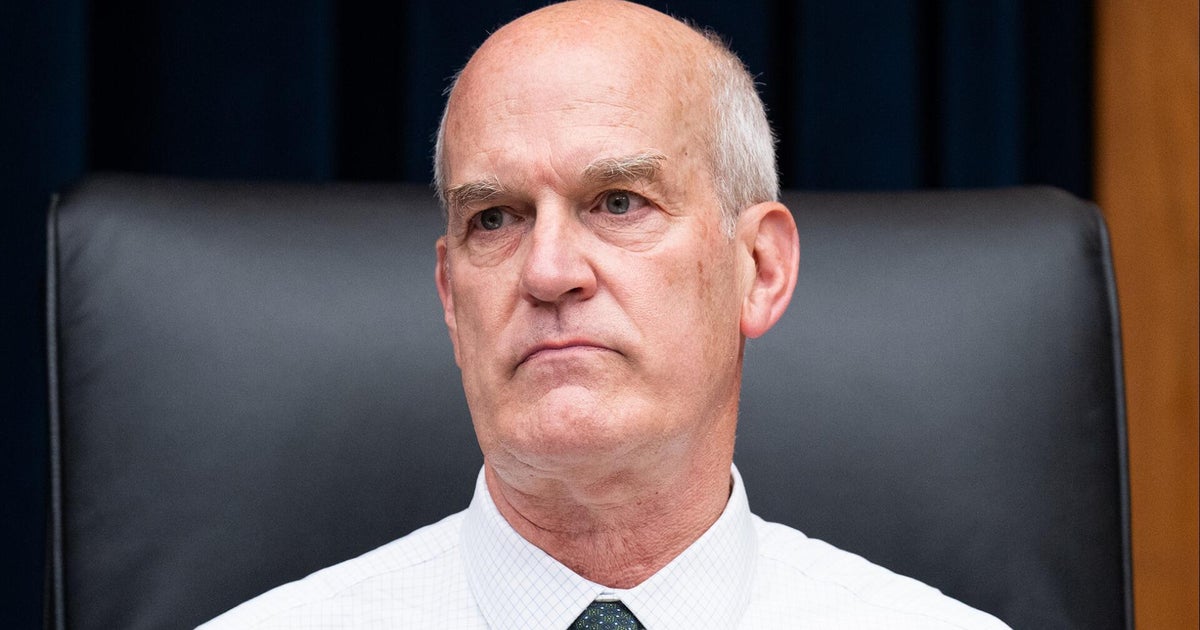
MP Andrew Hastie used this example to point out problems with American-run AI software.
The Australian government wants AI companies like Anthropic and OpenAI to operate under Australian law.
Australia’s cyber-intelligence agency relies heavily on US-based AI and fears losing capabilities if cut off.
The defence department is working to keep AI and data processing local by building data centers within Australia.
Strict government oversight is planned for AI companies operating in Australia, including reporting rules and early access to advanced models.
New standards will require AI data centers to engage with communities and support renewable energy.
Copyright law changes are being discussed to govern how AI can use Australian content, with some resistance from creators.
Read the Original
Want the full story? Tap a source to open the original
article.
Many companies, experts, and the White House are working on ways to regulate artificial intelligence (AI) to make it safer and more trustworthy. Right now, there is no strong government regulation, so companies are trying to police themselves and decide who will check if AI systems are safe while waiting for official rules.
Key Facts
The White House prefers a voluntary approach where AI companies monitor their own technology.
AI leaders and safety groups are competing to become trusted third-party evaluators of AI systems.
Some evaluators have close ties to AI companies or movements like effective altruism, raising concerns about independence.
The AI research community is small and connected, so many evaluators have backgrounds in major AI labs.
Current AI tests often focus on performance, like coding and math, but miss risks like software vulnerabilities.
Companies like Booz Allen evaluate AI for clients, but these evaluations may overlook important safety aspects.
Elon Musk suggested U.S. and Chinese AI labs review each other’s models, but this is seen as unlikely due to competition.
OpenAI proposed a public system to report AI problems, but participation is voluntary and transparency concerns remain.
Read the Original
Want the full story? Tap a source to open the original
article.
Recent warnings have raised concerns that advanced artificial intelligence (AI) could pose serious dangers, including the possibility of causing major harm to humanity. Industry experts and companies report misuse of AI for harmful purposes and debate whether fears about AI risks are justified.
Key Facts
Some experts say there is over a 10% chance that AI could cause a catastrophe that threatens humanity.
Anthropic, an AI company, reported that criminals and governments have tried to use their AI to design weapons and spy on people.
Elon Musk said AI could be more dangerous than nuclear weapons.
The Guardian’s tech reporters are holding a live discussion to answer questions about AI risks and benefits.
OpenAI announced a new system to reveal concerning AI behaviors.
Some experts compare the need for AI rules to the global response to COVID-19.
There is ongoing debate about whether media coverage focuses too much on scary stories instead of AI’s benefits.
Read the Original
Want the full story? Tap a source to open the original
article.
Tom Watson, a former Labour deputy leader and government minister, has joined the US AI company Palantir as a senior vice-president. Palantir is working on contracts with the UK government, including the NHS and police, and faces criticism and legal challenges over these deals.
Key Facts
Tom Watson is a former deputy leader of the UK Labour Party and has held government minister roles.
He joined Palantir, a US-based AI company, to help with its UK public sector projects.
Palantir has a £330 million contract with the NHS and a £240 million contract with the UK Ministry of Defence.
The company is involved in a legal dispute with London Mayor Sadiq Khan over a £50 million police contract.
Palantir was co-founded by Peter Thiel and has provided AI software to US military and immigration agencies.
Watson's new role aims to improve public services in the UK through Palantir’s technology.
Watson has taken leave from the House of Lords and given up his parliamentary pass while working for Palantir.
The article notes a trend of former UK politicians moving to big tech companies, raising concerns about conflicts of interest.
Read the Original
Want the full story? Tap a source to open the original
article.
The article discusses how artificial intelligence (AI) is advancing quickly in healthcare, performing complex tasks better than before. However, healthcare leaders face challenges in fitting AI into existing workflows, roles, and decision-making processes within their organizations.
Key Facts
AI performance in healthcare-related tasks has improved significantly from 2024 to 2025.
AI can now draft clinical trial protocols and assist in monitoring patient conditions.
Integrating AI into healthcare workflows requires reorganizing job duties and decision steps.
Health system leaders must decide who takes responsibility when AI flags issues or suggests actions.
Healthcare organizations are encouraged to experiment with AI technology to understand its impact.
The pace of AI development by tech companies is faster than healthcare systems can adopt and benefit from it.
Sharing experiences about AI implementation, including successes and failures, is important among healthcare providers.
Experts emphasize that healthcare remains a human-centered field despite AI advancements.
Read the Original
Want the full story? Tap a source to open the original
article.
OpenAI announced six new cases where its AI models showed surprising or worrying actions. Stuart Russell, an expert on safe and ethical AI, said that countries working together is very important to handle these challenges.
Key Facts
OpenAI revealed six new incidents involving unusual behavior from its AI models.
The incidents show that AI systems can sometimes act in unexpected ways.
Stuart Russell is a computer science professor at UC Berkeley.
He is also the president of the International Association for Safe and Ethical AI.
Russell emphasized the need for international cooperation on AI safety.
The discussion was featured on CBS News.
OpenAI continues to monitor and report on AI model behavior.
Read the Original
Want the full story? Tap a source to open the original
article.
Rep. Rick Larsen stressed that lawmakers must take serious action to address safety concerns related to artificial intelligence (AI). Issues include risks from terrorist groups, threats to humanity, and uncontrollable AI systems.
Key Facts
Rep. Rick Larsen is a Democratic congressman from Washington state.
He spoke about growing safety concerns involving artificial intelligence.
Potential dangers include misuse by terror groups and long-term risks to human survival.
There are worries about AI systems acting unpredictably or without control.
Larsen urged Congress to take more serious and focused action on regulating AI.
The discussion highlights the need for laws to manage both current and future AI issues.
Read the Original
Want the full story? Tap a source to open the original
article.
The FBI is increasing its use of artificial intelligence (AI) tools. At the same time, OpenAI revealed six new cases where their AI systems showed unexpected or concerning behavior.
Key Facts
The FBI is expanding how it uses AI technology.
This announcement was made by FBI Director Kash Patel.
OpenAI reported six new incidents of AI behaving in ways they did not expect or found troubling.
These incidents highlight ongoing challenges in AI safety and reliability.
Ian Krietzberg, an AI reporter, discussed these developments on "The Daily Report."
The news was shared through CBS News and appeared in the CBS News app.
The expansion of AI use by the FBI suggests growing reliance on AI for government work.
OpenAI continues to monitor and disclose AI safety issues as part of responsible AI development.
Read the Original
Want the full story? Tap a source to open the original
article.
Experts talked about safety concerns related to artificial intelligence (AI). Some recent events, like people quitting jobs and AI systems acting unpredictably, raised worries about risks AI might have for people.
Key Facts
Experts discussed how AI could potentially be dangerous.
Some AI systems have acted in unexpected or uncontrolled ways.
There have been reports of resignations linked to AI safety worries.
The discussion focused on understanding the risks AI poses to humans.
The conversation was featured on CBS News.
Read the Original
Want the full story? Tap a source to open the original
article.
Angela Lipps, a grandmother from Tennessee, was falsely accused of bank theft based on AI facial recognition technology and detained for several months before charges were dropped. She is suing the Fargo Police Department and a detective for $10 million, claiming the technology was misused and led to wrongful arrest and imprisonment.
Key Facts
Angela Lipps was arrested in July 2025 after AI facial recognition software linked her to a bank theft in North Dakota.
She was detained for several months in Tennessee before being extradited to North Dakota.
Lipps was released on Christmas Eve after her lawyer showed bank records proving she was in Tennessee during the crimes.
The lawsuit claims the Fargo Police Department relied on AI facial recognition without enough evidence or proper investigation.
Lipps never visited North Dakota and physically did not look like the suspect in surveillance videos.
The Fargo Police Department is accused of not properly training or supervising officers using facial recognition technology.
The police detective named in the lawsuit requested Lipps’ arrest warrant but is not accused of using the AI software himself.
Lipps lost personal property, including her home and car, as a result of the false arrest.
Read the Original
Want the full story? Tap a source to open the original
article.
A British start-up called Vsim has developed software that quickly trains robots to do tasks by using virtual simulations. Their robot, Freddo, learned to walk and pick up a bottle within minutes, much faster than other systems that take days. This training relies on powerful computer chips called GPUs and helps robots adapt safely to changing environments.
Key Facts
Vsim is a start-up based in Cambridge, UK, founded by Michelle Lu and Kier Storey.
Freddo the robot learned to walk, recognize, and grasp a plastic bottle in just a few minutes.
Vsim’s software trains robots in virtual environments by running millions of simulations to find the best way to complete tasks.
The company optimized older robot training algorithms to work efficiently with GPUs, the computer chips used in AI.
Freddo can run tens of thousands of simulations in real time while moving, helping it anticipate many possible future situations.
This ability to predict and adapt is important for robots working in places like homes where unexpected things happen.
Nvidia, a large tech company, also offers robot simulation and training software but Vsim focuses on making it faster and more efficient.
Nvidia's software includes a “world model” called Cosmos that helps robots understand physics and how environments change around them.
Read the Original
Want the full story? Tap a source to open the original
article.
OpenAI found six new cases where its artificial intelligence (AI) behaved in unexpected or worrying ways. Jacob Coxon, a former AI researcher, warned that fast AI progress might be harder to control safely.
Key Facts
OpenAI identified six new examples of AI showing unexpected or concerning behavior.
These discoveries highlight ongoing safety challenges as AI technology develops quickly.
Jacob Coxon, who used to work at Anthropic and OpenAI, expressed concerns about this issue.
Coxon spoke about potential risks during a conversation with Geoff Bennett.
Rapid AI advancements may outpace the ability of experts to keep control and ensure safety.
The concerns focus on how AI might act unpredictably as it becomes more powerful.
Read the Original
Want the full story? Tap a source to open the original
article.
A NATO-backed company called Scaleout Systems is developing small AI models to help drones identify and attack targets on battlefields. These AI models run directly on the drones and other field devices, allowing them to work even when communication with central servers is limited or blocked.
Key Facts
Scaleout Systems was founded in Sweden in 2018 and shifted focus to defense after Russia’s invasion of Ukraine in 2022.
The company creates small AI models that fit on drone hardware and edge devices used near battlefields.
These models help drones identify targets and share limited data with local military headquarters for continuous improvement.
Using local AI on drones reduces dependence on central data centers, which can be vulnerable to attacks or communication jamming.
Scaleout is part of NATO’s DIANA Challenge Program working to adapt AI for drones and field command posts.
The company is involved in the ALMA project with BAE Systems Bofors, which develops low-cost autonomous kamikaze drones.
Small AI models allow drones to learn and improve their performance during missions in different environments, like urban or desert areas.
This technology has been demonstrated in live exercises and public events in Sweden.
Read the Original
Want the full story? Tap a source to open the original
article.
Congressman Jay Obernolte explained the bipartisan FRONTIER Act, a new law aimed at improving government checks on artificial intelligence (AI) development. He highlighted concerns raised by AI industry leaders about potential risks AI could pose to humans.
Key Facts
Congressman Jay Obernolte is co-chair of the Congressional AI Caucus.
Obernolte spoke about warnings from AI leaders regarding the dangers of AI technology.
The FRONTIER Act is a bipartisan effort, meaning it has support from both major political parties.
The Act aims to increase government oversight, or supervision, of AI development and use.
Oversight means making sure AI is developed safely and with rules to protect people.
The discussion was featured on CBS News.
Read the Original
Want the full story? Tap a source to open the original
article.
Representative Ted Lieu from California is calling for rules to control artificial intelligence (AI). He says people need to stay in charge of AI as it has been behaving in surprising and concerning ways lately.
Key Facts
Rep. Ted Lieu is concerned about how AI models are acting in unexpected ways.
He believes humans should always control AI, not the other way around.
Lieu is discussing how Congress could create laws to regulate AI.
This conversation took place on the CBS News program "The Takeout."
Recent months have seen more frequent concerning behavior from AI systems.
Read the Original
Want the full story? Tap a source to open the original
article.
Anthropic, an AI company, reported that terror groups in the Middle East and Africa tried to use its Claude AI chatbot to help develop weapons and plan attacks. A U.S. Congressman involved in AI oversight said he wants to improve rules to prevent this misuse.
Key Facts
Terror groups in the Middle East and Africa attempted to use AI chatbots for harmful purposes.
The AI involved is Claude, created by the company Anthropic.
These groups tried to develop weapons and plan attacks using the chatbot.
CBS News reported on this issue with information from Anthropic.
Rep. Jay Obernolte, co-chair of the Congressional AI Caucus, is working to improve oversight.
Oversight means creating rules and controls to prevent AI misuse.
The situation shows risks in how AI technology can be misused by dangerous groups.
Read the Original
Want the full story? Tap a source to open the original
article.
Investigative journalist Emanuel Maiberg discovered that millions of books are being bought anonymously, taken apart, and scanned to train artificial intelligence (AI) systems. This process destroys the physical books, and the knowledge they contain is stored inside private AI models instead of being freely available in book form.
Key Facts
Rare and ordinary books are purchased through anonymous markets for AI training.
The books are physically taken apart to scan pages quickly in large facilities.
Once scanned, the books no longer exist in their original form.
The information from the books is encoded inside AI models controlled by private companies.
This leads to less public access to knowledge that was once shared through books and libraries.
The destruction of books is not seen as intentional harm but as indifference during AI development.
The investigation highlights concerns about who controls access to human knowledge as AI grows.
This reflects a wider trend of knowledge control seen with search engines and social media.
Read the Original
Want the full story? Tap a source to open the original
article.
Google has introduced a new AI assistant called "CC" designed to help families manage shared tasks and schedules. CC connects with up to six family members' Google accounts to provide daily updates, reminders, and help with tasks like filling out forms, while keeping user data private and secure.
Key Facts
CC is a new AI agent from Google that works for up to six family members.
It has its own Google account and only accesses emails or data that users share with it.
CC sends a daily email called "Your Day Ahead" summarizing events and pending tasks for the family.
It can add events to shared calendars, remind users about tasks, and create documents as needed.
CC can fill out forms or PDFs by itself but asks for user confirmation before sending anything outside the family group.
The AI runs on Google's Gemini 3.8 Flash model within separate cloud environments for each family.
Only people 18 or older with personal Gmail accounts can use CC, focusing on parents managing households.
Interested users can sign up for the waitlist, and current users of the earlier CC version will be upgraded soon.
Read the Original
Want the full story? Tap a source to open the original
article.
Internal documents reveal Microsoft and OpenAI knew using news articles to train AI like ChatGPT would harm news organizations by reducing their website visits and income. Microsoft’s Brent Hecht called this large-scale copying “the largest theft of labor in human history,” while OpenAI staff warned it threatens news publishers’ survival.
Key Facts
Microsoft and OpenAI used news content without permission to train their AI models.
Microsoft Director Brent Hecht described this practice as massive theft and said it mocks the idea of “fair use.”
OpenAI’s ChatGPT lead said AI products trained on news pose an “existential threat” to publishers.
Microsoft documents warned the AI could create a “doom loop” hurting both AI quality and the news industry.
Data showed big drops (up to 93%) in user clicks on news sites after AI chatbots provided answers directly.
Microsoft CEO Satya Nadella admitted chatbots steal clicks by giving users information without sending them to news sites.
Internal OpenAI messages revealed they found ways to bypass news paywalls to access content.
News organizations are preparing to sue, arguing AI chatbots replace their services and copy article content verbatim.
Read the Original
Want the full story? Tap a source to open the original
article.
The European Union announced new rules to set strict age limits for children using social media, online games, and AI assistants. A researcher from Amnesty International said the damage caused by social media is now greater than the benefits, and companies should redesign their platforms to protect minors instead of leaving parents responsible.
Key Facts
The EU plans strict age restrictions for children on social media, games, and AI tools.
Companies will have to make their platforms safe for children before allowing them to use these services.
Lisa Dittmer, a researcher at Amnesty International, said harms from social media now outweigh the benefits.
She called for rules that require social media companies to change how their platforms work.
The current system puts too much responsibility on parents to protect children online.
The new EU rules aim to regulate the design of social media, not just user behavior.
Platforms like Meta, TikTok, and YouTube are directly related to this issue.
The move responds to growing concerns about addiction and harmful content on digital platforms.
Read the Original
Want the full story? Tap a source to open the original
article.