EA Sports College Football 27 will feature several college football players on its cover. The main players highlighted are Lacy, Toney, and Moore, along with other notable athletes from different universities.
Key Facts
EA Sports College Football 27 is the upcoming edition of the college football video game.
The cover will feature players Lacy, Toney, and Moore.
Additional players on the cover include Indiana's Curt Cignetti, USC quarterback Jayden Maiava, Texas' Colin Simmons, and Notre Dame cornerback Leonard Moore.
These players represent different college football teams across the United States.
The game continues the tradition of showcasing top college football talent on its cover.
Read the Original
Want the full story? Tap a source to open the original
article.
Japanese company SoftBank plans to invest 45 billion euros in France by 2031. This investment will fund the construction of three new data centers, as France offers space and reliable electricity from its nuclear power plants.
Key Facts
SoftBank is a large Japanese technology group.
The company will invest 45 billion euros in France over the next five years.
Three new data centers will be built as part of this investment.
Data centers store and manage large amounts of digital information.
France is chosen because it has enough land for new facilities.
France's nuclear power plants provide stable and abundant electricity.
The investment supports the growth of digital infrastructure in Europe.
Read the Original
Want the full story? Tap a source to open the original
article.
Two French astronauts, Thomas Pesquet and Arnaud Prost, will take separate space trips in 2027. Prost will visit the new commercial space station Haven-1, while Pesquet will command a mission to the International Space Station (ISS). Both missions will use SpaceX rockets.
Key Facts
Arnaud Prost will be the test engineer on the first crewed mission to the Haven-1 commercial space station developed by the US company Vast.
Thomas Pesquet will command a private mission to the ISS, marking his third stay there.
Both missions will last about two weeks and are planned for 2027.
Haven-1 is the world’s first commercial space station and is scheduled to launch after delays.
Vast was founded in 2021 by Jed McCaleb to build commercial space stations and aims to eventually replace the ISS.
The ISS mission requires approval from international partners including NASA and the European Space Agency.
If approved, Pesquet would be the first non-American to command a US spacecraft.
Both missions will launch using SpaceX’s Falcon 9 rockets.
Read the Original
Want the full story? Tap a source to open the original
article.
OpenAI's Codex is now widely used by office workers as well as developers. It helps users manage and analyze documents, emails, calendars, and other work files in one place. The number of people using Codex has grown quickly, and it can automate daily tasks to save time.
Key Facts
Knowledge workers make up about 20% of Codex users and are growing faster than developers.
Codex has over 4 million weekly active users, a fivefold increase since February 2026.
Popular uses include data analysis (up 110%), research (up 37%), and handling reports, contracts, and spreadsheets (up 36%).
More than 60% of users run multiple Codex tasks simultaneously during the day.
Codex connects to email, calendars, documents, spreadsheets, design tools, and messaging apps like Slack and Teams.
Users can set up one-click daily summaries that highlight important emails and schedule items.
Some power users find managing several AI tasks stressful and mentally taxing.
Codex helps with academic research but still requires expert oversight to catch errors.
Read the Original
Want the full story? Tap a source to open the original
article.
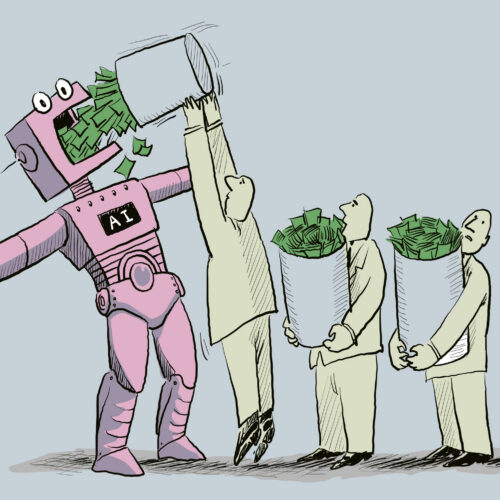
Alphabet, Google's parent company, plans to raise up to $80 billion by selling shares to fund its large investments in artificial intelligence (AI) technology. The fundraising includes a $10 billion investment from Berkshire Hathaway and aims to build more AI computing infrastructure to meet growing demand.
Key Facts
Alphabet wants to raise $80 billion to invest in AI infrastructure and cover tax-related expenses.
$10 billion of this comes from Berkshire Hathaway, an investment firm led by Warren Buffett until recently.
Half of the $80 billion will be used to expand AI computing power worldwide.
The fundraising is one of the largest equity raises ever and signals the high costs of AI development.
Alphabet’s AI system, Gemini, is gaining market share in AI chatbots.
The company’s demand for AI services is exceeding its current supply capacity.
Alphabet expects capital spending this year to reach $180 billion to $190 billion, with more increases planned by 2027.
Other AI companies like Anthropic are also preparing to go public, showing rising investor interest in AI technology.
Read the Original
Want the full story? Tap a source to open the original
article.
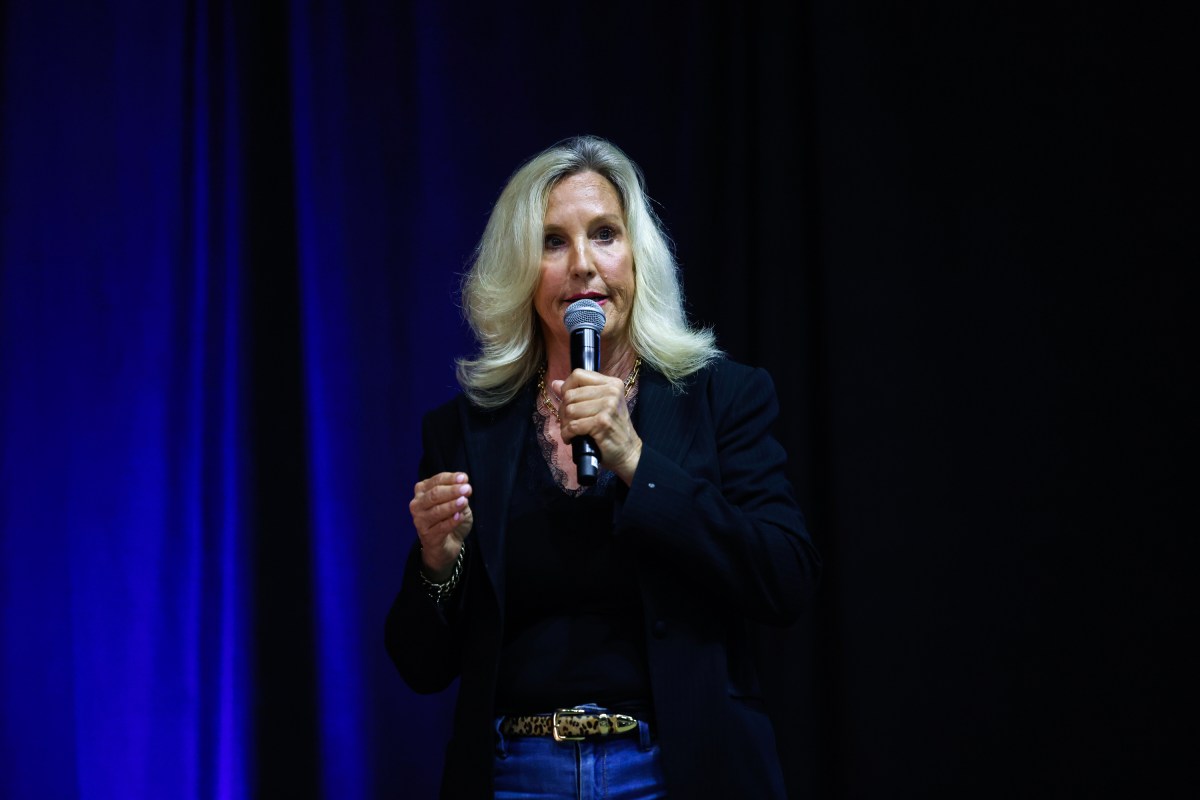
Environmental activist Erin Brockovich is gathering information from the public about data centers in the United States. She has received thousands of photos and reports to create a map showing the locations and size of these facilities, which are important for artificial intelligence but use a lot of energy and water.
Key Facts
Erin Brockovich asked Americans to send pictures and information about data centers near them.
As of May 31, she received 6,615 submissions, with 3,674 reports added to the map.
The map and photos are updated daily and rely on people’s reports.
Data centers are facilities that store and process large amounts of digital information, crucial for artificial intelligence.
These centers use a lot of electricity and water to keep their computer processors cool.
Data centers can have a big impact on the environment due to their energy use and hazardous materials.
Erin Brockovich is known for her past work on environmental cases, including a big legal settlement over water contamination.
This effort aims to increase awareness of the environmental impact of the growing number of data centers.
Read the Original
Want the full story? Tap a source to open the original
article.
Palantir, a US data analytics company founded by Peter Thiel in 2003, has grown rapidly and works with many clients worldwide, including the UK’s National Health Service (NHS) and the US military. The company uses AI software to analyze large amounts of data but faces criticism and controversy over its role and ethics.
Key Facts
Palantir was founded by Peter Thiel, a tech billionaire and ally of President Donald Trump, after 9/11.
The company uses AI-driven software to analyze complex data for clients like the NHS, US military, and Israeli military.
Palantir’s business value is about $375 billion.
It has contracts worth around £600 million with UK government agencies, including the Ministry of Defence and police forces.
London’s mayor Sadiq Khan blocked a £50 million deal between Palantir and the Metropolitan Police due to concerns about company values.
Critics argue that Palantir’s work raises moral and ethical questions about surveillance and data use.
Palantir’s name comes from a “seeing stone” in J.R.R. Tolkien’s Lord of the Rings, symbolizing observation and control.
Read the Original
Want the full story? Tap a source to open the original
article.
Alphabet, Google's parent company, plans to sell $80 billion in shares to fund its expansion of artificial intelligence (AI) infrastructure. The company aims to meet growing demand for its AI products by investing in new technology and data centers.
Key Facts
Alphabet will sell $80 billion in stock to raise money for AI development.
$10 billion of the sale is to Berkshire Hathaway, led by investor Warren Buffett.
The remaining $70 billion comes from a mix of underwritten offerings and sales on the open market.
Alphabet is seeing very high demand for its AI services from businesses and consumers.
The company expects to spend $180-190 billion on capital projects this year, with more spending planned for 2027.
Other US tech giants like Microsoft, Amazon, and Meta also plan huge investments in AI infrastructure.
Industry experts say companies see under-investing in AI as a big risk and are willing to spend a lot to lead the market.
The competition in AI depends not just on software but on owning large, efficient computer platforms to run advanced AI models.
Read the Original
Want the full story? Tap a source to open the original
article.
Firefly Aerospace won a $75 million contract from NASA to deliver four drones to the moon’s south pole. These drones will help NASA prepare for humans to live on the moon permanently.
Key Facts
Firefly Aerospace is a company that builds space vehicles.
NASA awarded Firefly Aerospace a $75 million contract.
The contract is to send four drones to the moon’s south pole.
The drones will assist NASA in exploring and setting up for future human missions on the moon.
Jason Kim is the CEO of Firefly Aerospace.
NASA plans to use the drones to gather information and support a permanent human presence on the moon.
The project highlights ongoing efforts to explore the moon’s less-visited south pole area.
Read the Original
Want the full story? Tap a source to open the original
article.
EA Sports announced the cover athletes for their upcoming video game "College Football 27." The cover features three college football players: quarterback Dante Moore, wide receiver Malachi Toney, and running back Kewan Lacy.
Key Facts
"College Football 27" will feature Oregon quarterback Dante Moore, Miami wide receiver Malachi Toney, and Ole Miss running back Kewan Lacy on the cover.
Dante Moore passed for 3,565 yards and 30 touchdowns last season, helping Oregon reach the College Football Playoff semifinals.
Kewan Lacy ranked third in the country in rushing yards with 1,567 and scored 24 touchdowns.
Malachi Toney led the nation with 109 receptions for 1,211 yards and 10 touchdowns.
The deluxe edition cover includes USC quarterback Jayden Maiava, Notre Dame cornerback Leonard Moore, and Indiana coach Curt Cignetti.
The "College Football" video game series resumed after a long break caused by disputes over players’ name, image, and likeness rights.
Previous cover athletes include players from Texas, Colorado, Michigan, Ohio State, and Alabama.
The game has been a commercial success, ranking among the best-selling American football video games.
Read the Original
Want the full story? Tap a source to open the original
article.
Many companies are adopting artificial intelligence (AI) tools but are unclear about their goals and how to use AI well. This confusion can lead to wasted money and frustrated workers. Governments and businesses want AI to improve productivity, but workers often feel left out of the decision process.
Key Facts
Some companies require employees to use AI tools regularly for promotions and track their usage.
At one firm, executives insisted on using generative AI even when a simpler method was cheaper and more accurate.
The UK government hopes AI will improve public service efficiency but civil servants report little consultation on its rollout.
Management often lacks a clear reason for adopting AI, causing mixed goals and poor results.
Different people in a company may want AI for different reasons such as beating competitors or cutting costs.
Training on AI ethics and risks is becoming mandatory to address issues like bias and false information from AI tools.
Company culture and involving employees are crucial for an AI program to succeed.
Some organizations provide multiple AI tools based on job needs and encourage proper use through education.
Read the Original
Want the full story? Tap a source to open the original
article.
Hackers used Meta’s AI chat support to take over some high-profile Instagram accounts, including Barack Obama’s White House account. Meta fixed the problem after security researchers revealed how the AI was tricked into giving hackers control of accounts by changing emails and resetting passwords.
Key Facts
Hackers exploited Meta’s AI-powered support chatbot to access Instagram accounts.
Targets included Barack Obama’s White House account, Sephora, and a US Space Force official.
Hackers tricked the AI assistant into linking accounts to new emails and then reset passwords.
Some hackers used virtual private networks (VPNs) to fake their location and avoid detection.
Meta confirmed the issue is fixed and is securing affected accounts.
The AI support assistant was launched globally on Facebook and Instagram earlier this year.
The AI assistant can perform tasks like reporting scams and resetting passwords.
This incident raises questions about the safety of using AI for important security functions.
Read the Original
Want the full story? Tap a source to open the original
article.
AI tools that create fake nude images of people without their permission are becoming much more common. Authorities are trying to find ways to control and stop this misuse of technology.
Key Facts
"Nudification" technology uses AI to make realistic fake nude pictures and videos.
These images often show people undressed without their knowledge or approval.
The use of this technology has increased sharply recently.
People are worried about privacy and consent violations.
Reporters like William Brangham are covering this growing problem.
Authorities are working to find solutions to limit or stop this abuse.
Read the Original
Want the full story? Tap a source to open the original
article.
GitHub has changed the way it charges users for its AI tool, Copilot, moving from a fixed request system to a usage-based pricing model. Many users are surprised by how quickly their monthly AI credit allotment is used up, sometimes in less than a day, making costs higher than before.
Key Facts
GitHub Copilot switched to a usage-based pricing system in April.
Users now get monthly AI "credits" to pay for usage; one credit equals $0.01.
Different subscription plans offer different credit amounts, from 1,500 to 20,000 credits.
The cost per AI request depends on the complexity and the AI model used.
Some AI models are much more expensive, causing rapid credit depletion.
Users report using up a month’s credits in just a few hours or even one day.
Prior to this, GitHub subsidized heavy users with a flat-rate system, covering some costs itself.
Examples show how quickly credits can be spent on simple tasks and much faster on complex coding work.
Read the Original
Want the full story? Tap a source to open the original
article.
A report by the Center for Countering Digital Hate found that Meta earned about $14.3 million from ads promoting Medicare scams on Facebook and other Meta platforms. These ads targeted older Americans with false promises of government benefits and used official-looking designs to trick people into sharing personal information or joining poor Medicare plans.
Key Facts
Medicare scam ads appeared on Meta platforms like Facebook, targeting older Americans.
The ads often promised fake benefits such as grocery cards, cash payments, or allowances.
These scam ads generated approximately 215 million views in one year.
Meta earned an estimated $14.3 million in revenue from these scam-related ads.
Scammers used fake government branding, urgent messages, and fake celebrity endorsements.
People who clicked the ads were sometimes asked to give personal information or ended up with worse Medicare plans.
Many scam advertisers were repeat offenders who returned after their ads were removed.
Meta says it removes many scam ads using automated tools and human reviewers but faces ongoing challenges as scammers change tactics.
Read the Original
Want the full story? Tap a source to open the original
article.
Paramount+ is adding new movies, shows, and episodes in June 2026. Highlights include weekly episodes of the series "Dutton Ranch," films like "The Running Man" and "The SpongeBob SquarePants Movie: Search for SquarePants," and reality TV shows such as "Celebrity Ex on the Beach" and "Teen Mom UK."
Key Facts
"Dutton Ranch" airs new episodes weekly on Fridays at 12am PT/3am ET.
"Dutton Ranch" has an 88% rating on Rotten Tomatoes.
On June 25, Paramount+ will release two films: "The Running Man" (2025) and "The SpongeBob SquarePants Movie: Search for SquarePants" (2025).
Reality TV shows like "Celebrity Ex on the Beach," "Italia Shore," and "Teen Mom UK" will be available for streaming.
Full seasons of "Italia Shore" (Season 3) and "The Agency" (Season 2) will drop in June.
New episodes of "Teen Mom UK" Season 13 begin on June 23.
Paramount+ is expanding its content to attract more viewers with a mix of movies, scripted series, and reality TV.
The streaming schedule includes precise dates for all new releases throughout June 2026.
Read the Original
Want the full story? Tap a source to open the original
article.
Dreo, a fan and air purifier brand launched in 2021, is competing strongly with Dyson by offering advanced features at a much lower price. Dreo’s 2026 fan models include innovations like a misting system to cool rooms, while Dyson focuses on smart tracking technology and higher-end air filtration.
Key Facts
Dreo has been the top-selling household fan brand on Amazon U.S. for three years.
Dreo’s tower fans made over $50 million in sales globally last year.
The Dreo MC710S fan offers a 40-foot airflow range and H13 True HEPA filtration.
Dreo fans have more wind speeds and are quieter than comparable Dyson models.
Dreo’s 2026 TurboCool Misting Fan uses ultrasonic misting to cool rooms without dampness.
Dyson’s top 2026 fan costs around $850 and uses AI to track the user’s location.
Dyson purifiers filter additional gases like VOCs and formaldehyde, which Dreo cannot.
Dyson products have higher build quality and more premium materials compared to Dreo.
Read the Original
Want the full story? Tap a source to open the original
article.
Anthropic, a company that creates artificial intelligence tools like the chatbot Claude, has officially applied to sell shares to the public. This move could lead to one of the largest initial public offerings in history.
Key Facts
Anthropic is a company specializing in artificial intelligence.
The company developed a chatbot named Claude.
Anthropic has filed paperwork to become a public company.
This process is known as an initial public offering (IPO).
The IPO could be one of the largest ever.
Public sale means anyone can buy part of the company.
The news was reported by CBS News correspondent Jo Ling Kent.
Read the Original
Want the full story? Tap a source to open the original
article.
Hackers exploited a security flaw in Meta’s AI support chatbot to take over and sell popular Instagram accounts by changing their email addresses. Meta fixed the issue on May 29 after hackers compromised thousands of accounts, including some high-profile ones.
Key Facts
Hackers used a VPN to hide their real location and trick Meta’s AI chatbot into changing the email linked to Instagram accounts.
The exploit let hackers steal valuable Instagram accounts worth hundreds of thousands of dollars.
High-profile accounts, like the Barack Obama White House and Space Force Chief Master Sergeant accounts, were briefly hacked.
The flaw existed since at least February 2026 and was shared in hacker groups and reported by security researchers.
Accounts with multifactor authentication (MFA) were protected and not vulnerable to the attack.
The security issue was due to the AI being tricked into misusing its permissions, known as a "confused deputy" problem.
Meta launched the AI support assistant in March 2026 to help users 24/7 but did not initially include strict safety checks.
Experts recommend adding more checks like out-of-band verification and monitoring to prevent similar attacks in the future.
Read the Original
Want the full story? Tap a source to open the original
article.
Apple TV is releasing several new shows and movies in June 2026. Highlights include the thriller series "Cape Fear" starring Javier Bardem and the second season of "Sugar" with Colin Farrell.
Key Facts
"Cape Fear" is an eight-episode thriller series on Apple TV, inspired by earlier films and starring Javier Bardem.
The show "Sugar" returns for its second season, following an LA private investigator connected to an alien network.
New episodes of "Sugar" release weekly from June 19 through August 7.
Jon Hamm stars in the drama series "Your Friends & Neighbors," with the season 2 finale airing June 5.
Other June releases on Apple TV include "Criminal Record," "Widow’s Bay," "Unconditional," and "Camp Snoopy" season 2.
Most shows debut on specific dates throughout June, spreading new content across the month.
Read the Original
Want the full story? Tap a source to open the original
article.