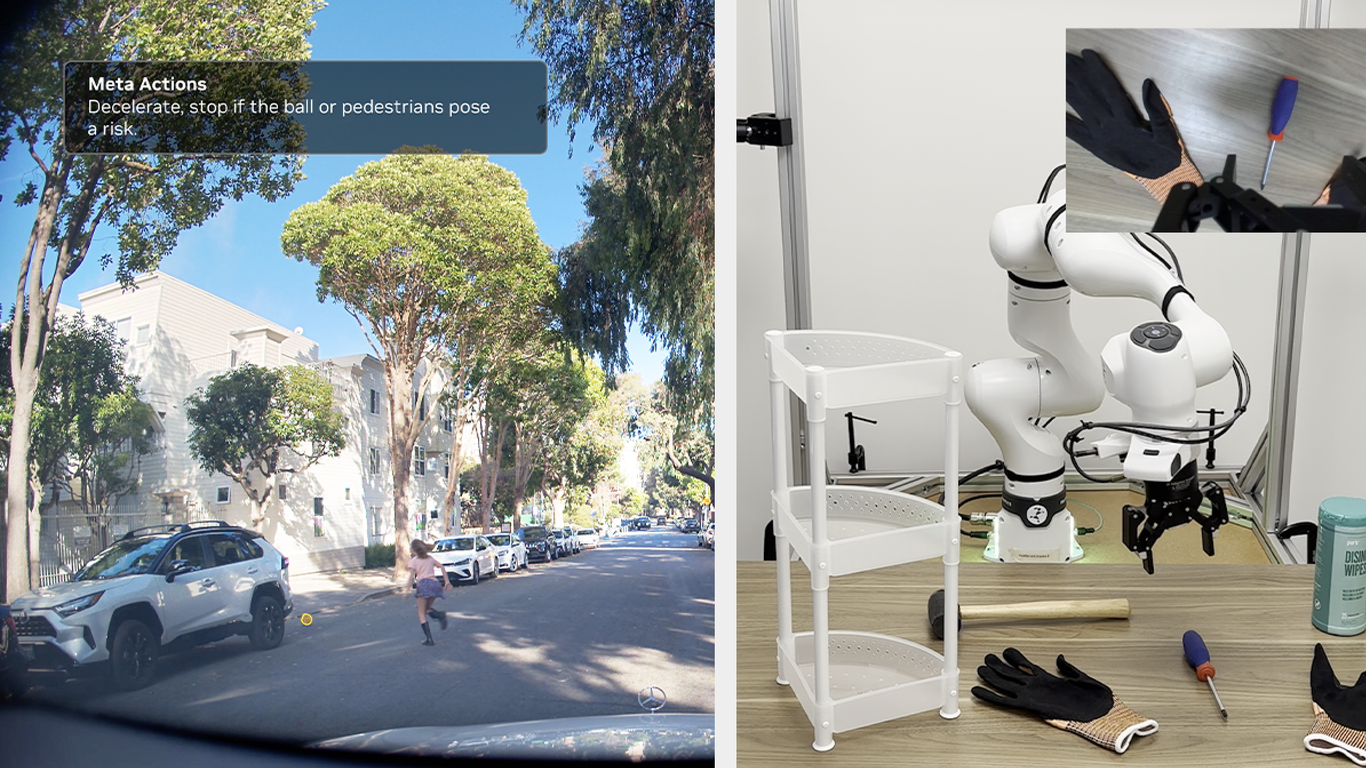
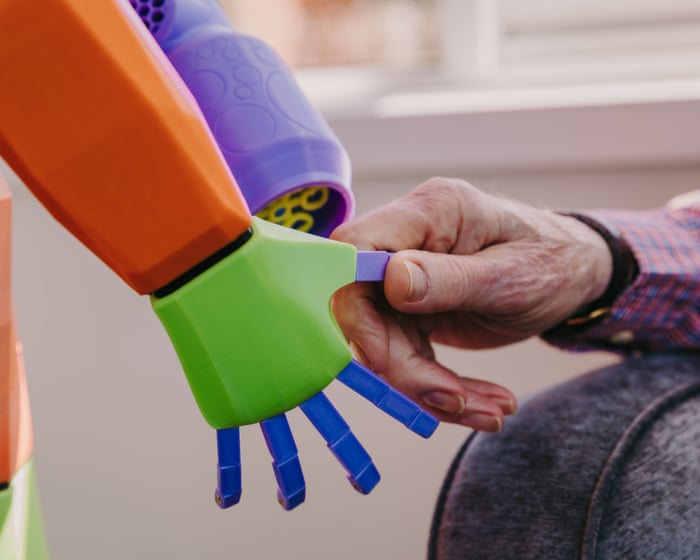
Nvidia introduced Cosmos 3, a new AI model that helps robots and autonomous vehicles understand and predict what will happen in real-world environments. This open model generates data about how machines move, which developers can use to train robots and other machines to navigate and act better in physical spaces.
Key Facts
Cosmos 3 is trained on 20 trillion pieces of data, including images, videos, sounds, text, and robot movements.
Unlike regular AI that creates images or videos, Cosmos 3 models machine actions like joint movements and paths.
Developers can use Cosmos 3 to simulate physical tasks and build specialized models for robots and vehicles.
The model is open, allowing hardware makers to customize it for their needs.
Nvidia is working with companies like Agile Robots and Runway to support Cosmos 3.
Cosmos 3 can create rare or risky scenarios for training that are hard to replicate in real life, such as robot accidents.
Nvidia offers two versions now: a high-accuracy "super" model and a fast "nano" model, with a local "edge" version coming soon.
Nvidia aims to make AI that not only answers questions or creates images but can plan and act in the physical world.
Read the Original
Want the full story? Tap a source to open the original
article.
The U.S. Department of Commerce has clarified that export controls on advanced AI chips apply to Chinese companies and their subsidiaries even if they are outside China. This guidance closes a loophole that allowed some Chinese firms abroad to receive restricted chip shipments without licenses.
Key Facts
The U.S. restricts shipments of advanced AI chips to Chinese companies and their subsidiaries worldwide.
The Bureau of Industry and Security (BIS) issued the clarification after questions about export rules arose.
The Trump administration canceled a previous global licensing plan from the Biden era aimed at controlling AI chip exports.
Nvidia, a leading chip maker, says it already follows licensing rules for sales to China-based companies.
Some experts say the previous lack of clear rules allowed Chinese companies to buy restricted chips legally.
The updated guidance means shipments of banned chips to Chinese firms outside China are now illegal.
The U.S. and China are competing closely in advanced AI technology.
In late 2023, President Trump eased some export limits by allowing Nvidia to sell a powerful chip (H200) to China.
Read the Original
Want the full story? Tap a source to open the original
article.
South Korea is using robots with artificial intelligence (AI) to help older people feel less lonely. These robot companions remind seniors to take their medicine, check on their health, and can call for help if there is an emergency.
Key Facts
South Korea has a growing number of older adults who may experience loneliness.
The country uses AI-powered companion dolls to support these seniors.
The robots remind users to take their medications on time.
They monitor the health and wellbeing of the seniors.
The dolls can call for help in case of emergencies.
There are ongoing questions about whether AI companions can fully replace human relationships.
Read the Original
Want the full story? Tap a source to open the original
article.
For over a year, top technology company leaders have been trying to gain the support of President Donald Trump as he began his second term. They have met with him at locations like Mar-a-Lago and made large donations during his inauguration.
Key Facts
Tech leaders have actively sought a positive relationship with President Trump.
Meetings have occurred at Mar-a-Lago, President Trump’s private club.
CEOs such as Elon Musk and Mark Zuckerberg have participated in these efforts.
Large donations were given by tech companies for President Trump’s inauguration.
These actions occurred since President Trump returned to the White House for his second term.
Tech companies view maintaining good ties with the government as important.
Efforts show a blend of direct meetings and financial support to gain favor.
Read the Original
Want the full story? Tap a source to open the original
article.
KSI, a British social media star and judge on Britain's Got Talent, announced he is leaving the YouTube group Sidemen after 13 years. He shared that May 31 would be his last video with the group, ending his long-time collaboration.
Key Facts
KSI’s real name is Olajide Olatunji.
He joined the Sidemen collective in 2013 and helped create football, comedy, and challenge videos.
The Sidemen group has 23 million subscribers on YouTube.
KSI announced his departure on social media, calling it a difficult decision after months of thought.
He has over 18 million subscribers on his personal YouTube channel.
KSI is also a musician, former boxer, and part owner of a football club.
His spokesperson confirmed he was leaving after fans suspected it might be a stunt.
Read the Original
Want the full story? Tap a source to open the original
article.
Two developers created Mira, a pair of AI-powered glasses that transcribe and summarize conversations without using a camera. The glasses aim to help users create a searchable record of their daily life, acting like a "second brain."
Key Facts
The developers, Anhphu Nguyen and Caine Ardayfio, previously added facial recognition to Meta's Ray-Ban glasses.
Mira glasses cost $650 and do not have a camera.
These glasses quietly record spoken information and turn it into searchable notes.
Technology Editor Peter O'Brien tested Mira for two weeks.
The glasses raise privacy concerns about recording people nearby.
The idea is to help users easily remember and find information from daily conversations.
Mira build on previous experiments with wearable tech and AI.
Meta’s involvement is indirect; the creators originally hacked Meta’s smart glasses but now have their own product.
Read the Original
Want the full story? Tap a source to open the original
article.
Skyscrapers have hidden floors that are not seen by the public. These floors hold important systems like heating, water, and electrical equipment that help keep the building safe and working well. These hidden levels also include special structural floors that support the building’s weight and fire refuge floors for emergencies.
Key Facts
Hidden floors in skyscrapers house mechanical systems such as heating, ventilation, air conditioning (HVAC), water tanks, pumps, and electrical equipment.
These floors are not counted in the public floor numbering and are usually not accessible to occupants.
Mechanical floors are placed throughout tall buildings to properly distribute essential services from top to bottom.
Some hidden floors, called structural transfer floors, contain beams and support systems instead of regular rooms.
Fire refuge floors are included for safety during emergencies but are also not publicly acknowledged.
In very tall buildings like the Burj Khalifa, multiple mechanical levels have larger heights to hold bulky equipment.
These hidden floors allow skyscrapers to operate like “vertical cities” with systems working efficiently across many floors.
The building industry is focusing on making skyscrapers more energy-efficient and sustainable due to their large impact on global CO₂ emissions.
Read the Original
Want the full story? Tap a source to open the original
article.
Peacock announced its list of movies and shows coming in June 2026. Highlights include the Season 8 premiere of "Love Island" on June 2 and a new documentary called "Lorne" about the creator of Saturday Night Live.
Key Facts
"Love Island" Season 8 premieres on June 2, 2026, on Peacock.
The Season 4 finale of "Below Deck Down Under" airs on June 2.
The documentary "The Alpinist" about climber Marc-André Leclerc is available starting June 2.
Peacock adds many older movies on June 1, including "Jurassic Park," "The Fast and the Furious" series, and "Being John Malkovich."
A new documentary called "Lorne" premieres on June 5; it focuses on Lorne Michaels, creator of Saturday Night Live.
Other shows premiering or concluding in June include "Summer House," "America’s Got Talent," "Top Chef," "American Ninja Warrior," and "The Real Housewives of Rhode Island."
The list features both new seasons and reunions of popular reality TV series.
Peacock provides a mix of movies, documentaries, reality shows, and competition series throughout June.
Read the Original
Want the full story? Tap a source to open the original
article.
Elon Musk’s company SpaceX plans to grow by using its Starship rocket and artificial intelligence (AI). The company also focuses on Starlink, its satellite internet service, and rocket launch services as part of its growth strategy.
Key Facts
SpaceX is developing the Starship rocket for future missions.
The company uses AI to help with its near and mid-term growth goals.
Starlink is SpaceX’s satellite internet service, which provides global internet coverage.
SpaceX offers rocket launch services for various customers.
Elon Musk leads the company’s innovation efforts in space and technology.
AI refers to computer systems that can perform tasks usually requiring human intelligence.
The combination of Starship, AI, Starlink, and launch services supports SpaceX’s overall business growth.
Read the Original
Want the full story? Tap a source to open the original
article.
Leaders in the technology field, like Sam Altman of OpenAI and Elon Musk, imagine a future where humans and artificial intelligence (AI) merge or where AI becomes the dominant species beyond Earth. They believe this next stage of evolution, called “transhumanism,” could let humans live longer and travel through space by turning consciousness into digital form.
Key Facts
Sam Altman predicts humans may merge with AI within the next 50 years.
Elon Musk describes humans as a “biological bootloader” for digital superintelligence.
Some tech leaders think future humans will be partly or fully digital to explore the galaxy.
This idea is called transhumanism, aiming to extend life and expand human abilities.
The concept involves turning human consciousness into digital code stored on computers or transmitted through space.
These beliefs shape technology development, focusing on creating superhumans rather than just useful tools.
The tech elite behind these ideas have gained huge wealth and influence from advances in information technology.
Critics warn this vision may ignore the needs and desires of regular people.
Read the Original
Want the full story? Tap a source to open the original
article.
High-resolution photos and videos shared on social media can reveal detailed biometric data like fingerprints and voice patterns. Cybercriminals can use artificial intelligence (AI) tools to steal these details and create fake images or voices, which may lead to identity theft, fraud, or other crimes.
Key Facts
Modern phone cameras capture biometric details, such as fingerprint ridges, in near forensic quality.
AI can reconstruct usable biometric templates from social media photos and videos.
Voice cloning technology can create realistic fake voices from just a few seconds of recorded audio.
Deepfake technology can make convincing videos of people doing or saying things they never did.
Biometric data like fingerprints and voice patterns cannot be changed once stolen, unlike passwords.
In 2024, the FBI recorded over 859,000 cybercrime complaints with losses exceeding $16 billion.
Phishing emails remain a major cyber threat, with 3.4 billion malicious emails sent daily.
Experts warn that the risk of biometric theft is growing as AI lowers the skill barrier for attackers.
Read the Original
Want the full story? Tap a source to open the original
article.
The article looks back on the 1986 movie SpaceCamp and its connection to NASA's Space Shuttle program. It explains how the shuttle was meant to make space travel routine but was set back by the Challenger disaster. The movie, aimed at young audiences, was released shortly after the disaster and had mixed success.
Key Facts
NASA’s Space Shuttle was designed to be a reusable spacecraft for frequent trips to low Earth orbit.
The shuttle was expected to make space travel common, with plans for monthly or even weekly flights.
The Challenger disaster in January 1986, which killed educator Christa McAuliffe, ended hopes for quick civilian space travel.
SpaceCamp, a movie made before Challenger’s loss, showed kids training for space missions and used real NASA footage.
The film struggled at the box office, earning $9.6 million on a $25 million budget.
Audiences at the time were reluctant to see a film about kids in danger on a space shuttle, likely due to the disaster’s recent memory.
Today, SpaceCamp is mostly remembered by fans who saw it as children and is not currently available on streaming platforms.
The article’s authors recently rewatched the film and found it still has elements of charm despite its flaws.
Read the Original
Want the full story? Tap a source to open the original
article.
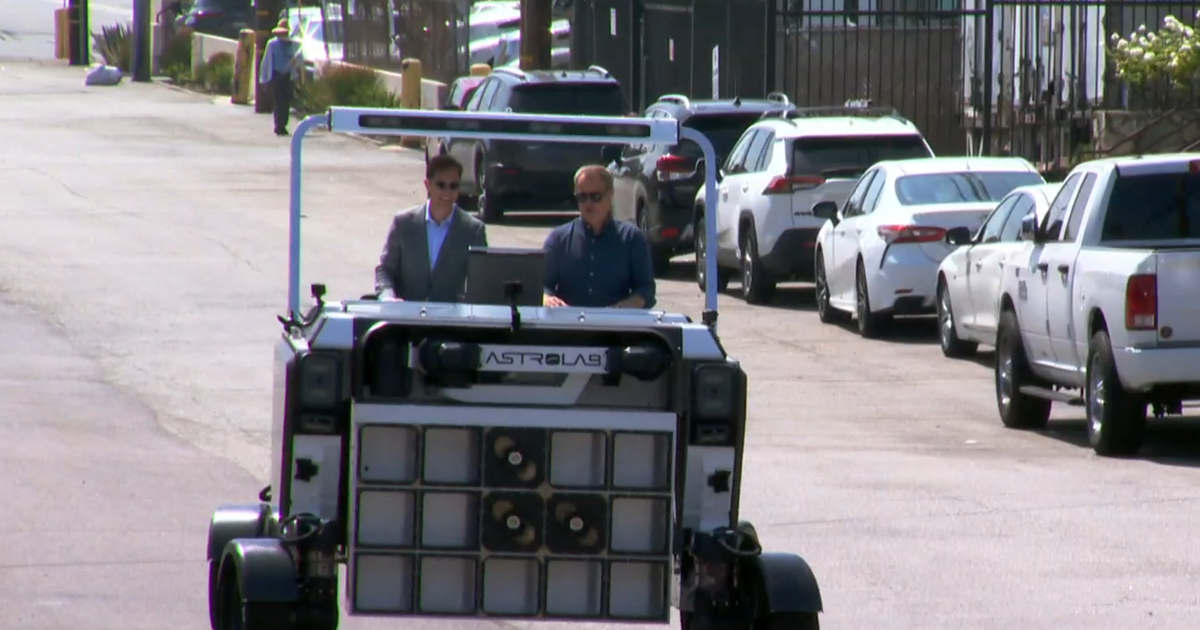
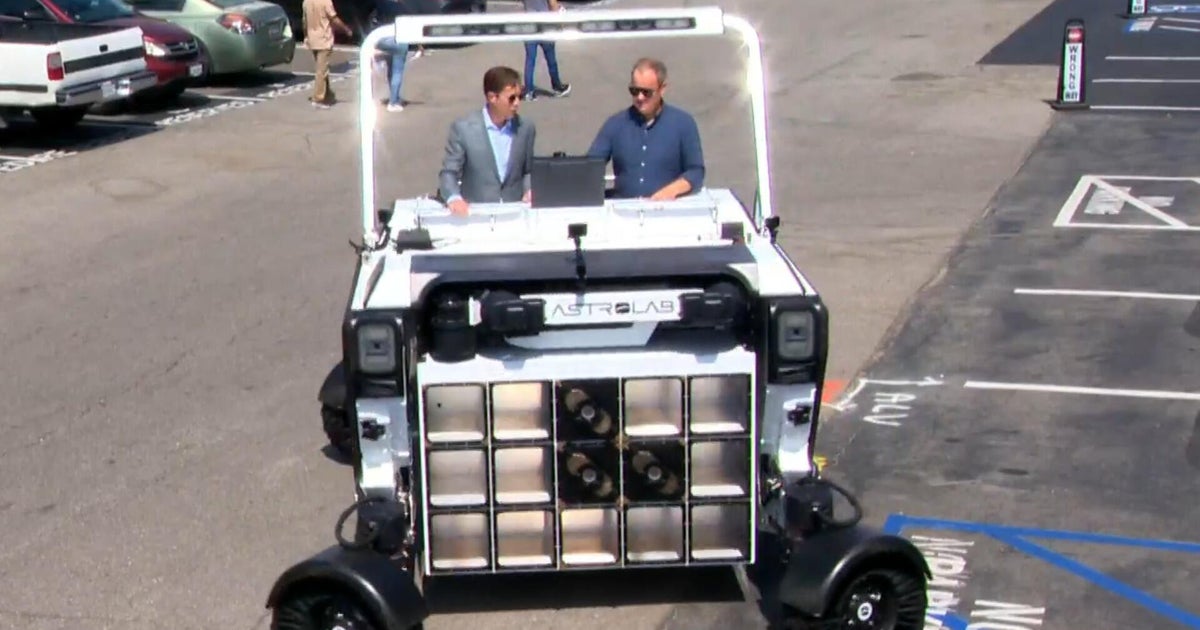
NASA selected two companies, Astrolab and Lunar Outpost, to build new electric moon buggies for its upcoming lunar base project. These vehicles will carry astronauts and supplies, work remotely, and operate for about a year on the moon's surface.
Key Facts
Astrolab and Lunar Outpost each received about $220 million from NASA to build moon rovers.
The rovers will be four-wheel drive electric vehicles that can carry two astronauts and supplies.
The vehicles will be designed to work on their own or be controlled remotely from Earth.
NASA plans to build a moon base near the lunar south pole over the next seven years.
The rovers will combine features from the old Apollo Lunar Rover and the modern Mars Perseverance Rover.
Blue Origin’s New Glenn Rocket, important for delivering these rovers, recently exploded in a test.
NASA announced a $20 billion plan to build the moon base.
Lunar Outpost aims to sell its rover to customers beyond NASA to support various activities on the moon.
Read the Original
Want the full story? Tap a source to open the original
article.
NASA is moving forward with its plan to return to the Moon by ordering lunar rovers for a future Moon base. This progress comes despite a recent setback involving an accident with Blue Origin, a company working with NASA.
Key Facts
NASA plans to build a base on the Moon.
They have ordered special vehicles called lunar rovers to use at the base.
Lunar rovers are designed to move around the Moon's surface.
Blue Origin, a private space company, had an explosion that caused a delay.
Despite this, NASA’s Moon mission is making significant progress.
The goal is to support astronauts living and working on the Moon for longer periods.
The development shows ongoing efforts to explore space beyond Earth.
Read the Original
Want the full story? Tap a source to open the original
article.
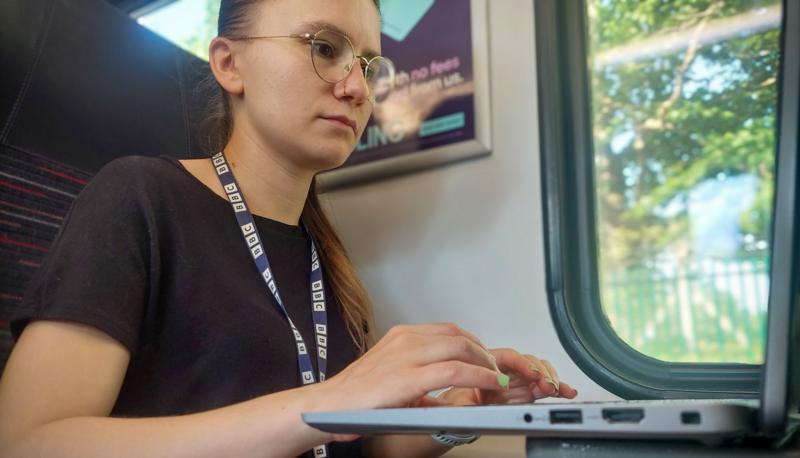
Wi-fi on trains in Britain is slow and often unreliable compared to other European countries. The government plans to improve this by installing new technology that connects trains to low-earth orbit satellites, which should boost coverage and speed over the next five years.
Key Facts
Britain’s onboard train wi-fi speed ranks 16th out of 18 major European and Asian countries.
The average train wi-fi speed in the UK is 1.09 Mbps, much slower than countries like Sweden (64.58 Mbps) and Switzerland (29.79 Mbps).
At home or office, UK internet speeds average 285 Mbps, far faster than train wi-fi.
The government will spend £57 million to improve train wi-fi by 2029.
New wi-fi systems will connect trains to low-earth orbit satellites instead of relying on mobile networks.
Current wi-fi depends on 3G and 4G mobile signals, which often drop out, especially through tunnels or remote areas.
The plan aims to increase wi-fi availability on trains from about 50-60% up to at least 90%.
Several train operators participated in satellite wi-fi trials before the full rollout.
Read the Original
Want the full story? Tap a source to open the original
article.
HP and Riot Games have teamed up to create a special gaming laptop called the HyperX OMEN 16 VALORANT Limited Edition. This high-powered laptop is designed for serious gamers and features advanced hardware and VALORANT-inspired design elements. It costs $3,049.99 and is available for pre-order on HP’s website.
Key Facts
The laptop is a collaboration between HP and Riot Games, focusing on the game VALORANT.
It uses an AMD Ryzen 9 9955HX3D processor and an NVIDIA GeForce RTX 5070 graphics card with 12GB of memory.
The screen offers up to 2.5K resolution, a 240Hz refresh rate, and a 3ms response time for smooth gaming visuals.
It includes HP’s HyperAction keyboard with an 8K polling rate, reducing input delay for fast gameplay.
The OMEN AI platform can automatically adjust performance and game settings with one click.
The laptop features design touches inspired by VALORANT, including hidden Easter eggs for fans.
This is the third gaming PC collaboration between HP and Riot, with previous products themed around Riot’s games.
The starting price is $3,049.99, placing it in the high-end gaming laptop market.
Read the Original
Want the full story? Tap a source to open the original
article.
Technology like robots, virtual reality, and artificial intelligence is being developed to help Australia’s ageing population and support carers in aged care homes. These tools aim to improve the lives of older people by reducing loneliness and providing new experiences, but experts say technology should support, not replace, human care.
Key Facts
Professor Wendy Moyle leads a social robotics lab focused on technology that helps older adults live at home or supports carers in aged care.
A “virtual hospital” using AI and robotics already operates in China.
Some robotic devices, like patient lifts, cause fear among users due to their size and unfamiliarity.
Australia faces challenges like workforce shortages in aged care and issues of neglect and abuse.
In Toowoomba, Queensland, residents at St Vincent’s Care enjoy virtual train trips through the Swiss Alps to reduce boredom and isolation.
Virtual reality can improve mood, memory, problem solving, and reduce pain and social isolation for older people.
Companion robots such as “Abi” use AI to recognize faces, emotions, remember conversations, and speak multiple languages.
Research warns that focusing too much on technology can overlook deeper problems in aged care and may reinforce negative attitudes about ageing.
Read the Original
Want the full story? Tap a source to open the original
article.
A new cancer treatment called amivantamab showed promising results in a trial with patients whose cancer had returned or spread and did not respond to other treatments. The drug shrank tumors in over a third of patients and completely removed tumors in some cases, with few side effects.
Key Facts
The trial included 102 patients with head and neck cancer across 11 countries.
Tumors shrank or disappeared in 43 patients; 15 had tumors completely eradicated.
Amivantamab targets cancer cells by blocking two key proteins (EGFR and MET) and activating the immune system.
The drug is given as a small injection under the skin every three weeks, making it easier to receive than traditional chemotherapy.
Side effects were mostly mild to moderate, and less than 10% of patients stopped treatment due to side effects.
The drug also showed positive results in lung cancer patients and is being tested in about 60 clinical trials for various cancers.
One patient reported improved speech, reduced pain, and a return to normal eating after treatment.
Results were presented at the American Society of Clinical Oncology annual meeting.
Read the Original
Want the full story? Tap a source to open the original
article.
Oura has launched the Ring 5, the world’s smallest smart ring, which is smaller and lighter than its previous model. It includes new health features like monitoring blood pressure and breathing during sleep, and offers live activity tracking. The ring requires a paid membership for full features and starts at $399.
Key Facts
The Oura Ring 5 is 6.09mm wide and 2.28mm thick, making it 40% smaller than the Ring 4.
The ring weighs between 2g and 2.69g, depending on size.
Battery life improved to 6–9 days, compared to 5–8 days on the previous model.
It uses stronger LEDs and photodetectors for more accurate health readings across different skin tones.
Made with non-allergenic titanium and waterproof up to 100 meters.
New Health Radar software tracks blood pressure signals and nighttime breathing patterns during sleep.
Users can receive AI health advice and connect with providers through the Counsel Health app integration.
Pricing starts at $399, with a required $5.99 monthly or $69.99 yearly membership for full use.
Read the Original
Want the full story? Tap a source to open the original
article.
The ASUS ProArt PX13 laptop, released in June 2024, remains a strong choice for creative professionals even after a year of use. It features a high-quality 13.3-inch OLED screen, powerful AMD Ryzen AI processor, and durable design, though its battery life may be a drawback for users who need long untethered use.
Key Facts
The ASUS ProArt PX13 is a convertible Windows laptop with a 13.3-inch OLED display and 3K resolution.
It uses an AMD Ryzen AI 9 HX 370 processor with 12 cores and a discrete graphics chip.
The screen covers 100% of the DCI-P3 color space and has PANTONE validation for accurate color work.
The laptop supports AI-assisted tasks like image generation and machine learning efficiently.
Its 60Hz refresh rate is a compromise but acceptable since it is not mainly a gaming machine.
The device meets military-grade durability and has a convertible hinge to flip between laptop and tablet modes.
After a year of travel and daily use, the laptop shows minor physical wear but works reliably.
Battery life is the main downside, with users needing to carry a charger for longer work sessions away from power sources.
Read the Original
Want the full story? Tap a source to open the original
article.