Biotech company Colossal has created an artificial eggshell that allows chicken embryos to develop normally outside a natural eggshell. This innovation could help scientists study bird development better and supports Colossal’s goal of bringing extinct bird species back to life.
Key Facts
Colossal developed a special container that replaces the natural eggshell for bird embryos.
Chicken embryos can develop normally inside this artificial shell.
The container keeps the egg membrane tension right, which is important for embryo development.
This technology helps scientists watch embryo growth continuously, unlike traditional methods that only allow limited time observations.
Previously, it was hard to keep chicken embryos alive outside their shells for extended studies.
The company aims to use this technology to help bring extinct bird species back.
The artificial eggshell supports the embryo’s circulatory system, which extends into the yolk.
This development may also solve problems researchers faced when studying chicken embryo development.
Read the Original
Want the full story? Tap a source to open the original
article.
Meta is cutting about 8,000 jobs, which is 10% of its workforce, in three waves starting this week. The company will stop hiring 6,000 people and move 7,000 workers into AI-related jobs as it invests heavily in artificial intelligence development.
Key Facts
Meta will lay off 8,000 employees worldwide, around 10% of its staff.
Layoffs began on Wednesday, starting early morning local time for those affected.
Job cuts include workers from content moderation, cybersecurity, and design teams.
U.S. employees will get 16 weeks of severance plus two extra weeks per year worked.
Meta will cancel plans to hire 6,000 new employees.
About 7,000 current workers will shift to artificial intelligence (AI) workflow roles.
The company faces low worker morale, partly due to tracking programs collecting employee data to train AI models.
Meta’s CEO, Mark Zuckerberg, is investing heavily in AI, with capital spending expected to reach $125-$145 billion this year.
Read the Original
Want the full story? Tap a source to open the original
article.
Ian Cheshire, the new chair of Ofcom, said he will take on big tech companies and address concerns that the regulator has been slow to act on online safety. He expressed worry about social media’s impact on children under 16 but said limiting their use is a government issue. Cheshire also plans to review impartiality concerns about the news channel GB News.
Key Facts
Ian Cheshire will become the new chair of Ofcom, the UK’s technology and media regulator.
He acknowledged a public view that Ofcom has been slow or too relaxed about online safety.
Cheshire said he wants to understand tech platforms better and encourage them to do more on safety.
He feels social media use by children under 16 is worrying but sees regulation of this as the government’s responsibility.
Safety campaigners welcomed Cheshire’s commitment to stronger enforcement of online rules.
Cheshire was questioned about complaints concerning GB News and its political impartiality.
He said he will discuss whether politicians should be allowed to present news shows on GB News.
Current rules let politicians host shows if different political views are shown in the program.
Read the Original
Want the full story? Tap a source to open the original
article.
Google is changing its search engine by adding more artificial intelligence (AI) features, which let users talk to the search system in a more interactive way. By 2026, Google plans to use these AI tools to give more detailed answers, create mini-apps from search questions, and make searching feel more like a conversation.
Key Facts
Google started testing an AI-powered search option called AI Mode about a year ago.
Over 1 billion people use AI Mode every month, with usage doubling every three months.
AI Mode allows a conversational experience where the AI asks follow-up questions.
Google is integrating AI Mode tightly with AI Overviews, which summarize search results.
The new search box uses advanced AI to better predict what users want as they type.
Google’s AI agents, powered by Gemini 3.5 Flash and a tool called Antigravity, create interactive answers that may include sliders and buttons.
These AI features are free for all Google search users and are rolling out globally.
The changes aim to make Google search more interactive and less focused on traditional link lists.
Read the Original
Want the full story? Tap a source to open the original
article.
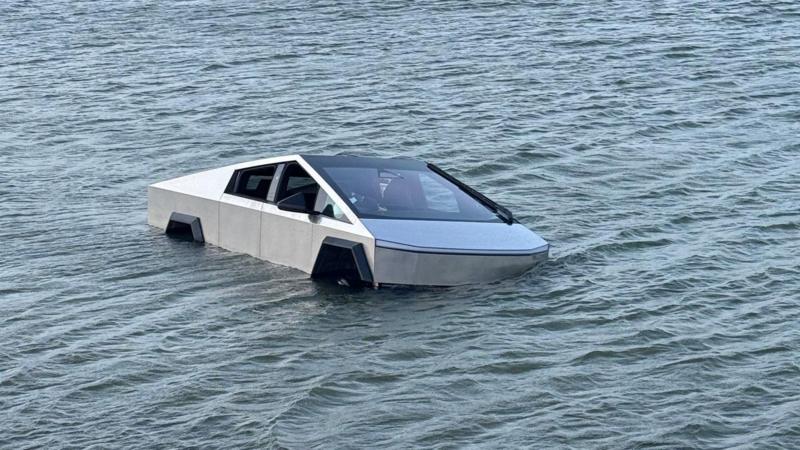
A man in Texas was arrested after driving his Tesla Cybertruck into Grapevine Lake to use its "wade mode," a feature designed to let the truck go through water up to about 32 inches deep. The vehicle became stuck and took on water, and the driver faced charges for driving in a closed part of the lake and water safety violations.
Key Facts
The incident happened at Grapevine Lake in north Texas.
The driver intentionally drove the Cybertruck into the water to try out the "wade mode."
Wade mode lets the Cybertruck drive through water up to 81.5 cm (32 inches) deep, measured from the bottom of the tire.
The vehicle became disabled, partially submerged, and had to be recovered with help from the local fire department's water rescue team.
The driver was arrested for operating a vehicle in a closed lake area and for water safety equipment violations.
Tesla warns drivers to check the water depth before entering and says damage from water is not covered by warranty.
Tesla advises against driving in fast or deep water, such as strong currents or rapids.
The Cybertruck is a new electric pickup made from durable steel, launched in 2019 and released to the public in 2023.
Read the Original
Want the full story? Tap a source to open the original
article.
A Tesla Cybertruck was pulled from a lake in Texas after the driver tried to use its "wade mode," which is designed to let the vehicle drive through shallow water. The truck became stuck, took on water, and the driver was arrested for illegal vehicle operation and water safety violations.
Key Facts
The Tesla Cybertruck was intentionally driven into a lake at Katie’s Woods Park in Texas.
The driver wanted to test the vehicle’s "wade mode," a feature made for driving through water up to about 32 inches deep.
The truck became disabled and filled with water, forcing the driver and passengers to leave the vehicle.
Police removed the half-submerged truck from the lake and arrested the driver.
The driver faced charges for driving in a closed park area and violating water safety rules.
Tesla’s manual says "wade mode" raises the truck’s height, protects it up to 32 inches of water, and requires slow speeds between 1-3 mph.
Drivers must fully close doors and windows and keep speed under 20 mph to enable "wade mode."
The manual warns drivers to check water depth before entering and notes the truck can sink in soft or muddy waterbeds.
Read the Original
Want the full story? Tap a source to open the original
article.
The article discusses the importance of clinical trials in healthcare and how they are currently underused as treatment options. It suggests that improving access to clinical trials by making them easier for patients to join could speed up the discovery of new therapies and improve patient care.
Key Facts
Clinical trials help develop new medical treatments and improve healthcare.
Many patients see clinical trials as a last option, not a regular choice.
This view limits how many patients join trials and slows down medical progress.
Making clinical trials more accessible can help more patients participate.
Expanding patient access can shorten the time it takes to find new treatments.
Efforts are focused on meeting patients where they are, likely meaning closer to home or through easier methods.
Improving trial enrollment benefits both patients and medical research.
Greater use of clinical trials can lead to more innovative therapies.
Read the Original
Want the full story? Tap a source to open the original
article.
The T1 Phone, a smartphone from Trump Mobile linked to President Donald Trump’s family, has finally started shipping after long delays. The phone was advertised as made in America and affordable, but customers are unhappy about delays, changes to the manufacturing claims, and some design issues like an incorrect American flag.
Key Facts
Trump Mobile, partly launched by President Trump’s sons, introduced the T1 Phone in June 2025.
The phone was promoted as an affordable, American-made alternative to brands like Apple and Samsung.
Hundreds of thousands of customers paid $100 deposits to pre-order the T1 Phone.
The launch faced delays, including citing a 43-day U.S. federal government shutdown as a reason.
The phone website changed the description from “Made in America” to “shaped by American innovation.”
Terms on the site warn there is no guarantee of phone delivery, production, or regulatory approval.
The phone started shipping about nine months late, but initial reactions have been mostly negative.
Customers pointed out design flaws, such as an American flag on the phone with the wrong number of stripes.
Read the Original
Want the full story? Tap a source to open the original
article.
A study by the thinktank Demos found that popular AI chatbots, including ChatGPT and Google Gemini, gave incorrect or misleading answers to many questions related to the recent Scottish election. The UK's Electoral Commission is calling for new laws to regulate AI platforms to prevent the spread of false information during elections.
Key Facts
Demos tested five free AI chatbots by asking 75 election-related questions about Scottish constituencies.
AI tools gave wrong answers to 34% of all questions asked.
ChatGPT was wrong in 46% of its answers, including inventing fake scandals and giving incorrect election dates.
Replika made mistakes in 56% of answers, inventing candidates and scandals.
Google Gemini made errors in 22% of answers, such as wrongly stating political positions and ongoing investigations.
Grok, an AI linked to Elon Musk’s platform X, had the lowest error rate at 9%, but its external links were often poor or irrelevant.
20% of British voters used AI tools for election information, which could be about 10 million people.
The Electoral Commission’s chief executive wants laws to hold AI companies accountable and give regulators more power during elections.
Read the Original
Want the full story? Tap a source to open the original
article.
Google DeepMind, the AI branch of Google, has agreed to hold formal talks with UK tech workers about union representation. This comes after staff raised concerns about DeepMind's AI being used by the US and Israeli governments for defense and intelligence purposes.
Key Facts
Several hundred Google DeepMind workers in London voted to form a union.
DeepMind refused to voluntarily accept the union for collective bargaining but agreed to talks through a government service called Acas.
A formal worker vote on union representation may happen in a few months.
A DeepMind AI researcher of Palestinian heritage is suing Google for wrongful dismissal after protesting work for Israel.
Israeli officials said Google’s cloud computing helped with military actions in the Gaza conflict.
Employees signed petitions worrying about AI being used in harmful weapons and surveillance after Google dropped a promise not to allow this use.
Google says it respects workers’ rights to join or not join unions and promises fair treatment regardless of their choice.
The Communications Workers Union says these talks show Google must address workers’ concerns about military and government contracts.
Read the Original
Want the full story? Tap a source to open the original
article.
Forza Horizon 6 is the newest driving game from Microsoft, letting players explore a recreated version of Japan and race cars in an open world. Driving games used to be very popular but lost ground to other types of games, though this new title shows the fun and excitement they can offer.
Key Facts
Forza Horizon 6 is available now on Xbox and PC, and will come to PS5 later.
The game features an open world based on real locations in Japan.
Driving games were the most popular video game genre from the 1990s to early 2000s.
Classic driving games include Ridge Racer, Daytona USA, Colin McRae Rally, Burnout, and Gran Turismo.
Newer mainstream games focus more on open-world adventures and live-service games like Fortnite and Minecraft.
Driving games appeal because many adults have experience with real cars, making them relatable and aspirational.
Driving games also offer a fantasy of freedom and excitement associated with open roads and fast cars.
The author hopes Forza Horizon 6 might help revive popular interest in driving games.
Read the Original
Want the full story? Tap a source to open the original
article.
The Software Freedom Conservancy (SFC) is suing Vizio, a smart TV maker, for not sharing the complete source code of its Linux-based TV operating system. A California jury will decide if Vizio must provide the full code, which would let users modify how their TVs work, such as reducing ads or stopping automatic tracking.
Key Facts
The SFC has been trying for eight years to get Vizio to release its smart TV software’s complete source code.
Vizio’s smart TVs run on an operating system based on Linux, specifically the Ubuntu version.
The lawsuit claims Vizio broke the GNU General Public License (GPL) by not sharing all code needed to run and modify the software.
A trial is set for August in the Orange County Superior Court in California.
If SFC wins, it could set a precedent for other smart TVs with Linux-based systems, like those from LG, Samsung, and Roku.
The case focuses on users’ rights to control and change the software on their devices.
Vizio and Walmart have not responded publicly to requests for comment on the lawsuit.
The Free Software Foundation, which manages GPL licenses, says there is no good reason for companies to withhold the full source code.
Read the Original
Want the full story? Tap a source to open the original
article.
China banned Nvidia's RTX 5090D V2 gaming chip while Nvidia's CEO Jensen Huang was visiting the country with President Donald Trump. This ban is part of China’s effort to block Nvidia’s chips and support its own chipmakers like Huawei and Cambricon as they develop AI technology.
Key Facts
China banned the Nvidia RTX 5090D V2 chip last Friday at customs.
The ban happened during Nvidia CEO Jensen Huang’s visit to China with President Trump.
The RTX 5090D V2 chip was made to follow US export rules and targeted Chinese gamers and AI developers.
China also blocked sales of other Nvidia chips like H200 and H20 products.
China wants to promote domestic chipmakers such as Huawei and Cambricon.
Huawei is expected to lead China’s AI chip market in 2026 with a 60% sales growth.
Morgan Stanley predicts China’s AI chip market will grow to $67 billion by 2030, with most chips made by Chinese companies.
Nvidia made about $17 billion in chip sales in China last year, mainly from H20 chips.
Read the Original
Want the full story? Tap a source to open the original
article.
Michael Wooldridge is a professor at Oxford who studies artificial intelligence (AI) and explains it in simple ways. He uses game theory, a method to understand strategic decisions, to explain global events like conflicts and competition.
Key Facts
Michael Wooldridge has worked in AI for over 30 years and is a professor at Oxford University.
He created accessible presentations about AI, such as the 2023 Royal Institution Christmas lectures.
Wooldridge wrote a book called "Life Lessons from Game Theory" that explains strategic thinking without using complicated math.
Game theory uses simple models, like the "chicken" game, to explain real-world situations involving conflict and competition.
Wooldridge uses examples like the Cuban missile crisis and the ongoing US-Iran conflict to show how game theory applies to international tension.
One way to resolve such conflicts is through communication or a third party offering incentives to change behavior.
Wooldridge also highlighted how AI concepts can be taught to children, such as through his involvement in an updated Ladybird book on AI.
He remains cautious and skeptical about AI but enjoys helping people understand its realities and potential.
Read the Original
Want the full story? Tap a source to open the original
article.
The robotics startup Figure AI is livestreaming humanoid robots that autonomously place packages on a conveyor belt. The event, which started as an eight-hour demo, has continued non-stop for days, showing robots working without human help and even competing with a human on the task.
Key Facts
Figure AI livestreamed robots placing thousands of packages onto a conveyor belt continuously for over 48 hours.
The robots work autonomously, reading barcodes and placing packages with the barcode facing down.
The robots use the Helix 02 neural network system, trained on over 1,000 hours of human motion data.
Each robot can work about 3 to 4 hours before needing to recharge, at which point another robot takes over.
The livestream became popular online, with viewers naming robots like Bob, Frank, Gary, Rose, and Jim.
Figure’s CEO, Brett Adcock, extended the demo from 8 hours to round-the-clock streaming to test reliability.
A "Man vs. Machine" competition was set up where a robot competes against a human to handle packages.
Figure also sells robot-themed merchandise inspired by the livestream event.
Read the Original
Want the full story? Tap a source to open the original
article.
Several U.S. child safety groups have asked the Federal Trade Commission (FTC) to investigate the gaming platform Roblox for risking children’s safety and encouraging excessive spending. The complaint focuses on in-game purchases, chat features, and design elements that may keep children playing longer and spending more money.
Key Facts
Child safety organizations Fairplay and the National Centre on Sexual Exploitation filed a complaint with the FTC against Roblox.
They raised concerns about children being pressured to spend money and exposed to unsafe contact through chat features.
Roblox uses a virtual currency called Robux, which can be bought and spent on avatar items and game passes.
A parent reported their 10-year-old spent over $7,000 in two months despite spending limits.
The complaint describes some game features as "gambling-like," with chance-based rewards and loot boxes.
Roblox uses age-estimation technology and blocks children from chatting with adults to improve safety.
Campaigners worry that children’s impulse control and peer pressure are exploited by the platform’s design.
Roblox said most games are free, only a small fraction of users spend money, and it bans gambling and similar practices.
Read the Original
Want the full story? Tap a source to open the original
article.
Child safety campaigners have asked the U.S. government to investigate Roblox, a popular online gaming and chat platform used by many children. They claim the platform exposes kids to harmful content and adults, and uses design features to make kids spend money impulsively.
Key Facts
Roblox has 150 million daily users, many of whom are under 13 years old.
Campaign groups filed a complaint with the Federal Trade Commission (FTC) about Roblox’s safety for children.
The complaint says Roblox’s chat features allow children to encounter sexual content and harmful adults.
The in-game currency, Robux, is said to encourage impulsive spending by children.
Roblox users can chat across large age gaps, such as 9-year-olds chatting with 16-year-olds.
Roblox recently added facial age checks and a system called Sentinel to detect child endangerment.
Roblox made $4.9 billion last year, with game creators earning $1.5 billion.
The FTC has previously focused on how technology companies exploit children’s attention online.
Read the Original
Want the full story? Tap a source to open the original
article.
Google is changing how its search engine works by adding new AI features that let users ask questions in a natural, conversational way instead of using keywords. The company is also introducing "agents" to provide ongoing updates and is planning AI-powered hardware like smart glasses.
Key Facts
Google expanded its search box to handle longer, chat-style questions.
AI-generated summaries already appear at the top of Google search results.
Google introduced "information agents" that can send alerts for repeated queries like concert announcements.
The Gemini app includes a personal assistant called Spark, which will work with Chrome and other apps.
A new feature called "Ask YouTube" combines text answers with video responses for how-to questions.
Google is developing AI smart glasses with Samsung and eyewear brands, releasing an audio-only model this fall.
Project Aura is a wearable device with a wider view than typical smart glasses, offered as a less immersive alternative to full mixed reality headsets.
Google aims to integrate AI into almost all its products, not just search, to compete with other AI chatbots.
Read the Original
Want the full story? Tap a source to open the original
article.
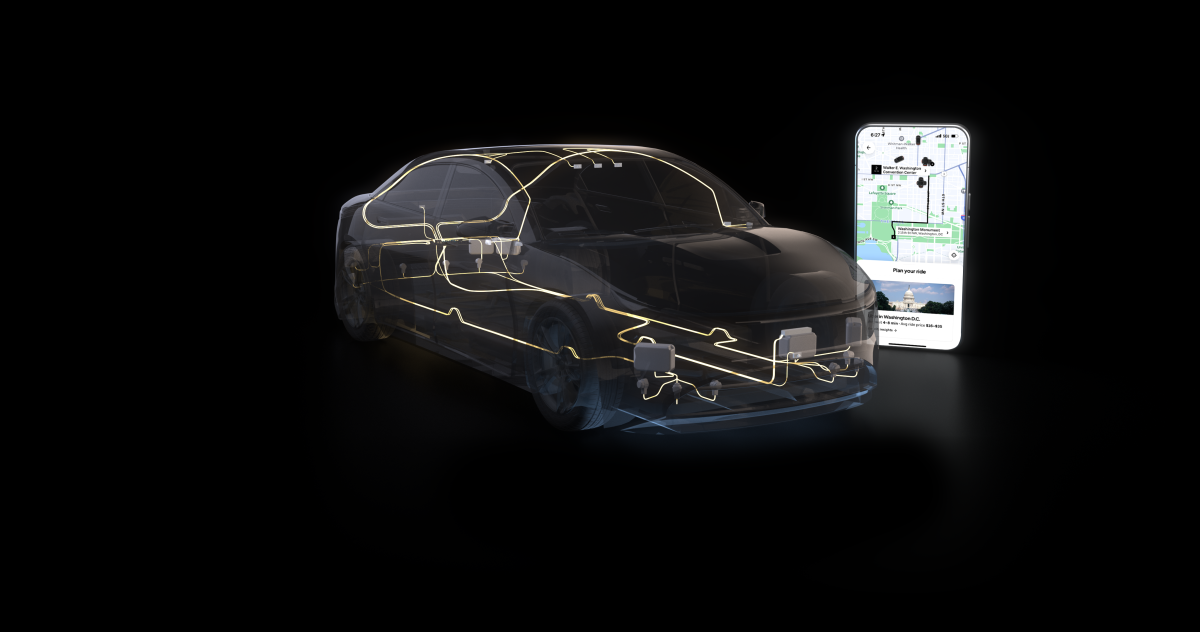
NVIDIA has developed a ready-to-use software package called DRIVE Hyperion and DRIVE AV L4 that helps car makers create self-driving cars without building the technology themselves. This system processes information faster than competitors and allows car companies to customize how their vehicles drive, with options from partial automation to fully autonomous driving in certain areas.
Key Facts
NVIDIA offers a standardized self-driving car software and hardware package called DRIVE Hyperion and DRIVE AV L4.
This system processes data about 42% faster than its closest competitor.
The software controls vehicle functions like steering, accelerating, and braking to enable autonomous driving.
Automakers can adjust the system to fit their brand and vehicle type.
The system supports various levels of autonomy, from Level 2++ (partial automation) to Level 4 (full automation in defined areas).
Mercedes-Benz was the first to use the full NVIDIA autonomous tech suite in its new CLA sedan.
Other car makers using parts of NVIDIA's technology include Hyundai, BYD, Zeekr, Isuzu, Stellantis, and Lucid Group.
NVIDIA won Newsweek’s award for the top innovator in automotive research and development for this technology.
Read the Original
Want the full story? Tap a source to open the original
article.
Volvo is introducing a new smart safety belt called the EX60, designed to adapt in real time to crash conditions and better protect different body types during accidents. This new belt system uses advanced sensors and has multiple force settings, aiming to save more lives worldwide. Volvo plans to share this technology with other carmakers in the future.
Key Facts
Volvo invented the three-point safety belt in 1959 and shared the patent openly.
Seat belts saved nearly 375,000 lives in the U.S. from 1975 to 2017.
The new EX60 safety belt uses inside and outside sensors to adjust the belt’s tightness during a crash.
It offers 11 levels of force adjustment to protect occupants of different sizes and in various crash types.
The belt is co-patented by Volvo and seatbelt maker ZF.
Volvo aims to make this technology available to other carmakers globally.
Volvo has studied over 50,000 real crashes involving 80,000 people to improve safety designs.
Volvo’s long-term goal is to eliminate car crashes through ongoing innovation, including using electrification and software development.
Read the Original
Want the full story? Tap a source to open the original
article.