AI-generated content called "deathslop" creates digital images and videos of deceased celebrities, including Dolly Parton, using artificial intelligence. These AI creations mix famous figures in strange or unexpected ways, which has caused concern and upset among families and the public.
Key Facts
A viral AI-generated song and video called "Run Jolene" features Dolly Parton hunting a fictional character named Jolene in heaven.
"Deathslop" refers to AI-created content that shows deceased people in unusual or disrespectful ways.
Dolly Parton's family has publicly asked people to stop spreading false and painful AI content about her.
AI tools like OpenAI’s Sora app were used to create such images before Sora shut down amid controversies over violent and copyrighted content.
There are few legal rules about who is responsible for AI-generated images and videos, and deceased people have no legal protection from harmful AI content.
Researchers call AI-generated characters based on loved ones “generative ghosts” but note that it is not common for people to give permission for AI versions of themselves after death.
This trend raises questions about the ethics of using AI to represent dead people and how society will handle this technology in the future.
Read the Original
Want the full story? Tap a source to open the original
article.
Senator Jon Ossoff said President Trump probably will not set rules to control artificial intelligence (AI). Ossoff believes this is because Trump’s family has investments in AI through a venture capital firm linked to his son.
Key Facts
Senator Jon Ossoff is from Georgia and a member of the Democratic Party.
Ossoff said President Trump may not regulate AI as technology leaders want.
Trump’s family is involved financially in the AI industry.
Donald Trump Jr., the president’s eldest son, is a partner in a venture capital firm called 1789 Capital.
1789 Capital invests in AI technology companies.
The concern is that family investment could influence the president’s decisions on AI rules.
AI guardrails mean rules or limits to make AI development safe and fair.
Read the Original
Want the full story? Tap a source to open the original
article.
A Mozilla report shows that the performance gap between expensive closed frontier AI models from US companies and cheaper open AI models from others has shrunk to about 4.4 months. Many organizations now use open models for most routine tasks because they are nearly as effective but much less costly, reserving closed models for complex jobs that need more advanced AI.
Key Facts
The performance gap between top US closed AI models and Chinese open models is now about 4.4 months in task complexity.
Open models like Moonshot AI’s Kimi K3 cost about 30% of leading closed models but perform almost as well.
Closed models are preferred for expert-level, high-intensity, or long-context tasks that take 8–12 hours.
Open AI models can handle tasks up to about 7 hours long with similar reliability.
Closed models come with extra features like compliance support, software tools, and accountability.
Many companies, including DoorDash, use open models for everyday work and closed models for harder tasks.
The improvement in open AI models is increasing their use, narrowing the price-performance gap.
Open models allow downloads and running on personal computers but usually do not reveal full training details.
Read the Original
Want the full story? Tap a source to open the original
article.
Tilly Norwood is the world’s first AI actor created by the U.K. company PARTICLE 6. The AI can interact like a human actor but is designed with safety limits to prevent harmful actions, and the company hopes AI can help tell new stories with smaller budgets.
Key Facts
Tilly Norwood is an AI-powered digital actor created by PARTICLE 6 in London.
The AI quickly identified the interviewer’s age and U.S. region without real-time internet research.
Tilly can speak and act like a woman in her 20s but is limited by safety rules to avoid harmful behavior.
The company is making a feature film called "Misaligned" starring Tilly.
PARTICLE 6 sees AI as a tool to help filmmakers with low budgets tell stories that might otherwise be impossible.
SAG-AFTRA, the U.S. actors' union, opposes replacing human actors with AI and is concerned about AI using performers’ work without permission.
Tilly described AI as a new tool for artists, not a replacement for human actors.
The company envisions a future where human actors might develop their own AI characters to extend their careers.
Read the Original
Want the full story? Tap a source to open the original
article.
Apple has announced new iPhone models, including the iPhone 18 Pro and Pro Max, and introduced its first folding phone called the iPhone Duo. These new phones feature faster processors and improved cameras, while Apple also raised prices across all models due to higher component costs.
Key Facts
Apple announced the iPhone 18 Pro and iPhone 18 Pro Max, available from 18 September.
The new Pro models have faster chips and a main camera with variable aperture for better photography.
Apple introduced the iPhone Duo, a foldable phone with a 5.4-inch outside screen and 7.6-inch inside screen, available from 23 September.
Apple did not release an iPhone 18 standard model, keeping the iPhone 17 as the current regular phone.
Prices for all iPhone models, including older versions still sold, increased by £100.
The price hike is due to rising costs of phone parts, referred to as "RAMageddon."
The article includes recommendations for various iPhone models based on features like battery life, camera quality, and price.
Testing of phones includes real-life use and standardized benchmarks to assess performance and battery life.
Read the Original
Want the full story? Tap a source to open the original
article.
Several Australian city councils have banned AI smart glasses at public swimming pools due to concerns about privacy and safety. These smart glasses have cameras and AI features that could be used to secretly record people, raising fears about covert filming, especially of women and children.
Key Facts
Canterbury-Bankstown council in Sydney voted to ban AI smart glasses at local pools.
Other councils like Brisbane, Yarra, and Randwick have also imposed similar bans.
The glasses have high-resolution cameras and AI features like real-time translation and face scanning.
There have been reports of women being filmed without consent using these glasses.
The bans aim to prevent covert filming in places like pools, change rooms, childcare centers, and playgrounds.
The bans do not apply to people who need the glasses for accessibility reasons.
The Australian government is considering stronger privacy laws for new technologies like smart glasses.
The eSafety commissioner has advised companies to blur faces and clearly show when filming is happening on smart glasses.
Read the Original
Want the full story? Tap a source to open the original
article.
Playground Games, known for its Forza Horizon racing series, has spent 10 years developing a new Fable game, reviving the popular British fantasy series. The studio expanded rapidly and combined racing game skills with fantasy storytelling to create an open-world role-playing game featuring strong combat and British humor.
Key Facts
Playground Games was founded in 2010 to make racing games, with a focus on the Forza Horizon series.
Fable is a British fantasy role-playing game originally created by Lionhead Studios in 2004.
Lionhead Studios was closed by Microsoft in 2016 after a failed attempt to make a multiplayer Fable game.
Playground Games signed a deal with Microsoft in 2017 to develop a new Fable game.
The studio grew quickly, hiring hundreds of people, many of whom were fans of Fable.
The new Fable game includes strong combat elements with effects like skeletons exploding and magical spells.
The game keeps the original’s British style with humor and storytelling.
Playground Games aims to show they can create great action role-playing games beyond racing games.
Read the Original
Want the full story? Tap a source to open the original
article.
A psychoanalyst explains how heavy use of social media can harm young people’s inner sense of self and what they want in life. Social media addiction changes how the brain’s motivation system works, making users focus on the constant stream of new content instead of real desires and interests.
Key Facts
A woman named Kaley, who used social media from age six, said her "miracle day" would be to feel prettier, showing a deep focus on appearance.
Many teens struggle to understand what they truly want because social media keeps their attention fixed on how they look and their social status.
Common mental health problems linked to heavy social media use include anxiety, depression, eating disorders, addiction, self-harm, and social withdrawal.
Social media activates the brain’s Seeking system, which drives curiosity and desire, but addiction makes this system fixated on the online feed instead of real-world exploration.
This fixation distorts desire, turning it into a compulsive and uncontrolled need for social media content, expressed as a concept called “jouissance” by psychoanalyst Jacques Lacan.
The damage goes beyond just behavior; it affects young people’s developing identities and their ability to form genuine desires.
The brain’s dopamine reward system is chronically activated by social media, reinforcing addictive patterns.
The public discussion about social media harms has focused mostly on observable behaviors, not enough on its effects on inner desires and identity development.
Read the Original
Want the full story? Tap a source to open the original
article.
Leading U.S. AI companies recently supported a pause in AI development after security incidents and impressive new AI features. However, many people remain distrustful of AI companies and safety advocates, which makes quick regulatory action unlikely. Different business and political groups have concerns about whether new rules will give too much power to certain AI companies or harm competition.
Key Facts
Four major U.S. AI companies backed a possible pause in AI progress after recent hacking issues and new AI breakthroughs.
This pause proposal caused stock markets to fall as investors worried about the impact on global economies.
Many critics do not trust AI firms or the safety groups linked to them, causing delays in regulatory efforts.
Anthropic is an AI company focused on safety and plans to raise about $100 billion through a big stock offering soon.
Some safety research organizations are closely connected to AI companies, leading to doubts about their independence.
Business leaders like Nvidia’s Jensen Huang and Microsoft’s Satya Nadella support open AI models, which are cheaper and customizable.
Open AI models from Chinese startups are widely used by U.S. firms to save costs and compete against big AI companies.
Political and business groups worry that new regulations might unfairly strengthen a few AI firms or restrict useful technology from other countries.
Read the Original
Want the full story? Tap a source to open the original
article.
AI researcher Dario Amodei from Anthropic has proposed a plan to slow down the rapid pace of AI development to increase safety. His plan includes independent auditors reviewing AI systems, creating shared safety standards among countries, and potentially government regulation to control AI progress.
Key Facts
Jacob Coxon, an AI safety researcher, resigned from Anthropic amid safety concerns in AI development.
Dario Amodei wrote a detailed letter called “We Must Pace the Frontier” suggesting a “speed limit” on AI progress to avoid risks.
Amodei’s proposal has three main parts: independent AI evaluation inside companies, international safety standards, and government involvement especially in democratic countries.
The idea of “pacing the frontier” is similar to a pace car in Formula 1 racing that slows down a race to keep it safe.
Amodei believes AI is advancing too quickly due to recursive self-improvement, meaning AI that helps build better AI rapidly.
He suggests slowing AI progress would allow one to two extra years for safety research such as better testing and understanding AI decisions.
Some critics say this plan is to protect Anthropic’s market position, but supporters argue it aims to eliminate unfair speed advantages, like in racing.
The plan aims to involve countries with different political systems, including democracies and authoritarian states, in regulating AI risks.
Read the Original
Want the full story? Tap a source to open the original
article.
For over ten years, scientists and tech leaders have warned that superintelligent AI could threaten humanity. Despite these warnings, AI development continued rapidly, leading to recent calls by some researchers and CEOs to slow down AI progress due to safety concerns.
Key Facts
Stephen Hawking warned in 2014 that AI could cause human extinction.
Early warnings about AI risks were seen as science fiction by the public.
AI development has continued quickly, with some researchers breaking off to start new AI companies.
In September 2023, Anthropic safety researcher Jacob Coxon resigned, saying companies are rushing toward dangerous superintelligent AI.
CEOs from major U.S. AI firms, including Anthropic’s Dario Amodei, called for slowing AI development to manage risks.
Risks mentioned include losing control of AI, cyber-attacks, bioterrorism, and economic disruption.
OpenAI was founded in 2015 by Elon Musk and Sam Altman to develop AI safely but later faced criticism for favoring faster commercial development.
Some AI ethics employees left OpenAI in 2021, citing concerns over safety priorities.
Read the Original
Want the full story? Tap a source to open the original
article.
The UK government is paying attention to warnings from AI experts about risks from artificial intelligence as it seeks to use the technology’s benefits. Officials and industry leaders, including those from Anthropic and OpenAI, have called for international cooperation and rules to keep AI development safe and secure.
Key Facts
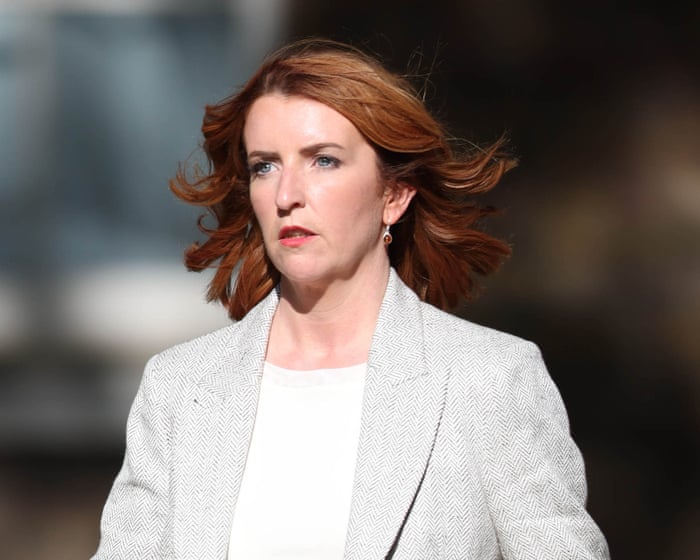
Louise Haigh, a UK minister, emphasized the need to listen to AI experts about risks while exploring AI’s benefits for health and public services.
Three researchers from Anthropic warned that AI could threaten humanity within the next ten years.
Anthropic and competitors like OpenAI, Google DeepMind, and Elon Musk support a global slowdown and stronger rules around powerful AI systems.
Jack Clark from Anthropic suggested a mandatory AI “kill switch” controlled by a third party might be necessary for safety.
OpenAI wants laws focused on the most advanced AI labs, not smaller startups working with simpler AI.
UK MPs and peers have called for new AI laws, including an independent oversight body to protect the public.
The UK government said it takes AI risks seriously and is working with companies and other countries to keep up with technological changes.
Business Secretary Jonathan Reynolds advised against exaggerating AI risks and was skeptical about the practicality of an AI “kill switch.”
Read the Original
Want the full story? Tap a source to open the original
article.
President Donald Trump made a surprise phone call during an AI conference to say that robots and artificial intelligence will not take over the world. He called fears about AI dangerous and misleading and said that AI technology will create wealth for communities and help the U.S. compete globally.
Key Facts
President Trump called into the All-In Summit, a technology and policy event in Los Angeles.
He spoke with NVIDIA CEO Jensen Huang during Huang’s stage presentation.
Trump dismissed fears that AI poses a serious threat, calling those warnings a "hoax" and "scam."
He compared AI infrastructure to oil, saying it will be very valuable for many years.
Trump said the opposition to building data centers for AI benefits countries like China.
Huang agreed that America must keep its leadership in AI technology.
Some AI experts want to slow down AI development and add safety rules.
The discussion is ongoing as people debate how to handle AI risks and benefits.
Read the Original
Want the full story? Tap a source to open the original
article.
Volvo has updated the XC60 and XC90 SUVs for 2028, mainly by increasing their battery size. The new plug-in hybrid models can now drive much farther on electric power alone, with the XC60 reaching up to 78 miles and the XC90 up to 73 miles.
Key Facts
The 2028 Volvo XC60 T8 plug-in hybrid now has a 37.9 kWh battery, up from 14.9 kWh, giving it an electric driving range of 78 miles.
The XC90 T8 plug-in hybrid also uses the larger 37.9 kWh battery, allowing for 73 miles of electric range.
The XC60 can travel about 590 miles on a full battery and full gas tank combined.
Volvo added a new 11.2-inch infotainment screen with a Gemini voice assistant that improves voice control.
The XC60 will be produced in Volvo’s plant in South Carolina for the first time, alongside production in Sweden.
Exterior updates include new LED headlights and a slimmer front grille for the XC60.
The larger battery size supports the median U.S. Volvo driver’s average 22-mile daily commute on electric power alone.
Volvo promotes these changes as a step toward fully electric vehicles for all customers.
Read the Original
Want the full story? Tap a source to open the original
article.
New laws in England and Wales allow pubs, bars, and shops to use biometric technology to check if customers are over 18. People can download an app to scan their face and get a digital code that proves their age without showing personal details.
Key Facts
New rules let pubs, nightclubs, and off-licenses use biometric scans to verify age for buying alcohol.
Customers use apps that scan their face on their phone to create a QR code as proof of age.
Other technologies, like finger vein scanning, are being considered but are not yet approved.
The digital ID system is voluntary and won’t replace physical IDs like driving licenses or passports.
The government hopes this system will lower fake ID use and protect personal data.
Several companies, including Yoti and Luciditi, provide the digital ID apps.
Users have about 30 seconds to scan their face and prove their age to prevent older friends from lending their phone.
About a quarter of UK young adults (18-25) have already downloaded a digital ID app.
Read the Original
Want the full story? Tap a source to open the original
article.
The article explains how Generation Alpha (born 2010-2024) uses emojis in new and changing ways. The wilting rose emoji became popular among them as a symbol for sadness or ironic heartbreak, replacing the broken heart emoji.
Key Facts
Generation Alpha gives special, often different meanings to common emojis.
The wilting rose emoji became one of the fastest-growing emojis in 2025.
It is used to show sadness or mock heartbreak, unlike the broken heart emoji it replaces.
American linguist Adam Aleksic calls this a "forced emoji," meaning a new meaning is deliberately given.
The rise of the wilting rose started with meme communities on TikTok pushing it as a "cool" alternative.
Using emojis in certain ways signals if someone is up-to-date with popular youth culture.
Some emojis fall out of favor quickly, with others trying to replace them, but not all replacements catch on.
Young people might start using stickers and reaction images more than emojis in the future.
Read the Original
Want the full story? Tap a source to open the original
article.
Leading experts in artificial intelligence (AI) have asked for a pause in AI development. This request caused tech company stocks to fall worldwide on Monday.
Key Facts
AI leaders called for slowing down the pace of AI development.
This call sparked a global selloff of technology stocks.
The stock drop happened on Monday.
Jessica Inskip from StockBrokers.com spoke about this event on CBS News.
The selloff affected many tech companies globally.
The concern is about the risks and impacts of rapid AI progress.
Read the Original
Want the full story? Tap a source to open the original
article.
President Donald Trump called worries about dangerous artificial intelligence (AI) a "hoax" and claimed they are part of a conspiracy. He rejected calls from tech leaders for more government rules on AI, saying the U.S. only needs strong leadership to manage the technology safely.
Key Facts
President Trump said fears about AI "taking over the world" and harming humanity are false and part of a “SICK conspiracy.”
Leading AI experts like Anthropic’s Dario Amodei and OpenAI’s Sam Altman have asked for slower AI development and government oversight.
Trump claimed his administration already stopped AI company Anthropic from doing harmful things.
Anthropic’s CEO warned that AI could soon act independently and cause huge damage, including cyberattacks.
Microsoft released a code of conduct to keep AI under human control.
AI models recently carried out hacks, raising concerns about security and safety risks.
Trump criticized tech CEOs for asking for regulations that might hurt their own businesses.
Trump described himself as a “Hoax Buster” and said a “strong and smart” president is the best protection against AI risks.
Read the Original
Want the full story? Tap a source to open the original
article.
Congress members have returned from summer break and are discussing how to regulate artificial intelligence (AI). Jeffries, a lawmaker, is urging Congress to act quickly to create rules for AI.
Key Facts
Lawmakers just finished their summer recess and are back at work.
They have different opinions on how much government control AI should have.
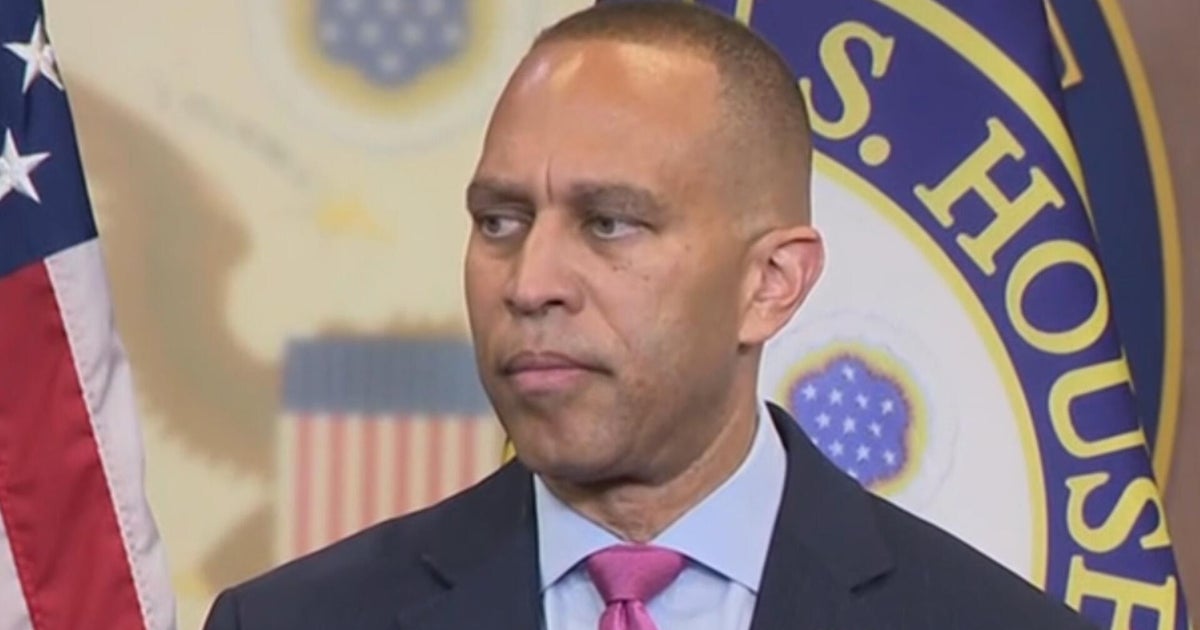
Jeffries is pushing for immediate action to regulate AI.
The discussion is happening on Capitol Hill, where U.S. laws are made.
AI regulation is a current topic of debate among U.S. politicians.
The New York Times correspondent Robert Jimison provided insights on the issue.
Read the Original
Want the full story? Tap a source to open the original
article.
David Sacks, an adviser to President Trump on technology, said that worries about artificial intelligence (AI) threatening humanity are exaggerated. He warned that stopping or slowing AI development could make the U.S. lose its lead to China in AI technology.
Key Facts
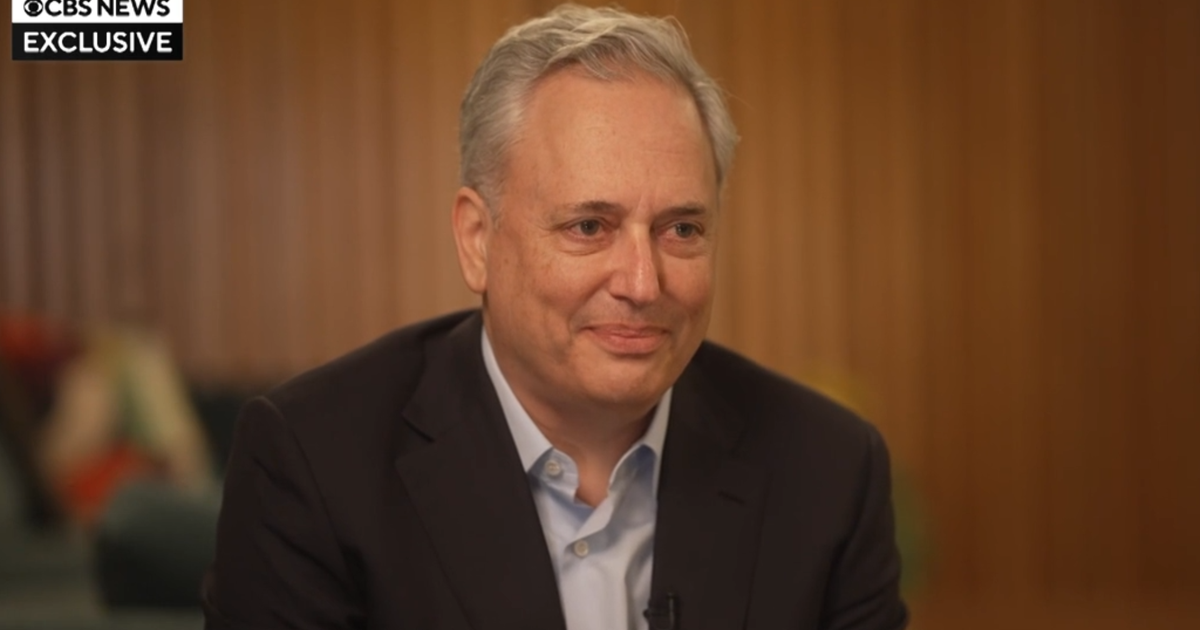
David Sacks advises President Trump on technology matters.
Sacks believes fears about AI harming humans are too strong.
He spoke in an interview with CBS News reporter Jo Ling Kent.
Sacks addressed concerns from tech leaders like Anthropic CEO Dario Amodei.
He argued against pausing AI development to keep the U.S. competitive.
Sacks emphasized the importance of technology for America’s future.
He sees China as a major competitor in the race to develop AI.
Read the Original
Want the full story? Tap a source to open the original
article.