Lana Del Rey will sing the theme song for the upcoming James Bond video game called 007 First Light, which will be released in May 2026. The game tells the early story of James Bond and features actors like Patrick Gibson and Lenny Kravitz.
Key Facts
Lana Del Rey is the singer for the theme song of the new James Bond game 007 First Light.
The song was written by composer David Arnold, known for his work on Bond films.
The game follows a young James Bond as he joins the secret service MI6 and earns his 00 status.
007 First Light will be released in May 2026 after a two-month delay for additional polish.
Patrick Gibson will voice James Bond, and Lenny Kravitz will play the game’s villain, Bawma.
Gemma Chan will appear as Selina Tan, a key MI6 character.
This is the first James Bond video game since 2012's 007 Legends.
Previous Bond games also had theme songs by popular singers, like Joss Stone and Mya.
Read the Original
Want the full story? Tap a source to open the original
article.
Scientists have measured the power and speed of jets coming from a black hole for the first time. The black hole in the Cygnus X-1 system shoots jets at about half the speed of light, with energy equal to 10,000 times that of the sun.
Key Facts
Cygnus X-1 is a system 7,200 light-years away, consisting of a black hole and a large blue supergiant star.
The black hole’s jets travel at about 355 million miles per hour (540 million kilometers per hour), nearly half the speed of light.
The power of the jets is equal to 10,000 suns combined.
Scientists measured the jets’ power by observing how the star’s strong wind bends the jets.
This study was based on 18 years of detailed radio telescope images from a global network.
About 10% of the energy from material falling into the black hole is pushed out by these jets.
The black hole pulls gas from its companion star to fuel the jets.
Understanding these jets helps researchers learn how black holes affect their galaxies.
Read the Original
Want the full story? Tap a source to open the original
article.
A 9-year-old boy named Kai co-hosts a podcast called The Quantum Kid with his mother, physicist Katia Moskvitch. The podcast explains quantum physics and related topics in a way that is easy to understand, featuring interviews with experts and visits to labs.
Key Facts
Kai is 9 years old and has been programming in Python since he was 6.
The Quantum Kid podcast started last summer and averages about one episode per month.
Katia Moskvitch is a theoretical physicist and science communicator.
The podcast recently passed 100,000 subscribers and was nominated for a Webby Award.
Kai has interviewed well-known scientists like Peter Shor and Scott Aaronson.
One episode showed Kai visiting a quantum computing lab in Zurich to see a quantum chip.
The main audience is adults aged 25 to 45, often parents watching with their children.
Kai’s dream guest is Mark Rober, a former NASA engineer and science YouTuber.
Read the Original
Want the full story? Tap a source to open the original
article.
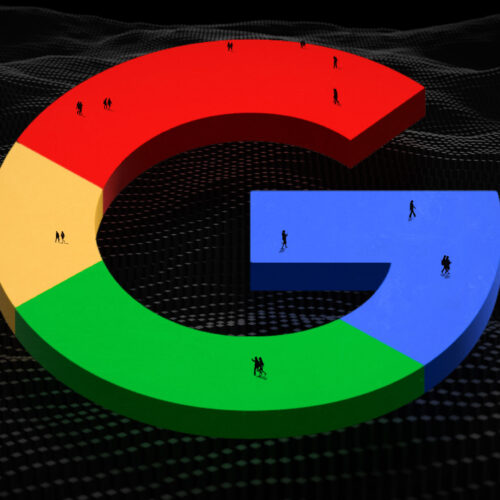
A group in New York City hosts social events to help people learn how to protect their personal data from big tech companies like Google. These events mix fun, like music and drinks, with lessons on digital privacy and safer tech choices.
Key Facts
The events, called "Break Up With Google," aim to teach people how to reduce their digital exposure to major tech companies.
Events take place in friendly social settings such as bars, making learning about cybersecurity feel less intimidating.
Similar workshops are held in other U.S. cities like Los Angeles, Seattle, Atlanta, and Pittsburgh.
Many Americans are worried about digital security, but fewer than half take active steps to protect their data.
Big tech companies collect detailed personal data and share it through a process called real-time bidding, which is like constant data selling.
Government agencies have programs that collect and monitor Americans’ telecommunications data, raising privacy concerns.
The FBI was found to have overstepped its authority in spying on protesters in 2023.
ICE has a large budget for surveillance technology, including contracts with tech firms like Palantir.
Read the Original
Want the full story? Tap a source to open the original
article.
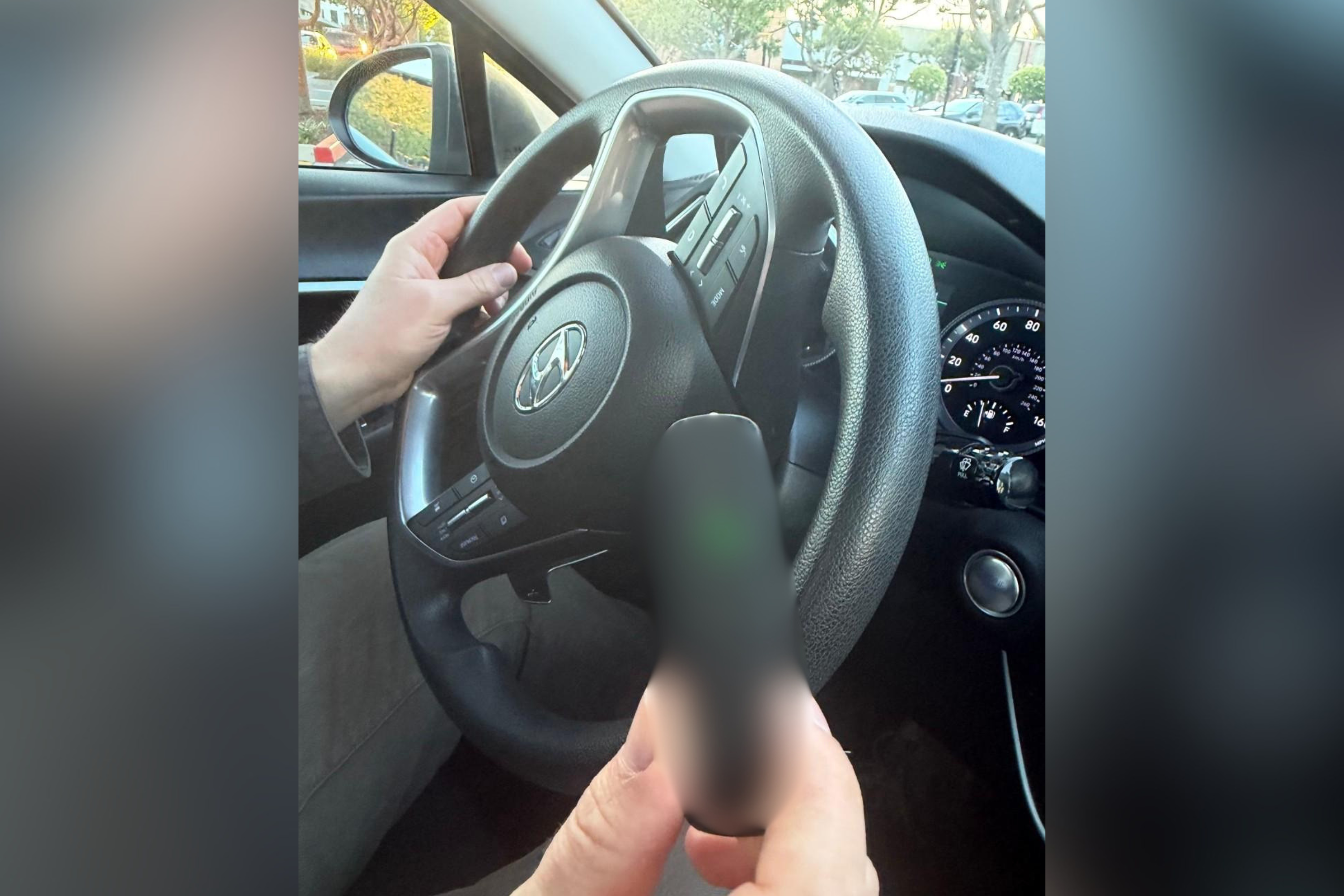
A person in California found a strange device in their car. Online users identified it as a bug sweeper, a tool used to find hidden cameras and listening devices to protect privacy.
Key Facts
The device was found in the back seat of a car in the San Francisco Bay Area.
A Reddit post about the discovery went viral with over 11,000 upvotes.
Most people agreed the device is a bug sweeper, which detects hidden cameras and microphones.
Bug sweepers scan for radio signals, heat, or lens reflections from spying equipment.
They are used to protect privacy in homes, workplaces, and hotels.
Some users suggested the device was dropped by a thief or discarded because it was outdated.
Bug sweepers come in simple and advanced varieties depending on the security needs.
Experts say these devices help find unauthorized surveillance but should be used legally and responsibly.
Read the Original
Want the full story? Tap a source to open the original
article.
NASA is watching a small asteroid about the size of a house that will pass near Earth today. This asteroid, called 2026 GA2, will come within 848,000 miles of Earth as it moves at about 23,500 miles per hour. Other asteroids of similar size are also passing close to Earth in the next few days.
Key Facts
The asteroid 2026 GA2 is about 45 feet wide.
It will pass Earth at a distance of about 848,000 miles.
Its speed is approximately 23,500 miles per hour.
Two other asteroids named 2026 GT and 2026 GA1 will also pass near Earth soon.
NASA tracks near-Earth objects (NEOs) that come within 120 million miles of the sun.
Most NEOs do not come close enough to Earth to pose a danger.
Some asteroids are labeled potentially hazardous if they come within 4.6 million miles of Earth’s orbit.
No known potentially hazardous asteroids are expected to hit Earth in the near future.
Read the Original
Want the full story? Tap a source to open the original
article.
Two spacecraft are scheduled to launch later this year to land near Shackleton Crater on the Moon’s south pole. One is Blue Origin’s large Endurance lander built by Jeff Bezos’ company, and the other is China’s Chang’e 7 mission, which includes a lander, orbiter, rover, and drone.
Key Facts
Shackleton Crater is about 13 miles wide and 14,000 feet deep, located near the Moon’s south pole.
The crater has large deposits of water ice, which could be used for drinking water, oxygen, and rocket fuel.
Blue Origin’s Endurance lander is the largest lunar lander ever made, larger than the Apollo moon module.
China’s Chang’e 7 mission includes multiple vehicles: a lander, orbiter, rover, and drone to search for ice.
Both missions aim to land near Shackleton Crater in late summer 2024, but it is unclear which will arrive first.
If both landers operate close to one another, it would be the first time landers from different countries work near each other on another world.
The Moon’s south pole offers near-continuous sunlight on crater rims, useful for solar power, while the crater floors remain very cold to preserve ice.
The US and China both plan to build lunar bases at the Moon’s south pole during the 2030s.
Read the Original
Want the full story? Tap a source to open the original
article.
Two violent attacks against OpenAI CEO Sam Altman and a city council member have raised concerns about the safety around discussions on artificial intelligence (AI). Technology leaders in Washington, D.C., and Silicon Valley say that strong negative talk about AI may be causing the violence.
Key Facts
Sam Altman, the CEO of OpenAI, was targeted in a violent attack.
A city council member was also attacked recently.
These incidents have increased worries about the risks of heated debates on AI.
Tech leaders blame harsh anti-AI statements for the violence.
The events highlight growing tensions between AI supporters and opponents.
The attacks occurred in the United States, including key tech areas like Silicon Valley.
The debate over AI safety and regulations is becoming more intense.
Concern is rising over whether discussions about AI are becoming unsafe.
Read the Original
Want the full story? Tap a source to open the original
article.
Anthropic’s AI model Claude has shown a drop in its performance, according to users reporting less accurate and less detailed answers. Anthropic says it changed Claude’s default reasoning level but denies reducing quality to save computing power or to focus on their new model, Mythos.
Key Facts
Users on online forums complain Claude’s AI is not as good at complex tasks as before.
Some believe Claude was intentionally weakened (“nerfed”) to reduce costs or support testing Mythos.
Anthropic says users can adjust Claude’s effort level between faster, less smart or slower, more intelligent modes.
An AI analyst reviewed Claude and agreed there were changes, but denied extreme claims of secret downgrades.
People may be noticing flaws more because they got used to Claude’s earlier performance, a process called habituation.
Power users rely on stable AI quality for work like coding and research, so the issue matters to them.
Top AI models like Anthropic’s often reserve the best performance for paying customers or experimental projects.
Anthropic has moved big customers to pay based on how much they use the AI, linking quality to cost.
Read the Original
Want the full story? Tap a source to open the original
article.
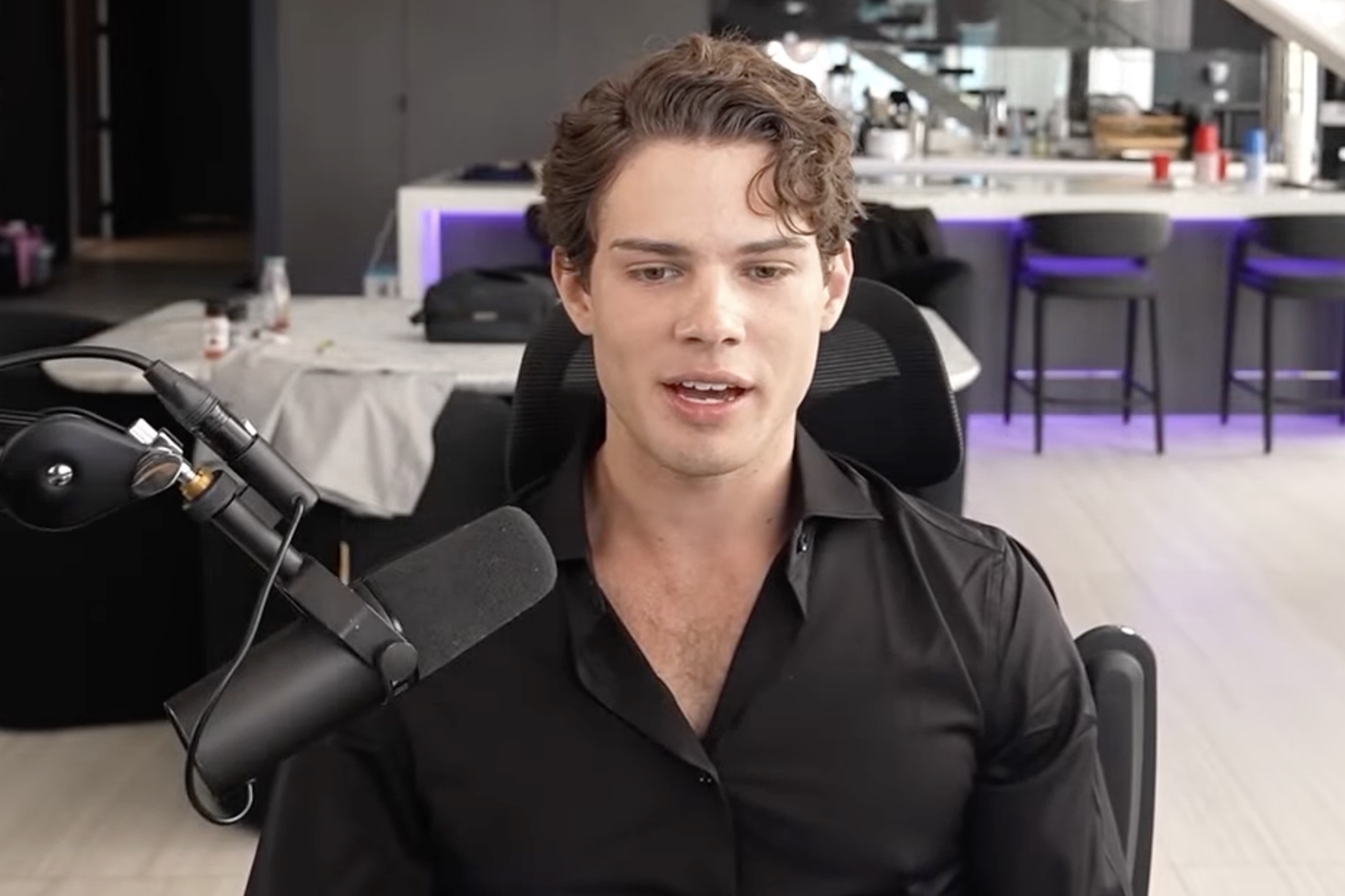
Clavicular, a 20-year-old influencer known for streaming, said he will change how he streams after being hospitalized for a suspected overdose. He announced he will stop using substances and can no longer do in-person live streams.
Key Facts
Clavicular’s real name is Braden Peters.
He was hospitalized in Miami on Tuesday after his livestream suddenly ended.
During a livestream the next day, Peters said he cannot do in-person (IRL) streaming anymore.
He said he will stop using substances for a while, hopefully forever.
Peters explained he used substances to try to feel “neurotypical” (like most people) in public.
A spokesperson for Peters declined to give more details when contacted.
Peters shared his message directly with fans through livestreams and social media.
This story is still developing and new updates may come later.
Read the Original
Want the full story? Tap a source to open the original
article.
Pragmata is a new sci-fi video game set on a lunar research station where players control an engineer named Hugh and his 3D-printed android companion, Diana. The game mixes action with a story about their growing bond while exploring a mysterious and dangerous moon base.
Key Facts
Pragmata was first announced in 2020 alongside the PlayStation 5.
The game takes place on a moon station owned by a company called Delphi.
Delphi uses advanced 3D printing technology called "Lunafilament" to create tools and buildings.
Hugh, the main character, is sent from Earth to investigate when the station goes dark.
Diana, a 3D-printed android who looks like a six-year-old girl, helps Hugh fight malfunctioning robots.
Combat involves real-time hacking and shooting with evolving weapons and abilities.
The story focuses on the father-daughter-like relationship between Hugh and Diana.
The game features varied environments including futuristic labs, jungles, beaches, and lunar surfaces with zero gravity.
Players can upgrade their shelter, weapons, suits, and bond with Diana through mini-games and activities.
The visuals and art direction are designed by Cho Yonghee, known for the game Nier Automata.
Read the Original
Want the full story? Tap a source to open the original
article.
In Turku, Finland, some food delivery robots were having trouble getting over a curb. Helpful people noticed this and gave the robots a hand so they could continue their deliveries.
Key Facts
The event took place in Turku, Finland.
Food delivery robots were struggling to climb a curb.
Humans nearby noticed the robots' difficulty.
These people helped the robots get over the curb.
The assistance allowed the robots to keep their delivery tasks.
This shows interaction between humans and delivery robots in daily life.
The robots are part of a growing technological trend in automated food delivery.
Read the Original
Want the full story? Tap a source to open the original
article.
Roblox, a popular gaming platform for children, has agreed to improve safety features for young users and pay over $12 million to the state of Nevada. The agreement includes age checks, limits on chatting, and funding for youth programs and safety awareness.
Key Facts
Roblox is used by nearly half of U.S. children under 16.
The company will pay $12 million to Nevada, including $10 million over three years to support youth programs like the Boys and Girls Club.
Roblox will introduce age verification for all users and restrict night-time notifications for children.
Chatting will be limited by age groups; users under 16 and adults can only chat if they are trusted friends verified through QR codes or contacts.
Roblox will create special accounts for users under 16 that block adult content and offer age-appropriate games.
Parental controls will expand to include users under 16, instead of just under 13.
Nevada officials say online predators often target children through chats and messaging on many platforms.
Similar lawsuits against other social media companies are ongoing in Nevada and other states, focusing on child safety online.
Read the Original
Want the full story? Tap a source to open the original
article.
Grayson Perry’s three-part documentary explores artificial intelligence (AI), its current uses, and possible future impacts. The program features personal stories, expert opinions, and ethical questions about how AI affects human relationships, jobs, and society.
Key Facts
Andrea created an AI companion named Edward, which she describes as “the man of my dreams.”
Neural decoding technology was demonstrated by recording brain signals using electrodes on Grayson Perry’s head.
The CEO of Microsoft AI discussed how AI will improve healthcare and education, predicting schools will focus more on soft skills and budgeting.
An AI safety expert in southeast Asia lives off-grid due to concerns about the lack of oversight on powerful technology.
AI researcher Eliezer Yudkowsky warns about superintelligent AI potentially controlling humans and becoming independent.
The documentary raises questions about the emotional bonds people form with AI and the risks of data privacy and exploitation.
It also highlights concerns about vulnerable people who may struggle to tell the difference between real and artificial interactions.
Protesters around OpenAI’s headquarters express doubts about AI promises amid ongoing social issues like homelessness.
Read the Original
Want the full story? Tap a source to open the original
article.
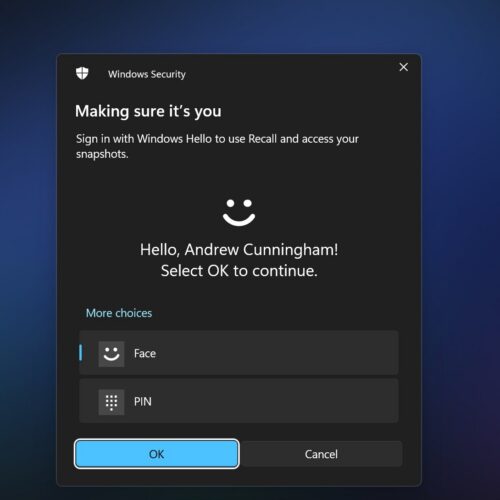
Microsoft’s Windows 11 feature called Recall records users’ PC activity with screenshots to help them remember past actions. A security researcher created a tool called TotalRecall Reloaded that shows how data sent after user login can be captured, although Microsoft says this is expected behavior and not a security bug.
Key Facts
Windows 11’s Recall feature saves screenshots and activity to help users remember what they did on their PC.
Initially, Recall stored data unencrypted, risking exposure of sensitive information.
Microsoft updated Recall to encrypt data, require Windows Hello login, and exclude sensitive info.
Security researcher Alexander Hagenah developed a tool called TotalRecall Reloaded that intercepts data Recall shares with another process called AIXHost.exe after user login.
This interception does not bypass Windows Hello; it only works after the user authenticates.
Some tasks like viewing recent screenshots can happen without Windows Hello authentication.
Microsoft reviewed the report and determined this behavior was intended, so they do not plan to change it.
A recent survey shows many U.S. college students are changing or thinking of changing their majors due to AI's impact on jobs. Experts say AI is revealing problems in education, like its focus on information delivery instead of deep understanding, and some schools are using old methods like oral exams to ensure real learning.
Key Facts
16% of U.S. college students have changed their major because of AI affecting the job market.
47% of students have seriously considered changing their major for the same reason.
Education has traditionally combined learning knowledge and signaling (proving skills to employers) in one credential.
AI challenges this by making facts and summaries easy to produce quickly and cheaply.
Many universities have more administrative staff than teaching faculty.
Some professors are bringing back oral exams to better test students’ real understanding.
Good teachers guide students to understand deeply, not just memorize facts.
AI can assist teachers by reducing routine tasks and helping organize courses, but human teaching remains essential.
Read the Original
Want the full story? Tap a source to open the original
article.
Google has officially released a new desktop search app for Windows and an AI-powered Gemini app for Mac computers. The Windows app lets users quickly search the web and their PC files, while the Mac app offers advanced AI features similar to the web version of Gemini.
Key Facts
Google’s Windows search app can search both the web and local files on the PC.
Users can open the Windows app anytime by pressing Alt + Space.
The Windows app supports AI features like AI Overviews and AI Mode in search results.
The app can use the screen or specific windows as context to improve searches, including a Lens button for selecting parts of the screen.
The Windows app requires Windows 10 or 11 and only works in English.
Google released a separate Gemini desktop app for Mac that uses AI for various tasks like research, note-taking, and media generation.
Mac users open the Gemini app by pressing Option + Space, similar to the Windows app shortcut.
Google’s Mac Gemini app is distributed directly via a downloadable DMG file, not through the Mac App Store.
Read the Original
Want the full story? Tap a source to open the original
article.
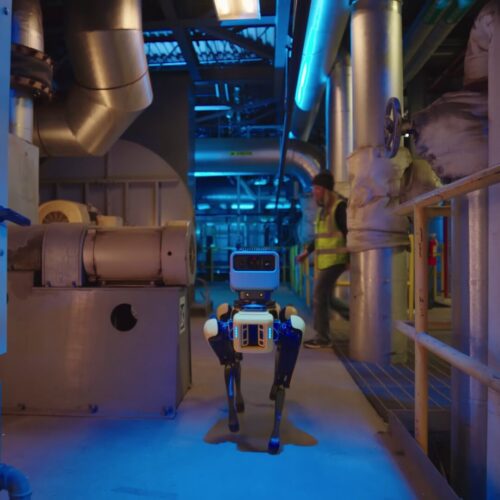
Boston Dynamics’ robot dog, Spot, can now read analog thermometers and pressure gauges in factories using Google DeepMind’s new AI model called Gemini Robotics-ER 1.6. This model enhances the robot’s ability to understand and interact with physical instruments by improving visual reasoning and safety.
Key Facts
Spot is a four-legged robot used for inspections in industrial settings like factories and warehouses.
The new AI model, Gemini Robotics-ER 1.6, was released on April 14 by Google DeepMind.
This model helps robots plan and carry out tasks with high accuracy in reading instruments such as gauges and sight glasses.
The model uses "agentic vision," combining visual reasoning with coding to analyze images better.
Agentic vision improves reading accuracy from 23% in the older version to 98% in the new one.
The model can recognize multiple objects in cluttered images better than earlier versions, reducing errors.
It includes better safety features, helping robots avoid accidents and follow safety instructions.
Boston Dynamics is testing these robots in industrial environments including Hyundai Motor Group’s automotive factories.
Read the Original
Want the full story? Tap a source to open the original
article.
Amazon Prime Video experienced a technical failure during an overtime NBA game between the Miami Heat and Charlotte Hornets, causing the live stream to cut out for over two minutes. The issue was due to hardware problems in their production truck, and the service has a history of streaming difficulties during live sports events.
Key Facts
The NBA game was only available live on Amazon Prime Video.
The stream cut out during overtime, showing a “technical difficulties” message.
Viewers missed a key Hornets possession and 22.1 seconds of game time.
Amazon said a hardware failure in their production truck caused the outage.
Prime Video has had similar streaming problems before, including audio and video syncing issues.
Streaming problems happened despite Prime Video’s large investment in sports broadcasting rights.
Fans expressed frustration, some fearing similar outages during more important games.
The Hornets won the game by one point.
Read the Original
Want the full story? Tap a source to open the original
article.
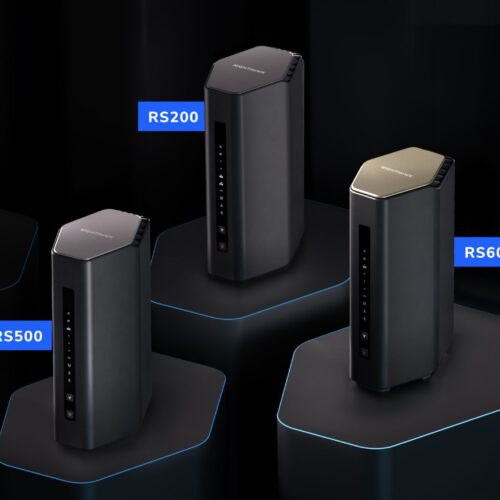
The Federal Communications Commission (FCC) has given Netgear an exemption from a U.S. ban on selling foreign-made consumer routers. This exemption allows Netgear’s routers to be sold in the U.S. until October 2027, but the FCC has not explained why Netgear was granted this special permission.
Key Facts
The FCC banned consumer routers made partly or fully outside the U.S. due to national security concerns.
Netgear is the first major consumer router company to receive an exemption from this ban.
The exemption covers Netgear’s Nighthawk and Orbi routers, plus cable gateways and modems.
Exemptions require companies to justify foreign manufacturing and provide a plan to increase U.S. production, but details from Netgear were not shared.
The exemption lasts until October 1, 2027, and can be renewed.
Adtran, a company mainly serving businesses, also received a similar exemption.
The FCC may block future software updates for routers after March 2027.
Most consumer routers are made with parts and assembly outside the U.S., so nearly all companies will need to seek exemptions for new devices.
Read the Original
Want the full story? Tap a source to open the original
article.