Several musicians have found fake albums that use their names on Spotify, but the music and style are not theirs. These fake albums seem to be created using artificial intelligence (AI). Spotify is aware of the problem and is working on tools to help artists control what appears under their names.
Key Facts
Jazz pianist Jason Moran discovered a fake album under his name on Spotify, with music different from his style.
Many musicians, including jazz, indie rock artists, and even rapper Drake, have faced similar fake AI-generated content.
Spotify removed over 75 million spam tracks in the past year and is strengthening rules against impersonation.
Spotify plans to give artists a tool to approve or reject releases under their names before they appear on the platform.
The tool will also be available to rights holders of deceased artists if they have accounts, helping to protect artist identity posthumously.
Spotify uses systems, human review, and reporting to detect and remove unauthorized content.
Some musicians think these measures are not enough and worry about ongoing misuse of their names.
Artificial intelligence is contributing to an increase in fake music content on streaming platforms.
Read the Original
Want the full story? Tap a source to open the original
article.
The Artemis II mission by NASA successfully sent astronauts around the moon and brought them back to Earth safely. However, NASA acknowledges that there is still more work to be done.
Key Facts
The Artemis II mission involved sending astronauts around the moon.
All astronauts returned safely to Earth on Friday.
NASA describes this mission as a major achievement.
Despite the success, NASA says additional work is needed.
The mission is part of a broader plan to explore the moon.
Read the Original
Want the full story? Tap a source to open the original
article.
President Donald Trump praised the successful return of NASA’s Artemis II mission, which splashed down safely in the Pacific Ocean. The mission involved a ten-day journey around the Moon, with the Orion spacecraft carrying four astronauts. President Trump mentioned plans for future lunar missions and a potential mission to Mars.
Key Facts
NASA’s Artemis II mission returned safely to Earth after a ten-day journey around the Moon.
The spacecraft made a successful splashdown in the Pacific Ocean on Friday night.
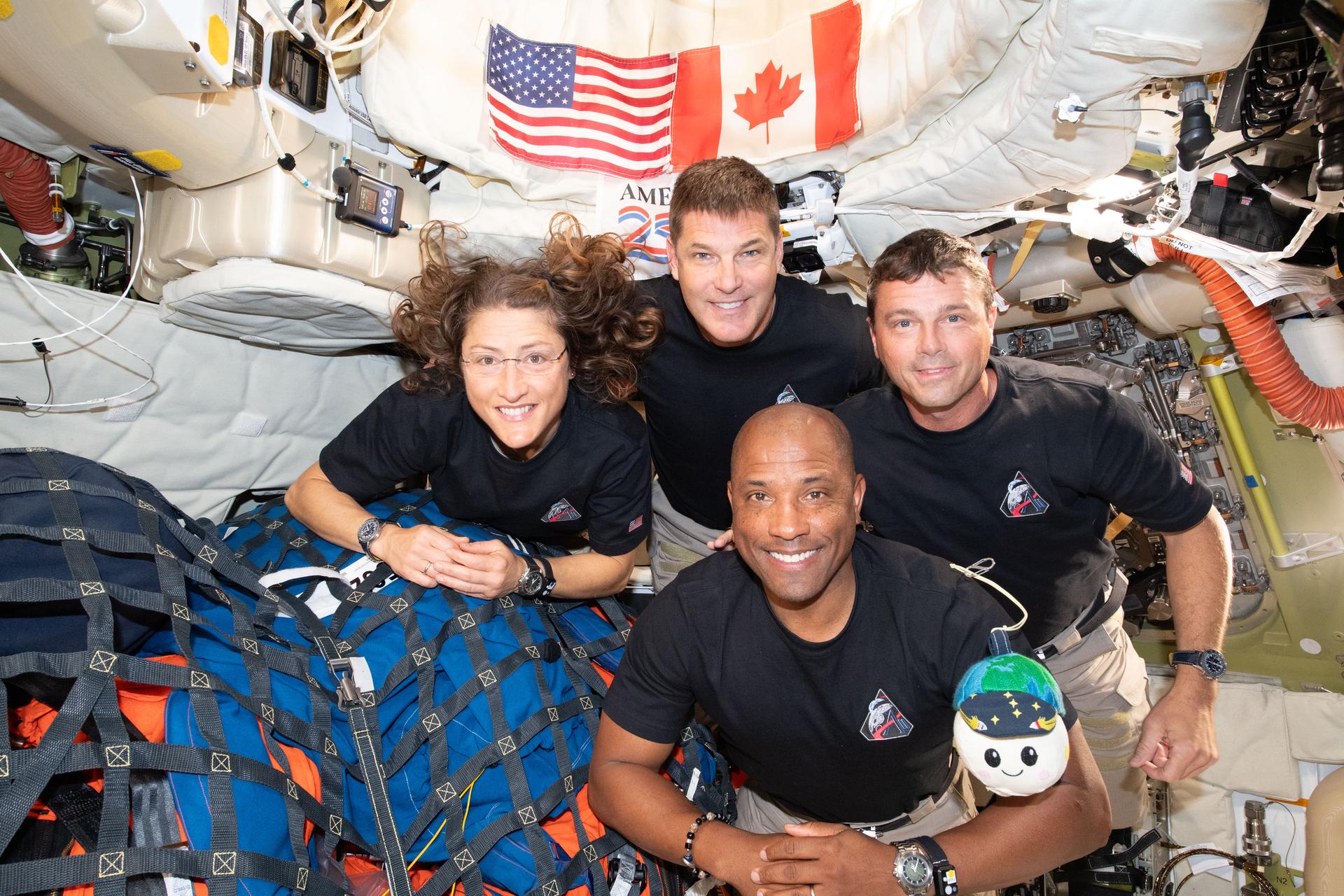
The Artemis II crew included four astronauts: Reid Wiseman, Victor Glover, Christina Koch, and Jeremy Hansen.
President Trump congratulated the crew and expressed pride in their achievement.
Trump shared plans for future lunar missions and mentioned Mars as a future goal.
Artemis III is planned for mid-2027, focusing on testing new lunar docking technologies.
NASA is working on technologies to potentially send astronauts to Mars in the 2030s.
Read the Original
Want the full story? Tap a source to open the original
article.
NASA's Artemis II astronauts have completed a mission to the Moon and returned to Earth after reaching the furthest point ever traveled by humans. They landed safely in the Pacific Ocean after re-entering Earth's atmosphere at high speed.
Key Facts
Artemis II is NASA’s first crewed lunar mission in over 50 years.
The astronauts traveled the furthest distance ever by humans.
The crew landed safely in the Pacific Ocean.
They re-entered Earth's atmosphere at high speed.
This mission is part of NASA's efforts to explore the Moon.
Read the Original
Want the full story? Tap a source to open the original
article.
A recent survey reveals that many Gen Z workers are trying to sabotage AI initiatives at their workplaces because they fear losing their jobs. While company leaders are increasingly using AI and believe it will play a significant role in decision-making, there is also growing concern and stress about the potential negative impacts of AI. This situation highlights a disconnect between employees and executives over the adoption and use of AI technologies.
Key Facts
Nearly 44% of Gen Z workers reportedly sabotage their company's AI efforts due to fear of job loss.
Overall, 29% of workers admitted to undermining AI technologies in their workplaces.
64% of company leaders use AI tools for more than two hours daily.
75% of executives believe AI will be part of executive decision-making in the next five years.
56% of executives think AI is creating issues within their companies, with 73% feeling stressed about AI's future impact.
35% of C-suite executives are unsure they can stop a rogue AI agent.
28% of employees have seen AI produce incorrect or unethical results.
Gen Z is concerned about job displacement, data privacy, and ethical use of technology.
Read the Original
Want the full story? Tap a source to open the original
article.
Justin Bieber's lifestyle brand, SKYLRK, has a significant presence at Coachella 2026 with its SKYLRK Oasis and SKYLRK Shop. The brand, co-founded by Bieber, features innovative designs and has expanded into areas like tech, showcasing creativity and expansion beyond clothing.
Key Facts
SKYLRK was co-founded by Justin Bieber and Neima Khaila and launched in July 2025.
The brand has a 10,000-square-foot installation called SKYLRK Oasis at Coachella.
SKYLRK includes creative designs, clothing, tech products, and custom furniture.
The brand's pop-up shop offers products like sunglasses, hoodies, and tees.
The SKYLRK installation at Coachella reflects Bieber's personal expression and independence.
Bieber's SKYLRK brand is described as a creative and innovative space without traditional rules.
Bieber's involvement with SKYLRK includes personal input on design and branding.
Read the Original
Want the full story? Tap a source to open the original
article.
NASA's Artemis II mission successfully brought four astronauts around the Moon and back to Earth. However, future missions face challenges, such as developing landers needed to land on and build a base on the Moon. Space companies SpaceX and Blue Origin are working on these landers but are currently behind schedule.
Key Facts
The Artemis II mission successfully circled the Moon.
Four astronauts returned safely to Earth after the mission.
The mission has inspired interest in future space travel possibilities.
NASA plans to start building a lunar base with one mission per year starting in 2028.
SpaceX and Blue Origin are developing lunar landers, but both projects are delayed.
SpaceX's Starship lander is over two years behind schedule.
Blue Origin's Blue Moon lander is at least eight months behind schedule.
Read the Original
Want the full story? Tap a source to open the original
article.
NASA’s Artemis II mission safely returned four astronauts to Earth after a historic trip around the Moon. The team splashed down in the Pacific Ocean and will undergo medical checks before heading to NASA's Johnson Space Center. This mission marked a step forward for future Moon missions by testing new equipment in deep space.
Key Facts
Artemis II mission was the first crewed lunar mission in over 50 years.
The astronauts successfully landed in the Pacific Ocean on Friday.
The mission included NASA astronauts Reid Wiseman, Victor Glover, Christina Koch, and Canadian astronaut Jeremy Hansen.
The crew started their journey from Florida’s Kennedy Space Center.
They traveled farther into space than any human before, circling the Moon's far side.
Artemis II tested critical equipment, including the Orion capsule’s heat shield and navigation systems.
Key historic moments included Glover being the first person of color to travel around the Moon, Koch the first woman, and Hansen the first non-American.
The mission faced a brief communication blackout during re-entry due to intense heat.
Read the Original
Want the full story? Tap a source to open the original
article.
Many Americans feel anxious about the impact of artificial intelligence (AI) on jobs. There is debate about whether AI will cause widespread job loss or if these concerns are exaggerated. The current data on this issue is varied and debated.
Key Facts
Many Americans are worried about losing their jobs due to AI.
Experts have different views on how AI will affect employment.
Some people believe AI's impact on jobs will be very harmful.
Others think concerns about AI job loss are exaggerated.
The data on AI's impact on jobs is mixed and open to interpretation.
Josh Tyrangiel discussed this topic in a story for The Atlantic.
Read the Original
Want the full story? Tap a source to open the original
article.
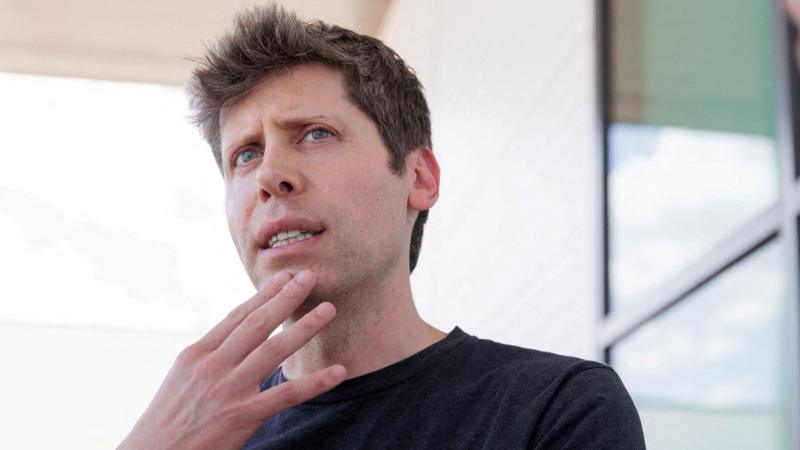
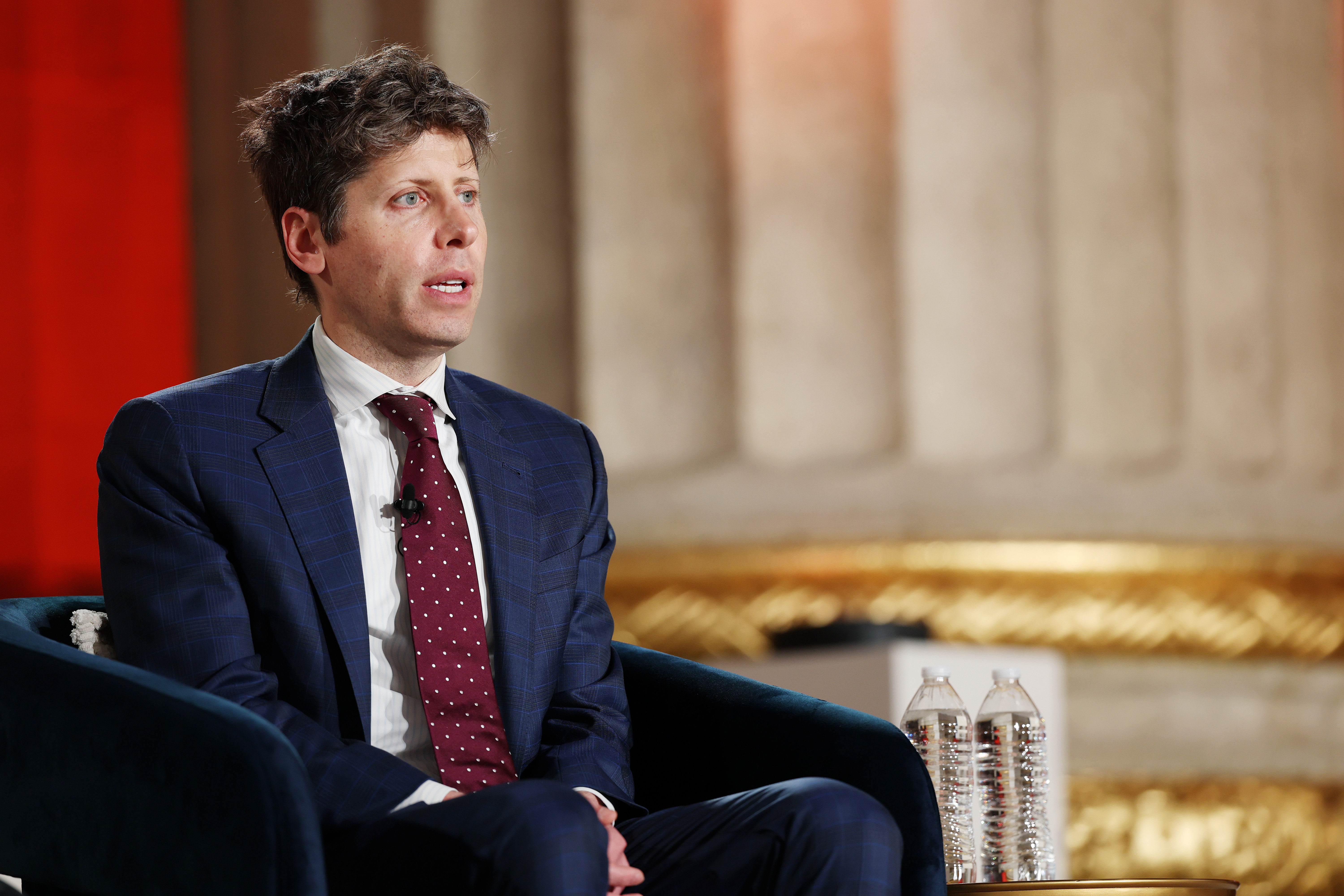
A man was arrested after allegedly throwing a Molotov cocktail at the home of Sam Altman, the CEO of OpenAI, in San Francisco. No injuries were reported, and OpenAI confirmed the incident, which is under investigation.
Key Facts
A 20-year-old man was arrested after throwing a Molotov cocktail at Sam Altman's home.
The incident occurred around 4 a.m. local time in the North Beach area of San Francisco.
The Molotov cocktail set part of an exterior gate on fire before the suspect fled.
OpenAI confirmed the attack took place at Altman's residence.
The suspect was found near OpenAI's headquarters about an hour later, threatening to set it on fire.
OpenAI noted increasing security concerns due to recent threats and protests.
OpenAI recently faced criticism for collaborating with the US Department of Defense.
OpenAI is valued at $852 billion and has significant market presence with products like ChatGPT.
Read the Original
Want the full story? Tap a source to open the original
article.
A star from the show "Slow Horses" confirmed that his character will appear in the upcoming sixth season. Christopher Chung, who plays a hacker named Roddy Ho, shared that the new season will be out late in 2026. He mentioned some changes in his character's journey, reflecting on events from the previous season.
Key Facts
Christopher Chung plays the character Roddy Ho in the series "Slow Horses".
Chung confirmed his character Roddy Ho will be in Season 6.
"Slow Horses" Season 6 is set to release in late 2026.
Roddy Ho will have a more spiritual and holistic arc in the upcoming season.
In the previous season, Ho was involved in a controversial plot with MI5 servers.
Christopher Chung was nominated for an award for his performance but did not win.
Showrunner Will Smith indicated this will be his last season and hinted at the return of some characters from past seasons.
Actor and star Gary Oldman is praised for his multifaceted contribution to the series.
Read the Original
Want the full story? Tap a source to open the original
article.
Medtronic partnered with Virtua Health in Camden, New Jersey, to create a program called "Healthy Neighbor" that uses both human health workers and artificial intelligence (AI) to help patients manage chronic health conditions. The program aims to improve health outcomes by pairing community health workers with high-risk patients and using AI to track conditions like hypertension and diabetes.
Key Facts
Medtronic and Virtua Health launched the "Healthy Neighbor" program in Camden, New Jersey.
The program uses AI technology and community health workers together.
It aims to help high-risk patients manage chronic conditions like high blood pressure and diabetes.
Since its launch, 74% of patients with uncontrolled hypertension saw a reduction in blood pressure.
69% of patients with diabetes reduced their A1c levels, a key measure of diabetes control.
The program builds on Medtronic's earlier work with similar technology in countries like Kenya, Ghana, and India.
Social and environmental factors, rather than just hospital care, significantly affect health outcomes, according to research.
Read the Original
Want the full story? Tap a source to open the original
article.
The President of UChicago Medicine emphasized the need for simple and clear leadership when dealing with AI in healthcare. Many healthcare leaders are grappling with the spread of incorrect information, which makes providing accurate medical advice more challenging. Discussions are ongoing about how healthcare providers can build trust when faced with misinformation from various Internet sources.
Key Facts
UChicago Medicine President stresses the importance of clear leadership in AI use.
AI is being used for health advice, but there's concern about incorrect information it sometimes provides.
The Trump administration issued a warning on scams targeting Medicare and Medicaid consumers.
Healthcare providers face challenges from misinformation on social media and other platforms.
There is a need for hospitals to build credibility as patients seek information from online sources.
An upcoming webinar will address how to gain patients' trust in the era of online misinformation.
Hospital markets in the U.S. are highly concentrated, with few systems dominating inpatient care.
Read the Original
Want the full story? Tap a source to open the original
article.
Meteorologists are discussing a change in how the National Weather Service (NWS) makes long-range weather forecasts. The NWS plans to use more automated systems for forecasts beyond four days but will still have meteorologists involved in the process. Some meteorologists have expressed concern about this change, while others believe it is necessary.
Key Facts
A new plan from the NWS involves more automation for forecasts beyond four days.
Meteorologist Troy Kimmel criticized the change on social media, calling it "unacceptable."
NOAA confirmed the NWS will use a modernized process for 4-7 day forecasts.
The change aims to allow local NWS offices to focus more on short-term warnings.
The Impact-Based Decision Support Services (IDSS) is a part of this system, helping emergency responders.
The Days 4-7 forecasts will still involve human oversight when needed.
Some meteorologists are concerned about reduced human input, while others see the benefits.
Local NWS offices will continue issuing weather watches and warnings.
Read the Original
Want the full story? Tap a source to open the original
article.
Police in San Francisco arrested a 20-year-old man after he allegedly threw a Molotov cocktail at the home of Sam Altman, the CEO of OpenAI, and threatened the company's headquarters. The attack caused a fire at the perimeter gate of Altman's home, but no one was injured. The suspect showed up at OpenAI's office an hour later and was subsequently arrested.
Key Facts
A 20-year-old man was arrested for allegedly attacking Sam Altman's home with a Molotov cocktail.
The incident occurred in the North Beach area of San Francisco.
The attack caused a fire on the perimeter gate of Altman's home.
No injuries were reported from the incident.
The suspect also made threats against the OpenAI headquarters.
OpenAI confirmed the attack took place at Altman's home and praised the quick police response.
San Francisco Police Department is keeping details limited due to an active investigation.
Sam Altman is a prominent figure in the AI industry, known for leading OpenAI, the company behind ChatGPT.
Read the Original
Want the full story? Tap a source to open the original
article.
NASA's Artemis II mission is getting ready for the astronauts to return to Earth. This mission has taken them farther from Earth than any humans in over 50 years.
Key Facts
NASA’s Artemis II mission involves astronauts coming back to Earth after a long journey.
The astronauts traveled further from Earth than anyone has in more than 50 years.
The mission's return will involve a splashdown, which means landing in the ocean.
This mission is important for future trips to the Moon.
Al Jazeera provided details on what to expect during the splashdown.
Read the Original
Want the full story? Tap a source to open the original
article.
A Molotov cocktail was thrown at the San Francisco home of OpenAI CEO Sam Altman. The suspect, a 20-year-old man, was arrested and had also made threats at OpenAI’s headquarters. No one was injured, and the investigation is ongoing.
Key Facts
A suspect threw a Molotov cocktail at Sam Altman's home in San Francisco.
There were no injuries from the incident.
The same person also threatened OpenAI's headquarters in San Francisco.
The police responded quickly and arrested a 20-year-old man.
The investigation by San Francisco police is still active.
Charges against the suspect were pending as of the reported date.
Read the Original
Want the full story? Tap a source to open the original
article.
In June 2024, a cyber-attack disrupted London hospitals, causing appointment cancellations and blood shortages. Anthropic, an AI company, announced a new AI model named “Claude Mythos Preview” that can find serious security flaws in major software, potentially enabling more powerful cyber-attacks. The company is limiting access to this AI to help companies fix vulnerabilities before hackers exploit them.
Key Facts
A cyber-attack in London in June 2024 caused over 10,000 appointment cancellations and a patient’s death due to blood test delays.
Anthropic released an AI model called Claude Mythos Preview, which can detect security weaknesses in major browsers and operating systems.
Mythos found a 27-year-old bug in critical security infrastructure and flaws in the Linux kernel, a key part of many computer systems.
Experts warn this AI could make cyber-attacks faster, more frequent, and more destructive by enabling less skilled hackers.
Anthropic is sharing Mythos only with big companies like Apple, Microsoft, and Google to help them improve security.
There is little government regulation to control the spread of such powerful AI tools at the national or global level.
The Trump administration has banned its government agencies from using Anthropic’s technology and criticized the company.
This lack of cooperation between Anthropic and the government may hinder efforts to protect critical systems.
Read the Original
Want the full story? Tap a source to open the original
article.
The article discusses how artificial intelligence (AI) is changing the IT services industry by making software development faster and cheaper. This shift is challenging traditional business models, which often connect revenue to labor and time. Companies are moving toward pricing based on results rather than effort because AI allows tasks to be completed more quickly and efficiently.
Key Facts
AI is influencing how IT services organize and price their work.
The cost of creating software is decreasing, while its importance is increasing.
AI makes it easier to produce software, changing how companies compete.
More code created by AI means more complexity and potential risks.
Traditional models tied revenue to labor, but this is changing with AI.
Companies must shift from input-based pricing to output-based pricing.
Human expertise combined with AI is crucial at every stage of work.
IT services firms will focus more on delivering outcomes rather than just deploying resources.
Read the Original
Want the full story? Tap a source to open the original
article.
NASA's Artemis II mission is returning to Earth after a 10-day trip around the Moon. The mission includes four astronauts and will end with a splashdown in the Pacific Ocean near Southern California. It marks the first time in over 50 years that people have traveled beyond low-Earth orbit.
Key Facts
Artemis II is the first crewed mission beyond low-Earth orbit in over 50 years.
The mission ends with a splashdown in the Pacific Ocean near Southern California.
The mission launched on April 1 with four astronauts aboard, including the first woman and first person of color to travel beyond low-Earth orbit.
The spacecraft reached over 248,000 miles from Earth, setting a new distance record.
Artemis II gathered data for future missions, including Artemis III, which aims for lunar landings.
During the mission, the spacecraft experienced a planned communications blackout while behind the Moon.
The return journey will see the spacecraft enter Earth's atmosphere at high speed, generating extreme heat.
Read the Original
Want the full story? Tap a source to open the original
article.