Europe has stopped the planned "Block 3" upgrades for its Ariane 6 rocket due to high costs. While Ariane 6 has launched eight successful missions and provides reliable access to space, its future is uncertain because of expensive launch costs and the need for continued government subsidies.
Key Facts
The Ariane 6 rocket launched eight successful missions in two years, reaching orbit each time.
It can carry over 20 metric tons to low-Earth orbit.
Europe canceled the Block 3 upgrades, including a new lightweight upper stage called ICARUS.
This cancellation affects future scientific missions, such as a probe to Saturn’s moon Enceladus.
Launch costs are estimated between 80 million and 100 million euros per flight.
Each launch requires a government subsidy of 32 to 38 million euros to cover costs.
Europe has invested about 3.6 billion euros in Ariane 6 development and its launch site.
The goal is to fly 9 to 10 launches per year, with talks about increasing to up to 20 launches annually.
Read the Original
Want the full story? Tap a source to open the original
article.
Moderna and Merck have developed a personalized mRNA cancer vaccine called intismeran autogene that showed positive results in a Phase 3 trial for high-risk melanoma patients by preventing cancer recurrence. This vaccine is tailored to each patient’s tumor and given alongside Merck’s immunotherapy Keytruda. The vaccine could become available as soon as next year pending regulatory approval and is also being tested for other cancers.
Key Facts
The vaccine is a personalized mRNA therapy made specifically for each patient's tumor mutations.
Phase 3 trial results showed improved recurrence-free survival and distant metastasis-free survival in melanoma patients.
The vaccine is used together with Merck’s immunotherapy drug Keytruda.
This is the first positive Phase 3 result for an individualized mRNA-based cancer therapy.
Moderna and Merck are testing this vaccine approach on other cancers like lung, bladder, and kidney cancers.
The treatment could help keep patients cancer-free for longer, potentially changing cancer from a deadly disease to a manageable condition.
Unlike standard drugs made the same for everyone, this vaccine is custom-built for each patient’s unique tumor.
If approved and successful in other cancers, this technology might change how treatments are developed and delivered across the U.S. healthcare system.
Read the Original
Want the full story? Tap a source to open the original
article.
China’s Tianjin 117 Tower, currently the world’s tallest unoccupied building, will have the world’s longest elevator shafts when it opens. Otis, the elevator company, will install 251 elevators and escalators, including two SkyRise elevators that travel nearly 600 meters high, breaking the current record held by a building in Shanghai.
Key Facts
Tianjin 117 Tower has 117 floors and stands about 600 meters (1,968 feet) tall.
It holds the Guinness World Record as the tallest empty building.
Otis will supply 251 elevators and escalators for the tower’s vertical transportation.
Two Otis SkyRise elevators will travel upwards of 597 meters (1,958 feet), longer than any elevator hoistway before.
The previous record for tallest elevator was 578 meters (1,898 feet) in Shanghai Tower.
Designing these elevators required special engineering to ensure safety, smooth rides, and handling of building sway and wind.
Tianjin 117 will have China’s highest occupied floor at over 584 meters (1,916 feet).
Techniques used in this tower’s elevator design will help future supertall buildings worldwide.
Read the Original
Want the full story? Tap a source to open the original
article.
A major court case against Meta is shifting its focus from the content posted by users to the way Meta designs its social media platforms. The case examines how features like recommendation systems and infinite scrolling influence user behavior and whether these design choices contribute to harm.
Key Facts
The legal case targets Meta, the company behind Facebook and Instagram.
Traditionally, legal debates focused on what users publish on social media platforms.
This case looks at the infrastructure of the platforms, such as algorithms that recommend content.
Features like infinite scroll and attention-maximizing tools are under scrutiny.
The question is whether Meta’s design choices make users more vulnerable, especially minors.
Section 230, a U.S. law that limits platform liability for user content, is less central in this case.
The trial is seen as potentially groundbreaking in shaping social media regulation.
Read the Original
Want the full story? Tap a source to open the original
article.
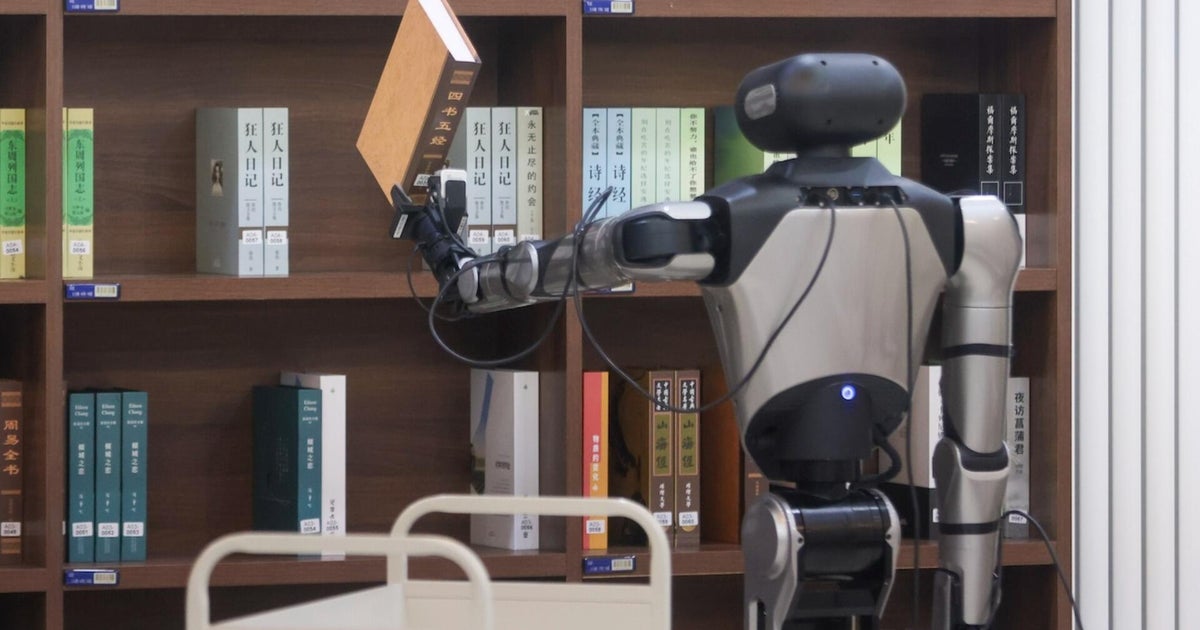
China is focusing on humanoid robots to lead in technology and improve productivity. At the World Robot Conference in Beijing, Chinese companies are competing with U.S. firms in developing these robots.
Key Facts
The World Robot Conference is taking place in Beijing.
Humanoid robots are robots designed to look and act like humans.
China is investing in humanoid robots to gain a technological advantage.
Chinese companies are competing against American companies in robot development.
The goal is to use robots to increase work productivity.
The conference highlights the ongoing technology competition between China and the U.S.
Read the Original
Want the full story? Tap a source to open the original
article.
Australia’s eSafety commissioner reported that Roblox still allows adults to contact children in unsafe ways despite previous changes. Roblox has agreed to make further improvements within three months and to have independent checks to ensure better protection for kids using the platform.
Key Facts
Roblox made some changes last fall to block adults from messaging unknown children.
Testing by Australia’s eSafety identified gaps allowing adults to send friend requests and see children’s profiles without restrictions.
Adults can comment on kids’ posts outside of game areas without parental permission.
Australian law requires online platforms to block unwanted contact between adults and children and make kids’ accounts private by default.
About 1.7 million Australian children use Roblox.
Roblox agreed to a court-enforceable deal to improve safety settings and parental controls within three months.
Roblox will allow third-party experts to audit its child safety tools to verify compliance with the law.
The company recently began using facial age checks, a method that raises privacy concerns among some people.
Read the Original
Want the full story? Tap a source to open the original
article.
A new app called Divine has launched, allowing people to create and watch six-second looping videos like the old Vine app. Divine includes over two million original Vine videos, uses a system to verify videos are made by humans (not AI), and is built on a decentralized platform where users can move their accounts to other apps.
Key Facts
Divine is designed to be a successor to the original Vine app, with six-second looping videos.
It hosts more than two million original Vine videos restored from the Internet Archive.
The app bans AI-generated content and uses tools like ProofMode to verify videos are real and unchanged.
Users must record videos live in the app instead of uploading pre-recorded clips.
Divine is built on a decentralized system called Nostr, allowing users to take their content to other compatible apps.
Jack Dorsey, Twitter’s co-founder, supports Divine.
The original Vine had over 200 million monthly users and helped launch internet celebrities like Jake Paul and Lele Pons.
Divine’s founder, Evan Henshaw-Plath, aims to "reset" social media by making content authentic and less addictive.
Read the Original
Want the full story? Tap a source to open the original
article.
Sony-owned Insomniac Games, known for making Marvel’s Spider-Man video games, is now creating a new game starring Marvel’s Wolverine. The game introduces a different story world and focuses mostly on fighting enemies, showing Wolverine’s violent combat style with advanced graphics and controller feedback.
Key Facts
Insomniac Games developed the recent Marvel’s Spider-Man games and is now making a Wolverine game.
This Wolverine game presents a new story universe without classic X-Men teams.
The villain in the game is Mister Sinister, who also acts like a father figure to Wolverine.
Wolverine’s teammates include characters usually seen as villains, like Sabretooth and Mystique.
Gameplay focuses mainly on combat, differing from Spider-Man’s mix of fighting and swinging through the city.
The combat system uses color cues to tell players when to block or dodge attacks.
Wolverine’s fighting style is more violent, allowing killing moves with graphic blood effects.
The game uses modern technology for realistic gore and uses the PlayStation DualSense controller to make fights feel more immersive.
Read the Original
Want the full story? Tap a source to open the original
article.
Book publishers are dealing with the challenges that come from using artificial intelligence (AI) in their work. They face issues around how AI is changing the publishing industry and concerns about misuse of AI tools.
Key Facts
AI technology is increasingly used in the book publishing world.
Publishers must learn how to use AI while addressing new problems it brings.
There are worries about how AI might be misused in creating or handling book content.
Tisha Morris, a lawyer and author, discussed these challenges on CBS News.
The industry is working to find ways to balance AI’s benefits with ethical concerns.
Read the Original
Want the full story? Tap a source to open the original
article.
Neuroscientist Jared Cooney Horvath says that using more technology in schools has caused a drop in how well students learn. He spoke to the Senate about how screen time and technology affect education.
Key Facts
Jared Cooney Horvath is a neuroscientist and educator.
He testified before the Senate earlier this year.
His testimony focused on the effects of classroom technology.
He believes that more technology use in schools has lowered learning outcomes.
He discussed the impact of screen time on students.
The information was reported by CBS News.
The article highlights concerns about technology in education.
Read the Original
Want the full story? Tap a source to open the original
article.
Genesis has introduced the GV90, its new luxury electric SUV, based on a previous concept called Neolum. The GV90 features advanced designs like pillarless coach doors, a large retractable dashboard screen, a 25-speaker sound system, and safety innovations including a roof airbag. It uses a powerful electric platform shared with Hyundai and Kia models and offers fast charging and a large battery for long driving range.
Key Facts
The GV90 is a luxury electric SUV from Genesis, based on the earlier Neolum concept.
It includes a special variant called the GV90 Neolum with no B pillar and coach-style doors.
The SUV has a large OLED screen on the dashboard that retracts when driving, with a 25-speaker 3D sound system made with Bang & Olufsen.
It uses the 800 V E-GMP electric platform shared with Hyundai Ioniq 9 and Kia EV9.
The GV90 has a 123.5 kWh battery that provides about 310 miles of driving range for the seven-seat version.
Fast charging can take the battery from 10% to 80% in as little as 22 minutes with the right charger.
The electric motor produces a combined 657 horsepower and 590 pound-feet of torque.
The vehicle includes 12 airbags, including the world’s first roof airbag to protect occupants in rollovers.
No information is yet available on the U.S. release date or price.
Read the Original
Want the full story? Tap a source to open the original
article.
Meta is defending itself in court against claims that its social media platforms, Instagram and Facebook, harm children’s mental health by creating addictive features. The company highlights its efforts to protect young users, like blocking harmful content and restricting adult contact with teens, but critics argue these measures are inadequate.
Key Facts
Meta faces lawsuits in a California federal court accusing it of contributing to a youth mental health crisis.
Four U.S. states seek billions of dollars in damages and want changes to how Meta runs Instagram and Facebook.
Meta says it works to protect children by blocking offensive content and limiting adult interactions with teens.
Instagram introduced features such as comment filters, warnings for harmful posts, and limits on tagging.
Meta enforces a minimum age of 13 years for accounts and tries to prevent underage users from signing up.
The company launched “Teen Accounts” in 2024 to provide a safer online space for teenagers.
Critics say Meta’s child safety efforts are mostly for show and not effective at preventing harm.
A 2025 report by a former employee and online safety groups accused Meta of avoiding real action on youth safety.
Read the Original
Want the full story? Tap a source to open the original
article.
A recent study from the AI Observatory found that more people are using artificial intelligence (AI) chatbots to get advice on personal topics like health and relationships. This shows that AI tools are becoming more common for private and sensitive questions.
Key Facts
The study was done by the AI Observatory.
More people are turning to AI chatbots for advice on health matters.
AI chatbots are also being used for relationship advice.
The increase shows that users trust AI with personal and private topics.
The data was reported and explained by CBS News.
AI chatbots are computer programs that can talk with people and provide information.
The report highlights a growing role of AI in everyday life.
Read the Original
Want the full story? Tap a source to open the original
article.
AI apps that can create fake nude photos are becoming easy to find and use, including some without age limits. Many students are facing problems because these apps sometimes make sexual images of people they know or themselves without consent.
Key Facts
There are more than a dozen AI "nudify" apps available in app stores.
Some of these apps do not have age restrictions, meaning anyone can download them.
These apps use artificial intelligence to create explicit images of people.
Students across the country are dealing with the effects of AI-generated pornography.
The images can feature real people without their permission.
This new technology raises privacy and safety concerns.
CBS News reported on the widespread availability and impact of these apps.
Read the Original
Want the full story? Tap a source to open the original
article.
UK cinemas are thinking about banning Meta’s smart glasses because they worry people might use them to secretly record movies. The glasses can help people with hearing or vision difficulties, but movie theaters are also concerned about privacy and illegal filming.
Key Facts
UK cinemas may stop customers from wearing Meta smart glasses that have cameras.
The glasses cost £359 and some people call them “spyware” because they can secretly record.
The glasses can help people by showing subtitles or translating, useful for those with disabilities.
No cinemas have banned the glasses yet, but many are considering rules to limit their use.
Meta says the glasses have a flashing light that comes on when filming, to warn people.
Some people say they have been recorded without knowing it, raising more worries.
Other UK places like theaters and pubs already limit the use of these glasses.
Meta says the glasses help users with music, translation, and calls, and want fair rules about where they can be used.
Read the Original
Want the full story? Tap a source to open the original
article.
Companies Moderna and Merck developed a personalized mRNA vaccine combined with the drug Keytruda. This treatment helped reduce the return and spread of melanoma, a serious type of skin cancer, in patients at high risk.
Key Facts
Moderna and Merck are drug manufacturers working on cancer treatments.
They created a personalized vaccine using mRNA technology.
The vaccine was used together with the drug Keytruda.
The treatment focused on melanoma, the deadliest form of skin cancer.
It showed signs of reducing the cancer’s return and spreading.
The vaccine is tailored to each patient’s cancer.
The information comes from doctors involved in the research, including Dr. Jon LaPook and Dr. Janice Mehnert.
Read the Original
Want the full story? Tap a source to open the original
article.
The Duskbloods is a new multiplayer game made by FromSoftware, known for single-player games like Elden Ring. It features fast-paced battles between players and AI opponents in a city map, where players form alliances, complete missions, and fight to be the last survivors. The game is exclusive to the Nintendo Switch 2.
Key Facts
The game takes place in Lowanro City, with a large clock tower and a map divided by a retractable bridge and sewers.
Eight players compete in three phases, with the weakest two players eliminated after each phase.
Players gain a currency called Virtue by fighting, holding points, and doing quests.
Players can form alliances, including unusual actions like proposing marriage with flowers.
It combines mechanics from previous FromSoftware games with faster battles and more tactical multiplayer play.
Players fight AI creatures and bosses, with others able to join to help during boss fights.
Each player has a personal objective given by a "Sigil," influencing their goals and alliances.
The game is designed to be chaotic and strategic, and it’s exclusive to Nintendo Switch 2.
Read the Original
Want the full story? Tap a source to open the original
article.
SpaceX plans to launch up to one million satellites designed as AI data centers, but many of these satellites will be discarded each year, either burning up in Earth’s atmosphere or moved to distant orbits. This project could create a new form of electronic waste in space by sending valuable materials like gold, copper, and silver out of Earth’s recycling cycle.
Key Facts
SpaceX proposes a satellite “megaconstellation” with about one million AI data center satellites.
Approximately 200,000 satellites will be decommissioned annually after a roughly five-year lifespan.
Around 40,000 satellites are expected to re-enter Earth’s atmosphere each year and burn up.
The remaining satellites may be moved to distant orbits, effectively losing their materials from Earth’s resources.
Key valuable materials lost include about 1,000 tons of copper, 170 kilograms of gold, and nearly 2 tons of silver per year.
Burning satellites in the atmosphere may contribute to ozone depletion due to aluminum release.
The mass of these satellites greatly exceeds that of current objects in low-Earth orbit, increasing space debris concerns.
Recovering these materials from space would require mining asteroids of significant size, highlighting the scale of Earth's material loss.
Read the Original
Want the full story? Tap a source to open the original
article.
A website called ClarityCheck, which helps people find information about others using photos and personal details, accidentally left over 9 million photos and other personal data publicly accessible online. A security researcher found this issue and alerted the company, which then secured the data, but the exposure lasted for months.
Key Facts
ClarityCheck offers a reverse image search to identify people using photos.
More than 9 million images, including faces of adults and children, were stored in an unsecured online location.
The exposed data amounted to around 450 gigabytes of files, including profile pictures and screenshots.
The images were stored in an Amazon S3 bucket with no password protection, accessible via URL.
A second security problem exposed email addresses and phone numbers.
Independent researcher Jeremiah Fowler discovered the exposure and tried to warn ClarityCheck before contacting WIRED.
ClarityCheck secured the data after learning about the issue but disagreed that the data was truly "exposed" to the public.
Experts say that any data accessible without login credentials is considered exposed and poses privacy risks.
Read the Original
Want the full story? Tap a source to open the original
article.
Longmont, Colorado ended its contract with Flock Safety, a company that installs cameras to automatically read license plates and help police solve crimes. However, the city soon approved a new contract with another company, Axon, to install similar cameras, showing that surveillance continues despite public concerns about privacy.
Key Facts
Flock Safety operates over 120,000 license plate reading cameras across the U.S. that scan billions of plates each month.
These cameras help police find stolen vehicles and missing people but also collect data on many innocent drivers.
Critics worry about privacy because police can search data without a warrant and sometimes misuse it for personal reasons.
At least 56 cities have cut ties with Flock this year due to privacy concerns.
Flock introduced some new rules on data use, but many privacy advocates think they don’t go far enough.
Even when cities stop using Flock, other companies or private cameras often continue surveillance.
Longmont chose Axon, a large law enforcement tech company, to replace Flock’s cameras despite public protests.
Axon has gained municipalities as customers after Flock’s bad publicity and highlights its own focus on privacy.
Read the Original
Want the full story? Tap a source to open the original
article.