A SpaceX Falcon 9 rocket is expected to crash into the moon early Wednesday morning. The rocket will hit the moon at about 5,400 miles per hour, creating a crater nearly 90 feet wide.
Key Facts
The rocket involved is a SpaceX Falcon 9.
It weighs about 8,800 pounds.
The crash is scheduled for 2:35 a.m. EDT on Wednesday.
Impact speed will be around 5,400 miles per hour.
The crash will form a crater about 27 meters (89 feet) wide.
Experts have confirmed these details about the crash.
The event is notable because it involves space debris hitting the moon.
Read the Original
Want the full story? Tap a source to open the original
article.
Top leaders from major artificial intelligence (AI) companies are scheduled to meet with officials from the White House. This meeting aims to discuss important topics related to AI development and its impact.
Key Facts
Leading AI company executives will meet White House officials.
The meeting is reported by multiple news sources.
The discussion will focus on AI and its future.
Ian Krietzberg, a reporter specializing in AI, shared this information.
The event highlights the government’s interest in AI technology.
The White House aims to engage with industry experts directly.
The meeting shows cooperation between the tech industry and the U.S. government.
Read the Original
Want the full story? Tap a source to open the original
article.
A study in Italy followed over 5,000 students and found that those who started using social media at ages 11 to 12 scored lower on school tests than those who waited until ages 14 to 15. The gap in test scores stayed the same or got bigger over time, especially in Italian and math subjects.
Key Facts
The study involved 5,227 students from 28 schools in northern Italy.
Students who joined social media around age 11-12 scored about six months behind in Italian and math by eighth grade compared to late starters.
The difference in scores did not go away by 10th grade and even increased for math.
Starting social media use at ages 13-14 is suggested as a better choice for academic performance.
Early social media users also tended to check their phones more often and had less parental supervision.
There was no significant impact of early social media use on English test scores.
Researchers recommend parents help children understand how social media can distract attention and encourage screen-free, face-to-face time.
The study warns the results should be viewed carefully as the effects of social media on youth are still debated.
Read the Original
Want the full story? Tap a source to open the original
article.
The article discusses the new season of the TV show Ted Lasso, where the main character coaches a women’s soccer team. It highlights a trend in Hollywood where women’s stories are often included only within male-led projects, despite evidence that female-led films perform well financially.
Key Facts
Ted Lasso’s fourth season features the lead coaching a second-division women’s soccer team.
Hollywood often places female characters within existing successful franchises to reduce financial risks.
A study of 350 top U.S. movies from 2014 to 2017 showed that female-led films generally made more money worldwide than male-led films.
The financial success of female-led films challenges the idea that women-led stories are riskier for studios.
Studios prefer safe bets tied to proven franchises rather than original female-led stories.
Failed male-led franchise movies are seen as individual failures, but failed female-led projects are sometimes used to question women’s commercial appeal.
Ted Lasso itself began as characters created for sports ads before becoming a full TV show.
Hollywood’s caution leads to fewer original female-led projects and maintains gender imbalance in storytelling.
Read the Original
Want the full story? Tap a source to open the original
article.
Google’s upcoming Pixel 11 phones will have a new lighting feature called HiLight. This feature uses a light on the back of the phone to notify users about calls from favorite contacts and chats, similar to old notification lights.
Key Facts
The Pixel 11 series will be revealed later this month.
HiLight is a new LED light inside the camera area of the Pixel 11 Pro Fold.
The light can show different colors and acts as a camera flash and notification light.
It lights up when the phone is face down to alert users about calls or chats.
HiLight is linked to Google’s Gemini chat service and other upcoming Google devices.
This feature is a return to notification lights that showed alerts without turning on the screen.
The Pixel 11 Pro Fold has a smaller camera bump compared to last year’s model.
Google will officially explain the feature on August 12.
Read the Original
Want the full story? Tap a source to open the original
article.
A hospital in Singapore is using artificial intelligence (AI) to help its staff work better together. Instead of letting AI replace workers, the hospital trains many employees in AI skills so they can use the technology as a tool to solve problems and improve patient care.
Key Facts
The National University Hospital, Singapore, wants 10% of staff in every job group to learn AI and innovation skills.
They have trained 41% of their 10,700 employees so far.
Training includes all roles, like cleaners, pharmacists, nurses, and finance staff.
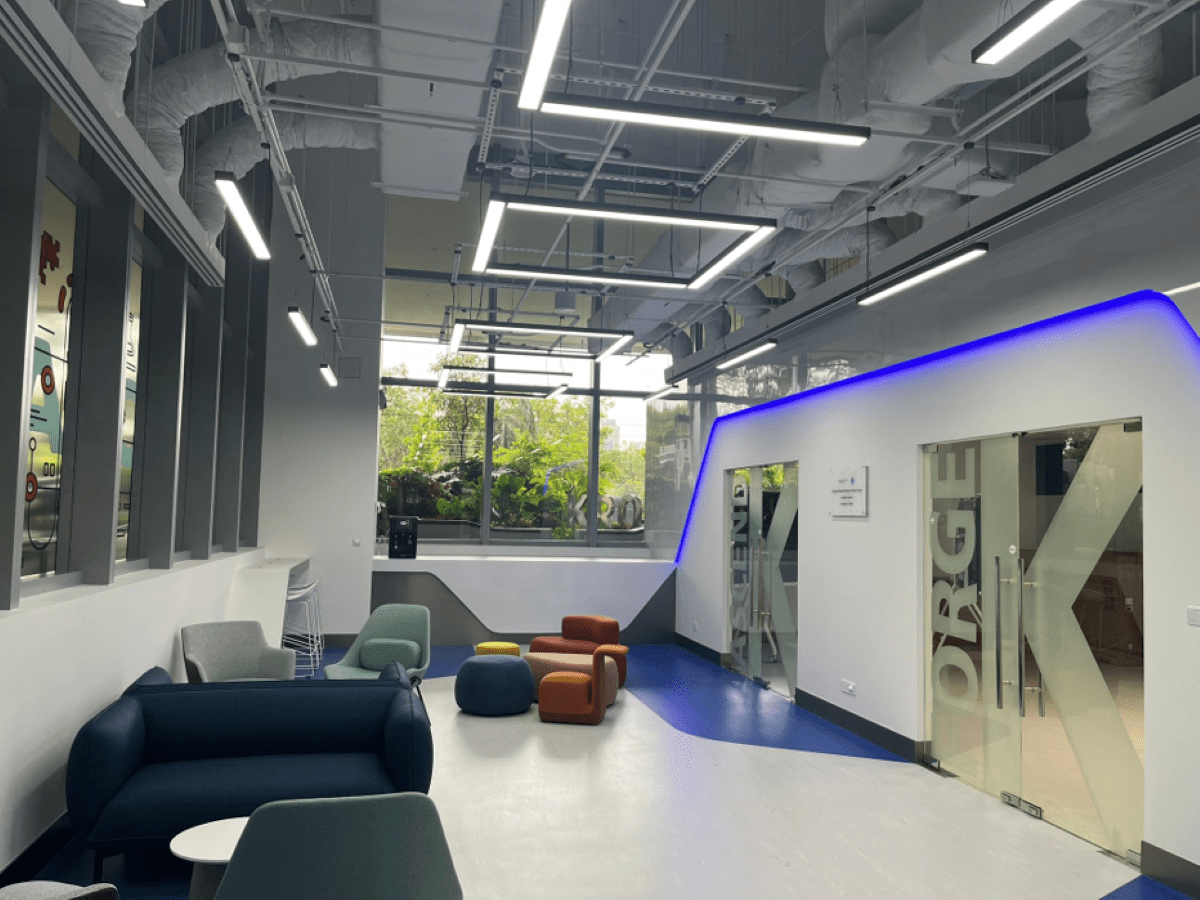
They created the Kent Ridge Office of Innovation (KROI) to support learning, collaboration, and technology development.
KROI has three parts: ASCEND (skill learning), NEXUS (teamwork and process), and FORGE (building usable tools).
An Innovation Hub gives staff a place to try ideas and work together across departments.
The hospital focuses on clear goals but lets teams decide how to use AI in their daily work.
AI tools are designed to handle routine tasks, freeing staff to spend more time on patient care.
Read the Original
Want the full story? Tap a source to open the original
article.
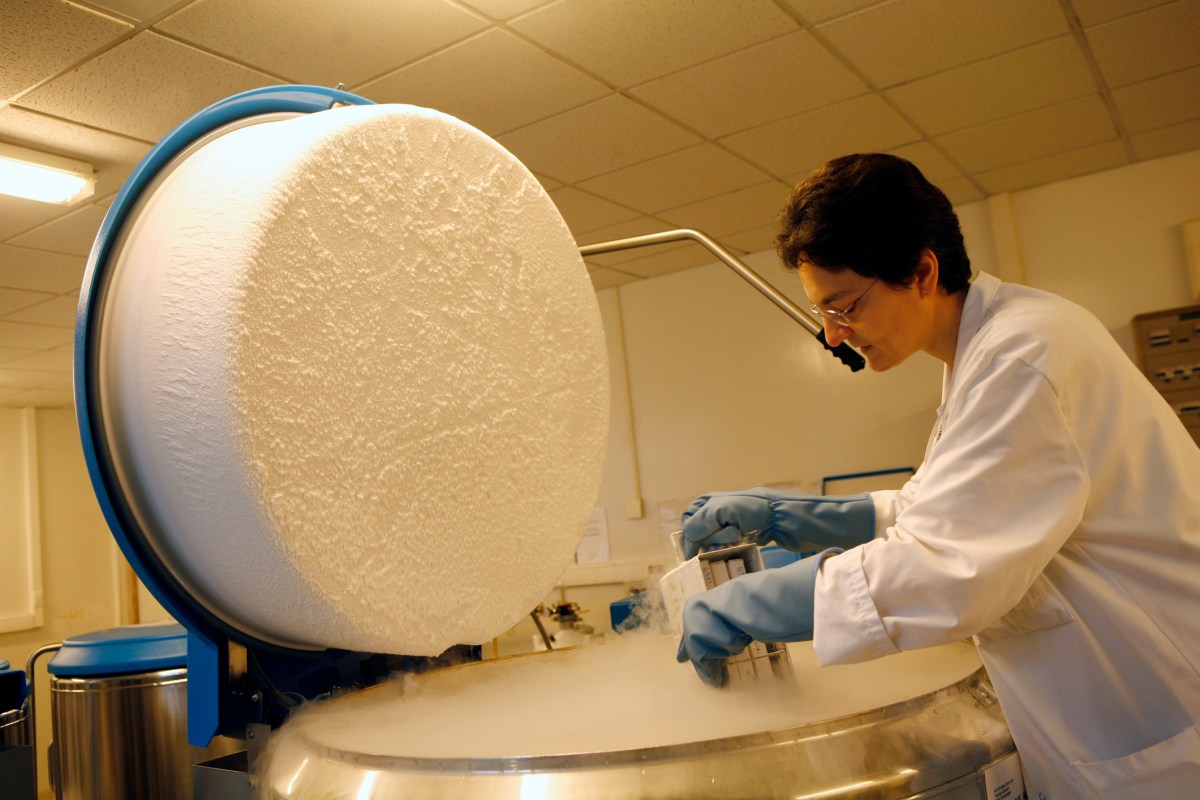
Regenerative medicine is growing quickly, with over 10,000 clinical trials testing stem cells and other advanced treatments. Regulators like the U.S. FDA and European agencies warn that many products are marketed before enough testing, raising concerns about safety and effectiveness. Clinics and companies are now focusing more on following rules and being transparent about how these treatments are made and used.
Key Facts
Regenerative medicine uses stem cells and similar advanced therapies to treat illness and injury.
There are more than 10,000 clinical trials worldwide in this field.
The U.S. Food and Drug Administration warns many regenerative therapies are sold without enough study or approval.
Europe also warns that unregulated therapies may cause serious side effects without proven benefits.
The International Society of Stem Cell Research says selling stem cell treatments without full review breaks scientific and medical rules.
Cell-based medicines depend on factors like the source of cells and how they are handled, so strict manufacturing and tracking are needed.
Mesenchymal stem cells (MSCs) are widely studied but work in complex ways not fully understood.
Safety controls help reduce risks but don’t guarantee a treatment will work for a specific disease.
Read the Original
Want the full story? Tap a source to open the original
article.
Elon Musk’s social media platform X has blocked more than 60 Saudi dissident accounts inside Saudi Arabia due to requests from Saudi authorities. These actions follow similar moves by other platforms like Meta and Snapchat, raising concerns about censorship and how tech companies handle government pressure.
Key Facts
X (formerly Twitter) started blocking Saudi dissident accounts inside Saudi Arabia from mid-July.
Over 60 accounts, including activists, academics, and independent media, have been geoblocked (made invisible inside Saudi Arabia).
Users were notified that the blocks were to comply with Saudi local laws.
Saudi authorities claimed the blocked content violated public order, religious values, morals, or privacy.
Other platforms like Meta, Snapchat, and YouTube have also restricted dissident content in Saudi Arabia for legal reasons.
Human rights groups say these actions amount to censorship and suppress freedom of speech.
Some blocked users include Yahya Assiri, Abdullah Alaoudh, and Saudi satirist Ghanem al-Masarir.
Critics worry this sets a precedent for other authoritarian governments to pressure tech companies to restrict content.
Read the Original
Want the full story? Tap a source to open the original
article.
Tanuki: Pon’s Summer is a video game by Kyoto-based Denkiworks where players control Pon, a tanuki who must deliver packages on a small bike to fix his town’s shrine. The game combines BMX stunts with mini-games based on Japanese culture, aiming for accurate cultural details and fun gameplay.
Key Facts
The main character is Pon, a tanuki who has caused financial trouble for his local shrine.
Players deliver parcels on a small bike to earn money for shrine repairs and festival preparations.
The game includes BMX tricks inspired by popular skate and snowboarding games like Tony Hawk’s Pro Skater.
Players interact with townsfolk through simple emoji responses, reflecting communication challenges.
There are many mini-games, such as sumo wrestling, fishing, baseball, and working in a local bar.
The developers researched Japanese culture deeply to create accurate shrines and festivals.
BMX tricks use a mix of button presses and joystick movements, supported by physics from experienced developers.
The game’s setting and activities are inspired by real places and traditions from Kyoto.
Read the Original
Want the full story? Tap a source to open the original
article.
Nvidia has started a group to create rules on how companies should share information about AI security problems. They are asking the public for ideas to help make AI safer and prevent future risks. This is part of Nvidia’s new Open Secure AI Alliance with over 120 member companies.
Key Facts
Nvidia launched the Open Secure AI Alliance to improve AI security.
The alliance includes more than 120 companies.
A working group within this alliance is writing guidelines for sharing AI cybersecurity incidents.
The group wants public feedback on these guidelines.
The goal is to learn from AI security problems and reduce future risks.
This effort is part of Nvidia’s open-source technology initiative.
Read the Original
Want the full story? Tap a source to open the original
article.
A SpaceX Falcon 9 rocket booster, weighing 8,800 pounds, is expected to crash into the moon at about 5,400 mph early Wednesday. The rocket has been orbiting the moon since January 2025 after launching two lunar landers. Scientists will observe the impact with lunar orbiters to learn more about the moon's surface.
Key Facts
The rocket is part of a Falcon 9 that launched two lunar landers in January 2025.
The booster separated and has been orbiting the moon since then.
It will hit the moon at about 2:35 a.m. Eastern time on Wednesday.
The impact speed will be around 5,400 mph and create a crater about 65 to 100 feet wide and 16 feet deep.
SpaceX says the rocket disposal followed all rules and regulations.
The crash impact will be hard to see even with telescopes because it will happen on the lit side of the moon.
NASA’s Lunar Reconnaissance Orbiter will take before-and-after pictures to study the impact area.
Scientists hope to study the dust and vapor from the crash to learn about hidden water ice on the moon.
Read the Original
Want the full story? Tap a source to open the original
article.
Chevrolet has introduced the 2027 Corvette Grand Sport X, which uses updated software and a new engine to improve performance compared to the previous E-Ray hybrid model. The car combines a powerful electric motor from the ZR1X and a new 6.7-liter V8 engine, with many parts shared from the older model but with software changes that make it feel more exciting to drive.
Key Facts
The 2027 Corvette Grand Sport X replaces the earlier E-Ray hybrid model.
It uses a more powerful electric motor, inherited from the ZR1X model.
The Grand Sport X features a new naturally aspirated 6.7-liter V8 engine called the LS6.
It retains many hardware parts from the E-Ray, including suspension and brakes.
Chevrolet improved the car’s behavior mainly through software updates.
The Grand Sport X keeps the widebody design and optional carbon fiber wheels.
The car is designed to offer better track performance than the E-Ray.
Chevrolet provided special flights and accommodation for media to test drive the new car.
Read the Original
Want the full story? Tap a source to open the original
article.
At least 12 states in the U.S. have reported possible cyberattacks on their water and wastewater systems. So far, there have been no major interruptions to water services, and authorities are investigating the incidents.
Key Facts
Cyber intrusions have targeted water and wastewater utilities in at least a dozen states.
Iran is the main suspect behind these cyberattacks, but this has not been officially confirmed.
The attacks can disrupt utility controls by changing passwords or disabling alarms.
The FBI advises utilities to disconnect from the internet when possible and to use manual controls if automated systems fail.
Michigan is one of the affected states, with the state police working with federal partners and state environmental agencies.
Local operators say all water systems continued to work safely with no public health risks.
The FBI is leading the investigation into the cyberattacks.
Officials encourage water facilities to strengthen cybersecurity measures to prevent future problems.
Read the Original
Want the full story? Tap a source to open the original
article.
SpaceX is preparing its crew for a mission that will last six months in space. NASA released new images of Earth that show its shape is lumpy and not a perfect sphere, especially when oceans are not included.
Key Facts
SpaceX is getting ready for a long spaceflight mission that will last about six months.
The SpaceX crew shared their feelings and excitement about the upcoming mission.
NASA created new images of Earth showing its shape without the ocean coverage.
These images reveal that Earth is not a perfect round shape but has bumps and irregularities.
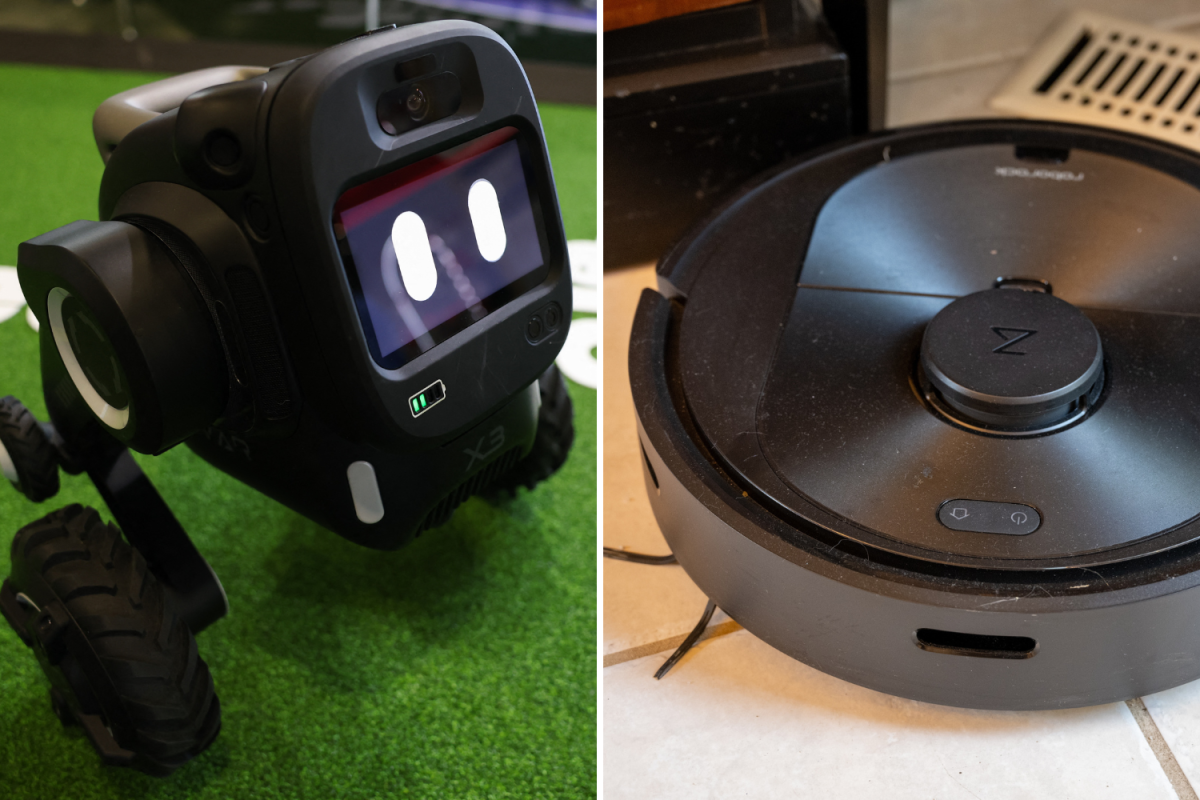
The Trump administration has decided to limit the use of certain foreign-made advanced robots due to national security concerns. The Federal Communications Commission (FCC) added these robots, including those used in homes like robot vacuums and lawn mowers, to a restricted list to prevent potential security risks from hacking or data theft.
Key Facts
The FCC added foreign-made advanced robotic devices to a banned list because of cybersecurity and supply chain worries.
Household robots affected include robot vacuums, robotic lawn mowers, pool cleaners, home security robots, and AI companion robots.
These robots often have cameras, sensors, GPS, and wireless connections that collect data and help them navigate.
Officials fear these connected robots could be hacked or used to steal sensitive information.
FCC Chairman Brendan Carr supports the move, saying it helps protect America’s critical supply chains.
Senator Tom Cotton also backed the ban, emphasizing the risk of adversaries infiltrating homes and industries.
China, a major supplier of these robots, has threatened to retaliate against the U.S. for these restrictions.
The ban aims to stop foreign technology dependencies that could weaken national security.
Read the Original
Want the full story? Tap a source to open the original
article.
This article reviews the best microwaves available in the UK for different budgets and kitchen needs. The author tested 10 different microwave models by cooking and reheating common foods and looked at features like speed, ease of use, and extra functions such as air frying.
Key Facts
Microwaves heat food quickly by making water molecules in food vibrate to create heat.
People mainly use microwaves to reheat drinks, defrost meals, warm food, pop popcorn, and cook potatoes.
The author tested 10 microwaves by preparing the same foods: popcorn, jacket potatoes, baked beans, water, ice defrosting, poppadoms, and frozen chips.
Some microwaves now have smart features like air-frying.
The best overall microwave found was the Panasonic NN-CD88 4-in-1 combi with air fry costing £379.
The best budget microwave was the Salter DuoWave 2-in-1 at £184.
All microwaves tested had controls on the right side and mostly opened to the left except one model.
Leftover food after testing was given to animals, and microwaves not collected by brands were donated to charity.
Read the Original
Want the full story? Tap a source to open the original
article.
At least seven U.S. states have reported cyberattacks targeting their water systems. Officials say the quality of the water is still safe and has not been affected.
Key Facts
Cyberattacks targeted water systems in at least seven states.
Authorities have been informed and are investigating the incidents.
Water quality in these states remains safe for the public.
The attacks involved attempts to access or disrupt water treatment systems.
No reports indicate that water supply was interrupted.
The FBI received reports and is involved in the investigation.
The attacks highlight concerns about security in public infrastructure.
Read the Original
Want the full story? Tap a source to open the original
article.
Eli Lilly is increasing the availability of its experimental weight loss drug called retatrutide. This drug, still not approved by the FDA, helped obese patients in clinical trials lose between 73 and 85 pounds over two years.
Key Facts
The drug’s name is retatrutide.
Retatrutide is currently experimental and not yet approved by the FDA.
Eli Lilly is the company developing and expanding access to this drug.
Clinical trial participants who took retatrutide lost 73 to 85 pounds over two years.
Dr. Rachel Pessah Pollack has discussed details about the drug’s safety and who can use it.
The information was presented on CBS News.
Read the Original
Want the full story? Tap a source to open the original
article.
Researchers in Italy's Emilia-Romagna region are developing new types of wheat that can resist the effects of climate change. This work aims to create better wheat for making pasta, a key part of Italian cuisine, despite changing weather conditions.
Key Facts
The project focuses on improving wheat, the main ingredient in pasta.
Scientists are working in Emilia-Romagna, an important food area in Italy called "Food Valley."
The goal is to develop wheat that can withstand climate change challenges like heat and drought.
This wheat is intended to secure the future production of pasta.
The effort combines traditional food with modern technology to adapt to environmental changes.
Climate change affects agriculture by making it harder to grow certain crops.
Italy is a major producer and consumer of pasta worldwide.
The initiative is part of a larger movement to protect food supply from climate risks.
Read the Original
Want the full story? Tap a source to open the original
article.
Big Walk is a new online cooperative puzzle game made by House House, the creators of Untitled Goose Game. Players explore a beautiful, realistic wilderness as bird-like characters, working together to solve puzzles and overcome challenges while communicating by voice.
Key Facts
Big Walk is an online co-op puzzle game for up to 12 players.
Players control bird-like characters in a photorealistic Australian wilderness setting.
The game uses voice proximity and direction to encourage real-time communication.
The objective includes completing puzzles to earn red peanuts, which unlock items like a slow-moving toy train.
Gameplay mixes moments of teamwork and puzzles with exploring and backtracking through the environment.
Visuals transition quickly from night to day, adding to the immersive atmosphere.
The game focuses on cooperation and playfulness rather than fast rewards or typical online game mechanics.
It encourages social interaction through shared experiences and verbal communication.
Read the Original
Want the full story? Tap a source to open the original
article.