Obesity rates in England have doubled since 1993, with 30% of adults obese in 2024 compared to 15% in 1993. The rise is linked to lifestyle changes like more sedentary jobs and cheaper, easier access to unhealthy foods, despite many government attempts to reduce obesity.
Key Facts
In 1993, 15% of adults in England were obese; by 2024, that figure reached 30%.
Obesity rates have increased fastest among 16-to-24-year-olds, from 6% in 1993 to 18% in 2024.
There are now 14 million obese adults in England, one million of whom are young adults.
Changes in jobs mean more people sit for long periods, leading to less physical activity.
Food prices have fallen due to supermarket competition and more fast food and delivery options.
Unhealthy foods high in fat, salt, and sugar are cheaper and more available, especially in poorer areas.
The UK government has launched 14 national obesity strategies since 1992, including a sugar tax introduced in 2018.
Experts say these efforts have not been enough to stop the rising obesity rates in England.
Read the Original
Want the full story? Tap a source to open the original
article.
A California woman admitted to killing her wife by stabbing, similar to how she had killed her previous husband years before. She fled to Mexico after the crime but was caught and now faces a long prison sentence.
Key Facts
Yolanda Olejniczak Marodi, 54, pleaded guilty to second-degree murder for killing her wife Rebecca Marodi in February 2025.
Rebecca Marodi was a decorated California fire captain who fought deadly wildfires.
Rebecca was found with multiple stab wounds at their home and had expressed wanting to end their marriage.
Security footage showed Rebecca running from Yolanda, screaming for help, while Yolanda was seen holding a knife.
Yolanda fled to Mexico about 75 minutes after the attack but was arrested there and returned to the U.S.
Yolanda had previously served 10 years in prison for the 2000 stabbing death of her first husband after he ended their marriage.
Friends said Yolanda was jealous and controlling toward Rebecca before the attack.
Yolanda faces 36 years to life in prison when sentenced on September 2, 2025.
Read the Original
Want the full story? Tap a source to open the original
article.
A federal judge approved the Trump administration's plan to end Temporary Protected Status (TPS) for South Sudanese immigrants in the United States. The ruling follows a Supreme Court decision allowing the administration to end TPS for Haitians and Syrians, and means South Sudanese nationals lose legal protections that let them live and work in the U.S. temporarily.
Key Facts
Judge Patti Saris ruled that the Trump administration can end TPS protections for South Sudanese people living in the U.S.
TPS lets people from troubled countries stay in the U.S., work legally, and avoid deportation temporarily.
The Supreme Court recently ruled 6-3 to allow ending TPS for Haitians and Syrians, influencing this decision.
South Sudan has faced civil war and political unrest, resulting in many deaths and displaced people since 2011.
The Department of Homeland Security said South Sudan no longer meets the criteria for TPS, starting in November.
Some groups tried to keep TPS protections through court but lost after the Supreme Court decision.
Since 2001, TPS holders have contributed billions in taxes and to the U.S. economy, filling important jobs.
The judge ruled that the department now has authority over TPS because of changes in government structure after 2002.
Read the Original
Want the full story? Tap a source to open the original
article.
A federal appeals court has stopped President Donald Trump's administration from building a $400 million ballroom at the White House because Congress has not approved the project. The court said President Trump cannot build the new ballroom where the East Wing used to be without permission from Congress.
Key Facts
The project is a $400 million ballroom at the White House.
The ballroom is planned to be 90,000 square feet (8,400 square meters).
The ballroom would replace the East Wing, which was demolished last fall.
A three-judge panel from the U.S. Court of Appeals for the District of Columbia Circuit made the ruling.
The court said President Trump cannot build the ballroom without congressional approval.
President Trump plans to appeal the decision to the U.S. Supreme Court.
The court's ruling requires the administration to halt construction immediately.
Read the Original
Want the full story? Tap a source to open the original
article.
The U.S. jobs market weakened in July, with employers cutting 23,000 jobs unexpectedly. This change makes it harder for the Federal Reserve to decide whether to raise interest rates to fight inflation or hold steady to support jobs.
Key Facts
In July, the U.S. lost 23,000 jobs, contrary to expectations.
The Labor Department lowered previous job growth numbers for May and June by 103,000 combined.
The Federal Reserve usually raises interest rates to lower inflation and cuts rates to help jobs when the economy weakens.
Inflation in June was 3.5%, higher than the Fed’s 2% target but lower than May’s 4.2%.
The Fed is now more likely to keep interest rates steady in September rather than raise them.
The Consumer Price Index for July is expected to show inflation slowed to 3.4%.
Wages have risen about 38% over seven years, but prices have increased nearly 30%, leaving workers with smaller real gains.
Businesses are cautious about hiring because of uncertainty linked to high energy prices, tariffs, and immigration policies.
Read the Original
Want the full story? Tap a source to open the original
article.
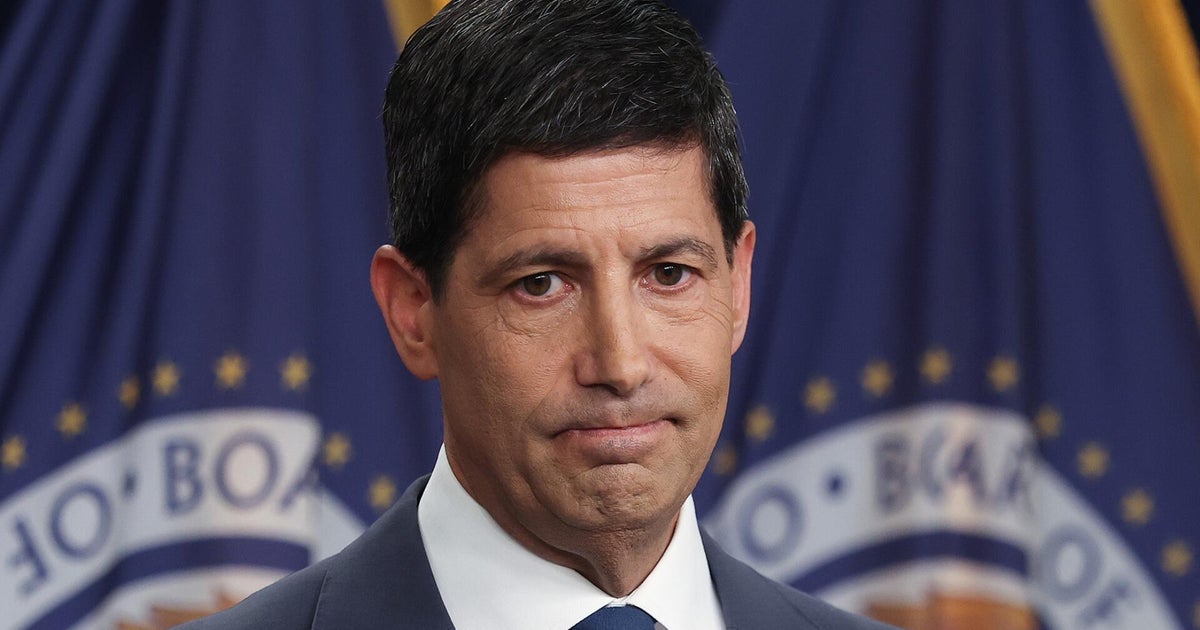
President Donald Trump is trying again to remove Lisa Cook from the Federal Reserve Board of Governors over accusations of mortgage fraud. The Supreme Court blocked his first attempt because he did not give her proper notice or chance to respond, but now the White House has formally notified her and set a deadline for her reply.
Key Facts
Lisa Cook is a member of the Federal Reserve Board of Governors.
President Trump wants to fire her due to allegations of making false statements on mortgage agreements.
The Supreme Court stopped Trump's first firing attempt, saying Cook deserved proper procedure before removal.
The White House gave Cook a deadline of August 26 to respond to the allegations.
The accusations come from Bill Pulte, a Trump housing official, who sent a criminal referral last year.
Cook denies wrongdoing and has not been charged with a crime.
The Supreme Court ruled that the President cannot remove a Fed governor without "cause," protecting the Fed from political interference.
Chief Justice Roberts and four others formed the majority in the Supreme Court decision supporting Cook’s protections.
Read the Original
Want the full story? Tap a source to open the original
article.
The Senate confirmed Cameron Hamilton as the new head of the Federal Emergency Management Agency (FEMA). Hamilton previously led FEMA temporarily but was fired after opposing plans to eliminate the agency. He will now manage FEMA during a time of change and effort to restore stability.
Key Facts
Cameron Hamilton was confirmed by the Senate to lead FEMA.
Hamilton previously served as FEMA’s temporary leader in 2025 but was fired for opposing agency elimination plans.
President Donald Trump nominated Hamilton along with more than 70 other officials.
Hamilton’s confirmation suggests Trump may be reconsidering plans to shut down FEMA.
FEMA has over 20,000 employees and has faced challenges including staff departures and delays in disaster aid.
Some Democrats have accused the Trump administration of favoring disaster aid requests from Republican governors over Democrats.
Hamilton pledged to make FEMA fair, follow laws, and improve how disaster claims are handled.
Emergency management professionals showed support for Hamilton’s confirmation despite concerns from some FEMA staff.
Read the Original
Want the full story? Tap a source to open the original
article.
Kriti Lodha shared her experience with postpartum psychosis, which she believes was caused by a combination of severe lack of sleep, being a first-time mother, and a difficult childbirth. She spoke about how hard it was to recover from this condition during an interview on a health program.
Key Facts
Kriti Lodha experienced postpartum psychosis after giving birth in 2020.
She described several triggers including sleep deprivation, being a new mom, and a traumatic birth.
Postpartum psychosis is a serious mental health condition that can occur after childbirth.
Lodha expressed uncertainty about whether she would recover during her most difficult moments.
She discussed her story on the CBS News health show "Healthful."
The interview was conducted by Norah O'Donnell.
Postpartum psychosis is different from postpartum depression and often requires medical attention.
Read the Original
Want the full story? Tap a source to open the original
article.
President Donald Trump held a meeting at the State Department focused on the mining industry. The White House said Trump has supported mining by encouraging investment, speeding up permits, and helping American workers.
Key Facts
President Trump hosted a roundtable on mining at the State Department.
The meeting focused on the mining industry.
The White House called Trump a strong supporter of the mining sector.
Trump’s support has led to more investments in mining.
His policies have sped up the process for mining permits.
These efforts have aimed to benefit American workers in mining.
The event took place on a Friday afternoon.
Read the Original
Want the full story? Tap a source to open the original
article.
Journalist Don Lemon has asked a federal judge to dismiss charges against him related to a protest at a church in Minnesota. Lemon’s lawyers say the charges are a political attack connected to his reporting on immigration issues and the Justice Department’s actions.
Key Facts
Don Lemon faces federal civil rights charges for allegedly disrupting a church service during an anti-ICE protest in St. Paul, Minnesota.
Lemon says he was acting as a journalist covering the protest, not as a participant.
The protest happened amid an immigration crackdown and after a controversial death of Renee Good by a federal agent.
Lemon’s lawyers argue that statements by President Trump and Justice Department officials show the charges are vindictive and aimed at punishing Lemon’s reporting.
Charges include conspiracy against rights of religious freedom, and Lemon has pleaded not guilty.
The Justice Department arrested Lemon at his Los Angeles hotel late at night while he was covering an awards show, despite offers to arrange his surrender.
Government efforts included attempting to access Lemon’s YouTube subscriber information, which a judge rejected.
Lemon’s lawyers claim the government bypassed standard procedures and targeted Lemon because of his journalism.
Read the Original
Want the full story? Tap a source to open the original
article.
Puerto Rico is facing a severe water shortage due to a historic drought and long-standing problems with its water system. Over 180,000 people are now on a 48-hour water rationing schedule, while local leaders report ongoing service issues that predate the drought. The Trump administration has not made any official statements about the crisis.
Key Facts
More than 180,000 residents in Puerto Rico are under a 48-hour water rationing plan.
The Carraízo reservoir is at critically low levels, causing alternating water shutoffs in seven municipalities.
Some neighborhoods experienced over 100 days of unreliable water service this year before rationing began.
July was the driest month in San Juan in over 120 years.
The National Oceanic and Atmospheric Administration predicts continued dry and hot conditions through October.
About 68% of Puerto Rico is in drought, especially in interior and northern areas.
Puerto Rico’s government and the main water agency, PRASA, have not clearly communicated how long rationing will last.
San Juan’s mayor has sued PRASA for chronic water shortages unrelated to the current drought.
The Trump administration has not issued any public comment on the water crisis affecting millions of U.S. citizens.
Read the Original
Want the full story? Tap a source to open the original
article.
Millions of people in England may have to wait longer for mental health care as many NHS providers plan to cut services and reduce staff to save money. These changes could affect important areas like child mental health, crisis support, and community programs, even though the government has announced plans to open more mental health centers.
Key Facts
Over two-thirds (68%) of NHS mental health providers in England plan to cut or reduce some services in 2026-27.
Around half (57%) expect to cut clinical staff jobs, and 59% plan to freeze hiring new staff.
Services likely affected include child and adolescent mental health, talking therapies, addiction support, and crisis help.
The NHS is facing rising demand for mental health care along with financial problems.
East London NHS trust plans to cut many services and hundreds of jobs to close a £25 million financial gap.
Mental health experts warn cuts could harm care quality and safety across England.
The UK prime minister announced plans to open nearly 200 new community mental health centers and emergency mental health services by 2029.
Mental health charities say cutting funding and jobs makes it impossible to improve care effectively.
Read the Original
Want the full story? Tap a source to open the original
article.
Tennessee held its primary election using a new congressional district map redrawn by Republicans after changes to voting rights laws. The primary decided party candidates for the November midterm elections, highlighted by a close governor’s race and upset results in some congressional districts.
Key Facts
Tennessee’s congressional map was redrawn in May after the Supreme Court weakened minority voting protections.
Redistricting split Memphis’s majority-Black district, a traditional Democratic area.
Republicans hold 8 of Tennessee’s 9 congressional seats and aim to win all seats in November.
Senator Marsha Blackburn won the Republican nomination for governor and will face Democrat Jerri Green.
Blackburn would become Tennessee’s first female governor if elected.
In District 5, Trump-backed incumbent Andy Ogles lost his primary to Charlie Hatcher.
Ogles faced criticism for his anti-Muslim statements.
District 6’s open House seat has a competitive Republican primary after the incumbent ran for governor and lost.
Read the Original
Want the full story? Tap a source to open the original
article.
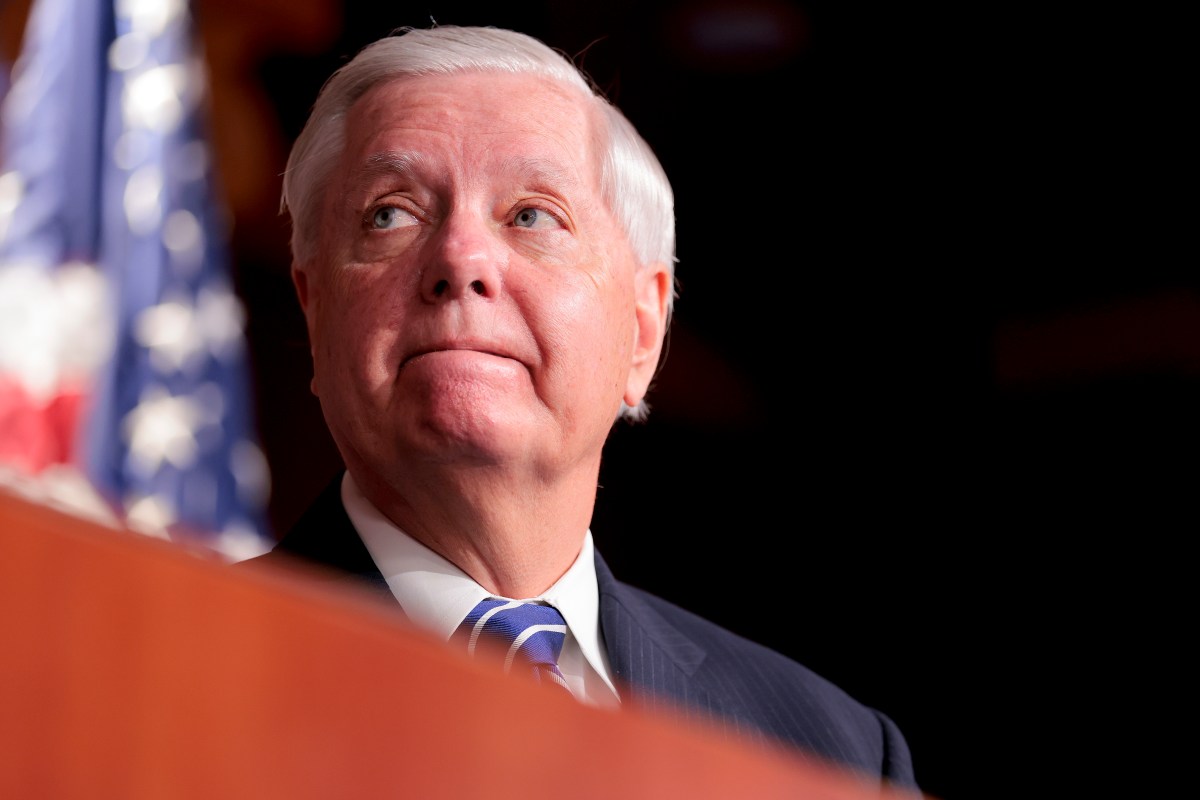
The U.S. Senate has passed a strong sanctions bill aimed at punishing Russia for its war in Ukraine. The bill, supported by both parties and linked to the late Senator Lindsey Graham, targets countries buying Russian oil and gas to cut off funds for Russia’s military actions.
Key Facts
The Senate approved the Russian sanctions bill by a large vote of 86-11.
The bill targets countries that import Russian oil, gas, and exports to reduce Putin’s war funding.
President Donald Trump supports the bill and urged the House of Representatives to vote on it.
The sanctions allow tariffs on the top five buyers of Russian energy, including China and India.
Countries importing less than 15% of their natural gas from Russia can receive exceptions if they are cutting back.
The bill also sanctions Russian leaders, financial institutions, and oil tankers that avoid previous sanctions.
Former Senator Lindsey Graham led efforts to create the bill before his sudden death.
Senator Darline Graham was appointed to her brother Lindsey Graham’s Senate seat and supports ending the war in Ukraine.
Read the Original
Want the full story? Tap a source to open the original
article.
The U.S. Government Accountability Office (GAO) reviewed savings claims made by the Department of Government Efficiency (DOGE), led by President Trump and Elon Musk. The GAO found that most of the claimed savings from canceled grants, contracts, and leases could not be verified or were exaggerated.
Key Facts
DOGE reported saving $215 billion through various government cuts but did not provide enough evidence to support most of these savings.
GAO focused on $110.3 billion in claimed savings related to contracts, grants, and leases.
Of $49.2 billion claimed in grant savings, about 96% could not be verified due to lack of information.
DOGE claimed $61 billion in savings from contracts, but GAO found that DOGE followed its own savings methods for only 27.5% of those cases.
The GAO noted that DOGE ignored important details and complexities in federal contracts, which likely caused savings to be misstated.
DOGE reported cutting 15,887 grants, 13,440 contracts, and 264 leases.
DOGE refused to respond to GAO’s requests for interviews or clarification about these issues.
Senate Democrats had earlier found that DOGE worked in secrecy, with restricted access at agencies and strict security measures.
Read the Original
Want the full story? Tap a source to open the original
article.
The White House shared a list of companies that recently lowered prices on various products and services, crediting these cuts to President Donald Trump’s efforts to make life more affordable. However, most companies did not mention the president or his policies when announcing their price reductions.
Key Facts
The White House claims that private companies have responded to President Trump’s call to lower prices for American families.
Companies cutting prices come from different sectors, including groceries, prescription drugs, energy, and automobiles.
Examples include Giant Eagle grocery chain reducing prices by 10% on popular items and Walmart cutting prices on 250 products.
Many companies say their price cuts are due to normal business reasons or seasonal campaigns, not directly because of President Trump’s policies.
University experts say there is no clear evidence showing that these price cuts were caused by the president’s efforts beyond the White House’s claims.
The White House credits agreements called Most Favored Nation (MFN) deals with drug manufacturers for some prescription drug price cuts.
Energy companies such as Georgia Power and automobile makers like Ford and Chevrolet are also on the list.
President Trump has posted on social media claiming credit for several major retailers lowering prices.
Read the Original
Want the full story? Tap a source to open the original
article.
The U.S. Senate approved a sanctions bill targeting Russia and Iran. The bill is named after the late Senator Lindsey Graham and passed with strong support from both parties.
Key Facts
The sanctions bill targets Russia and Iran.
It is named after Senator Lindsey Graham, who passed away.
The Senate voted 86 in favor and 11 against the bill.
The bill received bipartisan support, meaning members from both political parties agreed.
The vote took place on Friday.
The bill aims to increase pressure on Russia and Iran through economic measures.
Sanctions often involve limiting trade or financial activities to influence a country's behavior.
This is part of ongoing U.S. efforts to respond to international issues involving Russia and Iran.
Read the Original
Want the full story? Tap a source to open the original
article.
The U.S. Senate passed a bill proposing strong new sanctions on Russia to limit its ability to fund the war in Ukraine. The bill targets Russia’s energy sales and also penalizes countries that keep buying Russian oil and gas, but 11 senators, including one Republican, voted against it.
Key Facts
The bill was introduced by the late Senator Lindsey Graham.
It passed the Senate with 86 votes in favor and 11 against; the 11 included Senator Rand Paul, the only Republican opposing.
The sanctions aim to block Russian political leaders, banks, military groups, and energy companies.
The bill targets countries and companies that help Russia evade current sanctions, including those involved in shipping Russian oil.
It limits U.S. investments in Russia and restricts financial deals related to Russian energy and government debt.
The bill introduces “secondary sanctions” and tariffs on countries continuing to buy Russian oil and gas.
Some senators opposed the bill because it gives the President broad power to impose tariffs, which they worry might be used recklessly.
The legislation includes provisions allowing the President to waive certain sanctions to maintain flexibility.
Read the Original
Want the full story? Tap a source to open the original
article.
Dr. Mehmet Oz, head of the Centers for Medicare and Medicaid Services, asked senators to reject a proposed amendment by Senator Ted Budd. The amendment would let a federal ban on most hemp products start in November, but Oz expressed serious worries about its effects.
Key Facts
Dr. Mehmet Oz is the administrator of the Centers for Medicare and Medicaid Services (CMS).
Senator Ted Budd from North Carolina proposed an amendment related to hemp products.
The amendment would allow a federal ban on most hemp-derived products to begin in November.
Dr. Oz sent a letter to senators urging them not to support this amendment.
Oz stated he has “grave concerns” about the amendment’s impact.
The discussion involves the regulation of hemp products at the federal level.
This issue affects healthcare and product availability regulated by CMS.
Read the Original
Want the full story? Tap a source to open the original
article.