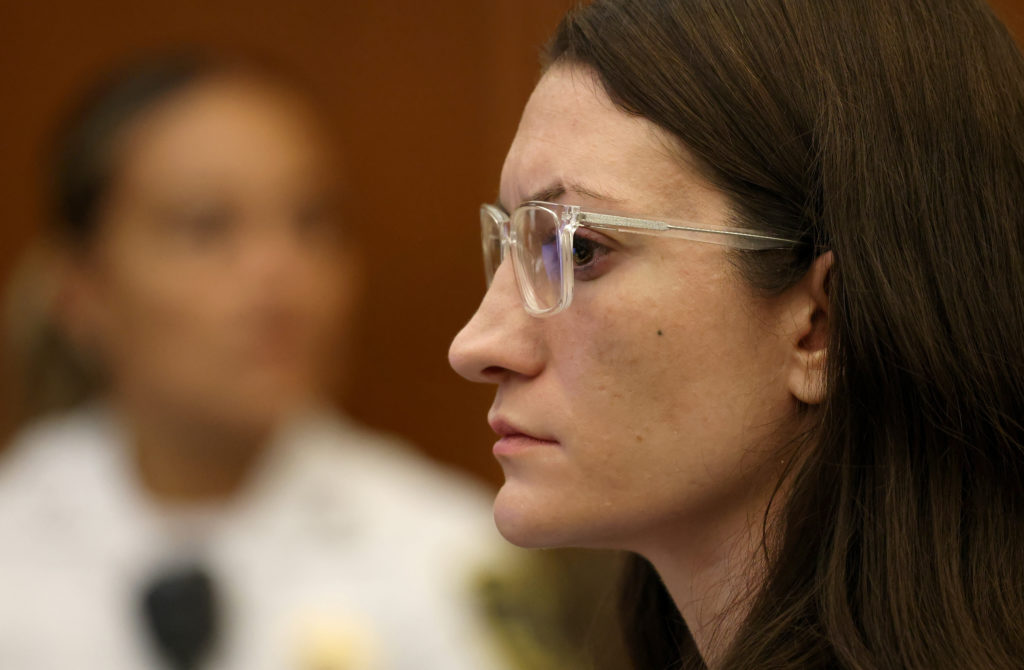
The murder trial of Lindsay Clancy, who killed her three children in Massachusetts in 2023, has entered its second week with more testimony from doctors and witnesses. Clancy’s defense says she suffered from postpartum psychosis, a severe mental illness after childbirth, while prosecutors argue she acted intentionally.
Key Facts
Lindsay Clancy strangled her three children, aged 8 months to 5 years, in January 2023.
Clancy was seriously injured after jumping from a second-floor window and is now paralyzed from the waist down.
Emergency room doctors testified about the children’s injuries and deaths.
Clancy’s defense claims she had postpartum psychosis and bipolar disorder, which affected her reality.
In the months before the killings, Clancy was prescribed various psychiatric medications and experienced worsening symptoms.
She sought help for postpartum depression in December 2022 but was discharged after a day.
Clancy’s last psychiatrist visit was on January 23, 2023; the next day she believed a voice told her to kill her children and then herself.
During the trial, jurors visited the family home and locations relevant to the case.
Read the Original
Want the full story? Tap a source to open the original
article.
Kay Granger, the first Republican woman from Texas elected to the U.S. House of Representatives, has died at age 83. She served nearly 30 years in Congress and faced Alzheimer's disease in her final years.
Key Facts
Kay Granger served in the U.S. House for almost 30 years, representing Texas’s 12th district.
She was the first Republican woman elected to the House from Texas.
Granger was also the first Republican woman to chair the House Appropriations Committee.
Before Congress, she was mayor of Fort Worth, Texas, from 1991 to 1995.
She did not seek re-election in 2024 due to health problems related to Alzheimer’s disease.
Her family announced she died from Alzheimer’s disease at age 83.
Granger disappeared from public life in late 2024 while living in a care home for memory care.
Republican House Speaker Mike Johnson honored her for her decades of public service.
Read the Original
Want the full story? Tap a source to open the original
article.
Sarah Matthews, a former White House deputy press secretary, said that President Trump and his team are trying to mislead the American people with their statements about the economy. She accused them of using false or misleading information to make the economy seem better than it is.
Key Facts
Sarah Matthews is a former deputy press secretary in the White House.
She claims President Trump and his officials are “gaslighting” the public.
“Gaslighting” means trying to make people doubt their own experiences or beliefs.
Matthews says the government is giving a false message about the state of the economy.
She mentioned that Republicans criticized President Biden’s team for similar behavior in the past.
The issue involves how leaders communicate about economic conditions.
Read the Original
Want the full story? Tap a source to open the original
article.
Marine veteran Joslin Joseph says Democrats need to find a balance between including transgender athletes and keeping sports fair. She talks about the challenges of having transgender women compete in women’s sports.
Key Facts
Joslin Joseph is a Marine veteran.
She discusses transgender athletes participating in women’s sports.
She highlights a conflict between inclusivity and fair competition.
She believes Democrats should address this issue.
The focus is on how to balance fairness with being inclusive of transgender athletes.
This topic relates to ongoing debates in American sports and politics.
Read the Original
Want the full story? Tap a source to open the original
article.
Abdul El-Sayed and U.S. Rep. Haley Stevens are competing in the Michigan Democratic primary. Both candidates visited Black churches in Detroit to ask for votes and support from the community.
Key Facts
Abdul El-Sayed attended a church event in Detroit and asked for votes from the congregation.
U.S. Rep. Haley Stevens also campaigned at a different Black church in Detroit.
A well-known pastor supported Haley Stevens during her church event.
The primary election is important for the future of the Democratic Party in Michigan.
Both candidates are making final efforts to win votes before the primary.
Detroit is a key city in this primary contest.
The article focuses on community outreach efforts in predominantly Black churches.
Read the Original
Want the full story? Tap a source to open the original
article.
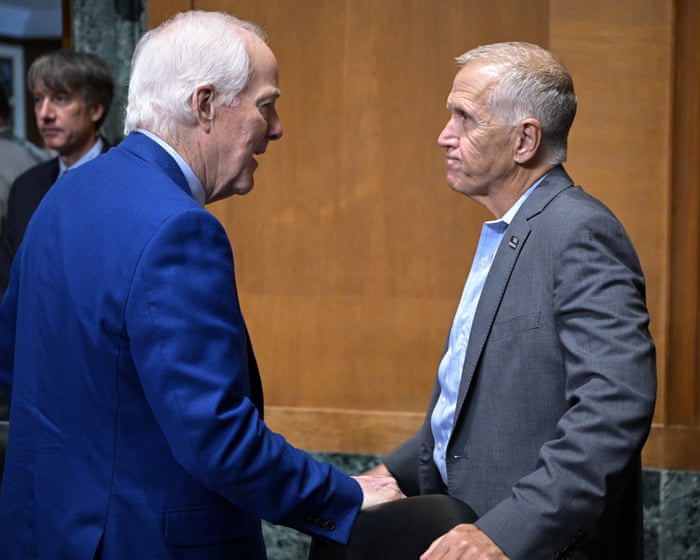
Two Republican senators agreed to support Todd Blanche’s nomination as attorney general after he canceled a $1.8 billion fund linked to protections for President Trump’s allies. The Senate judiciary committee plans to vote on his nomination after these concerns were resolved.
Key Facts
Todd Blanche is the current acting attorney general and is seeking permanent appointment.
Two Republican senators, John Cornyn and Thom Tillis, were blocking Blanche’s nomination.
Blanche confirmed in writing that the $1.8 billion “anti-weaponization fund” connected to Trump’s allies was canceled.
The fund and protections against future tax audits for Trump and his family were part of a lawsuit settlement with the IRS.
A federal judge criticized the settlement as favoring President Trump.
The cancellation of the fund and limits on audit protections addressed the senators’ concerns.
Blanche’s nomination will be voted on soon by the Senate judiciary committee.
President Trump previously supported the fund and warned he would push to restore it if Blanche’s nomination failed.
Read the Original
Want the full story? Tap a source to open the original
article.
Immigration and Customs Enforcement (ICE) detentions reached a record high in July during President Donald Trump's second term. This information comes from internal data released by the agency.
Key Facts
ICE detentions in July were the highest since President Trump's current term began.
The data showing this increase comes from internal agency records.
These numbers reveal a rise in immigration enforcement activity.
The report was covered by CBS News correspondent Camilo Montoya-Galvez.
This trend reflects the government’s approach to immigration during President Trump’s second term.
The data underscores increased efforts to detain immigrants by ICE.
Read the Original
Want the full story? Tap a source to open the original
article.
Michigan voters are preparing for the upcoming Tuesday primary elections, which include a Democratic race for the U.S. Senate. Two main candidates in the Democratic primary are Haley Stevens and Abdul Al-Sayed. The race has included disagreements about the focus on Israel and the American Israel Public Affairs Committee (AIPAC).
Key Facts
Michigan will hold primary elections on Tuesday.
Haley Stevens and Abdul Al-Sayed are competing in the Democratic Senate primary.
Stevens criticized Al-Sayed for focusing on Israel and AIPAC during the campaign.
AIPAC is a group that advocates for U.S.-Israel relations.
The debate touches on foreign policy issues within a state-level election.
Both candidates are seeking the Democratic nomination for U.S. Senate.
The primary results will determine who represents Democrats in the general election.
Read the Original
Want the full story? Tap a source to open the original
article.
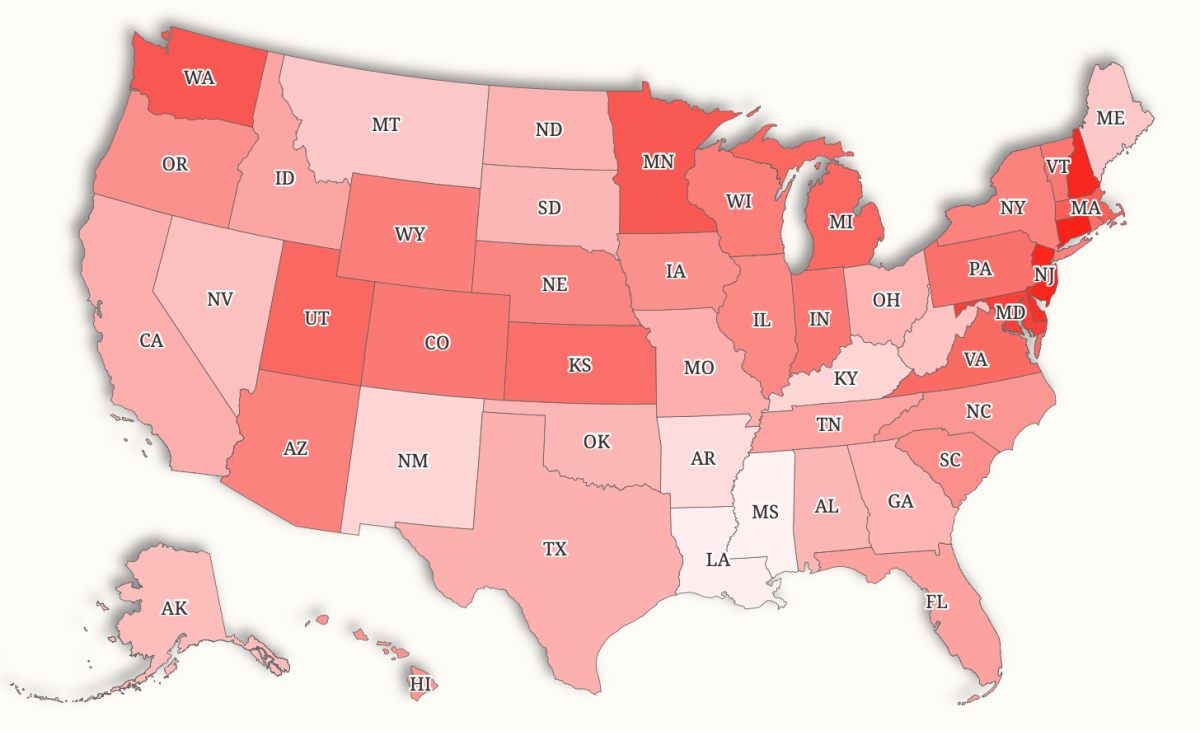
If Congress does not take action, Social Security retirement benefits could be cut by about 22% starting in late 2032 when the program’s trust fund is expected to run out. This could mean some retired couples losing up to nearly $17,000 a year in benefits, with the size of cuts varying by income and state.
Key Facts
The Social Security retirement trust fund (Old-Age and Survivors Insurance) is projected to be depleted by the fourth quarter of 2032.
After depletion, payroll taxes would cover only around 78% of the promised Social Security benefits.
A typical couple retiring around 2033 could see annual benefit cuts of about $16,900.
Low-income couples might lose about $10,200 yearly, while high-income couples could lose up to $22,300.
The cuts would affect about 60.1 million people, or 17.7% of the U.S. population.
States with the largest average monthly benefit cuts include Connecticut ($556), New Jersey ($554), and New Hampshire ($553).
The states with the most people affected are California (6 million), Florida (4.6 million), and Texas (4.3 million).
The proportion of residents affected is highest in Maine (22.9%), West Virginia (22.4%), and Vermont (22%).
Read the Original
Want the full story? Tap a source to open the original
article.
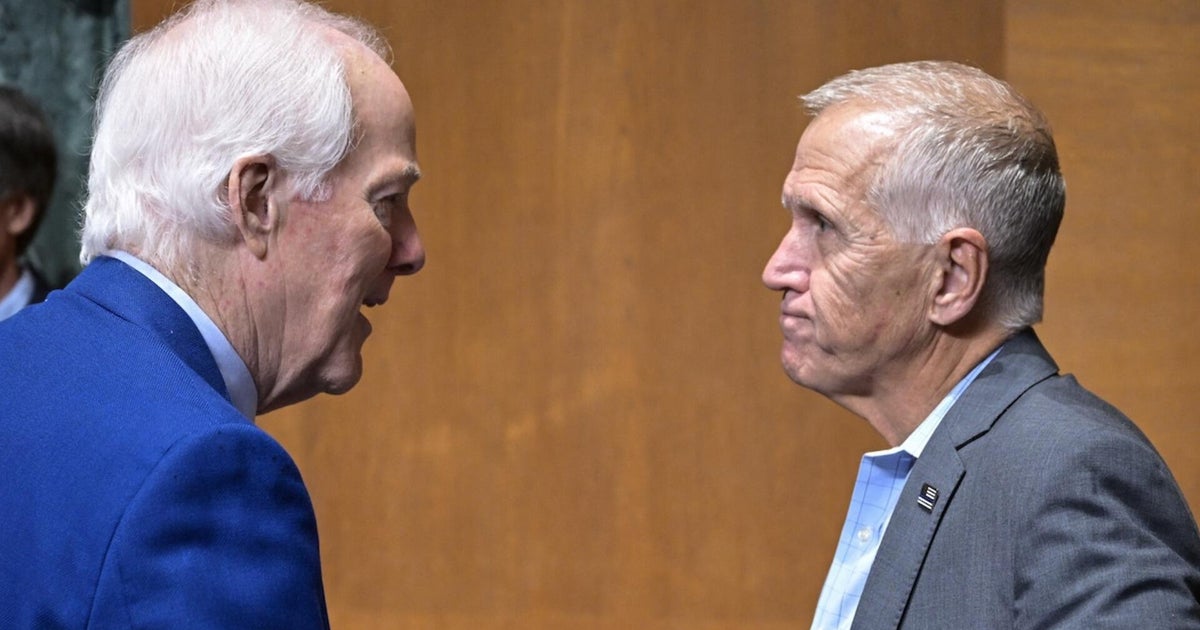
Republican Senators John Cornyn and Thom Tillis said they will vote to confirm Todd Blanche as attorney general. They made this decision after Blanche canceled a fund called the "anti-weaponization fund."
Key Facts
Senators John Cornyn and Thom Tillis are Republicans.
They support confirming Todd Blanche as attorney general.
Blanche canceled the "anti-weaponization fund" late Sunday night.
This action led Cornyn and Tillis to change their vote in favor of Blanche.
The "anti-weaponization fund" was a point of concern before Blanche rescinded it.
Read the Original
Want the full story? Tap a source to open the original
article.
Some U.S. states are changing rules about how children use the internet, and Congress is considering a federal law to better verify ages online. This effort aims to protect children from harmful content and social media addiction by requiring more reliable age checks and parental controls.
Key Facts
States are updating rules to control children's internet and social media use.
Federal lawmakers are reviewing the SCREEN Act, which demands strong age verification on adult websites.
Current systems mostly rely on users saying their age, which can be inaccurate.
New laws would limit features that keep children addicted and protect their privacy.
Research shows children who get smartphones before age 13 face higher risks of mental health problems.
Early social media use links to issues like suicidal thoughts, aggression, and poor emotional health.
The SCREEN Act wants to ban simple age declarations and enforce data limits on websites.
The Federal Trade Commission would oversee enforcing these new rules.
Read the Original
Want the full story? Tap a source to open the original
article.
Federal employees and their families have filed a lawsuit against the Trump administration for stopping insurance coverage of gender-affirming healthcare. The lawsuit says this ban breaks laws against sex discrimination and forces people to pay for expensive care themselves or skip it.
Key Facts
The lawsuit was filed by the Human Rights Campaign Foundation and a Washington, DC law firm.
The ban on gender-affirming care coverage began in January, affecting about 8.3 million federal employees and their families.
Coverage still exists for mental health counseling, including faith-based counseling.
A temporary exception allowed coverage for people already in treatment, but this will end by 2027.
An estimated 39,400 federal insurance enrollees will lose coverage for this care.
Many affected people must now pay high costs for doctor visits, hormone therapy, and surgeries out of pocket.
The lawsuit argues the ban violates Title VII, a law prohibiting discrimination based on sex.
Healthcare experts say gender-affirming care is medically necessary and life-saving for transgender people.
Read the Original
Want the full story? Tap a source to open the original
article.
Prediction markets show a strong chance that Jeanine Pirro will leave her role as U.S. attorney for the District of Columbia after a public disagreement with President Donald Trump. The dispute followed Pirro's decision to drop charges against a man accused of damaging the Lincoln Memorial Reflecting Pool, citing contractor error instead of vandalism.
Key Facts
Prediction markets put Pirro's chance of leaving her post before September 1 at 97%.
Pirro's office dismissed the case against David Hearn, a former Olympic canoeist accused of vandalizing the Reflecting Pool.
Prosecutors said new Interior Department documents showed the damage was caused by bad contractor work, not intentional harm.
President Trump strongly disagreed, calling the damage vandalism and criticizing Pirro publicly.
Interior Secretary Doug Burgum supported Trump’s view, stating they provided evidence of vandalism to prosecutors.
The disagreement is unusual for Trump’s second term, where his officials usually support him publicly.
Pirro is a longtime Trump ally and former Fox News host, making the split notable.
There is speculation Pirro could be forced out because of this disagreement.
Read the Original
Want the full story? Tap a source to open the original
article.
The article discusses how welfare programs in the United States lack strong identity checks compared to other parts of daily life where people are often verified with technology. This lack of verification has allowed some people to commit fraud in these programs.
Key Facts
Welfare programs in the U.S. do not have strict identity verification processes.
Other areas of life use tools like security cameras and online tests to confirm identity.
Fraudsters have taken advantage of the weaker checks in welfare systems.
Technology commonly used for security includes Ring cameras and CAPTCHAs (tests to prove you are human online).
The article compares current welfare verification to a lawless "Wild West" situation.
Welfare fraud means people get benefits they might not be entitled to.
The problem highlights a gap in technology use within government aid programs.
Read the Original
Want the full story? Tap a source to open the original
article.
Michigan Democrats are choosing their Senate nominee in a primary that highlights divisions over Israel policy within the party. The race between Abdul El-Sayed and Haley Stevens has attracted extensive spending from the pro-Israel group AIPAC, making the contest a test of who represents Jewish Democratic interests.
Key Facts
Michigan Democrats will pick their Senate candidate in a primary election.
The two main candidates are Abdul El-Sayed, a progressive former health official, and Haley Stevens, a current Representative.
The race is closely linked to debates over U.S.-Israel relations and Jewish political influence in the Democratic Party.
AIPAC, a pro-Israel lobbying group, is spending over $30 million to support Stevens and oppose El-Sayed.
El-Sayed challenges AIPAC’s role, arguing its spending doesn’t give it authority to define Democratic Israel policy.
Stevens supports Israel but also criticizes Israeli Prime Minister Benjamin Netanyahu and backs a two-state solution.
The contest reflects a larger debate within the party about how to handle Israel and represent Jewish voters.
Stevens is endorsed by many experienced Democrats and focuses on broader issues like the economy and opposing President Trump.
Read the Original
Want the full story? Tap a source to open the original
article.
The White House announced it finished creating a voluntary set of rules for reviewing advanced AI models by the deadline. However, it has not shared details about what the rules say, who has seen them, or when companies will start using them.
Key Facts
The AI framework was completed by the June 2 deadline set in an executive order.
The framework is voluntary and designed to guide AI developers on working with the government.
It includes rules on confidentiality, cybersecurity, insider risk, intellectual property, and nondisclosure when the government accesses AI models before release.
The government may access AI models for up to 30 days before they become public.
Only certain "trusted partners" will have early access to these AI models.
The criteria for which AI models fall under the rules and benchmarking details are classified and shared only with select developers and researchers.
The White House is meeting with various AI companies, including beyond Anthropic, OpenAI, and Google, to discuss the framework.
A staff-level meeting with companies to review the framework is scheduled.
Read the Original
Want the full story? Tap a source to open the original
article.
A Navy sailor named Quiyon had to shave off his beard because of new military rules. His 4-year-old son, Laceson, was surprised and confused when he saw his dad without it for the first time. The moment was recorded and shared online, becoming very popular.
Key Facts
Quiyon is a Navy serviceman from San Diego, California.
Military rules are becoming stricter about facial hair, leading to shaving requirements.
Quiyon shaved off his beard due to these rules, not by personal choice.
Laceson, his 4-year-old son, had never seen his dad without a beard before.
Laceson reacted with surprise and repeatedly asked why his dad shaved it off.
The family recorded the son’s reaction and shared it on TikTok, gaining over a million views.
Laceson is slowly getting used to his dad’s new clean-shaven look.
Quiyon does not plan to grow his beard back anytime soon.
Read the Original
Want the full story? Tap a source to open the original
article.
Former Transportation Secretary Pete Buttigieg said he is more likely than not to try running for president in 2028. He said many things are still uncertain about his future plans.
Key Facts
Pete Buttigieg served as the U.S. Transportation Secretary.
He spoke about his plans on the podcast “The Diary of a CEO.”
Buttigieg said he is “more inclined than not” to run for president in 2028.
He mentioned there are many unknown factors that could influence his decision.
The statement was made public on a Monday episode.
Buttigieg has run for president before in 2020.
Read the Original
Want the full story? Tap a source to open the original
article.
A federal judge has allowed the Department of Homeland Security (DHS) to continue building a border wall through a levee system near Presidio, Texas, despite concerns that the wall could cause flooding. The judge ruled against the town’s legal effort to stop construction, supporting the Trump administration’s plan to build a $46 billion wall along the U.S.-Mexico border.
Key Facts
A federal judge rejected the town of Presidio’s request to halt border wall construction through its levee system.
Presidio, a small town of about 3,200 people, argued the wall could cause flooding by damaging the levees protecting it.
The judge, Reggie B. Walton, said the town was unlikely to win its case and denied their motion for a construction pause.
The Trump administration is pushing forward with a large border wall project costing $46 billion from the Pacific Ocean to the Gulf of Mexico.
DHS Secretary has waived many environmental, wildlife, and historic site protections to speed up construction.
Opponents include landowners, environmental groups, and Native American tribes concerned about damage to land and cultural sites.
The government claims no final detailed plan has been completed, but says it has congressional authority to override many regulations.
The town’s development district said the government plans to replace existing earthen levees with a concrete wall topped by steel panels but cannot share full details due to national security reasons.
Read the Original
Want the full story? Tap a source to open the original
article.
John Oliver discussed how local police in the U.S. use many types of surveillance tools like cameras, microphones, and license plate readers to watch people. These technologies help police but also raise privacy concerns because they collect a lot of data and sometimes give false alarms.
Key Facts
Police use cameras, license plate readers, microphones, and cell-site simulators to monitor people.
Local police departments have increased their use of surveillance tools due to lower costs and federal funding.
Some officials describe these surveillance systems as “Big Brother on steroids,” a reference to constant government watching.
Cameras are used to identify suspects but also to collect data from private businesses and homes.
ShotSpotter microphones try to detect gunfire but often mistake other loud noises for shootings.
License plate readers scan many cars and keep track of their movements for 30 days, sometimes making mistakes.
Police access to private security cameras, like those on Ring devices, is growing and sometimes required by law.
Cell-site simulators mimic cell towers to collect phone data for law enforcement.
Read the Original
Want the full story? Tap a source to open the original
article.