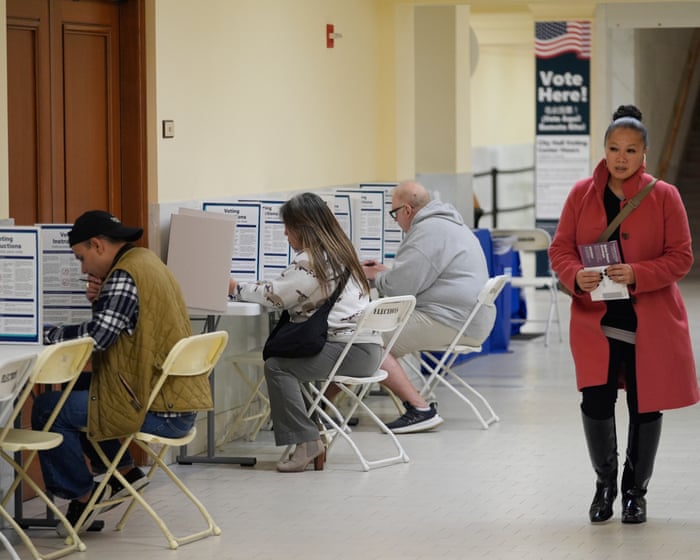
A study found that 35% of U.S. voters, about 85 million people, feel disconnected and distrustful of government but care about their communities and issues. These people often do not vote because they feel isolated and do not see how voting can improve their lives. Creating community spaces called "civic homes" can help people feel connected and encourage them to take part in voting and politics.
Key Facts
35% of U.S. voters are disaffected, meaning they feel unhappy and distrustful of politics.
About 58% of these disaffected voters want to feel more connected to others.
Disaffected voters include all races and genders but tend to be younger with fewer resources.
They talk about politics and seek information online almost as much as other voters.
The main difference is disaffected voters are less likely to vote (56%) compared to the general public (65%).
Nearly half of disaffected voters do not belong to any community groups or religious organizations.
"Civic homes" are community places where people connect, discuss issues, and feel they can make a difference.
People who feel a stronger sense of belonging in these civic homes are more likely to vote and take political action.
Read the Original
Want the full story? Tap a source to open the original
article.
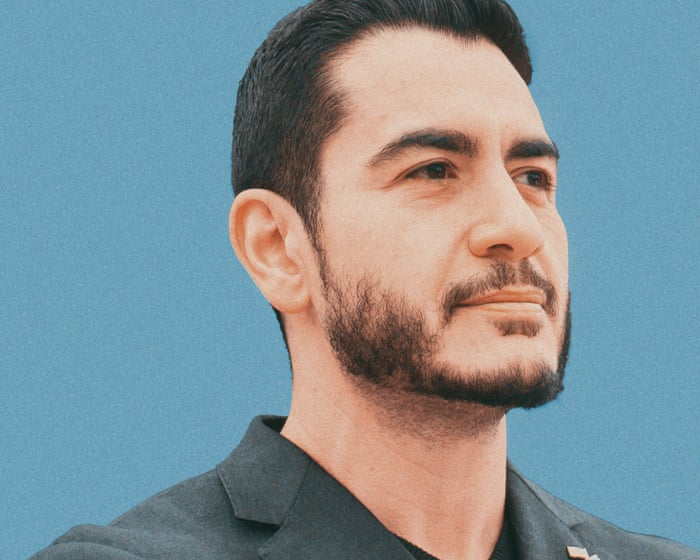
Abdul El-Sayed, a doctor and progressive candidate, is running in the Michigan Democratic primary for the US Senate. He represents a younger, more grassroots wing of the party and is competing closely with Haley Stevens, the party establishment’s choice. The August 4 primary will show if Michigan Democrats want a new direction in politics.
Key Facts
Abdul El-Sayed is a doctor and epidemiologist running for US Senate in Michigan.
He is known for mixing serious policy talks with humor and is seen as a progressive voice.
El-Sayed faces Haley Stevens, a more moderate Democrat backed by party leaders.
The race is very close according to recent polls, showing divided support within the Democratic party.
El-Sayed lost the Michigan governor’s race in 2018 but now represents a larger anti-establishment coalition.
He criticizes both parties’ establishments and wants a capitalism system that works for all.
El-Sayed linked US military spending to cuts in domestic programs like healthcare and nutrition support.
The August 4 primary will test if Michigan Democrats support more progressive, grassroots candidates.
Read the Original
Want the full story? Tap a source to open the original
article.
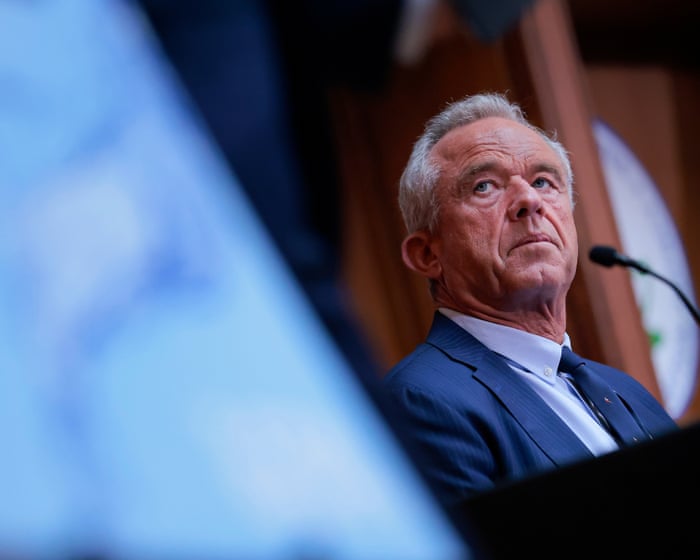
U.S. Health Secretary Robert F. Kennedy Jr. has called for better screening for Alzheimer’s disease. However, a key federal expert panel that advises on health screenings, the US Preventive Services Task Force (USPSTF), has not met for over a year, delaying important recommendations on cognitive decline screening.
Key Facts
The USPSTF, which advises on preventive health services, has been unable to meet since March 2025 due to government actions.
The Trump administration fired two taskforce chairs and has not filled many vacancies on the panel.
The USPSTF had planned to recommend guidelines on cognitive decline screening this year along with other health topics.
Alzheimer’s researchers say progress is slowed by these delays and funding disruptions.
Health Secretary Kennedy criticized the panel for inaction and emphasized the need for better Alzheimer’s screening.
The National Institutes of Health remains the largest federal funder of Alzheimer’s research.
About 7.4 million Americans age 65 and older have Alzheimer’s, with around 200,000 middle-aged Americans also diagnosed.
Alzheimer’s screening currently depends on noticing symptoms and performing cognitive tests followed by specialist referral.
Read the Original
Want the full story? Tap a source to open the original
article.
House Democratic leader Hakeem Jeffries is launching a campaign focused on making life more affordable as the midterm elections approach. He and Pennsylvania Governor Josh Shapiro are supporting Democratic candidate Bob Brooks in a key district, aiming to win House control from Republicans during President Trump’s second term.
Key Facts
Hakeem Jeffries announced the “Fighting for an Affordable America” agenda with 100 days left before the midterms.
The focus is on lowering costs for groceries, gas, housing, and providing affordable health care.
Jeffries and Governor Josh Shapiro support Bob Brooks, a retired firefighter running in Pennsylvania’s 7th District.
The seat is currently held by Republican Rep. Ryan Mackenzie, who is also holding his own campaign kickoff event.
Midterms often serve as a referendum on the sitting president, currently President Donald Trump.
President Trump supports Republican candidates and promotes his One Big Beautiful Bill, which includes tax breaks and spending cuts.
Democrats highlight voter frustration over the war with Iran and rising everyday costs to win votes.
Control of the House could be decided by fewer than 20 competitive districts, with Pennsylvania’s contests being especially important.
Read the Original
Want the full story? Tap a source to open the original
article.
U.S. Immigration and Customs Enforcement (ICE) plans to increase arrests and deportations of Haitian migrants as the Temporary Protected Status (TPS) for Haitians is set to end. More than 300,000 Haitians will lose their legal protection from deportation and work permits following a Supreme Court decision supporting the Trump administration's effort to end TPS for Haitian migrants.
Key Facts
ICE is preparing operations to arrest and deport Haitian migrants, including in Ohio where many Haitian communities live.
TPS is a program that gives temporary legal status and work permission to people from countries in crisis, like Haiti.
The Supreme Court ruled in favor of ending TPS protections for Haitians and Syrians.
Losing TPS means Haitians can be deported unless they have another legal status or a judge stops the deportation.
Deportations to Haiti are complicated by the difficult conditions there, including gang violence and political instability.
The U.S. government has limited deportations mostly to the northern city Cap-Haïtien, avoiding more dangerous areas like the capital, Port-au-Prince.
The Department of Homeland Security said TPS had been used like an unofficial amnesty and suggested that migrants who lose TPS should "self-deport."
TPS for Haiti began after the 2010 earthquake, and many Haitians recently arrived in the U.S. under programs ended by the Trump administration.
Read the Original
Want the full story? Tap a source to open the original
article.
House Republicans, led by Speaker Mike Johnson, passed a $95 billion budget plan aimed at supporting military readiness related to the war with Iran and other priorities. They also approved a large military spending bill and proposed new voting restrictions, but faced opposition within their party and from Democrats, who criticized the war spending amid economic challenges and low approval ratings for President Trump.
Key Facts
House Republicans passed a $95 billion budget focused on military readiness connected to the Iran conflict.
The budget avoided using words like “war” or “Iran” in its description.
Speaker Mike Johnson led the Republicans in passing a large military budget and voting restrictions on elections.
Four Republicans joined Democrats to pass a resolution urging President Trump to withdraw troops from Iran.
Senate Republicans, including leader John Thune, expressed hesitancy about quickly approving the House budget plan.
The defense budget’s approval is complicated by its combination with the Save America Act, which includes stricter voting rules favored by President Trump.
Democrats oppose the military budget’s high cost and criticized it as adding to economic strain.
The plan’s fate remains uncertain as negotiations continue over government funding beyond September 30.
Read the Original
Want the full story? Tap a source to open the original
article.
The Trump administration is ending Temporary Protected Status (TPS) for more than 330,000 Haitian immigrants in the US, which allowed them to live and work legally. Many Haitian immigrants and their families fear deportation back to Haiti, where violence and unsafe conditions remain.
Key Facts
Over 330,000 Haitian immigrants will lose their legal right to live and work in the US as TPS is terminated.
About 13,000 Haitian TPS holders work as nursing assistants, caring for around 65,000 patients daily.
The US Supreme Court ruled 6-3 in favor of ending TPS for Haitians and Syrians.
TPS was first given to Haitians in 2010 after a disaster and has allowed them to stay due to ongoing unsafe conditions in Haiti.
US Homeland Security says immigrants with TPS should leave or seek other legal statuses, but there is no clear path from TPS to permanent residency.
Haiti remains under a US travel warning due to a national state of emergency and violence.
Immigrant advocates and unions warn that ending TPS will hurt communities and industries that depend on immigrant workers.
Haitian immigrants with TPS have complied with government rules, paying fees and passing background checks.
Read the Original
Want the full story? Tap a source to open the original
article.
President Donald Trump has recently warned about a rise in communist ideas in the United States. He has described communism as a major threat and promised strong actions against it. This comeback of anti-communist talk happens as some left-leaning politicians gain support in the U.S.
Key Facts
President Trump gave a speech on July 3 at Mount Rushmore, calling communism a danger to America.
Trump said he would quickly defeat communists and exile them.
The U.S. State Department released a report accusing Cuba of leading modern communist efforts against the U.S.
The report claims communist networks have connections to leftist groups within the U.S.
The return of anti-communist views relates to Democrats who identify as socialists winning elections, like New York Mayor Zohran Mamdani.
Some newly elected Democrats endorsed by socialist groups have faced controversy over past support for communist figures.
Critics say Trump wrongly mixes socialism, which some European countries use, with Soviet-style communism.
Anti-communism was a main theme during the Cold War, involving Senator McCarthy and Trump’s mentor Roy Cohn, who fought against suspected communists.
Read the Original
Want the full story? Tap a source to open the original
article.
A recent poll shows President Donald Trump’s approval rating is low across the United States, especially in key states that could decide control of Congress in the 2026 midterm elections. Trump has strong support in some Republican states, but his approval has dropped in many places since he started his second term.
Key Facts
President Trump’s national approval rating is 38%, with 57% disapproval, making him 19 points underwater overall.
He is underwater (more disapproval than approval) in every major battleground state like Arizona, Georgia, Nevada, and Pennsylvania.
Some states that once had positive approval for Trump now have more people disapproving, including Florida and Ohio.
Trump’s strongest support is in Republican-leaning states such as Wyoming (+26 net approval) and North Dakota (+18 net approval).
Several of Trump’s strongest states have seen big drops in approval since January 2025; for example, Wyoming fell from +47 to +26.
Younger voters (ages 18-34) and independents mostly disapprove of Trump’s job performance.
Women disapprove of Trump by a larger margin than men, who are more evenly split.
The states where Trump’s ratings are lowest are likely to play a key role in the upcoming midterm election results.
Read the Original
Want the full story? Tap a source to open the original
article.
The Trump administration is dealing with an outbreak of cyclosporiasis, an illness caused by a parasite. The handling of information about the outbreak has caused confusion and concern among the public.
Key Facts
Cyclosporiasis is a sickness caused by a parasite.
There have been thousands of cases in the last two months.
The outbreak may involve more than one source.
The government’s communication about the outbreak has been unclear.
Experts say there is no clear leadership managing the information.
People affected are not getting enough accurate updates.
The administration is trying to improve how it shares information.
Read the Original
Want the full story? Tap a source to open the original
article.
Democrats are expected to win control of the House of Representatives in the upcoming midterm elections. However, they face tougher chances in the Senate races, where Republicans have a slight advantage. The election is 100 days away, and both parties are facing challenges as they prepare to compete.
Key Facts
Democrats are predicted to take the House in the midterm elections.
Republicans have a small lead or advantage in the Senate races.
The forecast comes from Decision Desk HQ, a group that analyzes election data.
There are 100 days remaining before the midterm elections.
Both political parties face difficulties or obstacles as they approach the election.
The midterms will decide control of both the House and the Senate.
The results will influence U.S. government and policymaking for the next two years.
Read the Original
Want the full story? Tap a source to open the original
article.
Senate Democrats, led by Minority Leader Chuck Schumer, held private meetings to plan responses to possible interference by President Trump’s administration in the 2024 midterm elections. They discussed threats like false videos made with AI and the presence of federal agents near voting sites. Democratic governors warned against attempts to undermine election fairness and promised to protect voters' rights.
Key Facts
Senate Democrats had two-hour closed-door sessions to prepare for potential election interference.
Scenarios included AI-created false videos and federal agents near polling places in certain states.
Chuck Schumer said these exercises help prevent possible election-related problems.
President Trump has questioned the 2020 election results and spoke about election integrity ahead of these exercises.
Democratic governors issued a statement condemning President Trump’s actions to undermine elections.
The U.S. Constitution gives states the power to manage federal elections, not the president.
Trump previously pressured Georgia officials in 2021 to change the election outcome.
There is concern about the use of National Guard troops or immigration agents around polling sites.
Read the Original
Want the full story? Tap a source to open the original
article.
A recent survey shows that rising housing costs are the top political concern for young Americans aged 18 to 34. Home prices have increased significantly since 2020, making it harder for young people to buy homes and affecting where they choose to live and vote.
Key Facts
Housing costs are the main issue for Americans aged 18-34 and men aged 18-49, according to a CNBC survey of 1,000 voters in 2026.
For all adults, housing was the fourth biggest issue after food prices, protecting democracy, and immigration.
Home prices in the U.S. rose 54% since 2020, driven by low borrowing costs and a shortage of homes.
The median home price in May 2026 was about $399,000, up from $316,000 in 2019.
Starter homes priced at $350,000 or less dropped from 60% to 40% of listings since 2019.
Mortgage rates increased to just above 6.5%, and property taxes rose over 30% from 2019 to 2025.
Home insurance costs climbed 46% since 2021, mainly due to more extreme weather.
Young adults aged 25-34 own fewer homes, with homeownership rates falling from 47% in 2005 to 37% now.
Read the Original
Want the full story? Tap a source to open the original
article.
Generation Z (people born 1997-2012) spends many hours daily on social media, where they see others' successes and achievements. Experts say this constant exposure to other people's highlight moments contributes to feelings of stress, inadequacy, and declining mental health among Gen Z.
Key Facts
Gen Z spends an average of four or more hours a day on social media; 22% spend seven or more hours daily.
Social media platforms like TikTok, Instagram, YouTube, and LinkedIn show users others’ personal and professional successes.
Exposure to luxury brands and lifestyle posts creates pressure and feelings of not measuring up.
One in three Gen Zers say the image of a perfect life online causes them extreme stress.
38% of Gen Z want to earn over $100,000 by age 30, influenced by seeing fast success stories online.
Surveys in 2025 show 94% of Gen Z experience mental health challenges monthly.
Data shows a significant drop in Gen Z reporting excellent mental health since 2019.
Experts link these mental health issues to social comparison caused by constant social media exposure.
Read the Original
Want the full story? Tap a source to open the original
article.
Newsweek analyzed 100 counties that could play a major role in deciding control of Congress in the 2026 midterm elections. These counties are mostly suburban areas and fast-growing metro regions where recent elections have been close, making small changes in voter turnout important.
Key Facts
The midterm elections are scheduled for November 3, 2026.
The analysis focused on counties where President Donald Trump’s 2024 election margins were narrow.
Data came from sources like the Cook Political Report, Ballotpedia, and election results.
Counties identified often overlap with key congressional districts expected to be competitive.
Both Democratic and Republican campaign groups are already targeting many of these counties.
Examples of important counties include Maricopa County (Arizona), Northampton County (Pennsylvania), Scott County (Iowa), Eaton County (Michigan), and Hidalgo County (Texas).
Campaign resources are being focused on areas with close margins to influence election outcomes.
The races in these counties could shape which party controls the House of Representatives starting in 2027.
Read the Original
Want the full story? Tap a source to open the original
article.
A college student was killed by her boyfriend who lived across the street from her. Her family has worked hard for many years to ensure he remains in prison.
Key Facts
The victim was a college student.
The killer was her boyfriend.
He lived just across the street from her.
The family has been fighting to keep him in prison for a long time.
CBS News and "48 Hours" covered the story.
Erin Moriarty is the correspondent reporting on the case.
The story is available on the CBS News app and website.
Read the Original
Want the full story? Tap a source to open the original
article.
President Donald Trump claimed the 2020 election was stolen and said U.S. elections can be rigged. He is pushing for laws that would give the federal government more control over elections and has encouraged efforts to redraw voting maps to favor Republicans. These actions raise concerns about influencing the midterm elections and challenging results that don’t favor his party.
Key Facts
President Trump said the 2020 election was illegitimate and claimed U.S. elections are vulnerable to fraud.
He wants Congress to pass the Save Act, which would let the federal government have more control over elections.
Elections in the U.S. are mainly run by states and local officials, not the federal government.
Some Republican-led states, like Louisiana, have redrawn voting maps to favor Republican candidates after a Supreme Court ruling.
Trump has tried to limit mail-in voting and suggested the US Postal Service might delay or withhold ballots from some voters.
Mail-in voting is more commonly used by Democrats than Republicans in many states.
Voting rights officials worry that false claims and efforts to control voting could undermine trust in elections and cause unrest.
The 2021 Capitol attack, linked to Trump’s denial of his 2020 loss, continues to influence concerns over election-related violence.
Read the Original
Want the full story? Tap a source to open the original
article.
Three Venezuelan men who were sent to a Salvadorian maximum security prison last year on flights arranged by US companies are suing those aviation firms. They claim the companies acted with the US government to illegally deport them and caused them harm by sending them to a prison known for torture.
Key Facts
The men were deported from the US to El Salvador in March 2023 under President Donald Trump’s administration.
They were held for four months in a Salvadorian terrorism prison called Cecot, where they say they were tortured.
The lawsuit accuses US companies CSI Aviation and GlobalX of violating civil rights and causing emotional distress.
CSI and GlobalX were hired by the Department of Homeland Security to operate the flights.
A federal judge had ordered the flights to return, but the companies allegedly ignored this.
The lawsuit says the companies made large profits from contracts with US immigration agencies.
Human rights attorneys filed the lawsuit in Washington DC on July 17, aiming to hold private companies accountable for the deportations.
The US and Salvadorian governments did not respond to specific claims in the lawsuit by the time of publication.
Read the Original
Want the full story? Tap a source to open the original
article.
A group called "Socialists in Schools" is campaigning to run candidates against eight Labor Party members in Victoria’s state election, including Education Minister Ben Carroll. They want changes like stopping public money going to expensive private schools and fully funding things like school uniforms and trips.
Key Facts
"Socialists in Schools" are a group opposing the current education department in Victoria.
They plan to run candidates for every lower house seat in Victoria.
Brendan Laws is challenging Education Minister Ben Carroll in the Niddrie district.
Their campaign calls for ending public funding to high-fee private schools.
They want to abolish the Naplan testing system.
They demand full public funding for school uniforms, excursions, materials, and lunches.
The group argues the Victorian public school system has been underfunded for many years.
They believe working-class students are increasingly left behind while wealthy private schools get more money.
Read the Original
Want the full story? Tap a source to open the original
article.
Left-wing Democrats, led by figures like Senator Bernie Sanders and Representative Alexandria Ocasio-Cortez, are supporting progressive candidates in key races such as Michigan's Senate primary. The party is divided between progressive and moderate wings as it tries to win back voters who supported President Donald Trump in 2024 and aims to regain control of the Senate.
Key Facts
Bernie Sanders and Alexandria Ocasio-Cortez held a rally in Detroit supporting Senate candidate Abdul El-Sayed.
El-Sayed’s platform includes universal healthcare under "Medicare for All," ending immigration enforcement, and stopping U.S. aid to Israel.
El-Sayed’s opponent in the Democratic primary is Haley Stevens, a moderate with strong political experience and corporate funding.
Michigan is a key battleground state that voted for Joe Biden in 2020 but for President Trump in 2024.
The Senate seat is open and important for Democrats to regain control of the Senate and counter President Trump’s agenda.
Some voters support progressive policies but are unsure if left-wing candidates can win general elections.
Moderate Democrat Haley Stevens has endorsements from Michigan’s governor and current Senator.
Other progressive candidates, like Francesca Hong in Wisconsin, are also competing in important midwestern races for governor.
Read the Original
Want the full story? Tap a source to open the original
article.