Senators Roger Wicker and Jeanne Shaheen plan to introduce a resolution urging the U.S. State Department to increase support for Russia’s pro-democracy movement. The resolution encourages cooperation with activists both inside and outside Russia.
Key Facts
The resolution is bipartisan, meaning it has support from both Republican and Democratic Senators.
It is scheduled to be introduced on Wednesday.
The resolution asks the U.S. government to strengthen ties with Russian pro-democracy groups.
This involves cooperation with activists working inside Russia and those abroad.
The resolution is non-binding, so it does not create a law but expresses support.
Senators Roger Wicker represents Mississippi; Jeanne Shaheen represents New Hampshire.
The proposal aims to align U.S. policy with efforts to support democracy in Russia.
Read the Original
Want the full story? Tap a source to open the original
article.
Pennsylvania has reported its fourth death related to measles this year, involving an 18-year-old who died from a rare brain complication caused by the disease. The state is experiencing its worst measles outbreak in over 30 years with nearly 700 cases, and the deaths involved unvaccinated individuals.
Key Facts
The fourth measles-related death in Pennsylvania was an 18-year-old from Mifflin County.
The cause of death was a rare brain condition called acute disseminated encephalomyelitis linked to measles.
Three earlier deaths included a 40-year-old woman and two infants; none were vaccinated.
The infants were too young to be vaccinated according to current guidelines.
Pennsylvania has seen nearly 700 measles cases so far this year, across 38 counties.
This outbreak is the state’s worst in over 35 years, with the first measles deaths in decades.
The U.S. is having its worst measles year since 1991 with several deaths in the past two years.
Lower vaccination rates and increased vaccine misinformation contribute to the rise in measles cases.
Read the Original
Want the full story? Tap a source to open the original
article.
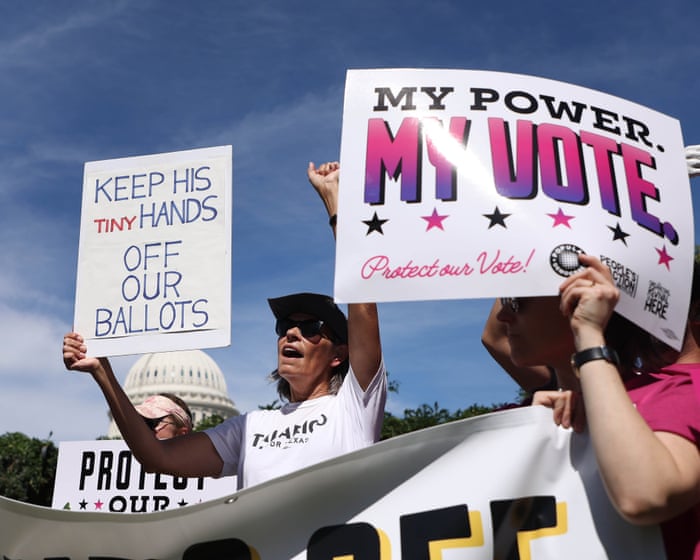
The US Supreme Court stopped President Donald Trump’s plan to make mail-in voting harder for the midterm elections. Election officials from both parties are now working to reassure voters that mail-in voting remains safe and reliable.
Key Facts
The Supreme Court blocked Trump’s order that would add difficult requirements to mail-in voting, such as redesigning envelopes and uploading voter lists to the postal service.
Election officials warned that Trump's plan could have caused major problems in running elections this year.
About 29% of Americans voted by mail in the 2024 presidential election, and about one third did so in the 2022 midterms.
Some voters worry mail-in ballots may not be counted if they arrive late, especially in states like Wisconsin where ballots must arrive by election day to be counted.
Election officials in Nevada, Wisconsin, Washington, and Arizona are encouraging voters to send mail ballots early or use drop-boxes to avoid delays.
Public education campaigns are planned to explain the mail-in voting process and build voter confidence.
Despite court victories, officials say distrust remains, so they continue encouraging safe voting practices without changes for now.
Read the Original
Want the full story? Tap a source to open the original
article.
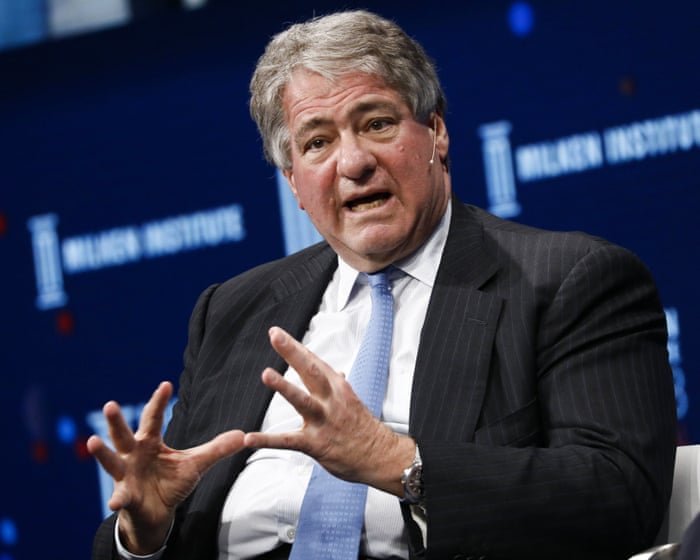
The House Oversight Committee voted unanimously to hold billionaire Leon Black in contempt of Congress because he ignored subpoenas to testify and provide documents related to the Jeffrey Epstein investigation. The vote now goes to the full House for consideration, while Black's lawyers argue the subpoenas are illegal and are seeking court intervention.
Key Facts
The House Oversight Committee voted 41-0 to hold Leon Black in contempt of Congress.
Black refused to appear for a subpoenaed deposition on September 3 and did not hand over requested documents.
The investigation focuses on Jeffrey Epstein and the government's handling of related matters.
Committee Chairman James Comer stated Black ignored lawful subpoenas and the committee has many questions for him.
The contempt resolution will be considered by the full House, but the timing is up to House leadership.
Black’s lawyers called the contempt vote retaliation and filed a lawsuit challenging the subpoenas.
Black requested postponing the contempt vote until courts rule on his legal challenges.
Both Republicans and Democrats on the committee support the investigation and contempt vote.
Read the Original
Want the full story? Tap a source to open the original
article.
Measles cases in the United States have reached their highest level in more than 30 years, with three deaths reported so far this year. The disease was declared eliminated in 2000 but has seen recent increases, mainly affecting unvaccinated people and those with certain health risks.
Key Facts
Measles is very contagious but was declared eliminated in the U.S. in 2000 due to vaccines.
This year’s measles cases have surpassed any year’s total since 2000.
Three people have died from measles complications in 2024, including a 40-year-old woman recently confirmed dead.
People who are not vaccinated or have unvaccinated children in their communities are most at risk.
Serious complications from measles include pneumonia and encephalitis (brain swelling).
Pregnant women, young children, adults over 20, and those with weakened immune systems are more vulnerable.
The measles virus can stay in the air for about 4 hours, making it easy to catch.
The best protection is vaccination with two doses of the MMR vaccine, which protects against measles, mumps, and rubella.
Read the Original
Want the full story? Tap a source to open the original
article.
The article discusses the upcoming U.S. midterm elections and the state of the Democratic Party. It focuses on how progressive and democratic socialist candidates are influencing the party and how they relate to more centrist Democrats.
Key Facts
The midterm elections are less than two months away and may affect the future of the U.S. government.
Democrats are expected to possibly take control of the House of Representatives and maybe the Senate.
Progressive and democratic socialist candidates, like Abdul El-Sayed from Michigan, are gaining influence within the party.
Tensions exist between the party's progressive left and its more centrist members.
The article features a Q&A session with several political reporters and correspondents to explore these issues.
Topics include the impact of democratic socialists, the party’s future direction, and election strategies.
Other related topics mentioned include backlash against some candidates and green policy platforms of midterm candidates.
The discussion also touches on how President Trump is trying to label Democrats as ‘radical’ communists.
Read the Original
Want the full story? Tap a source to open the original
article.
The Trump administration will follow the Supreme Court's decision to block new U.S. Postal Service rules on mail-in ballots before the 2024 midterm elections. Attorney General Todd Blanche said they will still work to ensure elections are free and fair despite disagreeing with the ruling.
Key Facts
The Supreme Court stopped new Postal Service rules for mail ballots from being used before the November midterm elections.
The rules required special barcodes on mail ballot envelopes and government tracking of voter information.
Several states have already started sending mail ballots and said it would be hard to meet these new requirements in time.
Attorney General Todd Blanche confirmed the Trump administration will follow the court’s order.
President Trump criticized the Supreme Court’s decision on his social media platform, calling it damaging to the country.
Two conservative justices, Alito and Thomas, disagreed with the court’s majority and supported the new rules.
Attorney General Blanche said President Trump is frustrated but has the right to express his views on the court.
The administration continues to emphasize their goal of having free and fair elections despite the ruling.
Read the Original
Want the full story? Tap a source to open the original
article.
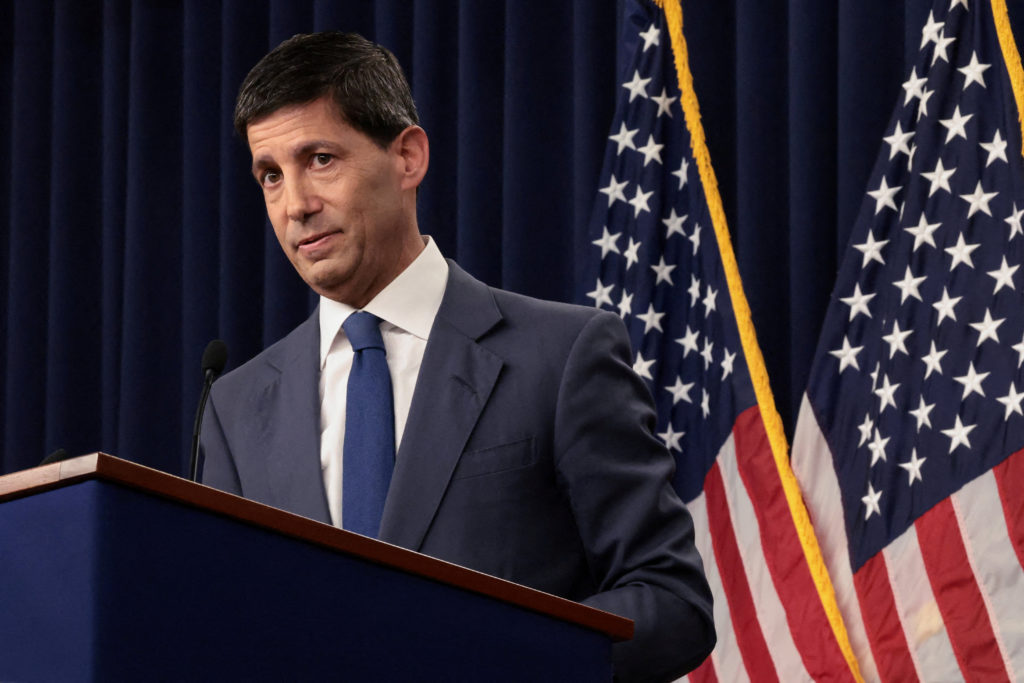
Attorney General Todd Blanche acted as the White House press secretary during a Rose Garden briefing on Tuesday. He discussed legal topics and praised the Defense Secretary’s work in a way that is unusual for the role.
Key Facts
Attorney General Todd Blanche spoke to reporters in the White House Rose Garden.
He took on the role typically held by the press secretary for this briefing.
Blanche commented on legal matters during his remarks.
He also praised Defense Secretary Pete Hegseth’s prosecution efforts.
The administration is known for breaking traditional ways of doing things.
This event is seen as another example of those norm-breaking actions.
The Rose Garden is a formal outdoor space often used for White House announcements.
Read the Original
Want the full story? Tap a source to open the original
article.
The House Oversight Committee voted unanimously to recommend holding billionaire Leon Black in contempt of Congress for refusing to comply with subpoenas related to its investigation into Jeffrey Epstein. Black has challenged the subpoenas in court and denies any wrongdoing connected to Epstein.
Key Facts
The House Oversight Committee voted 41-0 to recommend contempt of Congress against Leon Black.
Subpoenas sought Black’s testimony and non-disclosure agreements (NDAs) connected to Jeffrey Epstein.
Black has refused to comply with subpoenas and did not appear for his scheduled deposition on September 3.
Black is suing to block the subpoenas, calling them invalid and intrusive on private information.
Committee chair James Comer said Black’s cooperation is crucial due to his close relationship with Epstein.
Black reportedly paid Epstein $170 million for tax and estate services from 2013 to 2017.
Black’s attorneys accused Chairman Comer of violating House rules ahead of the deposition.
The next step is for the full House of Representatives to consider the contempt recommendation.
Read the Original
Want the full story? Tap a source to open the original
article.
Former FBI Director James Comey has asked to delay his trial, which involves charges of threatening President Donald Trump’s life using seashells arranged to spell “86 47.” The trial was originally set to start on October 21, but Comey’s defense team requested to move it to February.
Key Facts
James Comey is the former head of the FBI.
He faces charges related to threatening President Donald Trump’s life.
The alleged threat involved seashells arranged to spell “86 47.”
The trial was initially scheduled to begin on October 21.
Comey’s defense lawyer filed a request to delay the trial until February.
The request was submitted on Tuesday.
The defense attorney’s name is Joseph Zeszotarski Jr.
Read the Original
Want the full story? Tap a source to open the original
article.
The House Oversight Committee voted unanimously to hold Leon Black in contempt of Congress because he did not show up for a questioning session. The deposition is about his payments to Jeffrey Epstein, who was a convicted sex offender.
Key Facts
The vote was unanimous and bipartisan, meaning all members agreed across party lines.
Leon Black is the co-founder of Apollo Global Management, an investment firm.
Congress wants to question Black about millions of dollars he paid to Jeffrey Epstein.
Jeffrey Epstein was a convicted sex offender who died in custody.
Black’s failure to appear means he may face legal consequences for not cooperating with Congress.
The investigation is part of a broader inquiry into Epstein’s connections with wealthy and powerful people.
The House Oversight Committee is a group in the U.S. House of Representatives that checks government and public matters.
Read the Original
Want the full story? Tap a source to open the original
article.
The Federal Reserve is expected to raise short-term interest rates for the first time in three years to tackle high inflation. Federal Reserve Chair Kevin Warsh will explain the decision in a news conference, despite President Donald Trump wanting the Fed to lower rates.
Key Facts
The Fed’s current short-term interest rate is about 3.6%.
A rate increase, possibly by 0.25%, is anticipated but not officially confirmed.
Inflation remains above the Fed’s 2% target, partly due to higher oil and gas prices caused by the Iran conflict.
President Trump supports cutting interest rates to keep them low, but the Fed is independent.
The rate decision comes seven weeks before the U.S. midterm elections, where high prices are a major issue.
Financial markets believe there is a 90% chance the Fed will raise rates at this meeting.
Warsh has emphasized the need to control inflation to maintain the Fed’s credibility.
Higher interest rates could affect longer-term loans and bonds, such as those lasting 10 or 30 years.
Read the Original
Want the full story? Tap a source to open the original
article.
The U.S. has spent at least $38 billion on the war in Iran, which has greatly reduced its supply of missile defenses. The Congressional Budget Office found it could take five years to rebuild missile stockpiles, with costs rising as the conflict continues and causing inflation to increase.
Key Facts
The war in Iran has cost the U.S. about $38 billion so far.
Missile defenses like Patriot, Thaad, and Navy interceptors have been heavily used and need up to five years to be fully restocked.
The Pentagon spent $22.3 billion on munitions by June 30, with total spending around $33.4 billion then.
Iranian attacks damaged buildings at U.S. bases in several Middle Eastern countries.
The war is raising inflation by about 0.5 percentage points through 2027 and pushing short-term interest rates higher.
The cost could increase by $3 billion for every extra month the conflict lasts, depending on fighting intensity.
The shortage of missile defenses could cause problems if the U.S. faces a future conflict like one over Taiwan with China.
The Pentagon did not provide full data to the CBO, so estimates were based mainly on public reports.
Read the Original
Want the full story? Tap a source to open the original
article.
Representative Thomas Massie introduced impeachment articles against Defense Secretary Pete Hegseth. Massie accuses Hegseth of breaking laws related to the Iran war, limiting free speech, and other actions while managing military operations.
Key Facts
Rep. Thomas Massie filed eight articles of impeachment against Defense Secretary Pete Hegseth.
Massie accuses Hegseth of violating the 1973 War Powers Resolution, which limits the president’s ability to wage war without Congress’s approval.
The Iran war started in late February, with the initial U.S. military operation called Operation Epic Fury.
President Trump declared the ceasefire over and resumed military action against Iran in July without congressional approval.
Massie claims Hegseth ignored laws about minimizing harm to civilians, citing a bombing of a girls' school in Iran.
Massie also opposes Hegseth’s decision to demote Senator Mark Kelly after Kelly urged service members to reject illegal orders.
The impeachment articles include other accusations related to U.S. military actions in the Caribbean, Venezuela, and Yemen.
Massie, an opponent of President Trump’s foreign policy, lost a primary to a Trump-backed challenger earlier this year.
Read the Original
Want the full story? Tap a source to open the original
article.
President Donald Trump said the Kennedy Center will not undergo renovations if the courts reject the naming plan approved by the center’s board. He noted the board agreed to close the building for safety reasons and start reconstruction.
Key Facts
President Trump spoke about the Kennedy Center on Tuesday.
The center’s board almost unanimously agreed to close the building.
The closure is for safety reasons.
The board wants to begin reconstruction of the building.
Trump said renovations depend on the courts approving the board’s naming plan.
The naming plan was chosen by the Kennedy Center’s board.
If courts deny the naming plan, the center will not be renovated.
Read the Original
Want the full story? Tap a source to open the original
article.
The House Oversight Committee voted unanimously to recommend holding billionaire Leon Black in contempt of Congress for ignoring subpoenas in an investigation about Jeffrey Epstein. The full House will decide whether to send the case to the Justice Department for possible prosecution.
Key Facts
The committee vote was 41-0 to hold Leon Black in contempt.
Black did not appear and failed to provide nondisclosure agreements as requested.
He is challenging the subpoenas in court, arguing they are unrelated to the committee's work and violate privacy.
The matter now moves to the full House for a vote on possible prosecution referral.
Black was a business partner of Jeffrey Epstein and paid him for financial advice.
Black claims he regrets working with Epstein and says Epstein lied about his role.
Committee Chairman Rep. James Comer issued the subpoenas after Black left a voluntary interview.
Black’s lawyers describe the investigation as politically motivated and an abuse of power.
Read the Original
Want the full story? Tap a source to open the original
article.
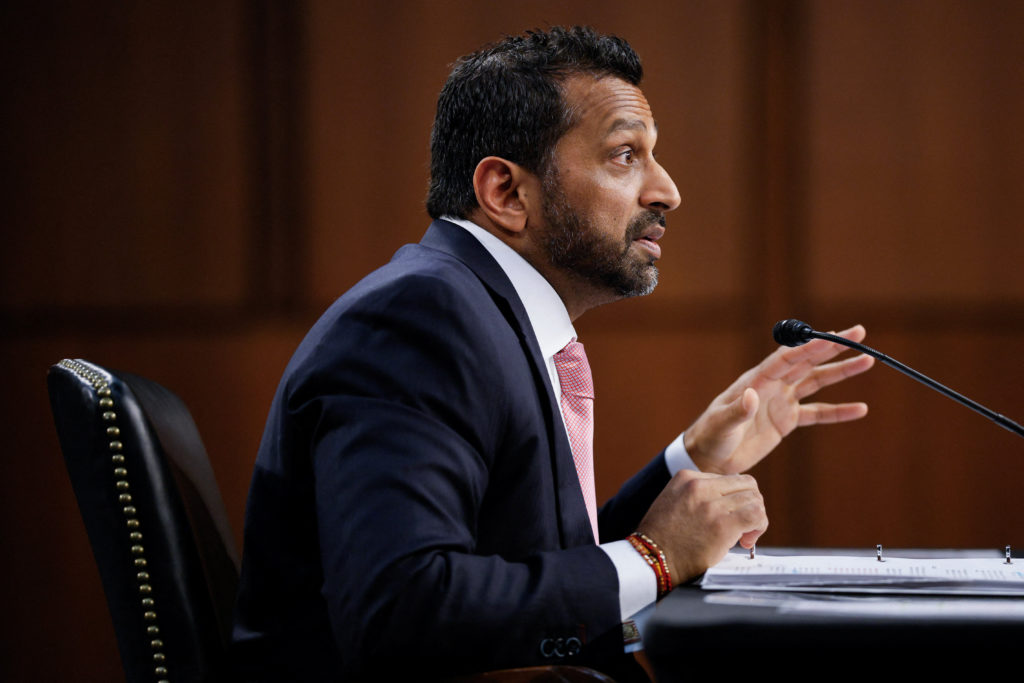
Senator Richard Blumenthal questioned FBI Director Kash Patel about firing 12 agents from a unit focused on Iran just before the U.S. launched an attack on the country. Patel said the fired agents did not meet FBI standards and were involved in an investigation into President Donald Trump’s handling of classified documents.
Key Facts
Senator Blumenthal asked why 12 FBI agents were fired from a unit dealing with threats from Iran.
The firings happened days before the U.S. launched an attack on Iran.
The affected unit was called CI-12 and focused on counterintelligence related to Iran.
FBI Director Kash Patel said the agents failed to meet FBI standards.
At the time, the fired agents were investigating President Donald Trump’s handling of classified documents.
Patel defended changes to FBI hiring rules related to personal conduct.
The discussion took place during a Senate hearing where Patel testified.
Read the Original
Want the full story? Tap a source to open the original
article.
A fencing contractor in Illinois tore down a fence after the homeowner refused to pay and threatened to call immigration officers. The contractor and workers, who are immigrants, removed the fence panels in response to the payment dispute.
Key Facts
The incident happened near Joliet, Illinois, outside city limits in Will County.
Contractor Cesar Diaz and his team were working on a fence when the homeowner refused to pay.
The homeowner allegedly threatened to call ICE (U.S. Immigration and Customs Enforcement) because the workers were immigrants.
Diaz and his crew dismantled the fence after the refusal to pay.
The homeowner was seen taking tools that belonged to the workers.
The video of the event went viral, getting over 32,000 shares and about 1 million likes.
Illinois law allows withholding payment if work is incomplete or unsatisfactory, but other reasons for nonpayment may be illegal.
A similar case happened in Maryland where contractors were arrested after a homeowner called ICE and owed workers money.
Read the Original
Want the full story? Tap a source to open the original
article.
Millions of federal student loan borrowers must choose a new repayment plan by September 29 because the Biden administration’s SAVE plan is ending under the Trump administration. About 1.5 million have already picked new plans, but 6 million more need to act soon to avoid being placed in a plan with higher monthly payments.
Key Facts
The SAVE plan helped lower student loan payments based on income and stopped some interest from growing.
About 7.5 million borrowers were enrolled in the SAVE plan at its peak.
The Trump administration ended SAVE after court challenges stopped key parts of the plan.
Borrowers must select a new repayment plan by September 29 or be automatically put in a standard plan with higher payments.
Loan servicers started notifying SAVE borrowers on July 1 about the need to switch plans.
1.5 million borrowers have already chosen new repayment options.
The Department of Education is aware of some billing and notice errors during the transition and has worked to fix them.
Not choosing a new plan could cause financial problems for borrowers because payments may increase significantly.
Read the Original
Want the full story? Tap a source to open the original
article.
The House of Representatives moved forward with a bill that gives President Trump the power to set tariffs on countries buying energy from Russia. The bill also extends current sanctions on Iran, bringing it closer to a final vote.
Key Facts
The House advanced a bill related to Russia sanctions.
The bill gives President Trump tariff authorities on countries buying Russian energy.
It also extends existing sanctions on Iran.
Two Democrats supported the bill, crossing party lines.
Moving the bill ahead clears an important step before the final vote.
The measure is called the Russia Sanctions Act.
Read the Original
Want the full story? Tap a source to open the original
article.