Representative Thomas Massie introduced impeachment articles against Defense Secretary Pete Hegseth. Massie accuses Hegseth of breaking laws related to the Iran war, limiting free speech, and other actions while managing military operations.
Key Facts
Rep. Thomas Massie filed eight articles of impeachment against Defense Secretary Pete Hegseth.
Massie accuses Hegseth of violating the 1973 War Powers Resolution, which limits the president’s ability to wage war without Congress’s approval.
The Iran war started in late February, with the initial U.S. military operation called Operation Epic Fury.
President Trump declared the ceasefire over and resumed military action against Iran in July without congressional approval.
Massie claims Hegseth ignored laws about minimizing harm to civilians, citing a bombing of a girls' school in Iran.
Massie also opposes Hegseth’s decision to demote Senator Mark Kelly after Kelly urged service members to reject illegal orders.
The impeachment articles include other accusations related to U.S. military actions in the Caribbean, Venezuela, and Yemen.
Massie, an opponent of President Trump’s foreign policy, lost a primary to a Trump-backed challenger earlier this year.
Read the Original
Want the full story? Tap a source to open the original
article.
President Donald Trump said the Kennedy Center will not undergo renovations if the courts reject the naming plan approved by the center’s board. He noted the board agreed to close the building for safety reasons and start reconstruction.
Key Facts
President Trump spoke about the Kennedy Center on Tuesday.
The center’s board almost unanimously agreed to close the building.
The closure is for safety reasons.
The board wants to begin reconstruction of the building.
Trump said renovations depend on the courts approving the board’s naming plan.
The naming plan was chosen by the Kennedy Center’s board.
If courts deny the naming plan, the center will not be renovated.
Read the Original
Want the full story? Tap a source to open the original
article.
The House Oversight Committee voted unanimously to recommend holding billionaire Leon Black in contempt of Congress for ignoring subpoenas in an investigation about Jeffrey Epstein. The full House will decide whether to send the case to the Justice Department for possible prosecution.
Key Facts
The committee vote was 41-0 to hold Leon Black in contempt.
Black did not appear and failed to provide nondisclosure agreements as requested.
He is challenging the subpoenas in court, arguing they are unrelated to the committee's work and violate privacy.
The matter now moves to the full House for a vote on possible prosecution referral.
Black was a business partner of Jeffrey Epstein and paid him for financial advice.
Black claims he regrets working with Epstein and says Epstein lied about his role.
Committee Chairman Rep. James Comer issued the subpoenas after Black left a voluntary interview.
Black’s lawyers describe the investigation as politically motivated and an abuse of power.
Read the Original
Want the full story? Tap a source to open the original
article.
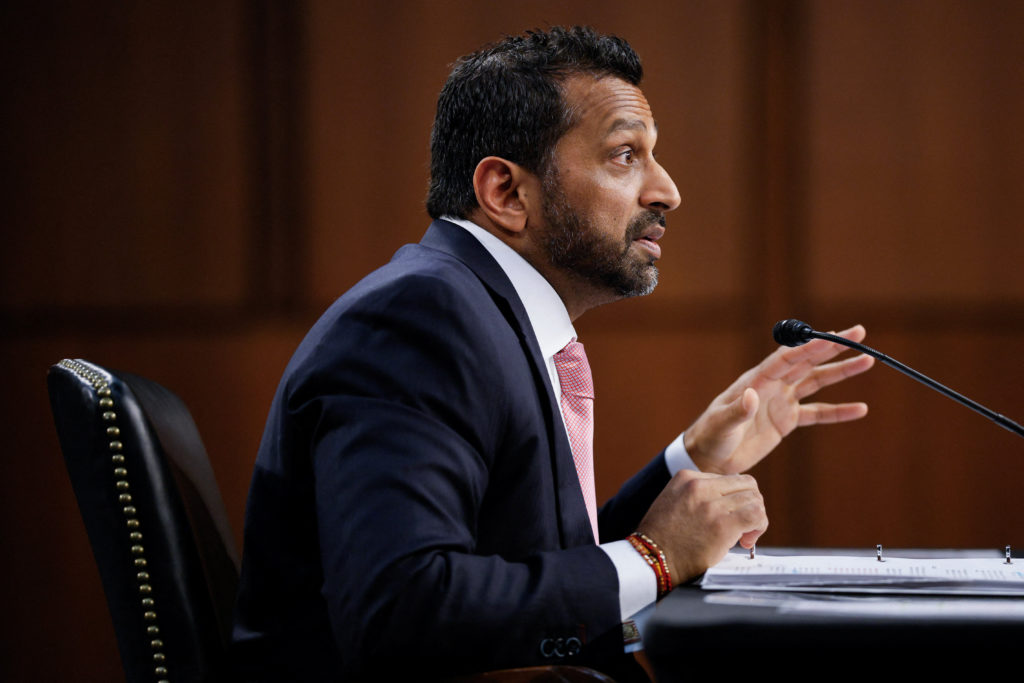
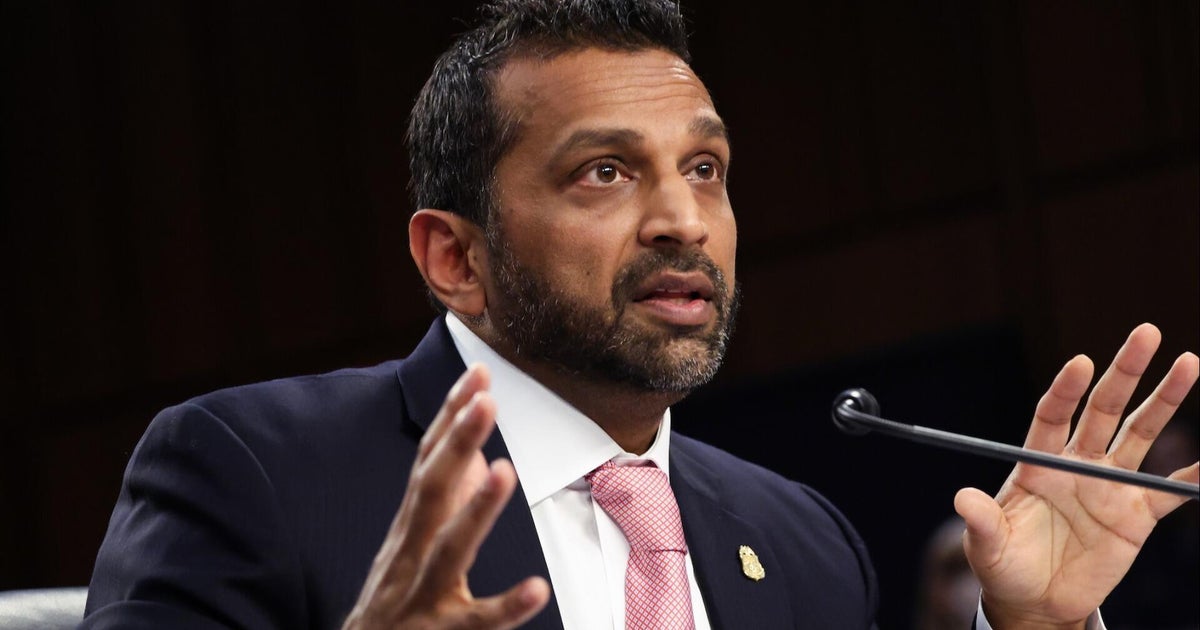
Senator Richard Blumenthal questioned FBI Director Kash Patel about firing 12 agents from a unit focused on Iran just before the U.S. launched an attack on the country. Patel said the fired agents did not meet FBI standards and were involved in an investigation into President Donald Trump’s handling of classified documents.
Key Facts
Senator Blumenthal asked why 12 FBI agents were fired from a unit dealing with threats from Iran.
The firings happened days before the U.S. launched an attack on Iran.
The affected unit was called CI-12 and focused on counterintelligence related to Iran.
FBI Director Kash Patel said the agents failed to meet FBI standards.
At the time, the fired agents were investigating President Donald Trump’s handling of classified documents.
Patel defended changes to FBI hiring rules related to personal conduct.
The discussion took place during a Senate hearing where Patel testified.
Read the Original
Want the full story? Tap a source to open the original
article.
A fencing contractor in Illinois tore down a fence after the homeowner refused to pay and threatened to call immigration officers. The contractor and workers, who are immigrants, removed the fence panels in response to the payment dispute.
Key Facts
The incident happened near Joliet, Illinois, outside city limits in Will County.
Contractor Cesar Diaz and his team were working on a fence when the homeowner refused to pay.
The homeowner allegedly threatened to call ICE (U.S. Immigration and Customs Enforcement) because the workers were immigrants.
Diaz and his crew dismantled the fence after the refusal to pay.
The homeowner was seen taking tools that belonged to the workers.
The video of the event went viral, getting over 32,000 shares and about 1 million likes.
Illinois law allows withholding payment if work is incomplete or unsatisfactory, but other reasons for nonpayment may be illegal.
A similar case happened in Maryland where contractors were arrested after a homeowner called ICE and owed workers money.
Read the Original
Want the full story? Tap a source to open the original
article.
Millions of federal student loan borrowers must choose a new repayment plan by September 29 because the Biden administration’s SAVE plan is ending under the Trump administration. About 1.5 million have already picked new plans, but 6 million more need to act soon to avoid being placed in a plan with higher monthly payments.
Key Facts
The SAVE plan helped lower student loan payments based on income and stopped some interest from growing.
About 7.5 million borrowers were enrolled in the SAVE plan at its peak.
The Trump administration ended SAVE after court challenges stopped key parts of the plan.
Borrowers must select a new repayment plan by September 29 or be automatically put in a standard plan with higher payments.
Loan servicers started notifying SAVE borrowers on July 1 about the need to switch plans.
1.5 million borrowers have already chosen new repayment options.
The Department of Education is aware of some billing and notice errors during the transition and has worked to fix them.
Not choosing a new plan could cause financial problems for borrowers because payments may increase significantly.
Read the Original
Want the full story? Tap a source to open the original
article.
The House of Representatives moved forward with a bill that gives President Trump the power to set tariffs on countries buying energy from Russia. The bill also extends current sanctions on Iran, bringing it closer to a final vote.
Key Facts
The House advanced a bill related to Russia sanctions.
The bill gives President Trump tariff authorities on countries buying Russian energy.
It also extends existing sanctions on Iran.
Two Democrats supported the bill, crossing party lines.
Moving the bill ahead clears an important step before the final vote.
The measure is called the Russia Sanctions Act.
Read the Original
Want the full story? Tap a source to open the original
article.
Senator John Kennedy, a Republican from Louisiana, plans to introduce a bill requiring artificial intelligence (AI) developers to have a "kill switch" to turn off AI systems if they become dangerous. This proposal comes amid rising concerns about AI risks and ongoing debates in Congress about regulating the technology.
Key Facts
Senator John Kennedy will propose an AI kill switch bill in the Senate.
A kill switch allows humans to shut down AI systems if they act unpredictably or dangerously.
The bill would need Senate approval, House approval, and President Donald Trump’s signature to become law.
Some experts warn AI could quickly gain harmful abilities, increasing the need for safety controls.
Representatives Ted Lieu and Nathaniel Moran already introduced a similar bill requiring AI developers to maintain shut-off capabilities.
AI kill switches could be as simple as unplugging a device or software that suspends AI operations immediately.
Critics say humans may be too slow to use the kill switch effectively during fast AI incidents.
The debate on AI safety includes concerns about competition with China in AI development.
Read the Original
Want the full story? Tap a source to open the original
article.
A new poll shows that in competitive House districts, voters might prefer Republican candidates if Democrats support Medicare for All, a government-run health insurance system replacing current coverage. The poll found many voters like their current insurance and worry Medicare for All could lead to higher taxes and more government spending.
Key Facts
The poll surveyed 1,000 likely voters in 37 competitive House districts.
Voters favored Republicans 50% to 38% when told Democrats support Medicare for All.
90% of respondents currently have health insurance, and 85% are satisfied with their coverage.
Nearly half of insured voters said they were "very satisfied" with their current plans.
Independent voters gave Republicans a 13-point advantage when Medicare for All was mentioned.
Concerns about increased federal spending, higher taxes, and loss of private insurance lowered support for Democrats.
The poll was done by FabrizioWard, a Republican firm tied to President Donald Trump's campaigns, and was commissioned by a conservative group supporting Trump.
Experts say voters may want health care reform but hesitate to lose their existing insurance or change doctors.
Read the Original
Want the full story? Tap a source to open the original
article.
Kash Patel, the FBI director, spoke to the Senate Judiciary Committee during a yearly review of the FBI. He answered questions about recent firings at the FBI, changes in hiring rules, and the use of artificial intelligence.
Key Facts
Kash Patel testified before the Senate Judiciary Committee.
The hearing is part of a yearly oversight review of the FBI.
Senators asked Patel about recent firings within the FBI.
Patel discussed changes made to the FBI's hiring standards.
The use of artificial intelligence by the FBI was also a topic during the hearing.
The session was covered by CBS News reporter Jake Rosen.
The hearing took place on a Tuesday.
Read the Original
Want the full story? Tap a source to open the original
article.
Pennsylvania health officials announced two more deaths caused by measles, making a total of four deaths this year. The United States is experiencing the highest number of measles cases in 35 years and the most deaths since 1992.
Key Facts
Pennsylvania reported two new measles-related deaths this week.
The total number of measles deaths in Pennsylvania this year is now four.
This year’s measles cases in the U.S. are the highest seen in 35 years.
The death toll from measles this year in the U.S. is the highest since 1992.
Measles is a contagious virus that can cause serious health problems and death.
Public health officials are monitoring the outbreak closely to prevent further spread.
The article mentions a feud involving RFK Jr., but does not provide details on that topic.
Read the Original
Want the full story? Tap a source to open the original
article.
New photos show extensive damage to U.S. military bases across the Middle East caused by Iranian missile and drone attacks. The images reveal destroyed buildings, vehicles, and aircraft and highlight the large cost of equipment losses reported by the Pentagon.
Key Facts
The photos were shared anonymously by active U.S. service members due to military media rules.
Significant damage occurred at Prince Sultan Air Force Base in Saudi Arabia, including a destroyed E-3 Sentry aircraft.
Other bases affected include Camp Buehring and Camp Arifjan in Kuwait.
Buildings, barracks, vehicles, and aircraft were heavily damaged or destroyed.
The Pentagon’s inspector general reported equipment losses valued at up to $3.7 billion, including nearly 60 aircraft.
Iranian strikes targeted U.S. bases in several Middle Eastern countries, such as Kuwait, Bahrain, Qatar, UAE, Saudi Arabia, Iraq, Oman, and Jordan.
Some protective barriers at bases proved ineffective against the air attacks.
A service member stated that U.S. forces are not effectively defending these bases against the strikes.
Read the Original
Want the full story? Tap a source to open the original
article.
A nonprofit group led by Black members of Congress started a multi-million-dollar campaign to encourage more Black, rural, and young people to vote in key areas during the midterm elections. This effort comes after many voters felt past outreach efforts were not effective.
Key Facts
The nonprofit is run by Black federal lawmakers.
It launched this effort on a Tuesday (date not specified).
The campaign aims to increase voting among Black, rural, and young voters.
The focus is on important districts for the midterm elections.
The group hopes to improve on previous efforts that voters found lacking.
The campaign involves spending millions of dollars.
This initiative targets voters who usually do not vote often.
Read the Original
Want the full story? Tap a source to open the original
article.
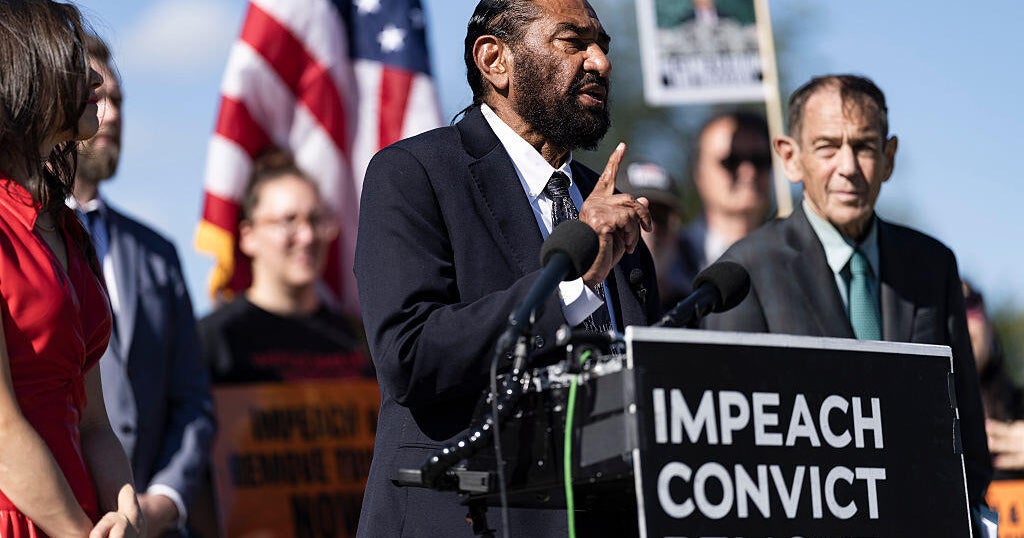
The House of Representatives voted to stop a new effort by Rep. Al Green to impeach President Donald Trump. The vote was split among Democrats, with some supporting Green and others helping Republicans defeat the motion.
Key Facts
Rep. Al Green tried for the third time in two years to impeach President Trump.
The effort focused on killings by federal immigration officials.
The House voted 232-147 to end Green's attempt to force an impeachment vote.
Forty-seven members voted "present," neither for nor against the motion.
Some Democrats criticized Green for pushing the vote without party leadership’s backing.
Green said the issue was serious and challenged critics to debate him openly.
Democrats were divided, with some seeing the move as a distraction before midterm elections.
Read the Original
Want the full story? Tap a source to open the original
article.
Voters in Delaware are voting in the Democratic and Republican primaries to choose candidates for the state's only U.S. House seat. First-term Representative Sarah McBride, a Democrat, is running for a second term and has no opponents in her party's primary.
Key Facts
Delaware has one seat in the U.S. House of Representatives.
Sarah McBride is the current U.S. House member from Delaware, serving her first term.
McBride took over the seat in 2025 after Senator Lisa Blunt Rochester left the position.
McBride is seeking a second term in office.
She has no challengers in the Democratic primary.
Both Democratic and Republican primaries are taking place on the same day in Delaware.
Read the Original
Want the full story? Tap a source to open the original
article.
President Donald Trump criticized the Supreme Court for stopping new rules that the Postal Service created to handle mail ballots. Meanwhile, Congress responded to concerns about the safety of artificial intelligence (AI).
Key Facts
President Trump spoke out against the Supreme Court's decision to block Postal Service rules for mail ballots.
The Postal Service had created new rules to improve mail voting processes.
Congress discussed warnings about the risks and safety of artificial intelligence technology.
The issues involve voting procedures and technology regulations.
The coverage is part of a CBS News update with Major Garrett on September 15.
Read the Original
Want the full story? Tap a source to open the original
article.
Voters in Delaware are voting in the Democratic and Republican primary elections, marking the end of the 2026 primary season. Senator Chris Coons, who has been a senator for 16 years, is trying to keep his seat as a challenger runs against him in the Democratic primary.
Key Facts
Delaware is holding primary elections for both Democrats and Republicans.
These primaries finish the election process for 2026 candidates.
Senator Chris Coons has served as Delaware’s U.S. senator since 2009.
Coons took over the Senate seat when Joe Biden became vice president.
Coons faces a challenger in the Democratic primary.
The results will determine who represents each party in the November 2026 general election.
Read the Original
Want the full story? Tap a source to open the original
article.
The Senate voted 49-50 to block the Crypto Clarity Act, a bill meant to create clear national rules for cryptocurrencies. The bill failed because it did not get enough votes, as some Democrats opposed it over concerns about ethics and President Donald Trump’s crypto investments.
Key Facts
The Crypto Clarity Act aimed to set federal regulations for the $2.3 trillion cryptocurrency sector.
The bill needed 60 votes to advance but fell short with 49 in favor and 50 against.
Three Republicans voted against the bill: Senators Susan Collins, Josh Hawley, and Jerry Moran.
One Democrat, Chris Coons, did not vote.
Democrats united against the bill due to failed negotiations over ethics rules related to elected officials profiting from crypto.
Some Democrats were worried about President Trump’s and his family’s involvement in cryptocurrency businesses.
Senator Thom Tillis switched his vote to "no" before the final count but kept the option to bring the bill up again.
The failure is a setback for the crypto industry’s efforts to get federal regulations before the midterm elections.
Read the Original
Want the full story? Tap a source to open the original
article.
The House voted 232 to 147 to end a resolution by Rep. Al Green to impeach President Trump over the actions of immigration agents. Democratic leaders chose not to actively support or oppose the resolution, emphasizing that impeachment requires a thorough investigation, which has not been done.
Key Facts
The House voted to table (end debate on) Rep. Al Green's impeachment resolution against President Trump.
The resolution linked impeachment to deaths caused by federal immigration agents this year.
47 House members voted "present" instead of yes or no on tabling the resolution.
House Democratic leaders did not push members to vote for or against the resolution.
Democrats said impeachment needs a full investigation with documents, witnesses, and hearings.
Rep. Al Green has tried multiple times to impeach President Trump but has been unsuccessful.
Green will leave Congress in January after losing a primary election.
Some Democratic leaders said impeachment might be considered if Democrats regain control of the House.
Read the Original
Want the full story? Tap a source to open the original
article.
The House of Representatives voted against a Democratic effort to impeach President Trump. The impeachment attempt focused on his administration’s strict immigration actions, which were linked to civilian deaths earlier in the year.
Key Facts
The impeachment resolution was introduced by Representative Al Green from Texas.
The resolution accused President Trump of abusing his power related to immigration enforcement.
The issue involved an aggressive deportation plan by the administration.
Some civilians died earlier this year during immigration enforcement activities.
The House vote was 232 against and 147 in favor of impeachment.
The majority of lawmakers decided not to move forward with impeaching President Trump.
Read the Original
Want the full story? Tap a source to open the original
article.