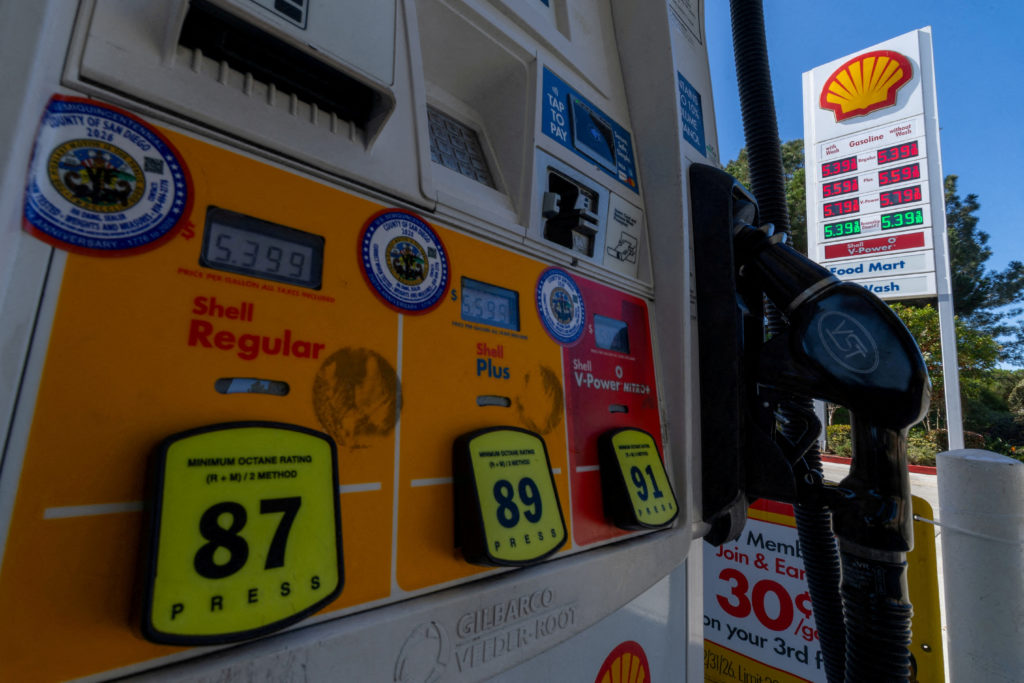
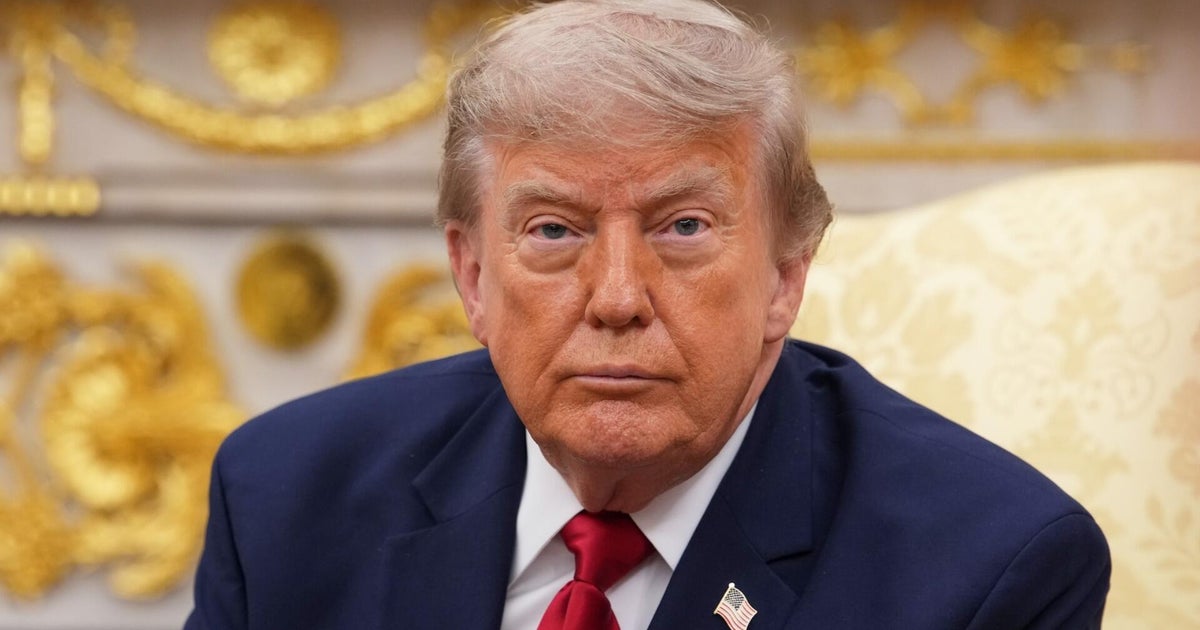
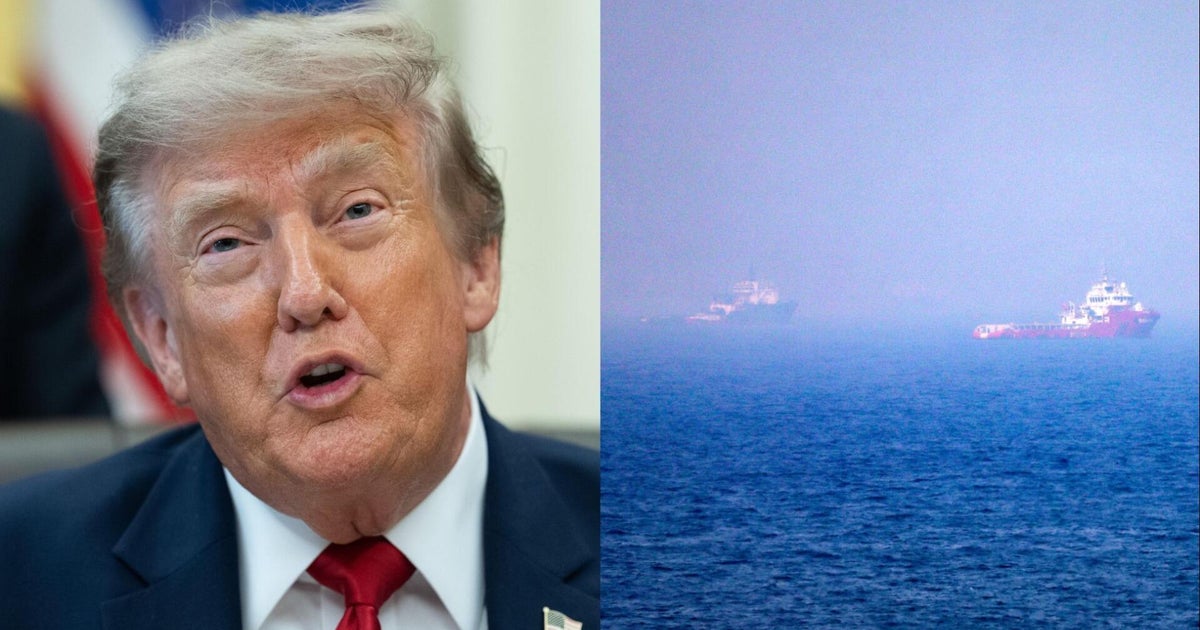
U.S. inflation fell by 0.4% from May to June, marking the largest monthly decrease in four years. On a yearly basis, inflation dropped to 3.5%, partly due to lower prices for gas, clothes, and used cars, easing some pressure on consumers.
Key Facts
Inflation in the U.S. decreased 0.4% from May to June.
The annual inflation rate dropped to 3.5% in June, down from 4.2% in May.
The fall in inflation was helped by lower costs for gas, clothing, and used cars.
This is the biggest monthly drop in inflation in four years.
Oil prices rose for two days in a row due to renewed U.S. attacks on Iran.
President Donald Trump announced a new blockade in the Strait of Hormuz, an important oil shipping route.
Many Americans remain worried about the economy after five years of high inflation.
Economic concerns may affect political support for Trump and Republicans in upcoming elections.
Read the Original
Want the full story? Tap a source to open the original
article.
The U.S. House of Representatives will vote on an amendment to stop all U.S. aid to Israel, causing division among Democrats. Some see it as a way to push for change in Israel’s government, while others worry it would hurt humanitarian efforts and national security.
Key Facts
The vote is on an amendment by Rep. Thomas Massie to block all U.S. funding to Israel.
The amendment does not exclude humanitarian or non-military aid.
House Minority Leader Hakeem Jeffries plans to vote against the amendment, citing its broad negative impact.
Jeffries warns the amendment could hurt efforts against groups like Hamas and Hezbollah.
Some progressive Democrats support the amendment to signal opposition to unconditional military aid to Israel.
Centrist Democrats praise Jeffries for standing against the amendment to protect national security.
The amendment is unlikely to pass the House or Senate but serves as a symbolic vote.
Democratic leadership is not forcing members to vote a certain way, allowing personal choice.
Read the Original
Want the full story? Tap a source to open the original
article.
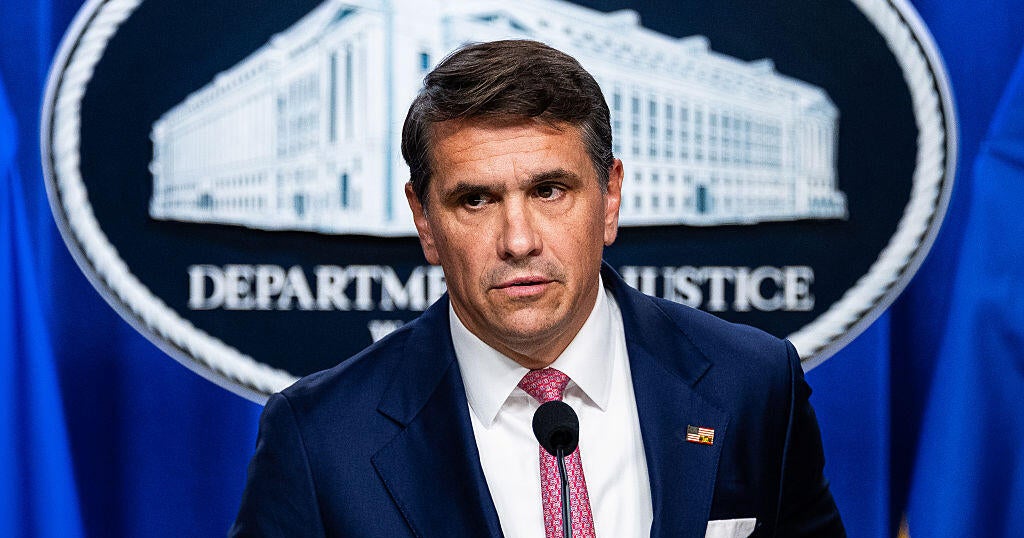
Acting Attorney General Todd Blanche will have a Senate hearing to confirm him as the permanent head of the Justice Department. He is expected to face detailed questions about past prosecutions, a controversial fund connected to President Trump, and the handling of sensitive cases.
Key Facts
Todd Blanche is currently acting Attorney General and was President Trump's personal defense lawyer.
He was nominated last month to lead the Justice Department permanently after Pam Bondi was fired in April.
Democrats plan to question Blanche about politicized prosecutions and the Justice Department’s handling of Jeffrey Epstein files.
Blanche supported a $1.8 billion "anti-weaponization" fund meant to compensate victims of government misuse, which has been widely criticized and is now being scrapped.
A federal judge recently sanctioned the Justice Department and a Trump lawyer, saying President Trump pursued a lawsuit for improper reasons.
Blanche and other officials are barred from using parts of the IRS settlement deal as legal proof in court.
Some Republicans on the Senate Judiciary Committee, including Senators John Cornyn and Thom Tillis, have criticized Blanche’s handling of this fund and related IRS settlement.
Blanche oversaw indictments against former FBI Director James Comey and New York Attorney General Letitia James, but these cases were dismissed due to legal issues with the prosecutors involved.
Read the Original
Want the full story? Tap a source to open the original
article.
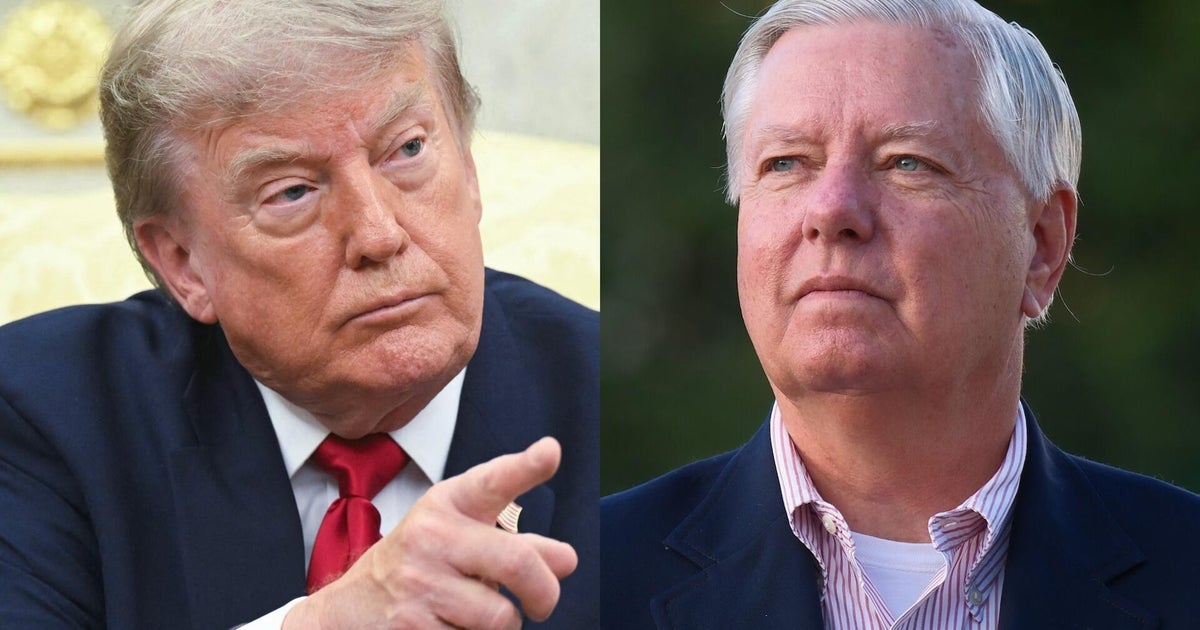
President Donald Trump commented on the FBI visiting the home of the late Senator Lindsey Graham, saying he did not know the reason for the visit and described the FBI's actions as a waste of time. He also mentioned that Senator Graham had health problems.
Key Facts
President Trump spoke about the FBI going to Senator Lindsey Graham’s home in Washington.
Trump said he did not know why the FBI showed up at Graham’s house.
He called the FBI’s visit a waste of time.
Trump made his remarks during a meeting in the Oval Office with the Iraqi prime minister.
The late Senator Lindsey Graham had health issues, according to Trump.
Graham was a Republican Senator from South Carolina.
The comments came after Senator Graham’s death.
Read the Original
Want the full story? Tap a source to open the original
article.
US Immigration and Customs Enforcement (ICE) has been ordered to stop most vehicle stops nationwide after two fatal shootings by ICE agents in Texas and Maine. The new rule exempts cases involving serious criminals and responds to concerns over the use of force during ICE operations.
Key Facts
ICE agents must now halt most vehicle stops across the US, except for cases involving serious criminal targets.
This policy change follows two recent fatal shootings by ICE agents, one in Biddeford, Maine, and one in Houston, Texas.
In Maine, an ICE agent shot a 26-year-old Colombian man during an enforcement operation; the man had legal work authorization.
In Texas, a 52-year-old Mexican man was fatally shot after being stopped in a case of mistaken identity.
Both shootings led to protests and criticism from immigrant rights groups.
The US Department of Homeland Security is investigating the Texas shooting.
Earlier this year, ICE shootings also resulted in the deaths of two US citizens in Minneapolis.
Since January 2025, at least seven people have died during ICE enforcement actions.
Read the Original
Want the full story? Tap a source to open the original
article.
Senator Ron Wyden asked the Office of Special Counsel to check if Health and Human Services Secretary Robert F. Kennedy Jr. broke the Hatch Act. The possible violation happened last month when Kennedy talked to two people running for Congress.
Key Facts
Senator Ron Wyden is a Democrat from Oregon.
Wyden sent a letter to Acting Special Counsel Jamieson Greer.
He wants an investigation into whether Robert F. Kennedy Jr. broke the Hatch Act.
The Hatch Act prohibits certain political activities by federal employees.
The investigation focuses on Kennedy's conversations with two congressional candidates last month.
Robert F. Kennedy Jr. is the Secretary of Health and Human Services.
The Office of Special Counsel is responsible for enforcing the Hatch Act.
Read the Original
Want the full story? Tap a source to open the original
article.
Across the United States, several states have set their own rules to protect workers from heat-related dangers, but there is no federal heat safety standard yet. Heat is causing more worker deaths every year, especially in outdoor jobs like construction and farming, making heat protections increasingly important.
Key Facts
Heat exposure killed 36 U.S. workers in 2021, 43 in 2022, 55 in 2023, and 48 in 2024 so far.
The U.S. does not have a federal law requiring heat safety protections for workers.
Only seven states have enforceable heat safety rules: California, Colorado, Maryland, Minnesota, Nevada, Oregon, and Washington.
California’s strictest standard (effective July 2024) requires shade, water, breaks, and training when temperatures exceed 80°F outdoors or 82°F indoors.
Colorado has rules for farm workers at 80°F and will implement broader heat protections for all workers starting August 12, 2024.
Maryland’s standard applies at 80°F and above, with increasing protection steps at 90°F, 100°F, and more.
Nevada uses a risk-assessment approach instead of fixed temperature triggers for many rules.
Minnesota, Oregon, and Washington have heat standards with varying temperature limits and requirements for rest and shade.
Read the Original
Want the full story? Tap a source to open the original
article.
The article suggests that some Democratic socialists continue to wear COVID-19 masks. It presents this behavior as an example of government control and obedience.
Key Facts
The article mentions Democratic socialists still wearing masks for COVID-19.
It implies that this reflects a principle of socialism.
It states that under socialism, the government makes decisions that people must follow.
The article uses informal language referring to people who obey government rules as "comrade."
Read the Original
Want the full story? Tap a source to open the original
article.
President Donald Trump spoke in the Oval Office about an FBI investigation into the death of Lindsey Graham. He said he does not believe there is much wrongdoing involved in the incident.
Key Facts
President Trump responded to questions regarding an FBI investigation into Lindsey Graham's death.
The comments were made during a session in the Oval Office.
President Trump expressed doubt that there was much bad intent or "evil" behind the death.
The article references an investigation by the FBI related to the incident.
Lindsey Graham has recently died under circumstances that prompted official scrutiny.
The source of the report is CBS News.
No further details about the nature of the death or investigation are provided in the article.
Read the Original
Want the full story? Tap a source to open the original
article.
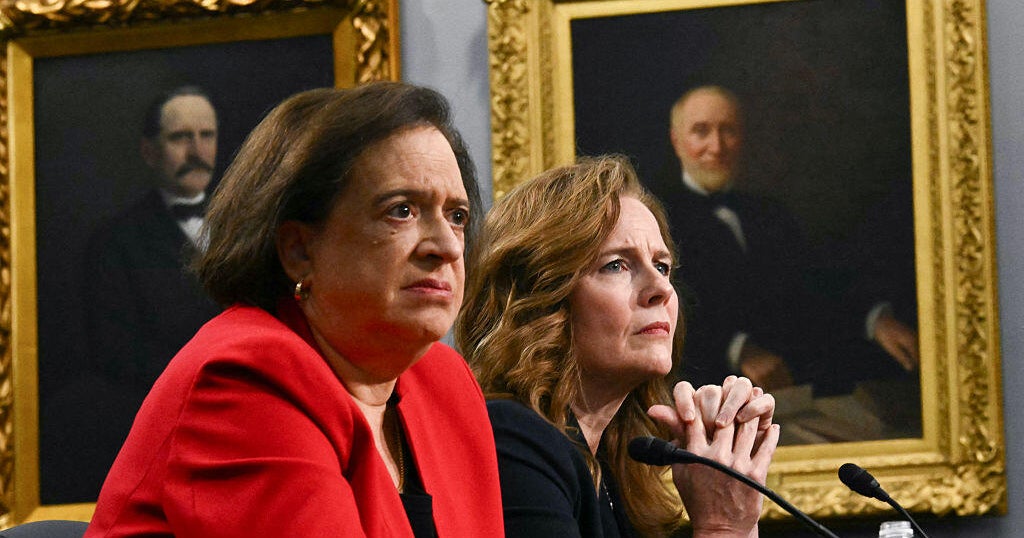
Supreme Court Justices Elena Kagan and Amy Coney Barrett testified before a House committee about security needs and the court’s budget request. They spoke about increased threats, the need for more security personnel, and concerns about transparency and ethics in the court.
Key Facts
Each Supreme Court justice currently has between four and eight security officers assigned to them.
Security increases during times of higher threat, such as after the leak of the Dobbs decision in 2022.
Justice Barrett shared that she carried a bulletproof vest at home and experienced a swatting incident at her residence.
House lawmakers say rising threats and violent rhetoric make better security funding necessary for judges and court staff.
Lawmakers also demand more financial disclosure and a stronger ethics code for the Supreme Court, citing Justice Clarence Thomas’s unreported gifts and travel.
The court implemented a voluntary ethics code in 2023, but some lawmakers consider it insufficient.
Justices Kagan and Barrett said they still do not know who leaked the Dobbs decision, which overturned abortion rights.
Lawmakers emphasized protecting judicial independence and adequate funding for public defenders.
Read the Original
Want the full story? Tap a source to open the original
article.
Health officials in the United States are investigating outbreaks of an illness called cyclosporiasis, caused by a parasite named Cyclospora cayetanensis. The infection often comes from eating contaminated fresh fruits and vegetables and can take days to show symptoms, making it hard to identify the source.
Key Facts
Cyclospora cayetanensis is a tiny parasite that infects the small intestine and causes diarrhea illness known as cyclosporiasis.
The parasite usually spreads through contaminated food or water, especially raw fruits and vegetables.
Symptoms can take about a week to appear after eating contaminated food, which makes it difficult to trace the illness.
Cyclosporiasis causes watery, repeated diarrhea that can last for weeks if untreated.
The illness is more dangerous for infants, older adults, people with weak immune systems, or those without easy access to medical care.
The Centers for Disease Control and Prevention (CDC) is investigating hundreds of cases across at least 31 states.
Washing fruits and vegetables might help reduce risk, but it may not completely remove the parasite.
Specialized lab tests are needed to confirm infection, so some cases might not be detected or reported.
Read the Original
Want the full story? Tap a source to open the original
article.
Republican House hardliners delayed House floor activities for two weeks but now appear ready to allow business to proceed. GOP leaders are trying to use a special rule to combine bills and move forward on key issues.
Key Facts
Republican hardliners in the House blocked activity for about two weeks.
GOP leaders want to return to normal House work by early Tuesday afternoon.
Republicans plan to use a special procedure to "merge" bills, which is not commonly used.
This move shows signs that the internal party blockade is weakening.
The goal is to advance legislation and get House business back on track.
The article focuses on events within the U.S. House of Representatives.
Read the Original
Want the full story? Tap a source to open the original
article.
Supreme Court Justices Elena Kagan and Amy Coney Barrett asked Congress for more money to improve security because threats against them have increased. They testified about the court's budget request, which includes funding for extra security agents and travel protection.
Key Facts
The Supreme Court is requesting over $228 million for the next fiscal year, an increase of more than $20 million.
Part of this request includes $14.6 million to add six more security agents per justice.
Justices currently have between four and eight security officers each, depending on their needs.
Threats against Supreme Court justices and federal judges have risen sharply, with a 38% expected increase for 2026.
The Supreme Court Police now handles residential security for justices, a job formerly done by the U.S. Marshals Service.
Since a 2022 leak about overturning Roe v. Wade, justices have faced more protests and threats, including a 2023 arrest of a person planning to harm three justices.
Justice Barrett shared that she had to wear a bulletproof vest and explain it to her children after the leak.
She also experienced a "swatting" incident where police were called to her home as a prank or threat.
Read the Original
Want the full story? Tap a source to open the original
article.
President Donald Trump reversed his plan to charge a 20% fee on cargo ships passing through the Strait of Hormuz. He said the change came after several U.S. allies made trade deals with the United States.
Key Facts
President Trump initially planned to impose a 20% fee on cargo ships using the Strait of Hormuz.
The Strait of Hormuz is a key shipping route in the Middle East.
The fee was intended to affect ships transiting this waterway.
President Trump later decided not to impose this fee.
He credited recent trade agreements with U.S. allies for his decision to walk back the fee.
The change was announced publicly and covered by CBS News.
Read the Original
Want the full story? Tap a source to open the original
article.
President Donald Trump canceled a plan to charge a 20% fee on cargo passing through the Strait of Hormuz. Instead, he chose to focus on investment deals with countries in the Gulf region.
Key Facts
President Trump planned to charge a 20% toll on cargo passing through the Strait of Hormuz.
He decided to drop this toll plan.
He replaced the toll idea with investment agreements with Gulf nations.
The Strait of Hormuz is an important waterway for global shipping.
These moves aim to strengthen economic ties with Gulf countries.
The announcement was reported by CBS News.
Aaron Navarro provided details on the topic for CBS News.
Read the Original
Want the full story? Tap a source to open the original
article.
New projections for the Social Security cost-of-living adjustment (COLA) in 2027 suggest seniors may receive a small increase in their benefits. The official adjustment amount will be announced later this year.
Key Facts
The Social Security COLA is a change to benefits that helps keep up with inflation.
Projections indicate the 2027 increase will be modest, meaning not very large.
The exact COLA amount will be officially announced later in the year.
This adjustment affects seniors who receive Social Security benefits.
COLA aims to maintain the purchasing power of benefits as prices change.
Read the Original
Want the full story? Tap a source to open the original
article.
A recent survey shows that most Americans expect the war involving Iran to last a long time. About 79% of people surveyed believe the U.S. military will stay involved in the conflict.
Key Facts
The survey was conducted by Reuters and released on Monday.
About 79% of Americans expect a long-lasting war with Iran.
The survey reflects opinions amid renewed military actions between the U.S. and Iran.
Most respondents believe the U.S. will continue its military presence in the region.
The poll indicates widespread public concern about the ongoing conflict.
Read the Original
Want the full story? Tap a source to open the original
article.
President Donald Trump has paid over $5 million in damages to E Jean Carroll after a jury found him liable for sexually abusing and defaming her. The payment comes three years after the verdict and follows court orders preventing further delays.
Key Facts
President Trump was found liable for sexually abusing and defaming E Jean Carroll in a civil case.
Carroll accused Trump of attacking her in a Manhattan store dressing room in the mid-1990s.
Trump denied the allegations and defamed Carroll on Truth Social in 2022 by denying her claims.
In 2023, a New York jury awarded Carroll more than $5 million in damages.
Trump tried to delay the payment to appeal to the Supreme Court, but the court declined to hear the appeal.
A judge ordered Trump to pay the damages last week, ending the delay.
Trump’s legal team called the case a "hoax" and claimed it was politically motivated.
Carroll is a former magazine columnist and is currently 82 years old.
Read the Original
Want the full story? Tap a source to open the original
article.
U.S. Immigration and Customs Enforcement (ICE) has told its officers to temporarily stop making traffic stops across the country after two fatal shootings involving agents. ICE has not officially confirmed this order, but multiple news sources have reported it.
Key Facts
ICE is the U.S. agency responsible for immigration enforcement.
Two deadly shootings involving ICE officers recently took place.
Because of these shootings, ICE has instructed agents to pause traffic stops temporarily.
The pause in traffic stops applies nationwide, across the United States.
ICE has not publicly confirmed this directive.
News organizations like NewsNation and The Hill have reported on the pause.
Traffic stops are routine stops of vehicles by law enforcement to check for legal issues.
The directive aims to address safety concerns for both officers and the public.
Read the Original
Want the full story? Tap a source to open the original
article.
The BBC’s latest annual report highlights serious challenges, including financial pressures and falling TV licence fee payments. The BBC needs a new funding model as fewer people watch live TV and licence fee income loses value when adjusted for inflation.
Key Facts
The BBC’s current funding comes mainly from TV licence fees, which have dropped by two million in five years.
The number of households paying the licence fee decreased by about half a million last year alone.
The licence fee model requires payment for watching live TV or using BBC iPlayer but does not apply to BBC radio-only listeners.
Changes in how people watch media, especially younger viewers preferring platforms like YouTube, reduce licence fee income.
The BBC claims the licence fee income has effectively fallen by about £1.2 billion after accounting for inflation since 2017.
Despite challenges, 94% of UK adults access BBC content monthly, and over half a billion people watch BBC content internationally.
The BBC says its traditional licence fee system is outdated due to shifts away from live TV viewing.
Younger audiences mainly use YouTube and streaming platforms, but the BBC remains a top five brand for UK youth.
Read the Original
Want the full story? Tap a source to open the original
article.