The California Supreme Court ruled that Riverside County Sheriff Chad Bianco broke election laws by seizing over 650,000 ballots related to a local redistricting vote. The court ordered Bianco to stop investigating election fraud and return the ballots to election officials.
Key Facts
Sheriff Chad Bianco ordered deputies to seize more than 650,000 ballots from a special election in Riverside County.
The seizure related to Proposition 50, which changed voting districts in the area.
The California Supreme Court ruled unanimously that Bianco violated state election law by taking the ballots and ignoring the Attorney General's order to stop.
Bianco claimed he was investigating claims of vote discrepancies totaling about 45,800 votes.
County election officials said the final vote count was accurate with only a small difference of about 100 votes.
The Attorney General, Rob Bonta, directed Bianco to halt the investigation, which Bianco initially ignored.
Bianco has also supported claims of election fraud similar to those made by President Trump about the 2020 election.
The court ordered Bianco to return the ballots and refrain from handling them except as legally required.
Read the Original
Want the full story? Tap a source to open the original
article.
A Texas court ended the legal case against Crystal Mason, a Black woman who was sentenced to five years in prison for casting a provisional ballot while on supervised release for a federal felony. The state’s highest criminal court decided not to hear further appeals, affirming Mason’s acquittal after nearly a decade of legal battles.
Key Facts
Crystal Mason was convicted in 2018 for illegally voting by casting a provisional ballot in the 2016 presidential election.
She was on supervised release for a federal tax felony at the time and was not on the voter registration list.
Mason was offered a provisional ballot because federal law requires a safeguard for voters not on the list.
Texas law prohibits people with felony convictions on probation from voting.
Mason said she did not know she was ineligible to vote and disputed testimony from poll workers.
The case sparked controversy due to the five-year prison sentence and concerns about voter intimidation.
The Texas Court of Criminal Appeals declined to hear further appeal, letting her acquittal stand.
Mason spent 10 months in federal prison after her conviction before being acquitted.
Read the Original
Want the full story? Tap a source to open the original
article.
A recent NBC News poll found that nearly half of young voters aged 18 to 29 have a negative opinion of capitalism. At the same time, 42 percent of these young voters see socialism in a positive way.
Key Facts
47 percent of voters aged 18 to 29 view capitalism negatively.
42 percent of the same age group have a positive view of socialism.
The poll focused on the opinions of younger voters.
The poll was conducted by NBC News.
The findings highlight a divide in how different economic systems are seen by young people.
This reflects broader changes in political and economic attitudes among younger generations.
The poll results were reported publicly for analysis.
Read the Original
Want the full story? Tap a source to open the original
article.
Lawmakers are getting closer to agreeing on a plan to make it faster to approve and build new infrastructure projects. Senator Sheldon Whitehouse said they have mostly resolved the major disagreements and are making good progress on the details of the bill.
Key Facts
The goal is to speed up how quickly infrastructure projects get approved and built.
Senator Sheldon Whitehouse leads the Senate Environment and Public Works Committee.
Whitehouse said lawmakers are past the toughest disagreements ("over the hump").
The current talks are focused on the substance or main parts of the bill.
This effort involves both Democrats and other lawmakers working toward a deal.
The reform is expected to help with projects like roads, bridges, and public facilities.
No final agreement is announced yet, but progress is significant.
This bill is important to improve U.S. infrastructure development.
Read the Original
Want the full story? Tap a source to open the original
article.
A group of lawmakers from both political parties proposed a new law to offer tax breaks for film and TV productions made in the United States. This plan aims to keep entertainment jobs in the country by giving companies a 20 to 30 percent credit on certain labor costs.
Key Facts
Lawmakers from both parties introduced the bill on Thursday.
The bill offers federal tax incentives for U.S.-based film and TV productions.
The basic credit covers 20 percent of eligible domestic labor costs.
Additional tax credits can raise the incentive to as much as 30 percent.
The goal is to prevent jobs in entertainment from moving to other countries.
The incentive targets labor costs directly related to production work done in the U.S.
This legislation is designed to boost the American entertainment industry and create more jobs.
Read the Original
Want the full story? Tap a source to open the original
article.
A Senate committee approved Chris Klomp’s nomination to be the deputy secretary of the Department of Health and Human Services (HHS). The committee vote was close, with one Democrat joining all Republicans to support him, moving Klomp closer to a full Senate confirmation vote.
Key Facts
The Senate Finance Committee voted 15-12 to advance Chris Klomp’s nomination.
Sen. Sheldon Whitehouse (a Democrat from Rhode Island) voted with Republicans.
Chris Klomp is nominated to be the deputy secretary of HHS.
The deputy secretary is the second-highest position at the Department of Health and Human Services.
The nomination now moves to the full Senate for a confirmation vote.
Klomp currently works as a senior adviser in the government.
Read the Original
Want the full story? Tap a source to open the original
article.
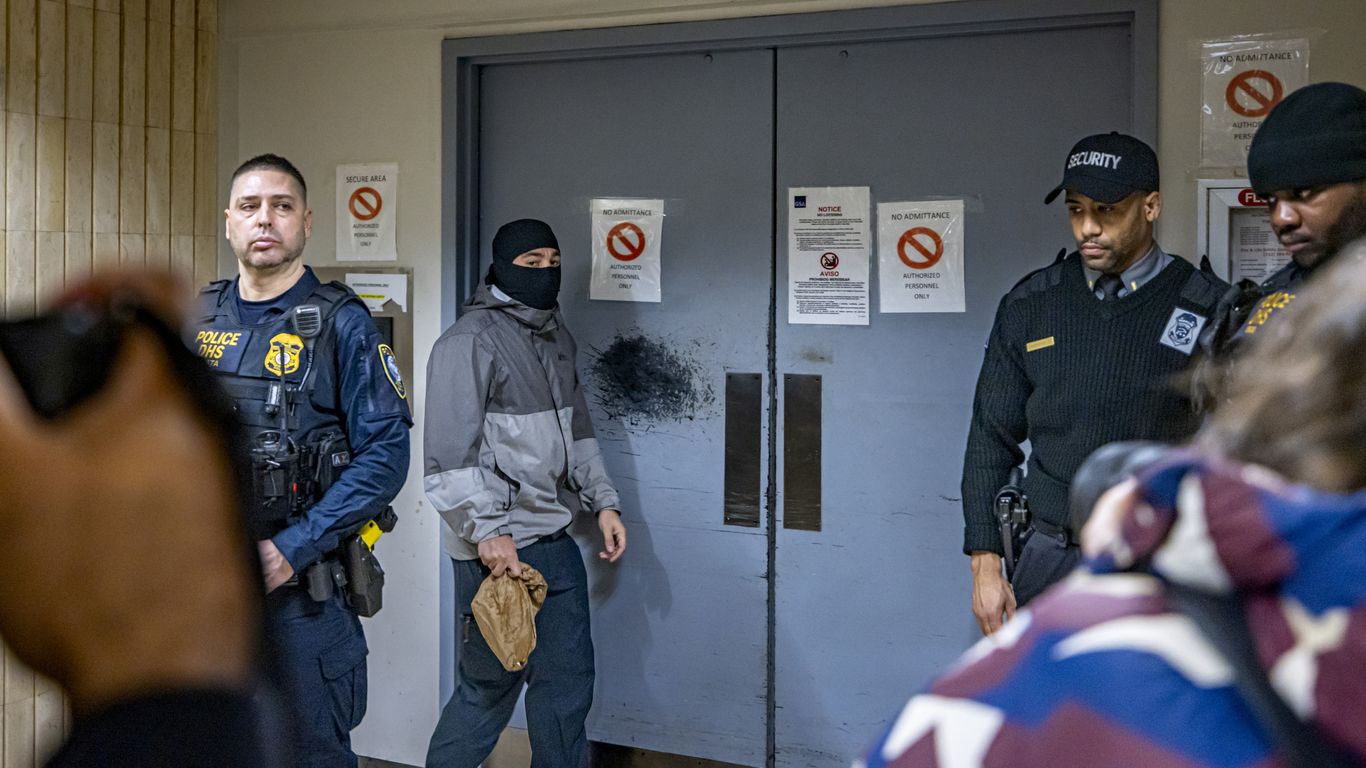
A federal judge ruled that immigration detainees at a New York City ICE detention center faced cruel and unconstitutional conditions. The judge issued an order requiring ICE to improve the facility’s space, food, hygiene, medical care, and access to lawyers.
Key Facts
The judge called the NYC ICE detention conditions "inhumane and unconstitutional."
ICE often held detainees longer than the intended 12 hours in overcrowded, unsanitary rooms.
Detainees lacked sleep, proper food and water, hygiene supplies, and medical care.
Access to lawyers was very limited, and phone calls were short and often monitored.
The judge said ICE ignored previous court orders and sometimes lied about compliance.
The new order requires at least 50 square feet per detainee (excluding areas near toilets) and temperature control between 68-74°F.
ICE must provide three meals daily with bottled water, hygiene products, bedding for overnight stays, and a medical professional on site.
Immigrants must have confidential and free phone access to attorneys.
Read the Original
Want the full story? Tap a source to open the original
article.
The Trump administration plans to ask the U.S. Supreme Court to allow it to continue the fast deportation of immigrants to third countries, which are countries other than their home nation. A recent federal appeals court ruling blocked this practice, saying migrants must have a real chance to challenge their deportation before being sent to these third countries.
Key Facts
The Trump administration wants the Supreme Court to permit quick deportations to third countries.
A federal appeals court recently stopped this rapid removal process, citing migrants' rights to contest deportations.
Migrants have been deported to third countries even if they have no connection there, raising legal concerns.
About 25,000 people have been deported to third countries during the Trump administration.
Third-country deportations happen when migrants cannot go back to their home country or that country refuses them.
Immigration authorities argue this tool helps with public safety and logistical challenges.
Immigration groups say the Trump administration has increased these deportations after making deals with nearly 36 countries.
Some deported migrants report not knowing their destination until after the deportation began, raising human rights issues.
Read the Original
Want the full story? Tap a source to open the original
article.
New York has sued Polymarket, claiming it runs an illegal gambling operation through its prediction market platform. The state says Polymarket operates without a license, allows underage users, avoids taxes, and puts people at risk, while the Trump administration supports the regulation of such markets at the federal level.
Key Facts
New York’s lawsuit calls Polymarket an unlicensed gambling business that breaks state laws.
Polymarket allows users aged 18–20, while New York law requires gamblers to be at least 21.
The state argues Polymarket avoids paying taxes that licensed casinos and sportsbooks must pay.
Tax money from gambling supports schools, youth sports, and problem gambling programs in New York.
Polymarket markets bets as “event contracts” or “swaps,” which states say are just gambling with different names.
The Commodity Futures Trading Commission (CFTC), part of President Trump’s administration, claims it has exclusive control over these markets and tries to block state laws.
Polymarket’s main platform has been blocked in the US since 2022 but a limited app runs under a licensed company called QCX.
New York wants the court to stop Polymarket from operating, fine the company, and return money to users.
Read the Original
Want the full story? Tap a source to open the original
article.
Senate Republicans blocked a Democratic effort to end the US war with Iran, voting 49-50 against a resolution that had passed the House. The conflict has lasted over 200 days, with 19 American soldiers killed and significant costs reported.
Key Facts
The Senate voted 49-50 against a resolution to end the war with Iran that the House had passed.
The vote followed over 200 days of conflict, with at least 19 US service members killed and more than 750 injured.
The resolution was brought to the floor under the War Powers Resolution, a law allowing Congress to force such votes.
In earlier votes, a few Republicans supported ending the war, but most oppose it, citing ongoing troop safety concerns.
The war has cost nearly $40 billion in the first four months, according to a Congressional Budget Office report.
Some senators said they will keep trying to end the war, pointing to growing Republican support ahead of elections.
The conflict has increased gas prices, costing American families about $900 each since it started.
Senator Andy Kim called the war reckless and expensive and criticized President Trump’s handling of the situation.
Read the Original
Want the full story? Tap a source to open the original
article.
A recent survey found that most people living in the Washington, D.C. area have been hurt by job cuts or furloughs in the federal government under President Trump. More than half of the residents said their households were negatively affected by workforce reductions in the past year.
Key Facts
55 percent of 2,801 residents in the D.C. area reported negative impacts from federal job cuts.
The survey focused on people living in Washington, D.C., and nearby suburbs.
The job reductions happened during President Donald Trump’s administration.
Households experienced financial or other hardships due to fewer federal workers.
The survey highlights the local effects of changes in the federal government workforce.
Federal job cuts and furloughs refer to losing jobs or temporary unpaid leave.
The survey data reflects the situation within the past year.
This issue mostly affects people connected to the federal government or its related economy.
Read the Original
Want the full story? Tap a source to open the original
article.
The Senate voted against a resolution that would require President Trump to bring U.S. troops home from the conflict with Iran. Although some Republican senators are unhappy with how President Trump is managing the war, most Republicans opposed the resolution, while most Democrats and a few Republicans supported it.
Key Facts
The Senate rejected a resolution that asked President Trump to end U.S. military involvement in the Iran conflict.
The resolution was originally passed by the House of Representatives in July.
Four Republican senators joined nearly all Senate Democrats to support the resolution.
Most Republican senators voted against the resolution.
The vote shows some disagreement within the Republican Party about President Trump's war policy.
The resolution focuses on the use of war powers, a legal authority about military actions.
The conflict with Iran involves U.S. troops deployed overseas.
Read the Original
Want the full story? Tap a source to open the original
article.
The California Supreme Court ruled that Riverside County Sheriff Chad Bianco must return about 650,000 ballots he took during an investigation of alleged voting fraud in a 2025 special election. The court said only election officials have legal control over voted ballots, and Bianco’s seizure was unlawful.
Key Facts
Sheriff Chad Bianco seized around 650,000 ballots from a 2025 special election on congressional redistricting.
The special election measure passed by a wide margin both statewide and in Riverside County.
The California Supreme Court unanimously ruled that Bianco’s seizure of ballots was illegal.
California law requires ballots to stay with election officials, even during criminal investigations.
Governor Gavin Newsom signed a new law preventing future ballot seizures like this one.
Bianco began the investigation after a local group complained about the election results, but election officials said the complaint was groundless.
Democratic Attorney General Rob Bonta sued and ordered the ballots returned, but Bianco initially refused.
The case is being watched closely amid wider concerns about election fraud claims linked to President Donald Trump and his allies.
Read the Original
Want the full story? Tap a source to open the original
article.
A government report says U.S. Immigration and Customs Enforcement (ICE) has wasted tens of millions of dollars on expensive detention projects since President Trump took office in 2025. The report highlights poor planning and mismanagement of funds meant to expand detention capacity, leading to unused facilities and high costs.
Key Facts
ICE received $45 billion last year to expand detention centers under President Trump’s administration.
The detainee population grew from 39,000 in January 2025 to 67,000 by July 2027.
Nearly $3 million was spent on tents at Guantánamo Bay that were never used.
ICE bought warehouses for detention that remained empty and are now being sold, costing $20 million.
High costs were paid to Florida for detention centers with poor conditions, including $249 per detainee per day, much higher than usual rates.
ICE bought two contractor-owned detention facilities for $1.5 billion without assessing if owning them was affordable long-term.
The Department of Homeland Security plans to create a strategic detention plan by August 2027, but this may be too late to avoid more waste.
The program has targeted some people with legal statuses, including asylum seekers and green card holders, not just criminals.
Read the Original
Want the full story? Tap a source to open the original
article.
A man was killed and a woman critically injured after being stabbed while they slept in a home in Edgewood, Pennsylvania. Police arrested a 32-year-old suspect nearby, who faces charges including homicide and burglary.
Key Facts
The incident happened around 12:30 a.m. in Edgewood, near Pittsburgh.
The victims were stabbed while sleeping in their home.
The man, 46-year-old Idris Evans, died at the hospital.
The woman was taken to the hospital and is in critical condition.
The suspect is 32-year-old Elijah Hemingway from Pittsburgh.
Police found Hemingway behind a nearby house with hand injuries.
Hemingway was charged with homicide, aggravated assault, and burglary.
Detectives confirmed the suspect entered the home before attacking the victims.
Read the Original
Want the full story? Tap a source to open the original
article.
A federal judge ruled that a key ICE detention site in New York City had poor and overcrowded conditions that violated detainees' constitutional rights. The judge ordered the Department of Homeland Security to improve conditions and allow detainees better access to lawyers.
Key Facts
The site at 26 Federal Plaza in Manhattan is used by ICE and other federal agencies.
Arrests of suspected illegal immigrants increased quickly, causing overcrowding and bad conditions.
Detainees were often denied timely access to attorneys and had limited phone usage.
The judge called the site a “black site,” meaning it operated secretly and without proper oversight.
The judge said ICE used harsh conditions to pressure detainees to leave the U.S. on their own.
The ruling said ICE violated detainees’ First Amendment rights (free speech and legal access) and Fifth Amendment rights (due process).
The case was brought by an asylum seeker who experienced these conditions firsthand.
The judge ordered immediate reforms and better monitoring of the detention site.
Read the Original
Want the full story? Tap a source to open the original
article.
The Trump administration has removed 760,000 people from ObamaCare health insurance programs. This happened at a time when insurance costs have already increased for many people.
Key Facts
760,000 ObamaCare enrollees were removed from health programs.
This action occurred under President Donald Trump’s administration.
Premiums for these health insurance plans have risen significantly this year.
The removals took place shortly before the midterm elections.
The decision affects people's access to affordable health coverage.
The move impacts the overall availability of health insurance on the ObamaCare marketplace.
The timing of the removals is notable because it is close to important national elections.
Read the Original
Want the full story? Tap a source to open the original
article.
The Senate narrowly rejected a resolution that aimed to limit President Trump's ability to use military force against Iran without Congress's approval. Some Republicans joined Democrats in supporting the measure, but it fell one vote short of passing.
Key Facts
The Senate voted 49 to 50 against a resolution to restrict President Trump's war powers in Iran.
Four Republicans voted with Democrats to advance the measure: Susan Collins, Lisa Murkowski, Rand Paul, and Thom Tillis.
The resolution would require the president to remove U.S. forces from conflict with Iran unless Congress approved a war declaration.
The measure passed the House in July but did not require the president’s signature since it was a concurrent resolution.
The War Powers Resolution of 1973 allows Congress to direct troop withdrawal through a concurrent resolution, but presidents have disputed its constitutionality.
Thom Tillis, who is leaving the Senate, supported the measure citing the 60-day limit on unauthorized military action.
This vote was the Senate’s first on the issue since July and likely the last before the midterm elections.
Some Republicans in competitive races have recently called for an end to the conflict, reflecting voter frustration with rising fuel prices.
Read the Original
Want the full story? Tap a source to open the original
article.
Nolan Wells, an 18-year-old who went missing during a July 4 boat trip in Mississippi, was found dead on July 6. The official state autopsy and a private autopsy both say that the cause and manner of his death cannot be determined.
Key Facts
Nolan Wells disappeared on July 4, 2026, after a boat trip with friends to Horn Island, Mississippi.
Authorities believe Wells may have stayed behind on the island when friends left.
His body was recovered on July 6, and officials suspect drowning.
The Mississippi State Medical Examiner's report states the cause and manner of death are "undetermined."
A private autopsy arranged by Wells' family reached the same conclusion, noting limitations in their findings.
Jackson County Sheriff John Ledbetter said there was no clear sign of a crime but investigation continues.
The family has been actively involved and commissioned their own private autopsy.
The case has received national attention due to the unclear circumstances of Wells’ death.
Read the Original
Want the full story? Tap a source to open the original
article.
Darializa Avila Chevalier, a Democratic candidate for New York Congress, was arrested during a protest against Israeli Prime Minister Benjamin Netanyahu’s speech at the United Nations. She is expected to win the congressional seat currently held by Rep. Adriano Espaillat.
Key Facts
Darializa Avila Chevalier is running for a New York congressional seat.
She won the Democratic primary against Rep. Adriano Espaillat.
Avila Chevalier was arrested at a protest in New York.
The protest was against Israeli Prime Minister Benjamin Netanyahu’s U.N. speech.
About 250 people participated in the protest.
The congressional seat is considered a safe Democratic district.
The protest took place on a Thursday.
Read the Original
Want the full story? Tap a source to open the original
article.