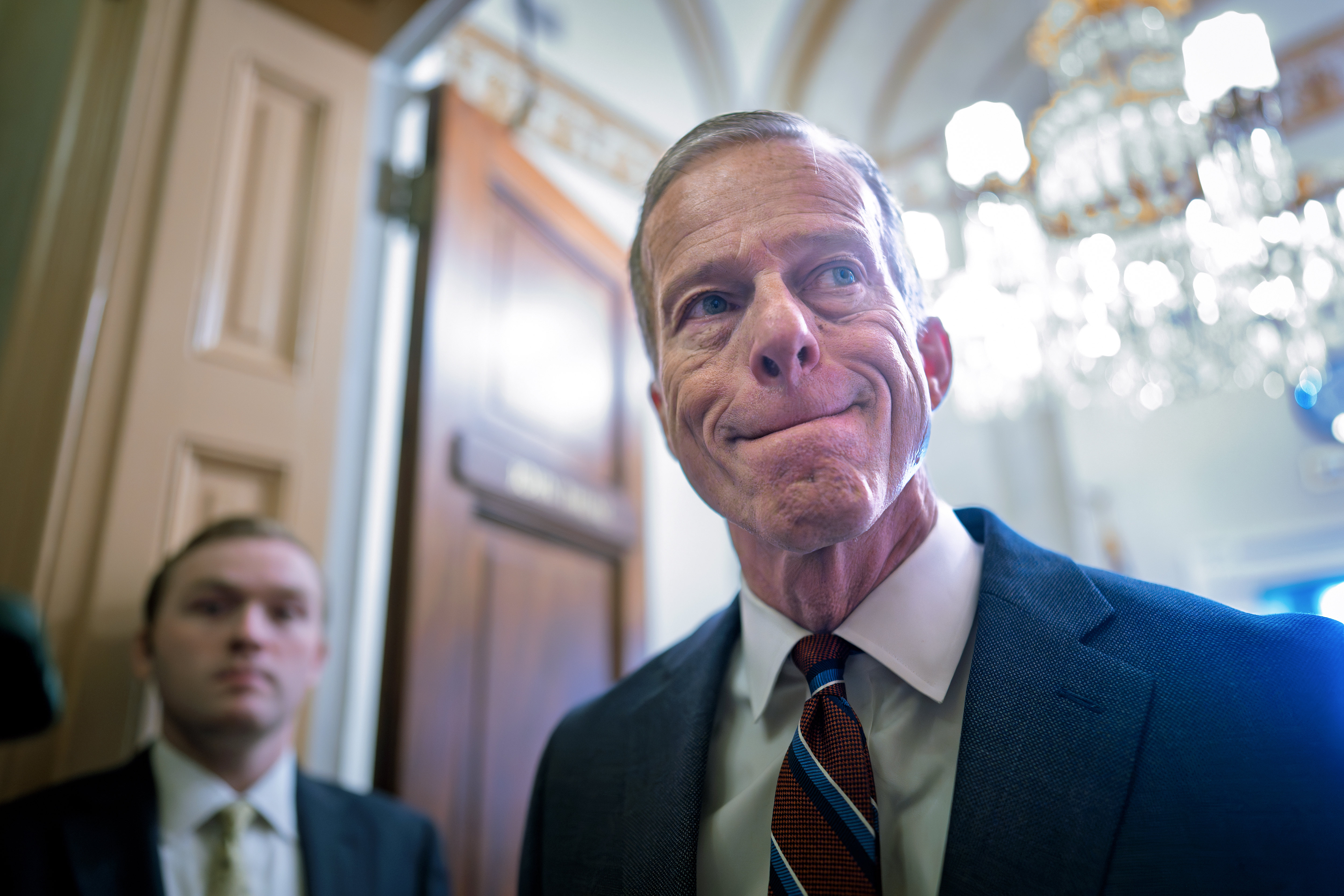
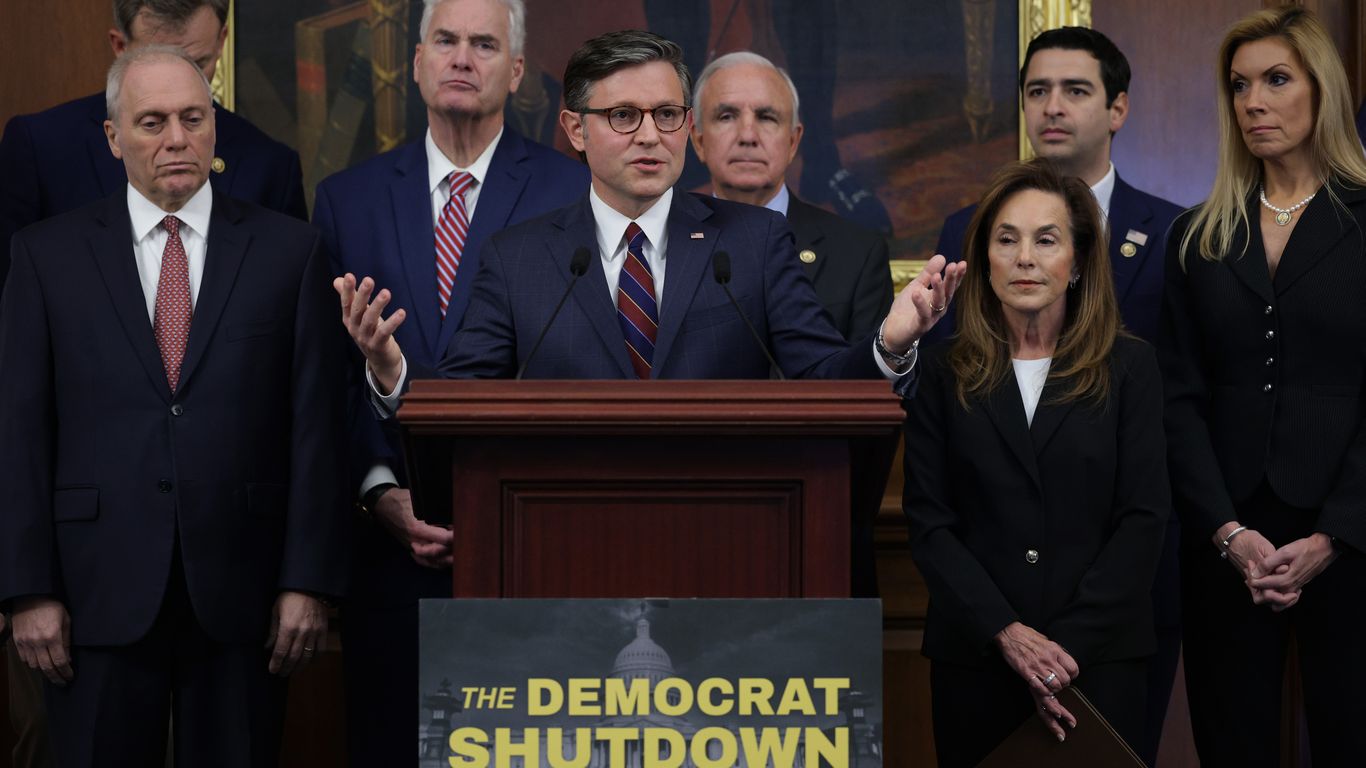
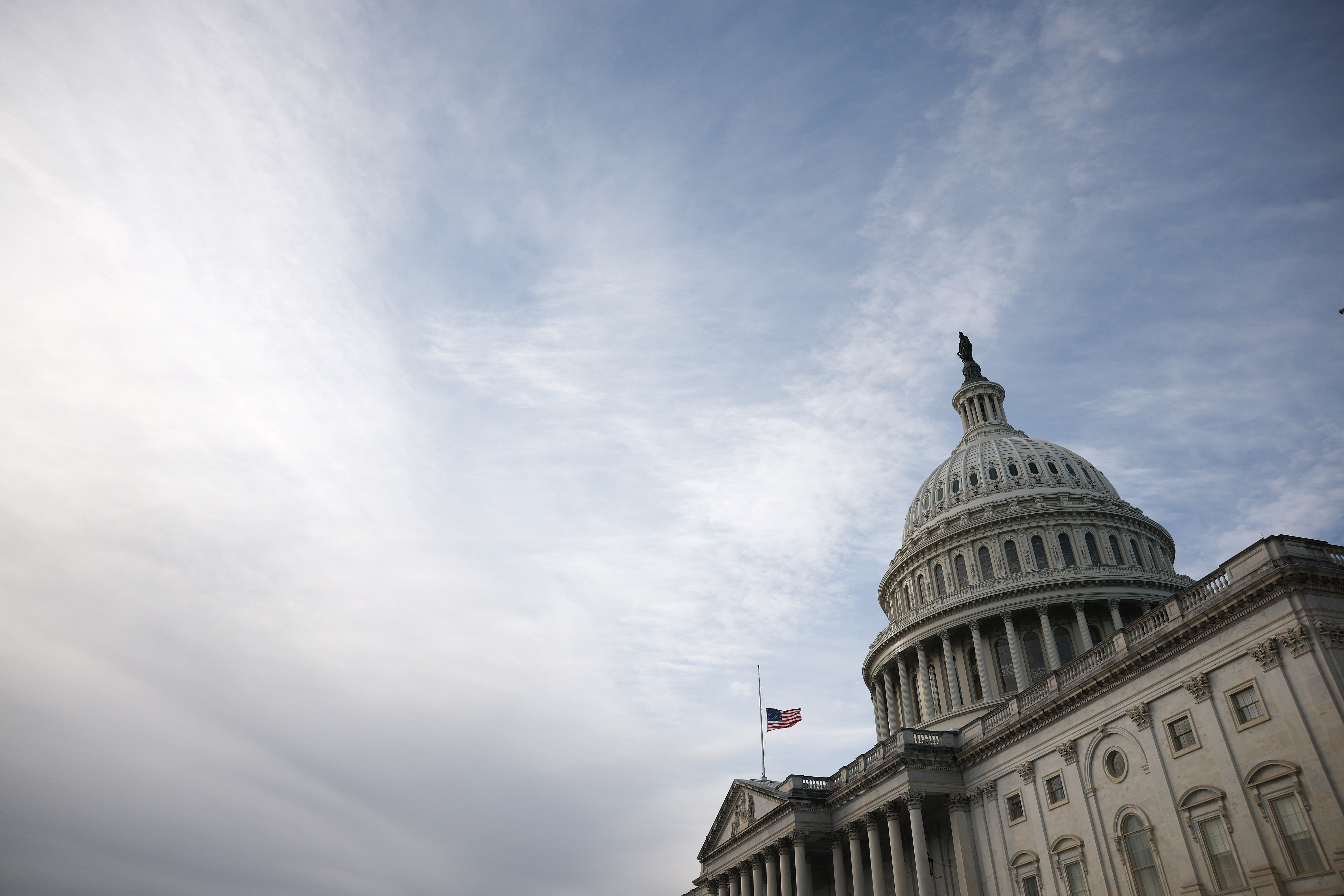
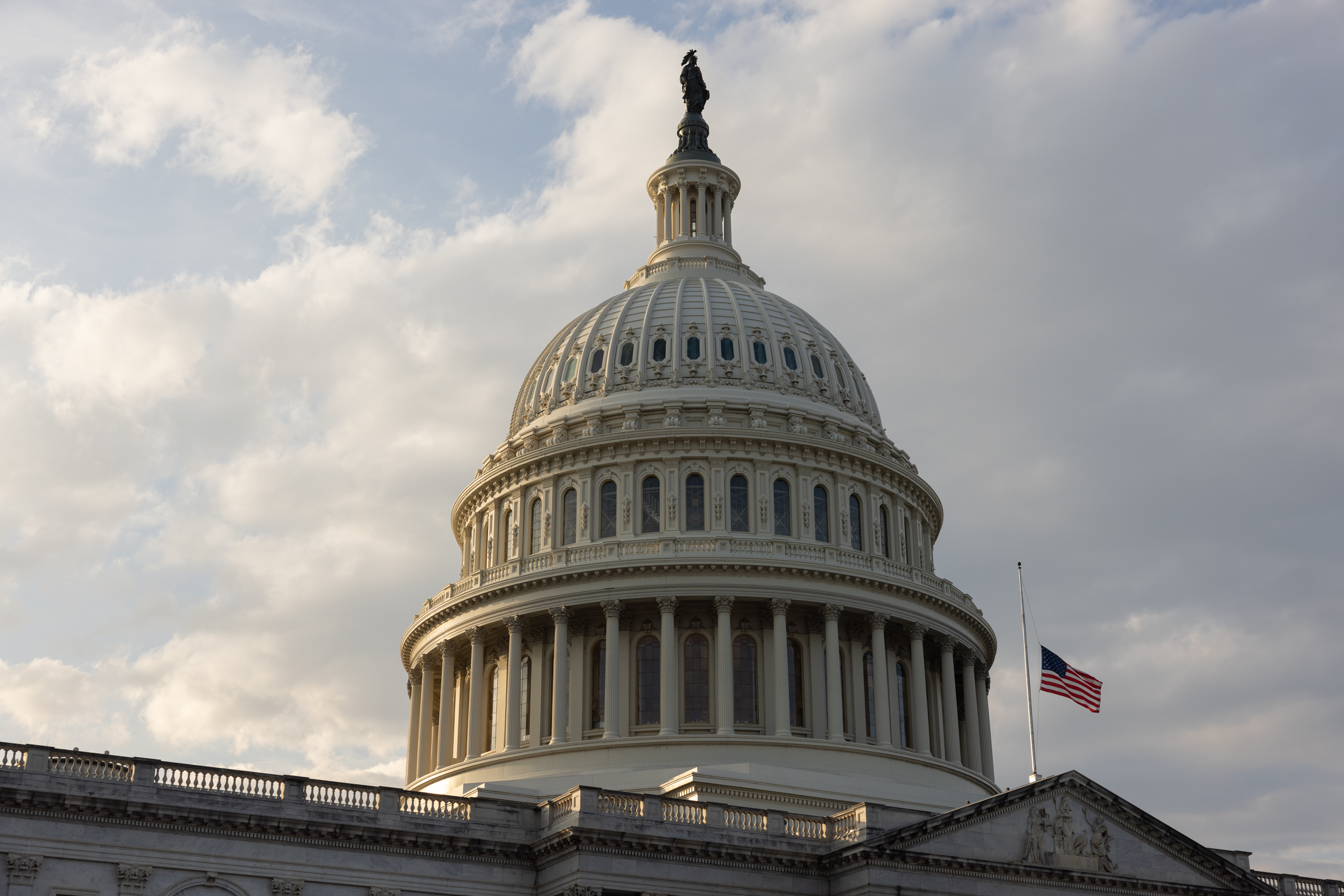
A new part added to a bill meant to end the government shutdown has upset many Republicans. This part lets senators sue the federal government for up to $500,000 over phone searches related to the January 6 investigation. Both Democrats and Republicans are unhappy because they feel it gives special legal rights to certain lawmakers.
Key Facts
A provision was added last-minute to a bill to stop the government shutdown.
Senate Majority Leader John Thune introduced this provision.
It allows certain senators to sue the government for $500,000 over phone record searches.
These searches are tied to investigations into the January 6 Capitol riot.
The FBI had subpoenaed phone records of eight senators over calls near the time of the riot.
Both political parties are upset about this provision, saying it is unfair.
House Speaker Mike Johnson publicly disagrees with the provision.
Read the Original
Want the full story? Tap a source to open the original
article.
The House of Representatives passed a funding package to end the longest federal government shutdown in history. The shutdown lasted 43 days and affected many federal workers and services. The bill now awaits President Trump's signature to officially reopen the government.
Key Facts
The House passed the funding package with a vote of 222-209.
The bill marks the end of a government shutdown that lasted 43 days.
Thousands of federal workers went unpaid and services were disrupted during the shutdown.
Two Republicans voted with most Democrats against the bill, while six Democrats voted in favor of it.
The package funds the government until January 30 and reverses federal layoffs since October 1.
The House Democratic leadership opposed the bill for not extending Affordable Care Act subsidies.
The deal faced division within both parties, especially among Democrats seeking healthcare assurances.
The bill is now pending President Trump's signature to officially reopen the government.
Read the Original
Want the full story? Tap a source to open the original
article.
The U.S. House of Representatives has passed a spending bill to end the longest government shutdown in U.S. history. The bill received 222 votes in favor and 209 against and will now be sent to President Donald Trump to sign into law. However, the bill does not resolve healthcare subsidy issues that were part of the shutdown debate.
Key Facts
The House passed the spending bill with 222 votes, including support from six Democrats.
The bill aims to end a shutdown that lasted 42 days, the longest in U.S. history.
The Senate had already approved the bill with a 60 to 40 vote.
The bill provides funding through January 30, restoring pay to federal workers.
Healthcare subsidies under the Affordable Care Act remain unresolved.
Republicans and Democrats disagreed on addressing healthcare costs.
Senate Republicans agreed to discuss healthcare subsidies by December.
Some Democrats consider the agreement a temporary fix and fear another shutdown in January.
Read the Original
Want the full story? Tap a source to open the original
article.
U.S. Catholic bishops released a message expressing concern for immigrants and criticized aggressive immigration policies without naming President Trump. They called for more humane treatment and communication about immigration issues. The bishops emphasized the importance of immigration reform and highlighted immigrants' contributions to the U.S.
Key Facts
U.S. Catholic bishops issued a special message about immigration concerns.
The message indirectly criticizes President Trump's immigration policies.
U.S. border crossings have decreased significantly under Trump's administration.
The message is the first of its kind from the bishops in 12 years.
216 bishops supported issuing the message, with 5 opposing and 3 abstaining.
The message opposes mass deportation and negative language about immigrants.
The bishops call for ongoing dialogue with leaders for immigration reform.
The bishops acknowledge immigrants' significant contributions to the U.S.
Read the Original
Want the full story? Tap a source to open the original
article.
A disagreement arose in the U.S. House of Representatives when Rep. Marie Gluesenkamp Perez attempted to condemn Rep. Chuy García for actions related to his retirement. This happened just before a vote on a government funding bill. The move led to a debate among Democrats, with some questioning the timing and need for the resolution.
Key Facts
Rep. Marie Gluesenkamp Perez moved to condemn Rep. Chuy García.
García announced his retirement unexpectedly, leaving his chief of staff as the only candidate for his seat.
Perez's actions caused a heated exchange on the House floor.
House Minority Whip Katherine Clark tried to persuade Perez to delay her actions.
Democrats are focused on voting to reopen the government, with many opposing the bill.
The resolution against García criticizes him for appointing an heir, calling it undemocratic.
Gluesenkamp Perez is a centrist Democrat from a Republican-leaning district.
García cited health reasons influenced by his family for his retirement decision.
Read the Original
Want the full story? Tap a source to open the original
article.
The U.S. House of Representatives is moving toward a vote on releasing files related to Jeffrey Epstein after Rep. Adelita Grijalva was sworn in. Her signature was the last needed to move forward with the vote, which some Republicans, including Speaker Mike Johnson, oppose. The vote on the Epstein files is expected soon, and Grijalva's swearing-in had been delayed by 50 days.
Key Facts
Rep. Adelita Grijalva was sworn in after a 50-day delay.
Grijalva signed a petition that triggered a vote to release Epstein files.
President Trump and House GOP leaders oppose releasing the files.
Speaker Mike Johnson plans a floor vote on the petition next week.
Johnson can omit the typical waiting period for the vote.
Johnson stated the delay was due to House being out of session.
Grijalva's delay was the longest for a special election winner in over a decade.
Read the Original
Want the full story? Tap a source to open the original
article.
President Donald Trump is facing renewed scrutiny over past connections to Jeffrey Epstein, a known sex offender. New emails from Epstein's estate and a bipartisan push in the House for file release have increased attention on this matter. Some legal analysts suggest this could impact Trump's political standing.
Key Facts
President Trump is involved in controversy due to his past connections with Jeffrey Epstein.
Recently released emails from Epstein’s estate have attracted public and political attention.
These emails mention Trump allegedly spending time at Epstein's home and relate to past misconduct allegations.
Democrat and Republican lawmakers are pushing for the release of thousands of government files related to Epstein.
Legal analysts discuss potential impacts on Trump's political image due to these developments.
The House is set to vote on the release of Epstein-related records, with enough signatures for a petition.
President Trump argues that the focus on Epstein is a diversion from other political issues.
House Democratic and Republican leaders seek full transparency to address public concerns.
Read the Original
Want the full story? Tap a source to open the original
article.
President Donald Trump is considering suing the BBC over how they edited a part of his speech from January 6, 2021, in a documentary. Trump has given the BBC a deadline to respond by Friday, threatening a lawsuit for one billion dollars. The situation also includes discussions of new allegations involving Trump, Ghislaine Maxwell, and Jeffrey Epstein.
Key Facts
President Trump stated in a Fox News interview that he feels he must sue the BBC.
The lawsuit threat concerns how the BBC edited a segment of Trump’s January 6, 2021, speech.
The BBC Chair, Samir Shah, apologized for the editing error.
Trump has threatened to sue the BBC for one billion dollars if they don’t respond by Friday.
CNN’s Senior Legal Analyst, Elie Honig, discussed the potential legal outcomes of the case.
New emails were released alleging Trump spent time with an Epstein victim, which he denies.
Trump has accused Democrats of using these allegations to distract from other political issues.
Read the Original
Want the full story? Tap a source to open the original
article.
U.S. lawmakers have released emails from Jeffrey Epstein's estate mentioning President Donald Trump. These emails include exchanges between Epstein, his associate Ghislaine Maxwell, and author Michael Wolff. The emails touch on relations and discussions involving Trump, while the White House maintains that President Trump was not involved in any wrongdoing.
Key Facts
More than 20,000 pages of documents from Jeffrey Epstein's estate have been released by U.S. lawmakers.
Some of these documents include emails that mention President Donald Trump.
Three email exchanges were specifically highlighted by Democrats on the House Oversight Committee.
The emails are between Epstein and Ghislaine Maxwell, and between Epstein and author Michael Wolff.
Epstein mentioned the "dog that hasn't barked," referring to Trump, and discussed crafting responses about their relationship.
The White House states that Virginia Giuffre, an Epstein accuser, never mentioned Trump in any wrongdoing.
Republicans released additional documents to counter claims and narratives from the Democrats' release.
Further updates are expected as more documents are reviewed.
Read the Original
Want the full story? Tap a source to open the original
article.
Some prominent figures in the MAGA movement have been quiet after Democrats released new emails involving President Trump and the late Jeffrey Epstein. The emails allege that Trump knew about Epstein's criminal activities, which Trump has denied. The political debate continues as Democrats and some Republicans push for further investigation into Epstein's connections.
Key Facts
New emails were released by Democrats mentioning President Trump in connection with Jeffrey Epstein.
The emails claim Trump "knew about the girls" and had spent time at Epstein's house.
President Trump denies any involvement in Epstein's crimes and notes a past disagreement with Epstein.
Prominent MAGA figures were mostly silent on social media after the email release.
Democrats on the House Oversight Committee released these emails as part of their investigation.
House Republicans also released their documents and are debating next steps on probing the Epstein case.
A new House vote might force the Justice Department to release more documents on the Epstein investigation.
The Senate, led by Republicans, is unlikely to pass this measure if it clears the House.
Read the Original
Want the full story? Tap a source to open the original
article.
A judge ordered U.S. Immigration and Customs Enforcement (ICE) to release over 300 people held without proper warrants in several states. This decision follows a lawsuit claiming ICE violated an agreement that prohibits detaining people without warrants in Illinois. The judge also instructed ICE to provide information on more detainees possibly held without warrants.
Key Facts
Judge Jeffrey Cummings ordered the release of 313 people detained by ICE without warrants.
The decision follows a lawsuit by the ACLU of Illinois and the National Immigrant Justice Center.
The lawsuit claims ICE violated an agreement against warrantless arrests in Illinois.
ICE must release 13 detainees immediately, who were agreed by both parties to be held improperly.
ICE must provide a status and risk assessment of 615 people they suspect were also detained without warrants.
By specific November deadlines, ICE must update lists and release more detainees deemed low risk.
Government lawyers may appeal the decision due to difficulties in gathering documents.
High-risk individuals among the detainees will remain in detention.
Read the Original
Want the full story? Tap a source to open the original
article.
The House of Representatives passed a bill to reopen the U.S. government, which had been shut down. This bill needed bipartisan support to pass in the Senate due to voting rules. President Donald Trump is expected to sign the bill, which will fund the government until January 30.
Key Facts
The U.S. government shutdown was the longest in history, causing issues like flight delays and affecting food assistance benefits.
The House of Representatives passed a bill to fund the government until January 30.
Two Republicans, Thomas Massie of Kentucky and Greg Steube of Florida, voted against the bill in the House.
The Senate passed the bill with nearly all Republicans supporting it, except Senator Rand Paul.
Republicans have a majority in both the House and Senate, but the Senate needed some Democrat votes to pass the bill due to a rule requiring 60 votes.
Democrats opposed the bill because of concerns about expiring Affordable Care Act subsidies, which will be addressed next month.
President Donald Trump is expected to sign the bill into law.
Read the Original
Want the full story? Tap a source to open the original
article.
Each summary links back to the original reporting, so you can check the work. Support that, and get the daily digest every morning. Most choose $3.99/month.
President Donald Trump is exploring how to give Americans $2,000 payments using money gained from tariffs. While his team is looking into this plan, budget experts doubt it is feasible. The tariffs currently generate significant revenue, but experts say it isn't enough to cover the proposed payouts.
Key Facts
President Trump wants to give Americans $2,000 from tariff revenue.
White House staff is examining how to implement this plan.
A poll shows 67% of Americans disapprove of how Trump manages the economy.
Tariffs brought in $195 billion recently, up 153% from the previous year.
Experts say the tariff revenue isn't enough for the proposed $2,000 payments.
Trump's Treasury Secretary suggested the plan could result in tax cuts instead.
Legal challenges could affect the tariffs that fund this plan.
The U.S. Supreme Court is reviewing Trump's ability to impose such tariffs.
Read the Original
Want the full story? Tap a source to open the original
article.
Six Democrats in the House of Representatives voted for a bill to end the federal government shutdown. The shutdown has been the longest in U.S. history, causing disruptions like flight delays and affecting food assistance for many Americans. The bill now requires action from the Senate regarding healthcare tax credits.
Key Facts
Six House Democrats voted to end the government shutdown.
The shutdown is the longest in U.S. history.
Concerns include flight delays and effects on food assistance programs.
Most House Democrats opposed the bill due to healthcare concerns.
The Senate must vote on healthcare tax credits as part of the deal.
The shutdown debate involves healthcare policy disagreements.
A few Senate Democrats also supported the bill with Republicans.
Jared Golden, one of the Democrats who voted, voiced concerns about using shutdowns as a political strategy.
Read the Original
Want the full story? Tap a source to open the original
article.
Emails from Jeffrey Epstein mentioning President Trump were released by House Democrats. The White House stated that these emails do not carry any significant meaning. President Trump referred to this as a distraction from the government shutdown.
Key Facts
House Democrats released emails from Jeffrey Epstein.
The emails mention President Trump.
The White House spokesperson, Karoline Leavitt, stated the emails "prove absolutely nothing."
President Trump commented on the issue on his Truth Social platform.
President Trump called the situation a "hoax."
He suggested it was intended to distract from the ongoing government shutdown.
Read the Original
Want the full story? Tap a source to open the original
article.
The U.S. Transportation Department decided not to increase flight reductions at 40 major airports. Improved staffing of air traffic controllers helped prevent the need for additional restrictions. The current reduction will stay at 6% instead of rising to 8%.
Key Facts
The U.S. Transportation Department stopped plans to increase flight reductions at 40 airports.
The decision was made because staffing conditions for air traffic controllers have improved.
Initially, there was a plan to raise the reduction from 6% to 8%.
The ongoing government shutdown had caused disruptions leading to pressure for resolution.
Recent improvements in controller attendance contributed to the decision.
The current flight reduction measure remains set at 6%.
Read the Original
Want the full story? Tap a source to open the original
article.
The House of Representatives has come back to Washington, D.C., and is preparing to vote on a bill that aims to end the longest government shutdown in U.S. history. The shutdown has been ongoing for several months, impacting federal operations.
Key Facts
The House of Representatives is meeting in Washington, D.C.
They are voting on a bill to stop the ongoing government shutdown.
The shutdown is the longest in U.S. history.
The shutdown has affected government functions and services.
Congressional correspondent Lisa Desjardins provided this report.
Read the Original
Want the full story? Tap a source to open the original
article.
Joe Rogan commented on the $300 million cost to renovate the White House ballroom, calling it excessive. This project, led by President Trump, is a major expansion at the White House and is privately funded, aiming to replace temporary event tents with a permanent structure. The initiative has sparked debates about its necessity and the influence of donors.
Key Facts
Joe Rogan criticized the $300 million cost for renovating the White House ballroom.
President Donald Trump is behind the construction of a new 90,000-square-foot ballroom.
The ballroom will be used for big events, replacing temporary tents.
The renovations are privately funded and reportedly cost taxpayers nothing.
Some traditional public review processes were bypassed in approving the project.
The project is expected to finish before the end of Trump's current term.
Critics are concerned about donor influence and changes to the historic White House.
The White House claims the renovations will be a lasting legacy and are not a financial burden on taxpayers.
Read the Original
Want the full story? Tap a source to open the original
article.
Staying informed here is free for everyone. If it's worth something to you, pay what you want. Supporters also get the daily digest by email every morning.
Lawmakers in the U.S. House of Representatives have released new information about the federal investigation into Jeffrey Epstein. This includes emails and documents that could create new questions about President Donald Trump’s connections to Epstein.
Key Facts
U.S. House of Representatives lawmakers are involved in the release of information.
The information relates to the federal investigation into Jeffrey Epstein.
A committee published emails and documents concerning Epstein.
These documents may raise questions about President Trump’s connections to Epstein.
The news was reported by Liz Landers, a White House correspondent.
Read the Original
Want the full story? Tap a source to open the original
article.
As Thanksgiving nears, some grocery stores and organizations in the U.S. are offering ways to get free or discounted food. This is happening in response to economic challenges like high inflation and delays in SNAP benefits. Many Americans are looking for affordable ways to have Thanksgiving meals.
Key Facts
Inflation has increased grocery prices, partly due to new tariffs.
There have been delays in SNAP benefits, causing added financial stress for some families.
Local food banks and churches are offering free turkey meals for Thanksgiving.
Grocery stores like ShopRite, Acme, FoodTown, and BJ’s Wholesale Club have special promotions for free or discounted turkeys for customers who spend certain amounts.
Some grocery stores, by law, cannot offer exclusive discounts to SNAP recipients.
Dollar General has Thanksgiving meal deals like Buy Two, Get One Free on certain items.
Over 200 food banks across the country are distributing Thanksgiving meal kits without income requirements.
Read the Original
Want the full story? Tap a source to open the original
article.