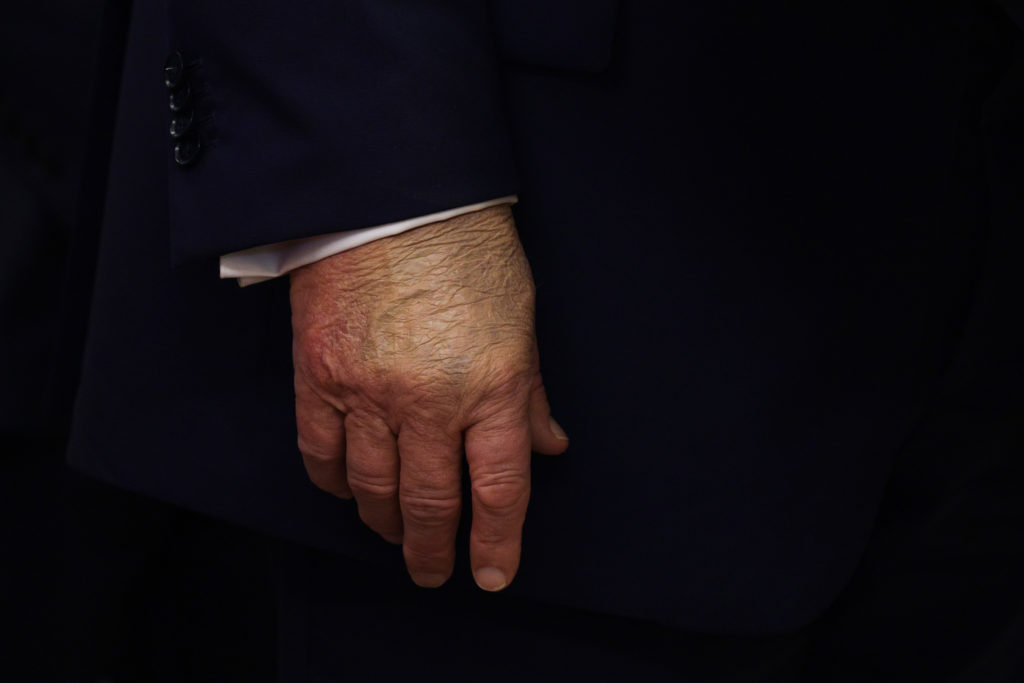
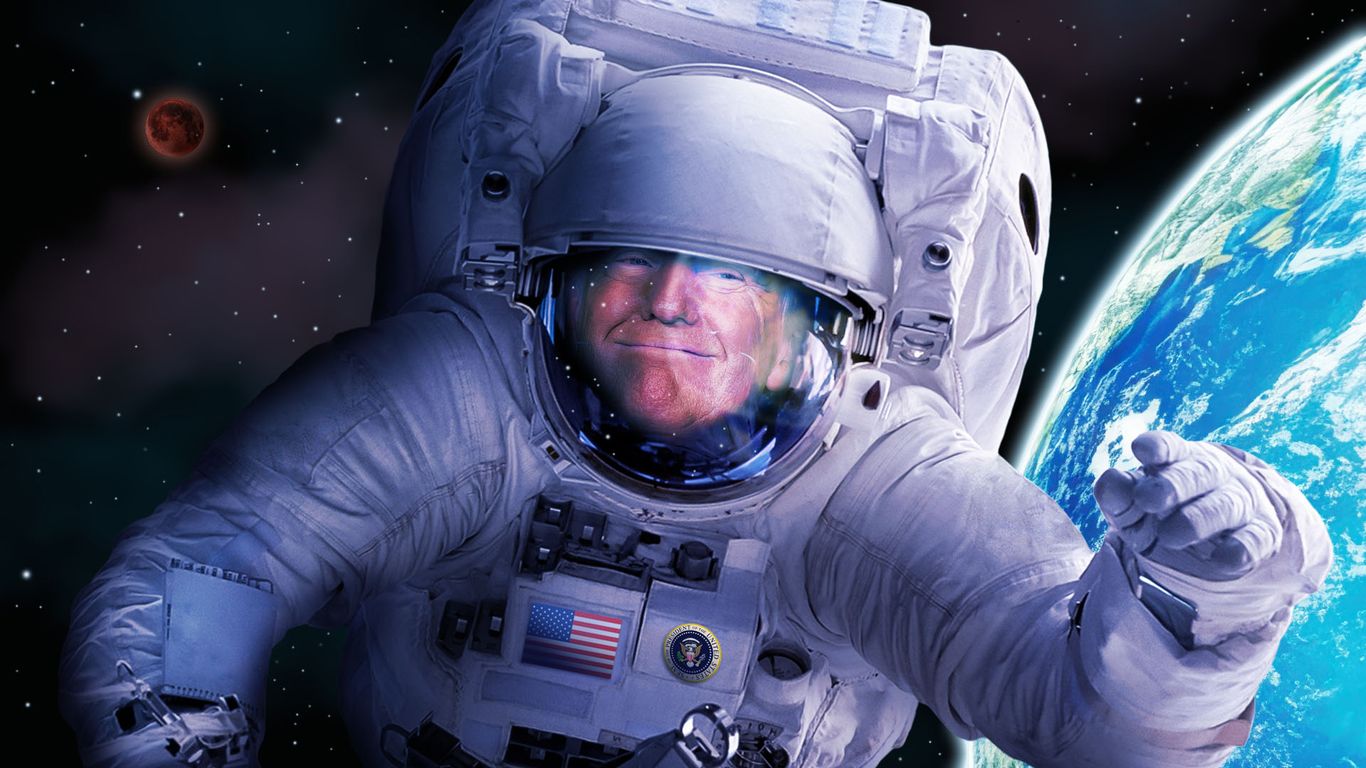
Over Labor Day weekend, false rumors spread on social media that former President Donald Trump was dead or seriously ill. Despite the speculation, Trump was seen and heard publicly, including speaking at the White House. The spread of the rumors involved mischaracterized comments and amplified social media posts.
Key Facts
On social media, rumors circulated that Trump had died, with hashtags like #trumpisdead trending.
Trump was alive and active; he spoke live at the White House on September 2.
Complaints stemmed from a quote by Vice President JD Vance that was taken out of context.
Trump has a non-life-threatening health condition, which was exaggerated in some posts.
The phrase "Trump is dead" was widely shared, appearing over 5,616 times on several platforms.
Rumors gained traction after a six-day gap in Trump's public appearances.
An erroneous August 29 post claimed Trump had died on a Wednesday without evidence.
Social media engagement around the rumors included millions of views and likes.
Read the Original
Want the full story? Tap a source to open the original
article.
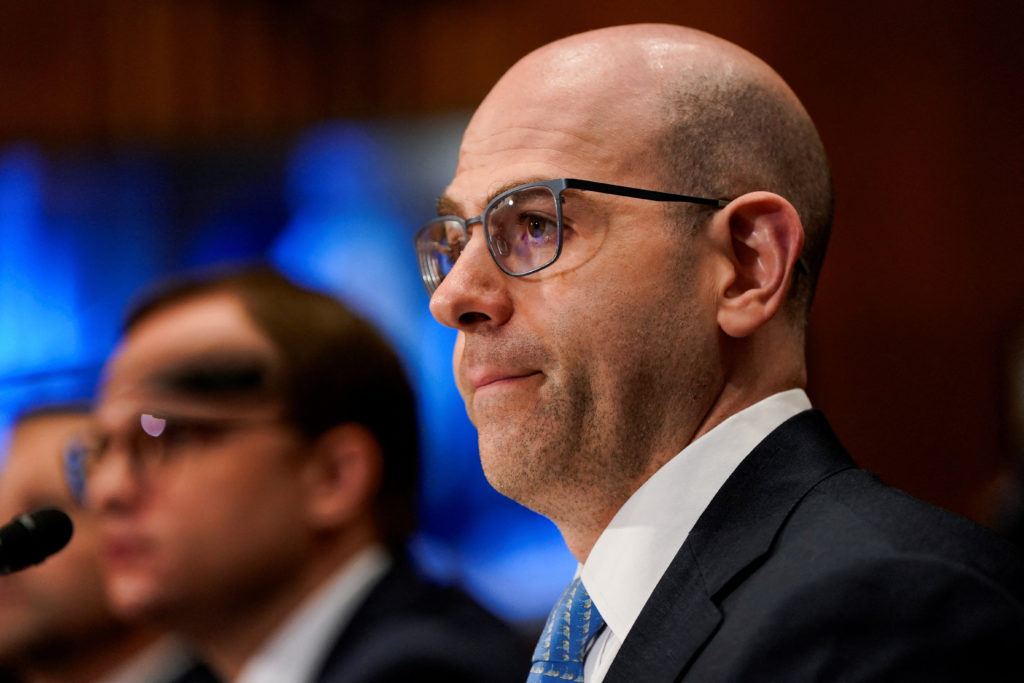
Stephen Miran, nominated by President Donald Trump to the Federal Reserve Board, stated that he would stay as a White House employee even if the Senate approves his nomination. He plans to take an unpaid leave from his role as chairman of the White House Council of Economic Advisers during this time.
Key Facts
Stephen Miran is nominated by President Trump for the Federal Reserve Board.
He will remain a White House employee even if confirmed by the Senate.
Miran would take unpaid leave from his current role at the White House.
His term at the Federal Reserve, if confirmed, would expire in January.
Miran stated he would resign from the administration only if he gets a longer-term nomination at the Federal Reserve.
Read the Original
Want the full story? Tap a source to open the original
article.
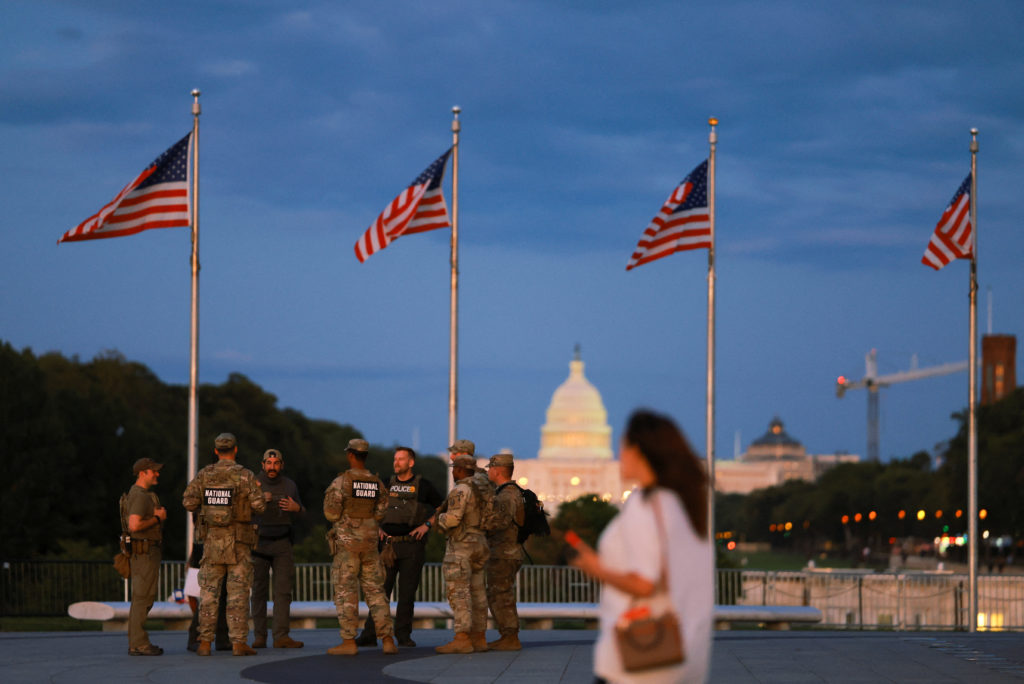
The District of Columbia has filed a lawsuit against President Donald Trump to stop the use of National Guard troops in Washington, D.C. The lawsuit claims that deploying over 1,000 troops for law enforcement is illegal.
Key Facts
The District of Columbia filed the lawsuit on Thursday.
The lawsuit targets President Trump's deployment of the National Guard in Washington, D.C.
The city's attorney general, Brian Schwalb, says this surge of troops is like a military takeover.
The lawsuit claims that using the military for law enforcement is illegal.
The lawsuit highlights an executive order dated August 11.
Over 1,000 National Guard troops are currently involved.
Read the Original
Want the full story? Tap a source to open the original
article.
The article discusses how media and political figures often describe racist violence as an individual issue involving hate or mental illness, overshadowing its systemic and global nature. It highlights the case of Robin Westman, a white transgender woman involved in a mass shooting, as an example of this tendency. The article argues that racism is not just about individual hate but is connected to broader systems that maintain power and inequality.
Key Facts
Media often frames racist acts as individual hatred or mental illness.
Robin Westman, a white transgender woman, committed a mass shooting in Minneapolis, wounding 17 people and killing two children.
Some pundits used Westman's case to promote transphobic narratives without evidence.
Racism is described not just as hate but as a system to maintain power and inequality.
Institutional racism involves policies and practices in various sectors like schools and workplaces that disadvantage people of color.
Structural racism refers to racist patterns across different societal institutions.
The focus on individual acts of racism can distort understanding of its systemic nature.
Read the Original
Want the full story? Tap a source to open the original
article.
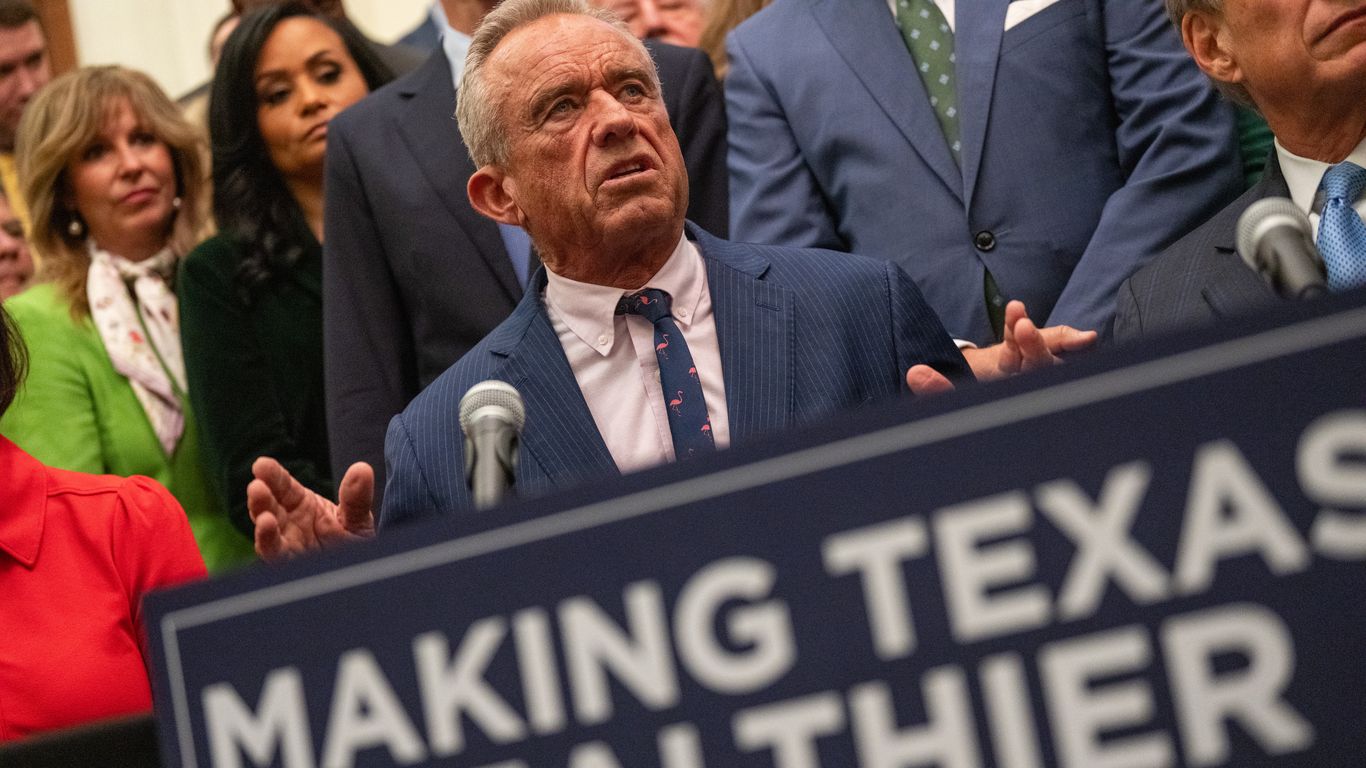
Republican senators are questioning Health Secretary Robert F. Kennedy Jr. after the firing of the CDC director, Susan Monarez. They plan to hold a hearing to discuss Kennedy's actions and their impact on public health policies. Some senators are also expressing concerns about Kennedy's vaccine policies and potential effects on upcoming elections.
Key Facts
Republican senators are scrutinizing Robert F. Kennedy Jr.'s decisions as Health Secretary.
The CDC director Susan Monarez was removed from her position after just a month.
A Senate hearing will be held to discuss Kennedy's health agenda and leadership.
GOP members are concerned about inconsistency between Kennedy's promises and his actions.
Some senators believe Kennedy's views may pose challenges in the midterm elections.
A KFF poll shows that only 37% of the public have a significant level of trust in Kennedy.
Democrats criticize Kennedy for creating public health risks, but their influence is currently limited in this matter.
Despite the criticism, some senators support Kennedy's broader health focus beyond vaccines.
Read the Original
Want the full story? Tap a source to open the original
article.
A federal appeals court decided that the Trump administration cannot use an old law called the 1798 Alien Enemies Act to deport suspected gang members quickly. The court ruled that the gang Tren de Aragua had not invaded the United States, which is a necessary condition for using the law. This decision blocks the fast-track deportation process that the administration tried to implement.
Key Facts
A federal appeals court decision was made on September 2.
The court ruled against using the 1798 Alien Enemies Act for fast deportations.
The Trump administration claimed the Venezuelan gang Tren de Aragua invaded the US.
The court found there was no such invasion or predatory incursion.
More than 230 Venezuelan men were deported using the act in March.
Investigations showed most deported individuals had no criminal records.
The court's decision is the first legal ruling on this use of the act.
The term "predatory incursion" was defined by the court as needing a foreign-directed armed force.
Read the Original
Want the full story? Tap a source to open the original
article.
Donald Trump announced moving the U.S. Space Command to Huntsville, Alabama, to enhance the nation's defense in space. This move is part of a larger effort to focus on space-based warfare, including a new missile defense initiative. The U.S. aims to stay ahead in the space race against major powers like China and Russia.
Key Facts
Donald Trump created a new military branch, the U.S. Space Force, during his first term.
Trump announced the relocation of Space Command to Huntsville, Alabama, known for space-related activities.
The relocation is part of a broader $175 billion missile defense initiative focusing on space.
Trump's administration wants to protect American space assets and address threats from countries like China and Russia.
Gen. Stephen Whiting supports the development of weapons in space to strengthen U.S. defenses.
The administration launched the Golden Dome initiative, similar to the old Star Wars project, aiming for a missile defense system in space.
While focusing on military space efforts, Trump proposed reducing NASA's budget, which affects non-military space exploration.
Trump's actions align with his partnership with Elon Musk to prioritize space competition and defense systems.
Read the Original
Want the full story? Tap a source to open the original
article.
People in the United States can expect to see the best autumn leaf colors from late September to mid-November. The changing colors start in the northern regions and higher areas before moving south. Warm temperatures might delay the peak colors in southern and western areas, but cooler regions could see them earlier.
Key Facts
Peak autumn leaf colors in the U.S. happen from late September to mid-November.
The color change starts in the North and high places, then moves South.
Warm temperatures might delay peak colors, especially in Georgia, Alabama, and northern Florida.
Cooler areas like northern New England, the Adirondacks, and the Poconos might see peak colors earlier.
SmokyMountains.com uses weather history, tree information, and user data to create foliage prediction maps.
The Northern Rockies have vibrant yellow Alpine larch groves that are a popular sight in fall.
Despite warmer weather, there will still be a lot of colorful leaves to see across the U.S.
Read the Original
Want the full story? Tap a source to open the original
article.
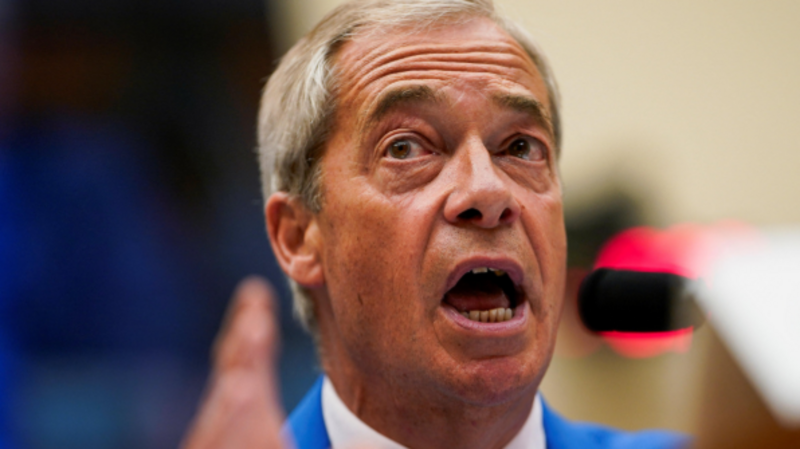
Nigel Farage asked U.S. politicians and companies to challenge the UK's speech laws, comparing them to those in North Korea. He spoke to a U.S. congressional committee, arguing that such laws could affect Americans, while some U.S. politicians criticized his stance. Farage emphasized conversations over sanctions, and the discussion included debates over the UK's Online Safety Act.
Key Facts
Nigel Farage is from the Reform UK party and was in Washington, DC.
He spoke to a U.S. congressional committee about UK speech laws.
Farage compared the UK's situation to North Korea, citing specific cases.
He urged U.S. politicians and businesses to talk to the UK about speech laws.
Farage clarified he did not want U.S. sanctions but open conversations.
The UK’s Online Safety Act aims to make the internet safer, especially for children.
Some U.S. politicians criticized Farage; others, like Republicans, praised him.
Farage met with former President Donald Trump during his visit.
Read the Original
Want the full story? Tap a source to open the original
article.
Robert F. Kennedy Jr. is set to testify before the Senate about issues at the Centers for Disease Control and Prevention (CDC) and changes to vaccine advisory panels. A federal judge ruled that the Trump administration acted unlawfully by freezing $2 billion in research funds for Harvard University, originally justified by claims of antisemitism on campus.
Key Facts
Robert F. Kennedy Jr. will testify before the Senate finance committee about his health care plans and recent events at the CDC.
Kennedy pressured a CDC director to resign, and after her refusal, the White House fired her, leading to other resignations in protest.
The hearing may discuss Kennedy's vaccine advisory changes and his "Make America Healthy Again" agenda.
A Senate committee is holding a confirmation hearing for a nominee to the Federal Reserve's board, which includes disputes about another seat on the board.
A judge in Boston found that the Trump administration illegally froze $2 billion of Harvard University's research funds.
The funding freeze was claimed to be due to antisemitism on campus, but the judge said it violated Harvard’s rights and had no direct connection to the research projects affected.
Read the Original
Want the full story? Tap a source to open the original
article.
Angela Rayner, the deputy prime minister, consulted three individuals before buying an £800,000 flat in Hove. She has admitted underpaying stamp duty, a type of property tax, and is under investigation to determine if she should have paid more. Rayner has asked tax authorities to investigate her tax payment and could face penalties if found at fault.
Key Facts
Angela Rayner consulted three people about her flat purchase: one experienced in conveyancing and two in trust law.
She admitted underpaying stamp duty on her £800,000 flat in Hove.
Rayner did not consult experts in complex tax law about the full purchase details.
She blames the underpayment on initial legal advice that did not account for her situation.
Rayner could face a £12,000 penalty if her actions are deemed careless or a 100% fine if deliberate.
The Independent Adviser on Ministers' Interests is investigating to determine if Rayner took appropriate advice.
Political figures are divided, with some calling for her resignation while others express confidence in the investigation process.
Rayner has contacted tax authorities to resolve the issue and has referred herself for investigation by the prime minister's standards adviser.
Read the Original
Want the full story? Tap a source to open the original
article.
Senator Elizabeth Warren wants the Senate Banking Committee to focus on President Trump's attempts to influence the Federal Reserve's independence. She is particularly concerned about Trump's recent actions of threatening to fire Fed officials and his nomination of an economist who supports more presidential control over the Fed.
Key Facts
Senator Elizabeth Warren is asking for attention on President Trump's influence over the Federal Reserve (Fed).
Stephen Miran, nominated by Trump for a Fed position, has views supporting more presidential control.
The Senate Banking Committee plans to question Miran about his nomination and views.
Trump has threatened to fire Federal Reserve Chairman Jerome Powell and another Fed board member, Lisa Cook.
Warren argues that undermining Fed independence could lead to higher mortgage, car loan, and credit card interest rates.
Countries with non-independent central banks often experience higher inflation, affecting working people the most.
Warren has criticized Fed Chair Jerome Powell's past policies, including his stance on interest rates and bank regulations.
Read the Original
Want the full story? Tap a source to open the original
article.
Health groups and medical associations have asked Robert F. Kennedy Jr. to resign as U.S. Health Secretary. They accuse him of ignoring science and reversing medical progress, which they claim puts lives at risk. Kennedy’s actions, including changes in vaccine policies, have led to resignations among CDC officials.
Key Facts
Over 20 health groups called for Robert F. Kennedy Jr. to step down as Health Secretary.
These groups accuse him of ignoring decades of scientific advances and putting lives in danger.
Kennedy fired the CDC director, Susan Monarez, shortly after she started her role.
He replaced members of the CDC’s vaccine advisory panel with his own appointees.
Kennedy withdrew recommendations for COVID-19 vaccinations for certain groups.
He cancelled $500 million in mRNA vaccine research funding.
Kennedy has faced criticism for spreading anti-vaccine misinformation.
Hundreds of federal health employees have urged him to stop spreading false health information.
Read the Original
Want the full story? Tap a source to open the original
article.
Robert F. Kennedy Jr., serving as the Health and Human Services Secretary, is set to testify before the Senate finance committee. The hearing follows a series of leadership changes at the CDC, including the firing of its new director and the resignation of top officials. The session will also address Kennedy's controversial vaccine policies and calls for his resignation.
Key Facts
Robert F. Kennedy Jr. will testify before the Senate finance committee on health care issues.
The CDC director, Susan Monarez, was fired by the White House after Kennedy pressured her to resign.
Three top CDC officials resigned in protest of the leadership changes.
Kennedy has pushed to change federal vaccine policies, affecting vaccine availability.
He replaced a vaccine advisory panel with people known for anti-vaccine views.
Around 20,000 staff, about a quarter of the HHS workforce, have left since Kennedy became secretary.
Kennedy's actions have sparked calls for his resignation from over a thousand current and former HHS staff.
Read the Original
Want the full story? Tap a source to open the original
article.
The U.S. Department of Education is using civil rights laws to investigate schools regarding discriminatory practices. Controversial decisions involve interpretations of laws related to racial and gender discrimination in schools, affecting support for marginalized students.
Key Facts
The Education Department is investigating Chicago Public Schools over a program that allegedly discriminates based on race.
Five Virginia school districts were found to violate a law meant to protect against sex discrimination.
The Trump administration warned Denver Public Schools to use biology-based definitions for gender or lose federal aid.
Title IX is a federal law that prevents sex discrimination in education settings.
The Trump administration interprets Title IX to exclude gender identity protections.
The Obama and Biden administrations included protections for transgender students under Title IX.
Schools could lose federal funding for defying the Department of Education's rulings.
Debates continue on how Title IX should be interpreted regarding gender identity.
Read the Original
Want the full story? Tap a source to open the original
article.
Fox executives made negative comments about Jeanine Pirro, referring to her as a "reckless maniac" following her actions after the 2020 presidential election. Pirro, now the U.S. attorney for Washington, D.C., was previously involved in media and political roles. She has taken strong public actions in her current law enforcement position, though some have faced legal challenges.
Key Facts
Fox News executives criticized Jeanine Pirro after the 2020 election.
Pirro was involved in promoting claims that the election was stolen from Trump.
These comments came to light due to a legal case involving Smartmatic, a voting technology company, against Fox News.
Pirro is now the U.S. attorney for Washington, D.C., focusing on crime enforcement.
She has announced actions against criminal activities, like drug trafficking in D.C.
There have been legal challenges to some of her enforcement actions, with judges questioning evidence.
Pirro had a past role in media and considered political positions, including briefly running against Hillary Clinton.
Her previous job included being a prosecutor and judge.
Read the Original
Want the full story? Tap a source to open the original
article.
President Trump is discussing the possibility of deploying National Guard troops to various states despite legal issues. A law expert explains that it is easier for Trump to send troops if governors request them, although Trump has hinted at sending troops without states' approval. A recent court ruling found Trump's earlier deployment in California illegal.
Key Facts
President Trump wants to deploy National Guard troops to certain states over legal challenges.
Trump suggested Illinois Governor Pritzker should request troops, which Pritzker rejected.
The president mentioned deploying troops to New Orleans, which got a positive response from Louisiana's governor.
A federal judge ruled that Trump's prior use of National Guard troops in California was illegal.
Law expert Stephen Vladeck discussed that Trump might rely on the Insurrection Act to send troops without state approval.
It's legally simpler for Trump to deploy troops if a governor requests them.
The situation recalls previous troop deployments during the George Floyd protests, with mixed state support.
Read the Original
Want the full story? Tap a source to open the original
article.
The article discusses the legal options available to the Trump administration for deploying more National Guard troops. Michel Martin from NPR interviews law professor Stephen Vladeck on this subject.
Key Facts
The focus is on the Trump administration's ability to deploy more National Guard troops.
Stephen Vladeck, a law professor, provides insights into the legal aspects.
The discussion is on NPR's Morning Edition program.
The interview explores remaining legal options for deployment.
The coverage will include audio that will be available later.
Read the Original
Want the full story? Tap a source to open the original
article.
Staying informed here is free for everyone. If it's worth something to you, pay what you want. Supporters also get the daily digest by email every morning.
A federal judge decided that the Trump administration illegally stopped more than $2.2 billion in research funds for Harvard University. The White House plans to challenge this decision.
Key Facts
A federal judge made a ruling about research funding for Harvard.
The ruling found that over $2.2 billion was frozen illegally.
The funds in question were meant for research purposes.
The Trump administration's freezing of funds was deemed illegal.
The White House intends to appeal the judge's decision.
The case involves significant financial resources for academic research.
Read the Original
Want the full story? Tap a source to open the original
article.
Some states in the U.S. face a challenge with Medicaid funding due to federal budget cuts. These states cannot legally use their own budgets to cover the shortfall, creating a financial problem.
Key Facts
Medicaid is a program that helps people in the U.S. with medical costs who have limited income.
Federal budget cuts have reduced the amount of money given to states for Medicaid.
Some states are trying to figure out how to run their Medicaid programs with less money.
Certain states have legal restrictions that prevent them from using their own budget to make up for the reduced federal funding.
This situation is creating a financial challenge for these states as they try to meet Medicaid needs.
Read the Original
Want the full story? Tap a source to open the original
article.